California Quitclaim Deed - Husband and Wife to Trust
About this form
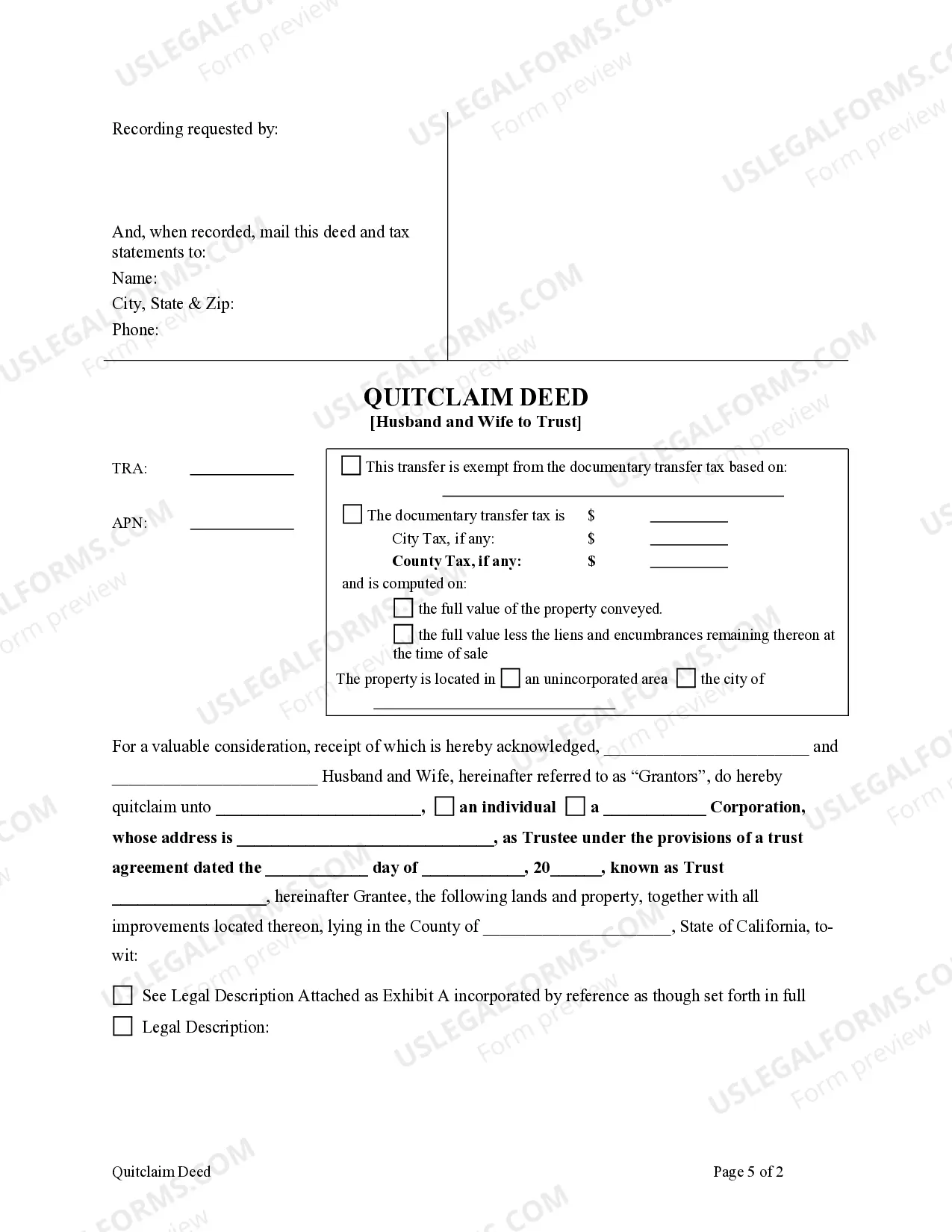
The Quitclaim Deed - Husband and Wife to Trust is a legal document used to transfer property ownership from a husband and wife to a designated trust. This form allows the grantors to convey their interests in the property without making guarantees about the title, distinguishing it from other deed types that may provide warranties. It is especially useful in estate planning or as part of a family trust arrangement.
Key parts of this document
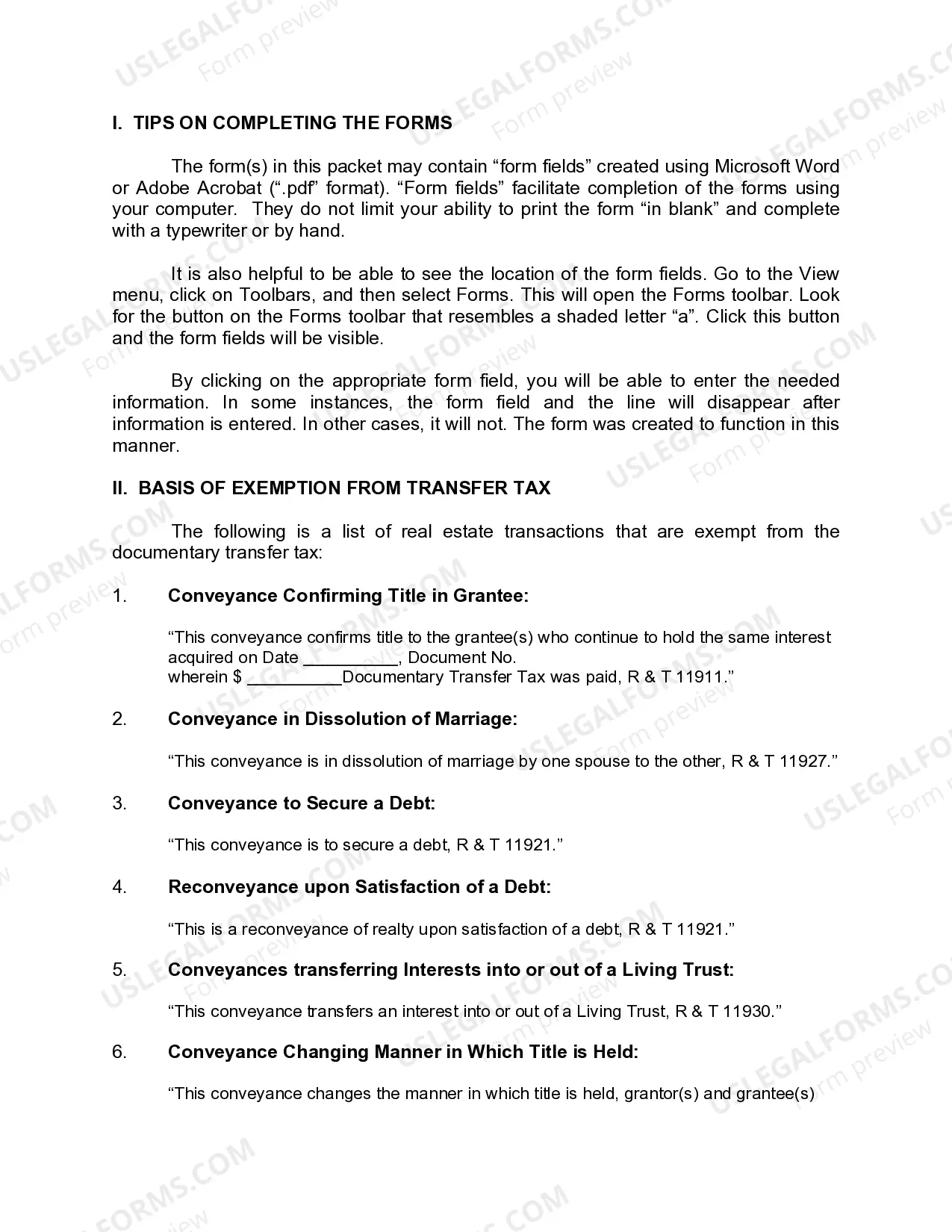
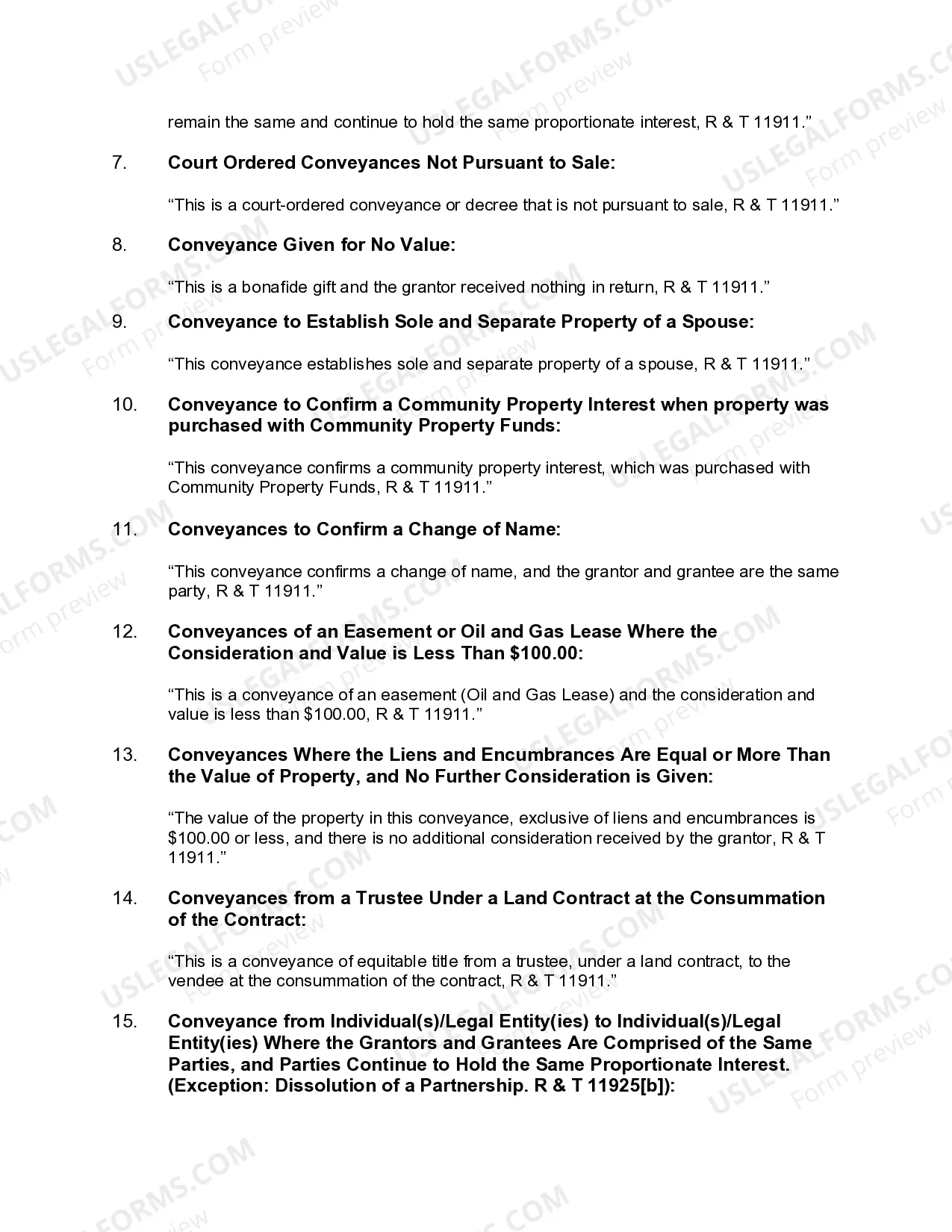
- Identification of grantors (husband and wife) and grantee (the trust)
- Description of the property being transferred
- Date of the transfer
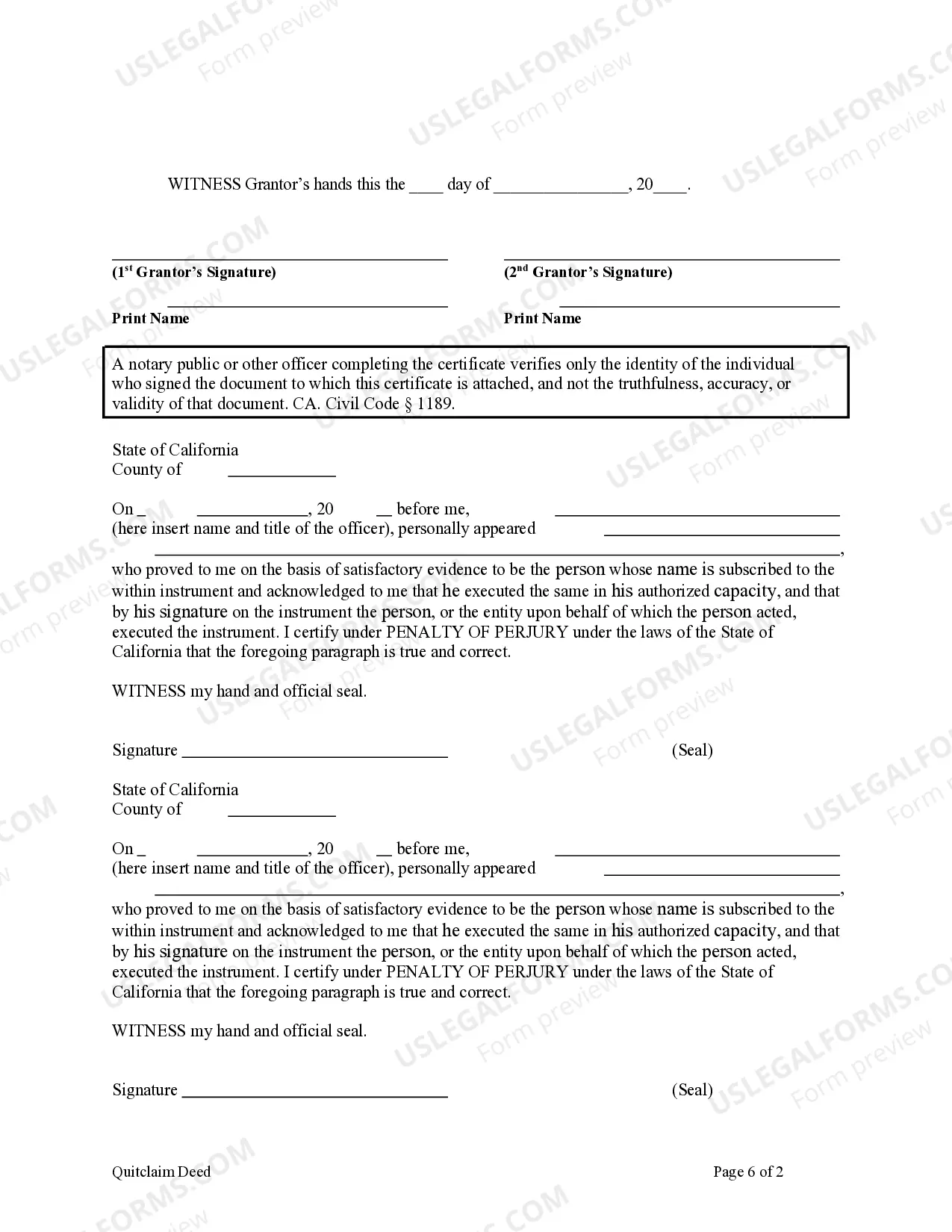
- Signature lines for the grantors
- Notary acknowledgment section (if required)







Common use cases
This form is typically used when a married couple wishes to transfer real estate into a trust for estate planning purposes. It is ideal in situations where the couple wants to simplify the transfer of assets upon death or manage assets during their lifetime through a trust structure.
Who needs this form
- Married couples looking to place their joint property into a trust
- Individuals involved in estate planning who wish to simplify the transfer of assets
- Anyone wishing to clarify property ownership and title during a marriage
Instructions for completing this form
- Identify the grantors by entering the names of both the husband and wife.
- Specify the name of the trust as the grantee.
- Clearly describe the property being transferred, including its location and legal description.
- Enter the date of the transaction.
- Both grantors should sign the deed before a notary public if required.
Is notarization required?
This form must be notarized to be legally valid. US Legal Forms provides secure online notarization powered by Notarize, allowing you to complete the process through a verified video call.
Get your form ready online
Our built-in tools help you complete, sign, share, and store your documents in one place.
Make edits, fill in missing information, and update formatting in US Legal Forms—just like you would in MS Word.
Download a copy, print it, send it by email, or mail it via USPS—whatever works best for your next step.
Sign and collect signatures with our SignNow integration. Send to multiple recipients, set reminders, and more. Go Premium to unlock E-Sign.
If this form requires notarization, complete it online through a secure video call—no need to meet a notary in person or wait for an appointment.
We protect your documents and personal data by following strict security and privacy standards.

Make edits, fill in missing information, and update formatting in US Legal Forms—just like you would in MS Word.

Download a copy, print it, send it by email, or mail it via USPS—whatever works best for your next step.

Sign and collect signatures with our SignNow integration. Send to multiple recipients, set reminders, and more. Go Premium to unlock E-Sign.

If this form requires notarization, complete it online through a secure video call—no need to meet a notary in person or wait for an appointment.

We protect your documents and personal data by following strict security and privacy standards.
Avoid these common issues
- Failing to include a complete legal description of the property.
- Not having both spouses sign the deed.
- Overlooking the notary requirements, if applicable.
Advantages of online completion
- Convenient access to the form anytime without needing to visit a legal office.
- Editability allows you to customize the document to your specific needs.
- Reliable templates drafted by licensed attorneys ensure compliance with legal standards.
Looking for another form?
Form popularity
FAQ
The parties to a trust relationship include the trustor, trustee, and beneficiaries. The trustor creates the trust, the trustee manages and administers it, and the beneficiaries receive the benefits of the trust. Each party plays a vital role in ensuring that the trust functions according to its intended purpose, especially in the context of a California Quitclaim Deed - Husband and Wife to Trust.
In California, the property in a trust is owned by the trust itself rather than any individual. The trustee holds legal title to the property, managing it on behalf of the beneficiaries. This setup is crucial for effective estate planning and can significantly streamline the transfer of property, particularly in cases involving a California Quitclaim Deed - Husband and Wife to Trust.
The three parties to a trust deed in California are the trustor, beneficiary, and trustee. The trustor conveys the property into the trust, while the beneficiary receives the rights and benefits from that property. The trustee acts as the administrator who ensures that the terms of the trust are followed, making these roles vital for any California Quitclaim Deed - Husband and Wife to Trust transaction.
In California, a trustee on a deed of trust can be an individual or a corporation. The key requirement is that the trustee must be capable of fulfilling the responsibilities related to managing the trust property. This flexibility allows many individuals or organizations to serve in this role, ensuring that your California Quitclaim Deed - Husband and Wife to Trust remains effective and secure.
In an express trust relationship, the three main actors are the trustor, trustee, and beneficiaries. The trustor, or grantor, creates the trust and specifies the terms. The trustee manages the trust property according to those terms and acts in the best interest of the beneficiaries, who are individuals or entities that receive benefits from the trust. Understanding these roles is essential when considering a California Quitclaim Deed - Husband and Wife to Trust.
Transferring a deed to a living trust in California involves executing a California Quitclaim Deed - Husband and Wife to Trust. Clearly state the property details and the living trust information on the deed. After signing and notarizing the document, you must record it with the appropriate county office to formalize the transfer.
To transfer a deed to a trust in California, you will typically draft a California Quitclaim Deed - Husband and Wife to Trust. This deed must clearly identify the property and the trust, then be signed and notarized. Once completed, the deed should be recorded with the county recorder's office to ensure the transfer is legally recognized.
While a trust can provide estate planning benefits, there are some disadvantages to consider. Establishing a trust can involve legal fees, and ongoing maintenance may be required to manage the trust properly. Additionally, there could be limitations on your ability to sell or refinance the property without going through specific legal steps, making it crucial to weigh these factors carefully.
To add your spouse to your deed of trust, you will need to draft and execute a California Quitclaim Deed - Husband and Wife to Trust. This deed should explicitly state both names and the intention to include your spouse as co-owner. Once executed, you must record the new deed with your county’s recorder office to finalize the addition.
Yes, a quit claim deed can be used to transfer property from a trust to an individual or another entity. This process ensures that the legal title of the property changes while the existing trust remains intact. Using a California Quitclaim Deed - Husband and Wife to Trust, you can streamline this transfer efficiently.