Alaska Notice to Landlord to Immediately Remedy Defect in Essential Services for Residential from Tenant to Landlord
What is this form?
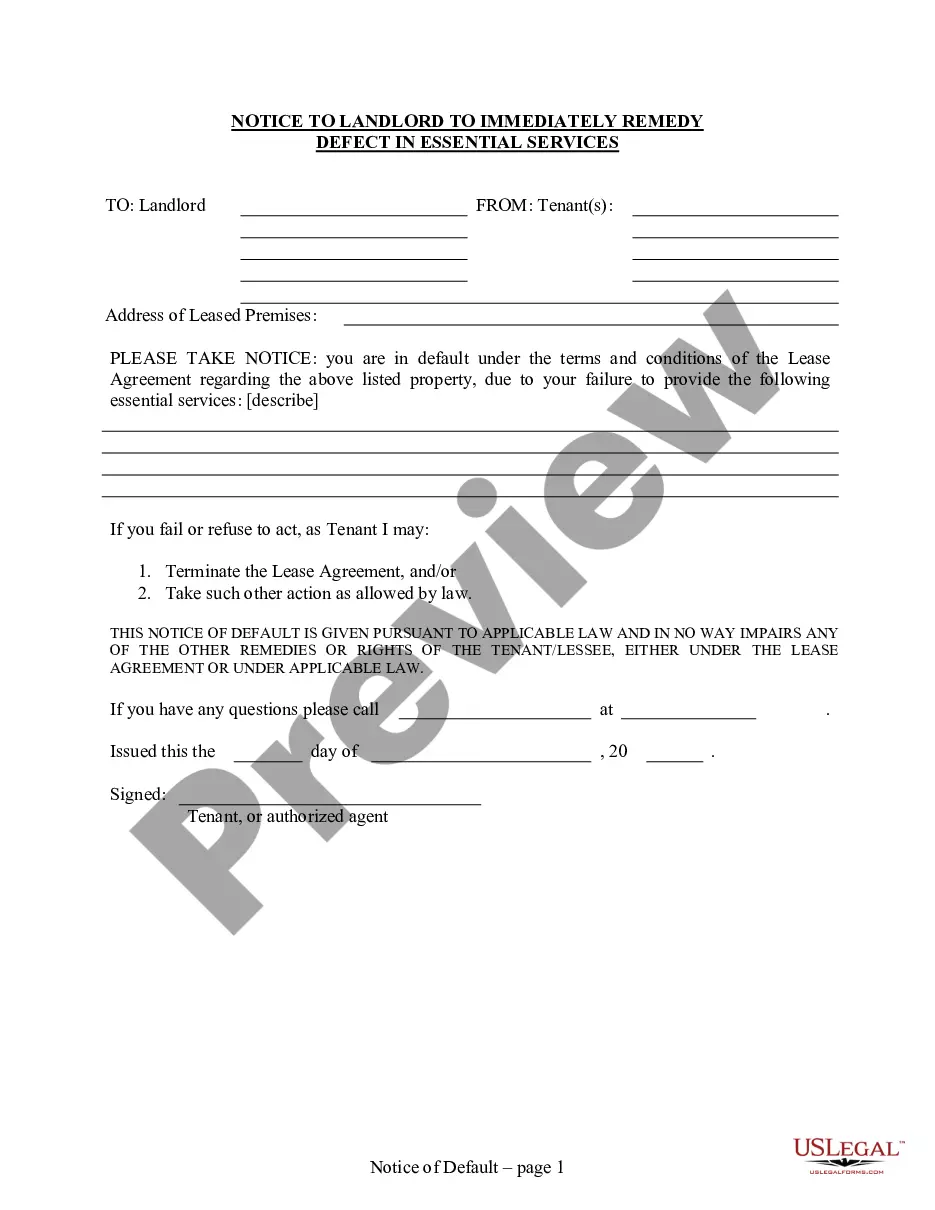
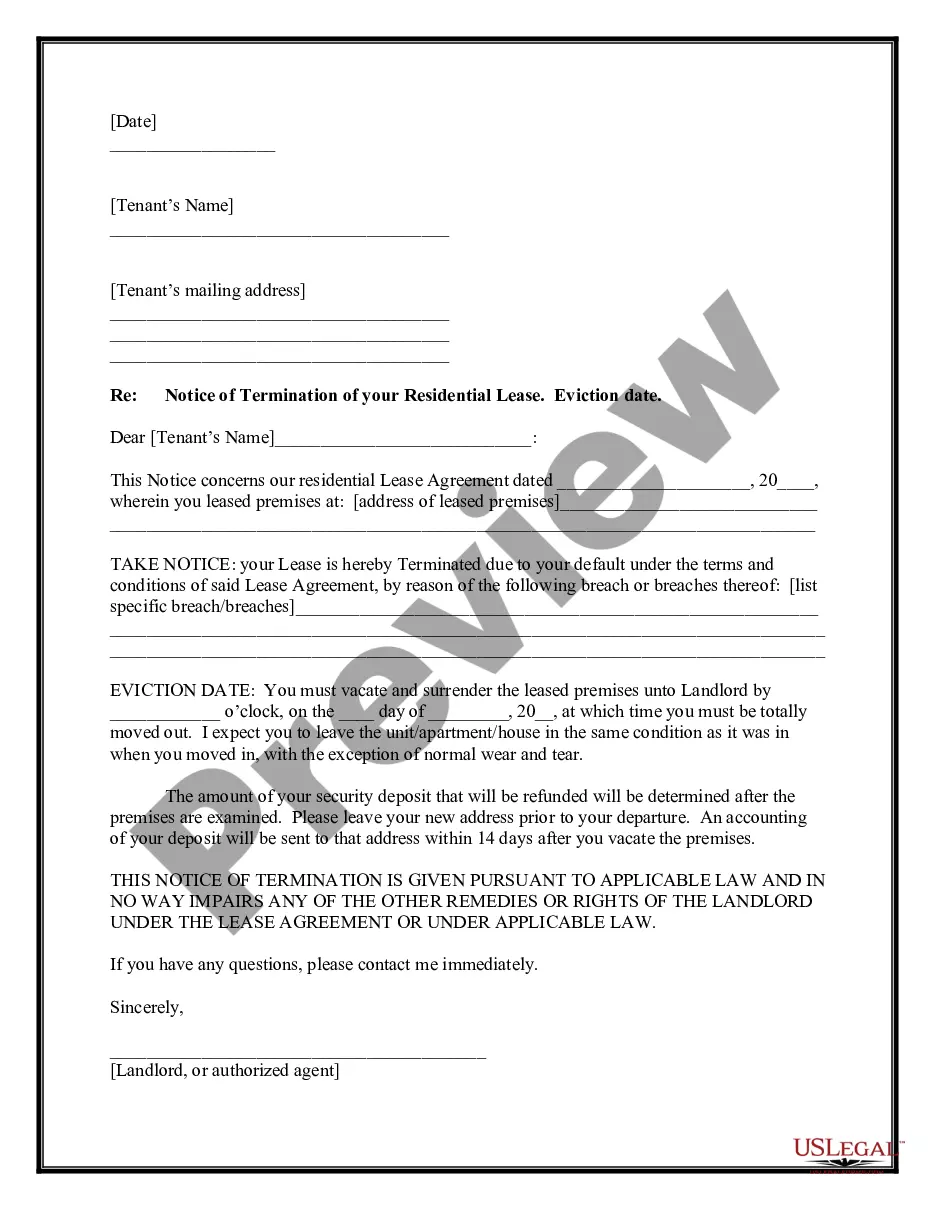
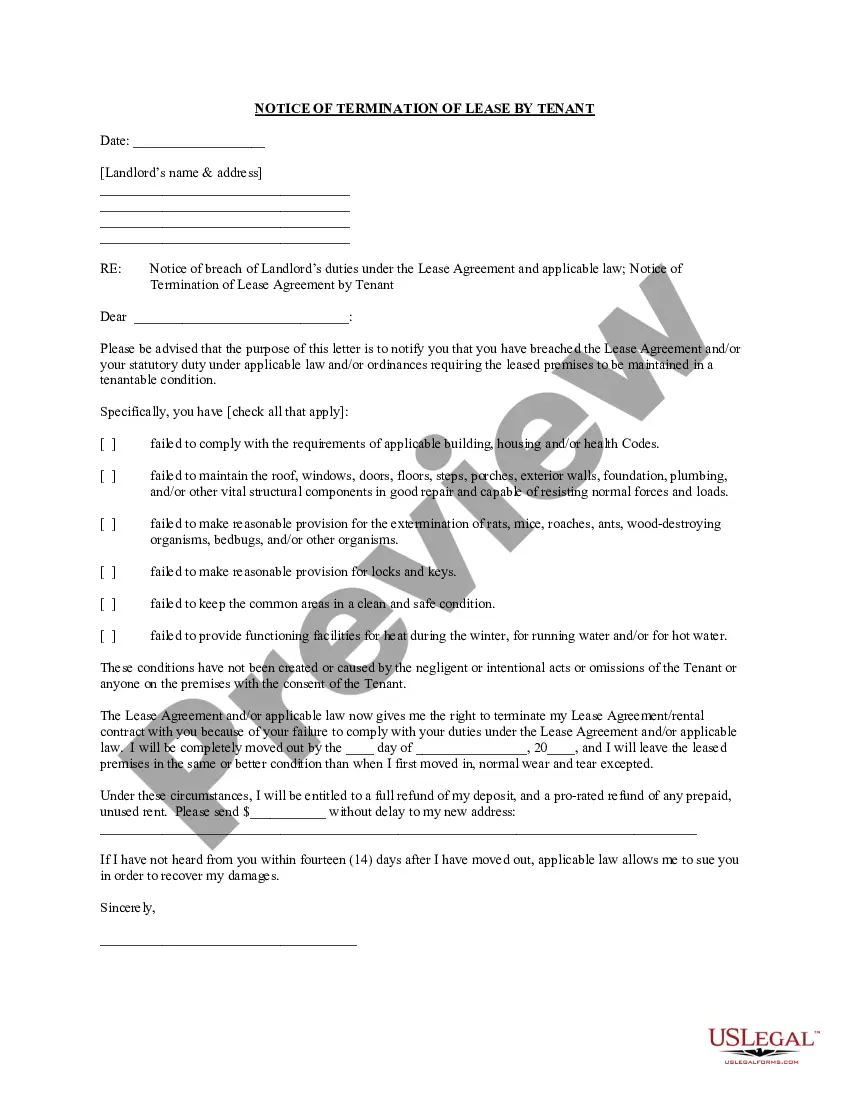
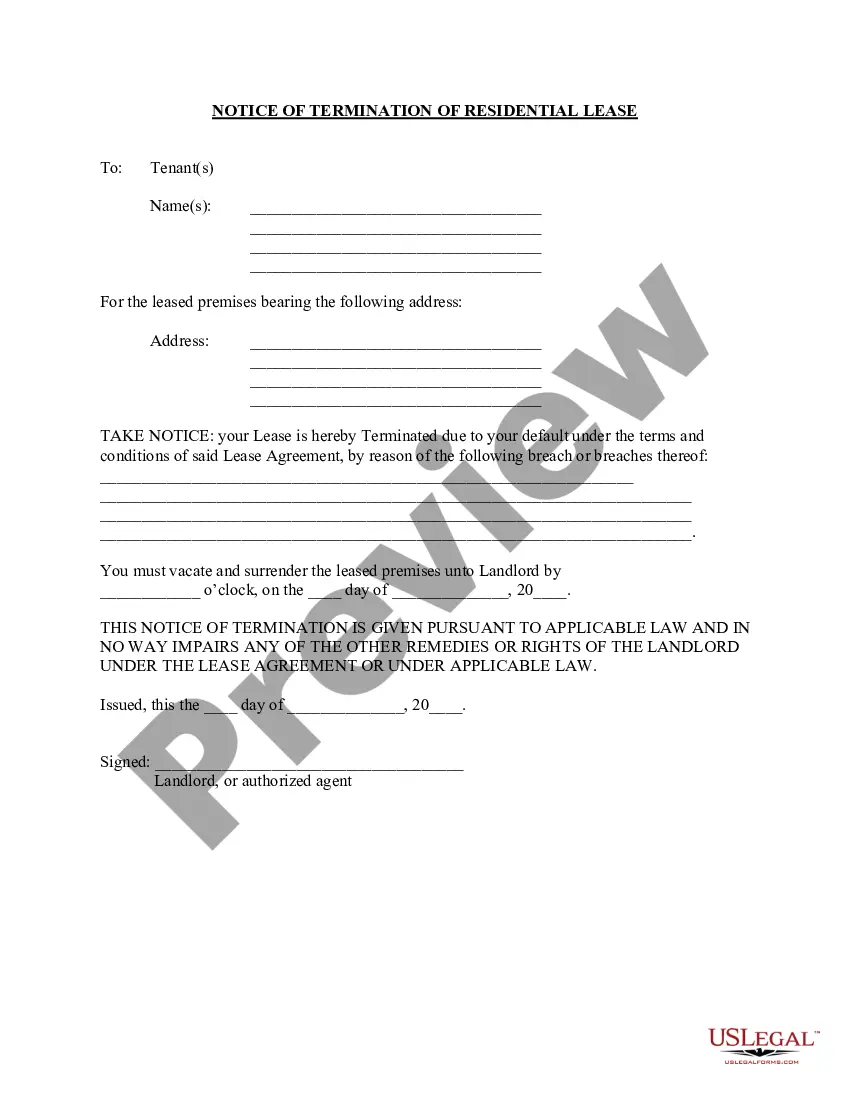
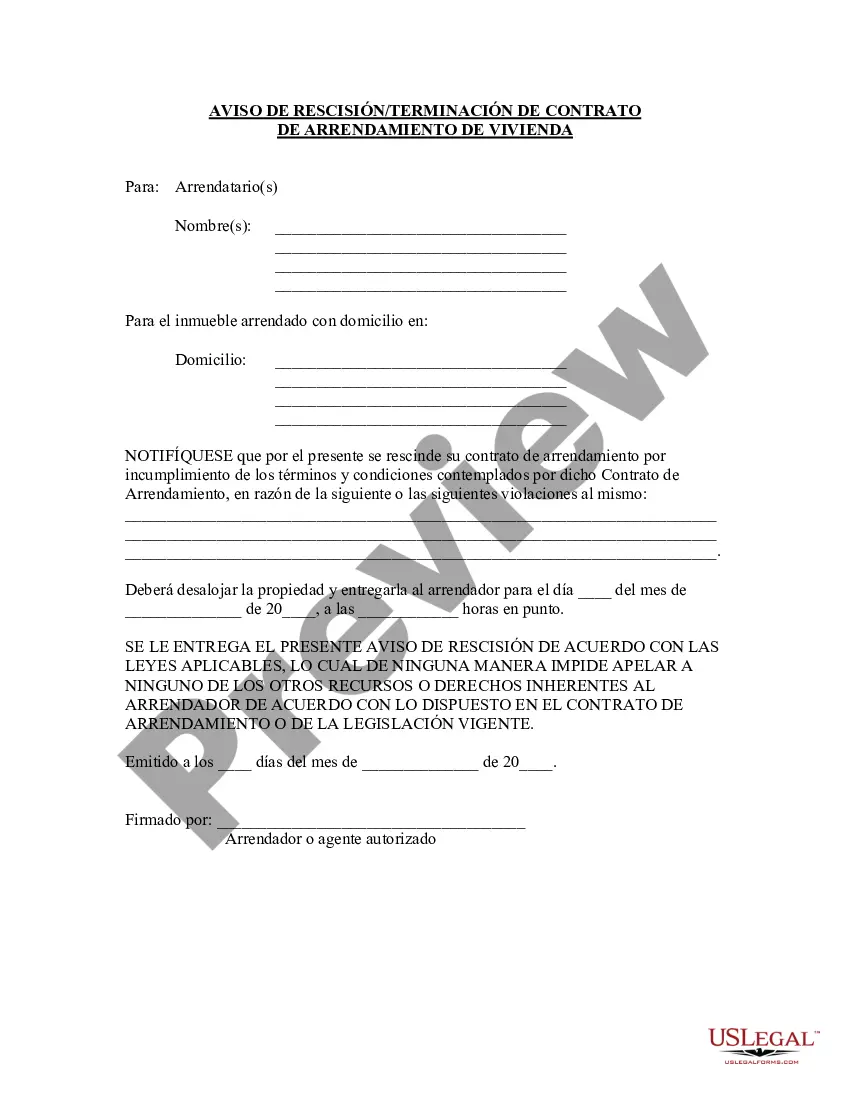
The Notice to Landlord to Immediately Remedy Defect in Essential Services form allows tenants to officially inform their landlord about deficiencies in essential services, such as water or heating. This form empowers tenants to request immediate repairs and indicates that failure to comply could lead them to cover the repair costs or terminate the lease. It serves as a critical communication tool that distinguishes itself from other rental notices by specifically addressing urgent service needs.
Form components explained
- Details of the defect in essential services.
- Identification of the tenant and landlord involved.
- Statement of the lease agreement default.
- Notification of potential legal actions available to the tenant.
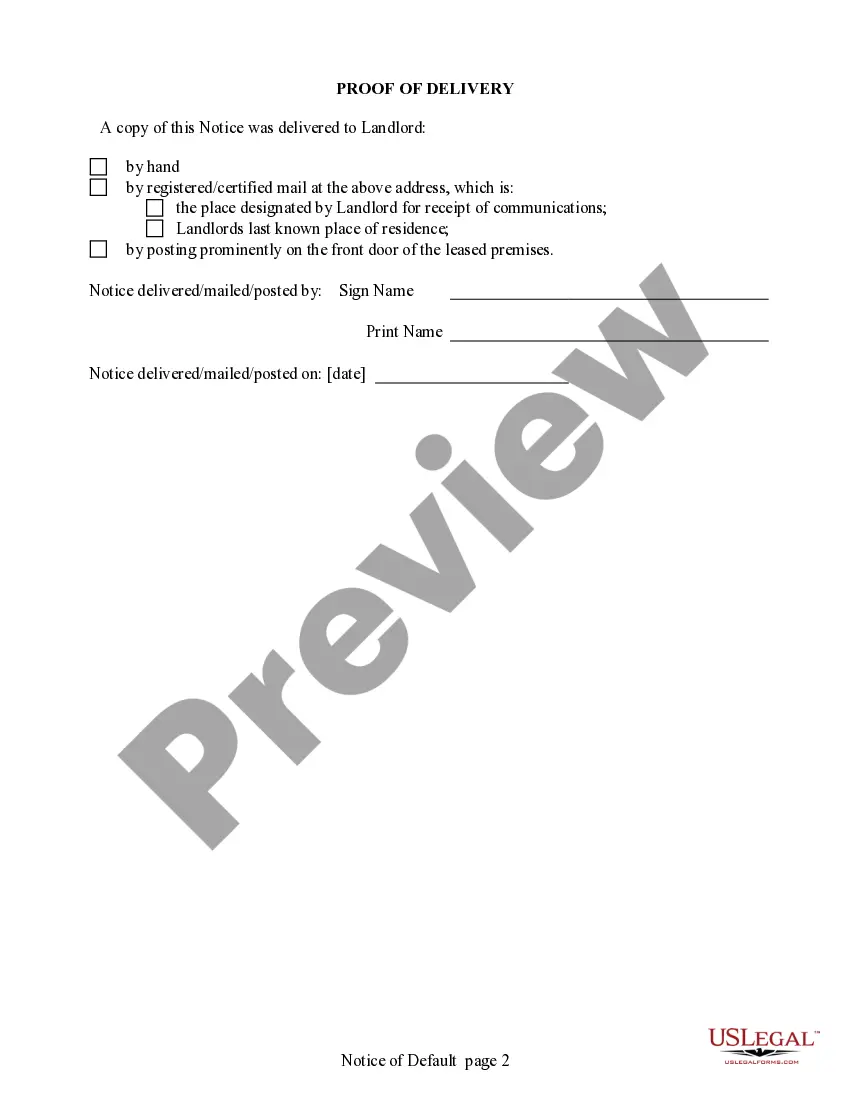
- Proof of delivery methods for the notice.
When to use this form
Use this form when you, as a tenant, experience a significant issue with essential services provided by your landlord. Examples include a lack of running water, heating failures during cold months, or electrical outages that disrupt safety or normal living conditions. It is crucial to notify your landlord promptly using this form to ensure they are made aware of the issue and to seek a remedy.
Who can use this document
- Tenants living in residential properties experiencing service defects.
- Individuals looking to formally document service issues with their landlord.
- Tenants who want to assert their rights regarding essential services under a lease agreement.
Instructions for completing this form
- Identify the parties: Enter the names of both the tenant and landlord.
- Specify the property: Include the address of the leased premises.
- Describe the defect: Clearly state the nature of the essential services that are lacking.
- Outline your demands: Specify what actions you expect the landlord to take.
- Finalize the notice: Sign and date the notice for evidence of delivery.
Is notarization required?
This form does not typically require notarization unless specified by local law. Ensure you follow any specific legal requirements related to your jurisdiction.
Get your form ready online
Our built-in tools help you complete, sign, share, and store your documents in one place.
Make edits, fill in missing information, and update formatting in US Legal Forms—just like you would in MS Word.
Download a copy, print it, send it by email, or mail it via USPS—whatever works best for your next step.
Sign and collect signatures with our SignNow integration. Send to multiple recipients, set reminders, and more. Go Premium to unlock E-Sign.
If this form requires notarization, complete it online through a secure video call—no need to meet a notary in person or wait for an appointment.
We protect your documents and personal data by following strict security and privacy standards.

Make edits, fill in missing information, and update formatting in US Legal Forms—just like you would in MS Word.

Download a copy, print it, send it by email, or mail it via USPS—whatever works best for your next step.

Sign and collect signatures with our SignNow integration. Send to multiple recipients, set reminders, and more. Go Premium to unlock E-Sign.

If this form requires notarization, complete it online through a secure video call—no need to meet a notary in person or wait for an appointment.

We protect your documents and personal data by following strict security and privacy standards.
Avoid these common issues
- Failing to accurately describe the defects, which can lead to misunderstandings.
- Not including the correct contact information for the landlord.
- Neglecting to keep proof of delivery, which is essential for records.
Why use this form online
- Convenience of downloading and completing the form at your own pace.
- Editability allows for customization to suit specific lease agreements.
- Access to attorney-drafted templates ensures legal compliance and clarity.
Legal use & context
- This notice serves as a formal record of the defect, which is important for any future legal actions.
- It communicates the tenant's right to remedy issues affecting essential services promptly.
- Failure to provide essential services can lead to lease termination under a tenantâs legal rights.
Summary of main points
- The form effectively communicates essential service issues to landlords.
- Timely use of this form can help avoid more severe legal disputes.
- Documentation of delivery is crucial for enforceability in any subsequent actions.
Looking for another form?
Form popularity
FAQ
If you think your landlord is violating the Fair Housing Act, you can get that landlord in trouble by filing a complaint at HUD.gov. Your remedy for breach of quiet enjoyment is to terminate the lease and move or sue in small claims court.
Calling state or local building or health inspectors. withholding the rent. repairing the problem, or having it repaired by a professional, and deducting the cost from your rent (called repair-and-deduct) moving out, or.
Tenants can all agree to withhold rent until the landlord makes repairs. A group of tenants can ask a judge to order the landlord to make repairs. If the landlord absolutely refuses to fix the bad conditions, tenants can ask a court to appoint a temporary landlord called a receiver in order to make repairs.
Duty of Repairs and Maintenance Also, once the tenant moves in, a landlord is required to make repairs and conduct maintenance to keep the rental property in a habitable condition. A habitable property is one that is free from infestation, has adequate heating, water, and electricity, and is structurally sound.
Apply to the Tribunal for orders: to stop the landlord/agent entering the premises. (Apply within 3 months after you become aware of the landlord's/agent's breach.) report trespass to the police. complain to NSW Fair Trading.
Your landlord has to keep your home in a good condition and do repairs if you need them. They can't make you leave your home just for asking for repairs to be done - your landlord has to follow a proper eviction process if they want you to leave.
Uninhabitable conditions can include dangerous ones, such as holes in the floor, unsafe or exposed wiring, or non-working air conditioning in dangerously hot summer months. Gross infestations of roaches, fleas or other pests are also uninhabitable conditions.
It says landlords should fix major problems within two weeks if they pose a threat to a tenant's health and security, such as a broken boiler in the depths of winter.
If you're seeking damages for emotional distress caused by a landlord's discrimination, or punitive damages for especially blatant and intentional discrimination, a lawsuit may well be your best bet. Understand what's involved in suing your landlord. You may file a lawsuit in either federal or state court.