Wyoming Commercial Lease Assignment from Tenant to New Tenant
What this document covers
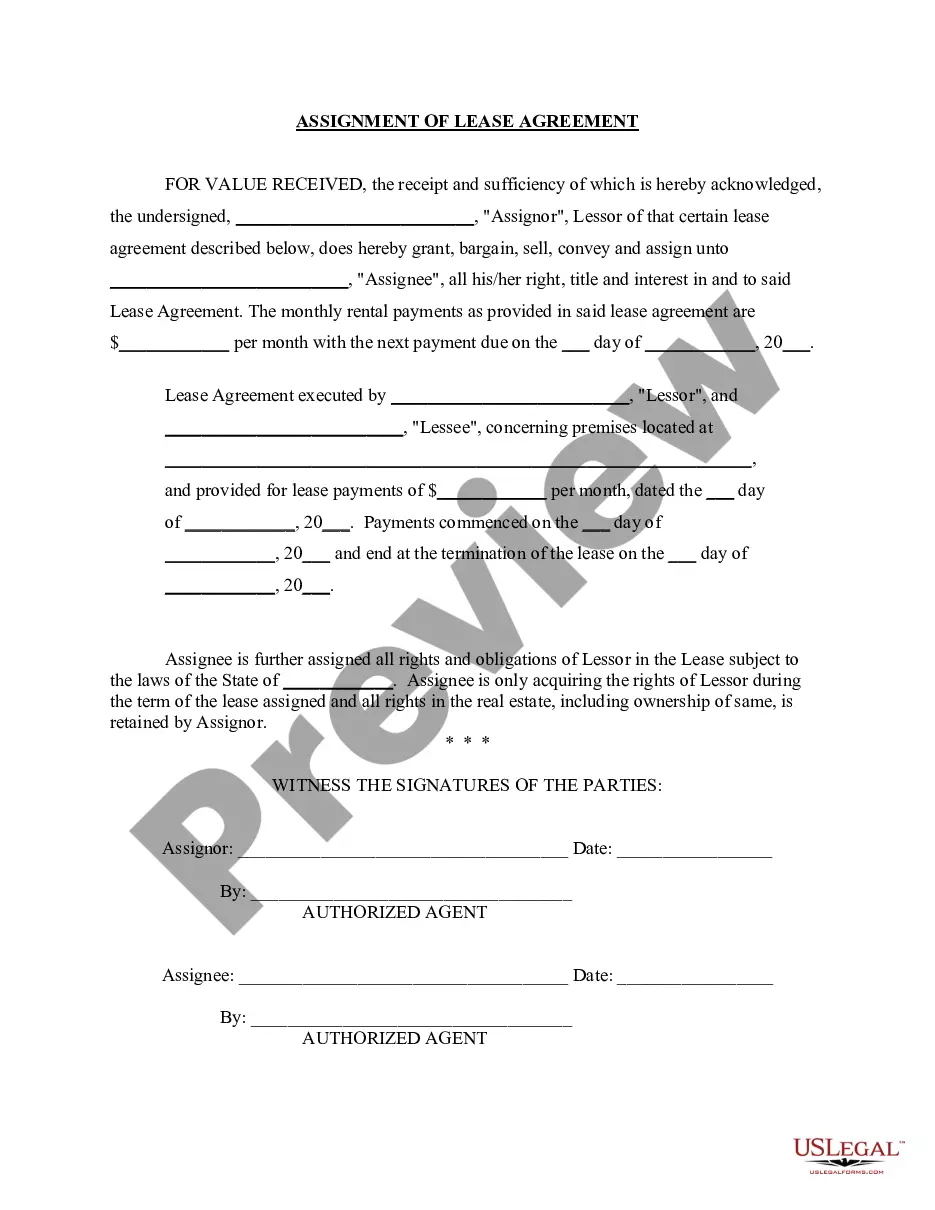
The Commercial Lease Assignment from Tenant to New Tenant form serves to transfer the lease obligations from an existing tenant (the Assignor) to a new tenant (the Assignee), while keeping the landlord unchanged. This agreement delineates whether the Assignor will remain jointly and severally liable for the lease terms. It provides a clear legal framework for the transition of responsibilities, differing from standard lease agreements by focusing specifically on assignments rather than direct leases or terminations.
Key components of this form
- Identification of the parties involved: Landlord, Assignor (former Tenant), and Assignee (new Tenant).
- Specification of the property being leased.
- Statement regarding joint and several liabilities of the Assignor.
- Provision for signatures and dates from all parties to validate the agreement.
- A section acknowledging the consideration exchanged among the parties.
When this form is needed
This form is essential when a tenant wishes to transfer their lease obligations to another party without altering the landlord's obligations. Situations might include a tenant needing to vacate the premises before the lease expires, business partnerships changing, or a new tenant stepping into an existing lease arrangement to maintain business continuity.
Who needs this form
- Current tenants looking to assign their lease to another tenant.
- New tenants wanting to take over an existing lease arrangement.
- Landlords wishing to ensure clarity in lease assignments.
- Legal professionals assisting clients through the lease assignment process.
How to prepare this document
- Identify and enter the names of the Landlord, Assignor, and Assignee.
- Specify the address and details of the leased property.
- Determine and indicate whether the Assignor will remain jointly and severally liable.
- Fill in the date of execution and have all parties sign the form.
- Ensure that each party acknowledges the receipt of valuable consideration, if applicable.
Does this document require notarization?
Notarization is not commonly needed for this form. However, certain documents or local rules may make it necessary. Our notarization service, powered by Notarize, allows you to finalize it securely online anytime, day or night.
Get your form ready online
Our built-in tools help you complete, sign, share, and store your documents in one place.
Make edits, fill in missing information, and update formatting in US Legal Forms—just like you would in MS Word.
Download a copy, print it, send it by email, or mail it via USPS—whatever works best for your next step.
Sign and collect signatures with our SignNow integration. Send to multiple recipients, set reminders, and more. Go Premium to unlock E-Sign.
If this form requires notarization, complete it online through a secure video call—no need to meet a notary in person or wait for an appointment.
We protect your documents and personal data by following strict security and privacy standards.

Make edits, fill in missing information, and update formatting in US Legal Forms—just like you would in MS Word.

Download a copy, print it, send it by email, or mail it via USPS—whatever works best for your next step.

Sign and collect signatures with our SignNow integration. Send to multiple recipients, set reminders, and more. Go Premium to unlock E-Sign.

If this form requires notarization, complete it online through a secure video call—no need to meet a notary in person or wait for an appointment.

We protect your documents and personal data by following strict security and privacy standards.
Common mistakes to avoid
- Failing to clearly specify the property involved in the lease assignment.
- Omitting signatures or dates from any of the parties.
- Not clarifying the liability status of the Assignor, leading to potential disputes later.
- Forgetting to review local laws that may influence the assignment process.
Why complete this form online
- Ease of access with instant download of the legal form.
- Editable fields allow customization to meet specific requirements.
- Confidence in the form's compliance with legal standards, as it is drafted by licensed attorneys.
Looking for another form?

Form popularity
FAQ
The difference between assignment and transfer is that assign means it's legal to transfer property or a legal right from one person to another, while transfer means it's legal to arrange for something to be controlled by or officially belong to another person.
Anyone renting a building, whether for commercial or personal use, has the right to privacy. You are entitled to do anything on the property that you wish, so long as whatever you are doing is legal. The landlord cannot prevent you from operating your business nor from allowing guests or patrons on the property.
There is an agreement about who is liable for the costs of the deed of assignment. The landlord's lawyer usually prepares the agreement. However, the outgoing tenant or the incoming tenant pays these costs, not the landlord.
Though landlords must scrupulously respect tenants' rights, one thing they don't have to do is automatically renew tenant's leases. In fact, except for discriminatory or retaliatory reasons, landlords of rental properties can refuse to renew tenant leases as it suits them.
An assignment is when the tenant transfers their lease interest to a new tenant using a Lease Assignment. The assignee takes the assignor's place in the landlord-tenant relationship, although the assignor may remain liable for damages, missed rent payments, and other lease violations.
An assignment is the transfer of one party's entire interest in and obligations under a lease to another party. The new tenant takes on the lease responsibilities, including rent and property maintenance, and the original tenant is released from most (if not all) of its duties.
Landlords can try and forfeit a lease if a tenant is in breach of their obligations (this assumes that the lease document includes a right to forfeit).If a commercial lease contains a break clause, either or both parties to the agreement may seek to terminate the lease before its fixed period has ended.
Can the landlord refuse consent to an Assignment? Most leases will say that the Landlord cannot unreasonably withhold consent. According to section 19 (1A) of the Landlord and Tenant Act 1927 the landlord can insert conditions in the lease, which need to be met in the case of an assignment.
An assignment is when the tenant transfers their lease interest to a new tenant using a Lease Assignment. The assignee takes the assignor's place in the landlord-tenant relationship, although the assignor may remain liable for damages, missed rent payments, and other lease violations.