Wyoming Warranty Deed from Husband and Wife to LLC
Understanding this form
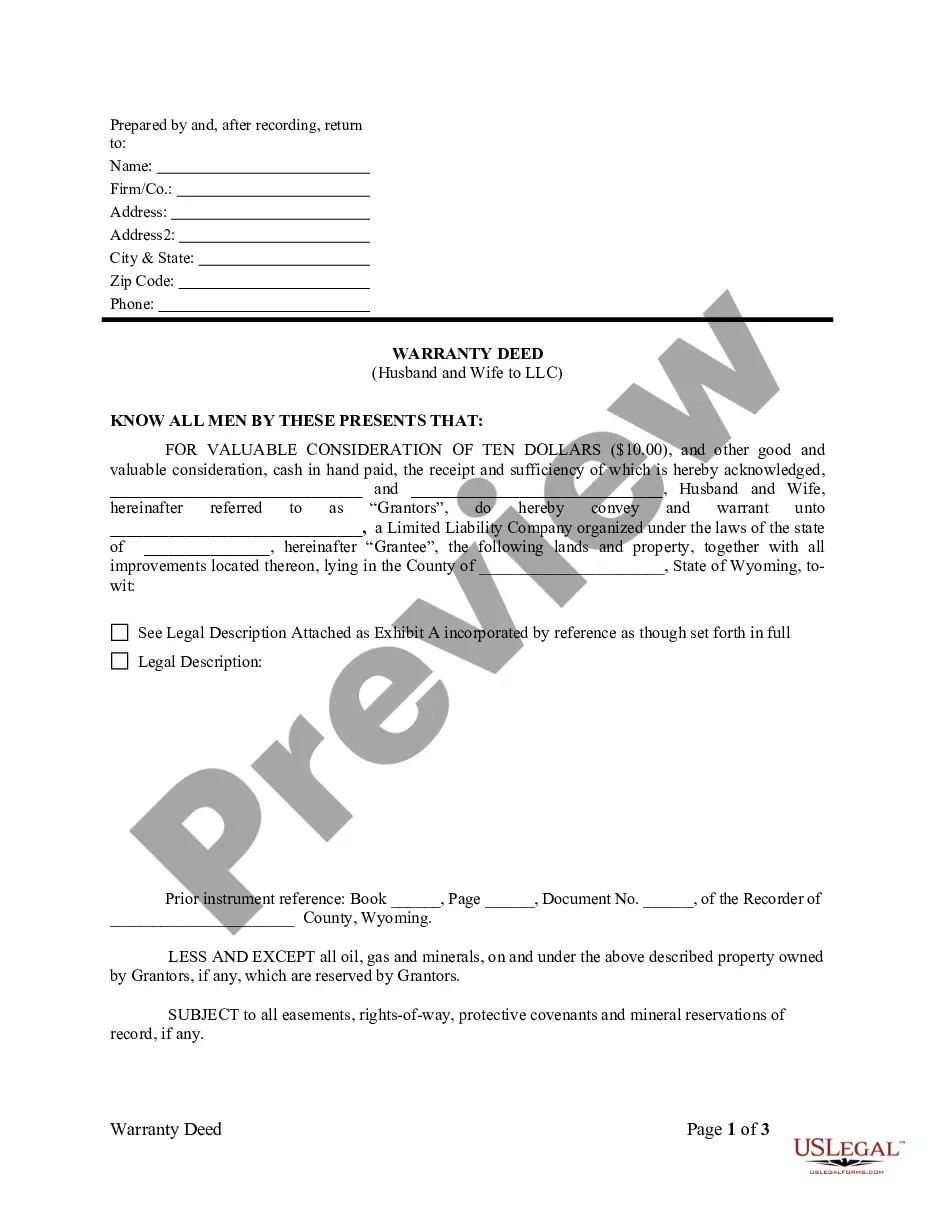
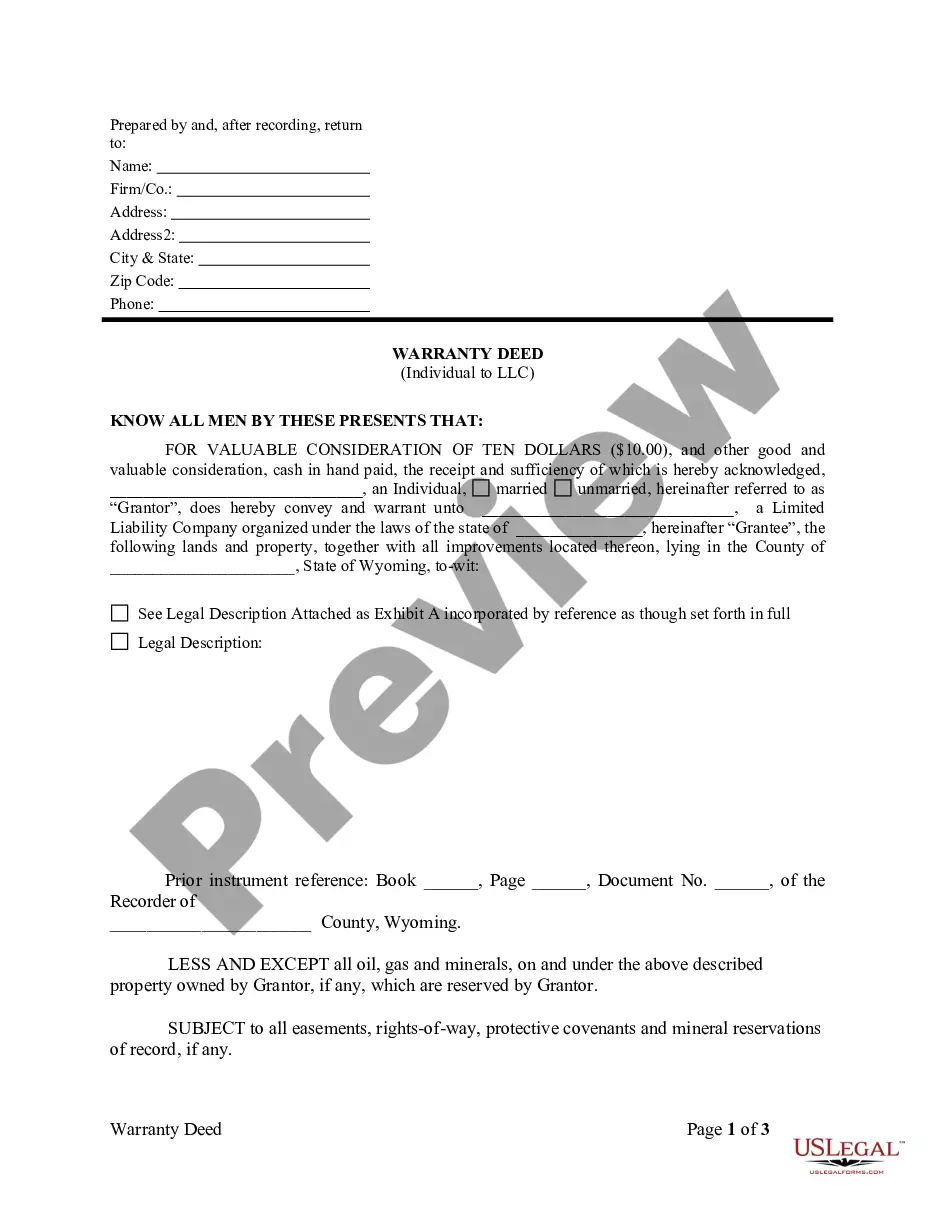
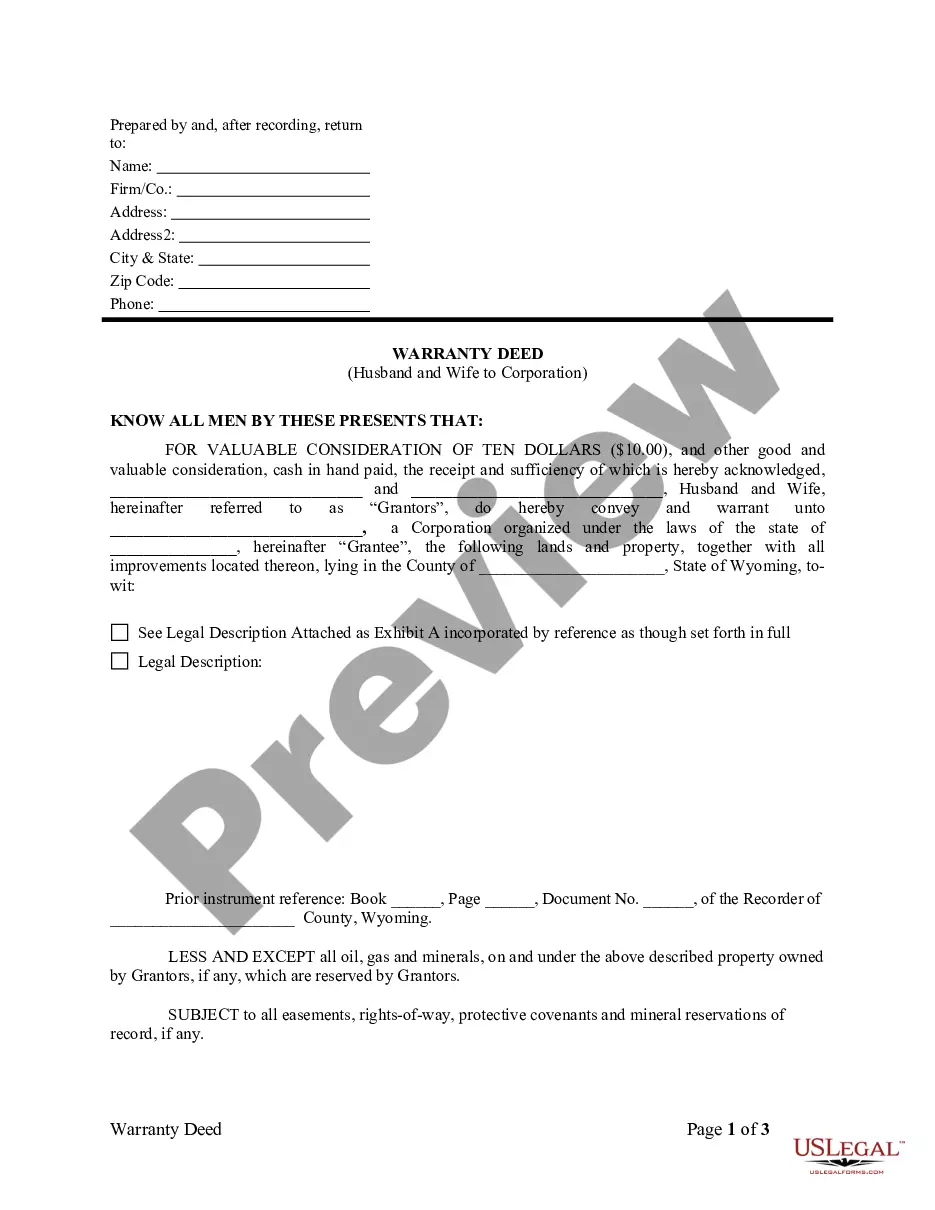
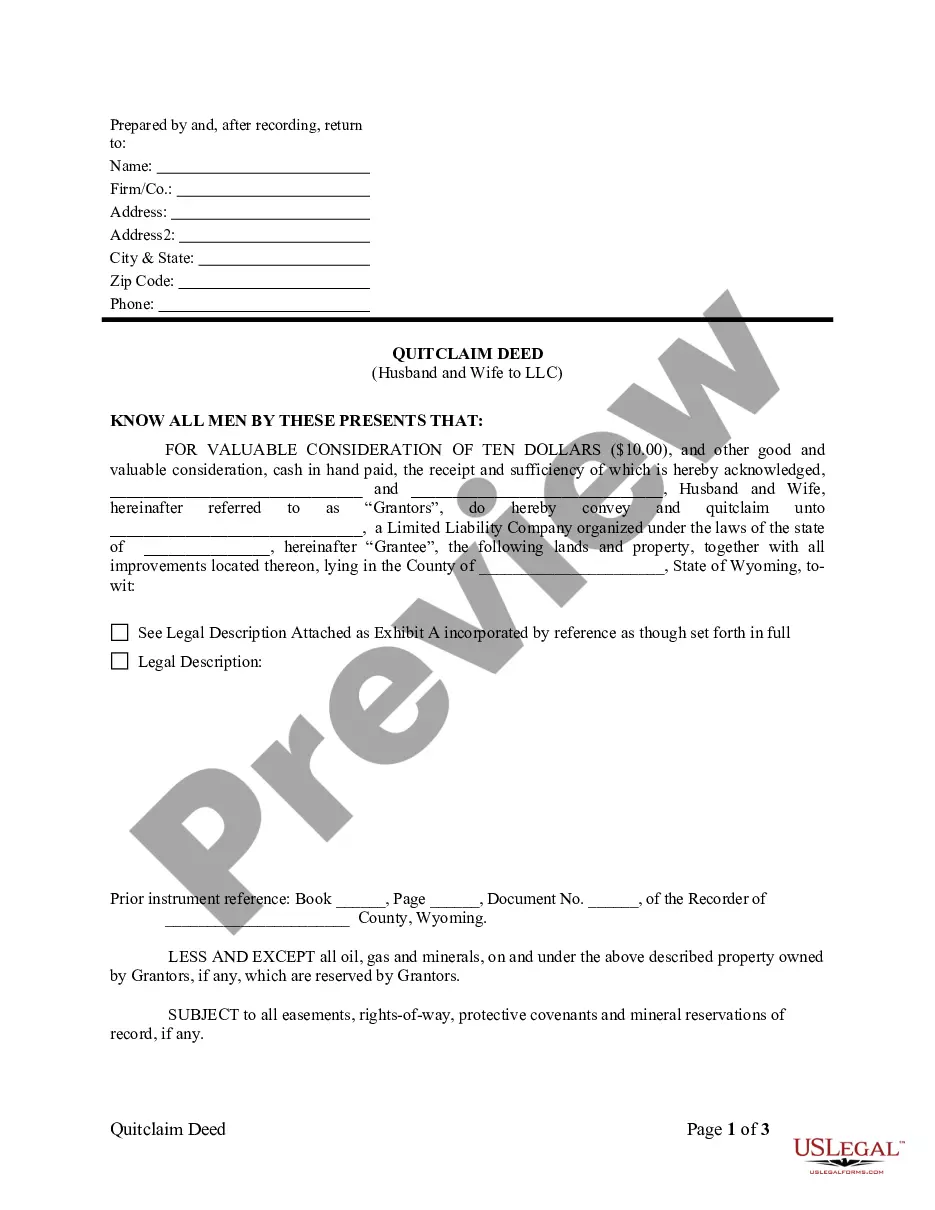
The Warranty Deed from Husband and Wife to LLC is a legal document used to transfer property ownership from a married couple to a limited liability company (LLC). This form is unique because it specifically involves a married couple (the grantors) conveying their property interests while retaining rights to minerals such as oil and gas. It establishes a clear title transfer, ensuring the LLC holds ownership rights while delineating any reservations by the grantors.
Form components explained
- Identification of grantors (husband and wife) and grantee (LLC).
- Description of the property being conveyed.
- Reservation of rights to oil, gas, and minerals by the grantors.
- Covenant by grantors regarding the title's freedom from encumbrances.
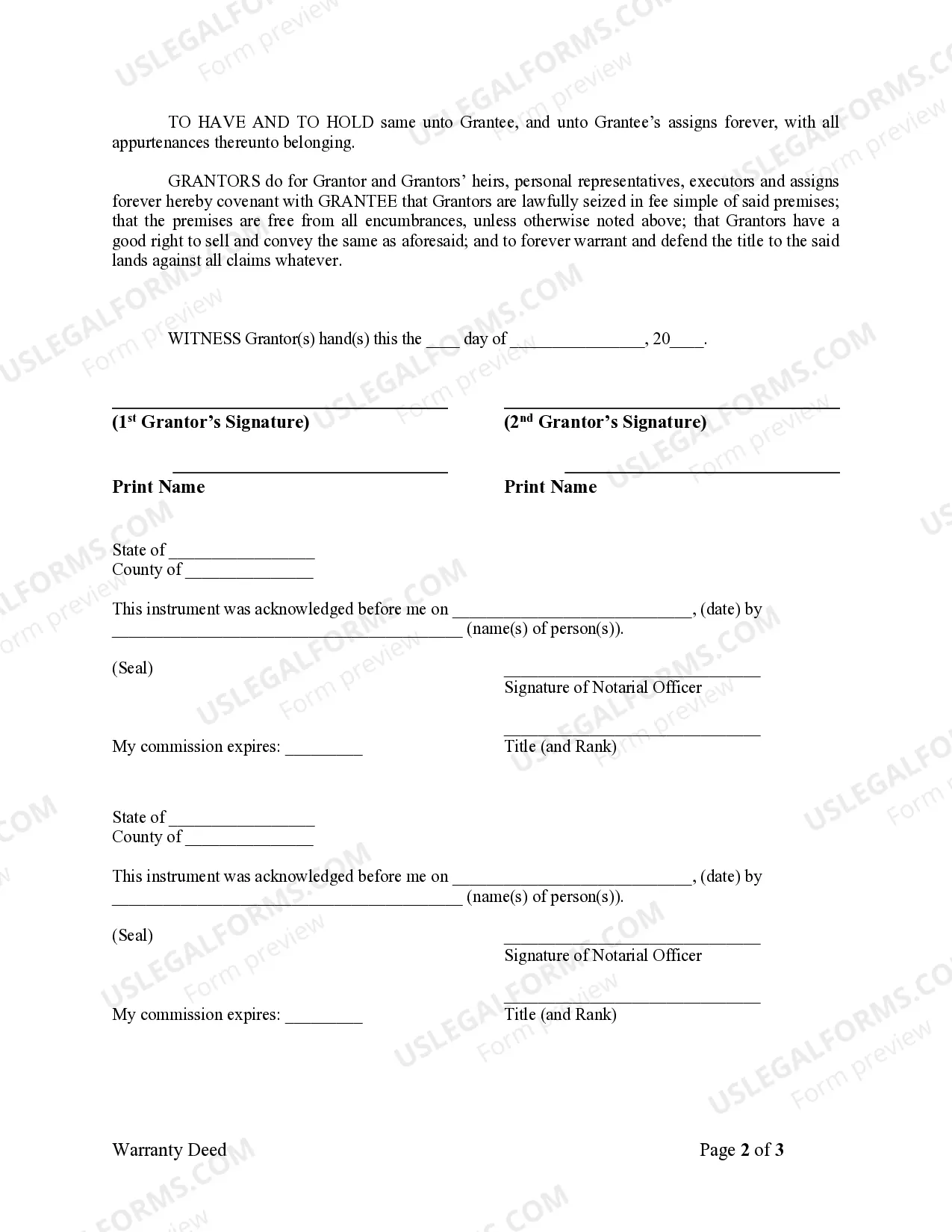
- Signatures of grantors to validate the deed.
When to use this form
This form is necessary in situations where a married couple wishes to transfer ownership of their property to an LLC. This could occur during business formations, when couples decide to organize their investments, or when they want to benefit from potential liability protections and tax advantages associated with LLCs.
Intended users of this form
- Married couples transferring property to their own LLC.
- Individuals seeking to formalize property transfers for business purposes.
- Property owners looking to protect their assets under an LLC structure.
Steps to complete this form
- Identify the grantors by providing the names of the husband and wife.
- Specify the property being deeded, including a detailed legal description.
- Indicate the name of the grantee, which should be the LLC.
- Include any reservations regarding oil, gas, and mineral rights.
- Both grantors must sign the document in the presence of a notary if required.
Notarization guidance
Notarization is required for this form to take effect. Our online notarization service, powered by Notarize, lets you verify and sign documents remotely through an encrypted video session, available 24/7.
Get your form ready online
Our built-in tools help you complete, sign, share, and store your documents in one place.
Make edits, fill in missing information, and update formatting in US Legal Forms—just like you would in MS Word.
Download a copy, print it, send it by email, or mail it via USPS—whatever works best for your next step.
Sign and collect signatures with our SignNow integration. Send to multiple recipients, set reminders, and more. Go Premium to unlock E-Sign.
If this form requires notarization, complete it online through a secure video call—no need to meet a notary in person or wait for an appointment.
We protect your documents and personal data by following strict security and privacy standards.

Make edits, fill in missing information, and update formatting in US Legal Forms—just like you would in MS Word.

Download a copy, print it, send it by email, or mail it via USPS—whatever works best for your next step.

Sign and collect signatures with our SignNow integration. Send to multiple recipients, set reminders, and more. Go Premium to unlock E-Sign.

If this form requires notarization, complete it online through a secure video call—no need to meet a notary in person or wait for an appointment.

We protect your documents and personal data by following strict security and privacy standards.
Common mistakes
- Failing to accurately describe the property can lead to issues with the deed.
- Not including necessary reservations for mineral rights if applicable.
- Incomplete signatures or notarization can invalidate the document.
- Misidentifying the LLC or grantors can create legal complications.
Why complete this form online
- Convenience of downloading and completing the form at your own pace.
- Editability allows for customization to fit specific property details.
- Reliability from forms drafted by licensed attorneys ensuring legal compliance.
Looking for another form?

Form popularity
FAQ
A warranty deed, also known as a general warranty deed, is a legal real estate document between the seller (grantor) and the buyer (grantee). The deed protects the buyer by pledging that the seller holds clear title to the property and there are no encumbrances, outstanding liens, or mortgages against it.
Warranty deeds and deeds of trust are integral to the home-buying process, but have different purposes. A warranty deed transfers ownership from the old owner to the new, and a deed of trust gives the lender interest in the property should you default on the loan.
Title insurance protects lenders and buyers from financial loss due to defects in a title to a property. The most common claims filed against a title are back taxes, liens, and conflicting wills.
A warranty deed guarantees that: The grantor is the rightful owner of the property and has the legal right to transfer the title.The title would withstand third-party claims to ownership of the property. The grantor will do anything to ensure the grantee's title to the property.
It's important to note that a warranty deed does not actually prove the grantor has ownership (a title search is the best way to prove that), but it is a promise by the grantor that they are transferring ownership and if it turns out they don't actually own the property, the grantor will be responsible for compensating
Typically, the lender will provide you with a copy of the deed of trust after the closing. The original warranty deeds are often mailed to the grantee after they are recorded. These are your original copies and should be kept in a safe place, such as a fireproof lockbox or a safe deposit box at a financial institution.
No, California does not require that the Grantee sign a warranty deed. However, some states and counties require that the deed be signed by the Grantee in addition to the Grantor.
When you purchase property, the previous owner will transfer the warranty deed to you. However, if you're paying for your home with a mortgage, as most people do, the warranty deed is not free and clear.You must deal with your mortgage appropriately if you move to sell your home.
A warranty deed is a higher level of protection produced by the seller upon the real estate closing.Paired with title insurance, your warranty deed guarantees that the grantor is the rightful owner and transfers these rights and title to you as the grantee or new owner of the property.