Wyoming Notice to Owner - Individual
Overview of this form
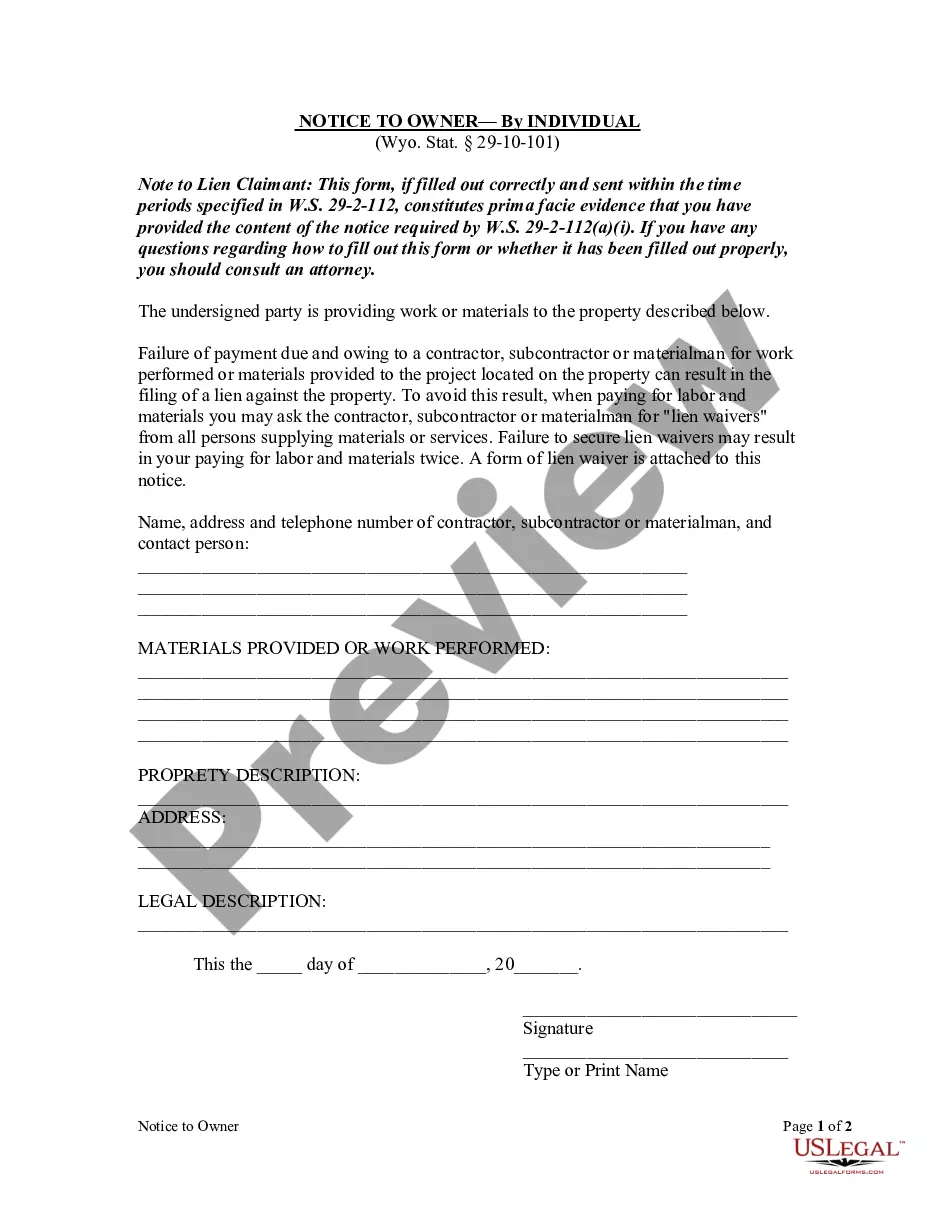
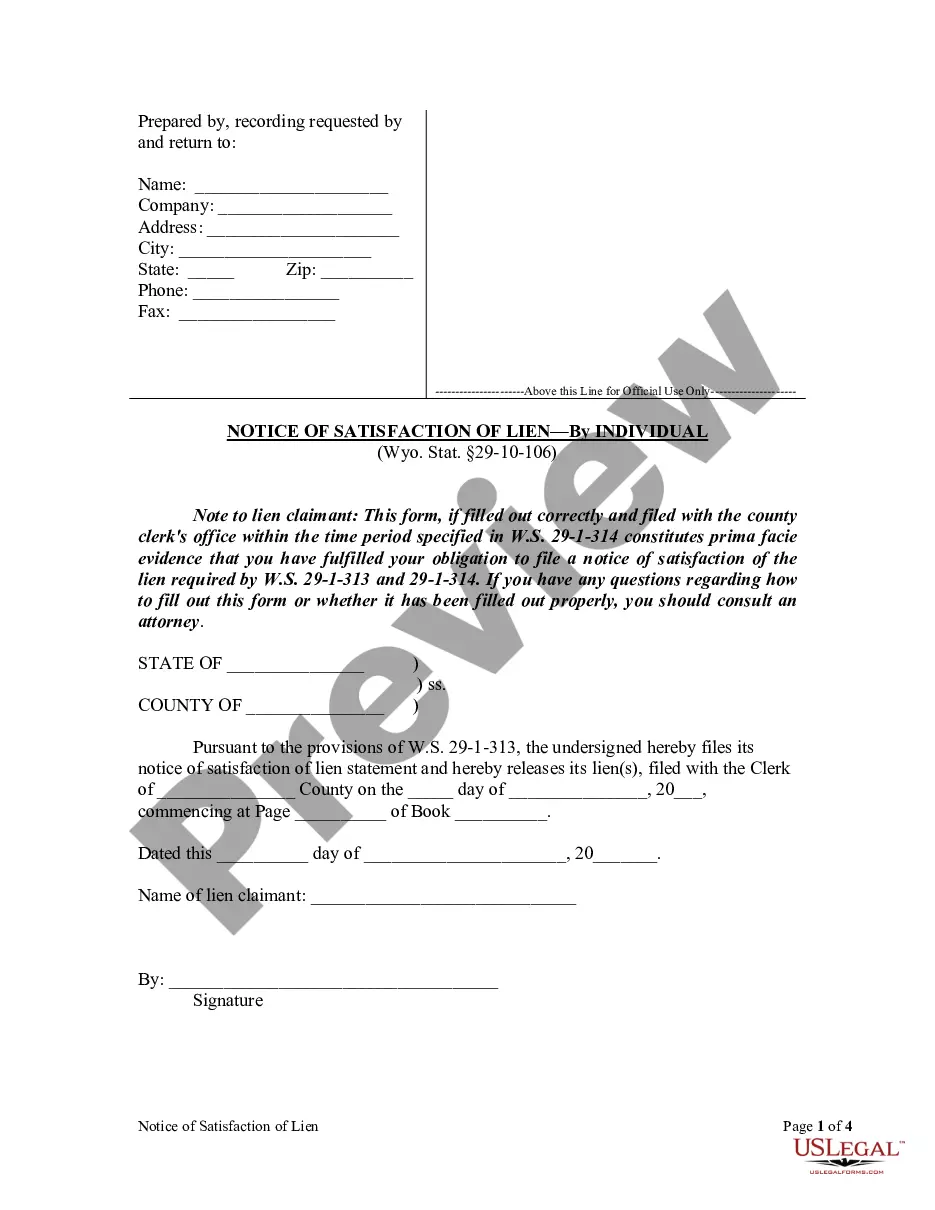
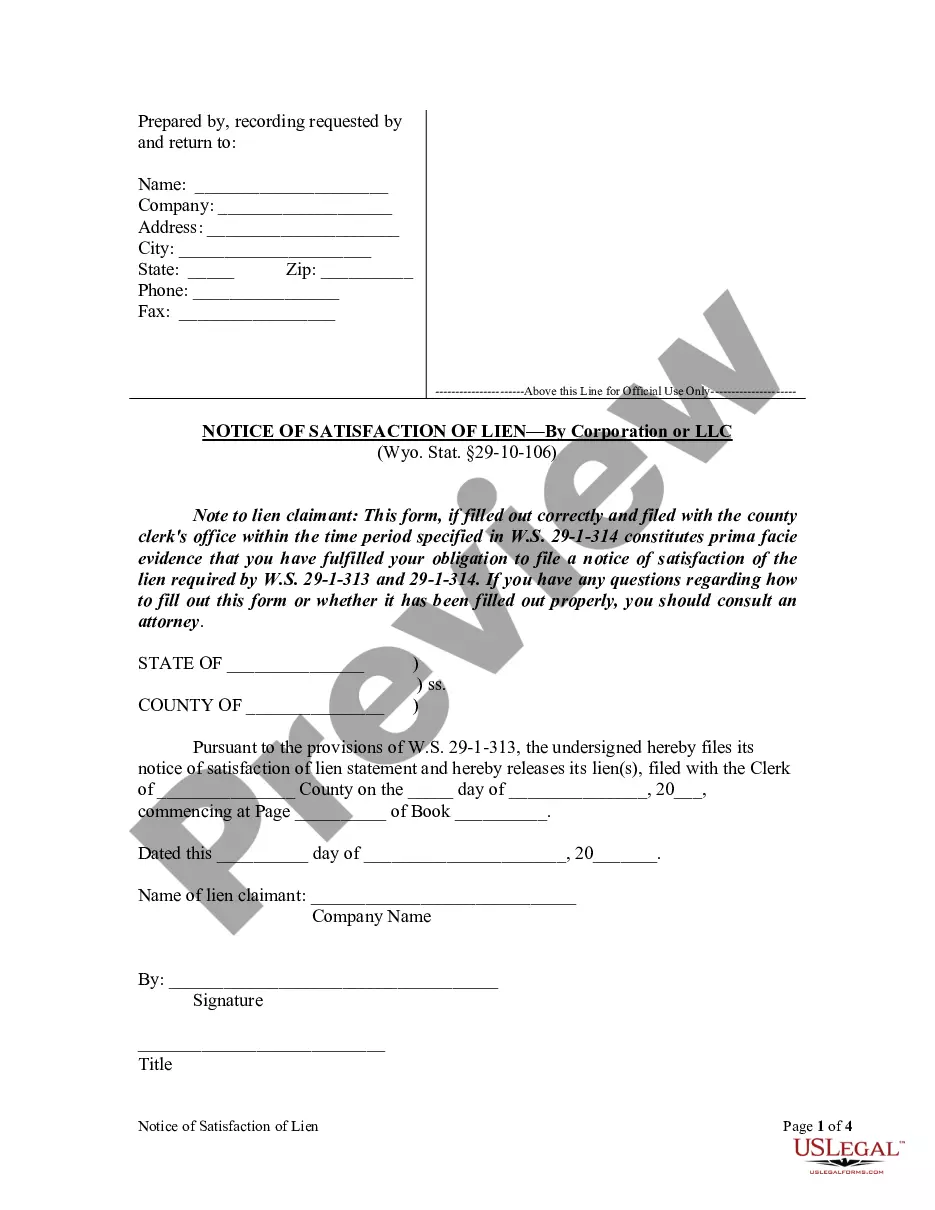
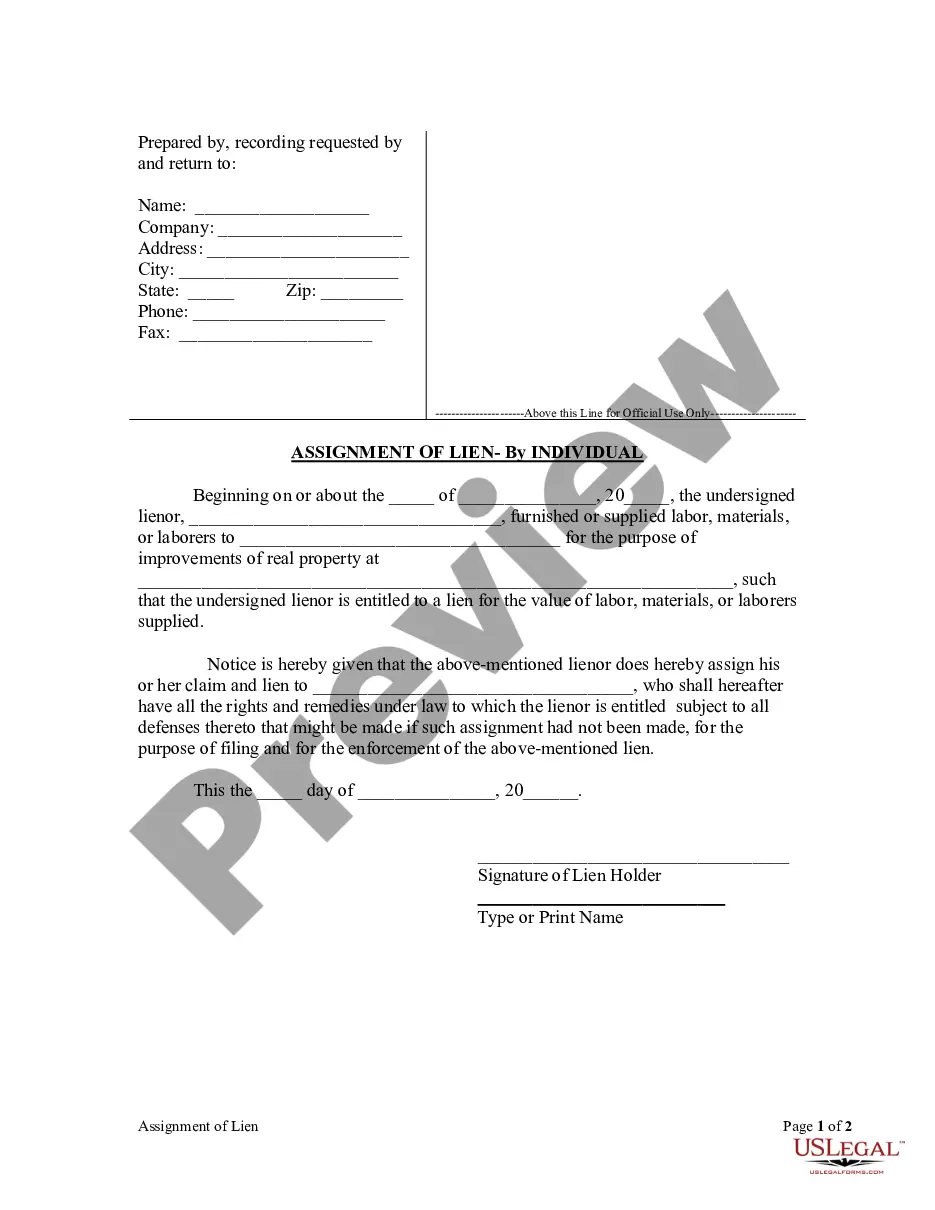
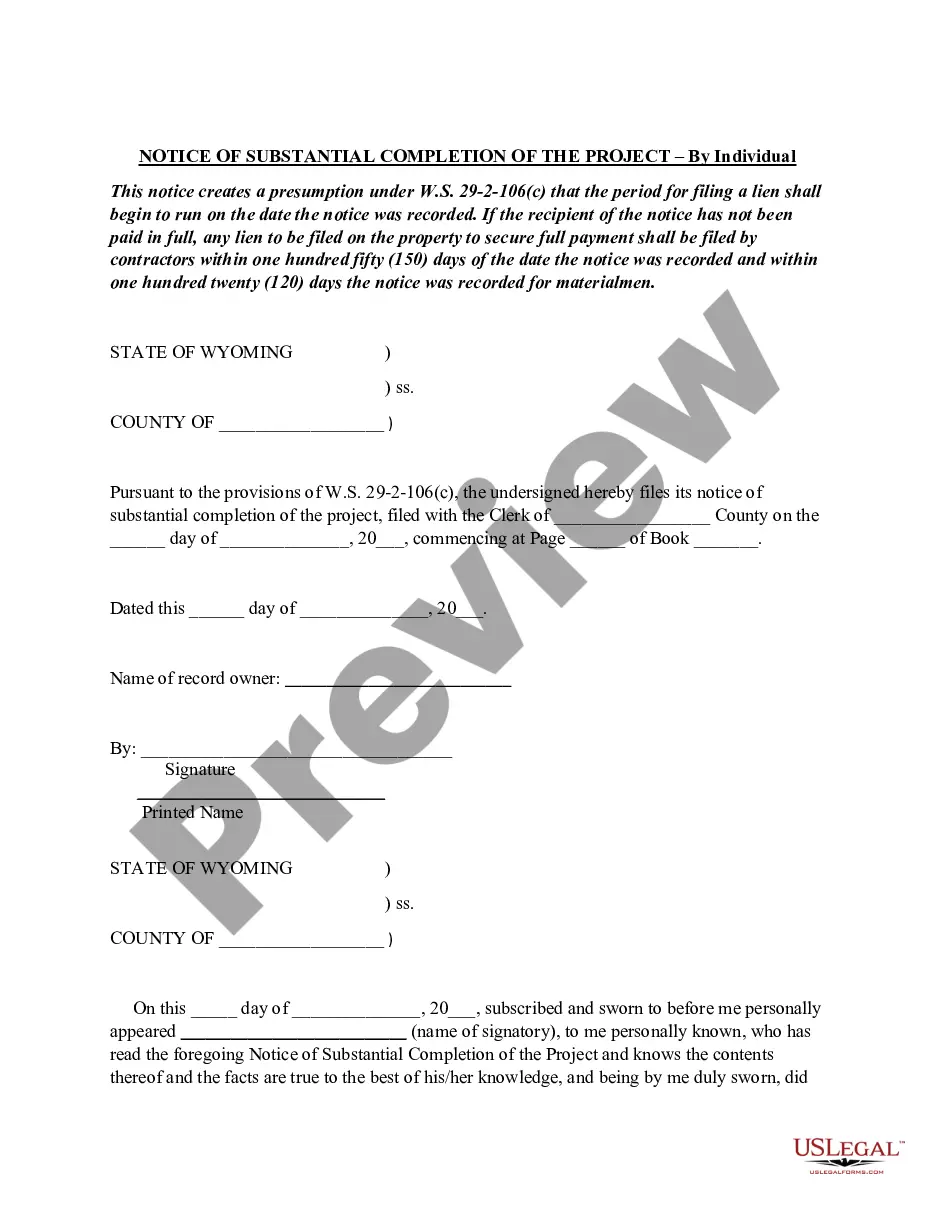
The Notice to Owner - Individual is a legal document used to notify the property owner that when making payments for labor and materials, they may request lien waivers from the prime contractor or subcontractor. This form is essential in protecting the owner's financial interests, as it clarifies that failure to secure these waivers may result in the risk of a mechanic's lien being filed against their property. This form is vital for individuals involved in property improvement contracts and differs from other notices as it specifically addresses lien waivers and the implications of unpaid services.
Key components of this form
- The name of the prime contractor or subcontractor providing the notice.
- A description of the property where labor and/or materials were supplied.
- A clear warning about the consequences of not securing lien waivers.
- Signature line for the contractor or subcontractor issuing the notice.
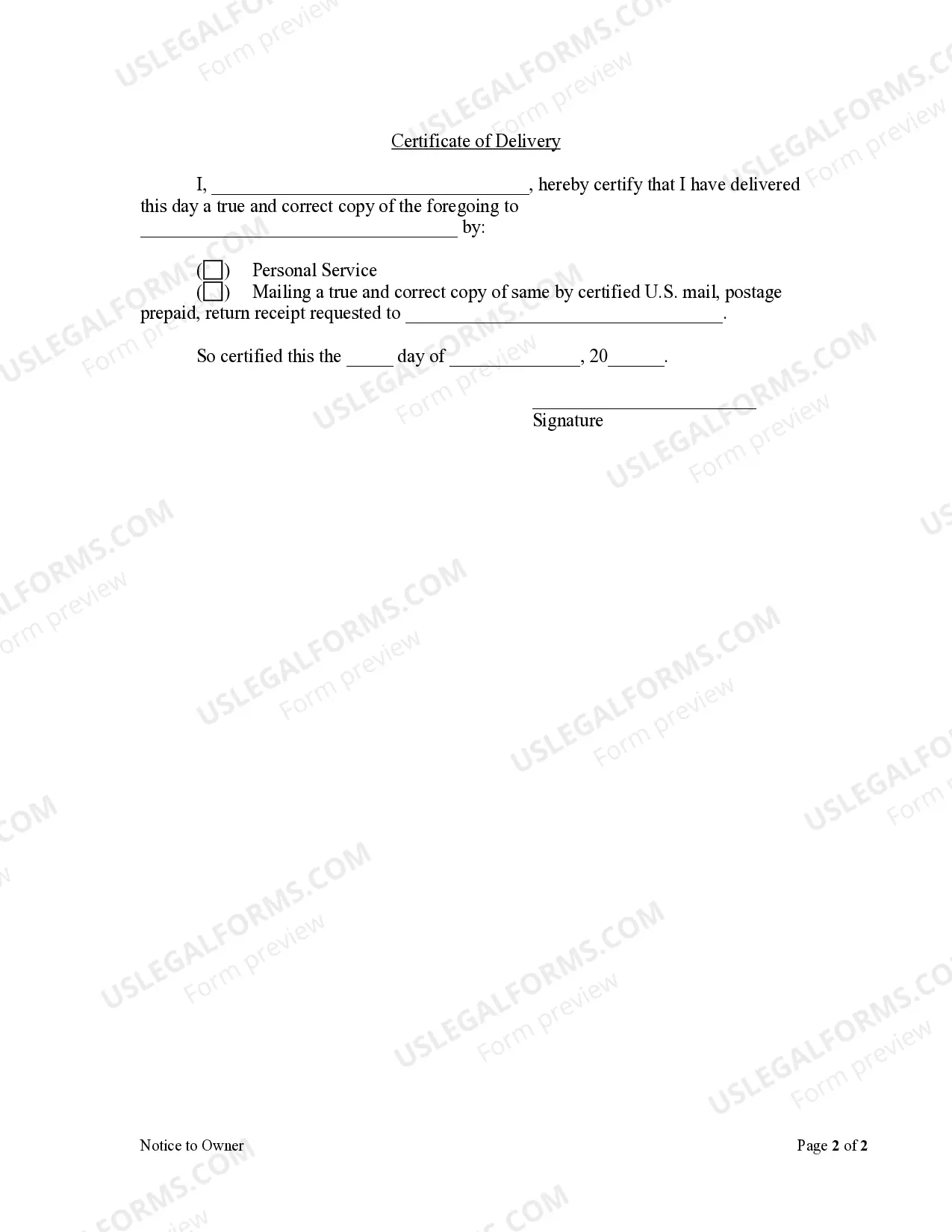
- Certification of delivery, including options for personal service or mailing.
When to use this form
This form should be used whenever a property owner is paying for labor or materials related to a construction or improvement project. It serves as a precautionary measure to ensure that the owner is aware of their right to request lien waivers from contractors and subcontractors. Using this notice can help prevent unexpected financial liabilities associated with mechanic's liens that could arise from unpaid services or materials.
Who this form is for
- Property owners who are commissioning construction or renovation work.
- Prime contractors or subcontractors involved in the provision of labor and materials.
- Individuals seeking to educate themselves on their rights related to mechanics liens.
Steps to complete this form
- Identify the prime contractor or subcontractor's name who is providing the notice.
- Specify the property address where the labor and materials were supplied.
- Complete the notice section with the relevant warnings about lien waivers.
- Sign the document and include the date of completion.
- Certify the delivery of the notice, noting how and to whom it was delivered.
Is notarization required?
Notarization is not commonly needed for this form. However, certain documents or local rules may make it necessary. Our notarization service, powered by Notarize, allows you to finalize it securely online anytime, day or night.
Get your form ready online
Our built-in tools help you complete, sign, share, and store your documents in one place.
Make edits, fill in missing information, and update formatting in US Legal Forms—just like you would in MS Word.
Download a copy, print it, send it by email, or mail it via USPS—whatever works best for your next step.
Sign and collect signatures with our SignNow integration. Send to multiple recipients, set reminders, and more. Go Premium to unlock E-Sign.
If this form requires notarization, complete it online through a secure video call—no need to meet a notary in person or wait for an appointment.
We protect your documents and personal data by following strict security and privacy standards.

Make edits, fill in missing information, and update formatting in US Legal Forms—just like you would in MS Word.

Download a copy, print it, send it by email, or mail it via USPS—whatever works best for your next step.

Sign and collect signatures with our SignNow integration. Send to multiple recipients, set reminders, and more. Go Premium to unlock E-Sign.

If this form requires notarization, complete it online through a secure video call—no need to meet a notary in person or wait for an appointment.

We protect your documents and personal data by following strict security and privacy standards.
Typical mistakes to avoid
- Failing to correctly identify the property or contractor in the notice.
- Not providing a clear and legible signature.
- Neglecting to deliver the notice properly, which can void its effectiveness.
Benefits of completing this form online
- Convenience of downloading and printing the form from home.
- Easy editing to fill in necessary details before finalizing.
- Access to templates prepared by licensed attorneys, ensuring legal compliance.
Looking for another form?
Form popularity
FAQ
File for eviction with your local courthouse. Gather evidence. Come to the court hearing to prove your case. Win a writ of possession and have the tenant removed by the sheriff.
A landlord cannot legally evict you without a court order, whether or not you have a lease.) How long does it take for a landlord to evict a tenant? A landlord can evict a tenant only by going through a formal eviction proceeding, which can take a few weeks from start to finish.
The big take-away is that in most circumstances a landlord cannot enter a property without agreement from the tenant. And If the landlord ignores the law and enters the property without permission, the tenant may be able to claim damages or gain an injunction to prevent the landlord doing it again.
Wyoming is a landlord-friendly state, that doesn't mess around when it comes to late rent. Landlords have the right to enter a tenant's apartment without notice if the tenant is more than three days late on the rent, and landlords can terminate a lease after three days of nonpayment of rent.
Entry Allowed with Notice for Maintenance and Repairs (non-emergency): Yes. In general, tenants are prohibited from unreasonably denying access to the rental unit or refusing a landlord entry (Wyo. Stat. § 1-21-1205).
The process eviction literally can take anywhere between 14 days to 6-8 months, typically. I know, not the most useful answer! But the reality of how long an eviction will take is dependent on the circumstances; mostly what it boils down to is how wilful your tenant is.
Step 1: Notice is Posted. Step 2: Complaint is Filed and Served. Step 3: Court Hearing and Judgment. Step 4: Writ of Restitution Is Issued. Step 5: Possession of Property is Returned.
When you rent a property from a landlord it becomes your home. They should only enter the property without you being present, if you have given permission for them to do so, or in a genuine emergency.
Yes, your tenant is within their rights to refuse you access to the property. In a lot of cases, tenants will refuse because the date and time isn't convenient for them and will suggest an alternative date or ask you to rearrange. However, some tenants will persistently try to obstruct you from entering the property.