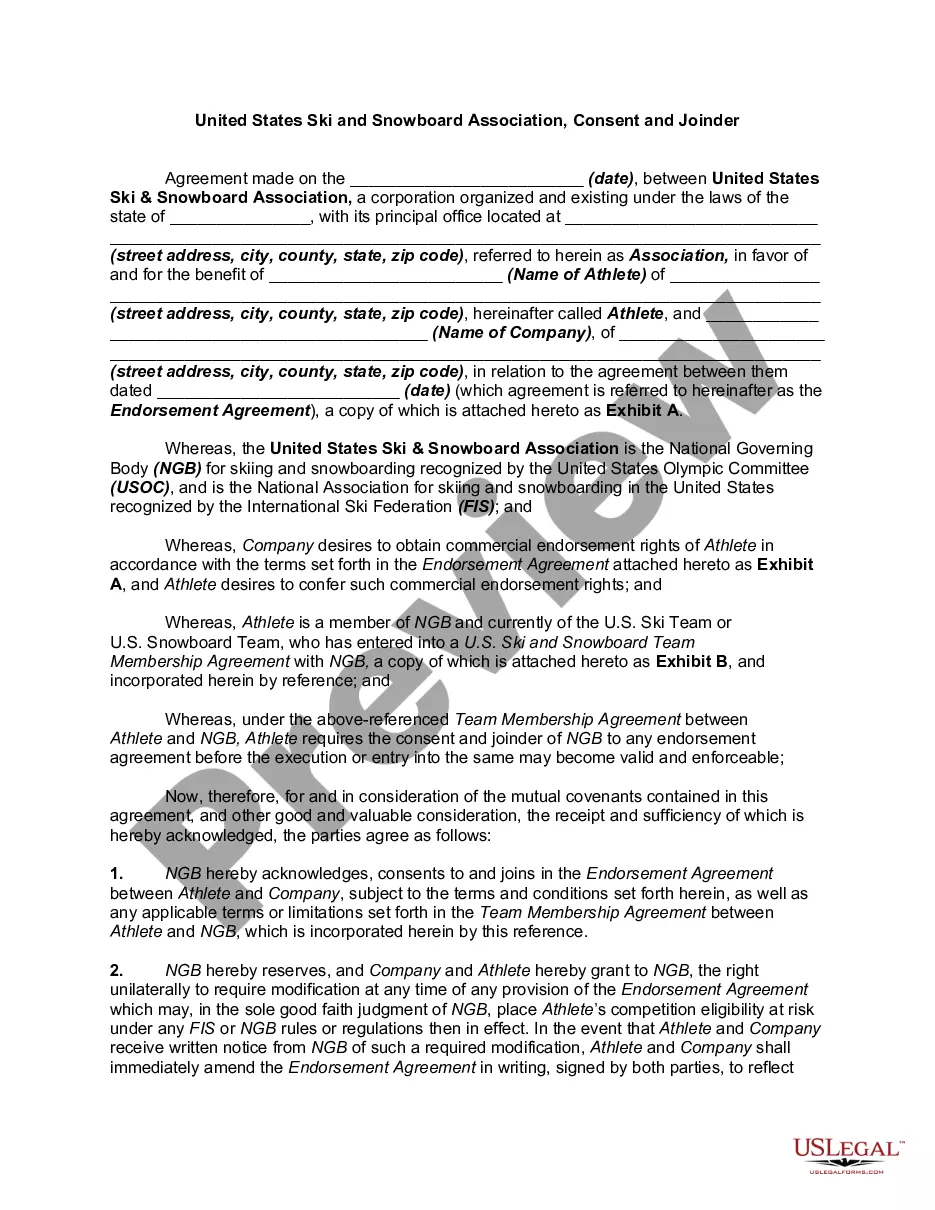
West Virginia Last Will and Testament for Divorced Person Not Remarried with Adult and Minor Children
Understanding this form
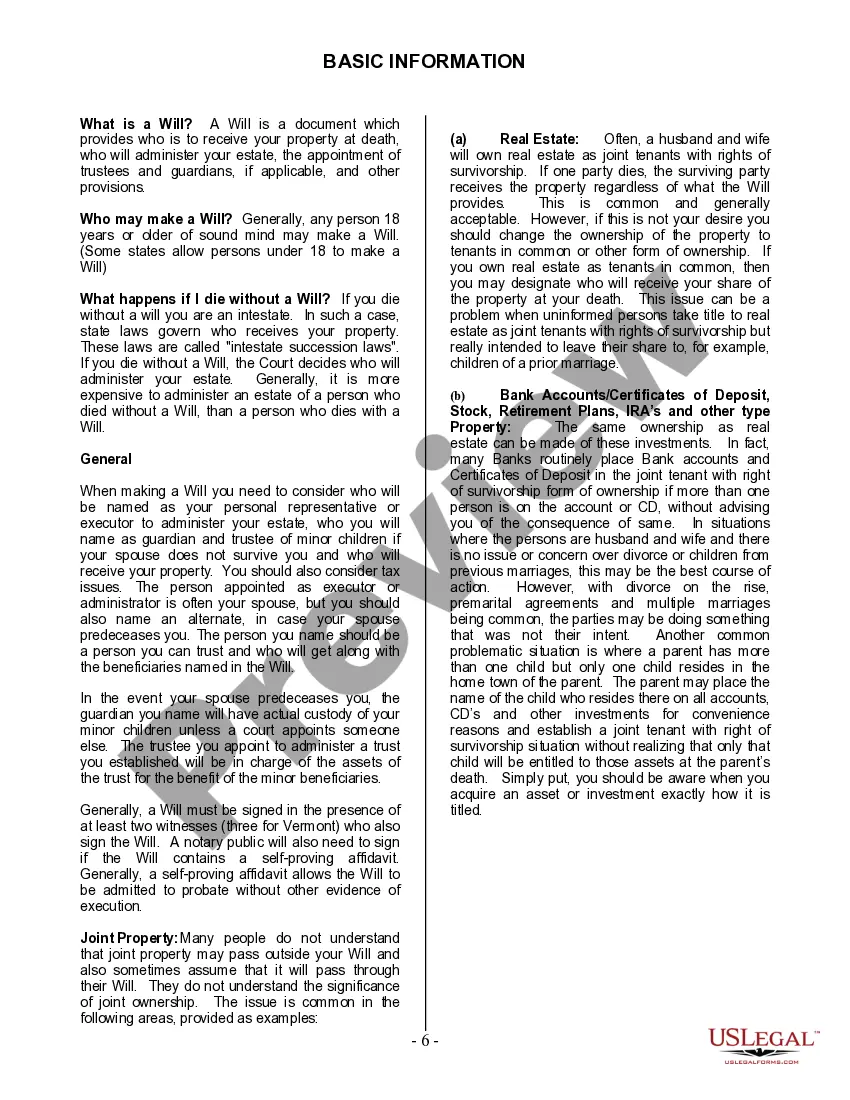
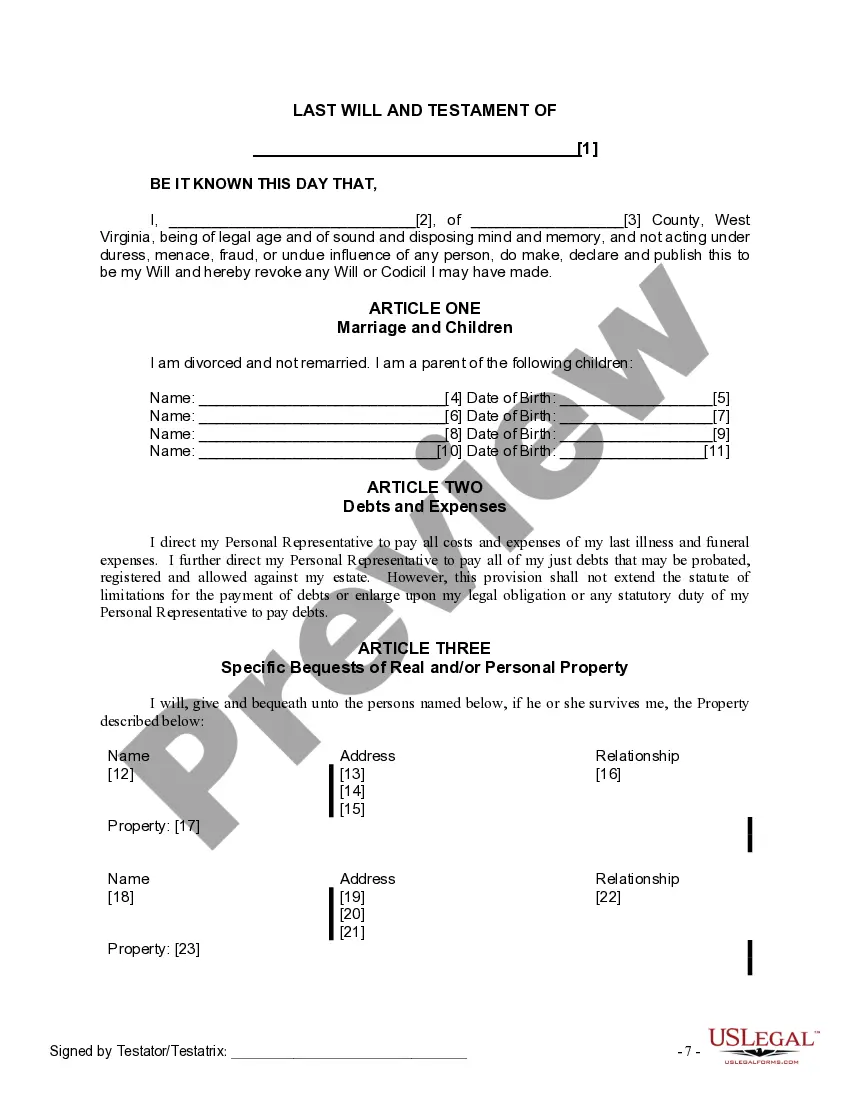
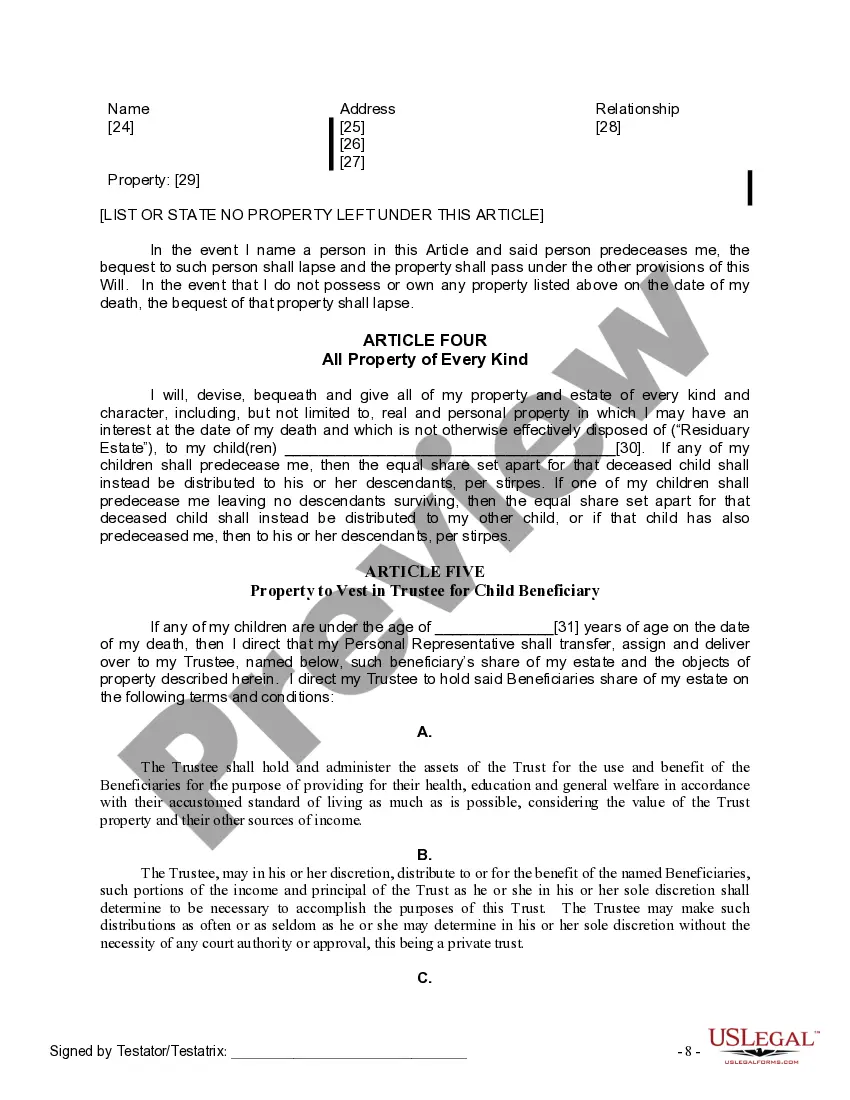
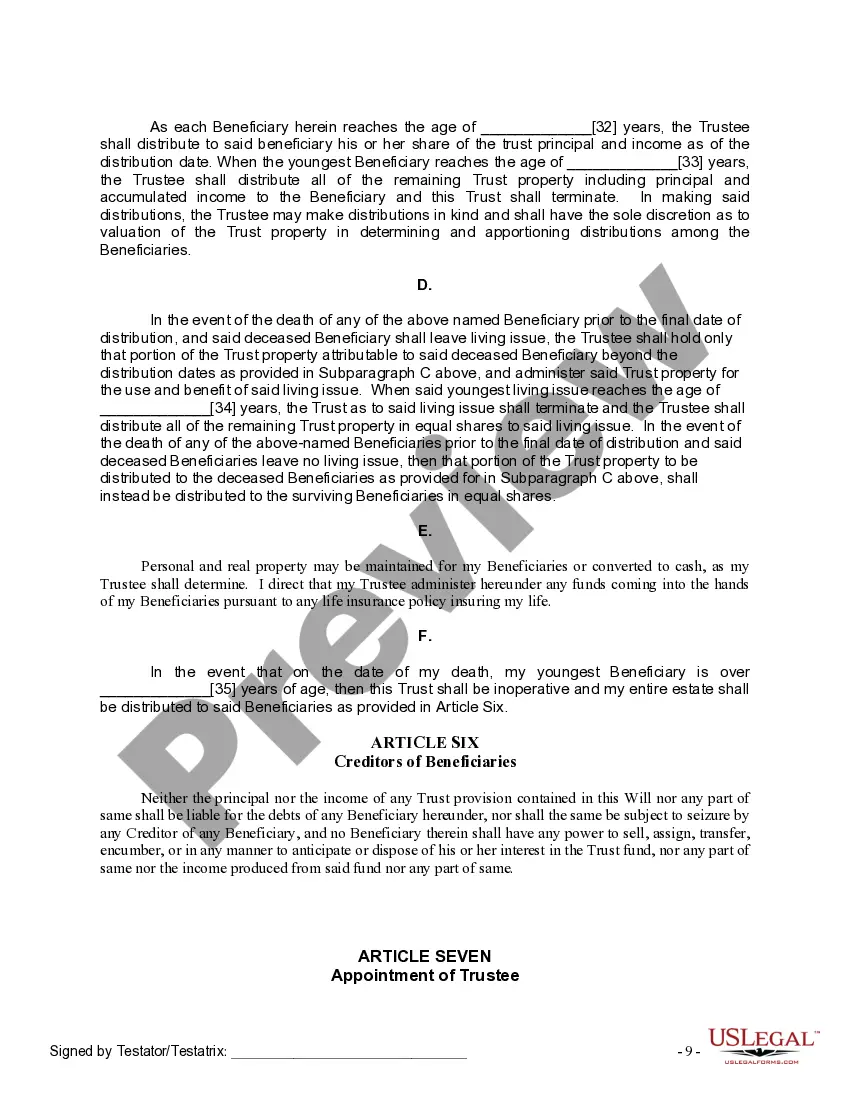
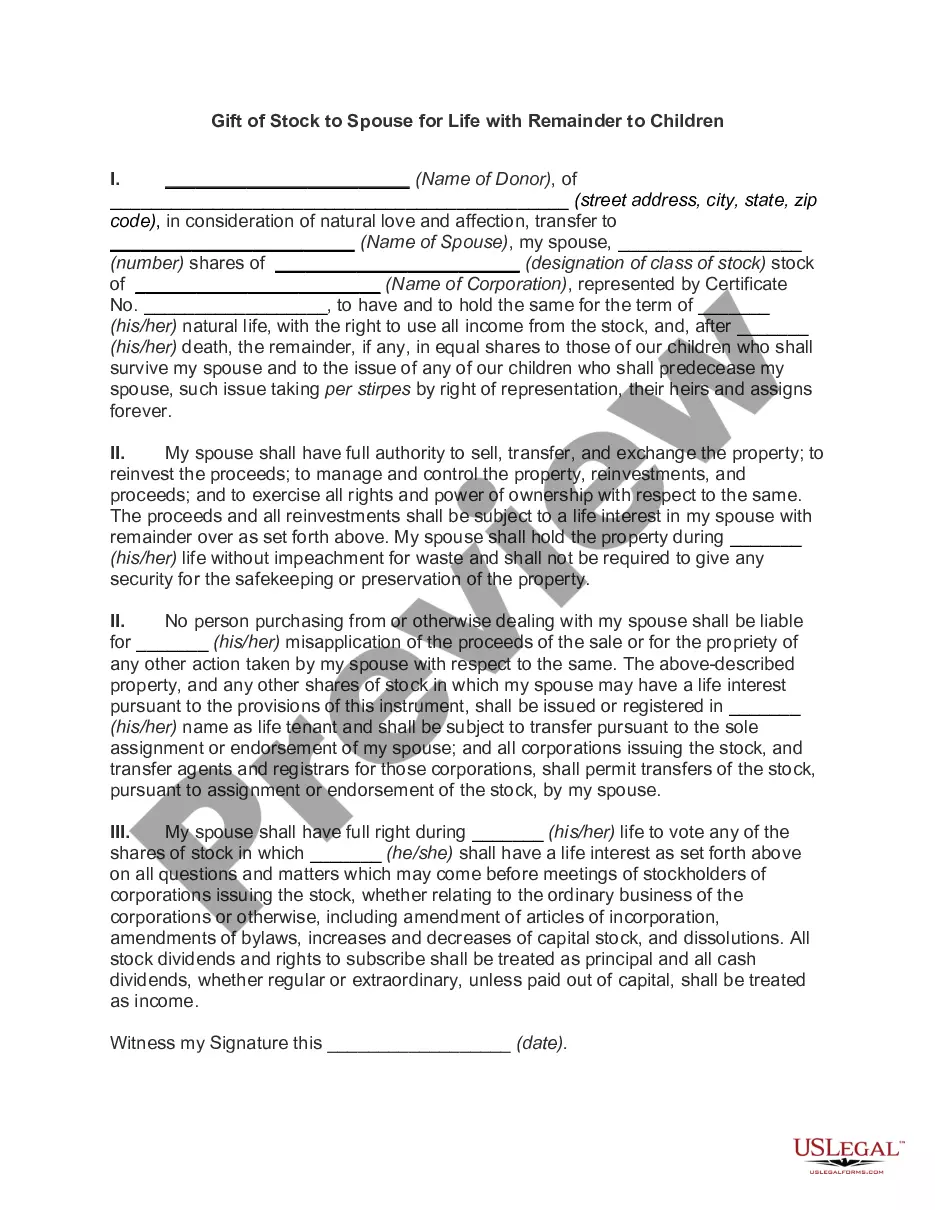
This Last Will and Testament is designed for a divorced individual who has not remarried and has both adult and minor children. It specifies how to distribute your property upon your death, appoints executors or personal representatives, and includes provisions for creating a trust for any minor children. This form helps ensure your wishes are legally documented and provides clarity on asset distribution among your loved ones.
Key components of this form
- Appointment of a personal representative or executor to manage the estate.
- Specification of who will receive property, including specific bequests of items of value.
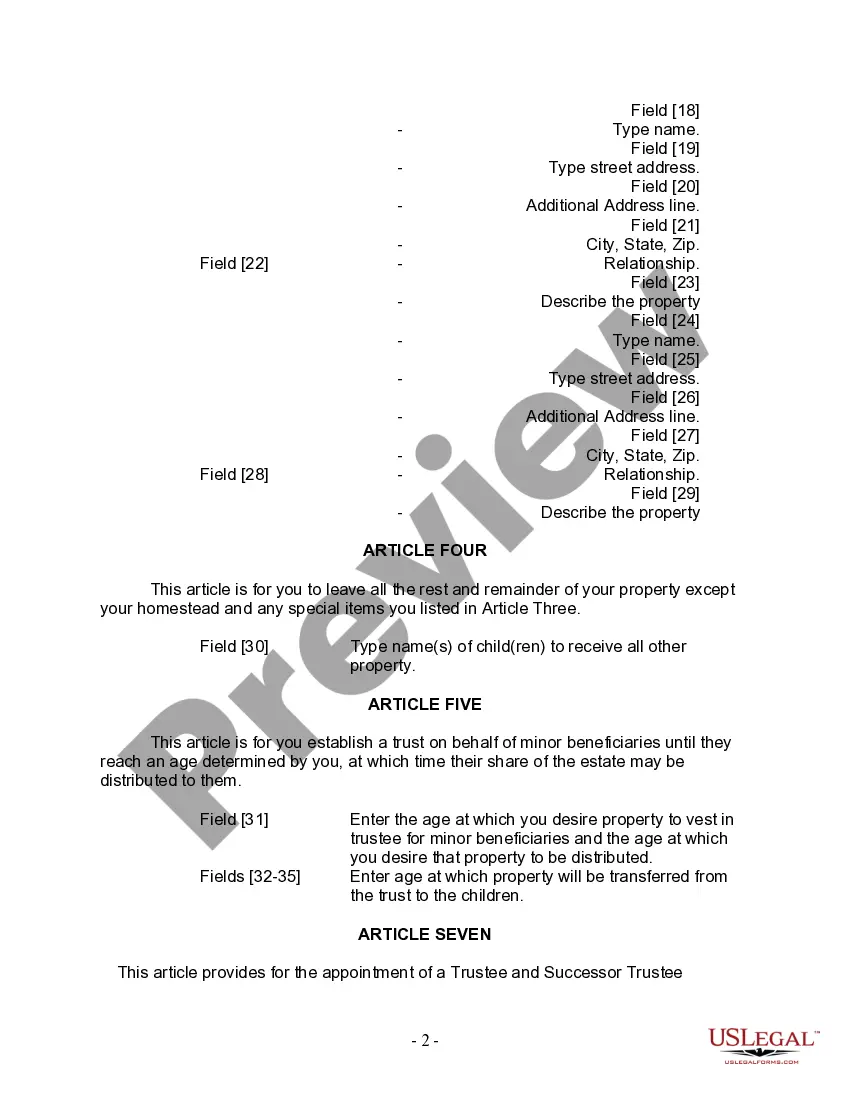
- Establishment of a trust for any minor children until they reach a specified age.
- Appointment of a guardian for minor children in the event of the testator's passing.
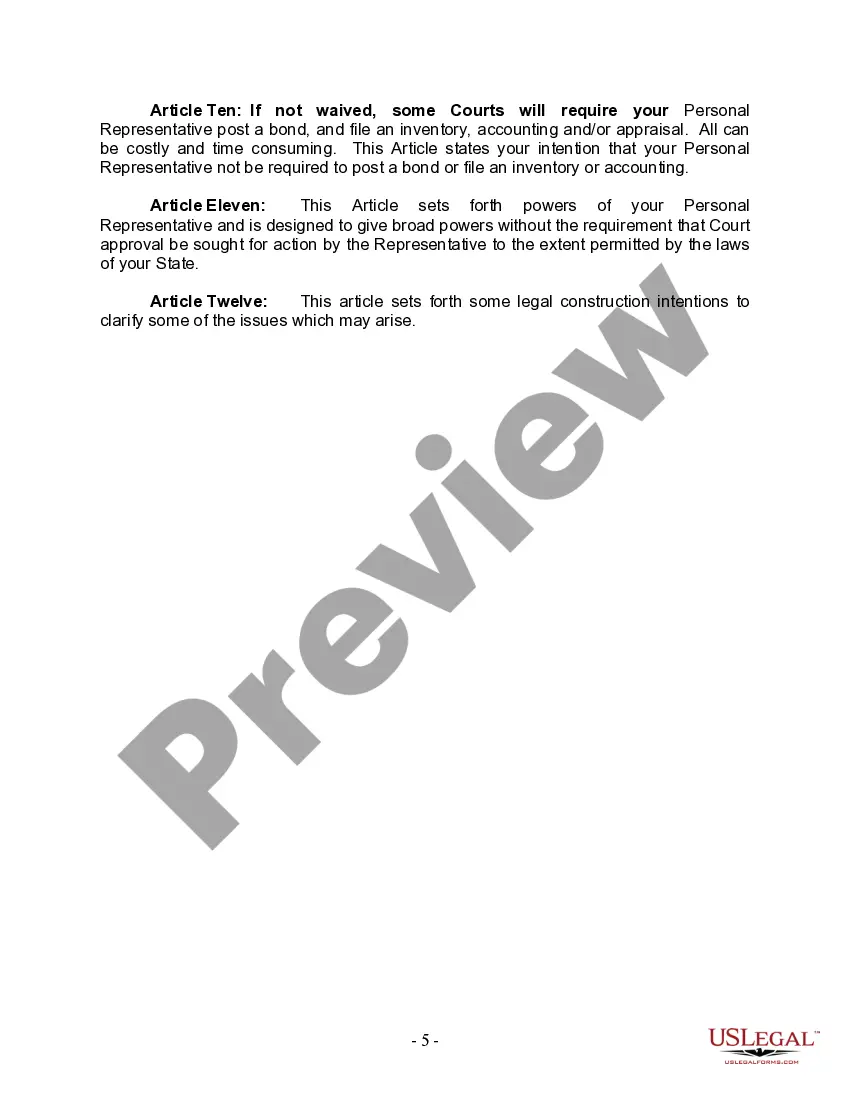
- General provisions that allow the personal representative broad powers to manage the estate.

When this form is needed
This Last Will and Testament is appropriate to use when a divorced individual, who has not remarried, wants to ensure their estate is managed according to their wishes. It's particularly relevant if you have both adult and minor children and want to designate specific bequests, appoint guardians, or set up trusts for the benefit of minor children.
Who needs this form
- Individuals who are divorced and have not remarried.
- Parents with both adult and minor children.
- Anyone wishing to create legal documentation for asset distribution.
- Individuals looking to appoint guardians for their minor children.
How to prepare this document
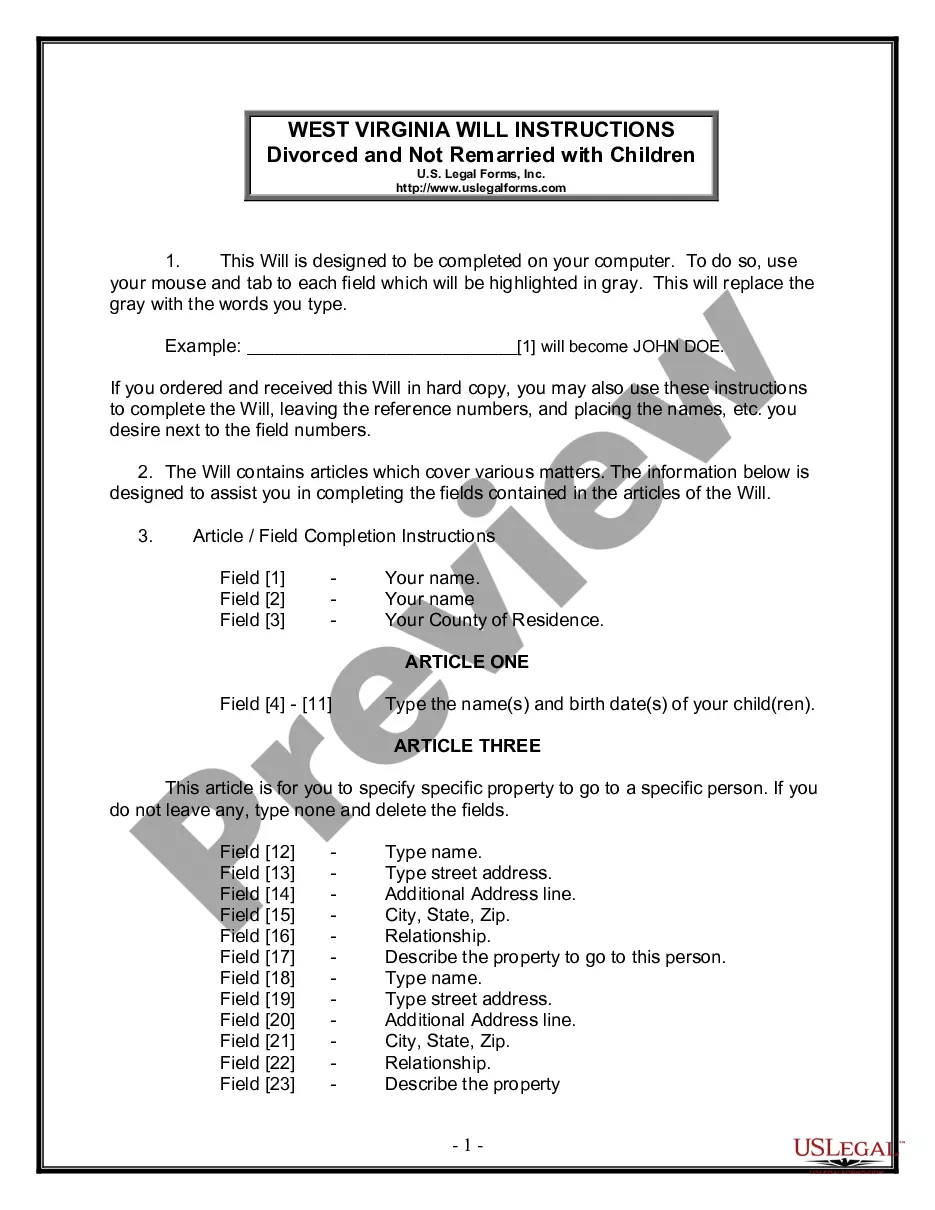
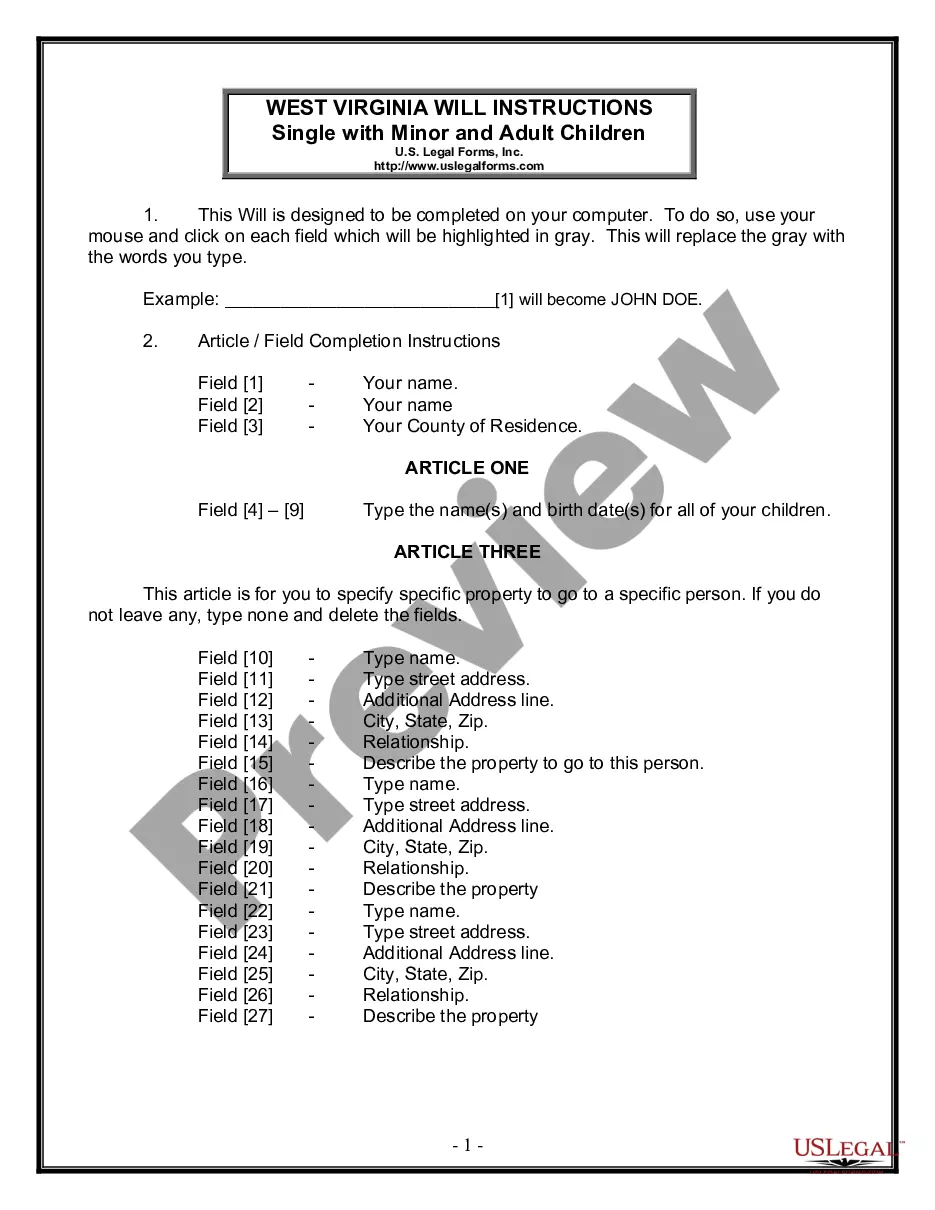
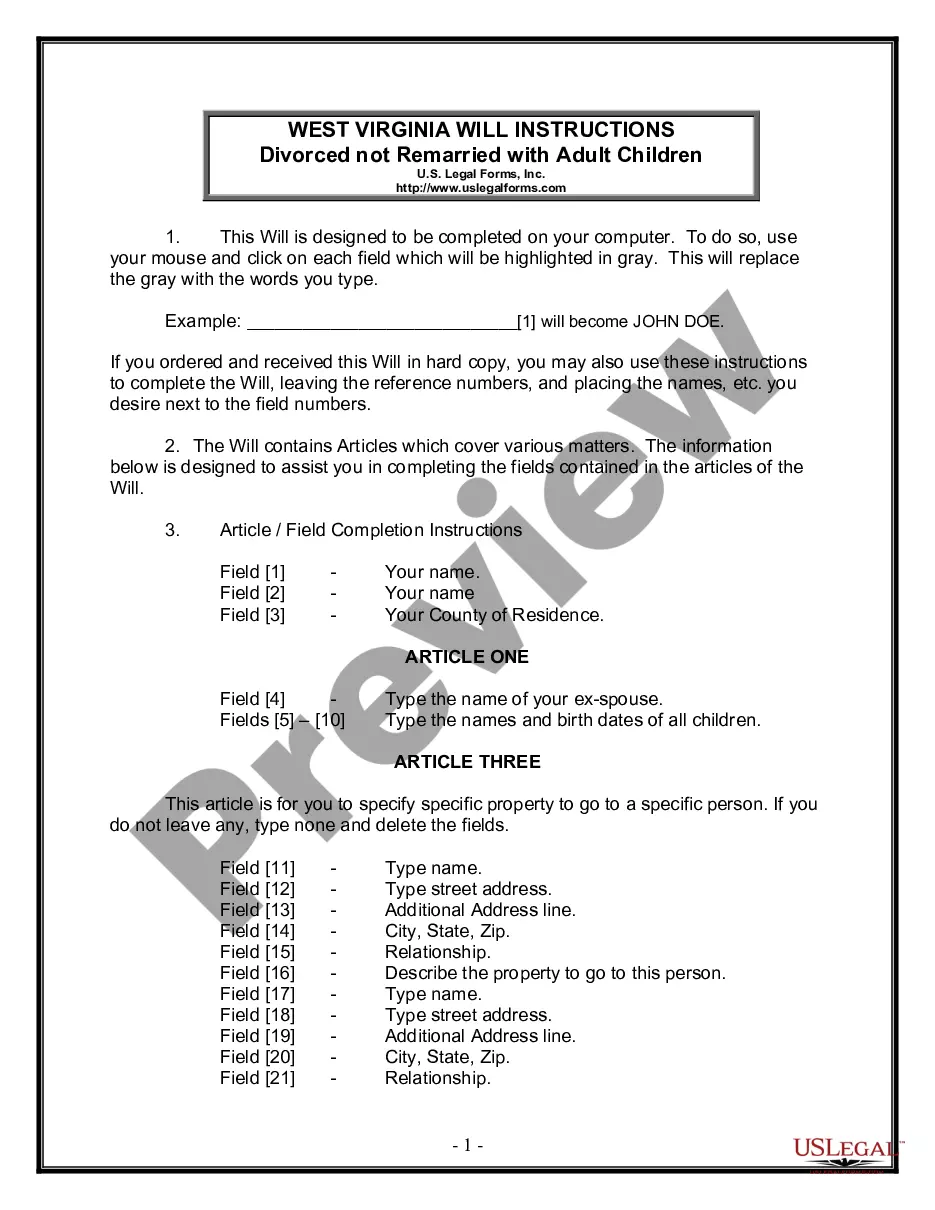
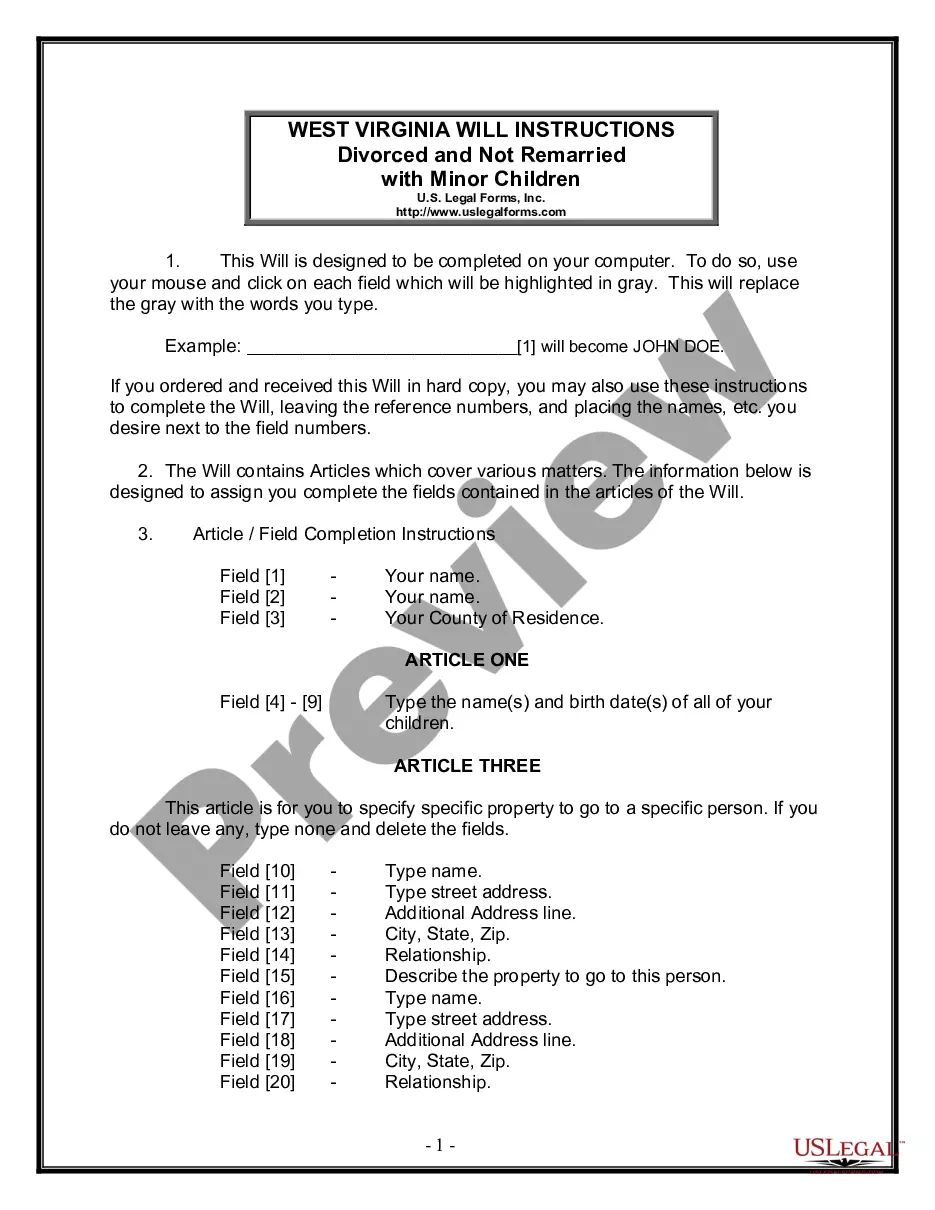
- Begin by entering your name and county of residence in the designated fields.
- List the names and birthdates of all your children to ensure they are included in the will.
- Specify any specific property you wish to bequeath to particular individuals, if applicable.
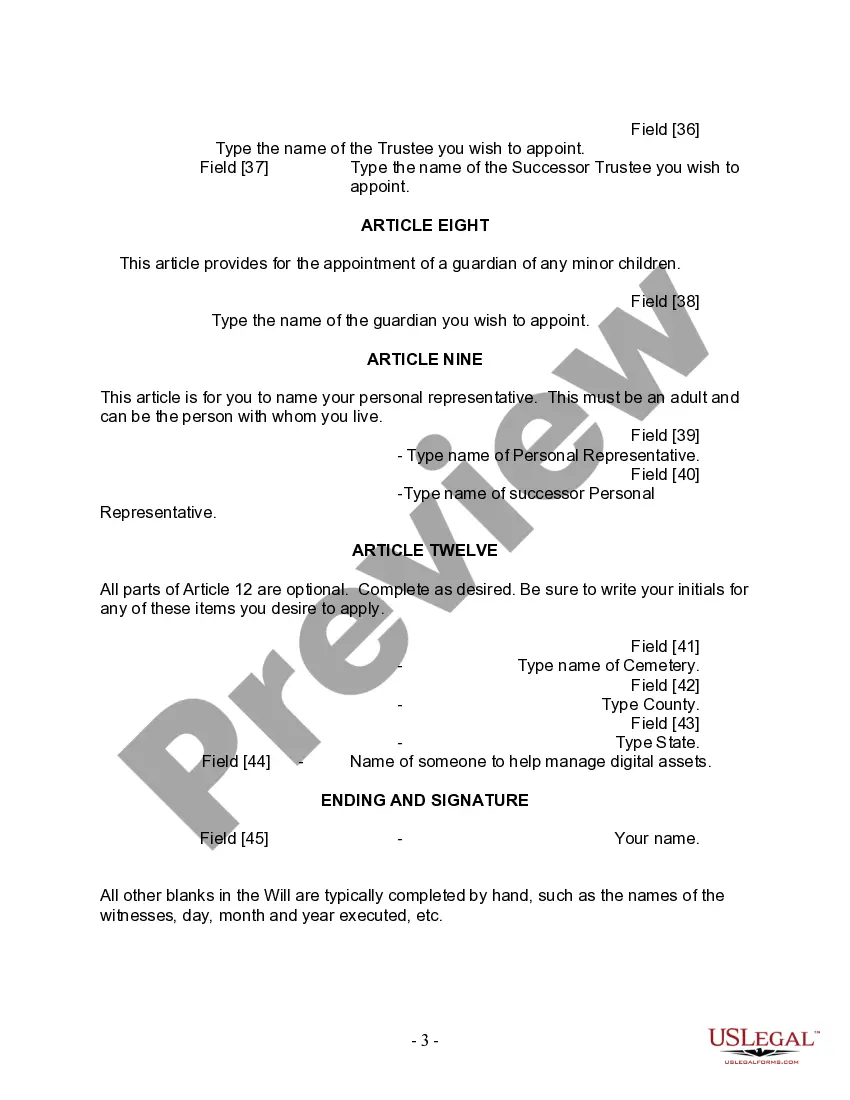
- Designate a personal representative and a successor, ensuring they understand their responsibilities.
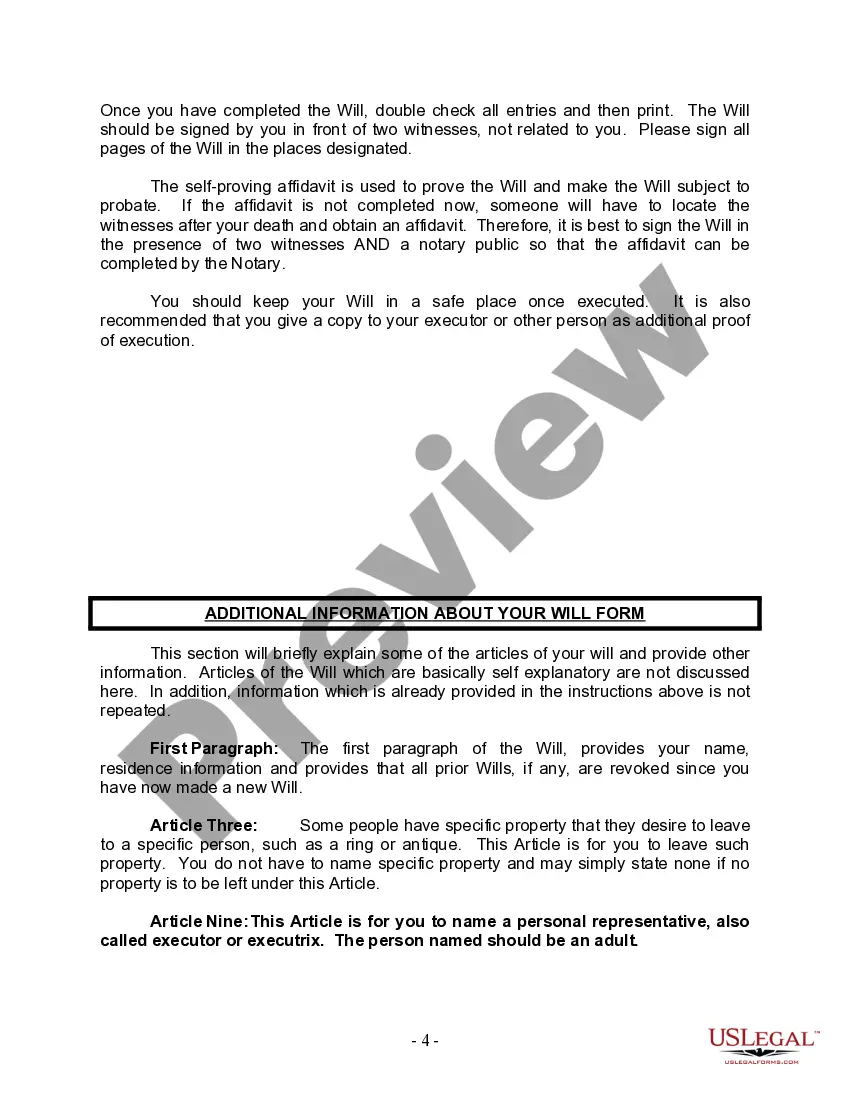
- Sign the completed will in the presence of two witnesses who are not beneficiaries and ensure it is notarized, if necessary.
Notarization guidance
Notarization is required for this form to take effect. Our online notarization service, powered by Notarize, lets you verify and sign documents remotely through an encrypted video session, available 24/7.
Get your form ready online
Our built-in tools help you complete, sign, share, and store your documents in one place.
Make edits, fill in missing information, and update formatting in US Legal Forms—just like you would in MS Word.
Download a copy, print it, send it by email, or mail it via USPS—whatever works best for your next step.
Sign and collect signatures with our SignNow integration. Send to multiple recipients, set reminders, and more. Go Premium to unlock E-Sign.
If this form requires notarization, complete it online through a secure video call—no need to meet a notary in person or wait for an appointment.
We protect your documents and personal data by following strict security and privacy standards.

Make edits, fill in missing information, and update formatting in US Legal Forms—just like you would in MS Word.

Download a copy, print it, send it by email, or mail it via USPS—whatever works best for your next step.

Sign and collect signatures with our SignNow integration. Send to multiple recipients, set reminders, and more. Go Premium to unlock E-Sign.

If this form requires notarization, complete it online through a secure video call—no need to meet a notary in person or wait for an appointment.

We protect your documents and personal data by following strict security and privacy standards.
Avoid these common issues
- Failing to have the will signed by two witnesses.
- Not clearly specifying who receives which assets or delegating guardianship for minor children.
- Neglecting to update the will after significant life changes, such as remarriage or the birth of additional children.
Benefits of completing this form online
- Convenient to fill out and modify using a computer, enabling clarity in your instructions.
- Allows for easy storage and access, ensuring your will is readily available when needed.
- Provides guidance throughout the completion process to minimize errors.
Looking for another form?
Form popularity
FAQ
No, in West Virginia, you do not need to notarize your will to make it legal.A self-proving will speeds up probate because the court can accept the will without contacting the witnesses who signed it.
In order for a will to be valid, it must be: made by a person who is 18 years old or over and. made voluntarily and without pressure from any other person and.signed by the two witnesses, in the presence of the person making the will, after it has been signed.
The Will must be filed with the Probate Office of the County Clerk in the county where the decedent lived. A Petition for Probate must be filed as well. This requests the appointment of an executor. If there is no Will, the clerk will appoint someone to serve as the Personal Representative of the estate.
No, in West Virginia, you do not need to notarize your will to make it legal.A self-proving will speeds up probate because the court can accept the will without contacting the witnesses who signed it.
The individual's mental capacity in question at the time the will was executed. The document was not properly executed according to WV legal requirements. There is evidence of fraud, forgery, coercion, or deception. Need help bringing or defending a will contest in WV?
For example, California requires that all sections of the will necessary to make the will valid must be written entirely by hand and that the person writing the will must sign it. If these state rules aren't followed, the holographic will won't be valid.
Yes. A will that you write yourself is called a holographic will. Holographic wills are not valid in every state, but they are valid in West Virginia, as long as they are written entirely in the author's handwriting.
A notarized will does not need to be probated.When a person dies leaving behind a will that is not notarized, the law requires that its validity be ascertained by a notary or by a court. Similarly, any non-notarized modification made to a will must be probated, whether the will is notarized or not.