West Virginia Last Will and Testament for Single Person with No Children

Overview of this form
The Last Will and Testament for a Single Person with No Children is a legal document that outlines how a single individual wishes their property and assets to be distributed upon their death. Unlike wills that accommodate various family structures, this form is specifically tailored for those without children and focuses on appointing an executor, designating beneficiaries, and providing directions regarding debt payment and property disposition.
What’s included in this form
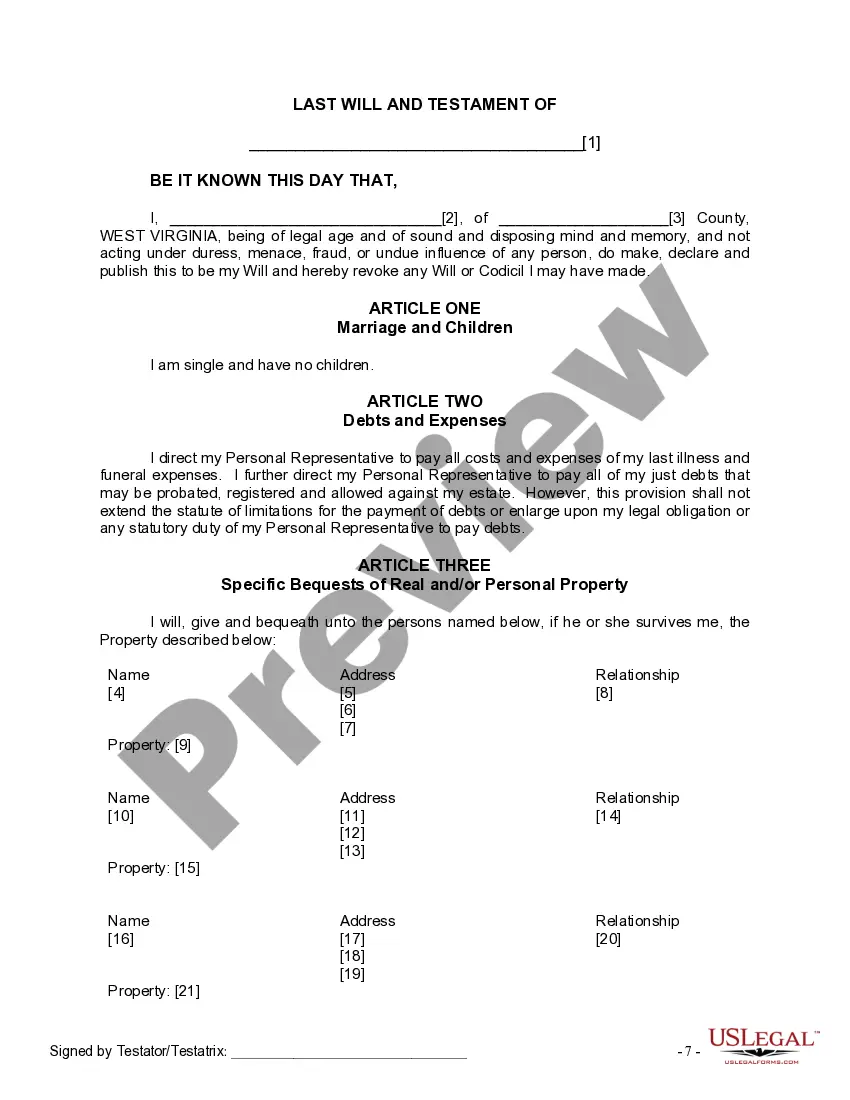
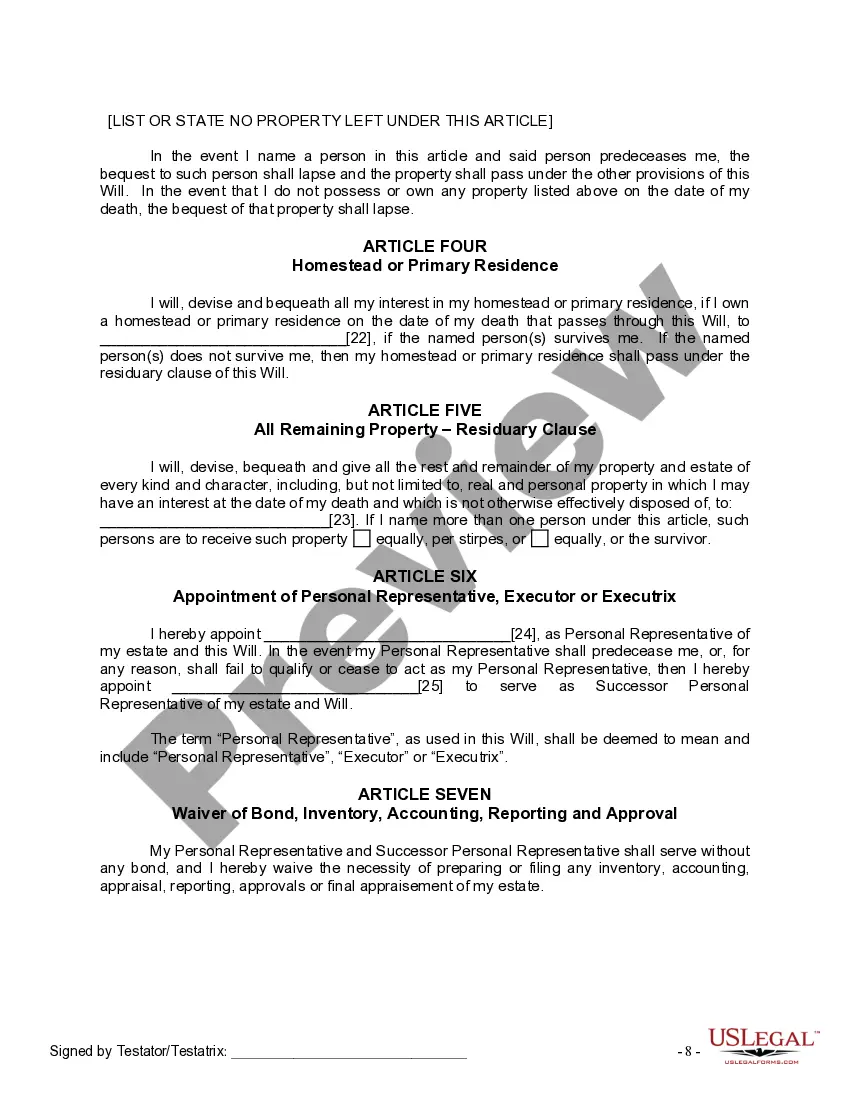
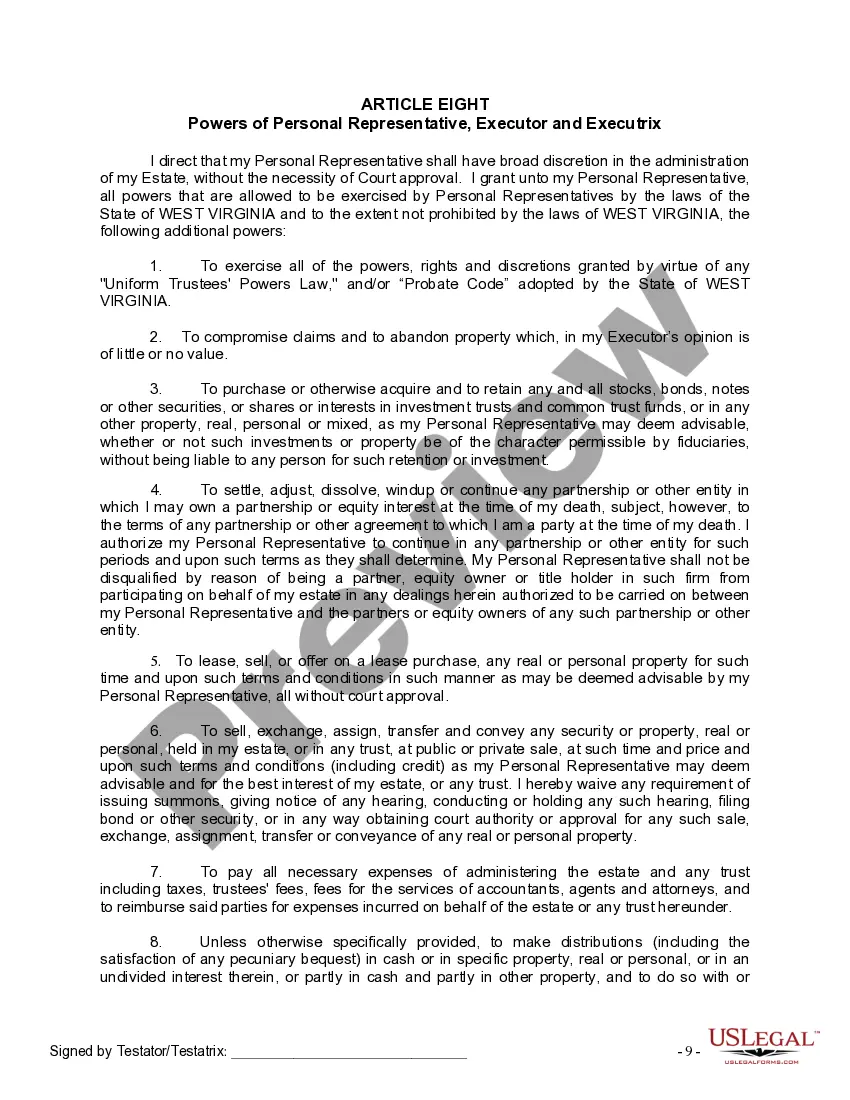
- Personal representative appointment: Designate an executor to manage the estate.
- Specific property bequests: Itemize any specific items or properties you wish to leave to particular individuals.
- Residuary clause: Decide who will receive the remainder of your estate after specific bequests.
- Homestead provisions: Address how your primary residence will be distributed.
- Signature requirements: Specify the necessary signatures from you and witnesses to validate the will.


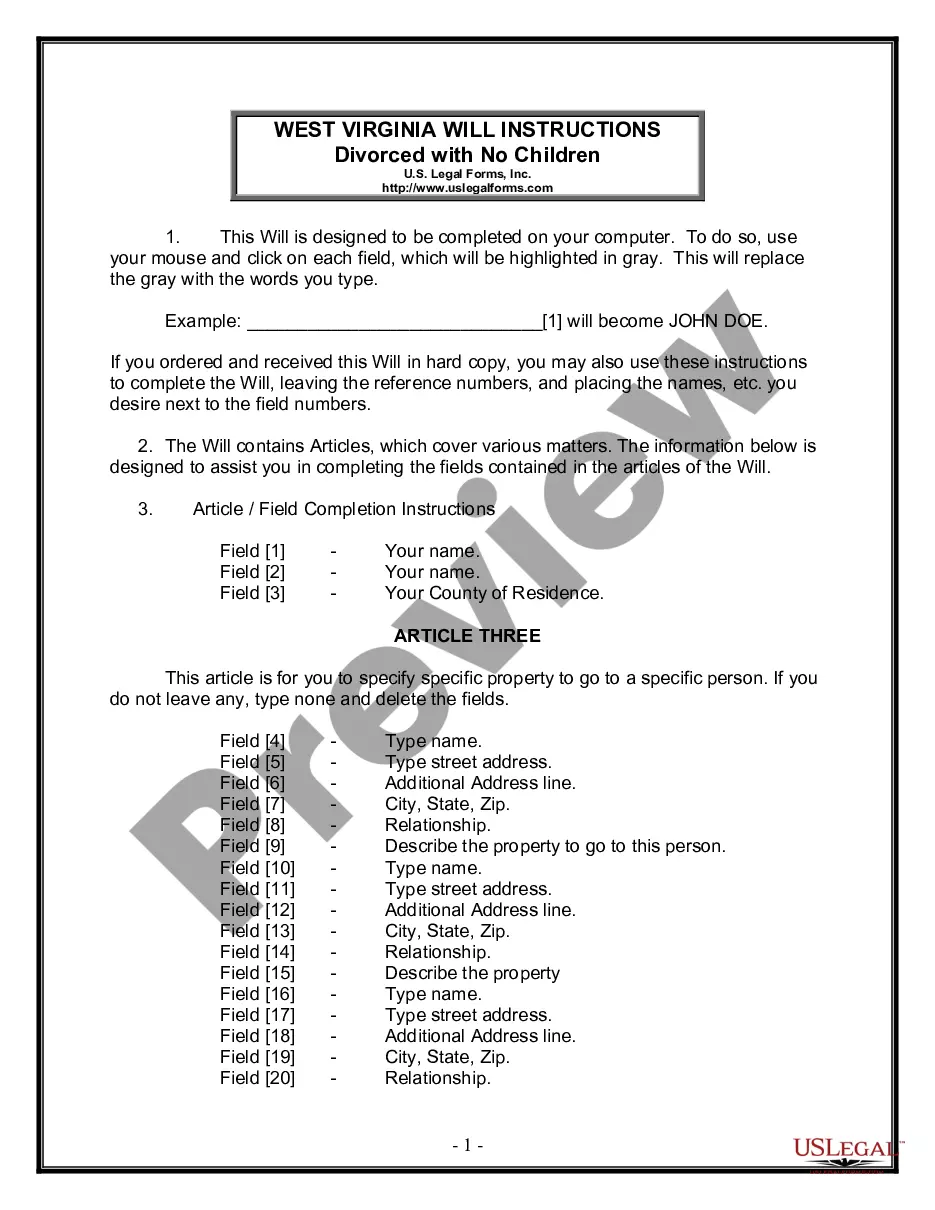
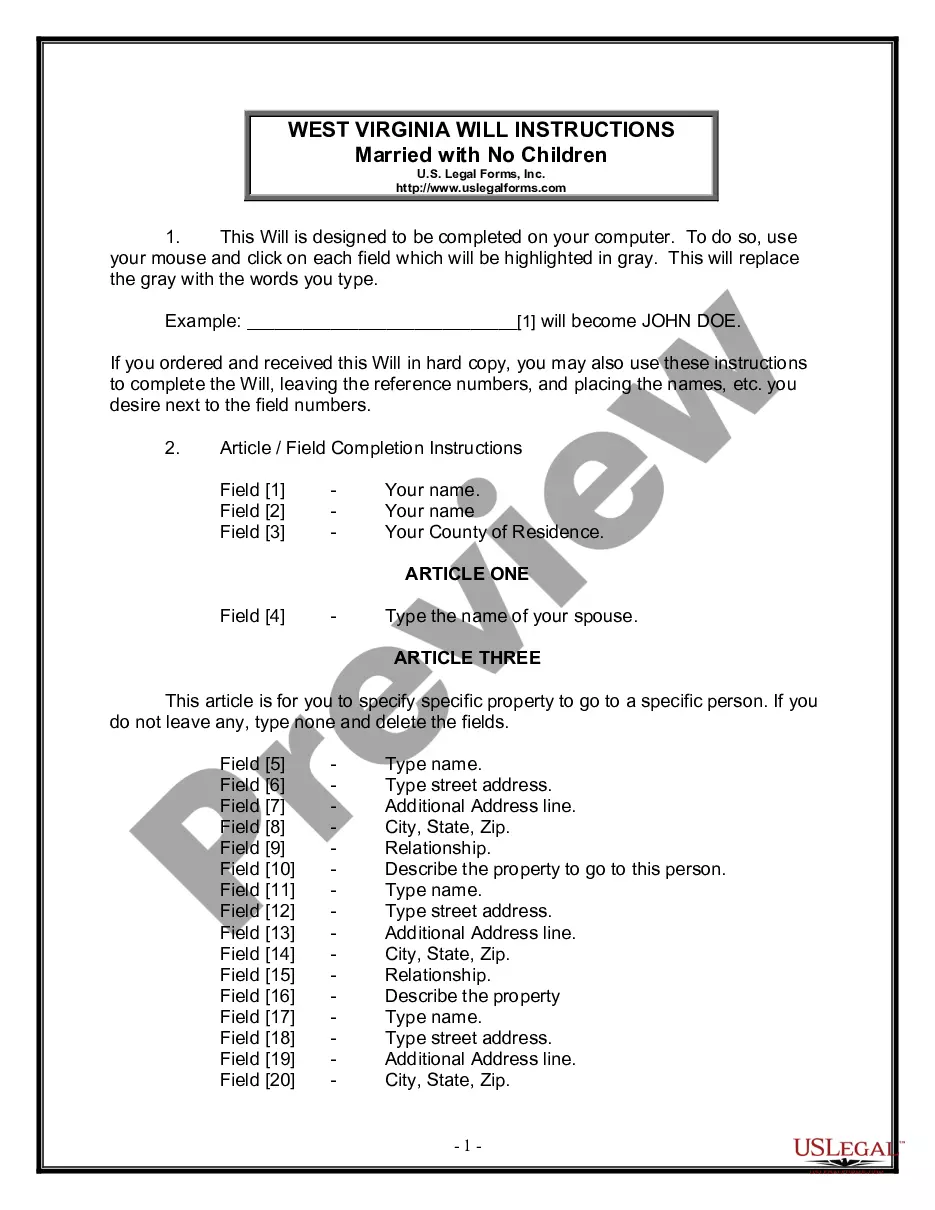
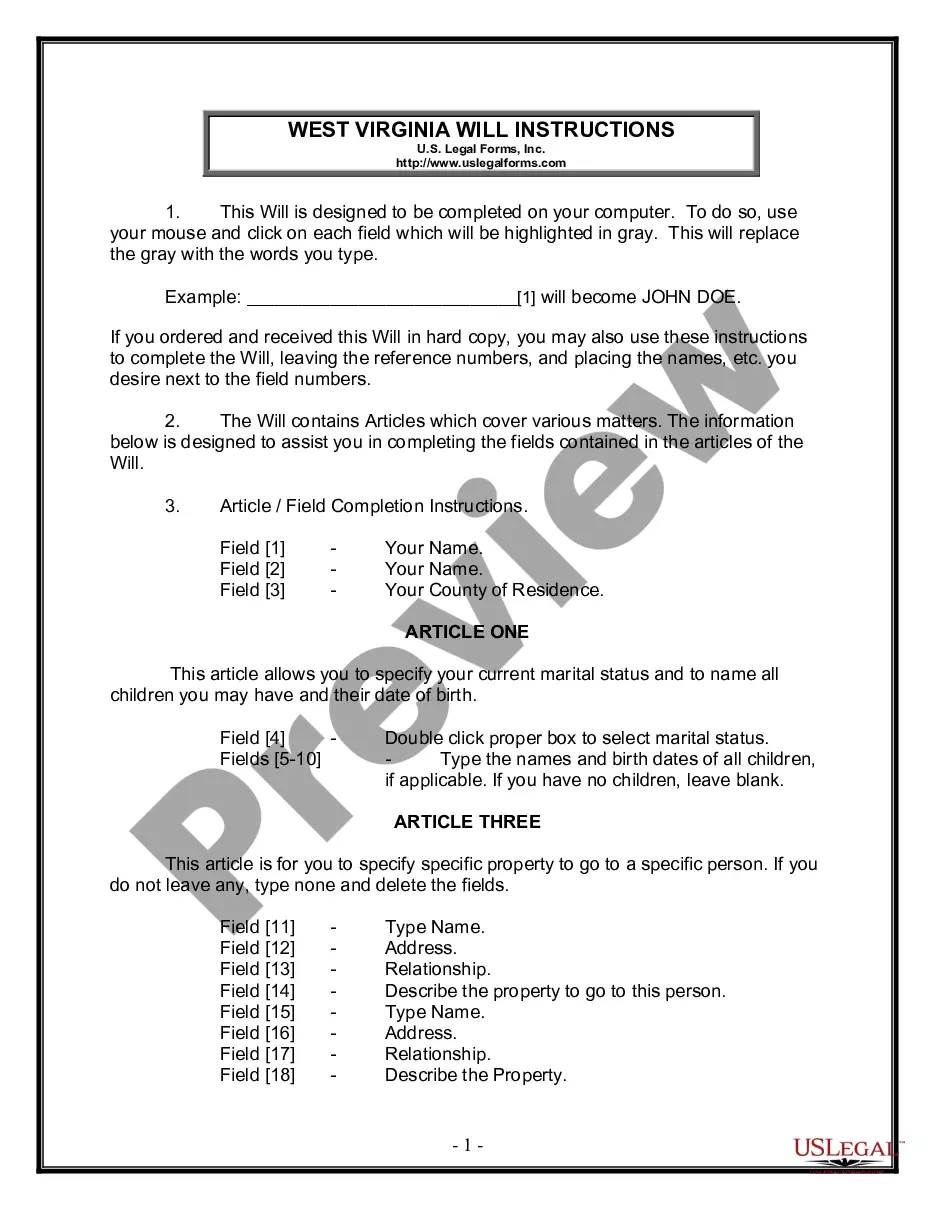
Situations where this form applies
This will is essential for individuals who are single and have no children, providing a clear plan for managing their estate after death. Use this form if you want to ensure that your assets are distributed according to your wishes, name an executor, and avoid intestate succession, which is the default distribution of your property by state law.
Who needs this form
- Single individuals without children.
- Adults above the age of eighteen and of sound mind.
- Those seeking to specify how their assets are managed and distributed after death.
- Individuals without existing wills who want to avoid the complexities of intestacy laws.
Instructions for completing this form
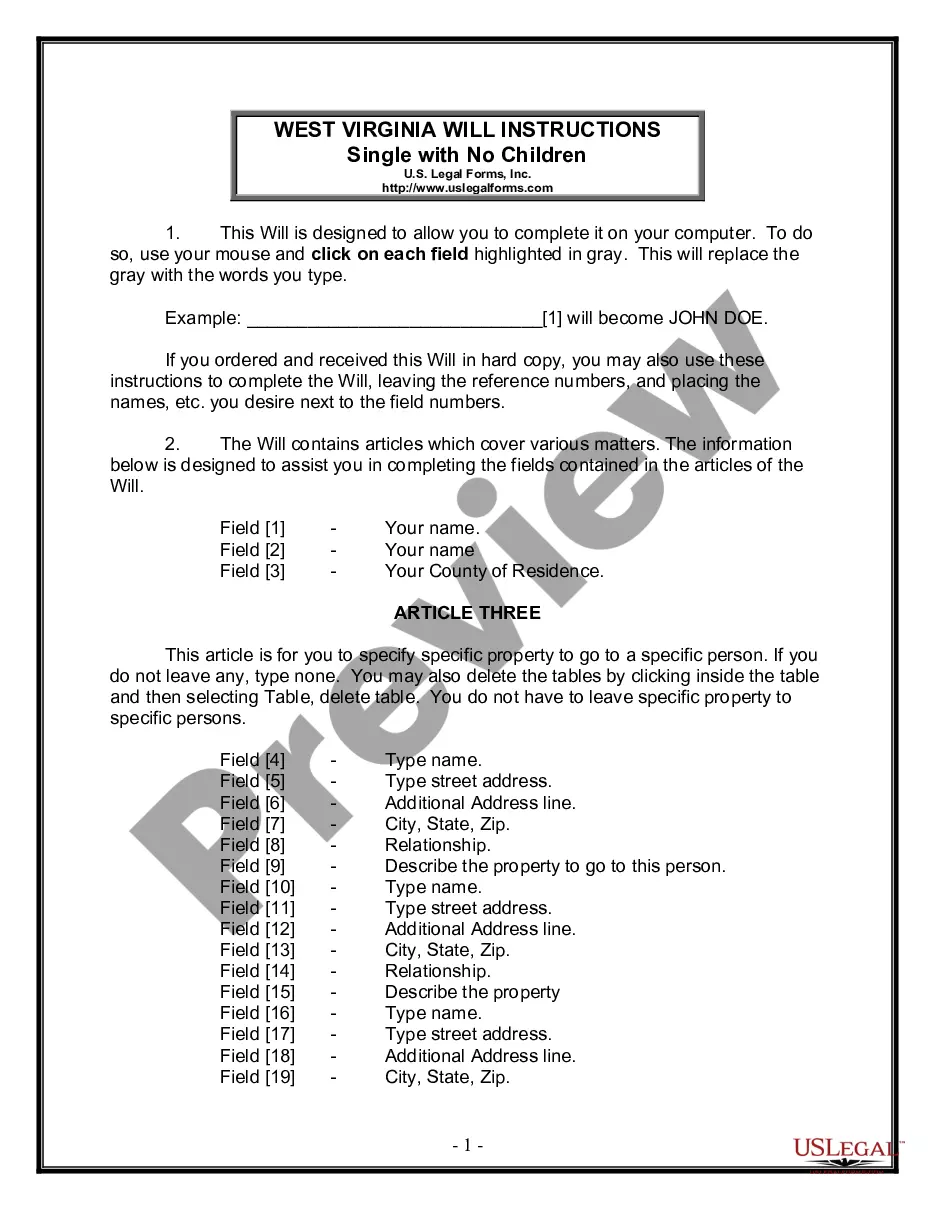
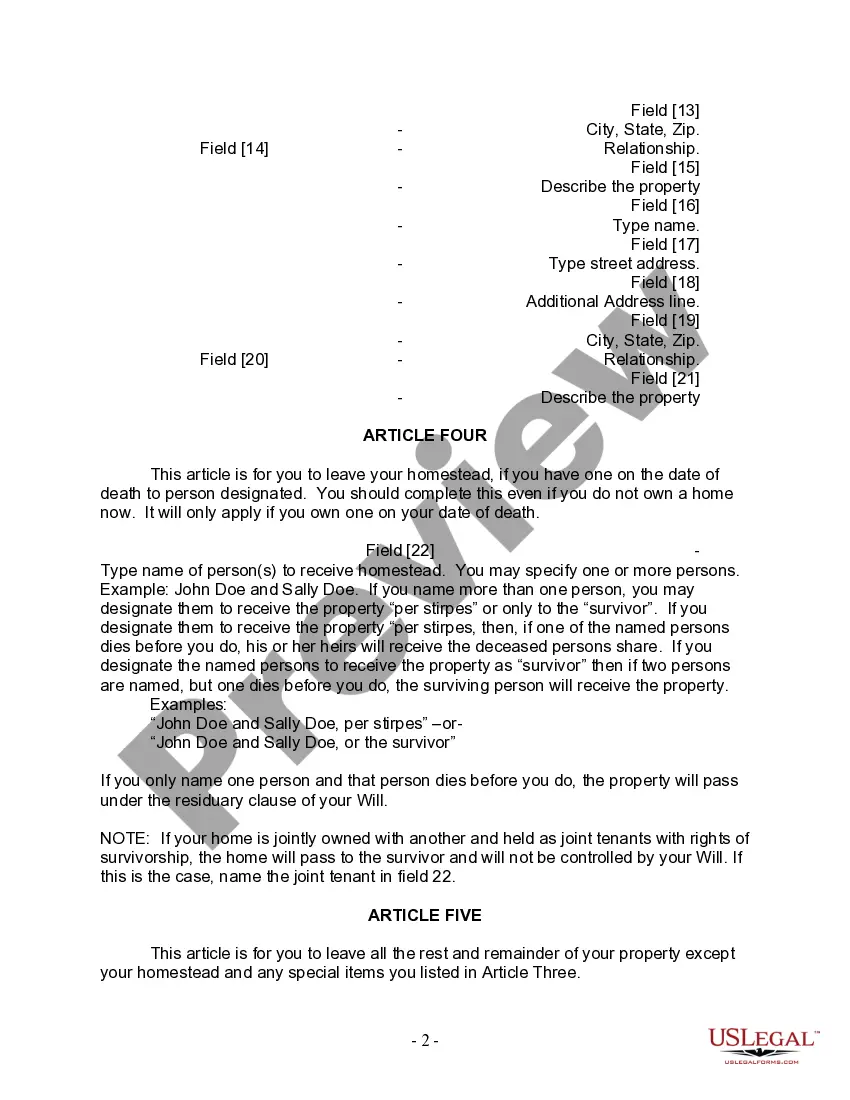
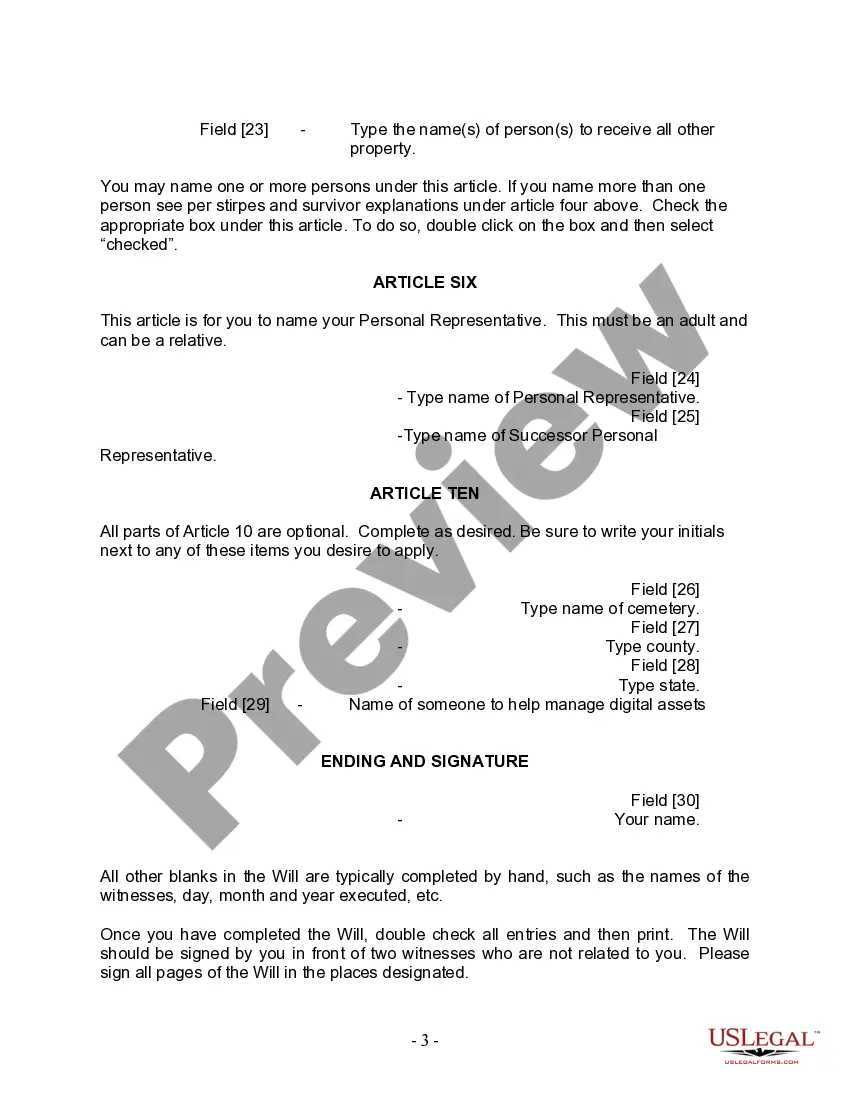
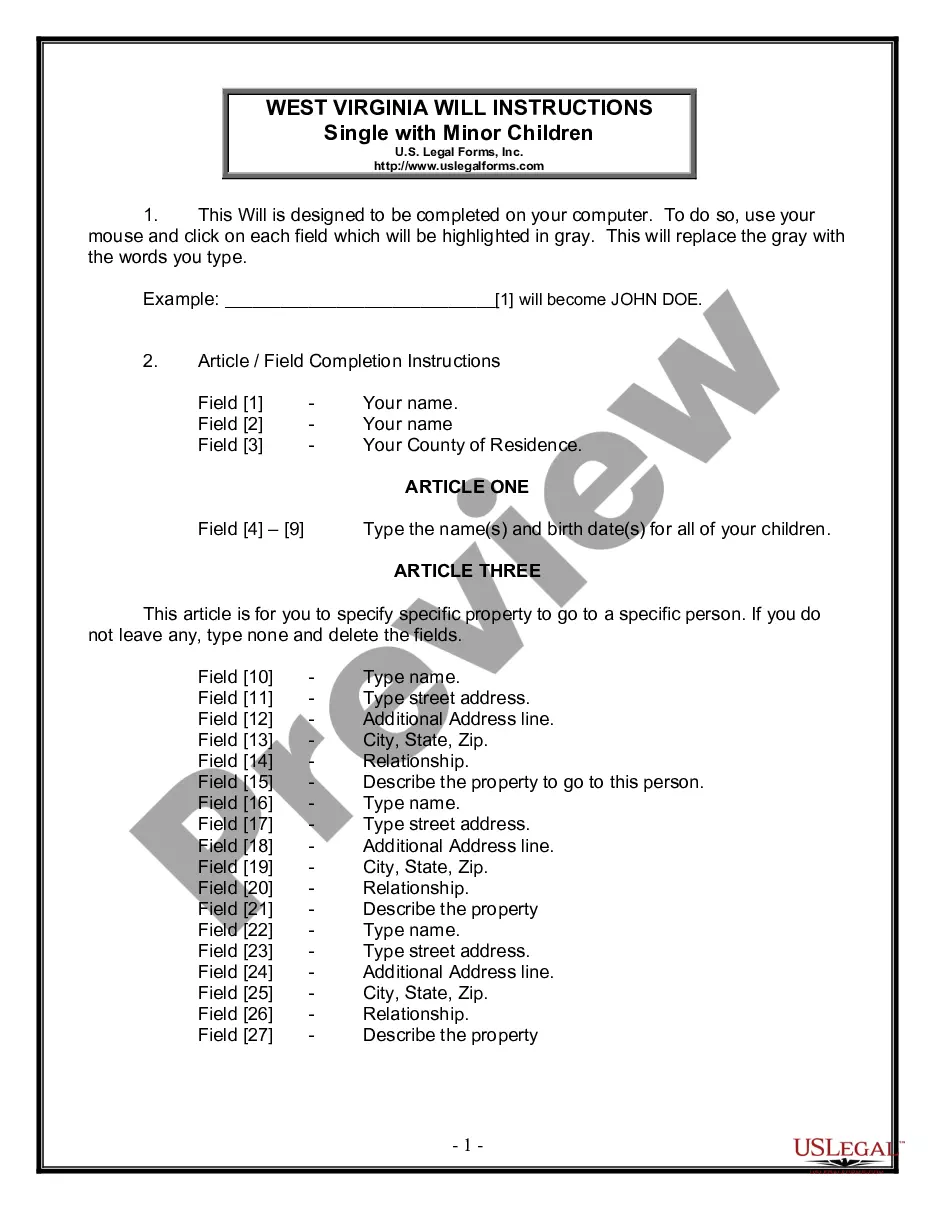
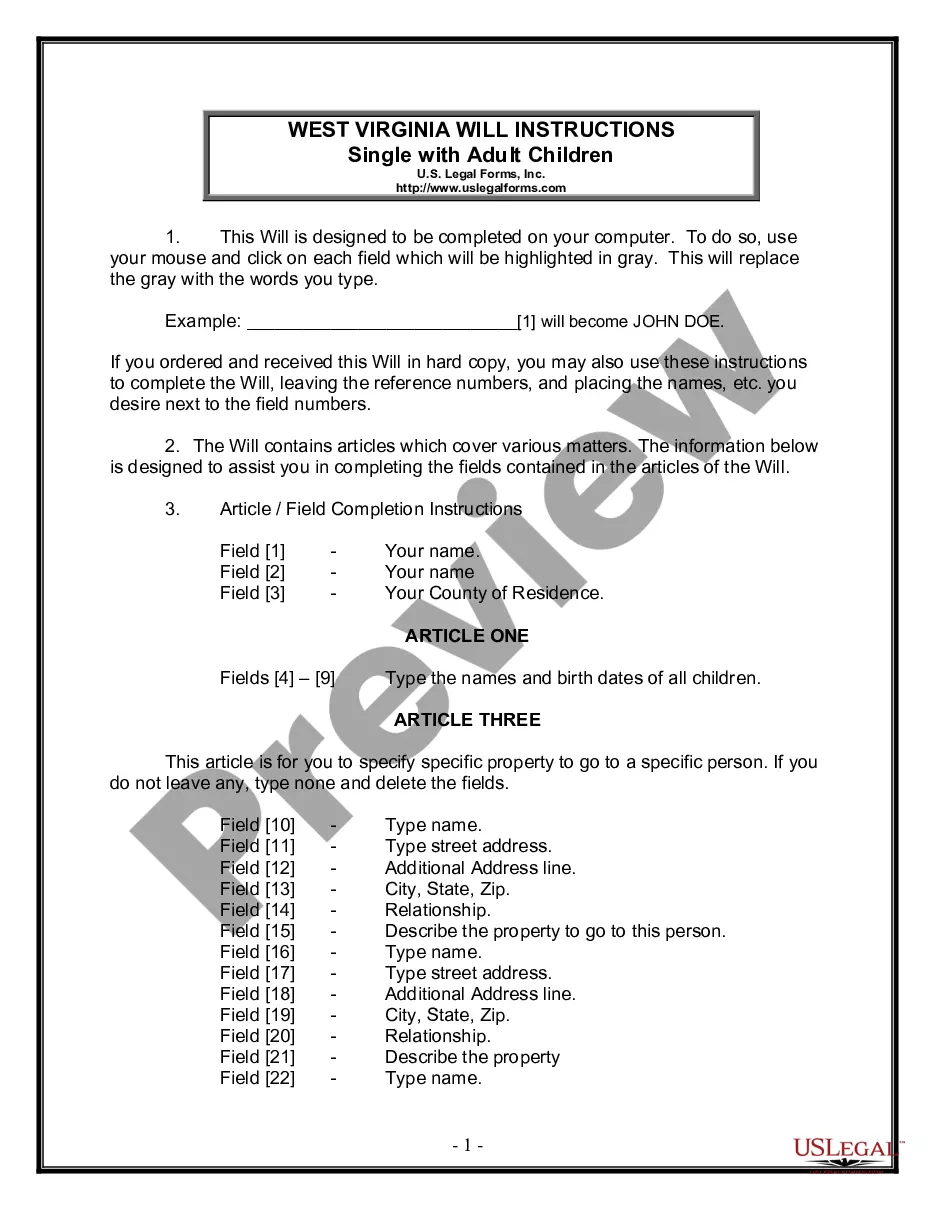
- Identify yourself: Enter your full name and county of residence.
- Designate beneficiaries: Specify who will receive your specific assets and property.
- Specify your personal representative: Name the person who will manage your estate after your death.
- Complete necessary clauses: Fill out the sections that detail your wishes for your homestead and any remaining assets.
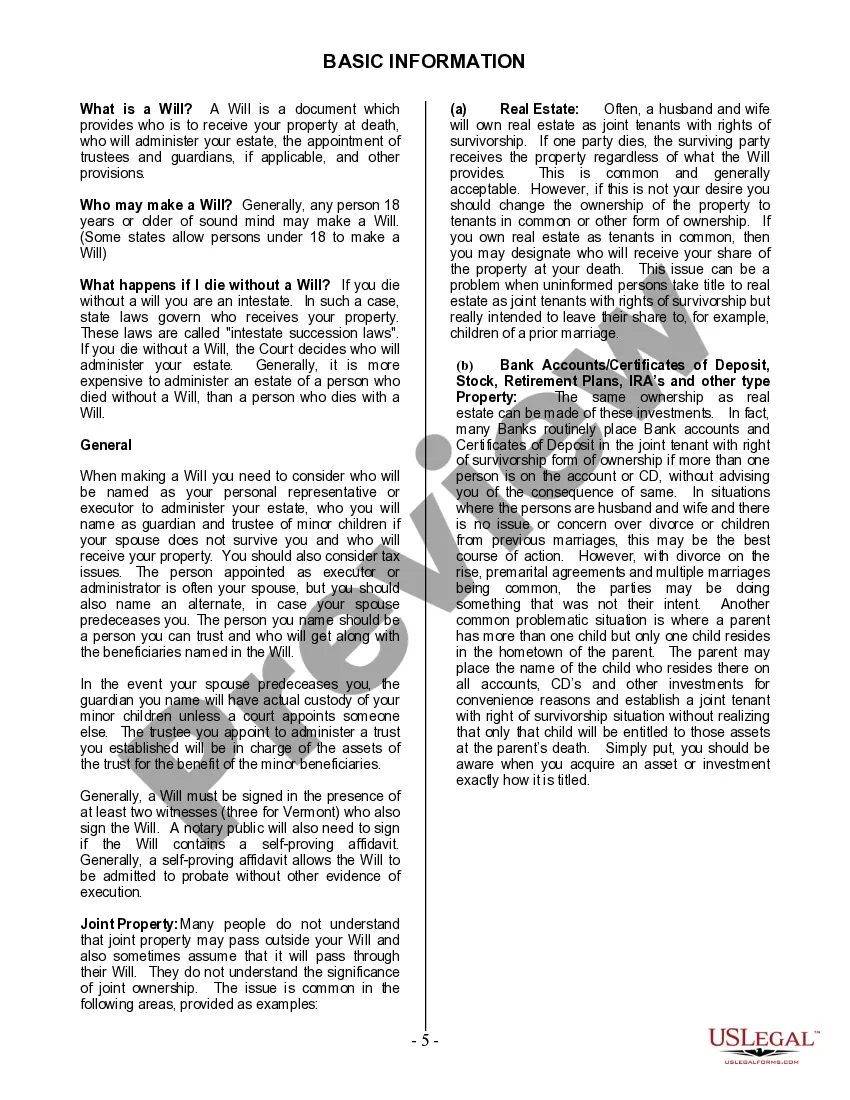
- Sign in front of witnesses: Ensure you and two witnesses sign the document to validate it.
Notarization requirements for this form
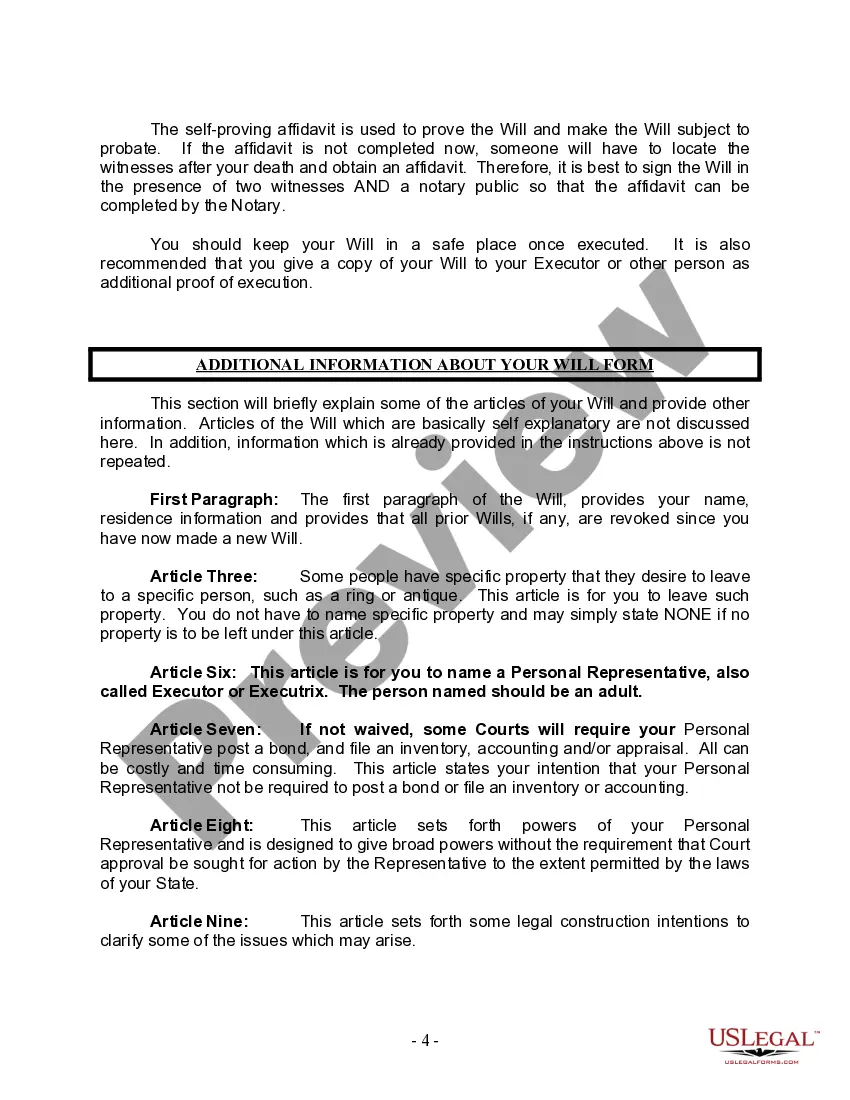
Yes, this form must be notarized to be legally valid in most jurisdictions. It is recommended to sign your will in front of two witnesses and a notary public to ensure compliance with the laws of your state.
Get your form ready online
Our built-in tools help you complete, sign, share, and store your documents in one place.
Make edits, fill in missing information, and update formatting in US Legal Forms—just like you would in MS Word.
Download a copy, print it, send it by email, or mail it via USPS—whatever works best for your next step.
Sign and collect signatures with our SignNow integration. Send to multiple recipients, set reminders, and more. Go Premium to unlock E-Sign.
If this form requires notarization, complete it online through a secure video call—no need to meet a notary in person or wait for an appointment.
We protect your documents and personal data by following strict security and privacy standards.

Make edits, fill in missing information, and update formatting in US Legal Forms—just like you would in MS Word.

Download a copy, print it, send it by email, or mail it via USPS—whatever works best for your next step.

Sign and collect signatures with our SignNow integration. Send to multiple recipients, set reminders, and more. Go Premium to unlock E-Sign.

If this form requires notarization, complete it online through a secure video call—no need to meet a notary in person or wait for an appointment.

We protect your documents and personal data by following strict security and privacy standards.
Typical mistakes to avoid
- Failing to sign the will in front of the required witnesses.
- Not appointing a personal representative, which might lead to complications for your beneficiaries.
- Forgetting to specify key items or properties you wish to bequeath.
- Overlooking state-specific requirements that could affect the will's validity.
Benefits of using this form online
- Convenience: Easily fill out the form from home, saving time and effort.
- Editability: Make changes as needed, ensuring your will reflects your most current wishes.
- Access to legal expertise: The forms are drafted by licensed attorneys, helping to ensure their legality and effectiveness.
- Instant download: Receive your will immediately after completion, allowing for timely execution.
Main things to remember
- This will is specifically for singles without children, focusing on asset distribution and executor designation.
- Proper execution requires signatures from you and two non-related witnesses.
- Completing this form helps avoid complications associated with dying intestate.
- Consider involving a legal adviser to clarify any state-specific nuances.
Looking for another form?


Form popularity
FAQ
No, in West Virginia, you do not need to notarize your will to make it legal.A self-proving will speeds up probate because the court can accept the will without contacting the witnesses who signed it.
Yes. A will that you write yourself is called a holographic will. Holographic wills are not valid in every state, but they are valid in West Virginia, as long as they are written entirely in the author's handwriting.
No, in West Virginia, you do not need to notarize your will to make it legal.A self-proving will speeds up probate because the court can accept the will without contacting the witnesses who signed it.
In order for a will to be valid, it must be: made by a person who is 18 years old or over and. made voluntarily and without pressure from any other person and.signed by the two witnesses, in the presence of the person making the will, after it has been signed.
Contrary to popular belief, you do not need to have an attorney draft a will for you. Anyone can write this document on their own, and as long as it meets all of the legal requirements of the state, courts will recognize one you wrote yourself.
A notarized will does not need to be probated.When a person dies leaving behind a will that is not notarized, the law requires that its validity be ascertained by a notary or by a court. Similarly, any non-notarized modification made to a will must be probated, whether the will is notarized or not.
You can make your own will in Virginia, using Nolo's do-it-yourself will software or online will programs. However, you may want to consult a lawyer in some situations. For example, if you think that your will might be contested or if you want to disinherit your spouse, you should talk with an attorney.
The Will must be filed with the Probate Office of the County Clerk in the county where the decedent lived. A Petition for Probate must be filed as well. This requests the appointment of an executor. If there is no Will, the clerk will appoint someone to serve as the Personal Representative of the estate.