Wisconsin Mutual Wills Package of Last Wills and Testaments for Man and Woman living together not Married with Adult Children
What this document covers
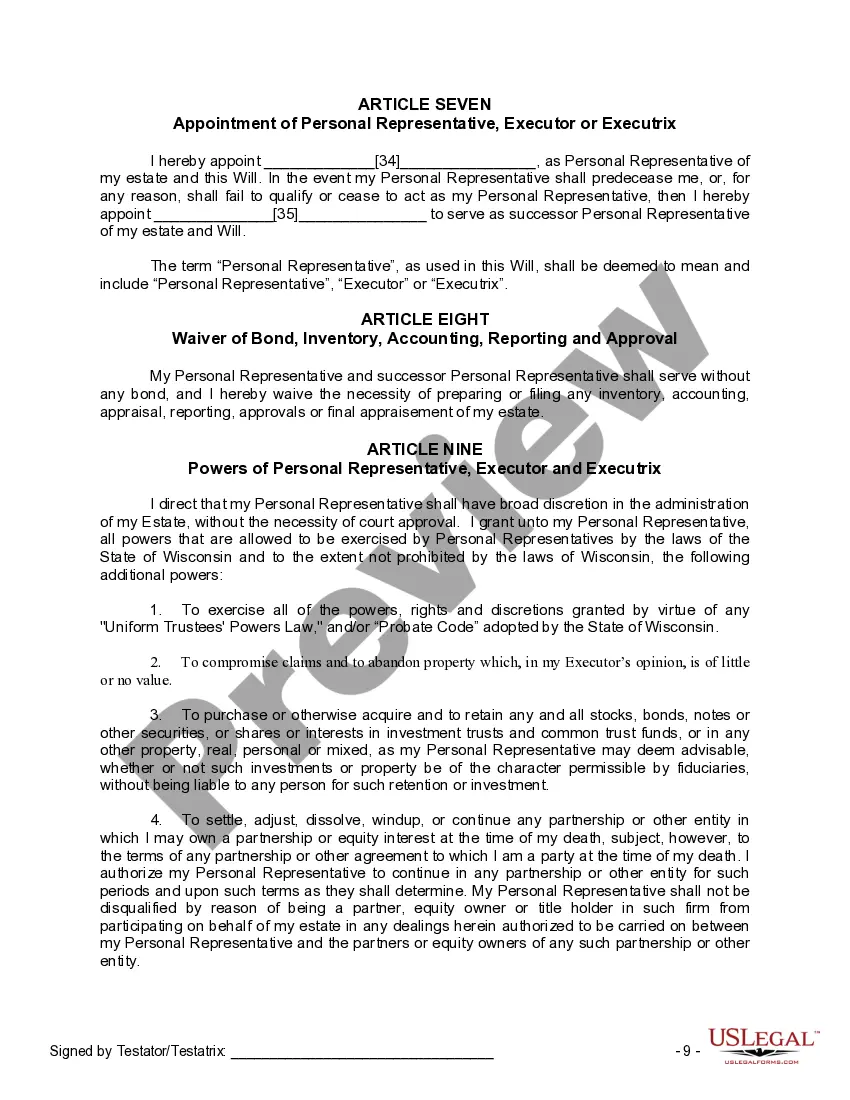
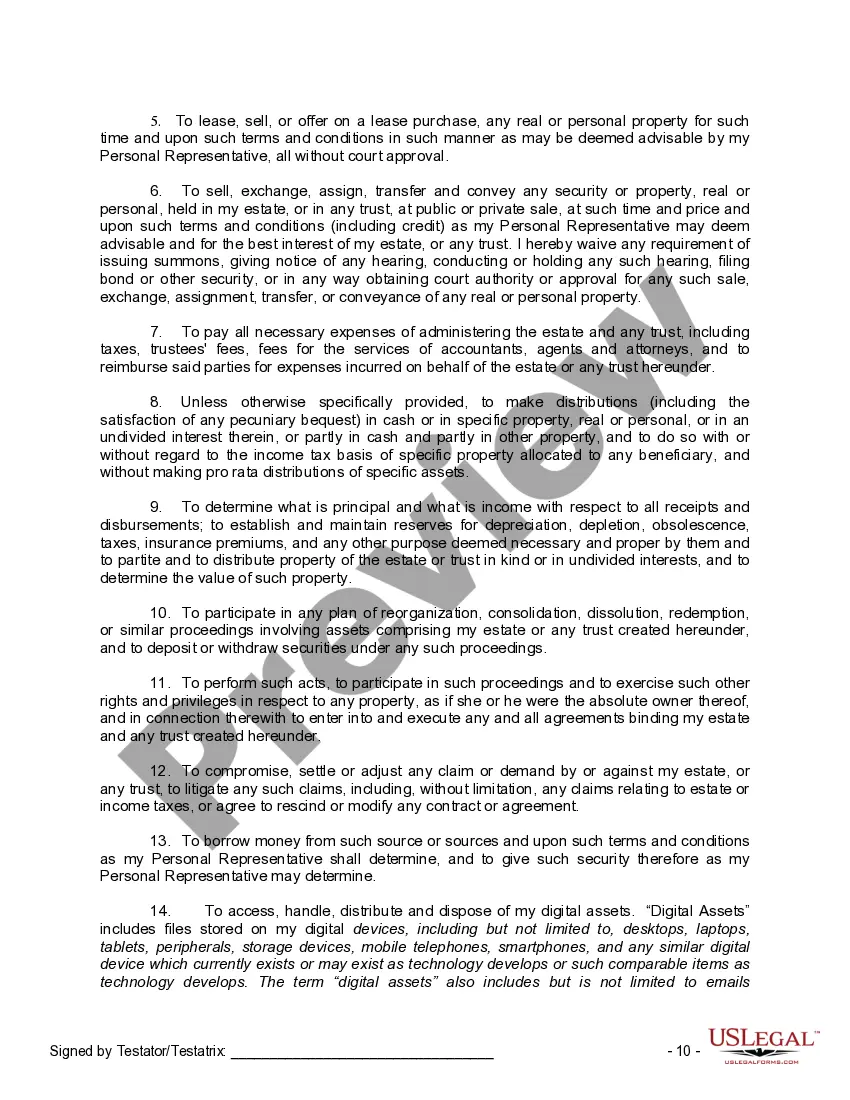
The Mutual Wills Package of Last Wills and Testaments for Man and Woman Living Together Not Married with Adult Children is a legal document that enables two individuals, who are not married but live together and have adult children, to create mutual wills. This form is particularly useful for those who want to leave their property to each other and ensure their wishes are respected after their passing. Unlike typical wills, this package is designed to address the unique needs of cohabiting partners, providing clarity on how their assets will be distributed, especially in relation to their adult children.
Form components explained
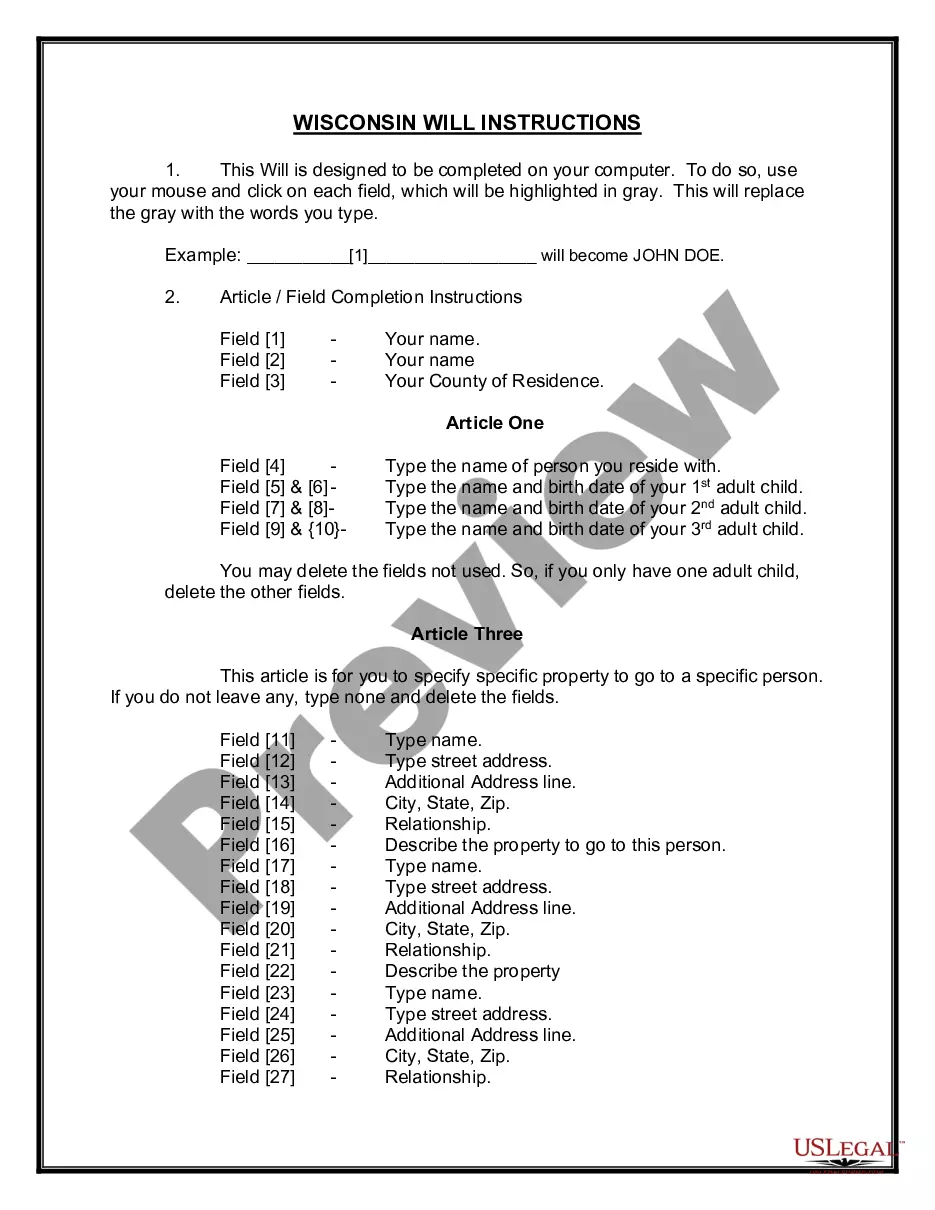
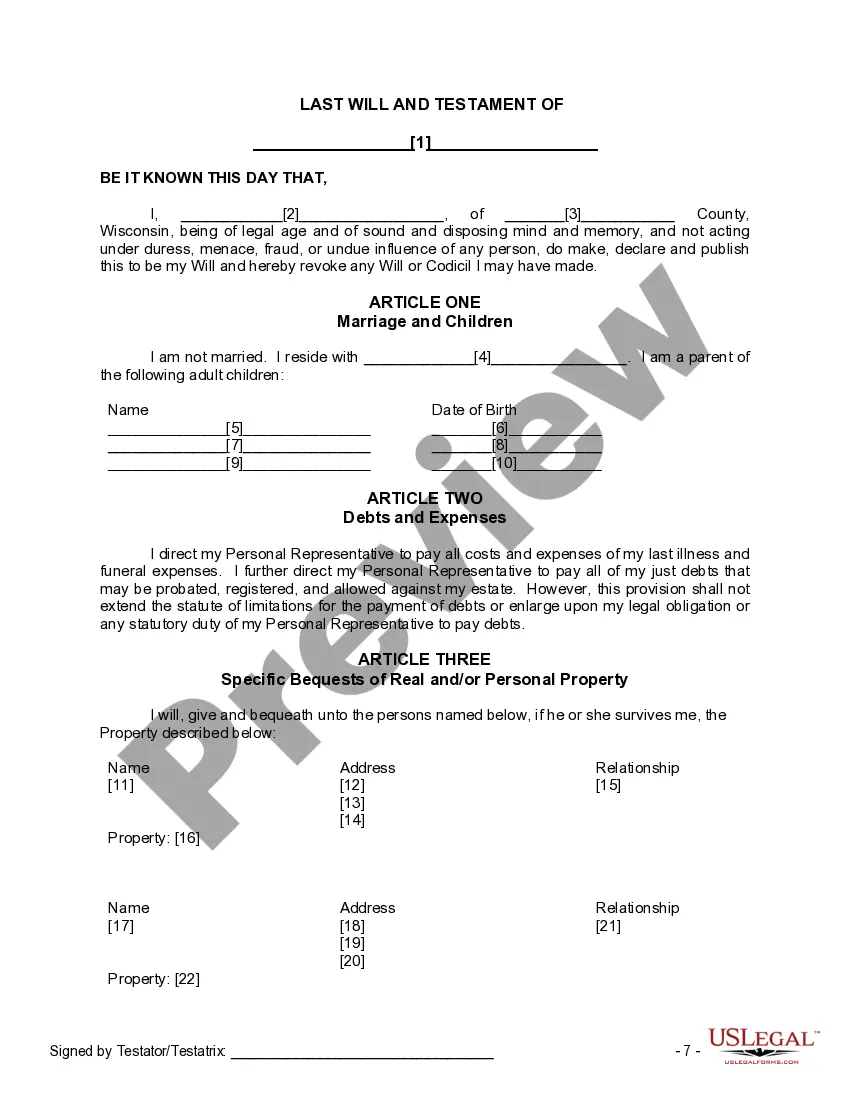
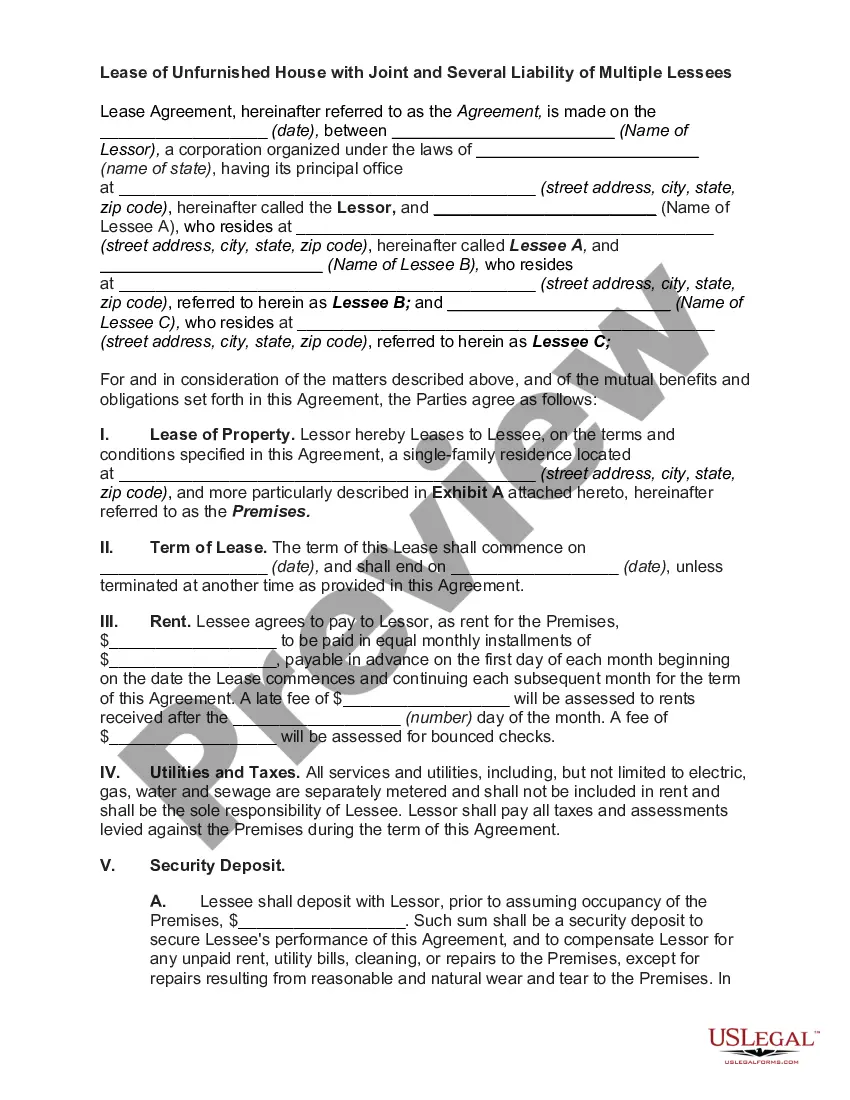
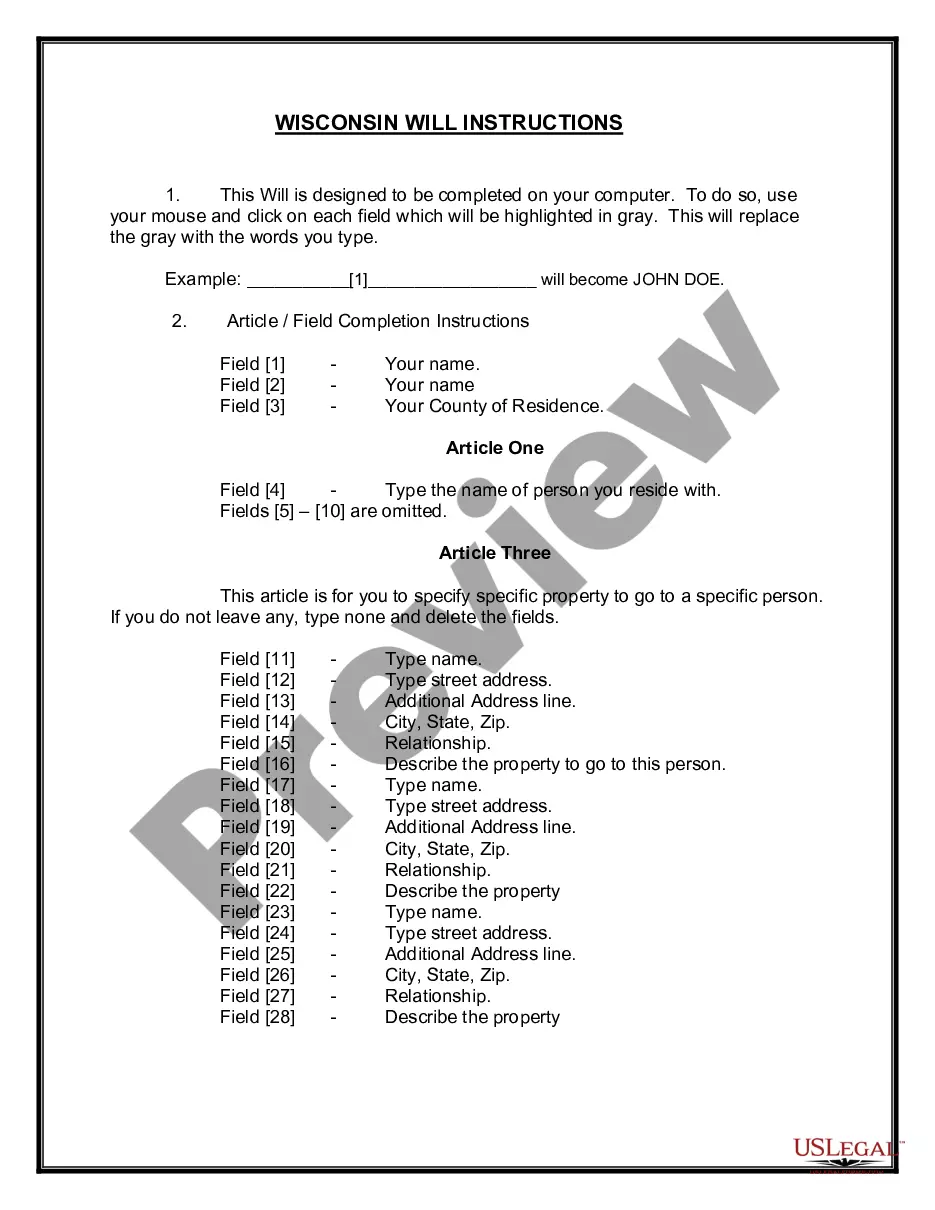
- Personal information fields for each partner, including names and counties of residence.
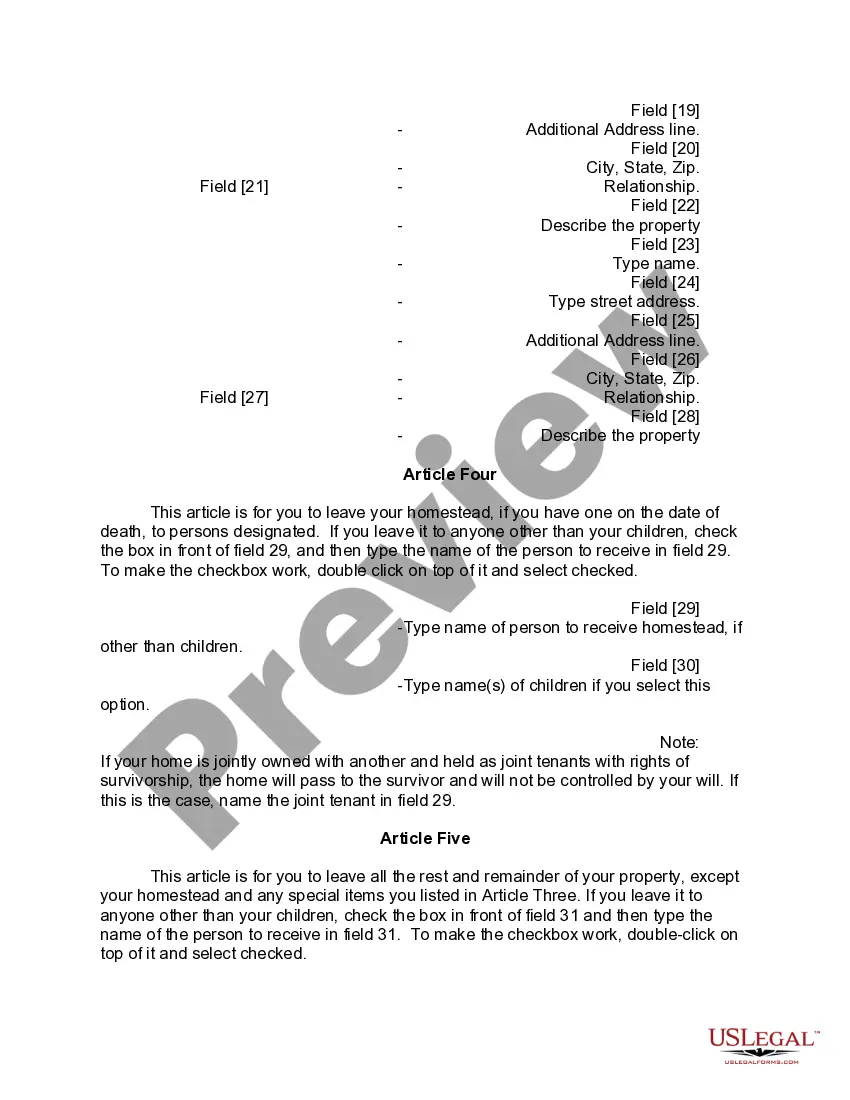
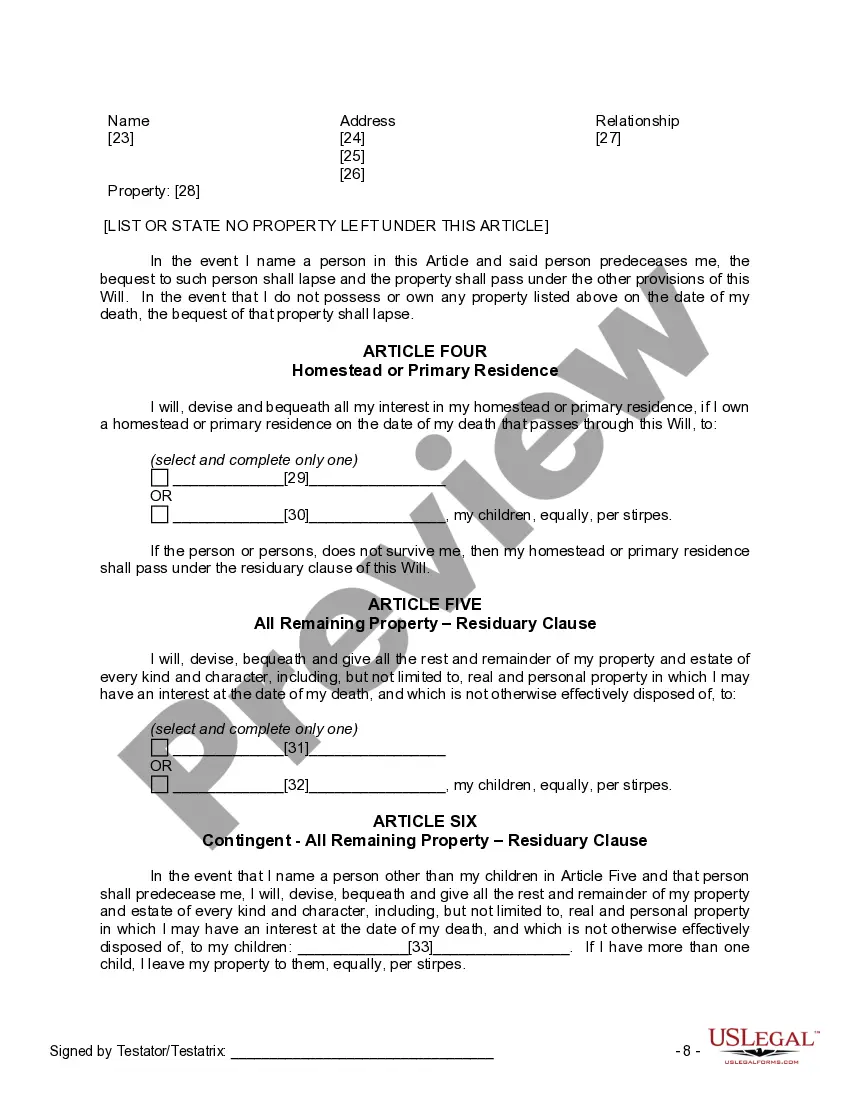
- Articles specifying the distribution of property, homestead, and any specific bequests to children or other individuals.
- Clauses addressing debts and expenses to be settled by the personal representative.
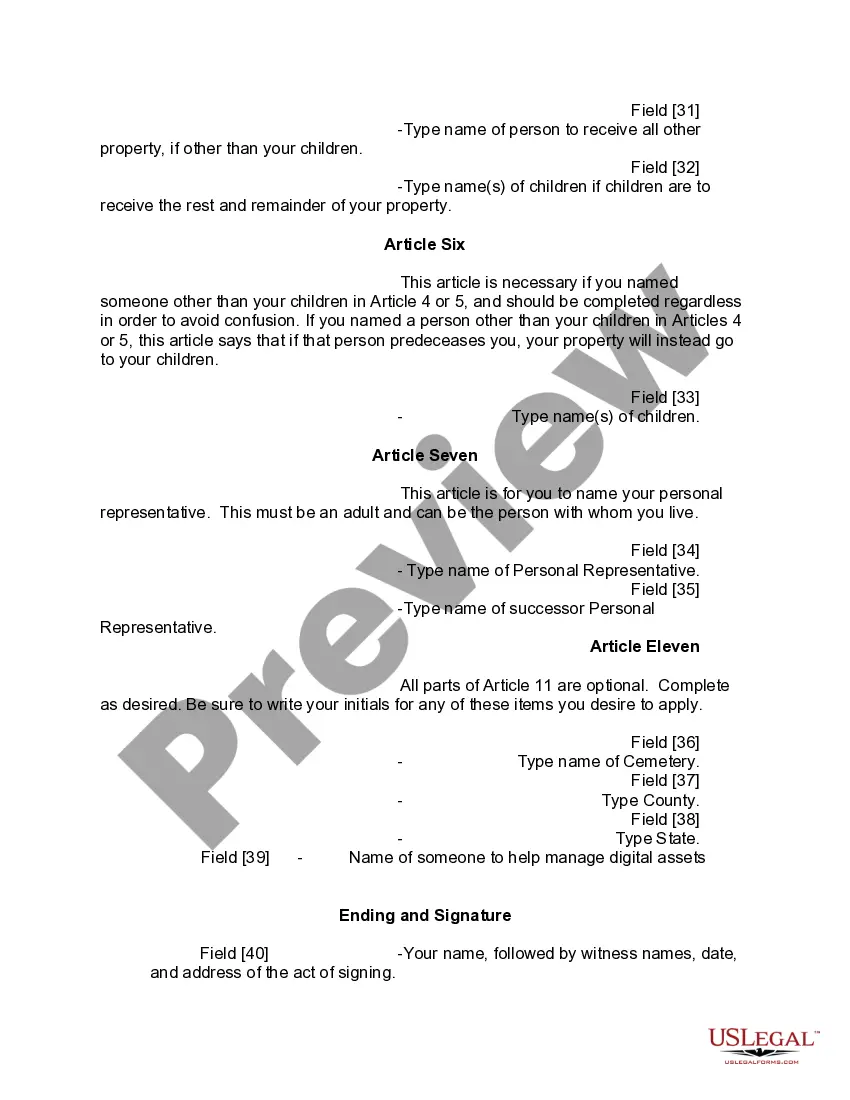
- Appointment of a personal representative to manage the estate.
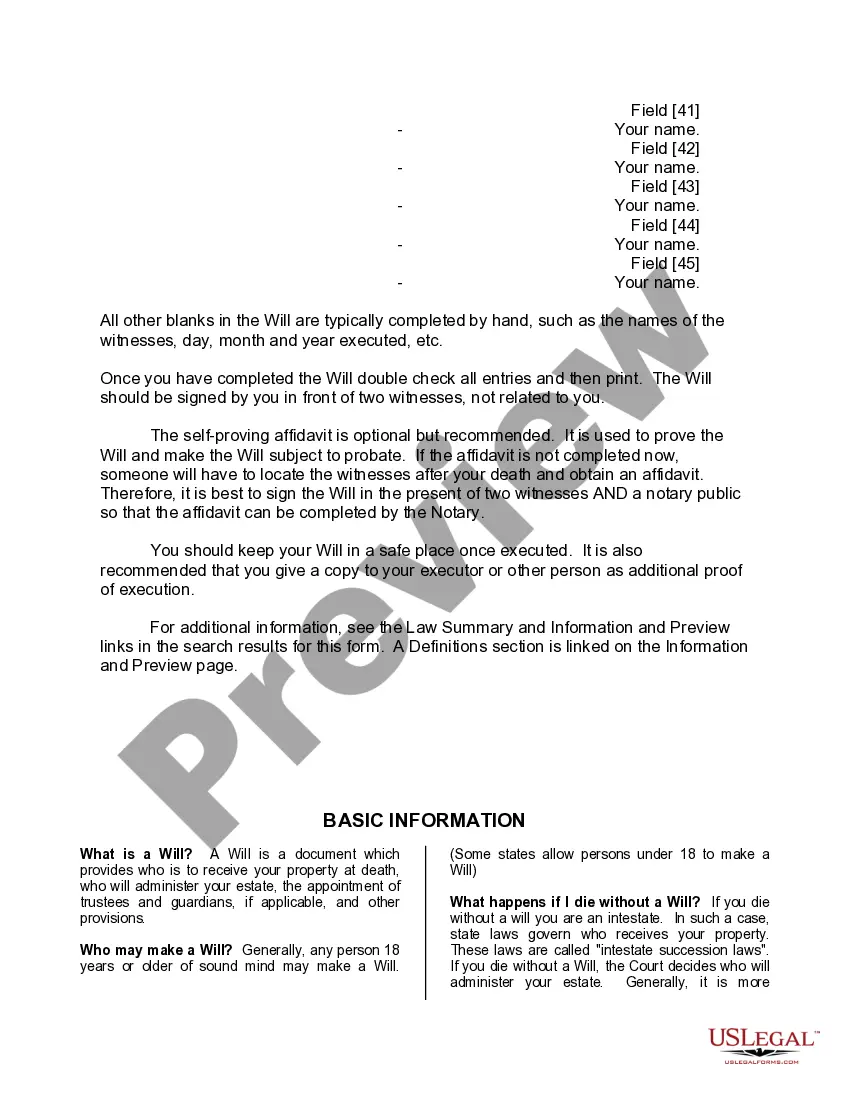
- Signature section requiring two witnesses and an optional self-proving affidavit for notarization.





Situations where this form applies
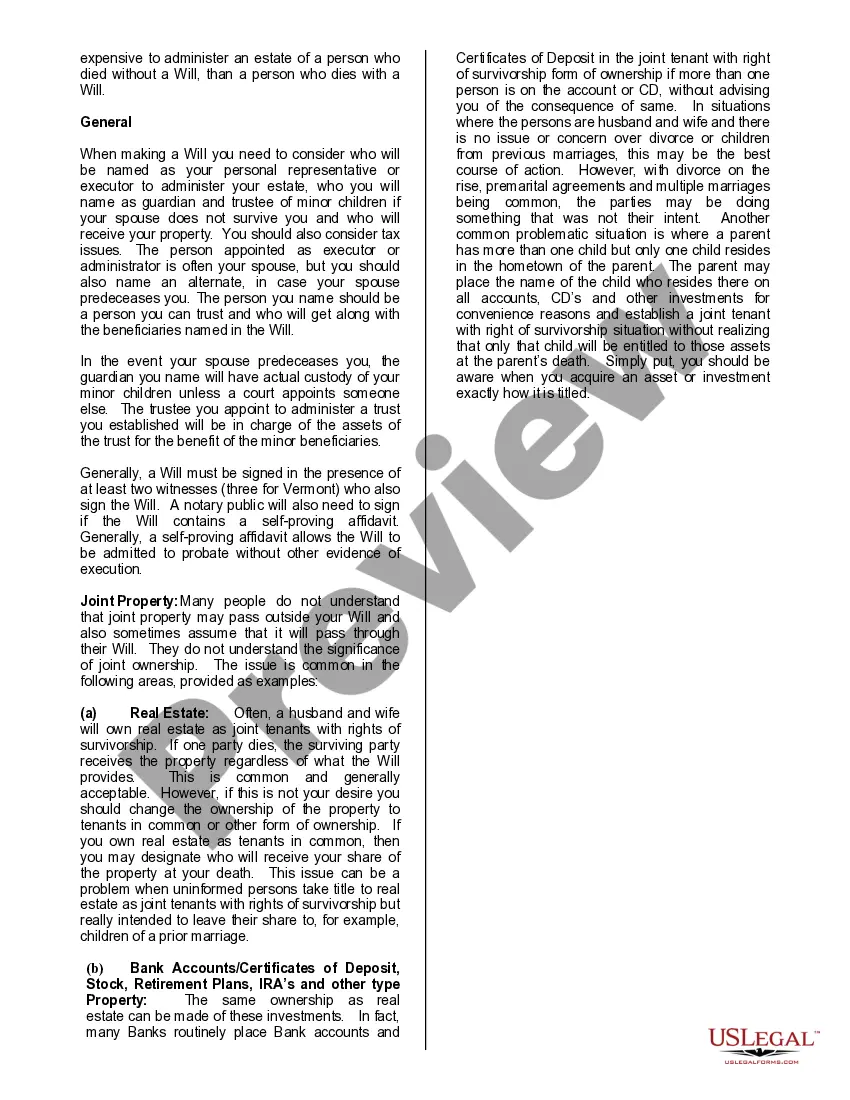
This mutual wills package should be used when two partners who are not married wish to outline how their assets will be distributed after death, particularly if they have adult children. It is ideal for individuals who want to ensure that their wishes regarding property and financial matters are clearly expressed and legally binding. This form is also suitable in situations where partners want to provide for each other while simultaneously addressing the inheritance rights of their children.
Who this form is for
- Couples living together who are not legally married.
- Partners with adult children looking to establish clear estate plans.
- Individuals wanting to ensure that their partner is taken care of after their death.
- Anyone seeking to protect their children's inheritance while providing for their partner.
How to complete this form
- Enter the names of both partners and their counties of residence in the designated fields.
- Specify the adult children by providing their names and birth dates as required.
- Designate any specific property to heirs, including descriptions and relationships.
- Complete the signature section in front of two witnesses who are not named in the will.
- If notary services are available, consider completing the self-proving affidavit to facilitate the probate process.
Notarization guidance
This form needs to be notarized to ensure legal validity. US Legal Forms provides secure online notarization powered by Notarize, allowing you to complete the process through a verified video call, available anytime.
Get your form ready online
Our built-in tools help you complete, sign, share, and store your documents in one place.
Make edits, fill in missing information, and update formatting in US Legal Forms—just like you would in MS Word.
Download a copy, print it, send it by email, or mail it via USPS—whatever works best for your next step.
Sign and collect signatures with our SignNow integration. Send to multiple recipients, set reminders, and more. Go Premium to unlock E-Sign.
If this form requires notarization, complete it online through a secure video call—no need to meet a notary in person or wait for an appointment.
We protect your documents and personal data by following strict security and privacy standards.

Make edits, fill in missing information, and update formatting in US Legal Forms—just like you would in MS Word.

Download a copy, print it, send it by email, or mail it via USPS—whatever works best for your next step.

Sign and collect signatures with our SignNow integration. Send to multiple recipients, set reminders, and more. Go Premium to unlock E-Sign.

If this form requires notarization, complete it online through a secure video call—no need to meet a notary in person or wait for an appointment.

We protect your documents and personal data by following strict security and privacy standards.
Mistakes to watch out for
- Neglecting to have the will signed in front of two witnesses.
- Filling out incorrect or incomplete personal information.
- Failing to update the wills after significant life changes, such as changes in relationships or financial circumstances.
- Overlooking the necessity of the self-proving affidavit in states that require it to streamline the probate process.
Benefits of using this form online
- Convenient access to legally vetted forms that can be completed from home.
- Ability to edit and tailor the document to your specific circumstances easily.
- Immediate download options for quick processing and completion.
- Reliability of forms drafted in compliance with state laws, enhancing legal enforceability.
Key takeaways
- The mutual wills package is specifically designed for non-married partners living together with adult children.
- This form ensures clear distribution of assets, protecting the interests of both partners and their children.
- Completing and notarizing the wills can help prevent disputes during the probate process.
- It is essential to follow the specific signing requirements to ensure legal validity.
Looking for another form?


Form popularity
FAQ
A will can also be declared invalid if someone proves in court that it was procured by undue influence. This usually involves some evil-doer who occupies a position of trust -- for example, a caregiver or adult child -- manipulating a vulnerable person to leave all, or most, of his property to the manipulator instead
Yes, a last will and testament normally must be filed with the court. That applies whether or not the estate is going to probate.Also, if you are in possession of a signed will, most states legally require you to file the will with the appropriate county court if you are the executor.
Property in a living trust. One of the ways to avoid probate is to set up a living trust. Retirement plan proceeds, including money from a pension, IRA, or 401(k) Stocks and bonds held in beneficiary. Proceeds from a payable-on-death bank account.
You don't have to get a lawyer to draft your will. It's perfectly legal to write your own will, and any number of products exist to help you with this, from software programs to will-writing kits to the packet of forms you can pick up at your local drugstore.
You and your spouse may have one of the most common types of estate plans between married couples, which is a simple will leaving everything to each other. With this type of plan, you leave all of your assets outright to your surviving spouse. The kids or other beneficiaries only get something after you are both gone.
While you can write your own last will and testament, it's very important to follow your state's requirements. If the court finds it invalid, someone other than your chosen executor could handle your estate and distribute your assets differently than you intended.
Bank accounts. Brokerage or investment accounts. Retirement accounts and pension plans. A life insurance policy.
A Last Will and Testament only takes care of your stuff (your assets). A Living Will only takes care of your self (your health care). Having either one of these documents is good it's better than nothing! But having both (or otherwise addressing both sides of estate planning) is better.
An executor of a will cannot take everything unless they are the will's sole beneficiary.However, the executor cannot modify the terms of the will. As a fiduciary, the executor has a legal duty to act in the beneficiaries and estate's best interests and distribute the assets according to the will.