Washington Last Will and Testament for Married person with Minor Children from Prior Marriage
What this document covers
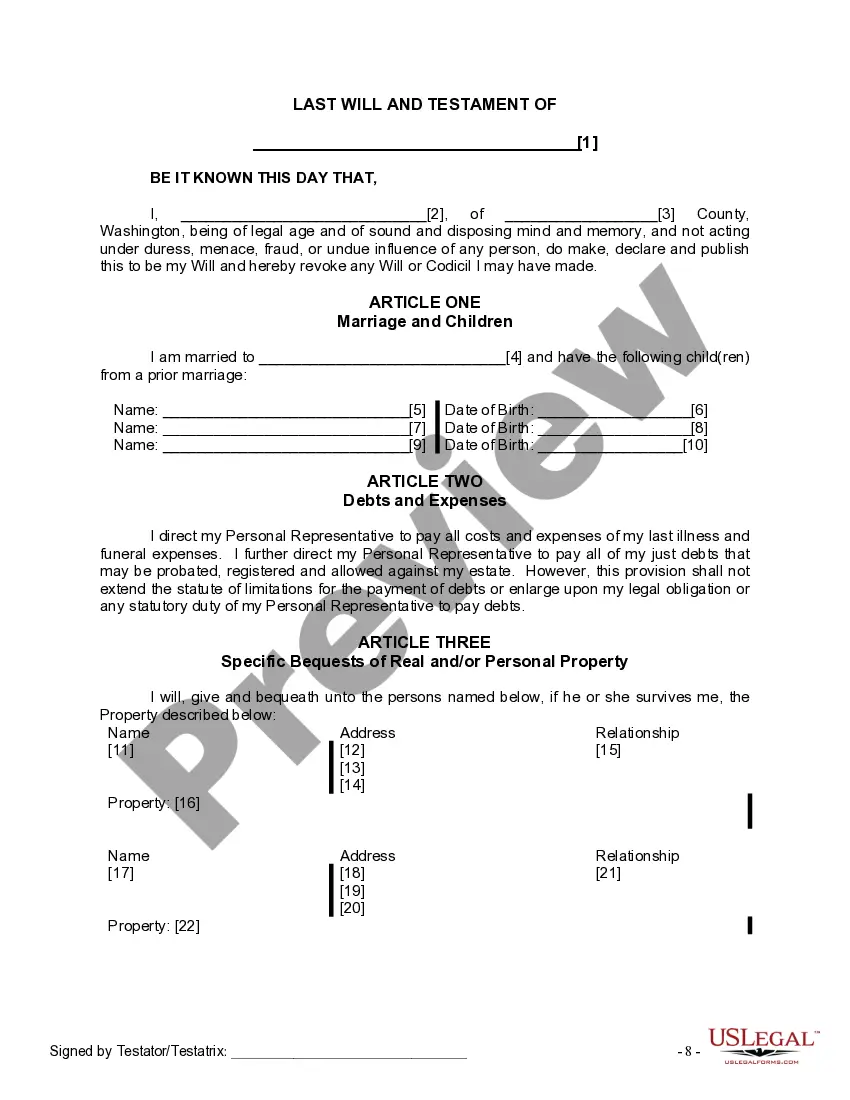
This Last Will and Testament is specifically designed for married individuals who have minor children from a previous marriage. It serves to outline how your property will be distributed upon your death and allows you to appoint a personal representative, trustee, and guardian for your children. Unlike standard wills, this form takes into account the complexities of blended families and provides tailored provisions for asset management and child guardianship.
Form components explained
- Appointment of a personal representative to manage your estate.
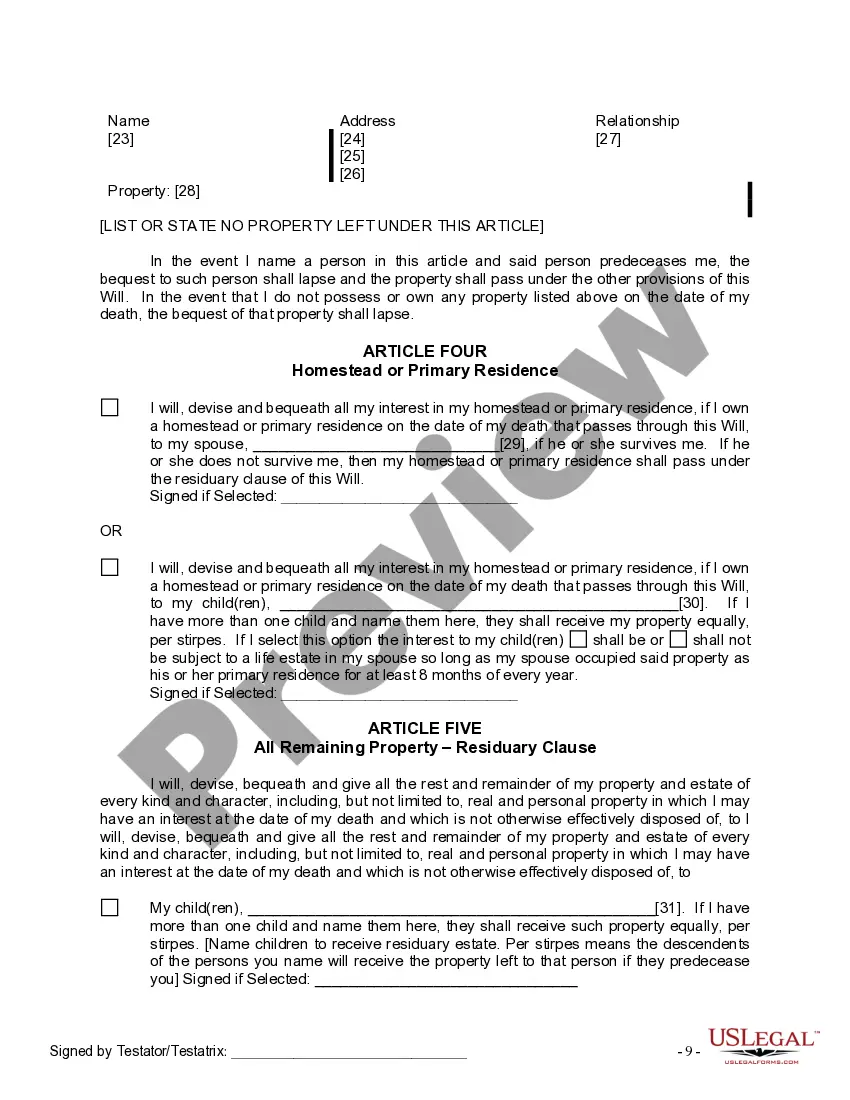
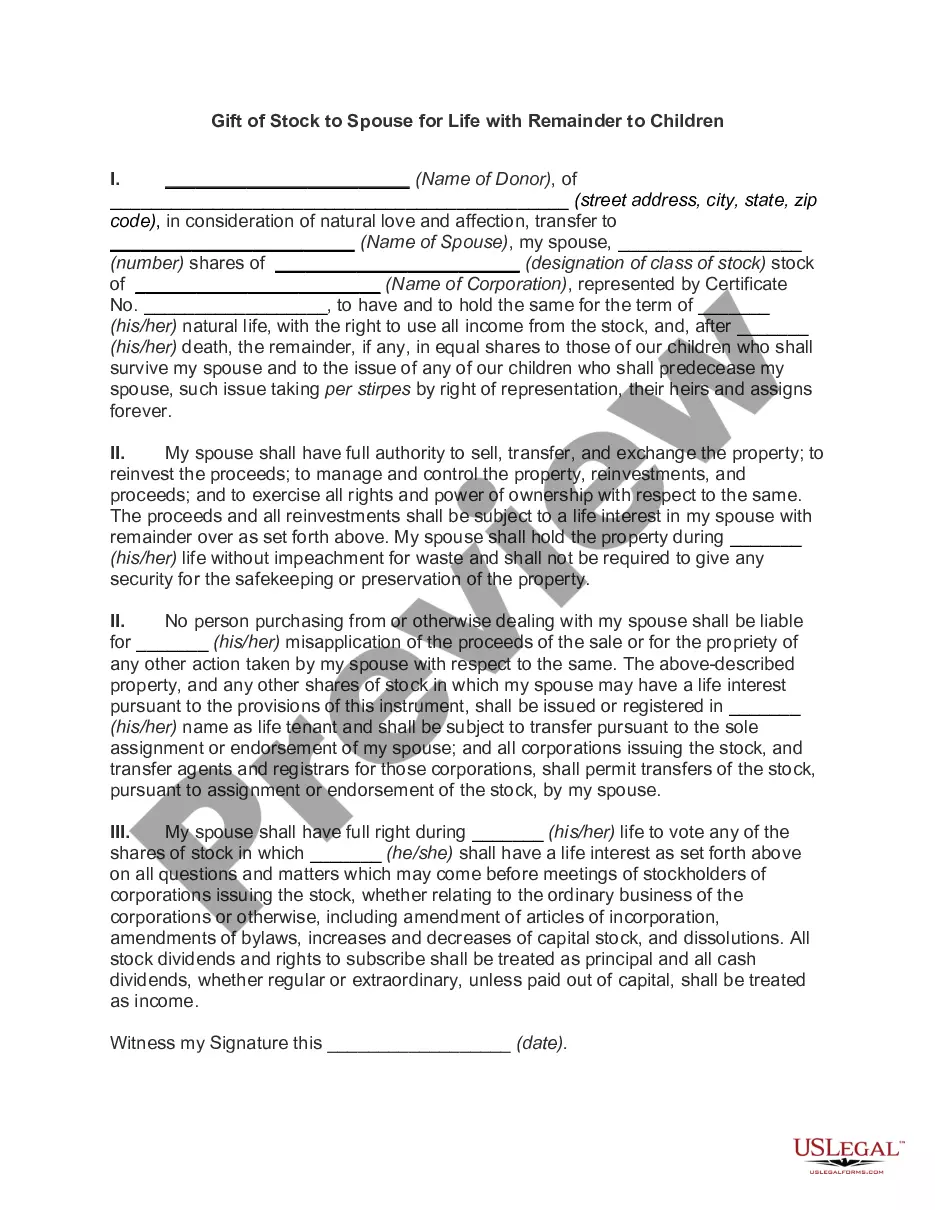
- Designations for property distribution among your spouse and children.
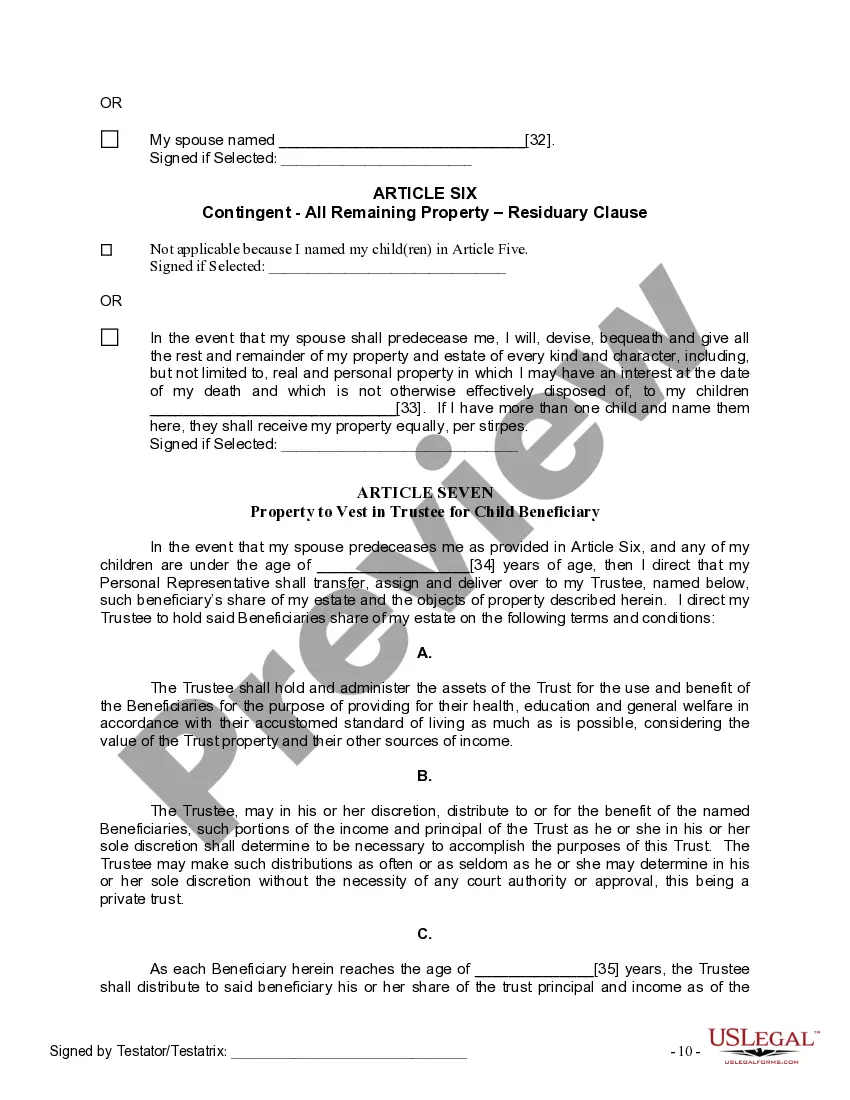
- Provision for appointing a trustee for managing assets for minor children.
- Instructions for funeral arrangements and debts.
- Clarifications on guardianship for minor children should both parents pass away.




Situations where this form applies
This form should be used when a married individual with minor children from a prior relationship wishes to ensure that their assets are distributed according to their preferences. It is crucial for those who want to define how their property will be managed for their minor children, thereby protecting their interests and providing for their upbringing in the event of the parent's death.
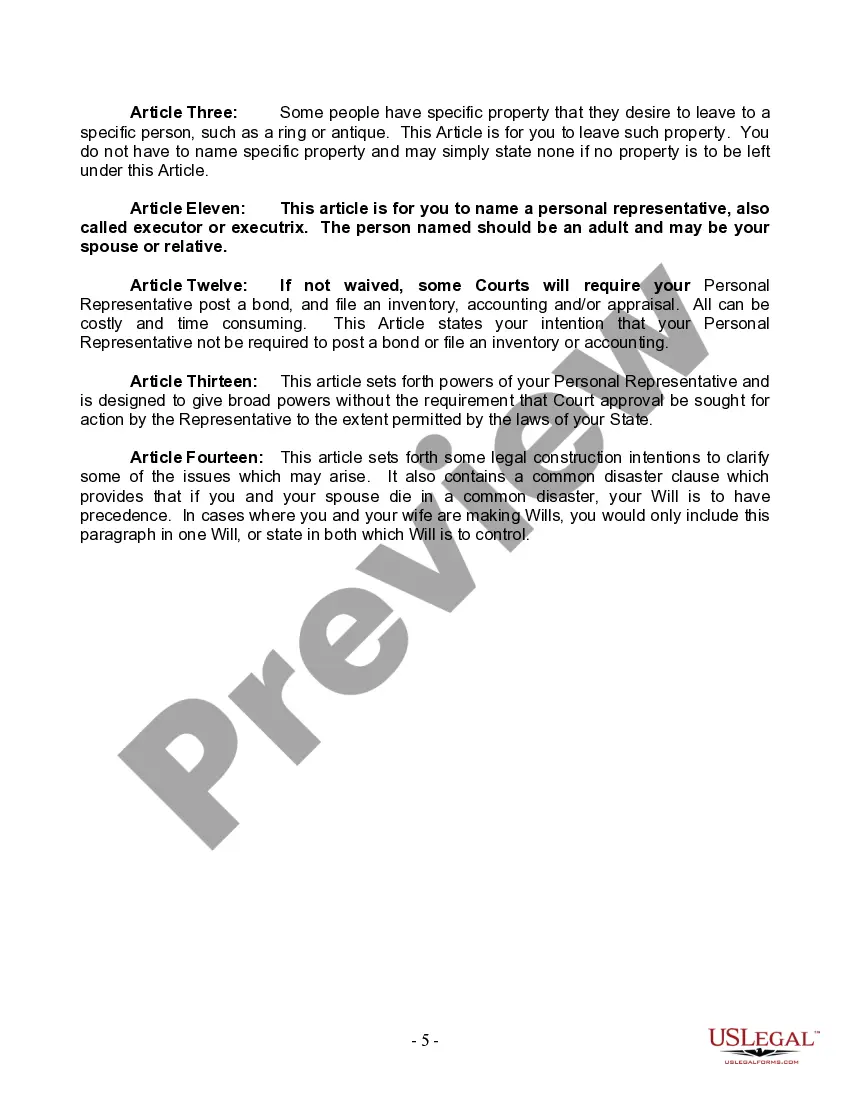
Who needs this form
- Married individuals with children from previous marriages.
- Parents concerned about the guardianship of their minor children.
- Those wanting to specify the management of assets intended for their children.
- Individuals seeking to clarify their estate distribution wishes to avoid confusion among heirs.
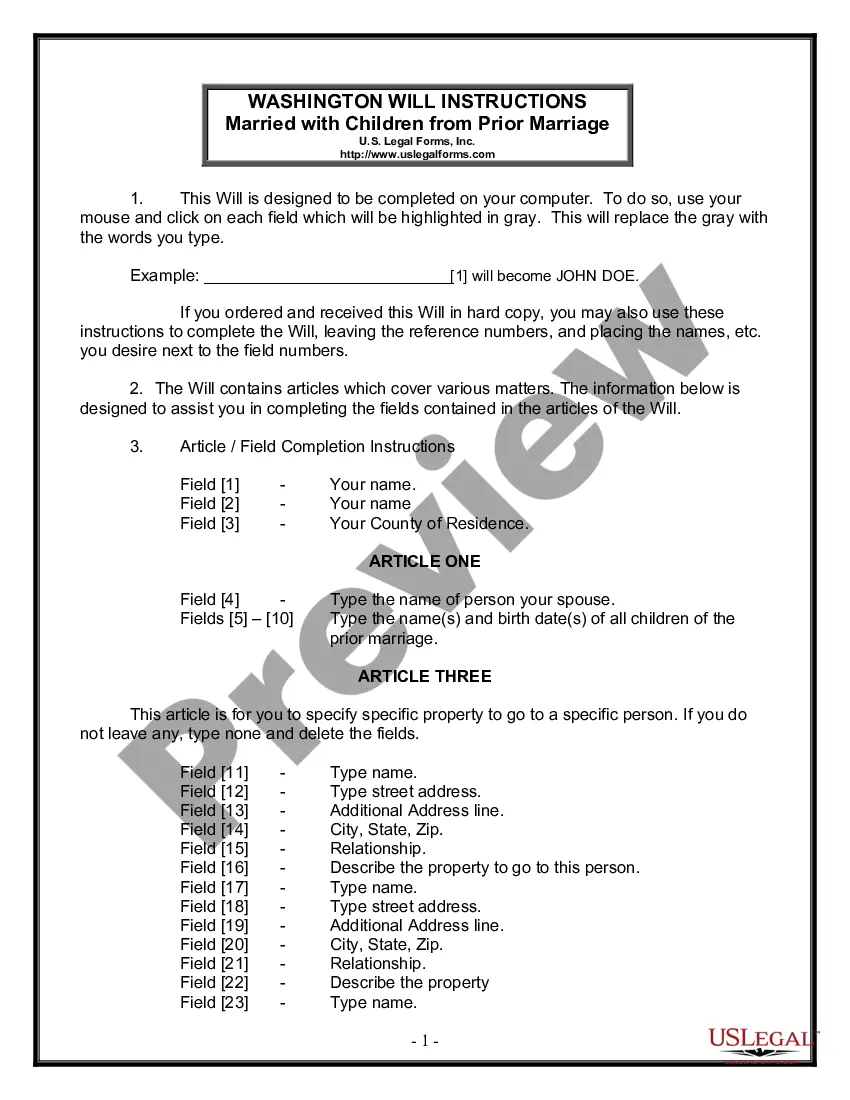
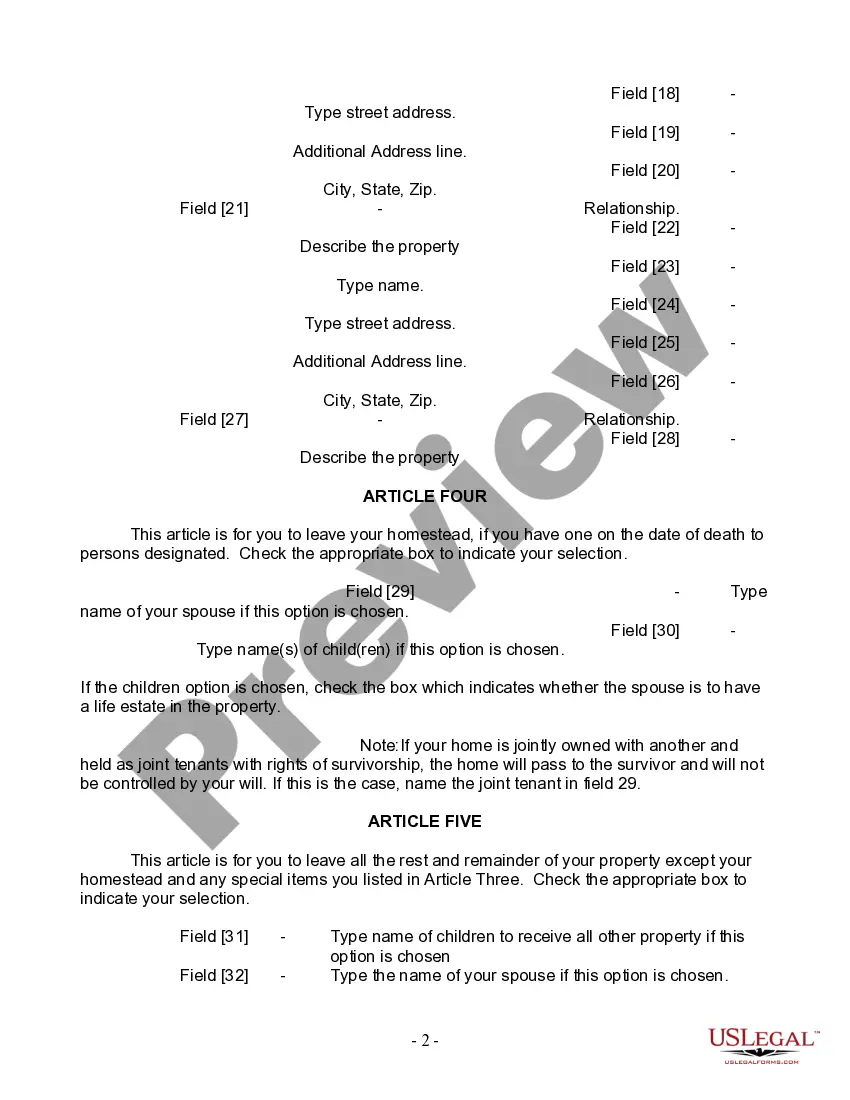
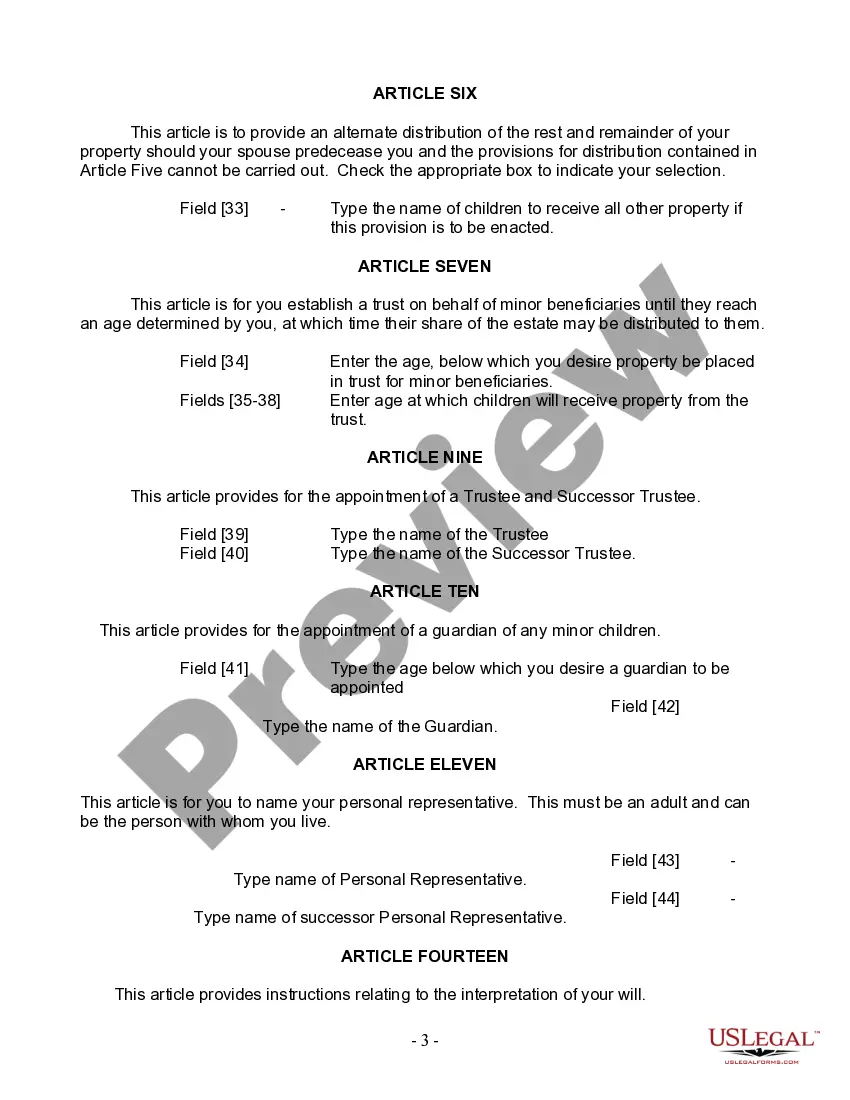
Instructions for completing this form
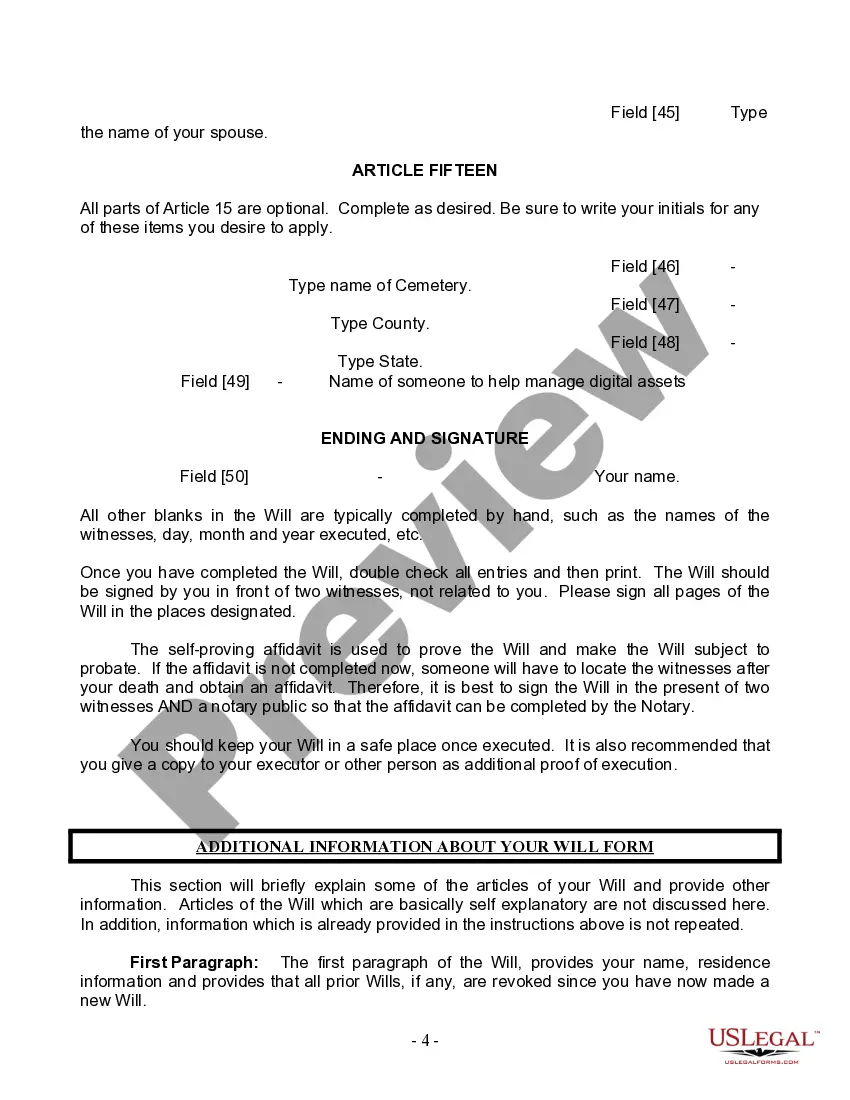
- Begin by entering your full name and county of residence.
- Designate your spouse's name and list any children from the prior marriage along with their birth dates.
- Specify any specific bequests you wish to make to individuals, detailing the relationship and describing the property.
- Indicate your choice of guardianship for your minor children and appoint a trustee for managing their inheritance.
- Ensure the will is signed in front of two unrelated witnesses and, if applicable, notarized to validate the self-proving affidavit.
Notarization guidance
Yes, this form must be notarized to be legally valid. Completion of the self-proving affidavit requires a notary public's signature, which simplifies the probate process. US Legal Forms offers integrated online notarization services for your ease and convenience.
Get your form ready online
Our built-in tools help you complete, sign, share, and store your documents in one place.
Make edits, fill in missing information, and update formatting in US Legal Forms—just like you would in MS Word.
Download a copy, print it, send it by email, or mail it via USPS—whatever works best for your next step.
Sign and collect signatures with our SignNow integration. Send to multiple recipients, set reminders, and more. Go Premium to unlock E-Sign.
If this form requires notarization, complete it online through a secure video call—no need to meet a notary in person or wait for an appointment.
We protect your documents and personal data by following strict security and privacy standards.

Make edits, fill in missing information, and update formatting in US Legal Forms—just like you would in MS Word.

Download a copy, print it, send it by email, or mail it via USPS—whatever works best for your next step.

Sign and collect signatures with our SignNow integration. Send to multiple recipients, set reminders, and more. Go Premium to unlock E-Sign.

If this form requires notarization, complete it online through a secure video call—no need to meet a notary in person or wait for an appointment.

We protect your documents and personal data by following strict security and privacy standards.
Common mistakes to avoid
- Failing to have the will signed by two witnesses or a notary, which is essential for validity.
- Not clearly stating who will be the guardian for minor children.
- Leaving out pertinent details about property, leading to ambiguity in asset distribution.
- Overlooking the appointment of a successor personal representative.
Advantages of online completion
- Convenience of filling out the form from home at your own pace.
- Editability allows for easy modifications whenever necessary.
- Access to legal guidance through US Legal Forms ensures accuracy and compliance with state laws.
Looking for another form?



Form popularity
FAQ
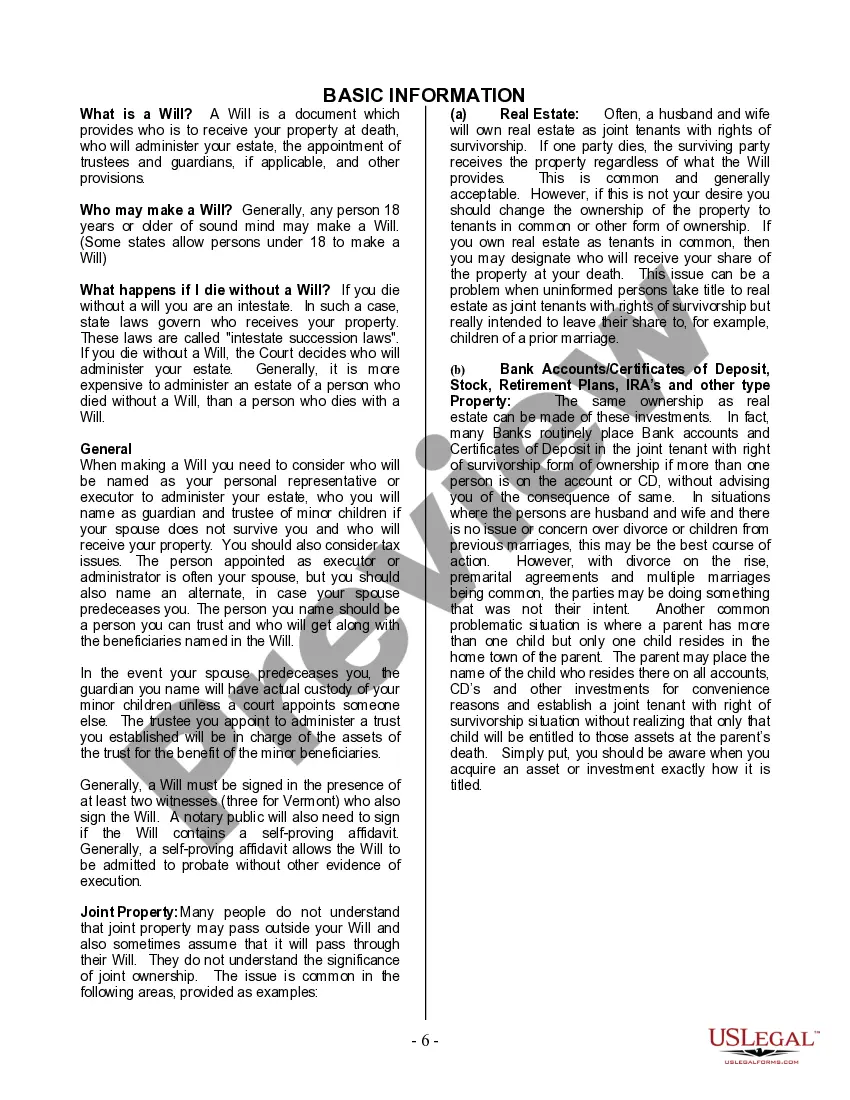
A joint will is a legal document executed by two (or more) people, which merges their individual wills into a single, combined last will and testament. Like most wills, a joint will lets the will-makers name who will get their property and assets after they die. Joint wills are usually created by married couples.
It must be in writing. Generally, of course, wills are composed on a computer and printed out. The person who made it must have signed and dated it. A will must be signed and dated by the person who made it. Two adult witnesses must have signed it. Witnesses are crucial.
Washington doesn't recognize holographic, or handwritten Wills, signed only by the testator. A valid Will in Washington needs to be signed by the testator in the presence of two disinterested witnesses who also sign. The same if true of any changes that are later made to a Will.
No, in Washington, you do not need to notarize your will to make it legal. However, Washington allows you to make your will "self-proving" and you'll need to go to a notary if you want to do that. A self-proving will speeds up probate because the court can accept the will without contacting the witnesses who signed it.
Washington doesn't recognize holographic, or handwritten Wills, signed only by the testator. A valid Will in Washington needs to be signed by the testator in the presence of two disinterested witnesses who also sign. The same if true of any changes that are later made to a Will.
If each spouse has their own Will, California law allows them to make new Wills after the divorce has been filed and creating the new Will does not violate the Automatic Temporary Restraining Order (ATRO) against changing beneficiaries, selling assets, etc.
Fraud or Undue Influence A nonfamily caregiver forcing the testator to leave them an inheritance. A family member getting the testator to sign a will by pretending it is just a general legal document that needs a signature.