Washington Warranty Deed for Parents to Child with Reservation of Life Estate
What this document covers
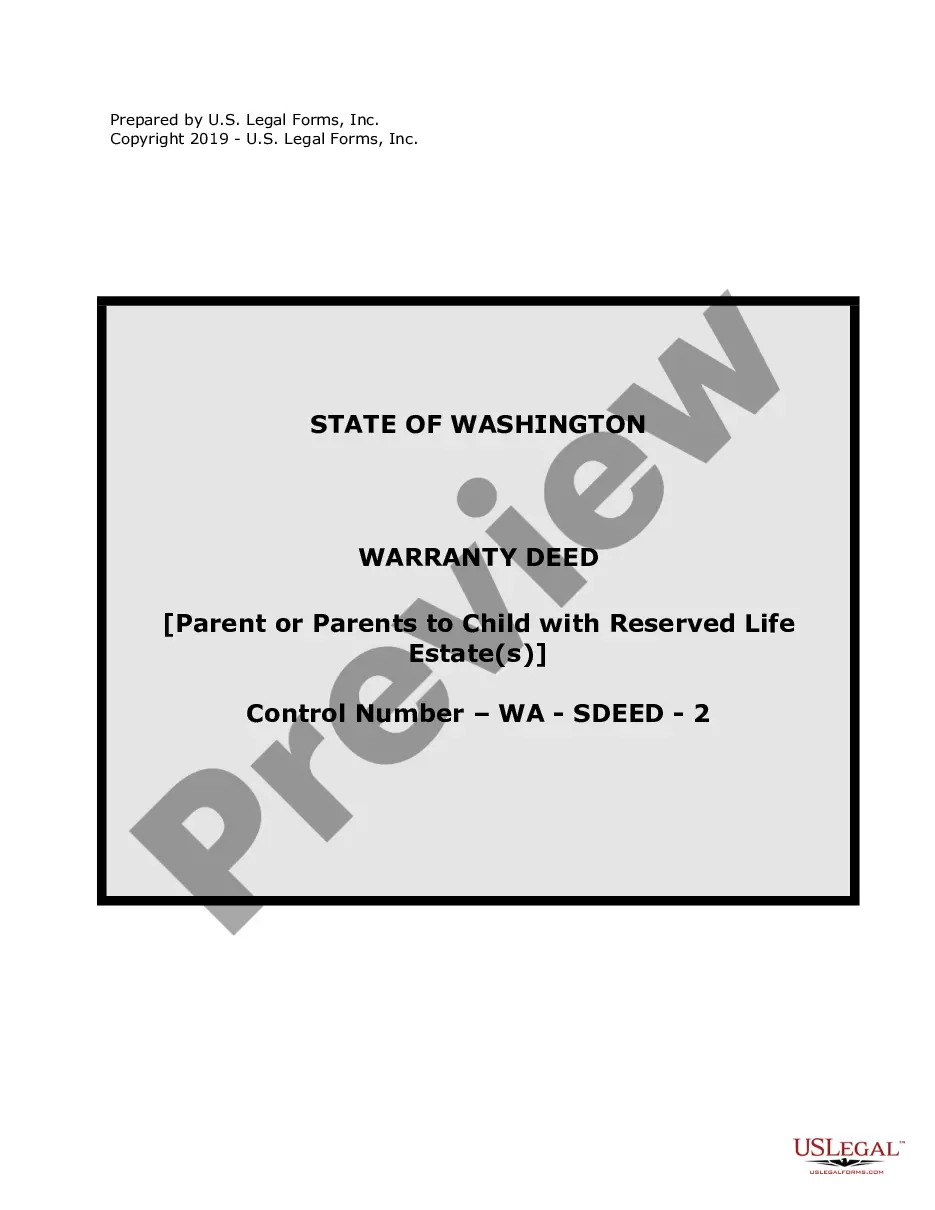
The Warranty Deed for Parents to Child with Reservation of Life Estate is a legal document that allows parents to transfer property ownership to their child while retaining the right to live in the property for the rest of their lives. This form differs from standard warranty deeds because it includes the provision of a life estate, ensuring that the parents can continue to enjoy the property during their lifetime despite the transfer of ownership. This deed is particularly useful for estate planning and to help avoid probate issues in the future.
What’s included in this form
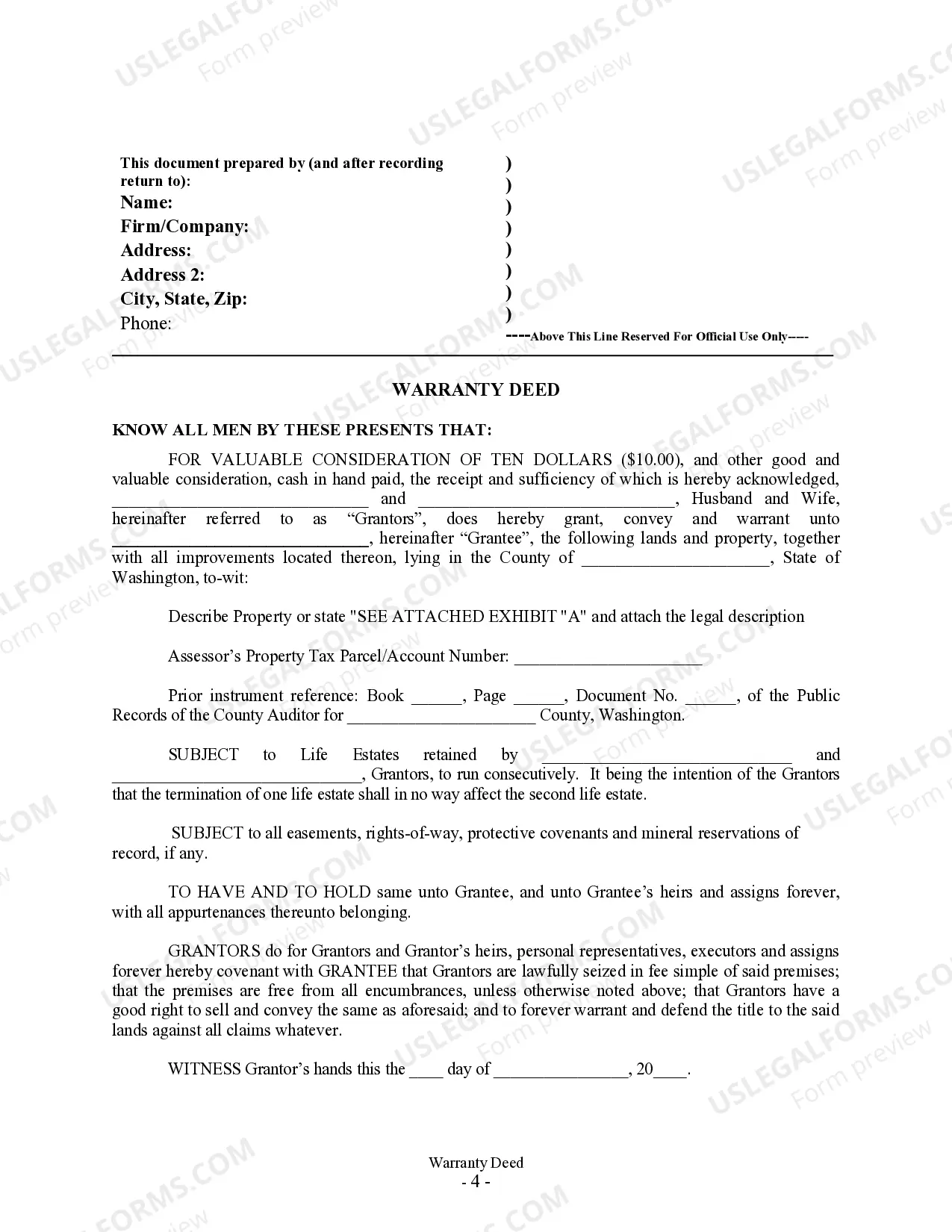
- Identifies the grantors (parents) and grantee (child)
- Describes the property being transferred, including legal description and tax parcel number
- Specifies the retention of life estates for the grantors
- Covenants about the title being free from encumbrances
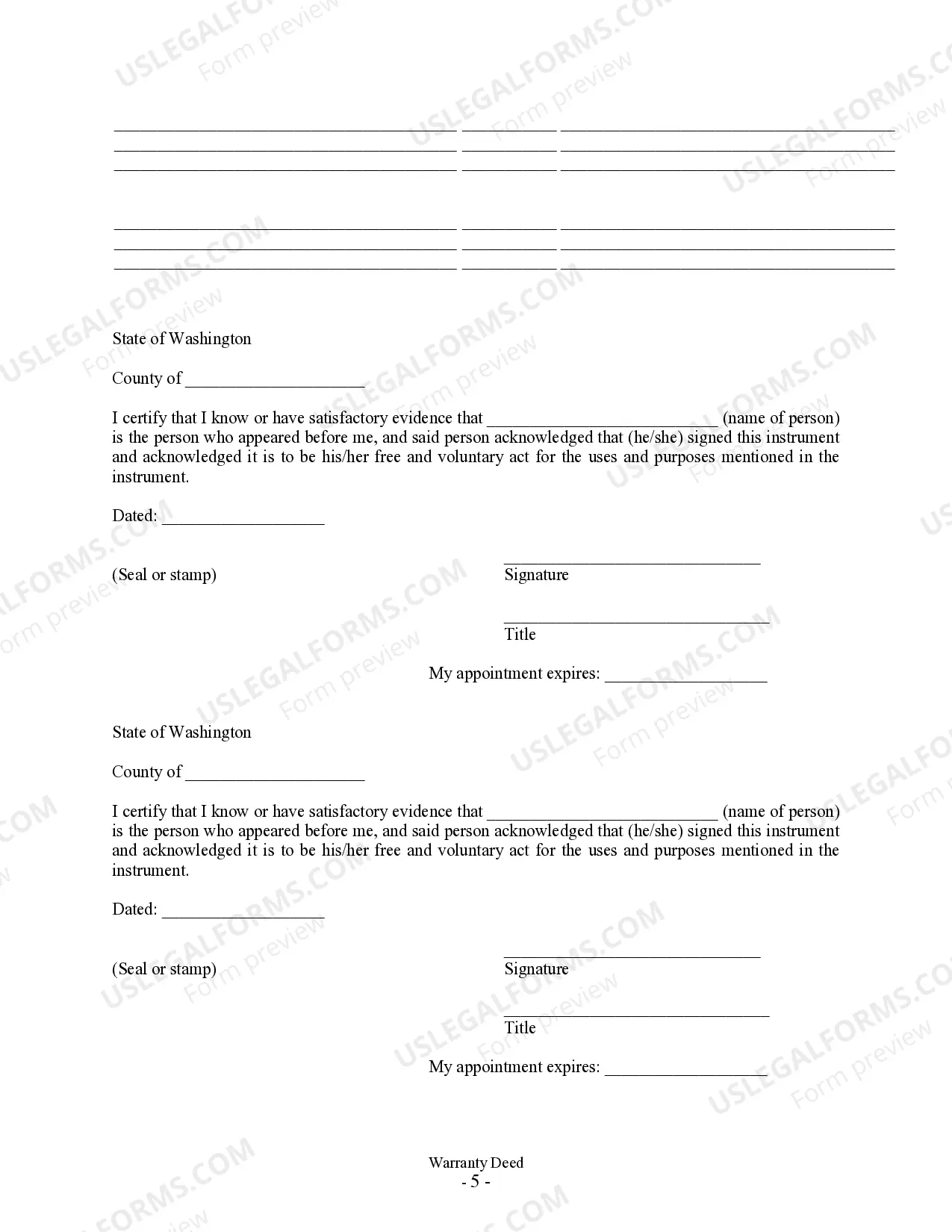
- Includes spaces for signatures of both grantors and a notary public


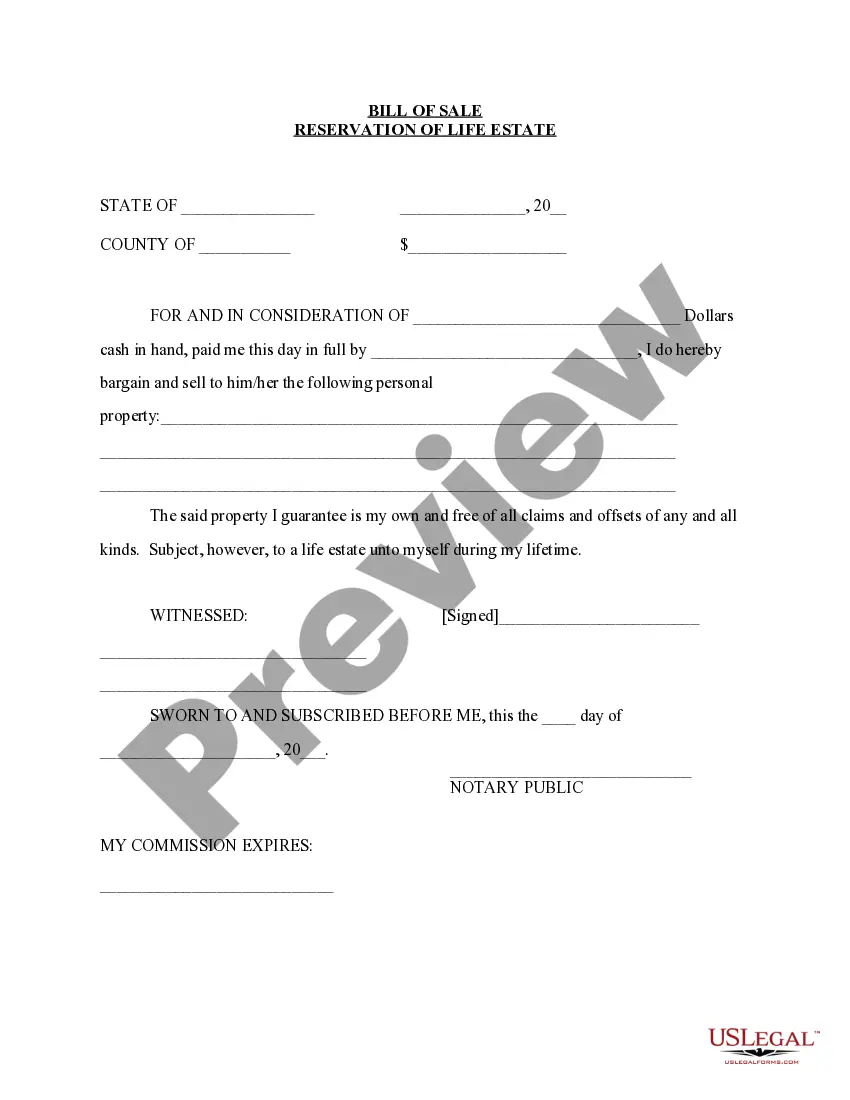

When to use this form
This form is appropriate to use when parents wish to transfer ownership of real estate to their child while ensuring they can continue to live in the property. It can be useful in scenarios such as planning for long-term care, avoiding probate, or managing family assets in preparation for inheritance. Using this form helps to clarify ownership rights and responsibilities while also protecting the parents' ability to remain in their home.
Who should use this form
- Parents who own property and want to transfer it to their child
- Individuals looking to establish a life estate arrangement within their family
- Homeowners engaging in estate planning to ensure a smooth transition of property
- Those seeking to avoid potential probate complications related to real estate
Completing this form step by step
- Identify the parties involved: grantors (parents) and grantee (child).
- Specify the property by providing the legal description and assessors property tax parcel number.
- Indicate the names of the grantors and detail the life estate retained by them.
- Complete the required signatures and enter the date.
- Have the document notarized to validate the transfer and ensure its legal enforceability.
Notarization guidance
To make this form legally binding, it must be notarized. Our online notarization service, powered by Notarize, lets you verify and sign documents remotely through an encrypted video session.
Get your form ready online
Our built-in tools help you complete, sign, share, and store your documents in one place.
Make edits, fill in missing information, and update formatting in US Legal Forms—just like you would in MS Word.
Download a copy, print it, send it by email, or mail it via USPS—whatever works best for your next step.
Sign and collect signatures with our SignNow integration. Send to multiple recipients, set reminders, and more. Go Premium to unlock E-Sign.
If this form requires notarization, complete it online through a secure video call—no need to meet a notary in person or wait for an appointment.
We protect your documents and personal data by following strict security and privacy standards.

Make edits, fill in missing information, and update formatting in US Legal Forms—just like you would in MS Word.

Download a copy, print it, send it by email, or mail it via USPS—whatever works best for your next step.

Sign and collect signatures with our SignNow integration. Send to multiple recipients, set reminders, and more. Go Premium to unlock E-Sign.

If this form requires notarization, complete it online through a secure video call—no need to meet a notary in person or wait for an appointment.

We protect your documents and personal data by following strict security and privacy standards.
Common mistakes to avoid
- Failing to provide a complete legal description of the property.
- Not specifying all grantors who will retain a life estate.
- Omitting notarization, which is necessary for legal validity.
- Leaving fields blank or incomplete, which can delay processing.
Why complete this form online
- Convenient access and download, allowing you to complete the form at your own pace.
- Forms are editable in Microsoft Word, making it easy to make necessary changes.
- Instructional guidance included to assist with proper completion.
- Reliable source of legal forms created by licensed attorneys.
Looking for another form?
Form popularity
FAQ
A person owns property in a life estate only throughout their lifetime. Beneficiaries cannot sell property in a life estate before the beneficiary's death. One benefit of a life estate is that property can pass when the life tenant dies without being part of the tenant's estate.
A California Revocable Transfer-On-Death Deed does not take effect until the property owner dies.As long as the original owner is alive, he can revoke the transfer, sell the property, add or remove beneficiaries, and otherwise maintain complete control over the property.
Almost all deeds creating a life estate will also name a remaindermanthe person or persons who get the property when the life tenant dies.The life tenant is the owner of the property until they die. However, the remainderman also has an ownership interest in the property while the life tenant is alive.
Can a life estate deed be changed? It is challenging to modify or change a life estate deed. The grantor cannot change the life estate as he or she has no power to do so after creating the life estate deed unless all of the future tenants agree. It requires the permission or consent of every one of the beneficiaries.
A special warranty deed is one in which the grantor is only guaranteeing that there are no outstanding claims or liens against the property arising from their ownership.
The creation of a life estate is accomplished by the language to Recipient for life or, if it is to be a life estate pur autre vie, to recipient for the life of (another person). The holder of the life estate is called the life tenant. If the property is to return to the original owner after the death of the life
A life estate is a form of joint ownership that allows one person to remain in a house until his or her death, when it passes to the other owner.
What happens to a life estate after someone dies? Upon the life tenant's death, the property passes to the remainder owner outside of probate.They can sell the property or move into and claim it as their primary residence (homestead). Property taxes will not be reassessed.