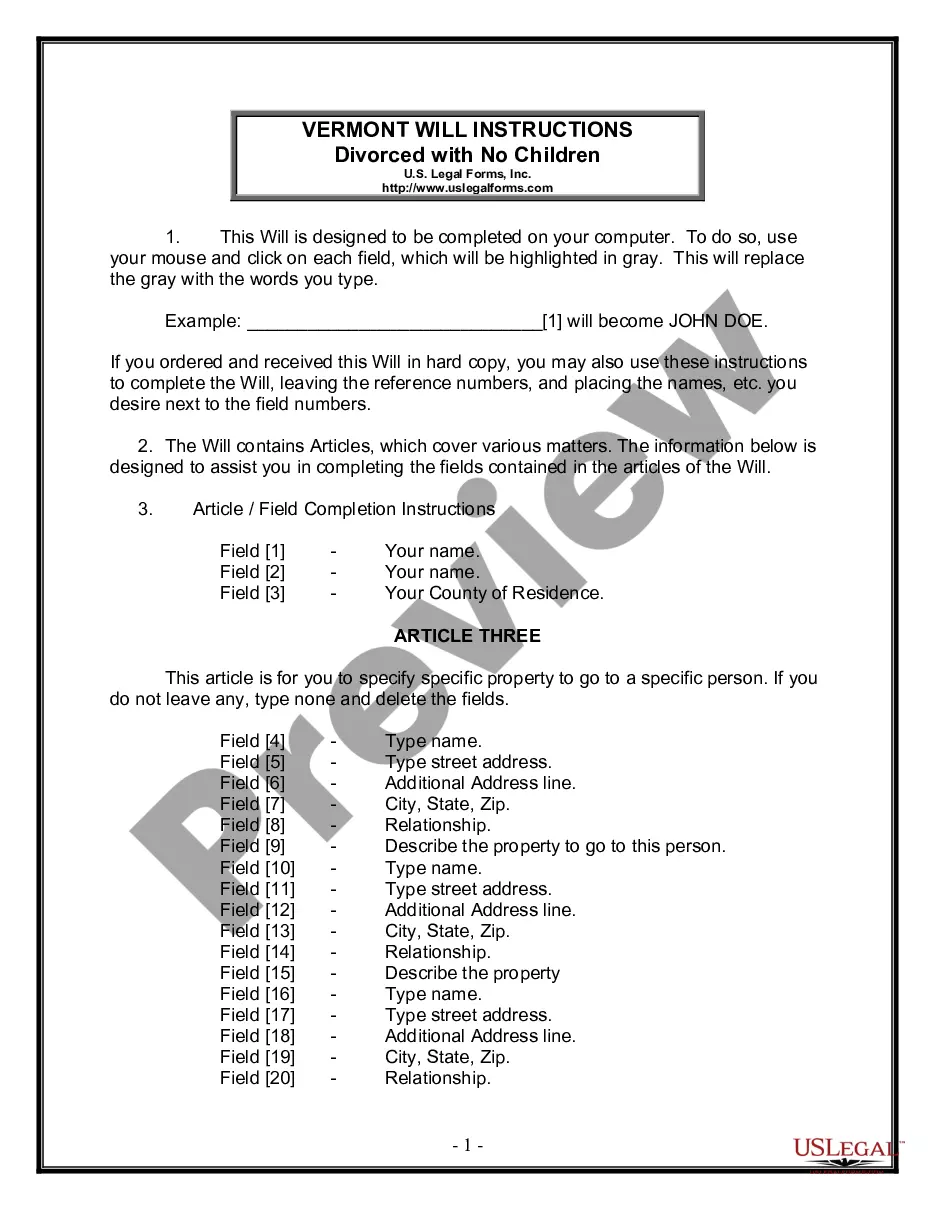
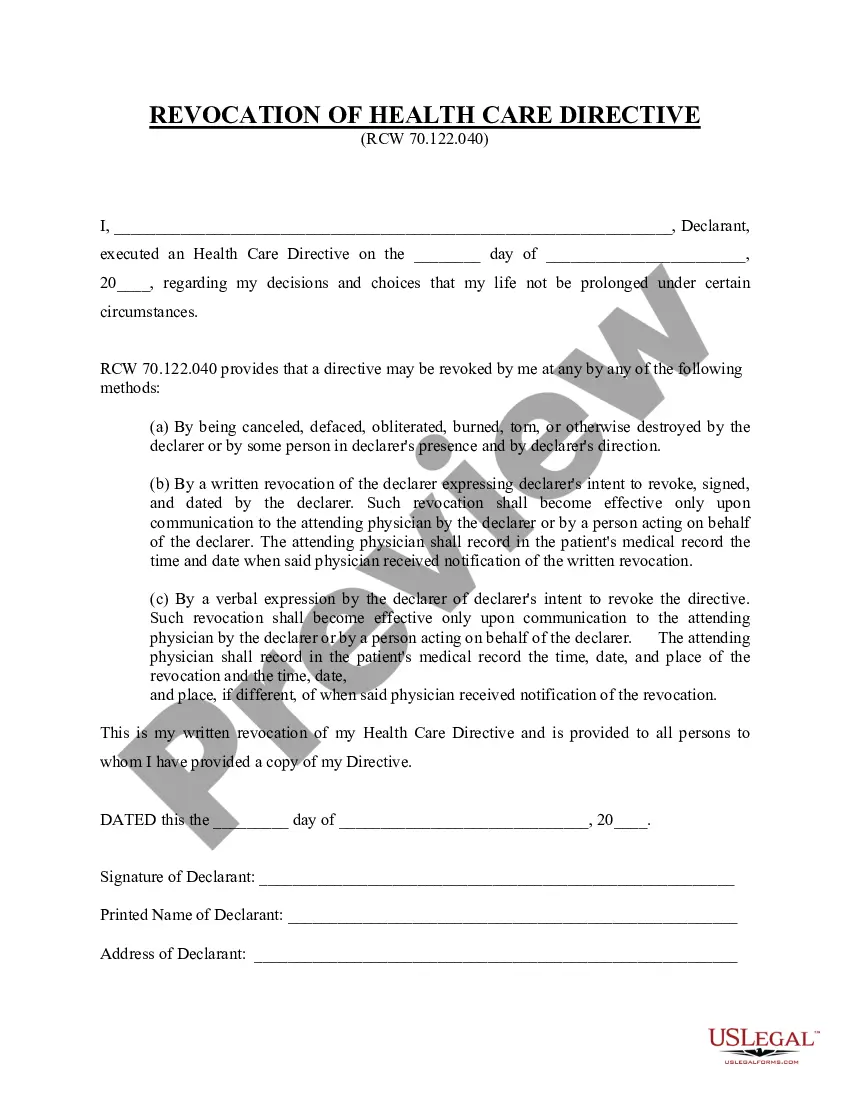
Washington Revocation of Statutory Equivalent of Living Will - Health Care Directive
About this form
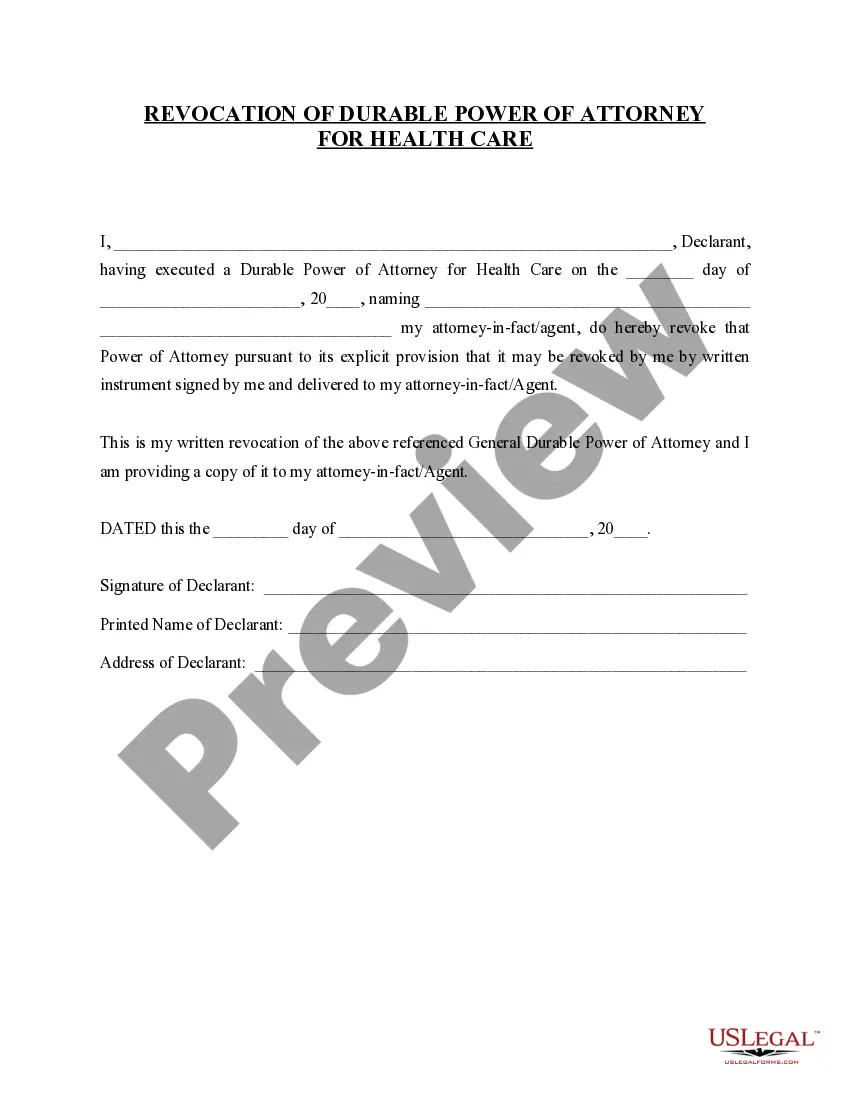
The Revocation of Statutory Equivalent of Living Will - Health Care Directive is a legal document that allows individuals to revoke a previously executed health care directive. This form expresses the declarant's intent to withdraw their wishes about life-prolonging treatments in certain circumstances. Unlike a living will, which provides directions for future medical treatment, this revocation form is used specifically to cancel those prior instructions and must be communicated to the attending physician for it to take effect.
Key parts of this document
- Declarant's name and personal information
- Date of the initial health care directive
- Methods for revoking the directive (cancellation, written revocation, verbal indication)
- Signature and printed name of the declarant
- Date of the revocation

When this form is needed
This form should be used when an individual decides to revoke a prior health care directive. It is essential for situations where a person has changed their mind about their end-of-life care preferences or wishes to update their medical treatment instructions. This revocation is particularly relevant if circumstances have changed, such as a new diagnosis or personal beliefs about health care that differ from what was previously established.
Who can use this document
- Individuals who have previously executed a health care directive and wish to change their end-of-life care preferences.
- Those seeking to ensure that their latest wishes are clear and legally recognized.
- Family members or guardians acting on behalf of someone who has a health care directive and needs to initiate a revocation.
Steps to complete this form
- Enter your name and personal details at the top of the form.
- Specify the date on which you originally executed the health care directive.
- Choose and indicate your preferred method of revocation (cancellation, written, or verbal).
- Sign the form at the designated space to affirm your intent.
- Provide the date of revocation in the appropriate field.
Notarization requirements for this form
In most cases, this form does not require notarization. However, some jurisdictions or signing circumstances might. US Legal Forms offers online notarization powered by Notarize, accessible 24/7 for a quick, remote process.
Get your form ready online
Our built-in tools help you complete, sign, share, and store your documents in one place.
Make edits, fill in missing information, and update formatting in US Legal Forms—just like you would in MS Word.
Download a copy, print it, send it by email, or mail it via USPS—whatever works best for your next step.
Sign and collect signatures with our SignNow integration. Send to multiple recipients, set reminders, and more. Go Premium to unlock E-Sign.
If this form requires notarization, complete it online through a secure video call—no need to meet a notary in person or wait for an appointment.
We protect your documents and personal data by following strict security and privacy standards.

Make edits, fill in missing information, and update formatting in US Legal Forms—just like you would in MS Word.

Download a copy, print it, send it by email, or mail it via USPS—whatever works best for your next step.

Sign and collect signatures with our SignNow integration. Send to multiple recipients, set reminders, and more. Go Premium to unlock E-Sign.

If this form requires notarization, complete it online through a secure video call—no need to meet a notary in person or wait for an appointment.

We protect your documents and personal data by following strict security and privacy standards.
Typical mistakes to avoid
- Failing to communicate the revocation to the attending physician.
- Not signing and dating the revocation form.
- Overlooking the inclusion of necessary personal information.
Why use this form online
- Convenient access to the form anytime, allowing immediate use when needed.
- Editable fields that ensure correct completion before finalizing.
- Reliable templates drafted by licensed attorneys for legal compliance.
What to keep in mind
- The form is essential for canceling a prior health care directive.
- Clear communication with your physician is vital for the revocation to be recognized.
- Using this form online offers practical benefits such as ease of access and editability.
Looking for another form?

Form popularity
FAQ
Health Care Directive Must be signed by two witnesses or notarized. Neither of your witnesses nor the notary may be your health care agent. If you choose to have the document witnessed, at least one of the witnesses may not be a health care provider or an employee of a provider directly attending to you.
The health care directive must be signed by you and witnessed by two people or acknowledged by a notary public. The health care directive allows people who clearly do not want their lives artificially prolonged under the above conditions to make their wishes known.
A person can also revoke their Advance Directive orally, by telling their healthcare provider that they no longer want either the entire document or any parts of it enforced.
As long as you can still make your own decisions, your advance directive won't be used. You can change or cancel it at any time. Your health care agent will only make choices for you if you can't or don't want to decide for yourself.
No, in Washington, you do not need to notarize your will to make it legal. However, Washington allows you to make your will "self-proving" and you'll need to go to a notary if you want to do that. A self-proving will speeds up probate because the court can accept the will without contacting the witnesses who signed it.
2. Your spouse, de facto or same sex partner Person with whom you have a close and continuing relationship. Person who currently provides support to you or did before you entered residential care.
An advance directive, alone, may not be sufficient to stop all forms of life-saving treatment.You retain the right to override the decisions or your representative, change the terms of your living will or POA, or completely revoke an advance directive.
Even though they are not required to follow your wishes, most will do so.In an emergency, a physician's choices could override your living will for another reason; if proper care dictates you to be treated in a certain way or there is an ethical obligation, that could override your wishes.
Some states combine a declaration and a durable power of attorney into a single form, called an "advance health care directive."If someone disputes the validity of your health care directive, it may be challenged in court.