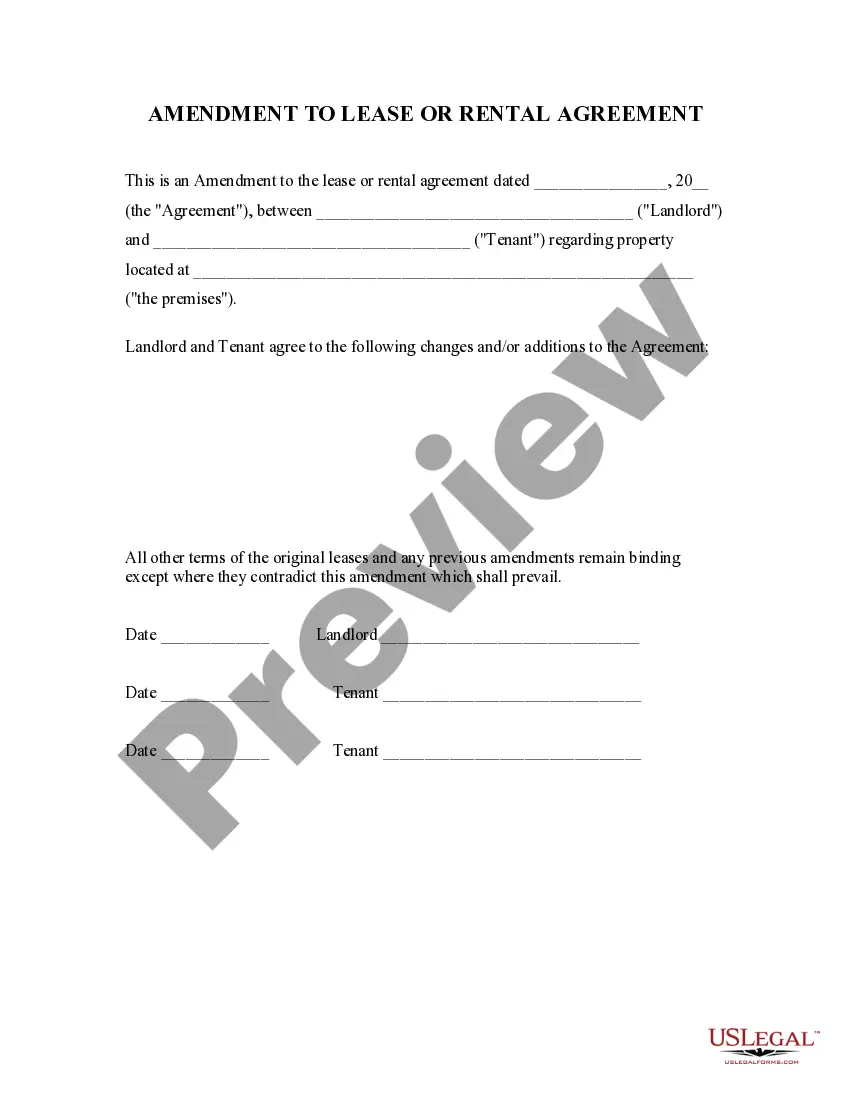
Washington Amendment to Lease or Rental Agreement
What is this form?
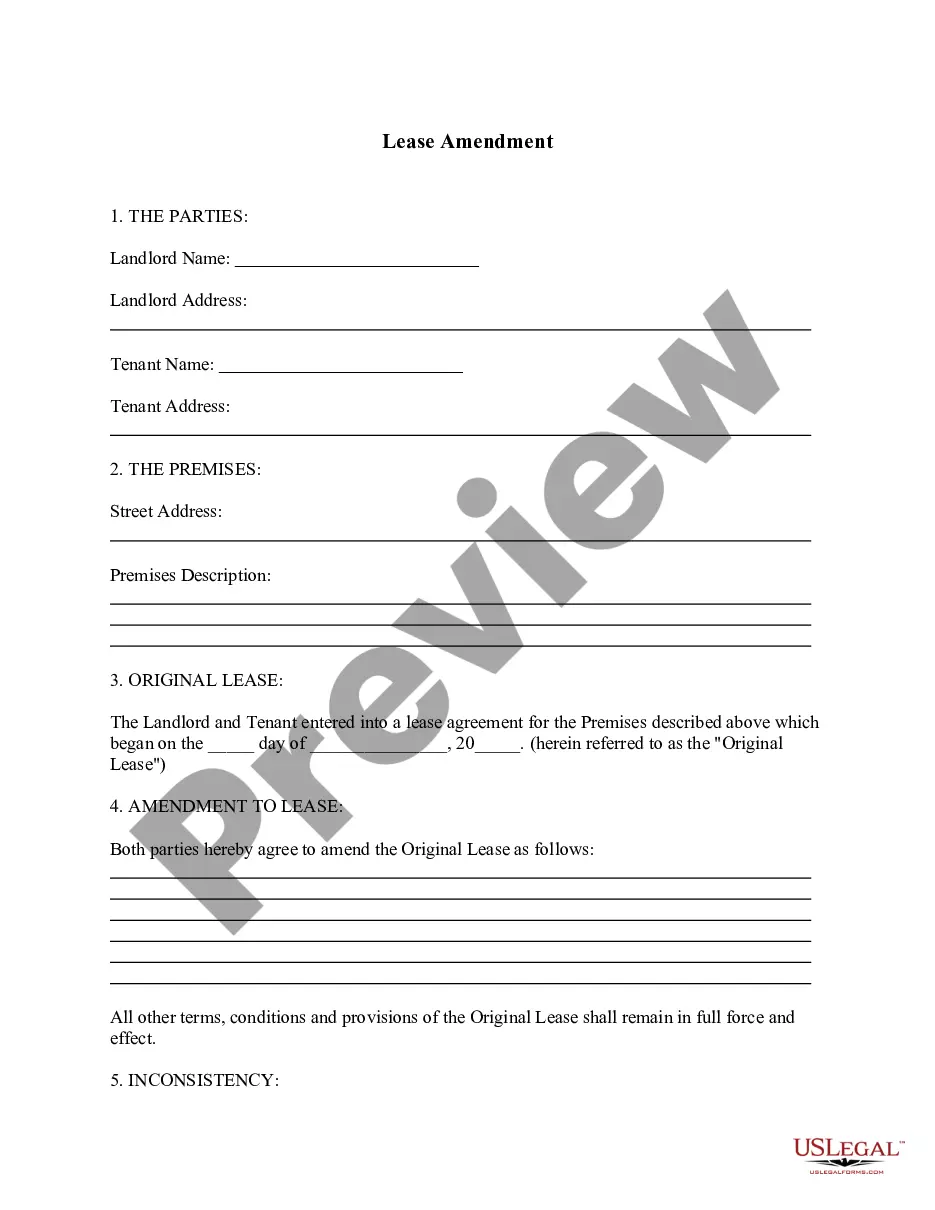
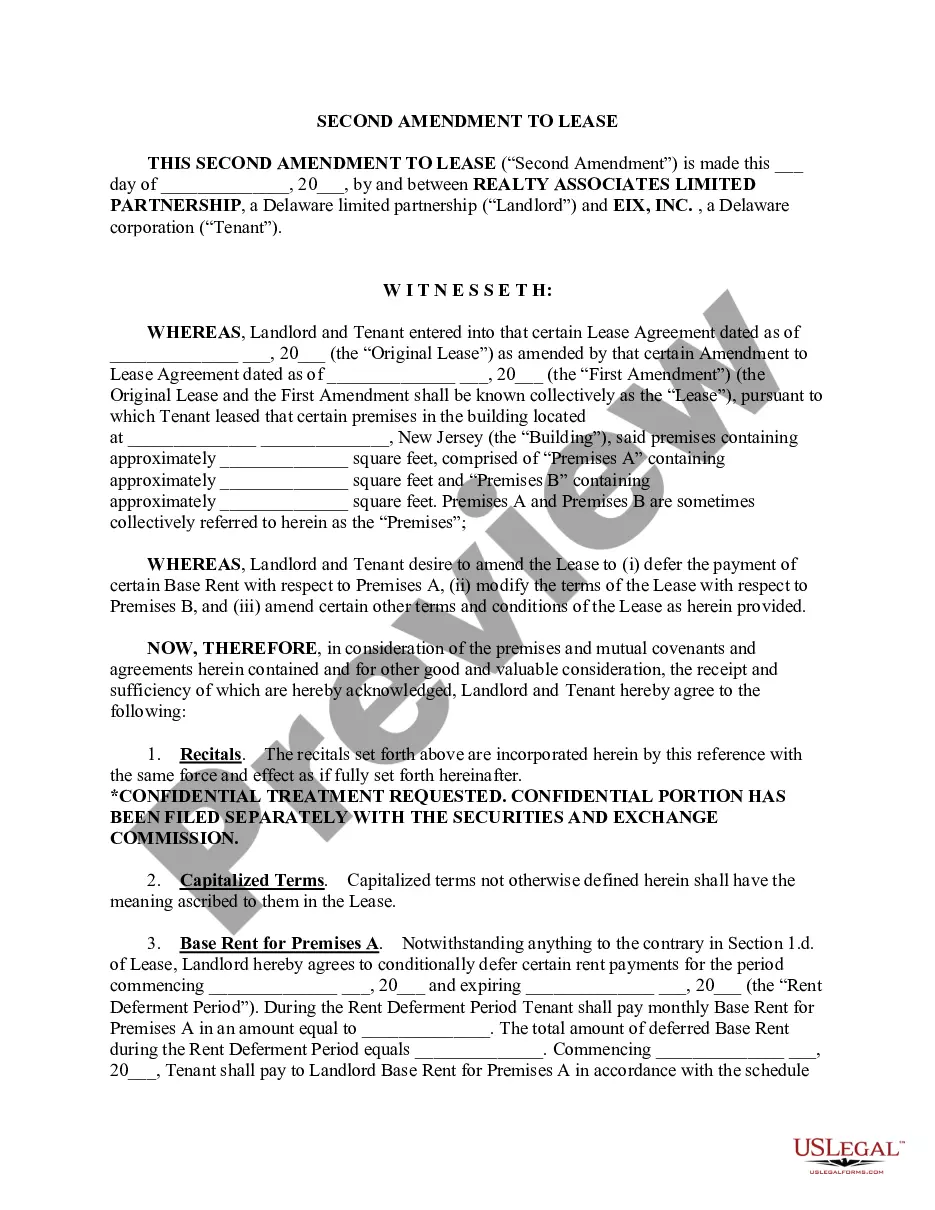
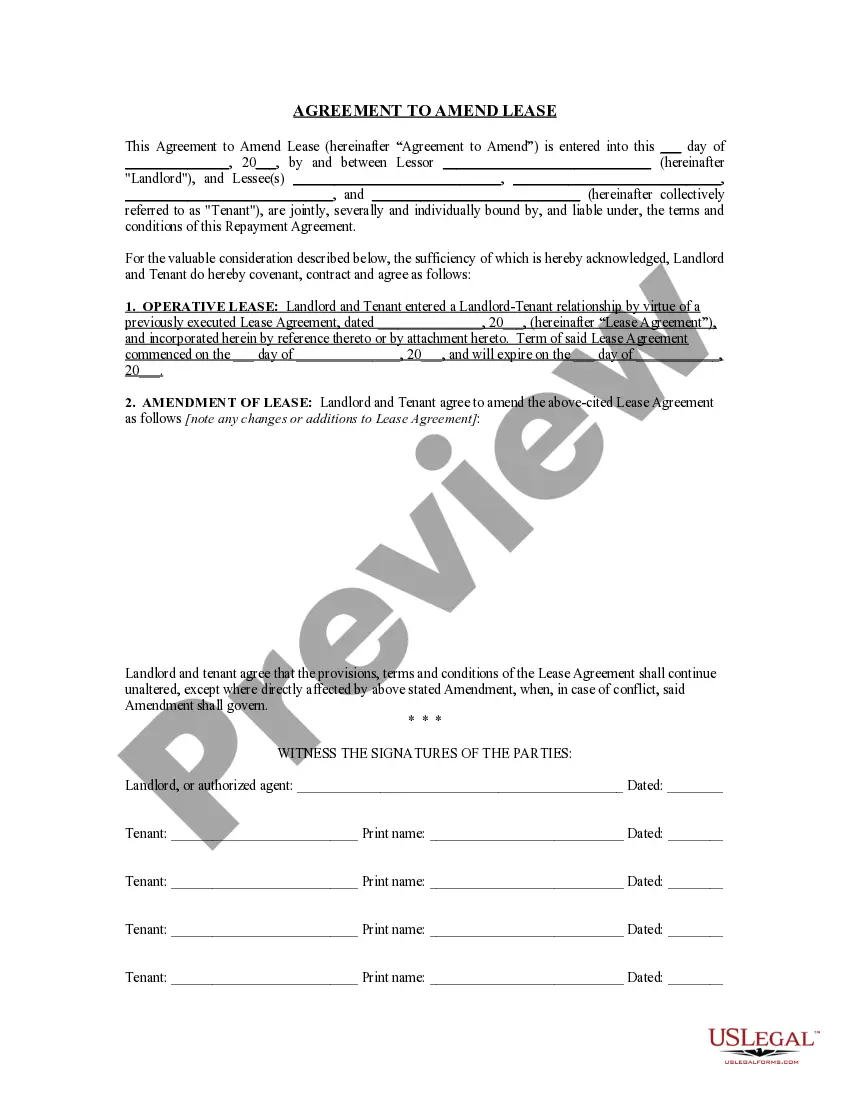
The Amendment to Lease or Rental Agreement is a legal document used to formally record changes to an existing rental agreement. This form ensures that both the landlord and tenant agree to the new terms, providing clarity and protection for both parties. Unlike verbal agreements, this written amendment can help resolve disputes by clearly detailing the adjustments made to the original rental agreement.
Form components explained
- Date of the original rental agreement.
- Identification of both the landlord and tenant.
- Description of the property involved.
- Detailed changes being made to the original agreement.
- Signatures of both the landlord and tenant.
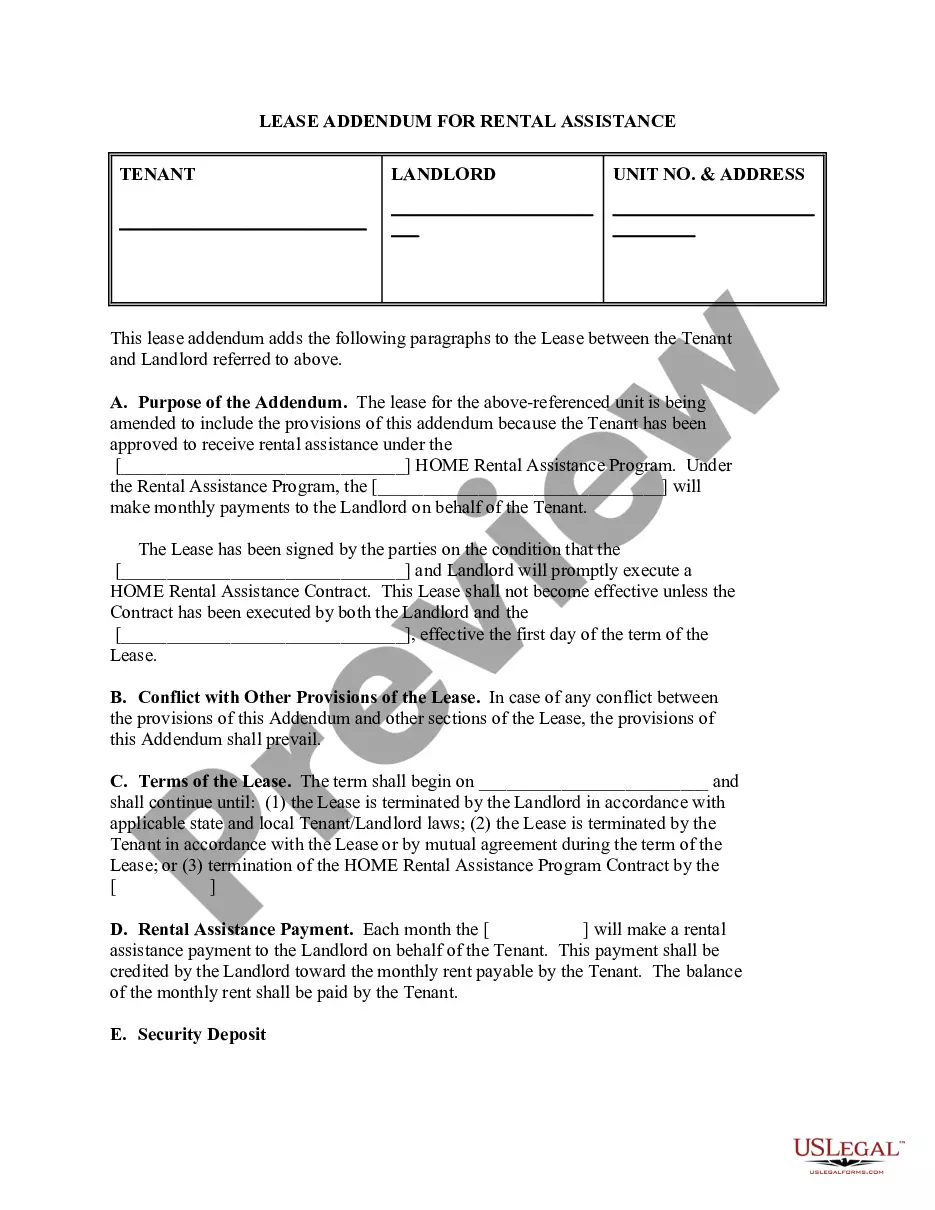
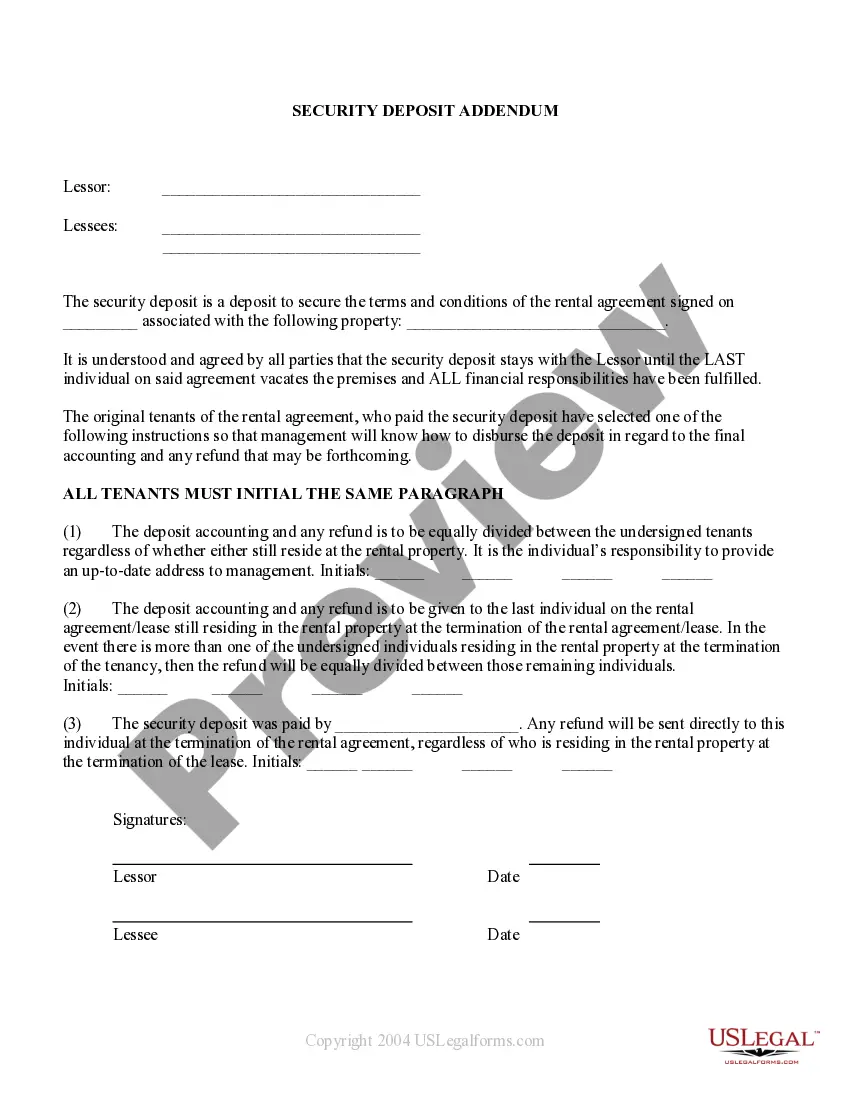
When this form is needed
This form is essential when either the landlord or tenant wishes to alter specific terms of the rental agreement. Common scenarios include changes in rental rates, lease duration extensions, or amendments to pet policies. Documenting these adjustments reduces the risk of misunderstandings and solidifies the agreed-upon terms for both parties.
Who should use this form
- Landlords seeking to modify existing lease terms.
- Tenants who want to propose changes to their rental agreements.
- Property managers acting on behalf of landlords.
- Individuals involved in residential or commercial leasing arrangements.
Steps to complete this form
- Identify the original rental agreement date and complete this section.
- Insert the full names of the landlord and tenant in the designated fields.
- Specify the address of the rental property.
- Clearly state the amendments to the terms of the original lease.
- Both parties should sign and date the amendment.
Is notarization required?
Notarization is not commonly needed for this form. However, certain documents or local rules may make it necessary. Our notarization service, powered by Notarize, allows you to finalize it securely online anytime, day or night.
Get your form ready online
Our built-in tools help you complete, sign, share, and store your documents in one place.
Make edits, fill in missing information, and update formatting in US Legal Forms—just like you would in MS Word.
Download a copy, print it, send it by email, or mail it via USPS—whatever works best for your next step.
Sign and collect signatures with our SignNow integration. Send to multiple recipients, set reminders, and more. Go Premium to unlock E-Sign.
If this form requires notarization, complete it online through a secure video call—no need to meet a notary in person or wait for an appointment.
We protect your documents and personal data by following strict security and privacy standards.

Make edits, fill in missing information, and update formatting in US Legal Forms—just like you would in MS Word.

Download a copy, print it, send it by email, or mail it via USPS—whatever works best for your next step.

Sign and collect signatures with our SignNow integration. Send to multiple recipients, set reminders, and more. Go Premium to unlock E-Sign.

If this form requires notarization, complete it online through a secure video call—no need to meet a notary in person or wait for an appointment.

We protect your documents and personal data by following strict security and privacy standards.
Avoid these common issues
- Not specifying all changes clearly, leading to confusion.
- Failing to sign the document by both parties.
- Using informal language rather than precise legal wording.
- Omitting the date of the original rental agreement.
Benefits of using this form online
- Convenience of downloading and filling out the form from anywhere.
- Editability allows users to customize the amendment to their needs.
- Reliability of having a legally compliant form drafted by licensed attorneys.
Looking for another form?
Form popularity
FAQ
The tenant moves without permission or agreement from the landlord, and the landlord must follow the state's law regarding abandonment (RCW 59.18. 310). An early-termination agreement is reached between the landlord and that tenant that stipulates terms for ending the tenancy early.
Consider other options for getting out of your lease early. Figure out if you can break your lease under Washington law. Re-read your lease agreement. Negotiate with your landlord. Move out and hope your landlord re-rents quickly. Make it official with paperwork.
Declare a Constructive Eviction. Point Out Landlord Breaches to Reduce Your Debt. Landlords Have a Duty to Mitigate Their Damages. Consequences for Breaking Your Lease. Look for These Clauses in Your Lease. Your Landlord May Have a Duty to Mitigate. Declare a Constructive Eviction.
These clauses typically allow tenants to end their lease early by providing advance notice and paying a fee, such as one month's extra rent. There is no set amount for what the termination fee can be, but it generally must be reasonable and not penalizing.
Adding an Addendum An addendum must include the basic elements of any landlord/tenant agreement. You should include the date, the address of the rental property and the names of each party just as you would in the original lease.
The best protection for tenants breaking their leases is to get something in writing and signed by the landlord agreeing upon a mutual termination of the lease that releases the tenant from any further financial obligation and guarantees a return of the deposit according to the terms set out in the lease.
A lease and addendum are esentially the same thing, 'the lease'. The addendum is part of the lease, it does not stand on it's own. If the lease and addendum say different things, but one does not supercede the other, it's ambigious, and the least restrictive clause stands.
Rental agreements are very similar to lease agreements. The biggest difference between lease agreements and rental agreements lies in the length of the contract. Unlike a long-term lease agreement, a rental agreement provides tenancy for a shorter period of timeusually 30 days.
The difference between lease and rent is that a lease generally lasts for 12 months while a rental agreement generally lasts for 30 days.That means the landlord can't raise the rent without your written consent or evict you without cause, and you can't stop paying rent or break the lease without consequence.