Washington Notice of Default on Residential Lease
What is this form?
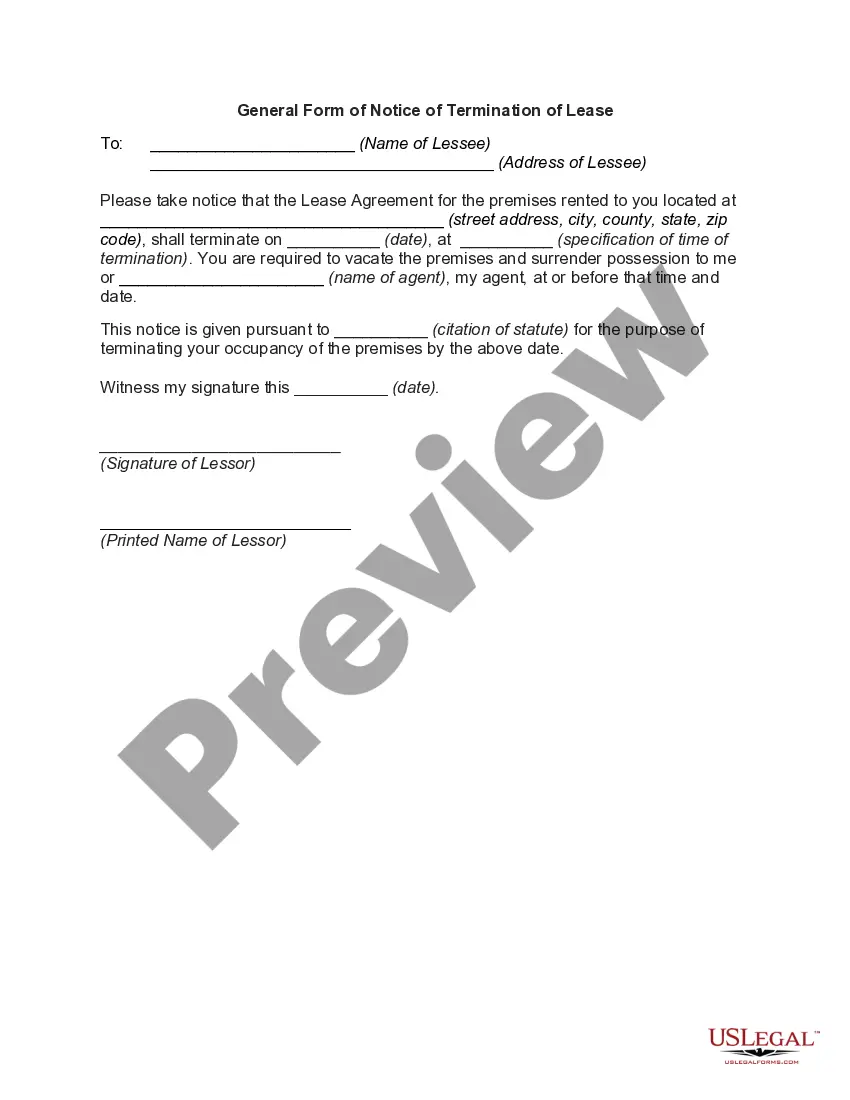
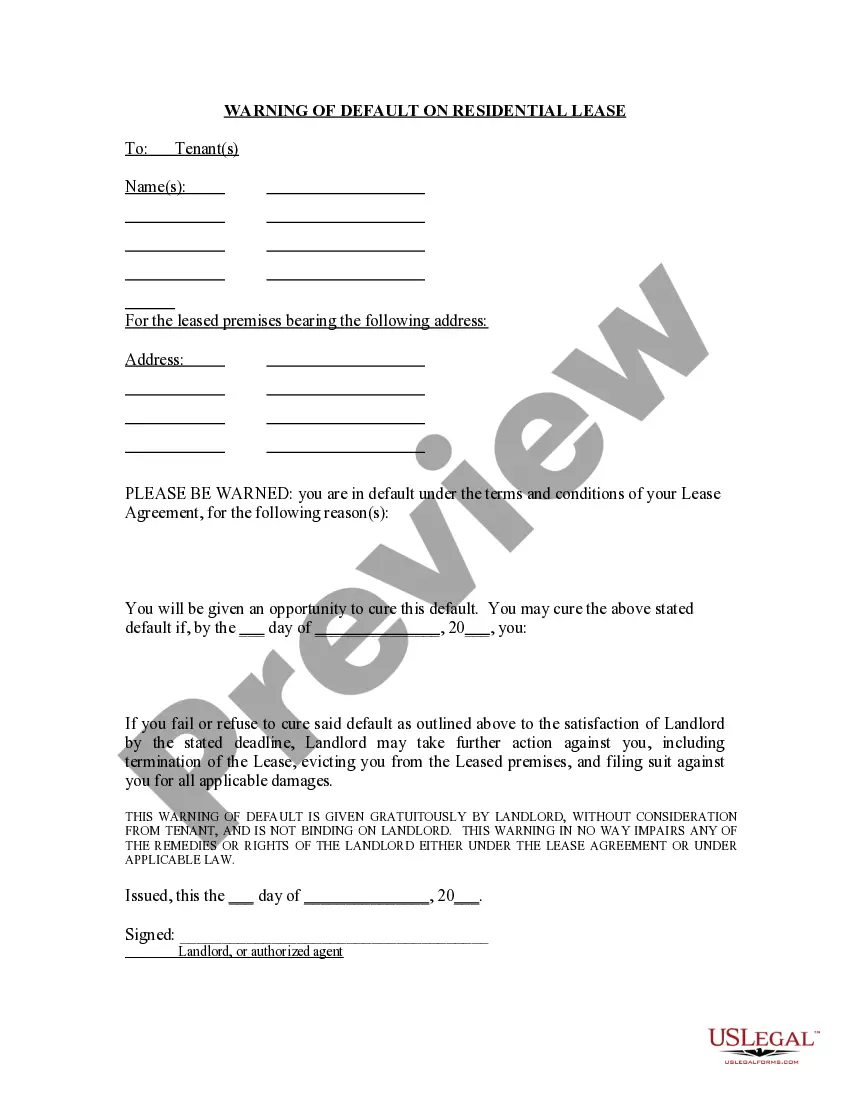
The Notice of Default on Residential Lease is a legal document that a landlord uses to inform a tenant of their failure to meet specific obligations under the lease agreement, such as non-payment of rent. This form outlines the reasons for the default and provides a deadline for the tenant to remedy the situation. Its purpose is to give tenants an opportunity to correct their default before the landlord can proceed with eviction or other legal actions, making it distinct from other notices, such as a Notice to Terminate Lease Agreement.
Key parts of this document
- Details of the specific reasons for the tenant's default.
- Deadline date by which the tenant must cure the default.
- Statement of potential actions the landlord may take if the default is not cured.
- Date of issuance and signature lines for the landlord or authorized agent.



Common use cases
Who can use this document
- Landlords who want to notify their tenants of a lease default.
- Property managers acting on behalf of property owners.
- Anyone engaged in residential leasing who needs to adhere to legal protocols before initiating eviction proceedings.
Steps to complete this form
- Identify the parties involved, including the landlord and tenant.
- Clearly state the reasons for the default, such as non-payment of rent.
- Specify the deadline date for the tenant to cure the default.
- Enter the date of issuance and provide space for the landlord's signature.
- Ensure that the notice is delivered to the tenant in accordance with applicable laws.
Is notarization required?
In most cases, this form does not require notarization. However, some jurisdictions or signing circumstances might. US Legal Forms offers online notarization powered by Notarize, accessible 24/7 for a quick, remote process.
Get your form ready online
Our built-in tools help you complete, sign, share, and store your documents in one place.
Make edits, fill in missing information, and update formatting in US Legal Forms—just like you would in MS Word.
Download a copy, print it, send it by email, or mail it via USPS—whatever works best for your next step.
Sign and collect signatures with our SignNow integration. Send to multiple recipients, set reminders, and more. Go Premium to unlock E-Sign.
If this form requires notarization, complete it online through a secure video call—no need to meet a notary in person or wait for an appointment.
We protect your documents and personal data by following strict security and privacy standards.

Make edits, fill in missing information, and update formatting in US Legal Forms—just like you would in MS Word.

Download a copy, print it, send it by email, or mail it via USPS—whatever works best for your next step.

Sign and collect signatures with our SignNow integration. Send to multiple recipients, set reminders, and more. Go Premium to unlock E-Sign.

If this form requires notarization, complete it online through a secure video call—no need to meet a notary in person or wait for an appointment.

We protect your documents and personal data by following strict security and privacy standards.
Typical mistakes to avoid
- Failing to provide sufficient details about the default situation.
- Not including a specific deadline for the tenant to resolve the issue.
- Omitting the signature of the landlord or authorized agent.
- Not delivering the notice according to local laws, which may require personal delivery or certified mail.
Benefits of using this form online
- Convenient access to professionally drafted legal forms.
- Easy to fill out and customize to your specific situation.
- Accurate and reliable language that complies with legal standards.
- Downloadable format allows for easy storage and printing.
Looking for another form?

Form popularity
FAQ
They don't have to give you any reasons why they want to evict you. They have to give you at least 28 days notice, but this could be longer depending on your agreement. If you don't leave by the time your notice ends, your landlord has to go to court to get a court order to make you leave.
It is equally easy for tenants in Washington to get out of a month-to-month rental agreement. You must provide the same amount of notice (20 days) as the landlord. Be sure to check your rental agreement which may require that your notice to end the tenancy be given on the first of the month or on another specific date.
In landlord-tenant law, default refers to the failure of a tenant to timely pay rent due.In general, the landlord is required to give the tenant notice of the default before bringing eviction proceedings or applying security deposit proceeds to the payment in default.
In most cities in Washington State, landlords can ask month-to-month tenants to leave with only 20 days' written notice. The notice must be written and must be delivered at least 20 days before the end of the month or rental period.
State law regulates several rent-related issues, including late and bounced-check fees, the amount of notice (at least 30 days in Washington) landlords must give tenants to raise the rent and how much time (three days in Washington) a tenant has to pay rent or move before a landlord can file for eviction.
1) Give your landlord at least 20 days written notice. The landlord must receive written notice of your move-out date 20 days before the end of the rental period.
The tenant moves without permission or agreement from the landlord, and the landlord must follow the state's law regarding abandonment (RCW 59.18. 310). An early-termination agreement is reached between the landlord and that tenant that stipulates terms for ending the tenancy early.
State law regulates several rent-related issues, including late and bounced-check fees, the amount of notice (at least 30 days in Washington) landlords must give tenants to raise the rent and how much time (three days in Washington) a tenant has to pay rent or move before a landlord can file for eviction.
Consider other options for getting out of your lease early. Figure out if you can break your lease under Washington law. Re-read your lease agreement. Negotiate with your landlord. Move out and hope your landlord re-rents quickly. Make it official with paperwork.