Washington Letter from Landlord to Tenant for Failure to keep premises as clean and safe as condition of premises permits - Remedy or lease terminates
Understanding this form
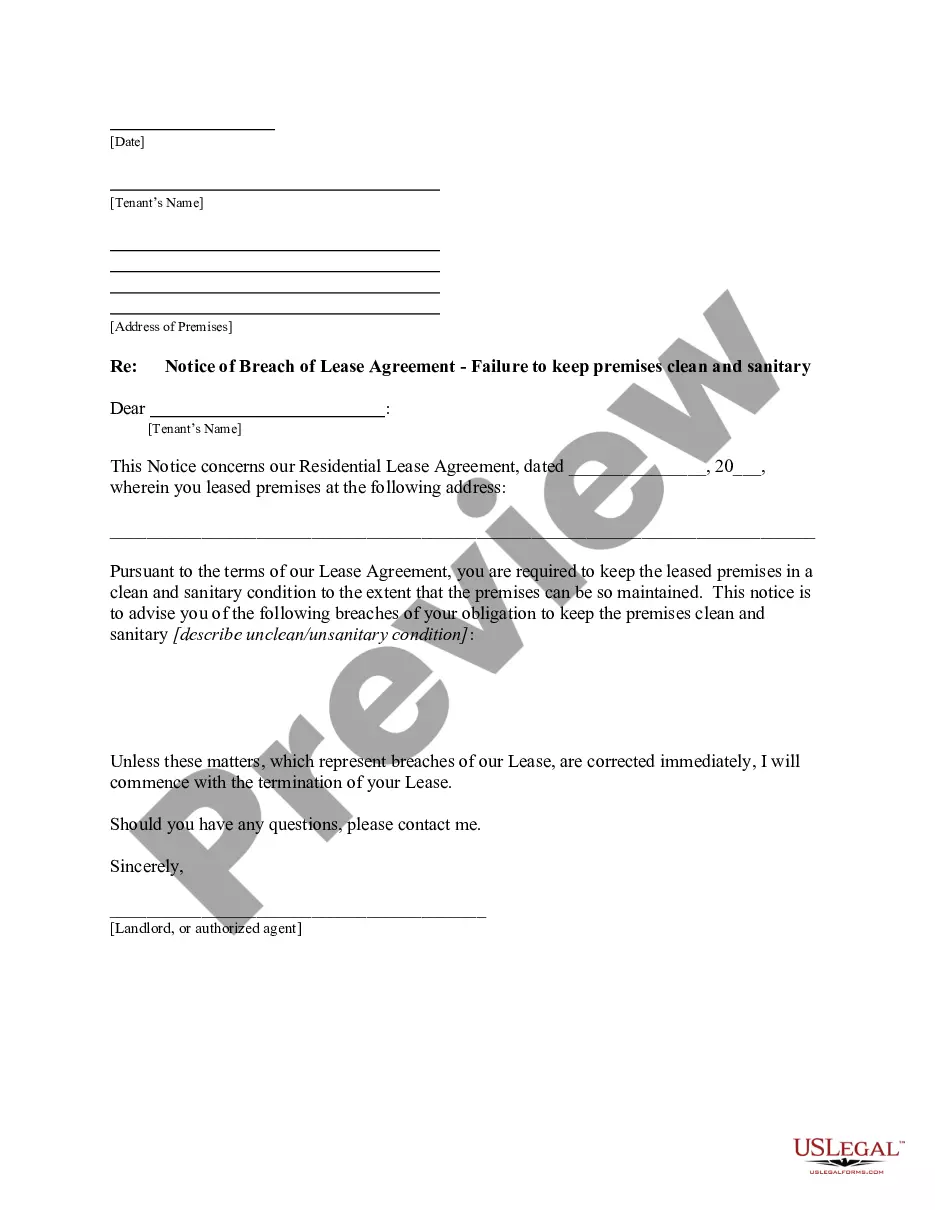
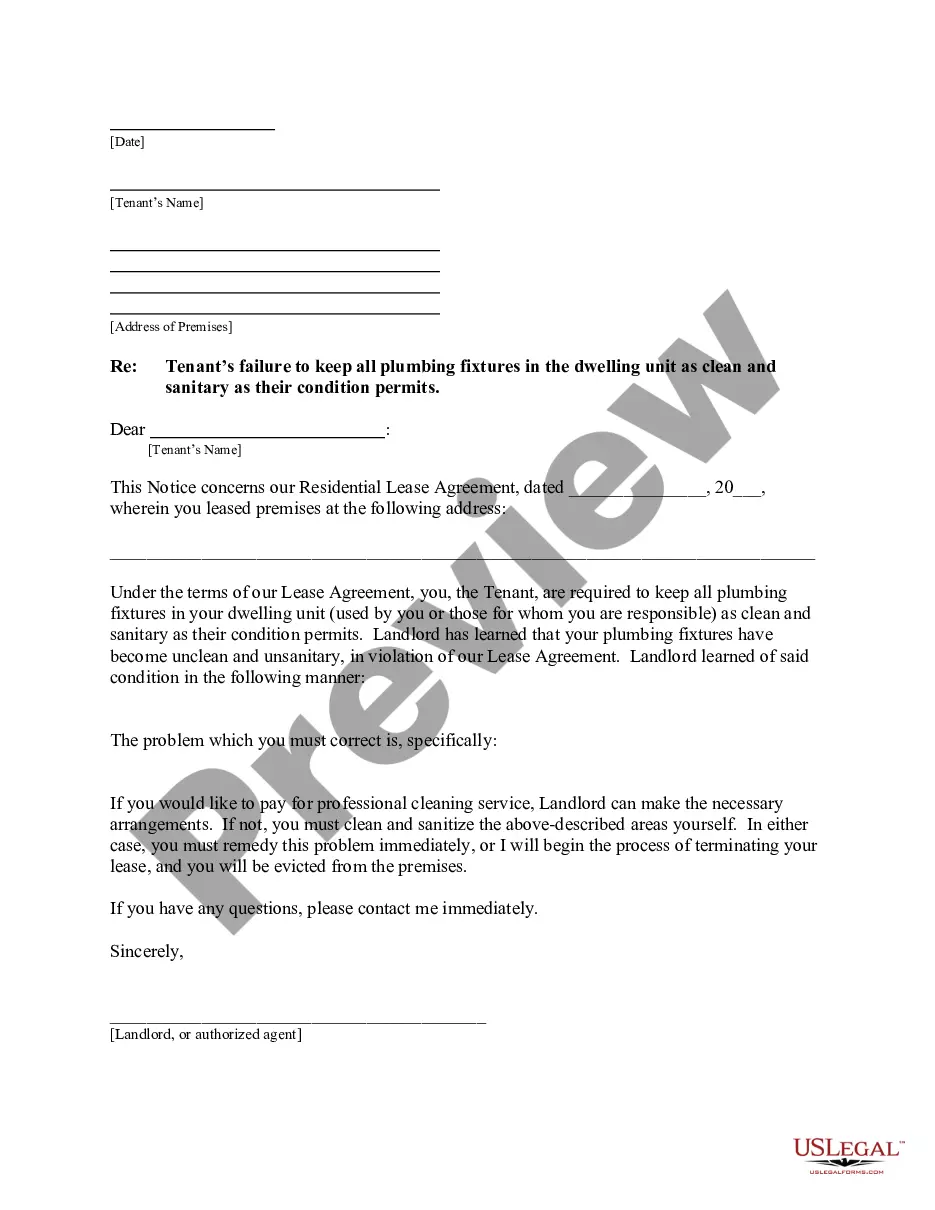
This Letter from Landlord to Tenant for Failure to Keep Premises Clean and Safe serves as a formal notice to tenants about their obligation to maintain the leased premises in a clean and sanitary condition. This form emphasizes the specific breaches of cleanliness that may lead to remedy or termination of the lease, ensuring clear communication between landlords and tenants regarding property maintenance expectations.
Form components explained
- Identification of the landlord and tenant
- Description of the unclean or unsanitary conditions observed
- Reference to the lease agreement terms regarding cleanliness
- Notification of potential remedies or lease termination



When to use this form
This form should be used when a landlord identifies that a tenant is failing to keep the rental premises clean or safe. It can be issued in response to specific complaints or observations about the condition of the property that violate the lease agreement. Using this notice can help landlords take appropriate action to remedy the situation or terminate the lease if the issues are not addressed.
Who this form is for
- Landlords seeking to address cleanliness issues with tenants
- Property management companies responsible for maintaining rental properties
- Tenants who want to understand their responsibilities under the lease
Steps to complete this form
- Identify the landlord and tenant by entering their full names and contact information.
- Specify the property address to clarify the location in question.
- Detail the unclean or unsanitary conditions that prompted this notice.
- Reference the applicable section of the lease agreement that addresses cleanliness.
- Sign and date the letter to ensure it is officially issued.
Does this document require notarization?
Notarization is generally not required for this form. However, certain states or situations might demand it. You can complete notarization online through US Legal Forms, powered by Notarize, using a verified video call available anytime.
Get your form ready online
Our built-in tools help you complete, sign, share, and store your documents in one place.
Make edits, fill in missing information, and update formatting in US Legal Forms—just like you would in MS Word.
Download a copy, print it, send it by email, or mail it via USPS—whatever works best for your next step.
Sign and collect signatures with our SignNow integration. Send to multiple recipients, set reminders, and more. Go Premium to unlock E-Sign.
If this form requires notarization, complete it online through a secure video call—no need to meet a notary in person or wait for an appointment.
We protect your documents and personal data by following strict security and privacy standards.

Make edits, fill in missing information, and update formatting in US Legal Forms—just like you would in MS Word.

Download a copy, print it, send it by email, or mail it via USPS—whatever works best for your next step.

Sign and collect signatures with our SignNow integration. Send to multiple recipients, set reminders, and more. Go Premium to unlock E-Sign.

If this form requires notarization, complete it online through a secure video call—no need to meet a notary in person or wait for an appointment.

We protect your documents and personal data by following strict security and privacy standards.
Typical mistakes to avoid
- Failing to clearly describe the unclean conditions leading to the notice.
- Not referencing the specific lease agreement clause that is being violated.
- Neglecting to sign and date the letter before delivering it to the tenant.
Benefits of using this form online
- Quick and convenient access to a professionally drafted legal document.
- Easy to edit and customize for specific needs and situations.
- Reliability of forms prepared by licensed attorneys ensuring compliance with state laws.
Quick recap
- This form is essential for landlords to formally address cleanliness issues with tenants.
- Clear documentation of breaches is crucial to uphold landlord rights.
- It is important to observe local regulations when issuing a notice of this nature.
Looking for another form?






Form popularity
FAQ
Contact us at (888) 700-9995.
What is the Law? In California, there is no legal definition for unsafe living conditions. Generally, the rule of thumb is that if your living environment affects your health or safety, then it can be considered an unsafe living condition.
Landlords have a responsibility to ensure the property meets health and safety laws. Landlords must also provide and maintain locks or other security devices to ensure the property is reasonably secure.
Fundamental responsibilities of landlords include: providing and maintaining the property in a clean and reasonable standard; giving proper receipts and maintaining records of all transactions pertaining to the tenancy; paying council rates and taxes; maintaining locks to ensure the property's security; and lodging the
Filing a complaint with state or local health or building inspectors (who may fine a landlord who fails to correct the problem within a set amount of time, or actually condemn the property in severe cases) suing the landlord for the difference between the monthly rent and the value of the unit with defects, or.
Following building and housing codes. Keeping the unit safe and sanitary. Disposing of garbage. Maintaining plumbing fixtures. Properly operating all plumbing and electric fixtures. Maintaining appliances supplied by the landlord. Not damaging the unit.
Landlords are required to provide a safe environment for their tenants. In many states, landlords are legally responsible for the failure to keep tenants safe from dangerous conditions on a property or safe from criminal activity.
The landlord had a duty to reasonably maintain the property; The landlord knew or should have known of the dangerous condition; The landlord breached their duty by failing to repair/fix the dangerous condition;