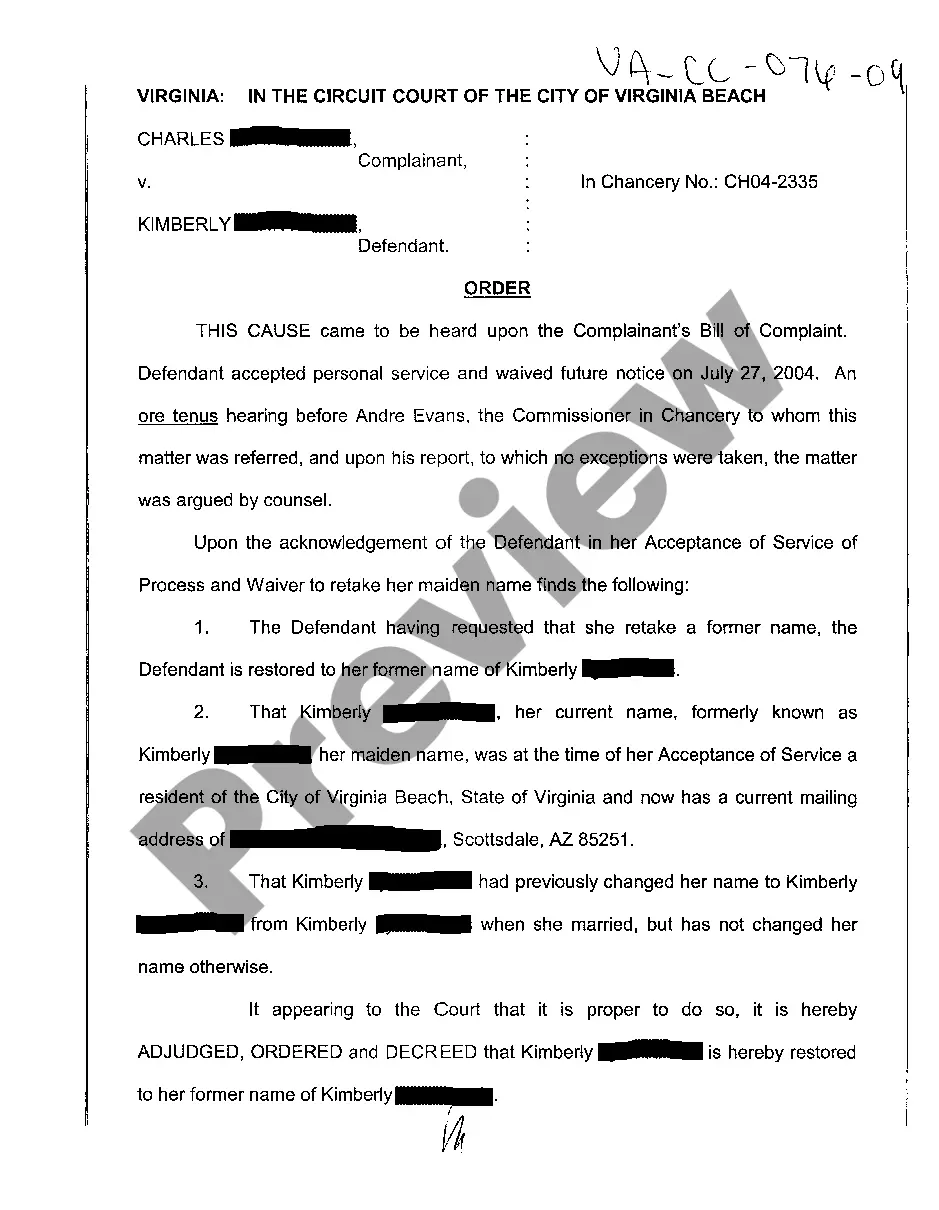
Washington Letter from Tenant to Landlord for Failure of Landlord to comply with building codes affecting health and safety or resulting in untenantable condition - demand for remedy
About this form
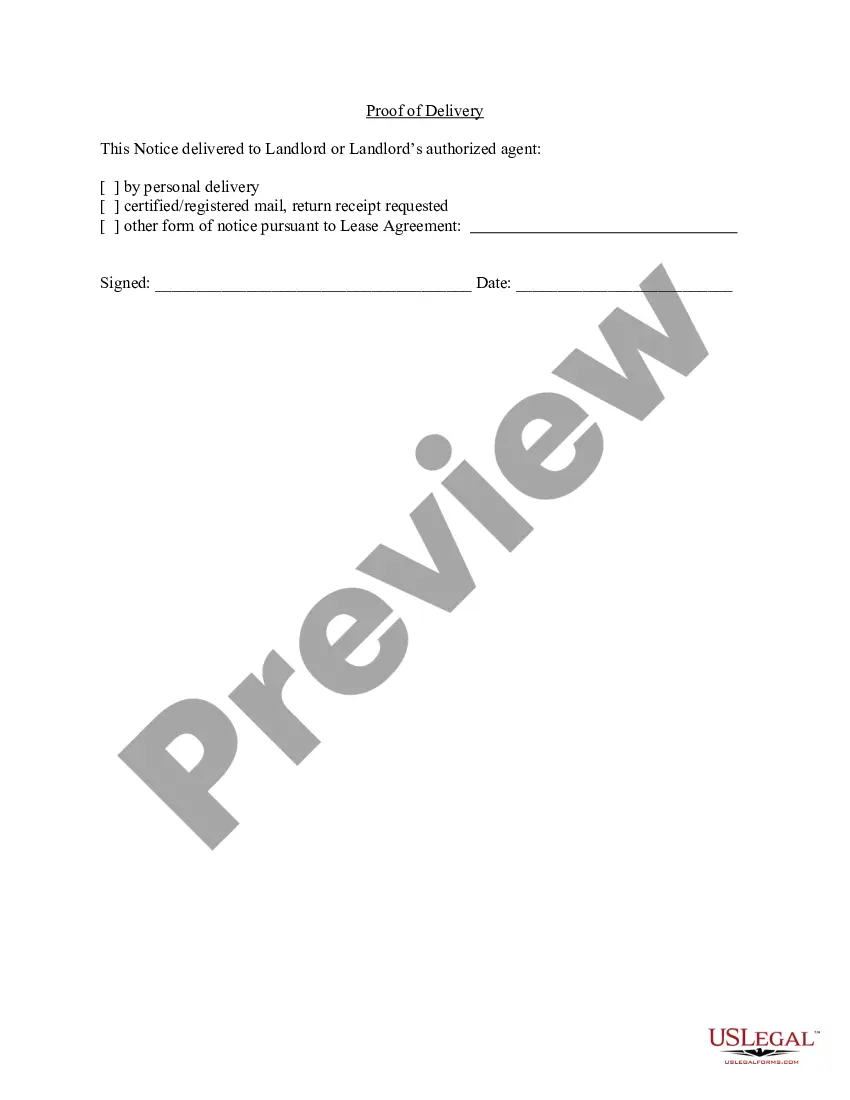
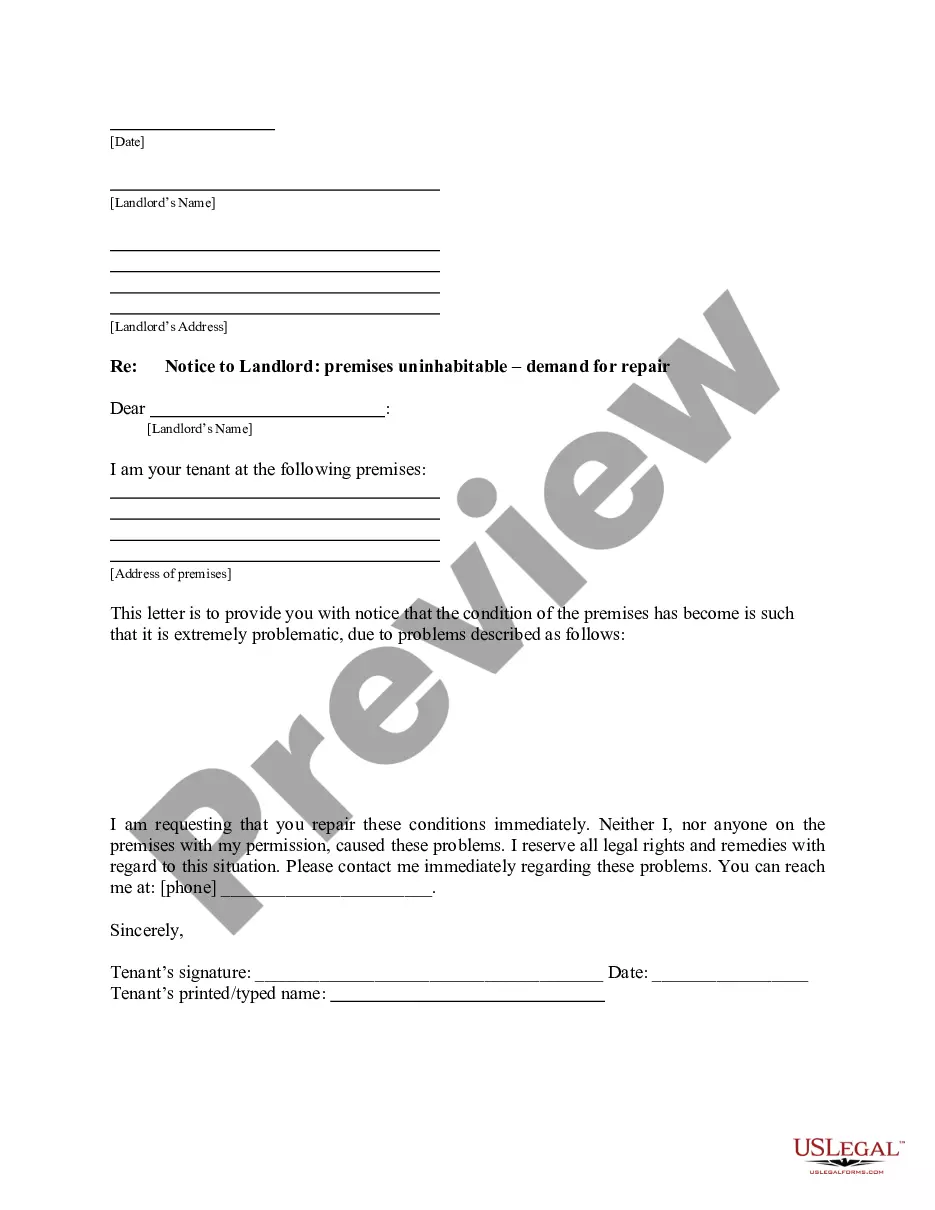
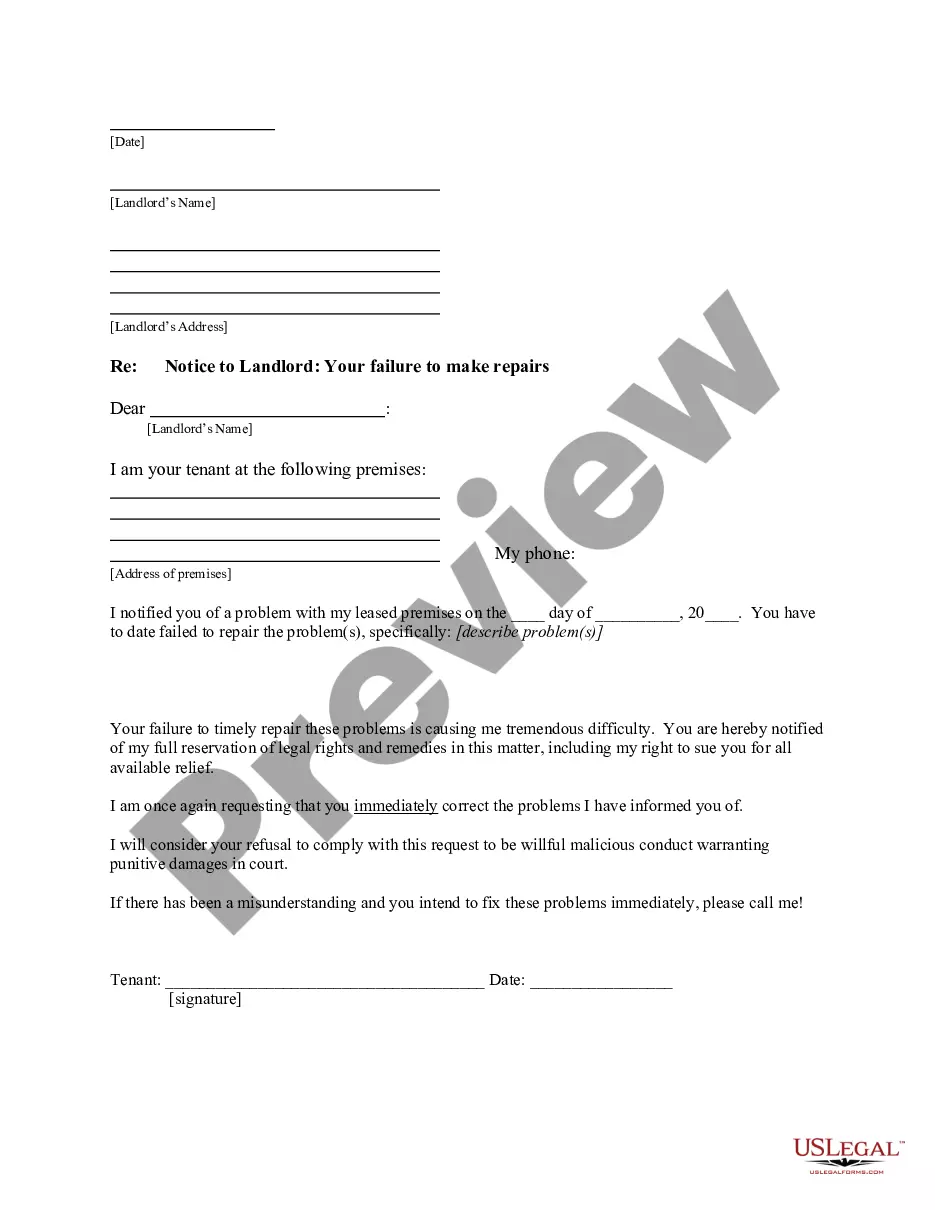
This form is a demand letter from a tenant to a landlord, addressing the landlord's failure to comply with building codes that impact the health and safety of the property. Specifically designed for situations where the leased premises are unsafe or unhealthy, this letter requests necessary repairs to be made within ten days, ensuring the conditions meet legal requirements. This form distinguishes itself from other tenant-landlord communication by focusing specifically on health and safety compliance issues.
Key components of this form
- Identification of the tenant and landlord.
- A detailed description of the building code violations and conditions affecting health and safety.
- A demand for repairs to be completed within a specified time frame (ten days).
- A declaration that the premises are currently unsafe or unhealthy.
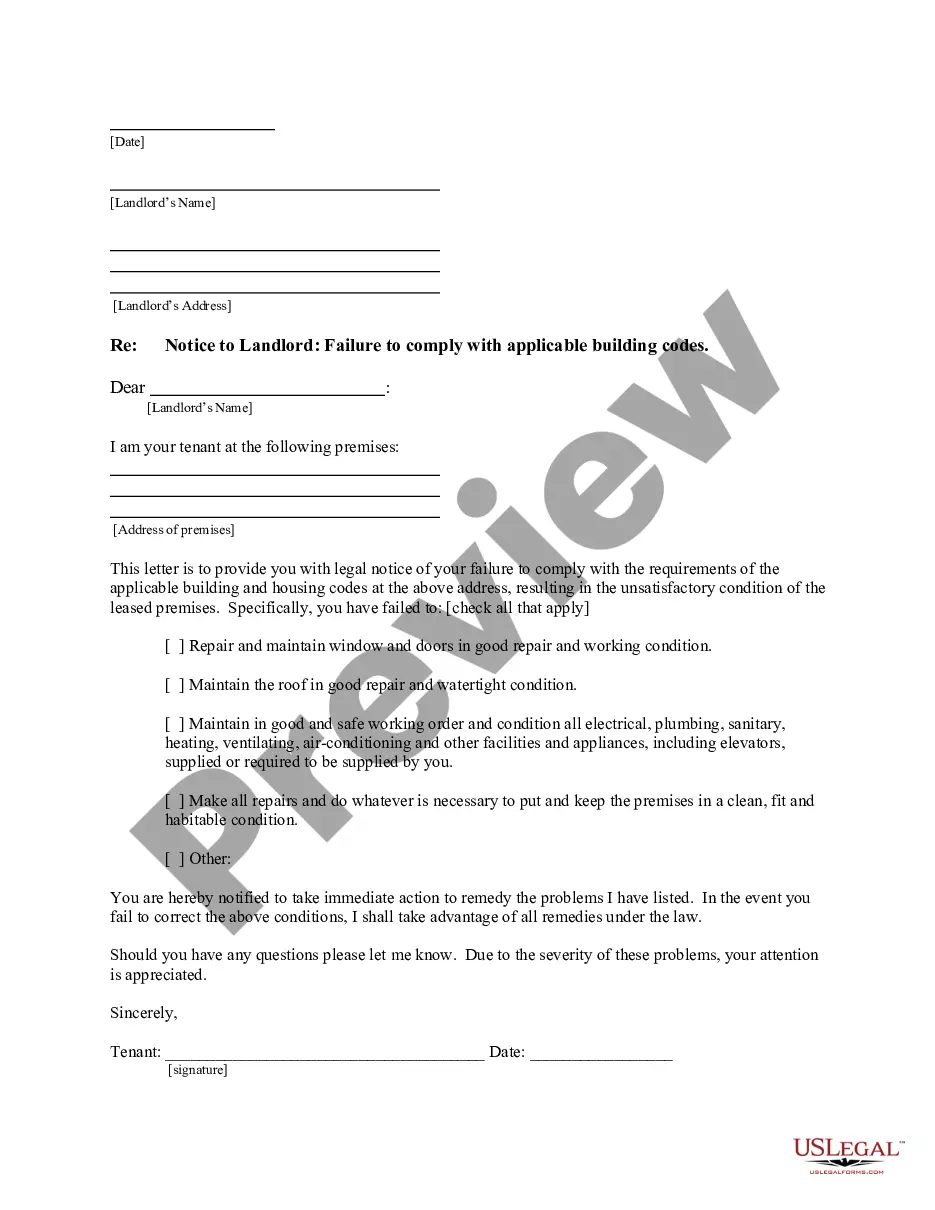
- Proof of delivery to the landlord or authorized agent.


When to use this form
This form should be used when a tenant notices any serious issues in the leased property that violate local building codes, particularly those relating to health and safety. Common scenarios include mold infestations, broken windows or doors, leaks, and other conditions that render the premises uninhabitable. Using this letter formally notifies the landlord of these problems and requests appropriate action to be taken.
Who needs this form
- Tenants who are experiencing unsafe or unhealthy conditions in their rental property.
- Individuals renting residential properties who have informed their landlord of issues but have seen no action.
- Those seeking to protect their rights under tenancy laws regarding building code compliance.
Instructions for completing this form
- Identify the parties involved: include the tenant's name and address as well as the landlord's name and address.
- Specify the exact issues affecting the property, citing specific building codes where applicable.
- Include a clear demand for necessary repairs to be made within ten days.
- Sign and date the letter, ensuring all information is accurate.
- Deliver the letter to your landlord or their authorized agent, and keep proof of this delivery.
Notarization guidance
This form does not typically require notarization to be legally valid. However, some jurisdictions or document types may still require it. US Legal Forms provides secure online notarization powered by Notarize, available 24/7 for added convenience.
Get your form ready online
Our built-in tools help you complete, sign, share, and store your documents in one place.
Make edits, fill in missing information, and update formatting in US Legal Forms—just like you would in MS Word.
Download a copy, print it, send it by email, or mail it via USPS—whatever works best for your next step.
Sign and collect signatures with our SignNow integration. Send to multiple recipients, set reminders, and more. Go Premium to unlock E-Sign.
If this form requires notarization, complete it online through a secure video call—no need to meet a notary in person or wait for an appointment.
We protect your documents and personal data by following strict security and privacy standards.

Make edits, fill in missing information, and update formatting in US Legal Forms—just like you would in MS Word.

Download a copy, print it, send it by email, or mail it via USPS—whatever works best for your next step.

Sign and collect signatures with our SignNow integration. Send to multiple recipients, set reminders, and more. Go Premium to unlock E-Sign.

If this form requires notarization, complete it online through a secure video call—no need to meet a notary in person or wait for an appointment.

We protect your documents and personal data by following strict security and privacy standards.
Common mistakes
- Failing to give specific details about the health and safety issues.
- Neglecting to keep proof of delivery of the letter.
- Not allowing sufficient time for repairs before taking further action.
- Omitting to follow up if no response is received from the landlord.
Benefits of using this form online
- Immediate access to a tailored document without delays.
- Edit and customize the letter to fit unique circumstances.
- Reliable templates drafted by licensed attorneys, ensuring legal accuracy.
- Convenient use; download and print from the comfort of home.
Key takeaways
- Ensure your health and safety concerns are formally documented through this demand letter.
- Utilize this form to compel your landlord to comply with building codes.
- Adhere to the outlined steps to enhance the effectiveness of your communication.
Looking for another form?
Form popularity
FAQ
It is equally easy for tenants in Washington to get out of a month-to-month rental agreement. You must provide the same amount of notice (20 days) as the landlord. Be sure to check your rental agreement which may require that your notice to end the tenancy be given on the first of the month or on another specific date.
They don't have to give you any reasons why they want to evict you. They have to give you at least 28 days notice, but this could be longer depending on your agreement. If you don't leave by the time your notice ends, your landlord has to go to court to get a court order to make you leave.
In most cities in Washington State, the landlord must give the tenant at least 20 days' notice before termination. New laws passed in Bellingham, Vancouver, and Tacoma require landlords to give tenants at least 60 days' written notice for a termination of tenancy.
1) Give your landlord at least 20 days written notice. The landlord must receive written notice of your move-out date 20 days before the end of the rental period.
State law regulates several rent-related issues, including late and bounced-check fees, the amount of notice (at least 30 days in Washington) landlords must give tenants to raise the rent and how much time (three days in Washington) a tenant has to pay rent or move before a landlord can file for eviction.
The tenant must: Pay rent and any utilities agreed upon. Keep the apartment clean and sanitary. Comply with the requirements of city, county, or state regulations.
Washington state is not a very landlord friendly state. Despite prohibiting localized rent control, the state does require landlords to make a significant number of informational disclosures to all tenants that effectively add to the process of signing new tenants.
Complaints can be filed with the U.S. Department of Housing and Urban Development and whichever state or local fair housing agency that has jurisdiction over the rental property. The Washington State Human Rights Commission has jurisdiction over rental housing in the entire state of Washington.