Washington Warranty Deed from Individual to a Trust
Understanding this form
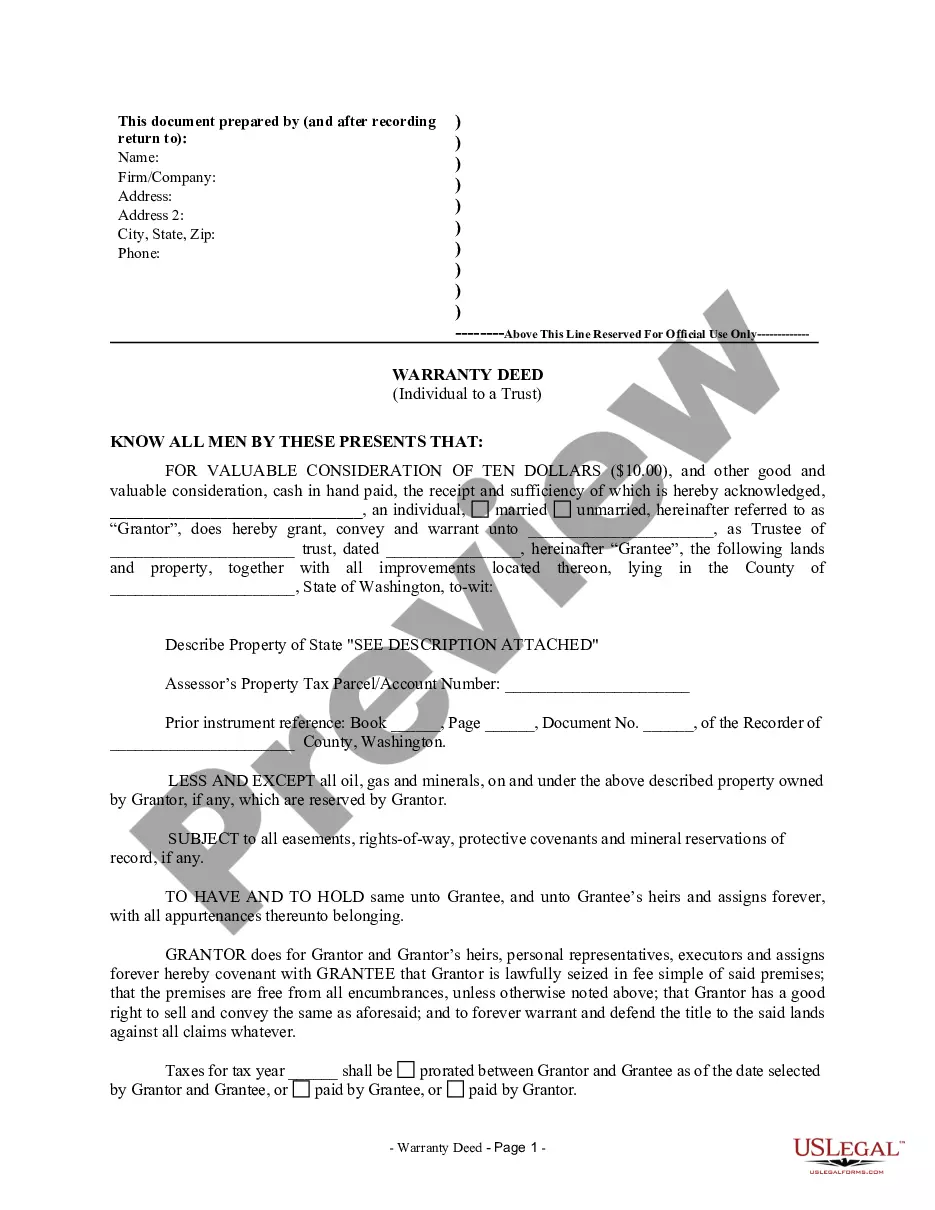
The Warranty Deed from Individual to a Trust is a legal document that enables an individual (the grantor) to transfer property ownership to a trust (the grantee). This form is distinct from simple deeds as it includes specific warranties regarding property title and encumbrances, ensuring the trust receives clear ownership. It is essential for establishing trust control over the property while reserving rights for oil, gas, and minerals, if applicable.
Key parts of this document
- Identification of the grantor and grantee, which specifies the individual transferring the property and the trust receiving it.
- Description of the property, including assessor's tax parcel number for reference.
- Reservation clause detailing any retained interests such as oil, gas, or mineral rights.
- Covenant of seisin, affirming that the grantor owns the property free of encumbrances.
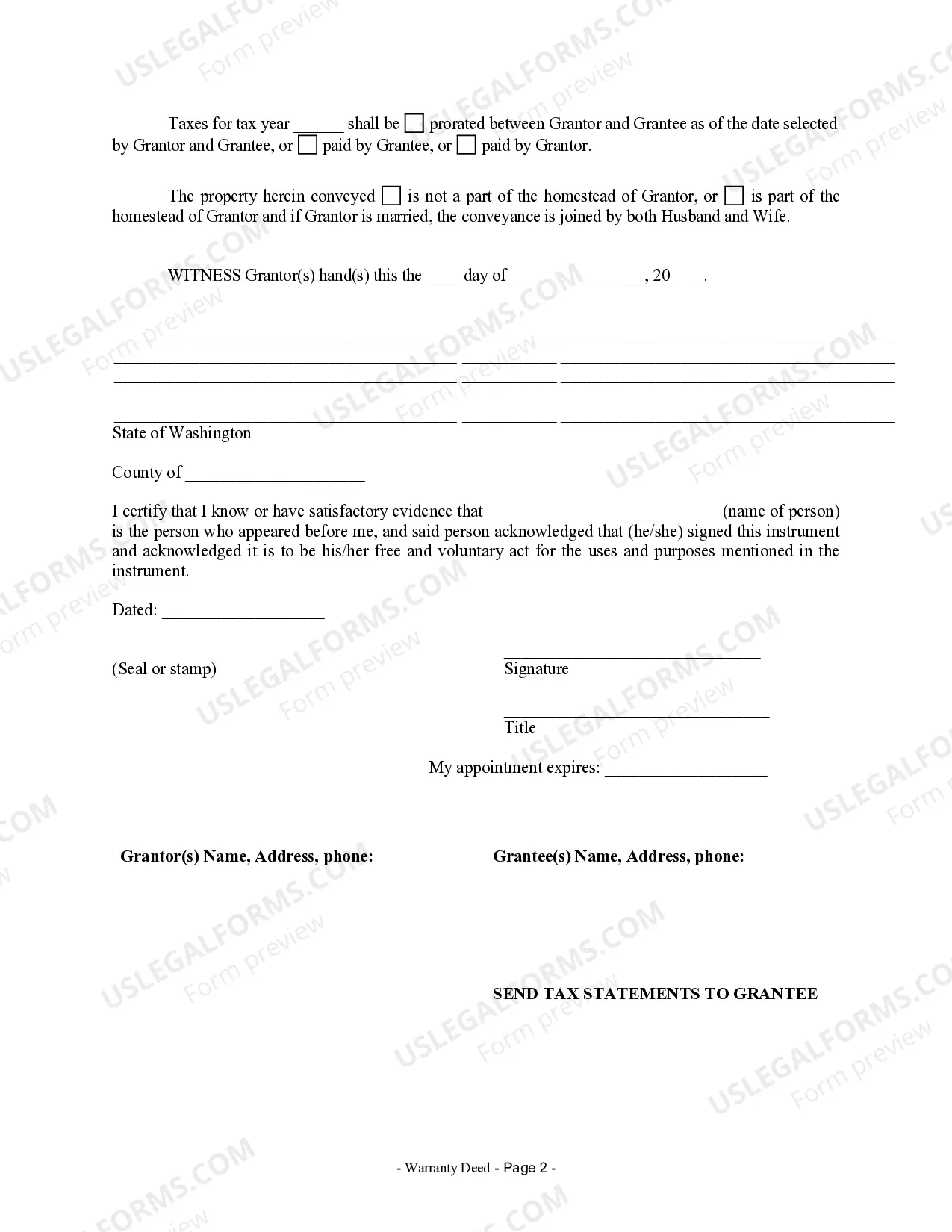
- Provisions regarding property taxes, outlining how taxes will be handled between the parties.
- Signature section for the grantor and acknowledgement by a notary public.





Situations where this form applies
This form is useful when an individual wishes to transfer property into a trust for estate planning purposes or to manage assets on behalf of beneficiaries. It is particularly beneficial when the grantor wants to ensure the property is held and managed according to the trust's terms, while retaining rights to certain resources beneath the land.
Who can use this document
- Individuals who own real estate and want to transfer ownership to a trust.
- Trustees who need to document the acquisition of property by the trust.
- Estate planners looking to incorporate property into a trust as part of a broader estate management strategy.
How to prepare this document
- Identify the parties involved by entering the grantor's and grantee's names accurately.
- Describe the property clearly, including the legal description and tax parcel number.
- Specify any reservations related to oil, gas, and mineral rights in the designated section.
- Review and fill in the tax year and payment responsibilities for property taxes.
- Ensure the document is signed by the grantor and acknowledged before a notary public.
Notarization guidance
Yes, this form must be notarized to be legally valid. This ensures that the grantor's signature is authenticated and the document is recognized as a legitimate transfer of property. US Legal Forms also offers integrated online notarization services, available twenty-four seven through secure video calls.
Get your form ready online
Our built-in tools help you complete, sign, share, and store your documents in one place.
Make edits, fill in missing information, and update formatting in US Legal Forms—just like you would in MS Word.
Download a copy, print it, send it by email, or mail it via USPS—whatever works best for your next step.
Sign and collect signatures with our SignNow integration. Send to multiple recipients, set reminders, and more. Go Premium to unlock E-Sign.
If this form requires notarization, complete it online through a secure video call—no need to meet a notary in person or wait for an appointment.
We protect your documents and personal data by following strict security and privacy standards.

Make edits, fill in missing information, and update formatting in US Legal Forms—just like you would in MS Word.

Download a copy, print it, send it by email, or mail it via USPS—whatever works best for your next step.

Sign and collect signatures with our SignNow integration. Send to multiple recipients, set reminders, and more. Go Premium to unlock E-Sign.

If this form requires notarization, complete it online through a secure video call—no need to meet a notary in person or wait for an appointment.

We protect your documents and personal data by following strict security and privacy standards.
Mistakes to watch out for
- Failing to accurately describe the property, which can lead to disputes.
- Omitting necessary signatures or acknowledgements, rendering the deed invalid.
- Not reviewing local laws regarding trust property transfers, which may affect the validity.
Why use this form online
- Convenience of downloading and completing the form at your own pace.
- Editability to ensure all information is accurate and tailored to your needs.
- Access to professionally drafted content, providing peace of mind regarding legal standards.
Looking for another form?

Form popularity
FAQ
A trustee deed offers no such warranties about the title.
Trustee's deeds convey real estate out of a trust.This type of conveyance is named for the person using the form the trustee who stands in for the beneficiary of the trust and holds title to the property.
The mortgage company usually prepares this deed as part of the loan package and delivers it to the title company for you to sign at closing. The title company is commonly the trustee to the deed and holds legal title to the property until the loan gets fully repaid.
Deeds of trust are the most common instrument used in the financing of real estate purchases in Alaska, Arizona, California, Colorado, the District of Columbia, Idaho, Maryland, Mississippi, Missouri, Montana, Nebraska, Nevada, North Carolina, Oregon, Tennessee, Texas, Utah, Virginia, Washington, and West Virginia,
A deed conveys ownership; a deed of trust secures a loan.
In the context of a California mortgage transaction, a trust deed also transfer ownership. Only this time, the title is being placed in the hands of a third-party trustee, who holds the property on behalf of the lender and the homeowner-borrower until the mortgage is paid.
A warranty deed protects property owners from future claims that someone else actually owns a portion (or all) of their property, while trustee deeds protect lenders when borrowers default on their mortgage loans.
Typically, the lender will provide you with a copy of the deed of trust after the closing. The original warranty deeds are often mailed to the grantee after they are recorded. These are your original copies and should be kept in a safe place, such as a fireproof lockbox or a safe deposit box at a financial institution.
Take the signed and notarized quitclaim deed to your county recorder's office to complete the transfer of title into your revocable trust. Check in two to four weeks to ensure it has been recorded. Include the address of the property on the asset list addendum attached to your trust.