Utah Last Will and Testament for Divorced and Remarried Person with Mine, Yours and Ours Children
What is this form?
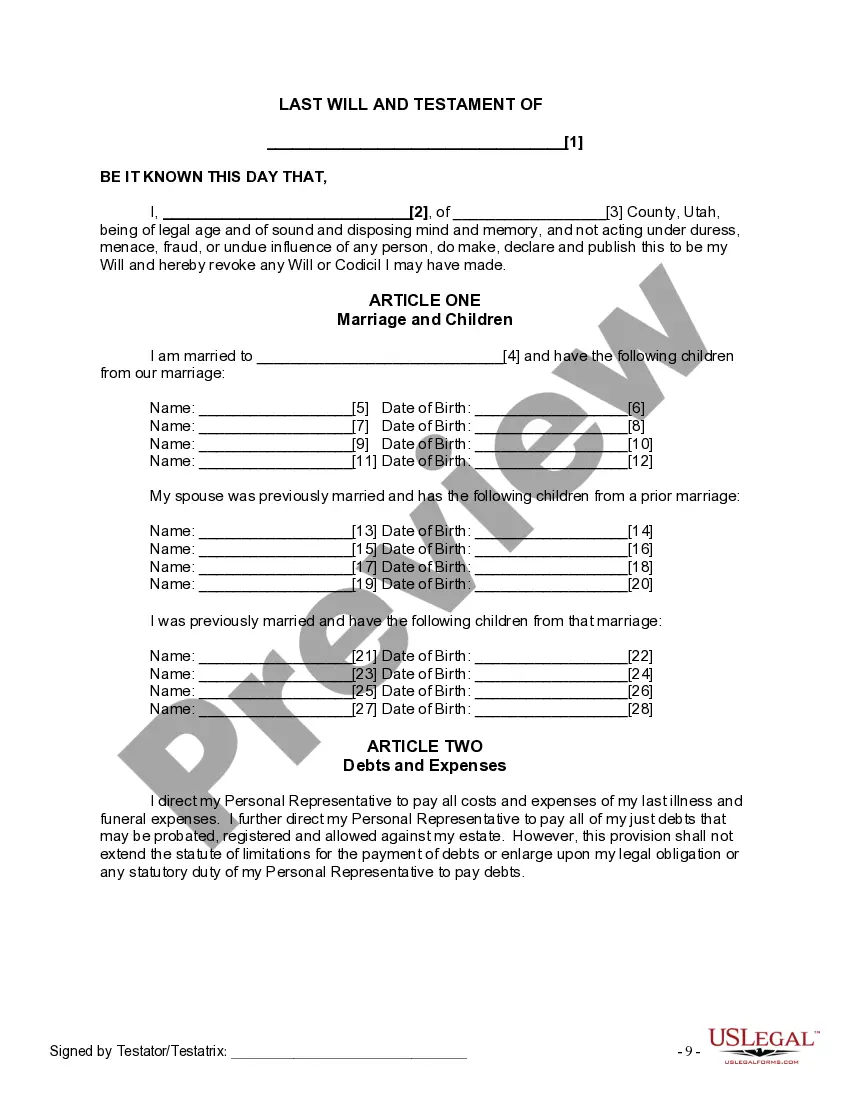
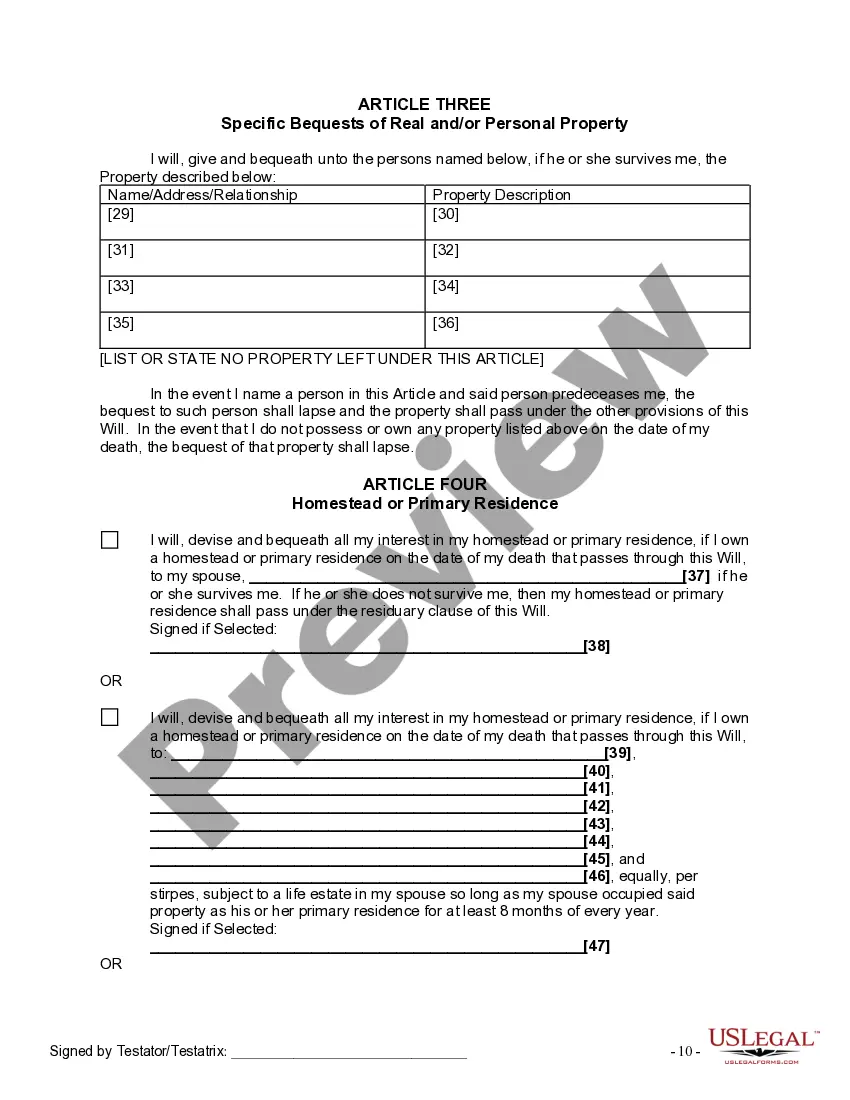
This Last Will and Testament form is specifically designed for divorced and remarried individuals with children from both their current and previous marriages. Unlike standard wills, this document addresses the unique family dynamics and ensures that all children, whether biological or stepchildren, are provided for in your estate plan. It facilitates important decisions regarding the distribution of your property, the appointment of guardians for minor children, and the establishment of trusts to manage funds for younger beneficiaries.
Main sections of this form
- Personal representative or executor appointment.
- Distribution instructions for property and specific bequests.
- Guardian appointment for minor children.
- Establishment of trusts for minor beneficiaries.
- Provisions for previous marriagesâ children.
- Self-proving affidavit for easier probate processing.

When to use this form
This form should be used when you need to outline the distribution of your assets after your death, particularly in cases where you are divorced and remarried, and have children from multiple relationships. It is essential when you wish to clarify the intentions regarding property distribution to ensure that all children and spouses are adequately provided for, and to avoid potential conflicts among heirs.
Intended users of this form
This form is suitable for:
- Divorced individuals who have remarried.
- Parents with children from both current and previous marriages.
- Individuals concerned about equitable asset distribution among stepchildren and biological children.
How to prepare this document
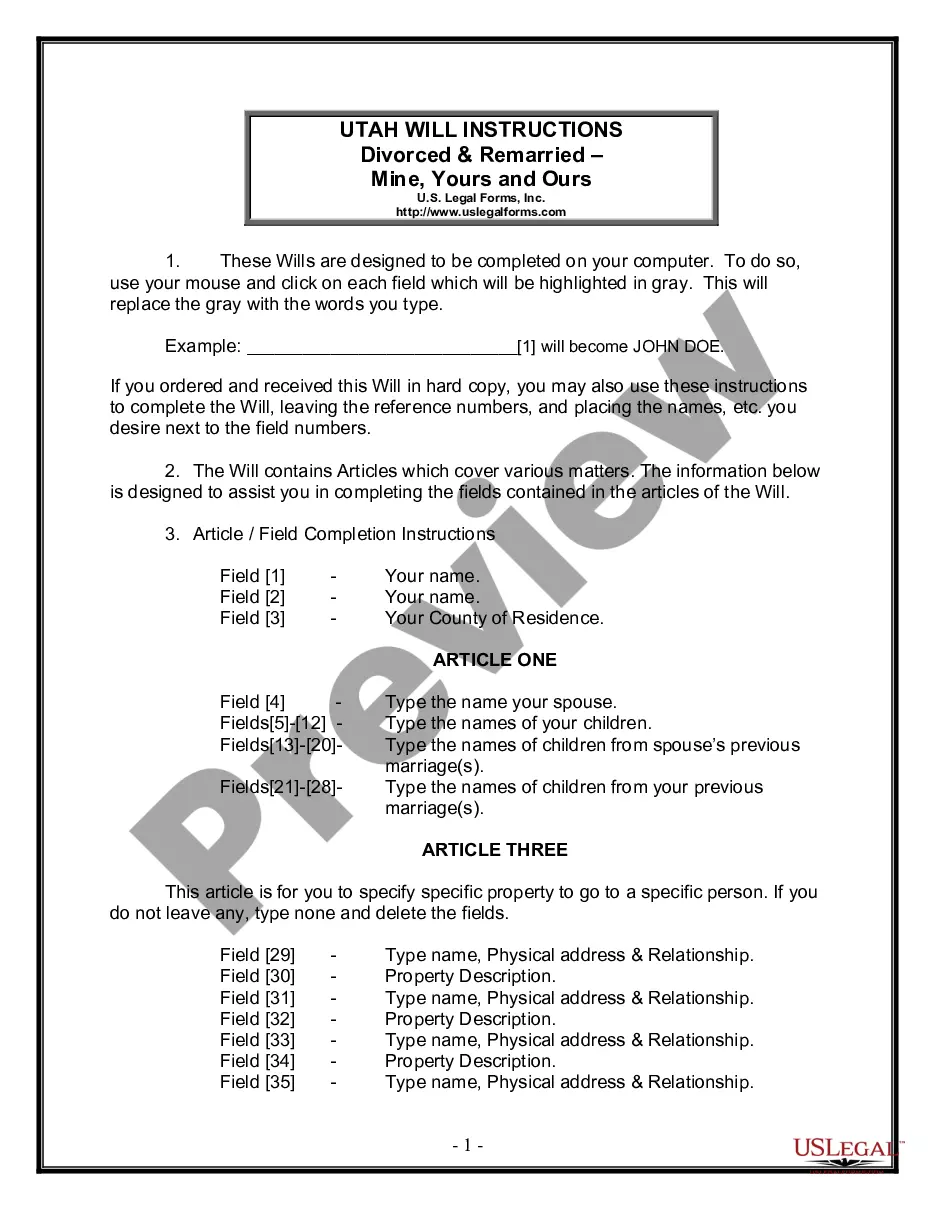
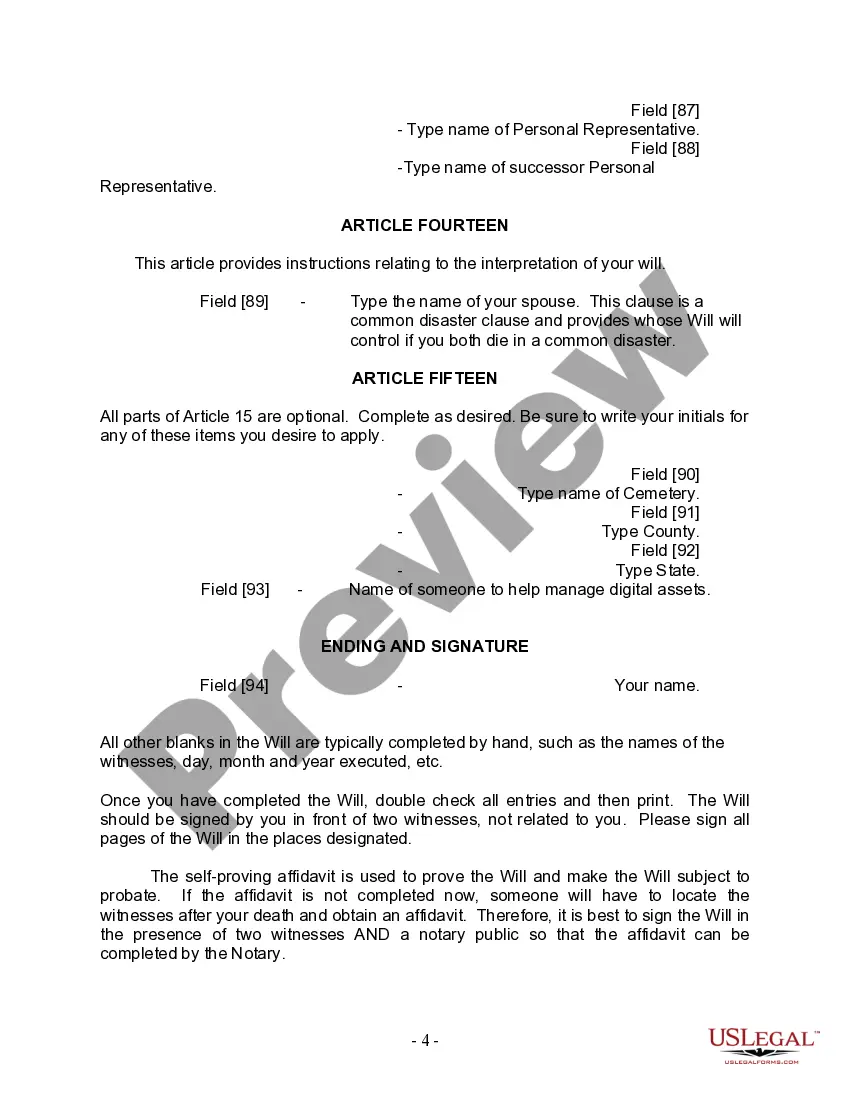
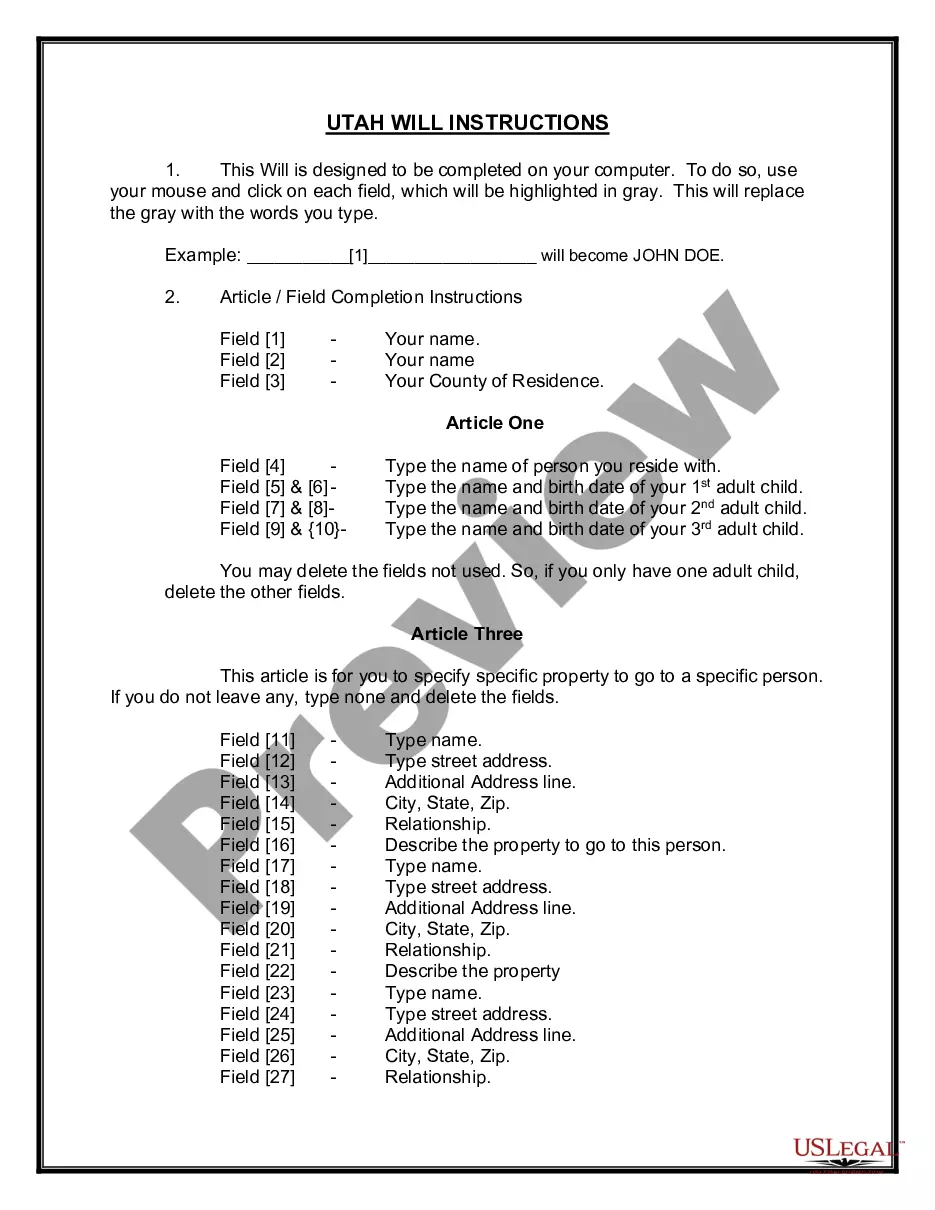
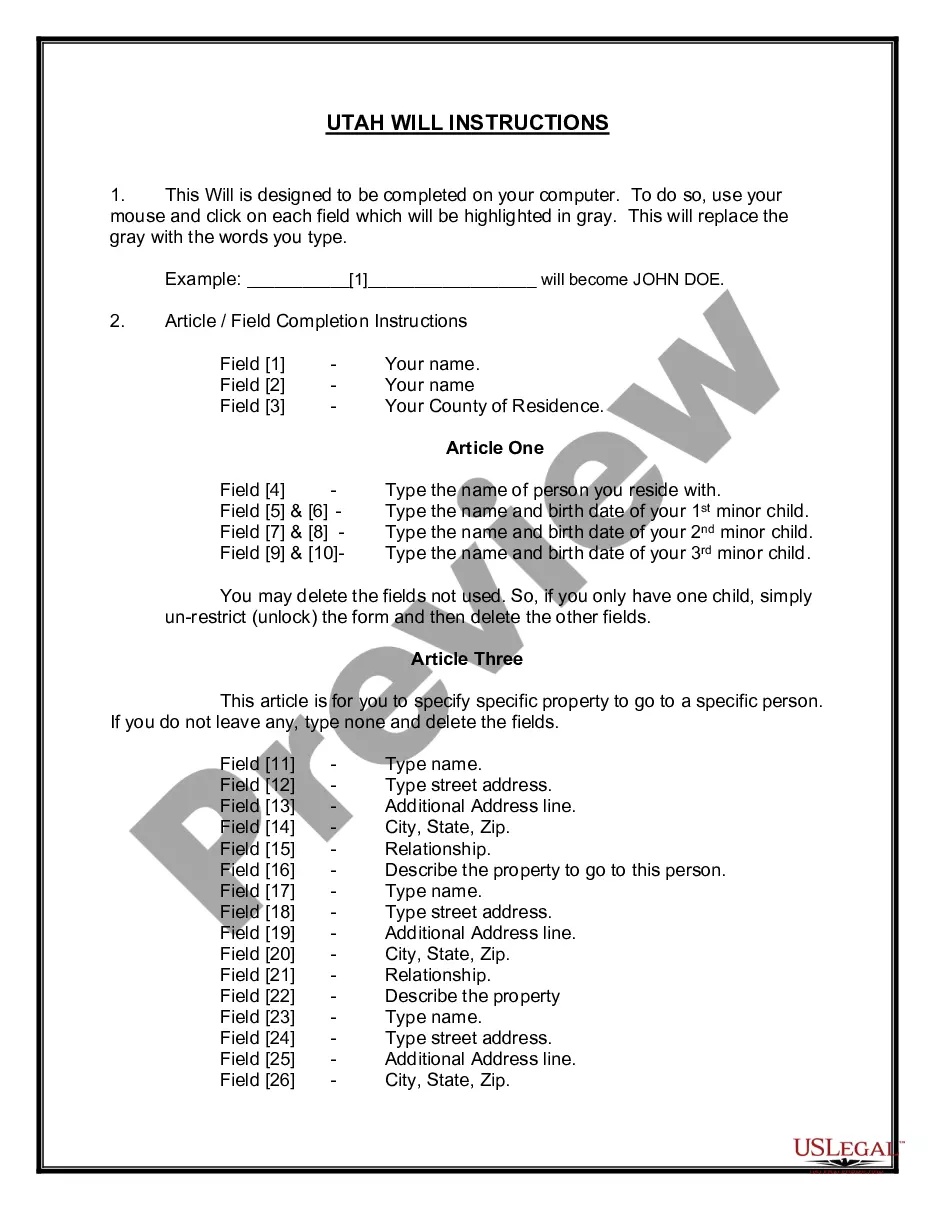
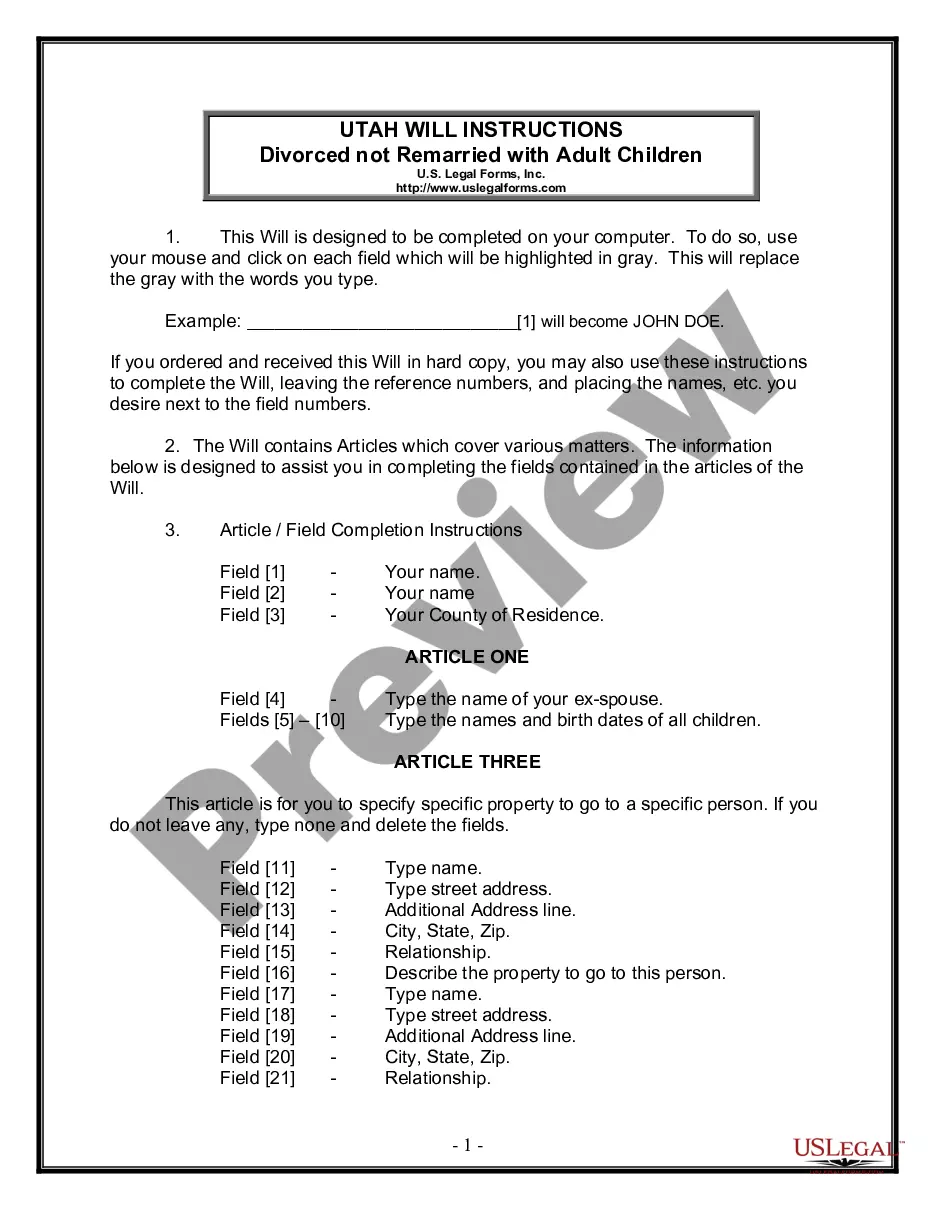
- Enter your name and county of residence.
- Specify your spouse's name and the names of all your children, including those from prior marriages.
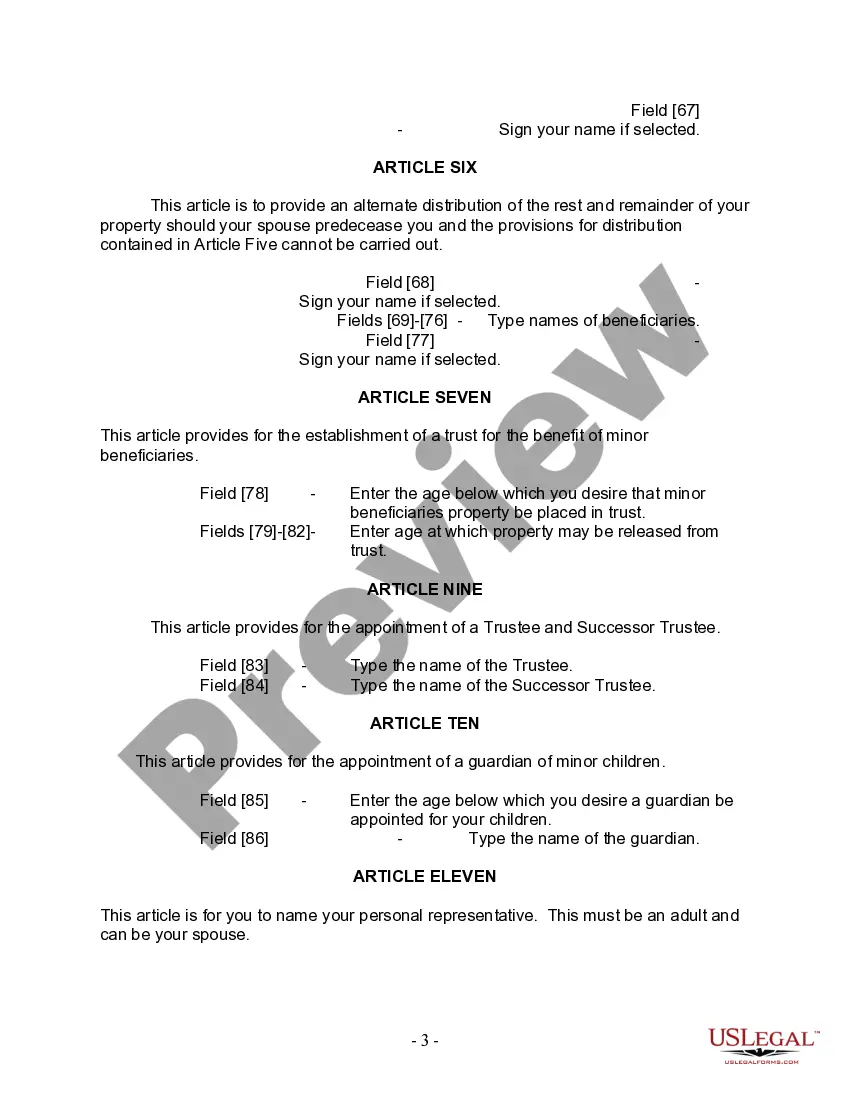
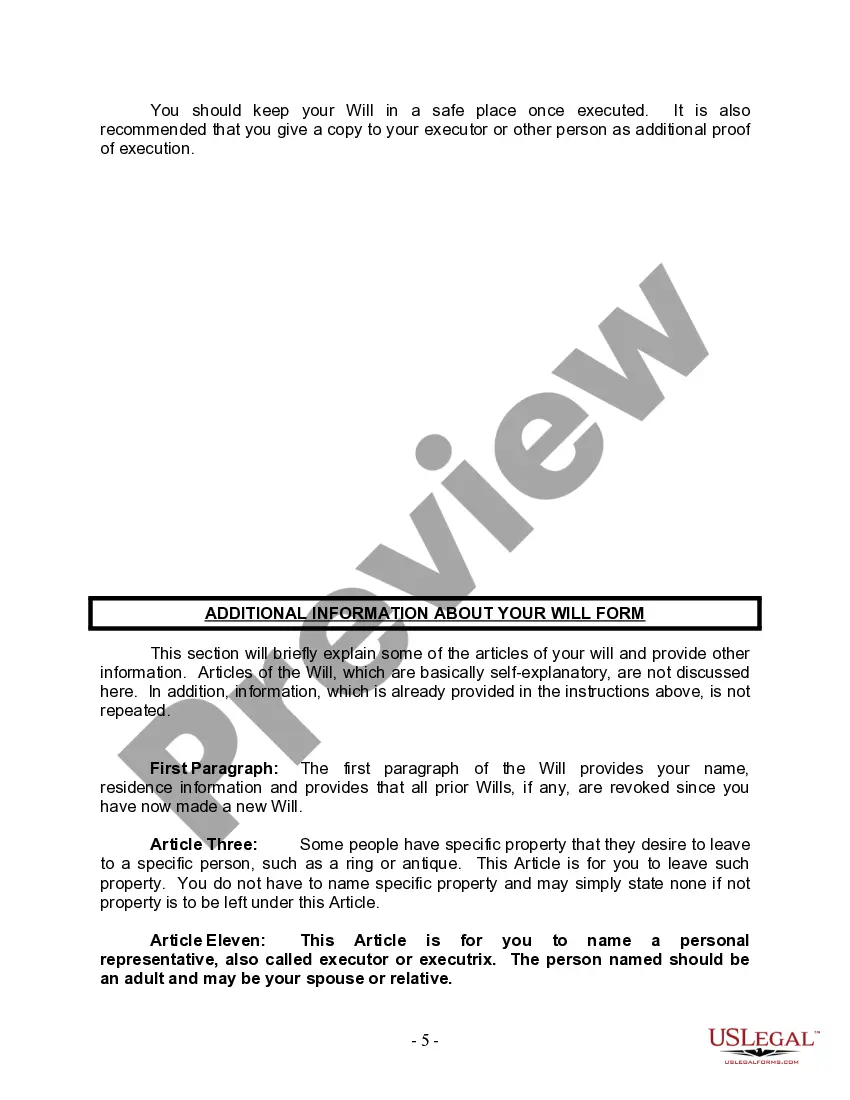
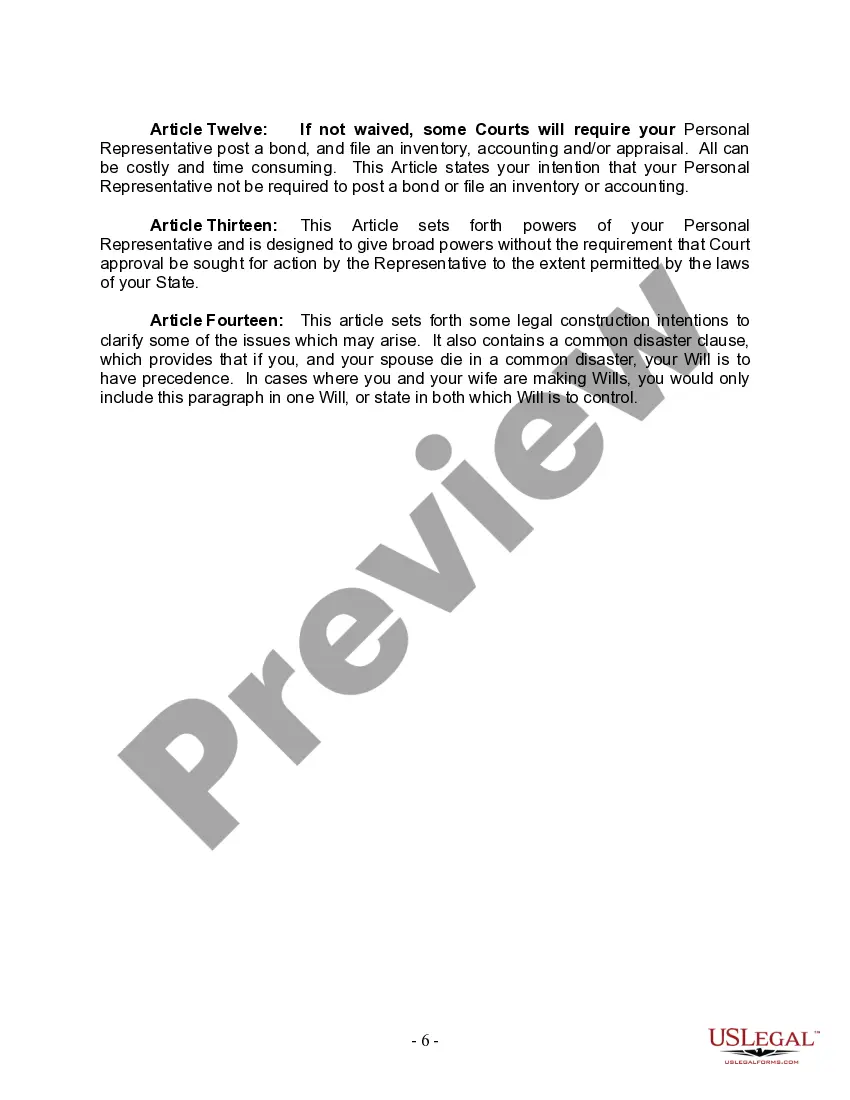
- Designate a personal representative and an alternate to manage your estate.
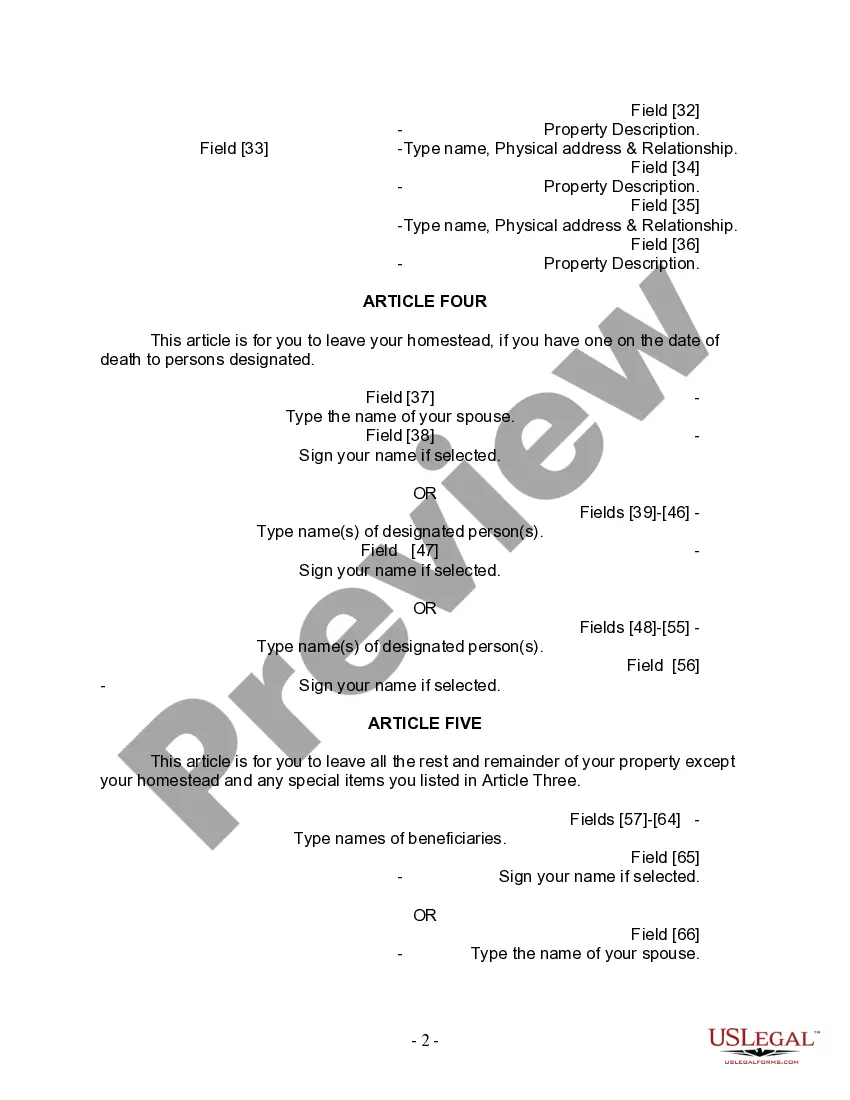
- Outline specific gifts of property in designated fields.
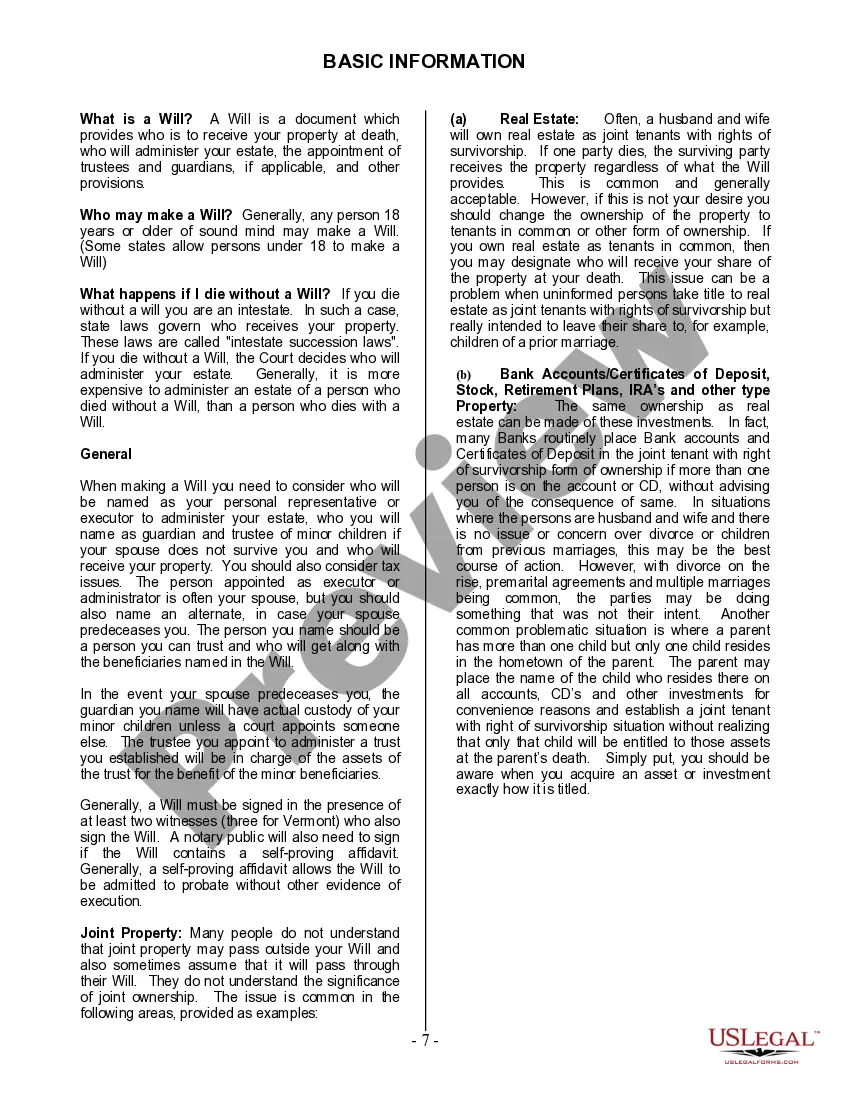
- Indicate the guardian for any minor children.
- Sign the will in the presence of two witnesses and, if applicable, a notary public.
Does this form need to be notarized?
Yes, this form must be notarized to be legally valid. Notarization provides an extra layer of assurance that the document will be accepted in court. With US Legal Forms, you can easily access online notarization services, allowing you to complete the process securely and conveniently without needing to travel.
Get your form ready online
Our built-in tools help you complete, sign, share, and store your documents in one place.
Make edits, fill in missing information, and update formatting in US Legal Forms—just like you would in MS Word.
Download a copy, print it, send it by email, or mail it via USPS—whatever works best for your next step.
Sign and collect signatures with our SignNow integration. Send to multiple recipients, set reminders, and more. Go Premium to unlock E-Sign.
If this form requires notarization, complete it online through a secure video call—no need to meet a notary in person or wait for an appointment.
We protect your documents and personal data by following strict security and privacy standards.

Make edits, fill in missing information, and update formatting in US Legal Forms—just like you would in MS Word.

Download a copy, print it, send it by email, or mail it via USPS—whatever works best for your next step.

Sign and collect signatures with our SignNow integration. Send to multiple recipients, set reminders, and more. Go Premium to unlock E-Sign.

If this form requires notarization, complete it online through a secure video call—no need to meet a notary in person or wait for an appointment.

We protect your documents and personal data by following strict security and privacy standards.
Common mistakes to avoid
- Failing to name guardians for minor children.
- Not having the will properly witnessed, which can lead to probate issues.
- Neglecting to include all children, which may cause disputes among heirs.
- Forgetting to sign the will in front of witnesses or notary, as required.
Benefits of using this form online
- Conveniently fill out the form from your own device.
- Edit and adjust your wishes easily as life changes occur.
- Receive expert-drafted legal content tailored for your unique situation.
Summary of main points
- This Last Will and Testament is crafted for divorced and remarried individuals.
- It ensures that all children are included in your estate plan.
- Proper witnessing and notarization are essential for legal validation.
- Clear instructions help in avoiding common pitfalls and disputes.
Looking for another form?




Form popularity
FAQ
It begins when a person, usually a family member, petitions the court to probate the estate and appoint a personal representative. The personal representative then administers the estate. This includes paying debts and claims against the estate, selling property (if required), and distributing assets.
There is no need for probate or letters of administration unless there are other assets that are not jointly owned.Probate or letters of administration will be needed so the personal representative can pass it whoever will inherit the share of the property, according to the will or the rules of intestacy.
Yes. Handwritten (holographic) wills are valid in Utah if they meet certain requirements. What do I need in a holographic will? A holographic will should be entirely in your own handwriting.
Under Utah law, a will must be filed with the court with reasonable promptness after the death of the testator. Utah Code § 75-2-902. So, after you pass away, your will should be filed in your local probate court by the person named to be your personal representative (also called an executor or administrator).
Witnesses: A Utah will must be signed by at least two witnesses, each of whom have signed within a reasonable time after witnessing the signing of the will or the testator's acknowledgement of the signature or of the will. Writing: A Utah will must be in writing. Beneficiaries: A testator can leave property to anyone.
You can make your own will in Utah, using Nolo's do-it-yourself will software or online will programs. However, you may want to consult a lawyer in some situations. For example, if you think that your will might be contested or if you want to disinherit your spouse, you should talk with an attorney.