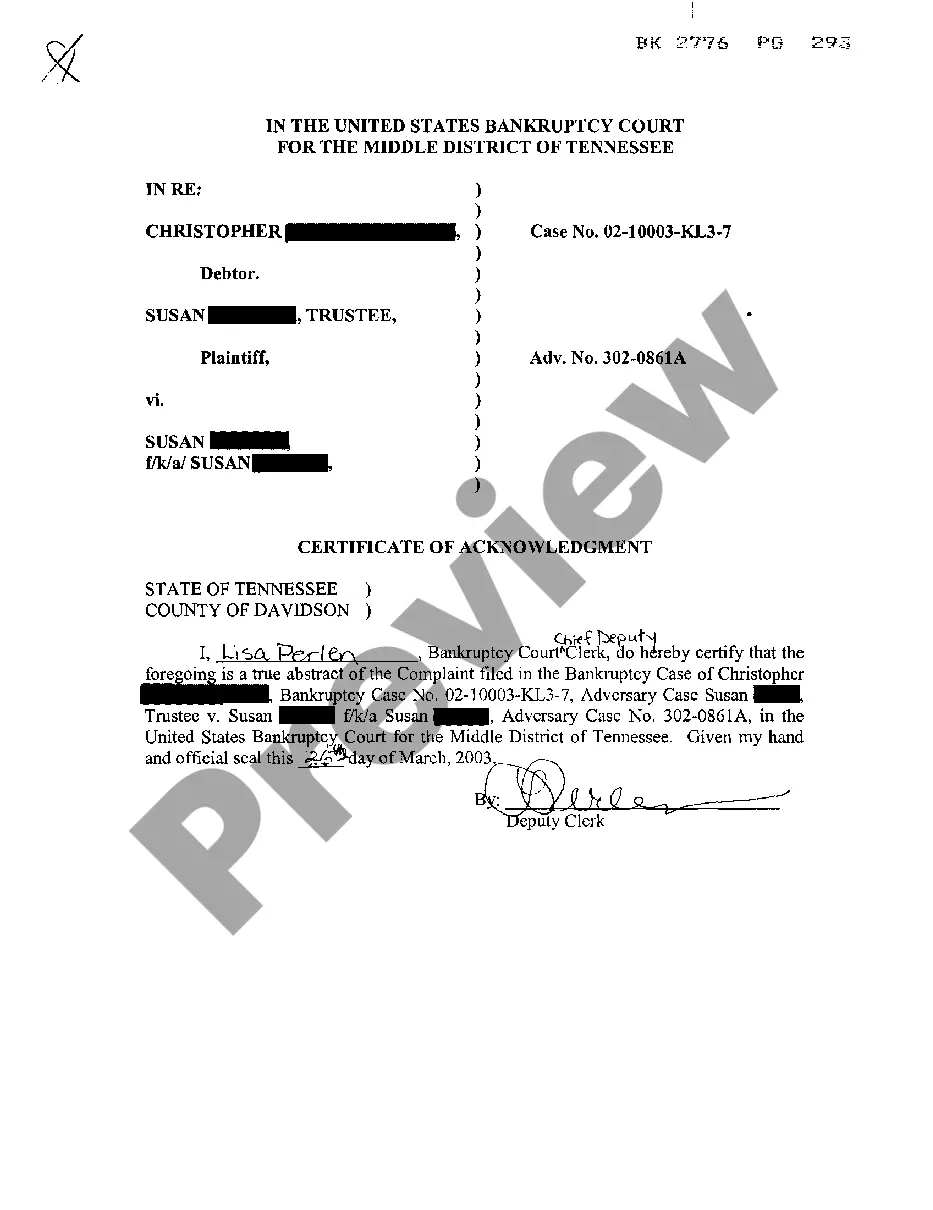
Utah Affidavit of Income Verification and Compliance with Child Support Guidelines
About this form
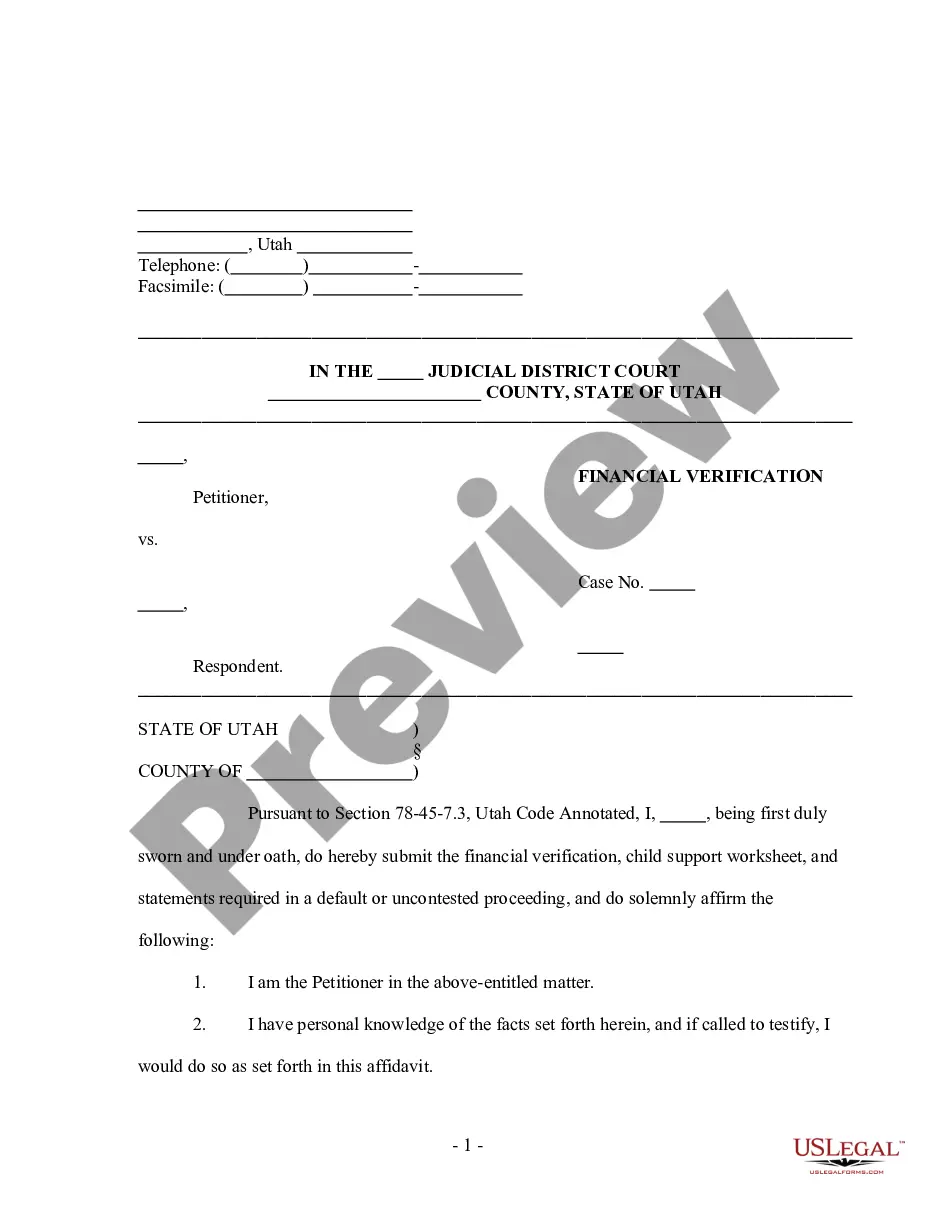
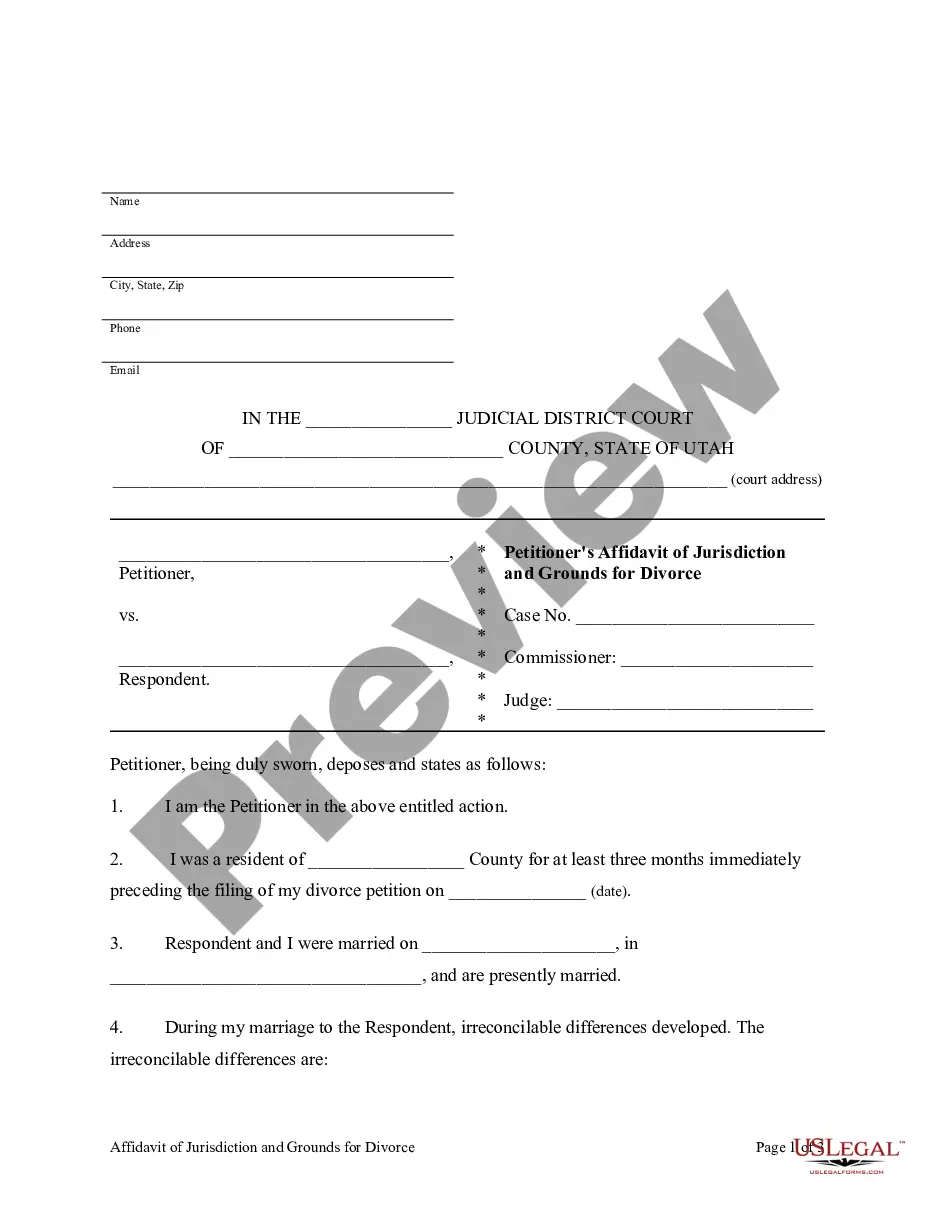
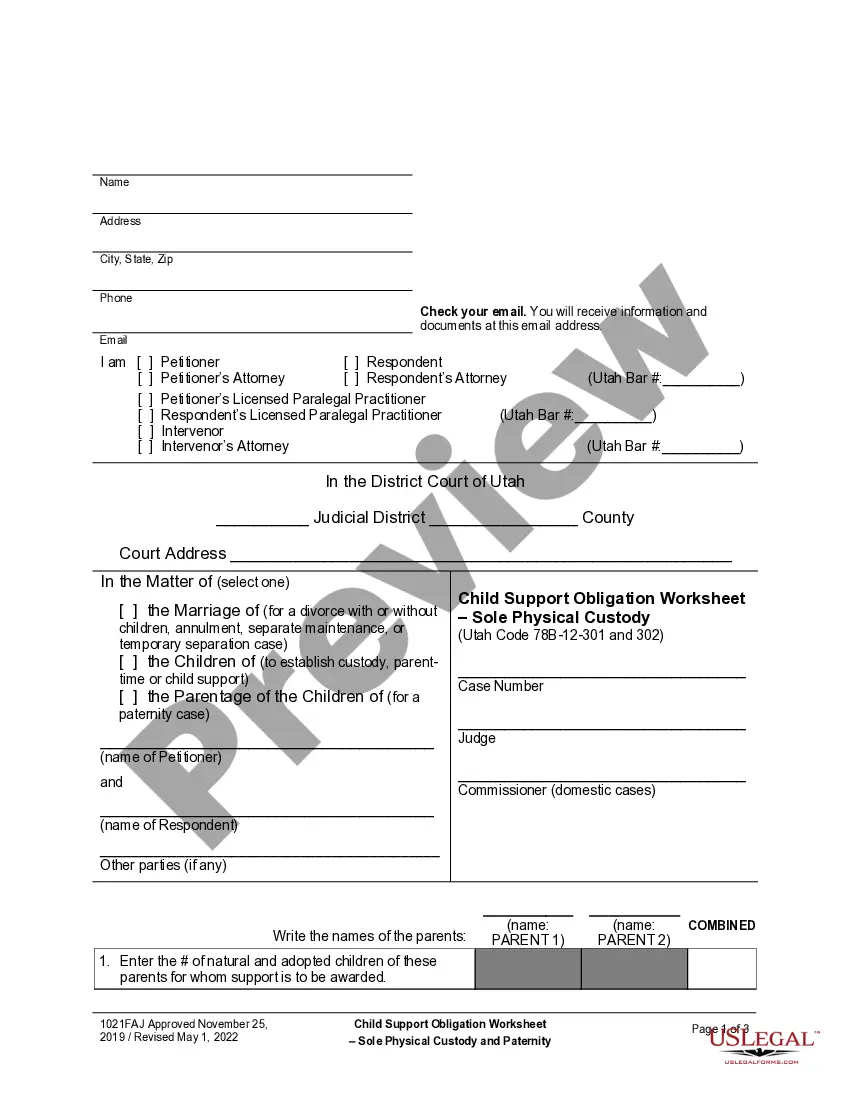
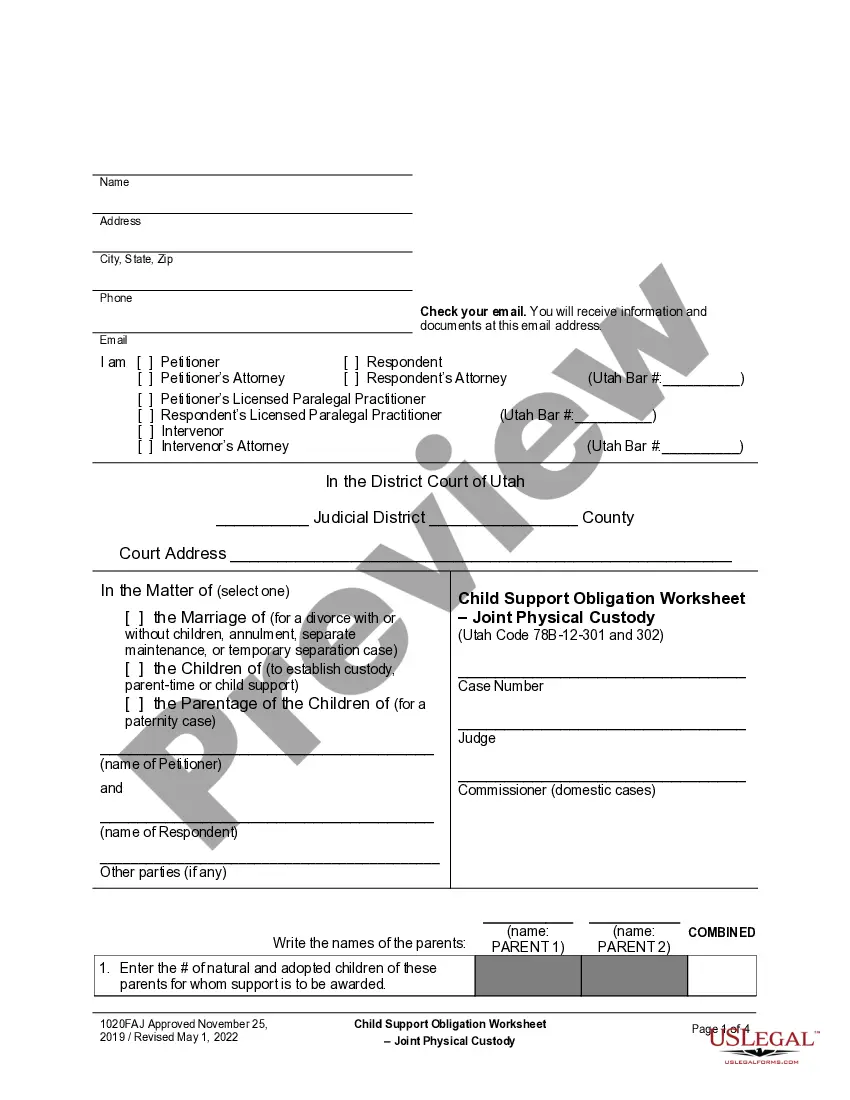
An Affidavit of Income Verification and Compliance with Child Support Guidelines is a legal document that certifies the income of both parties involved in a child support case. This form is essential for ensuring that the requested child support amount aligns with the minimum requirements set forth under child support guidelines. Unlike other income verification forms, this affidavit specifically focuses on compliance with child support regulations, making it a critical tool for parents navigating custody and support arrangements.
Form components explained
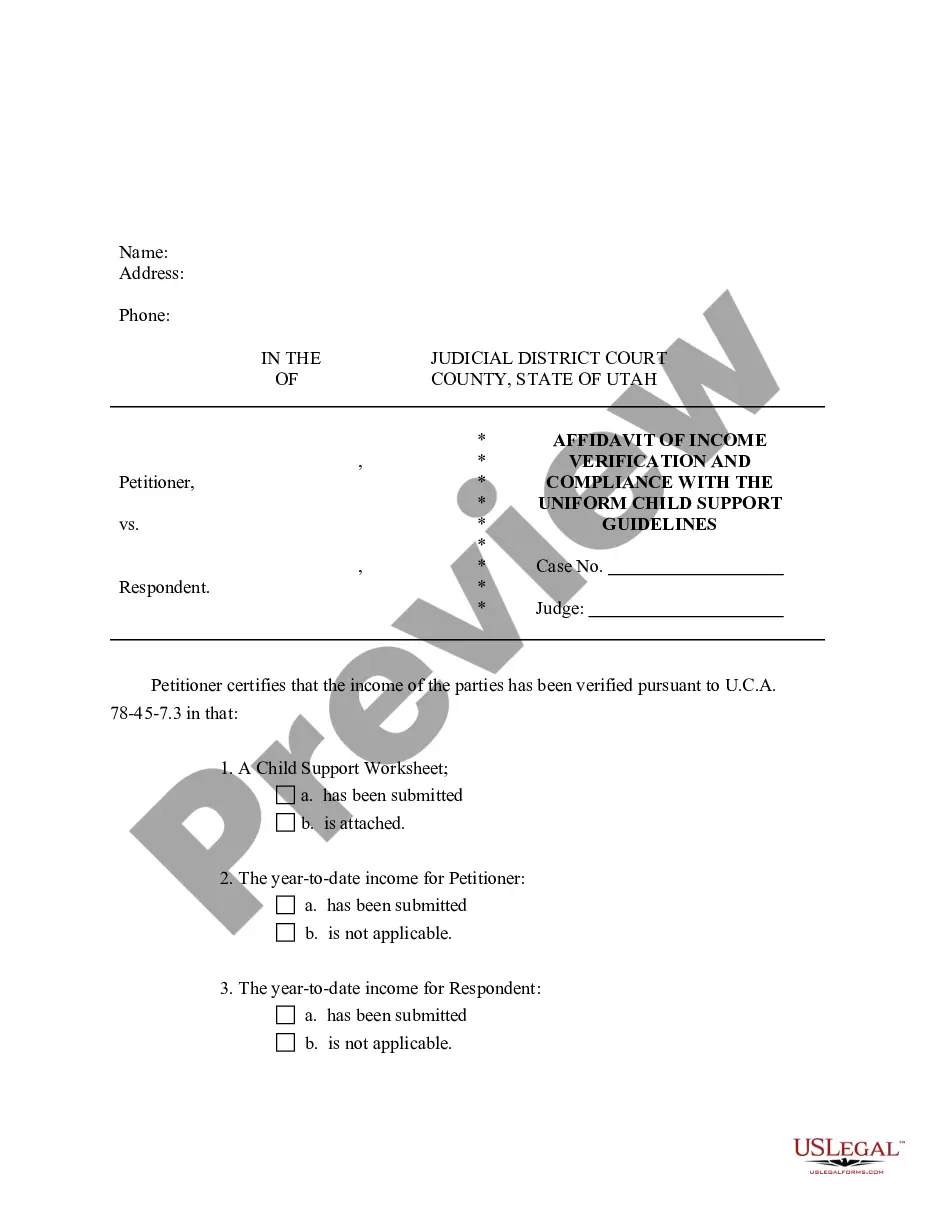
- Child Support Worksheet: Indicates whether it has been submitted or is attached.
- Year-to-date income for Petitioner: Specifies if it has been submitted or is not applicable.
- Year-to-date income for Respondent: Clarifies if it has been submitted or is not applicable.
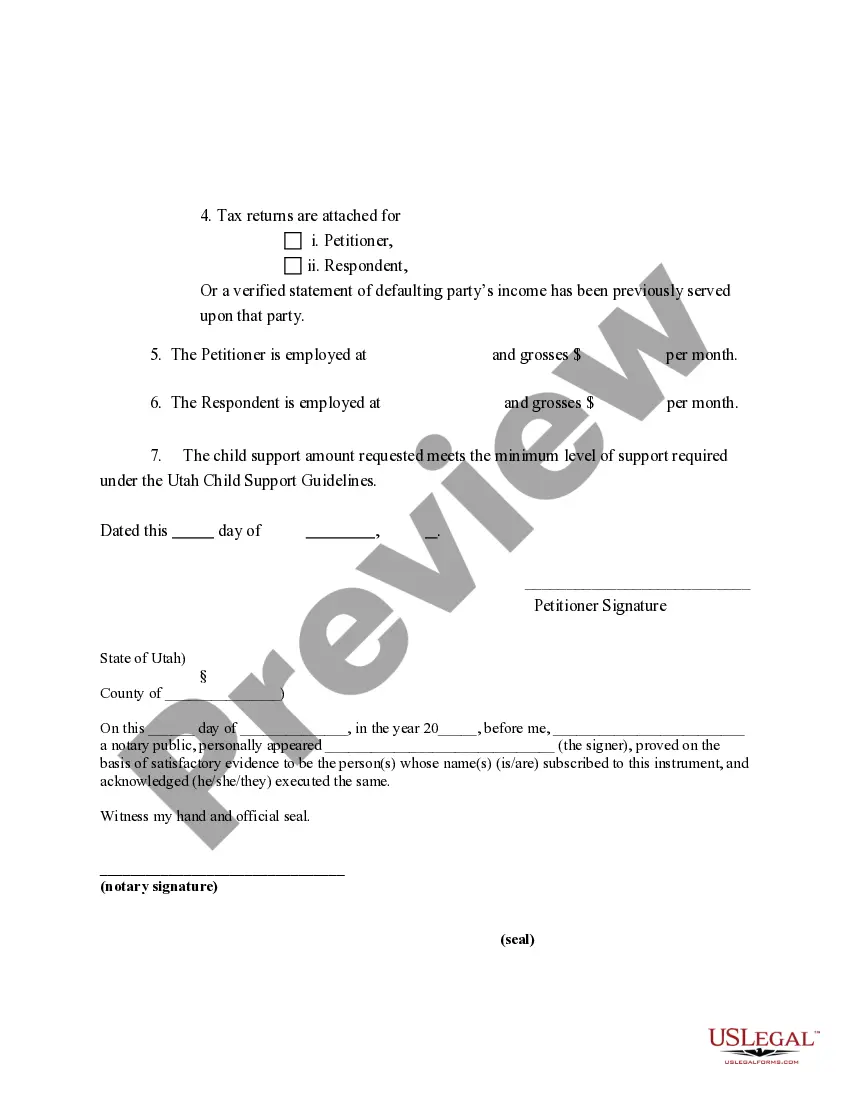
- Tax returns: Attachments for both Petitioner and Respondent, or a verified statement of income for the defaulting party.
When to use this form
This affidavit is used during divorce or custody proceedings where child support is being determined or modified. It is essential when one or both parties are required to provide proof of income for calculating a fair child support amount. It can also be used in cases where the income of either party has changed significantly and needs to be documented for compliance with child support obligations.
Who should use this form
- Parents or guardians seeking to establish or modify child support payments.
- Individuals involved in a divorce or separation where child support is a factor.
- Lawyers or legal representatives of parties in custody disputes.
How to complete this form
- Gather income documentation for both the Petitioner and Respondent.
- Complete the Child Support Worksheet and indicate its submission status.
- Provide year-to-date income information for both parties and check the applicable option.
- Attach relevant tax returns or a verified income statement for the defaulting party.
- Review the completed affidavit for accuracy and ensure all required signatures are included.
Notarization requirements for this form
This form must be notarized to be legally valid. US Legal Forms provides secure online notarization powered by Notarize, allowing you to complete the process through a verified video call.
Get your form ready online
Our built-in tools help you complete, sign, share, and store your documents in one place.
Make edits, fill in missing information, and update formatting in US Legal Forms—just like you would in MS Word.
Download a copy, print it, send it by email, or mail it via USPS—whatever works best for your next step.
Sign and collect signatures with our SignNow integration. Send to multiple recipients, set reminders, and more. Go Premium to unlock E-Sign.
If this form requires notarization, complete it online through a secure video call—no need to meet a notary in person or wait for an appointment.
We protect your documents and personal data by following strict security and privacy standards.

Make edits, fill in missing information, and update formatting in US Legal Forms—just like you would in MS Word.

Download a copy, print it, send it by email, or mail it via USPS—whatever works best for your next step.

Sign and collect signatures with our SignNow integration. Send to multiple recipients, set reminders, and more. Go Premium to unlock E-Sign.

If this form requires notarization, complete it online through a secure video call—no need to meet a notary in person or wait for an appointment.

We protect your documents and personal data by following strict security and privacy standards.
Common mistakes
- Failing to attach the necessary income proof, such as tax returns or pay stubs.
- Not checking the status of income submission for either party correctly.
- Omitting signatures or dates on the affidavit.
Benefits of using this form online
- Convenience of completing the form at home without needing to visit an attorney's office.
- Editability allows for adjustments before final submission.
- Access to legal document templates created by licensed attorneys, ensuring reliability.
Main things to remember
- An Affidavit of Income Verification is crucial for child support cases, ensuring the correct amount is calculated.
- Completing the form accurately and providing all necessary attachments is essential.
- Use this affidavit when income verification is needed in custody or support modifications.
Looking for another form?
Form popularity
FAQ
Child support is calculated using the gross monthly income of both parents and the number of overnights the child spends in each household.
In determining a parent's income for child support purposes, courts typically look at the parent's gross income from all sources. They then subtract certain obligatory deductions, like income taxes, Social Security, health care, and mandatory union dues.
Utah law requires the child support obligation to follow the child. This means we will enforce the obligation against the parent who does not have physical custody of the child. If neither parent has physical custody of a child who is living with a relative, we will enforce the obligations of both parents.
In Utah, child support payments must be used for things related to the living expenses of the child. This includes both basic necessities, like food, shelter, clothing, and medical expenses, as well as general living expenses such as daycare, travel and transportation, and school-related costs.
Best Interests of the Child Factors in UtahUtah family courts must consider several factors when deciding child custody in Utah, including: the child's physical and emotional needs. the child's relationship with each parent. the distance between the parents' residences.
Child support is calculated using the gross monthly income of both parents and the number of overnights the child spends in each household.
The court will consider the child's wishes to the extent that the child is sufficiently mature to express reasoned and independent preferences as to the parenting time schedule. Usually the court will not consider child's preference unless the child is at least 14 years old.
Utah's statute of limitations for child support arrears is the age of majority of the last child on the order, plus 4 years. (Unless a sum-certain judgment has been taken.)