Utah Letter from Landlord to Tenant as Notice to Tenant of Tenant's Disturbance of Neighbors' Peaceful Enjoyment to Remedy or Lease Terminates
Overview of this form
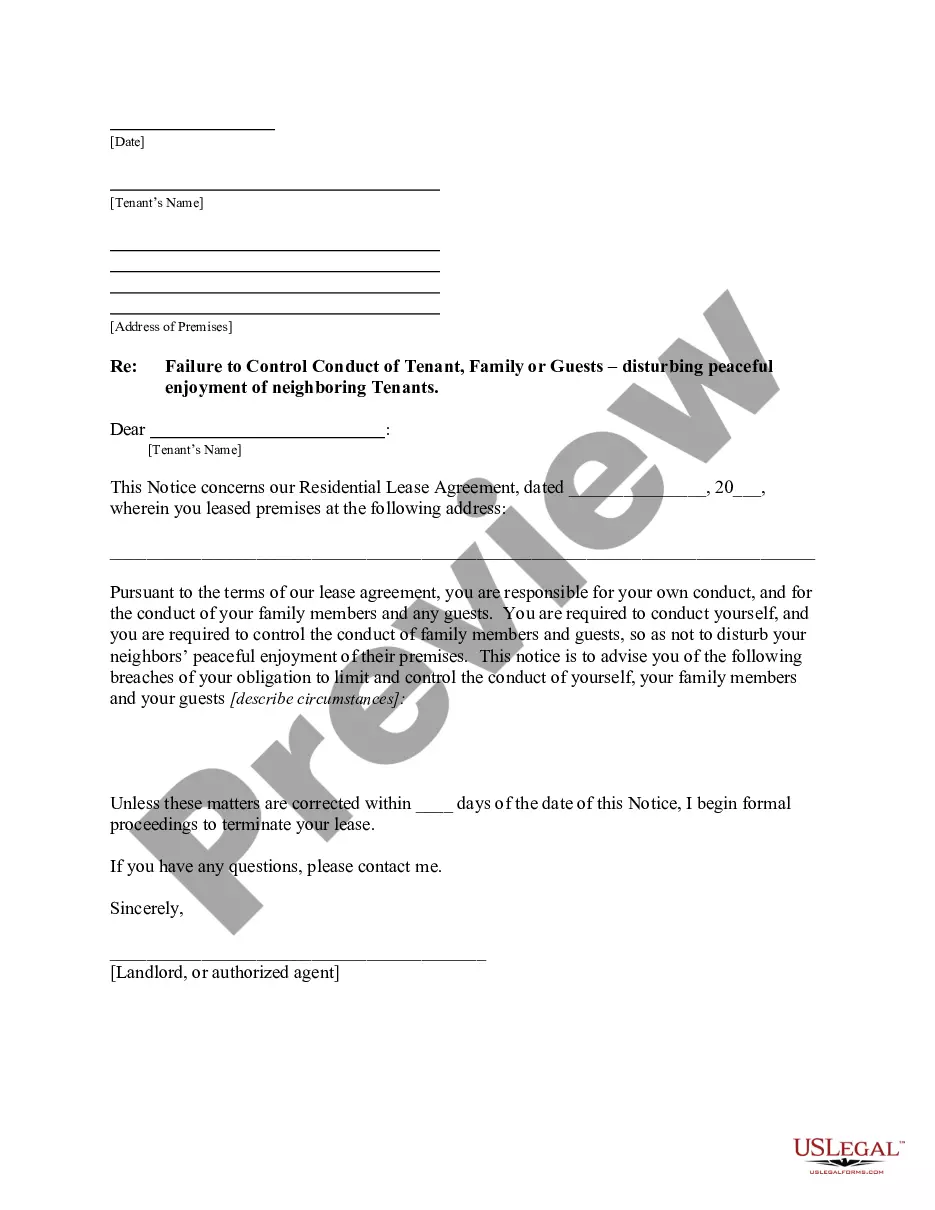
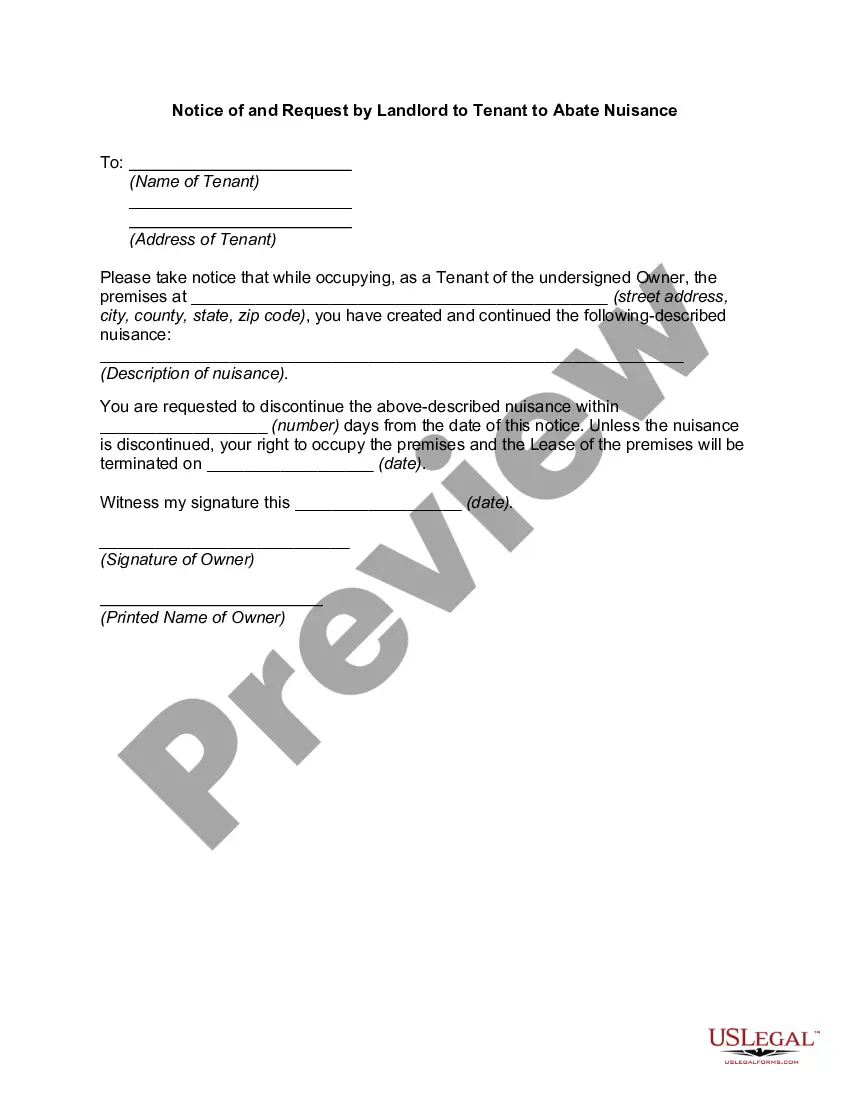
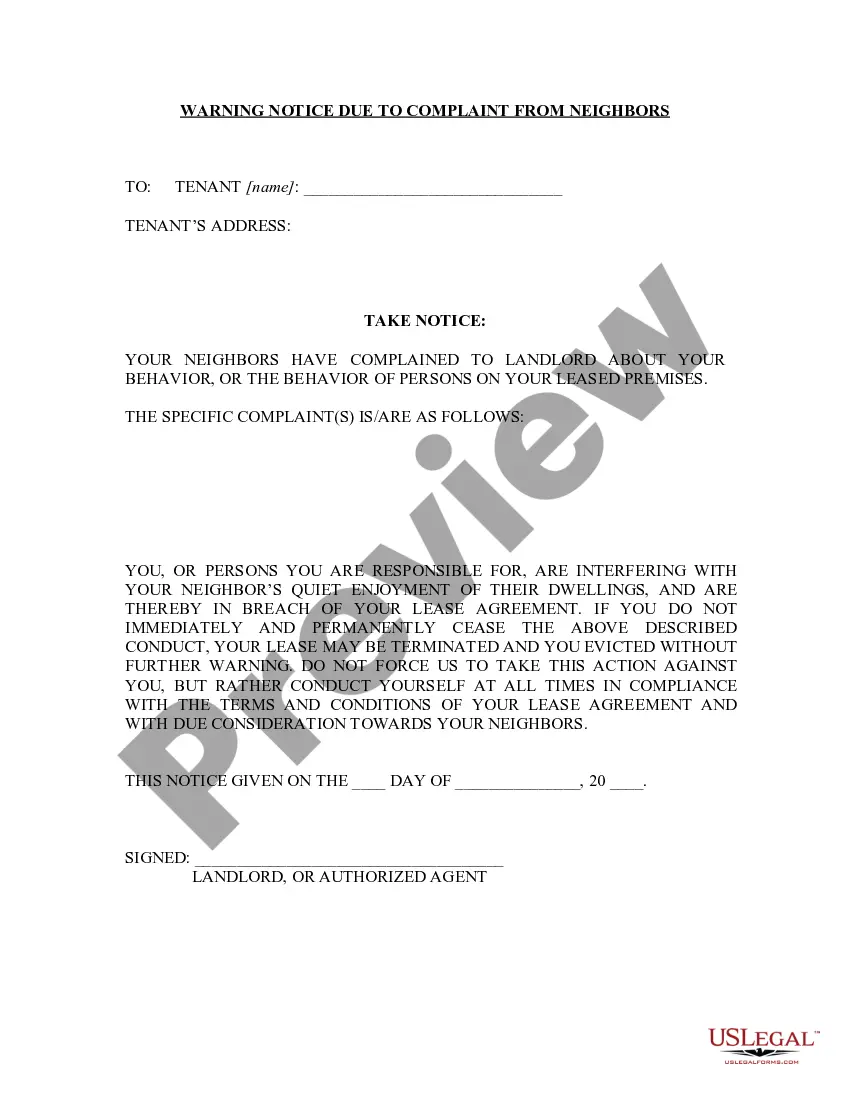
This form is a Letter from Landlord to Tenant as a Notice to Tenant of Tenant's Disturbance of Neighbors' Peaceful Enjoyment. Its primary purpose is to inform the tenant about their behavior that is violating lease terms regarding the quiet enjoyment of neighboring tenants. This notice outlines the landlord's concerns and specifies the need for the tenant to remedy the situation or face potential lease termination. Unlike other forms, this notice specifically addresses disturbances that affect neighbors rather than general lease obligations.
Key components of this form
- Identification of the landlord and tenant parties involved.
- Description of the specific disturbances occurring.
- Instructions for the tenant on how to remedy the situation.
- Warning regarding potential lease termination if the issue is not resolved.
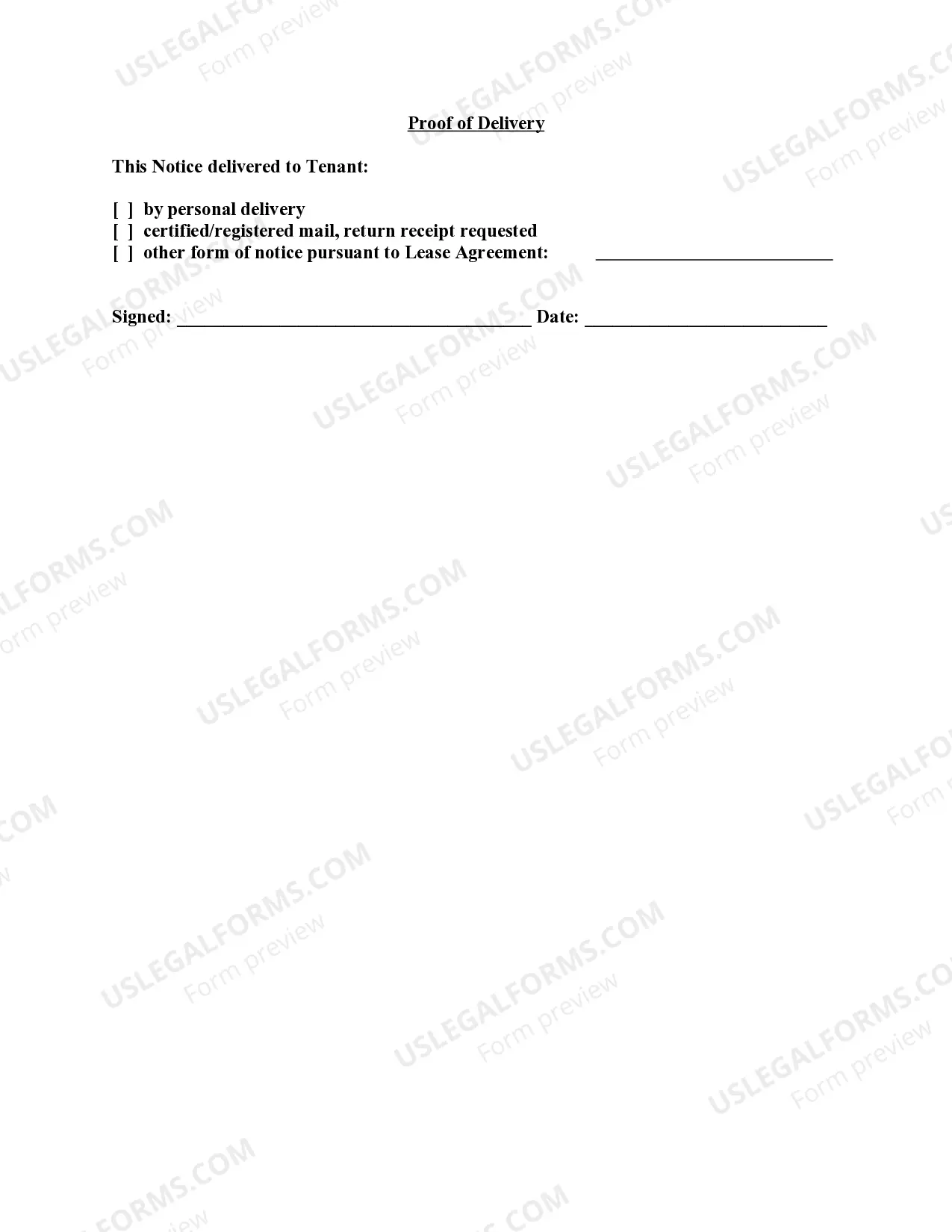
- Proof of delivery method to ensure the tenant receives the notice.
When to use this document
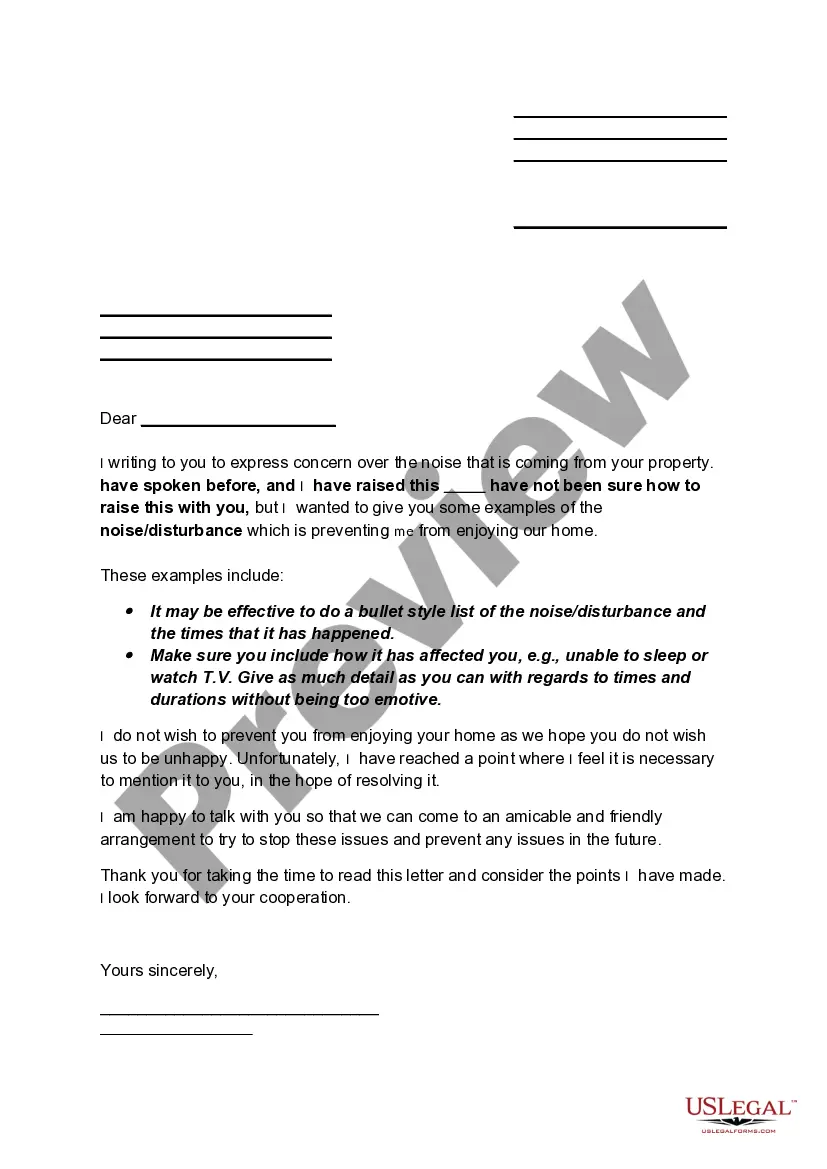
This form should be used when a landlord observes that a tenant, their family members, or guests are causing disturbances that disrupt the neighboring tenants' peaceful enjoyment of their homes. Situations may include loud parties, disruptive behavior, or repeated complaints from neighbors. Issuing this notice is an essential step in addressing these issues before taking further legal action, such as eviction.
Who this form is for
This notice can be used by:
- Landlords looking to formally address tenant disturbances.
- Property managers acting on behalf of landlords to maintain tenant relations.
- Tenants receiving complaints who need clarification on their obligations.
Steps to complete this form
- Identify the parties by entering the landlord's and tenant's full names.
- Describe the specific disturbances that are occurring.
- State the action the tenant must take to remedy the disturbance.
- Include a deadline for the tenant to respond or resolve the issue.
- Sign the notice as the landlord or authorized agent.
- Choose the method of delivery for the notice (personal or mail) and include the relevant details.
Does this document require notarization?
This form usually doesn’t need to be notarized. However, local laws or specific transactions may require it. Our online notarization service, powered by Notarize, lets you complete it remotely through a secure video session, available 24/7.
Get your form ready online
Our built-in tools help you complete, sign, share, and store your documents in one place.
Make edits, fill in missing information, and update formatting in US Legal Forms—just like you would in MS Word.
Download a copy, print it, send it by email, or mail it via USPS—whatever works best for your next step.
Sign and collect signatures with our SignNow integration. Send to multiple recipients, set reminders, and more. Go Premium to unlock E-Sign.
If this form requires notarization, complete it online through a secure video call—no need to meet a notary in person or wait for an appointment.
We protect your documents and personal data by following strict security and privacy standards.

Make edits, fill in missing information, and update formatting in US Legal Forms—just like you would in MS Word.

Download a copy, print it, send it by email, or mail it via USPS—whatever works best for your next step.

Sign and collect signatures with our SignNow integration. Send to multiple recipients, set reminders, and more. Go Premium to unlock E-Sign.

If this form requires notarization, complete it online through a secure video call—no need to meet a notary in person or wait for an appointment.

We protect your documents and personal data by following strict security and privacy standards.
Mistakes to watch out for
- Failing to provide specific examples of disturbances can lead to confusion.
- Not including a clear deadline for remedial action may weaken the notice.
- Forgetting to sign the notice could render it ineffective.
- Neglecting to document the delivery method may result in disputes over whether the notice was received.
Benefits of using this form online
- Convenience: Download the form anytime from the comfort of your home.
- Editability: Customize the form to fit your specific situation before printing.
- Reliability: The form is created by licensed attorneys, ensuring legal compliance.
Legal use & context
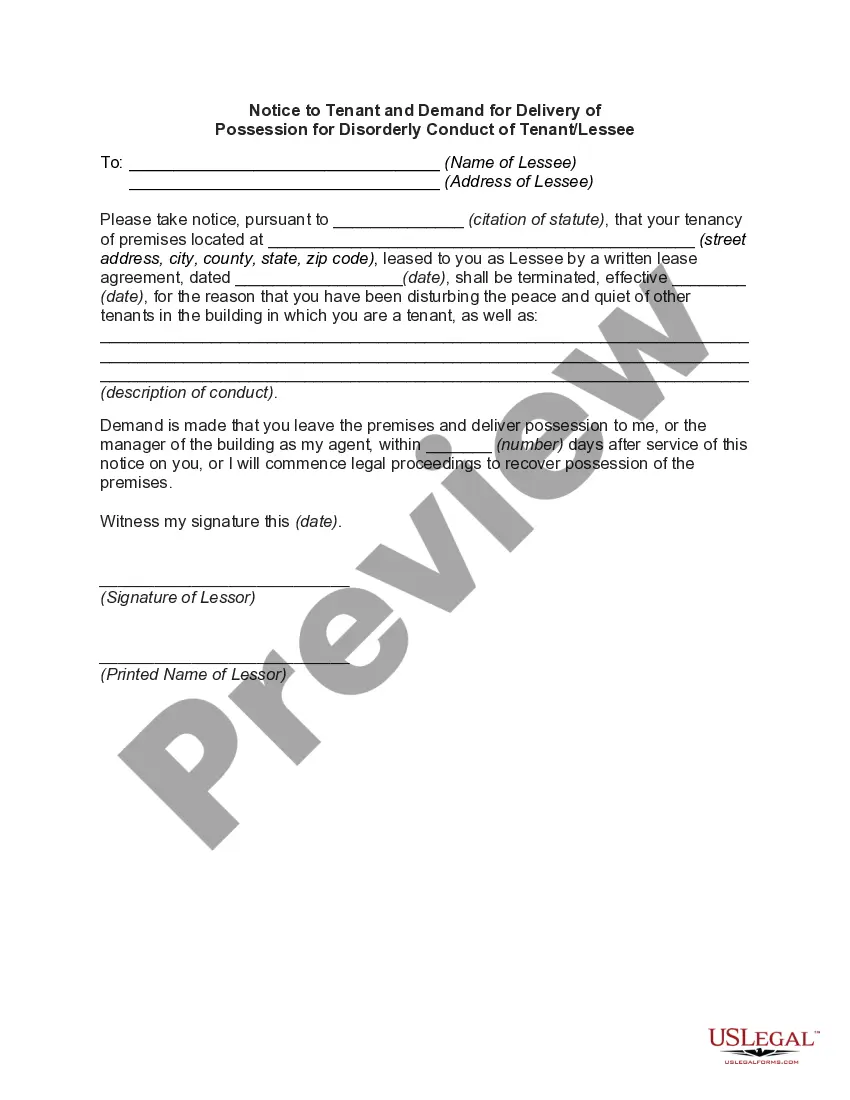
Serving this notice is a critical step in addressing tenant disturbances legally. It helps to protect the peaceful enjoyment rights of neighboring tenants while also providing tenants the opportunity to correct their behavior. If the issue persists after this notice, landlords may proceed with further legal actions such as lease termination or eviction.
What to keep in mind
- Use this notice to formally address tenant disturbances.
- Include clear details about the disturbances and expected actions to remedy them.
- Adhere to local laws regarding tenant rights and lease agreements.
- Proper documentation of the notice is crucial for future actions if necessary.
Looking for another form?
Form popularity
FAQ
It means with no interference from another party. Each sale carries the implication that it can be owned without any interference.
Under common law tenants have a right to 'quiet enjoyment' of the property. This is an implied term, or covenant, which has been expressed or implied in conveyances and leases of English land for centuries.'Quiet enjoyment' is a term so often misunderstood.
The covenant of quiet enjoyment states that a tenant has the right to enjoy his or her rental unit without substantial interference from the landlord. It ensures that tenants benefit from the full use and enjoyment of their rental unit.
According to Nolo, quiet enjoyment is The right of a property owner or tenant to enjoy his or her property without interference. Disruption of quiet enjoyment may constitute a legal nuisance.
Unfortunately that is not the case. Once a break notice has been served is cannot be unilaterally withdrawn. Even if both parties agree that the notice is withdrawn, service of the notice terminates the existing lease and creates a new tenancy by implication. There are a number of consequences that flow from this.
Unconditional quit notices are used to order the tenant to leave the premises without the chance to remedy the situation. This is used for a serious breach of the lease agreement or chronic late rent payment.
An eviction notice must state a reason why you are being evicted, otherwise it is invalid.For tenants who lived in the property for more than 12 months, the landlord must provide at least 60 days prior notice to vacate, under California Civil Code 1946.
A Covenant that promises that the grantee or tenant of an estate in real property will be able to possess the premises in peace, without disturbance by hostile claimants. Quiet enjoyment is a right to the undisturbed use and enjoyment of real property by a tenant or landowner.
Typical quiet hours are 11 p.m. to 7 or 8 a.m. on weekdays and 11 p.m. or midnight to 8, 9, or 10 a.m. on weekends and holidays. The quiet enjoyment clause for your apartment community may have tighter hours than your city ordinances to maintain a pleasant atmosphere for all residents.