Utah Letter from Tenant to Landlord containing Notice that premises in uninhabitable in violation of law and demand immediate repair
What is this form?
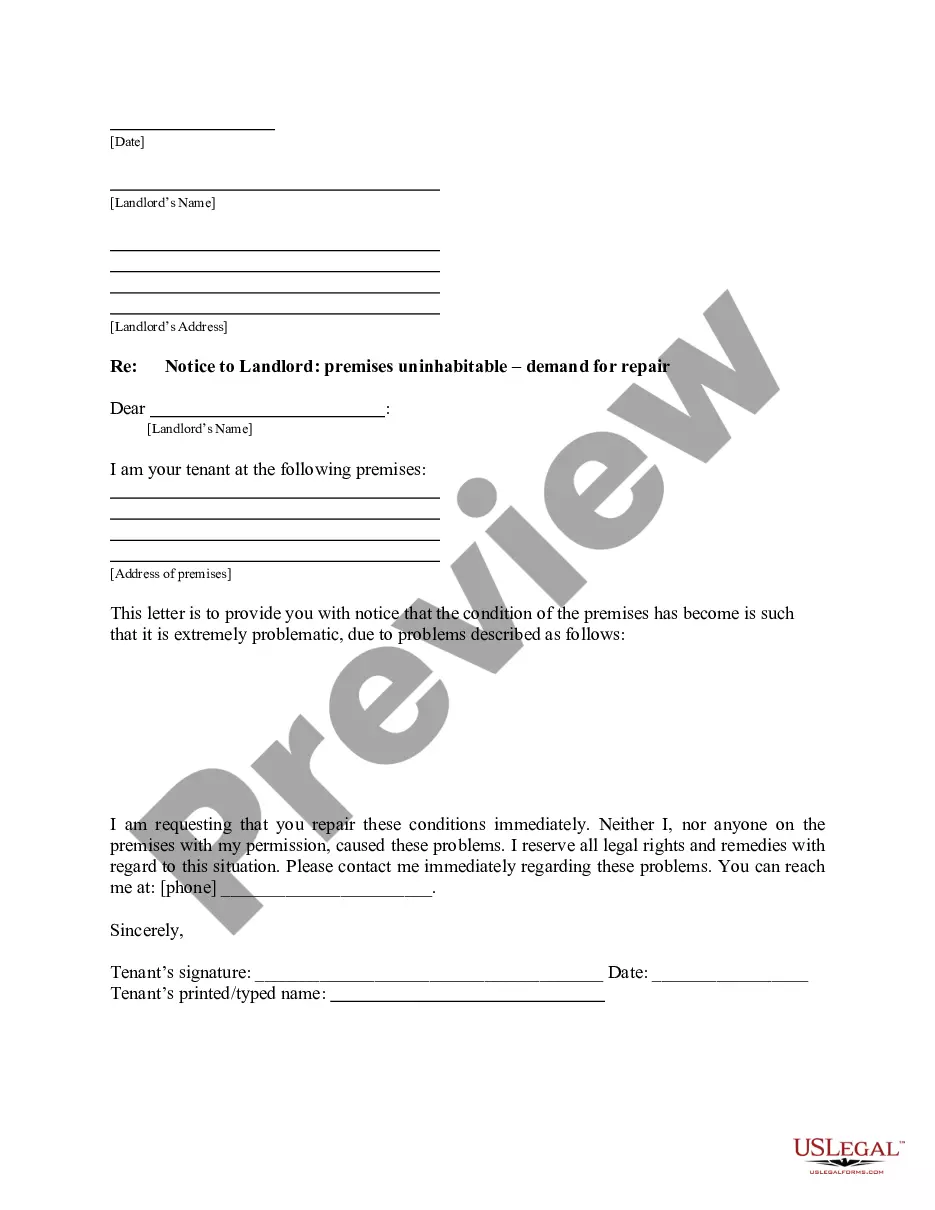
This form is a Letter from Tenant to Landlord containing Notice that premises are uninhabitable in violation of law and demand immediate repair. It serves as an official communication from a tenant to their landlord, notifying them of issues that make the property unsuitable for living. This letter differs from other tenant forms by specifically addressing health, safety, or legal violations that require immediate attention from the landlord.
Key parts of this document
- Tenant's name and contact information.
- Landlord's name and address.
- Date of notice and identification of the rental property.
- Description of the issues making the premises uninhabitable.
- Demand for immediate repairs and a statement of rights.
- Signature of the tenant(s) and date signed.

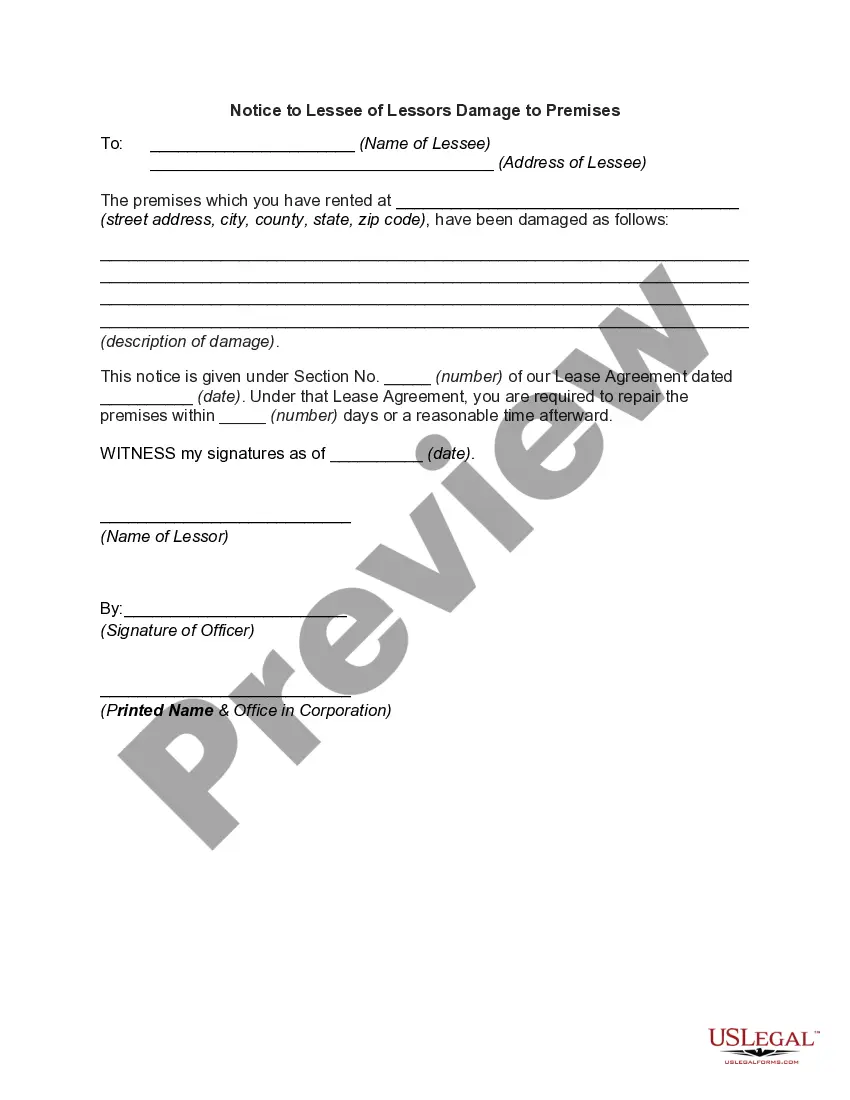

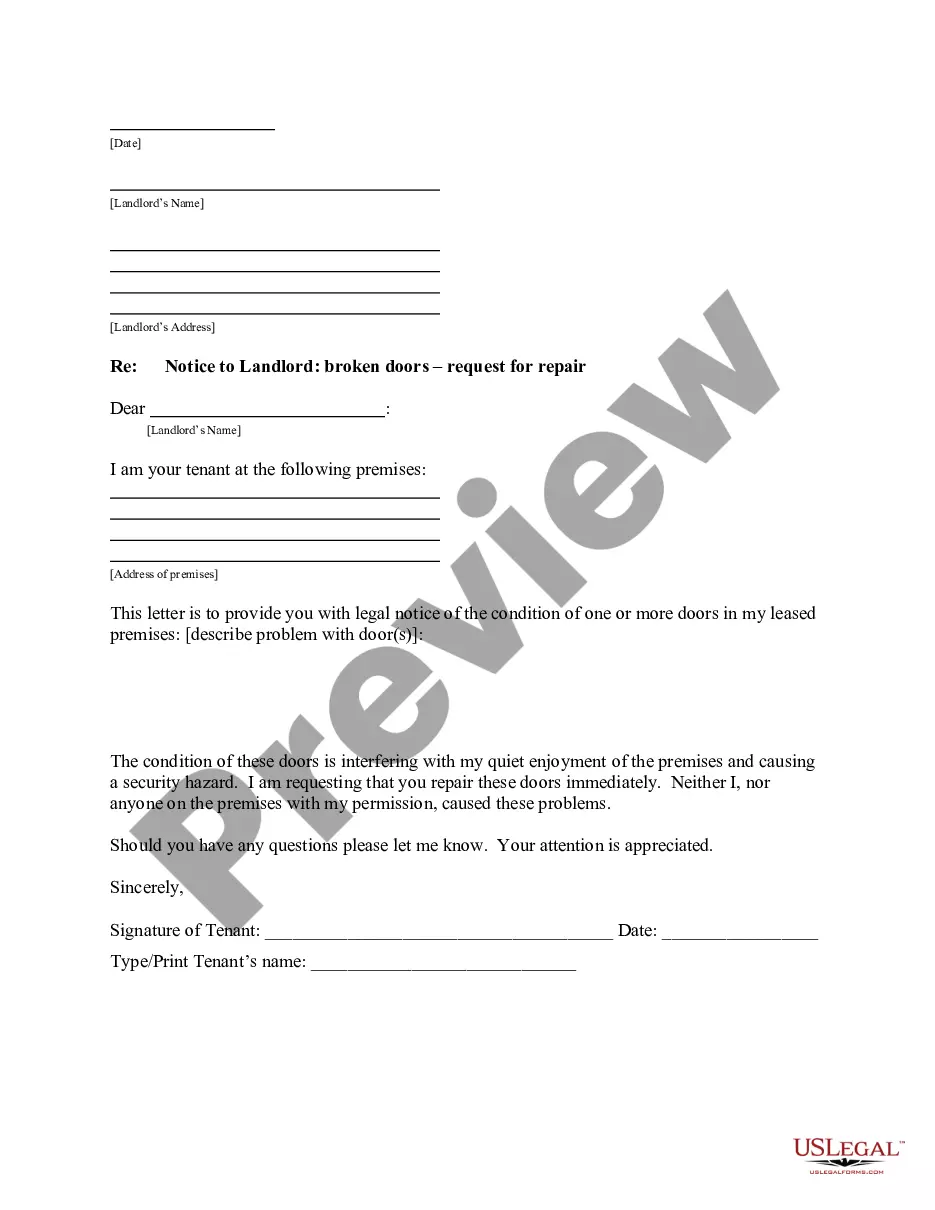
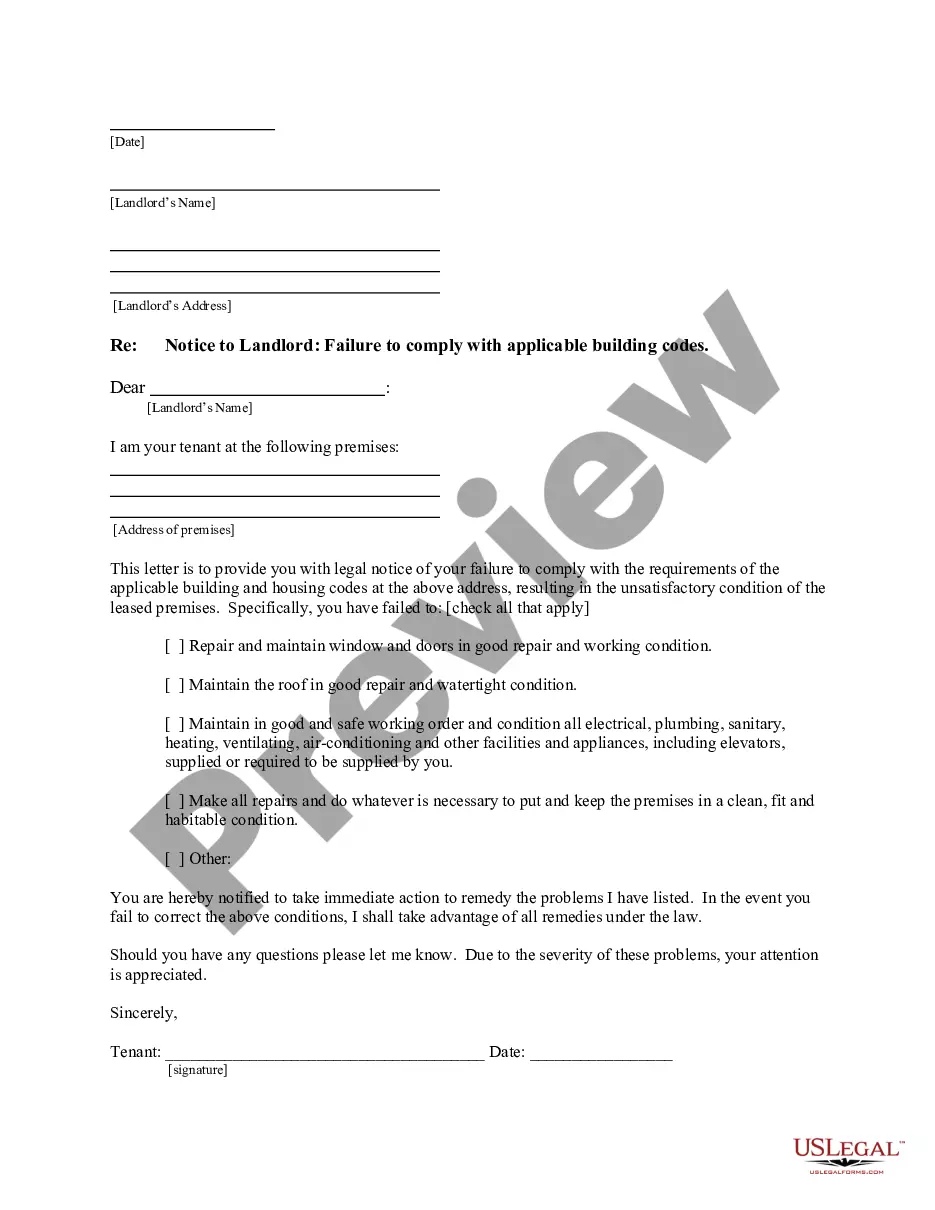
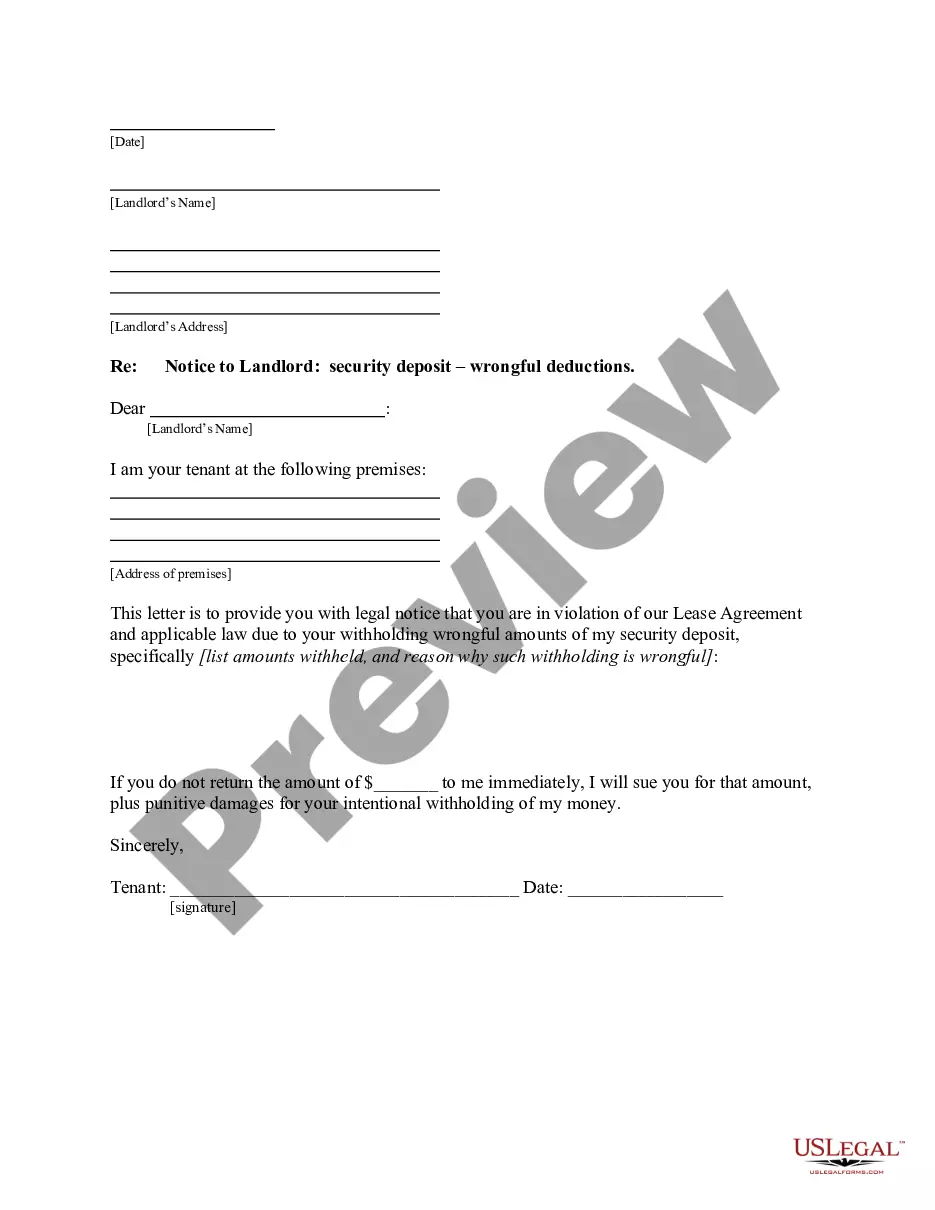
Situations where this form applies
This form should be used when a tenant discovers serious issues with the rental property that violate health or safety codes. For example, if there are significant plumbing leaks, electrical hazards, or pest infestations that render the premises unsafe, this notice informs the landlord of the need for urgent repairs. It is also applicable when a tenant wants to preserve their rights regarding termination of the lease or rent abatement if repairs are not made in a reasonable time frame.
Who needs this form
This form is designed for:
- Tenants facing uninhabitable living conditions.
- Individuals renting residential properties.
- Those wanting to formally notify their landlord of repair demands.
- Anyone who may need to invoke their legal rights regarding their rental agreement.
How to prepare this document
To complete this form, follow these steps:
- Enter your name and contact information as the tenant.
- Provide the landlord's name and address.
- Insert the date you are sending the notice.
- Clearly describe the issues that make the property uninhabitable.
- State your demand for repairs and specify your rights regarding the lease.
- Sign the letter and include the date of your signature.
Notarization requirements for this form
This form does not typically require notarization unless specified by local law. It is important to check your specific state's requirements to ensure compliance.
Get your form ready online
Our built-in tools help you complete, sign, share, and store your documents in one place.
Make edits, fill in missing information, and update formatting in US Legal Forms—just like you would in MS Word.
Download a copy, print it, send it by email, or mail it via USPS—whatever works best for your next step.
Sign and collect signatures with our SignNow integration. Send to multiple recipients, set reminders, and more. Go Premium to unlock E-Sign.
If this form requires notarization, complete it online through a secure video call—no need to meet a notary in person or wait for an appointment.
We protect your documents and personal data by following strict security and privacy standards.

Make edits, fill in missing information, and update formatting in US Legal Forms—just like you would in MS Word.

Download a copy, print it, send it by email, or mail it via USPS—whatever works best for your next step.

Sign and collect signatures with our SignNow integration. Send to multiple recipients, set reminders, and more. Go Premium to unlock E-Sign.

If this form requires notarization, complete it online through a secure video call—no need to meet a notary in person or wait for an appointment.

We protect your documents and personal data by following strict security and privacy standards.
Avoid these common issues
- Failing to provide a detailed description of the issues.
- Not including the date when the notice is sent.
- Overlooking to sign the letter before sending it.
- Ignoring local laws concerning required notice periods.
Benefits of completing this form online
- Immediate access to a legally vetted form tailored for tenant-landlord communication.
- Ability to easily fill out and customize the form to fit specific needs.
- Conveniently downloadable for quick printing and delivery.
- Efficient way to formally document housing issues for potential legal considerations.
- This notice provides a formal way for tenants to communicate serious property issues.
- Compliance with local notice requirements helps reinforce tenant rights.
- Failure to properly inform the landlord may affect tenants' rights and remedies.
Summary of main points
- The form formally notifies the landlord of uninhabitable conditions.
- It is important for protecting your rights as a tenant regarding repairs.
- Filling out the form accurately and completely is crucial for its effectiveness.
Looking for another form?
Form popularity
FAQ
Generally, no. The landlord cannot raise the rent during a 12-month lease term. Once a year, HUD calculates the median gross income in each part of the U.S. LIHTC rent amounts are based upon this calculation. If the local average income increases, the LIHTC rent may be increased during the next 12-month lease term.
The Fit Premises Act is the Utah law that governs housing conditions. Under this law, a landlord must provide safe and livable housing. This means the landlord must rent housing that is up to code.If you break something in your apartment or cause damage to the rental, you may have to pay for the repairs.
To give you an idea, it's in good taste to start your letter "Dear Mr./Ms. Insert Name Here," as is the case with any polite letter. No matter how much you might want to give your landlord a piece of your mind, do yourself a favor and refrain from calling him a slumlord.
Any time you write a letter or email to your landlord, keep your language clear and concise to eliminate any potential for confusion. Include relevant details such as the date of writing, the dates of any instances referenced within the letter, and your contact information and unit number.
Use Utah Legal Services to file an official report and receive legal assistance for your landlord complaint by visiting utahlegalservices.org. Visit utcourts.gov for information regarding your rights as a renter who is suing a landlord.
Enacted in 2012, Utah Code § 10-9a-505.5 prevents local governments from adopting excessive limits on the numbers of unrelated persons that can occupy a single residential unit in a single family zone. The minimum number is 4 unrelated persons in most areas, and 3 in cities that contain a university.
If you refuse access to your home If you refuse access for repairs and inspections entirely, you could be breaking your tenancy agreement and putting your health or safety at risk.You could be at risk of section 21 eviction if you rent privately and refuse access for repairs or gas or electrical safety checks.
By the law, Utah tenants are required to abide in a certain way. They must follow certain procedures as outlined by the law as well. Tenants also have certain rights that they are entitled to, as well as things they are responsible for. The tenant has the right to dwell in a safe and sanitary housing unit.