Utah Warranty Deed from Husband and Wife to Husband and Wife
About this form
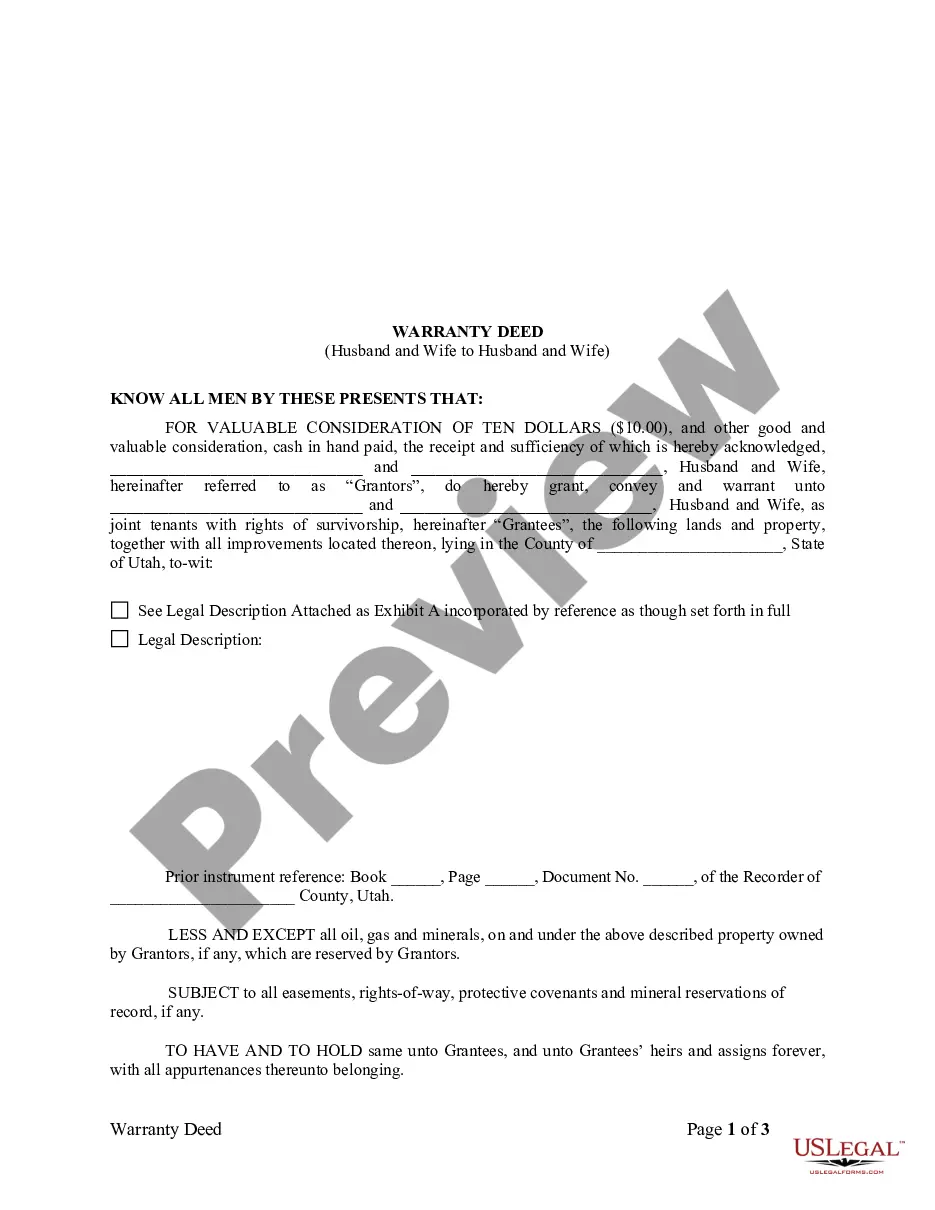
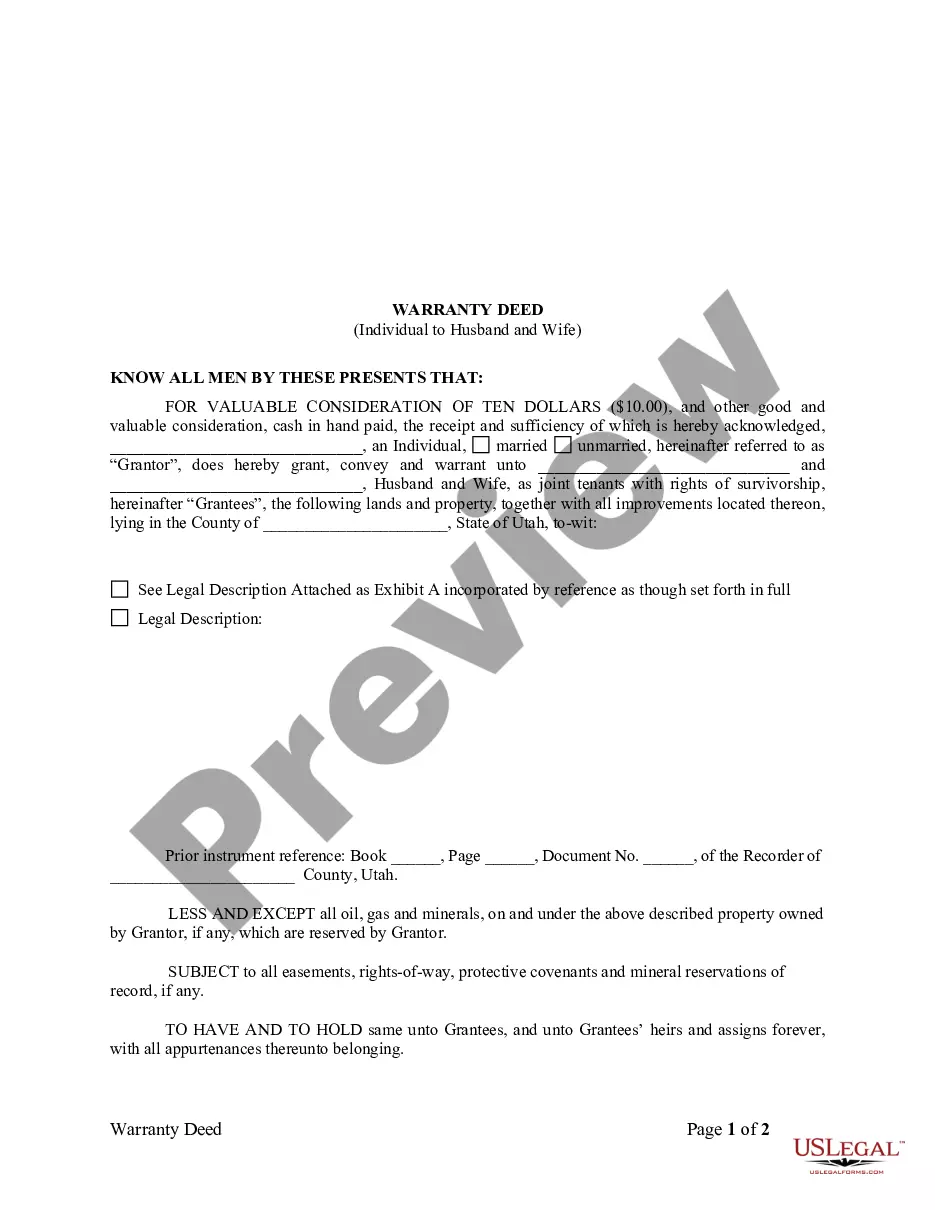
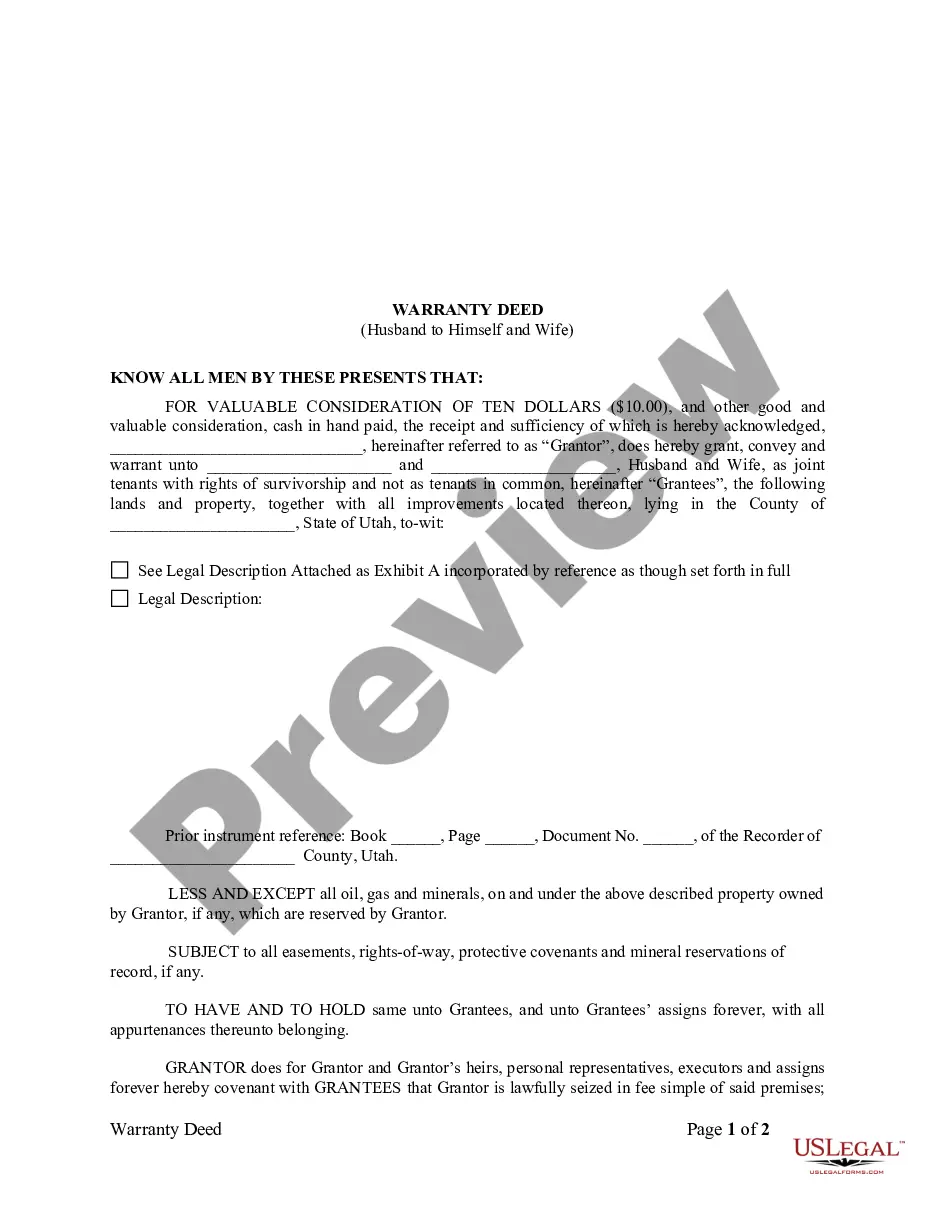
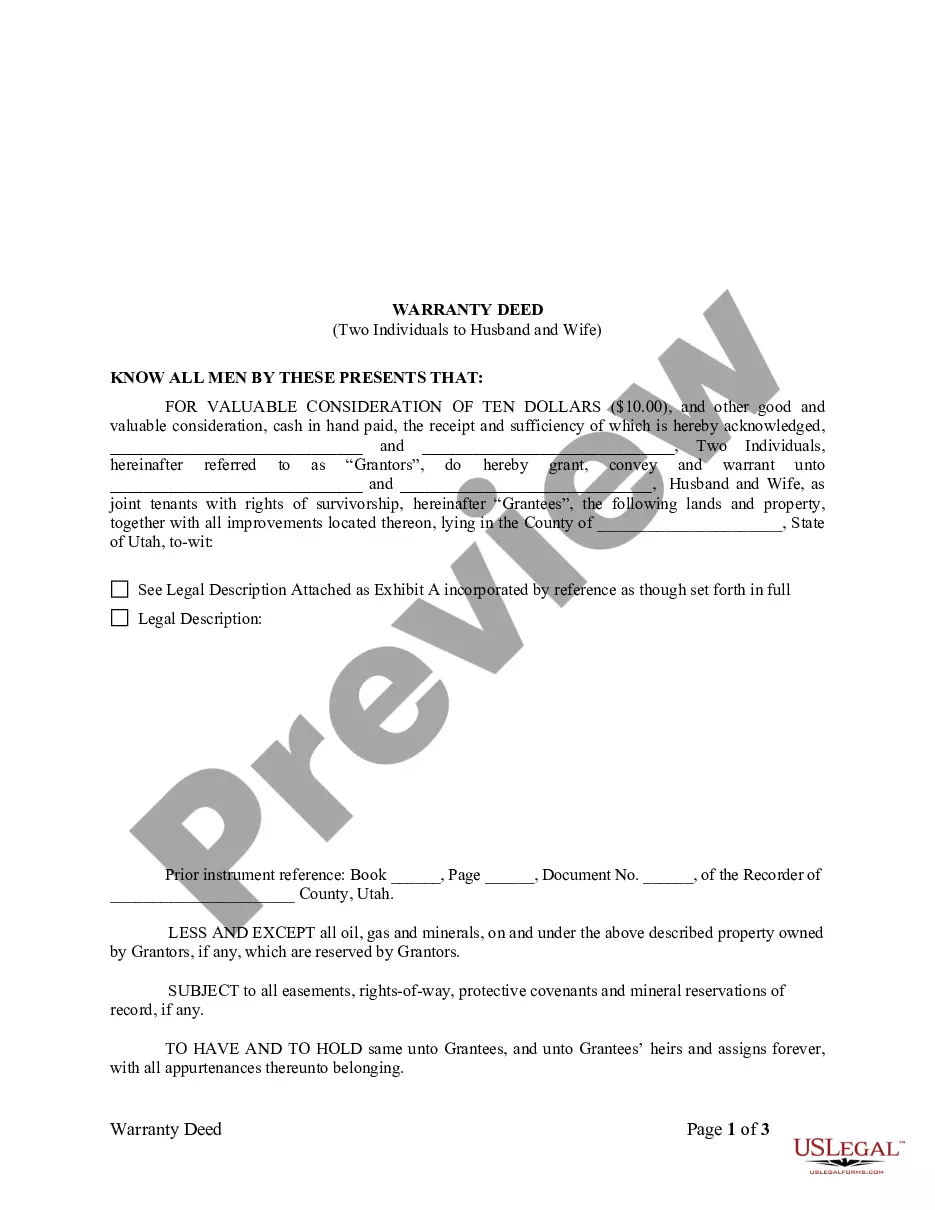
This Warranty Deed from Husband and Wife to Husband and Wife is a legally binding document that transfers property ownership between spouses. It ensures that both spouses are granted joint ownership and includes specific provisions regarding the handling of the property, including mineral rights. This form differs from other deed types by establishing joint tenancy with rights of survivorship, meaning that if one spouse passes away, the other automatically inherits the entire property without the need for probate.
Form components explained
- Identification of grantors (husband and wife) and grantees (husband and wife).
- Legal description of the property being transferred.
- Statement of consideration (the amount exchanged).
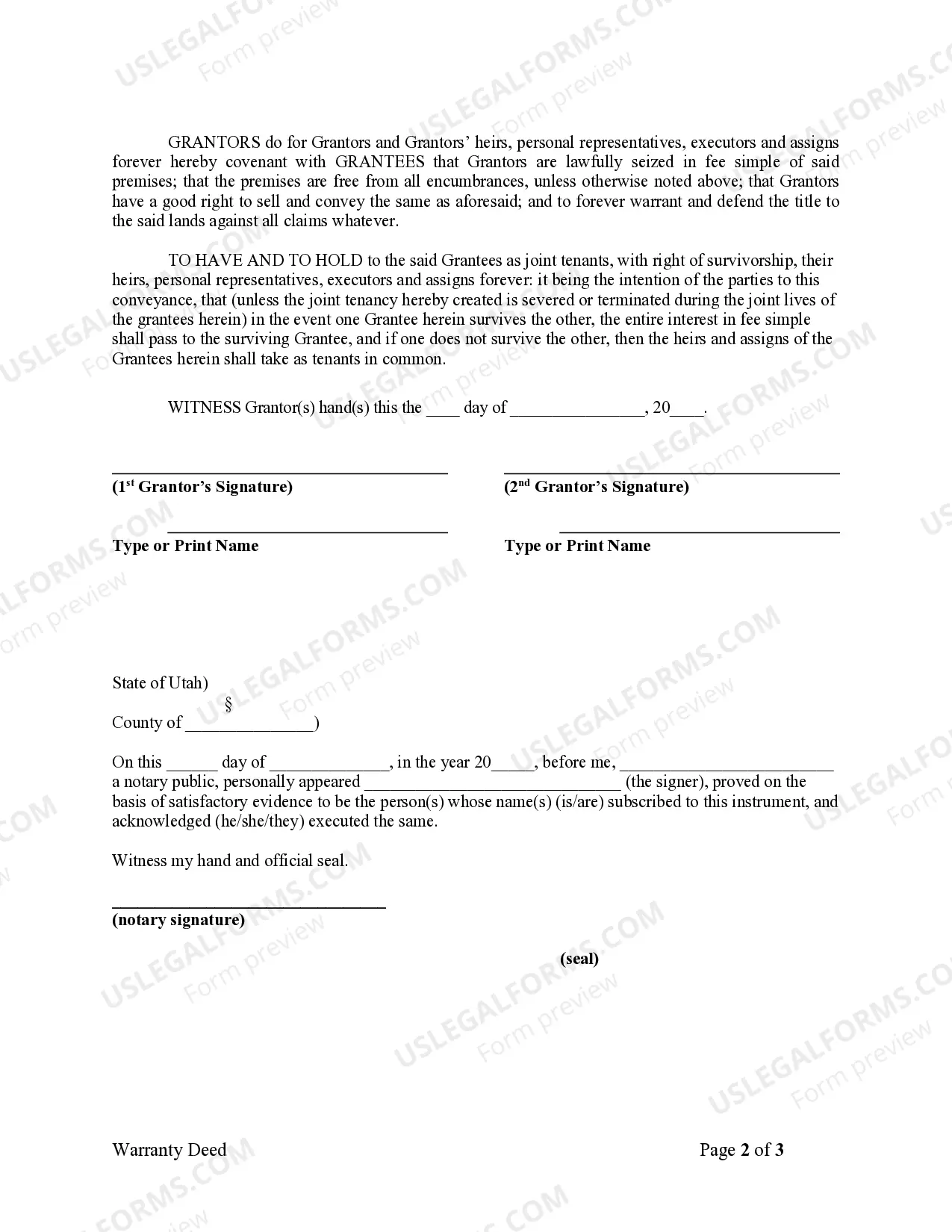
- Clauses detailing the rights and responsibilities of each party.
- Specification that the transfer is subject to existing easements and reservations.

When to use this document
This form is necessary when a husband and wife wish to transfer property between themselves, either to clarify ownership or to establish joint tenancy with rights of survivorship. It may also be used in situations where the couple wants to ensure that the property goes directly to the surviving spouse in the event of death, thereby avoiding probate complications.
Who should use this form
- Husband and wife couples who jointly own property.
- Couples who wish to clarify ownership or change how their property is titled.
- Those looking to ensure that property is transferred to a surviving spouse automatically upon death.
Completing this form step by step
- Identify the grantors (husband and wife) and the grantees (husband and wife).
- Specify the property being transferred in the legal description section.
- Enter the consideration or payment amount of ten dollars and any other valuable consideration.
- Include the date of signing and obtain signatures from both grantors.
- Review the deed to ensure all information is accurate and complete.
Does this form need to be notarized?
This form must be notarized to be legally valid. US Legal Forms provides secure online notarization powered by Notarize, allowing you to complete the process through a verified video call.
Get your form ready online
Our built-in tools help you complete, sign, share, and store your documents in one place.
Make edits, fill in missing information, and update formatting in US Legal Forms—just like you would in MS Word.
Download a copy, print it, send it by email, or mail it via USPS—whatever works best for your next step.
Sign and collect signatures with our SignNow integration. Send to multiple recipients, set reminders, and more. Go Premium to unlock E-Sign.
If this form requires notarization, complete it online through a secure video call—no need to meet a notary in person or wait for an appointment.
We protect your documents and personal data by following strict security and privacy standards.

Make edits, fill in missing information, and update formatting in US Legal Forms—just like you would in MS Word.

Download a copy, print it, send it by email, or mail it via USPS—whatever works best for your next step.

Sign and collect signatures with our SignNow integration. Send to multiple recipients, set reminders, and more. Go Premium to unlock E-Sign.

If this form requires notarization, complete it online through a secure video call—no need to meet a notary in person or wait for an appointment.

We protect your documents and personal data by following strict security and privacy standards.
Common mistakes to avoid
- Failing to provide a complete legal description of the property.
- Not including the correct names of all parties involved.
- Overlooking the need for signatures from both grantors.
Benefits of using this form online
- Convenience of accessing and downloading the form instantly.
- Editability allows for customization to fit specific needs.
- Reliability, as the template is drafted by legal professionals.
Looking for another form?
Form popularity
FAQ
Two of the most common ways to transfer property in a divorce are through an interspousal transfer deed or quitclaim deed. When spouses own property together, but then one spouse executes an interspousal transfer or a quitclaim deed, this is known as transmutation.
In states like California and Florida, the spouses may use a quitclaim deed to transfer the property without warranting title. Other stateslike Texasrecognize a similar type of deed called a deed without warranty.
In California, all property bought during the marriage with income that was earned during the marriage is deemed "community property." The law implies that both spouses own this property equally, regardless of which name is on the title deed.
California married couples generally have three options to take title to their community (vs separate) property real estate: community property, joint tenancy or Community Property with Right of Survivorship. The latter coming into play in California July of 2001.
The term "less and except" often appears in a warranty deed to signify that a particular area of the real estate is not covered under the deed. In other words, that part of the property is excluded from the contract.
When it comes to reasons why you shouldn't add your new spouse to the Deed, the answer is simple divorce and equitable distribution. If you choose not to put your spouse on the Deed and the two of you divorce, the entire value of the home is not subject to equitable distribution.
It is also crucial that a spouse know about the loan, even if he or she is not on the mortgage. In general, the spouse must sign a deed of trust, the Truth in Lending and Right to Cancel documents. By signing these documents, they are simply acknowledging the existence of the mortgage.
In cases where a couple shares a home but only one spouse's name is on it, the home will not automatically pass to the surviving pass, if his or her name is not on the title.
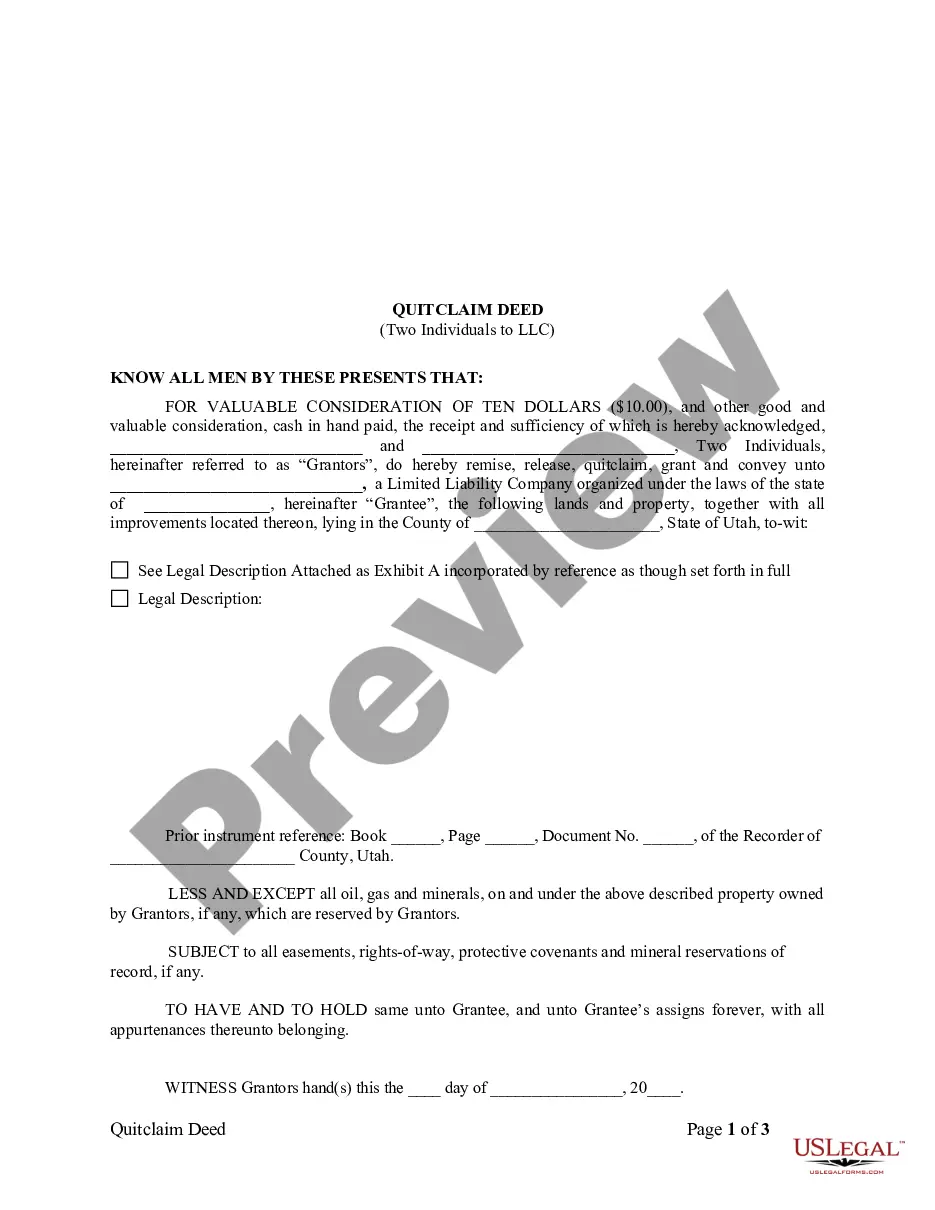
A Utah (UT) quitclaim deed is a legal document that allows a property owner to transfer real property to a buyer. It names the buyer and seller, the property, and any terms, interest, or conditions conveyed in the transfer of property.