Limitation on Disposition of Securities Memorandum
What this document covers
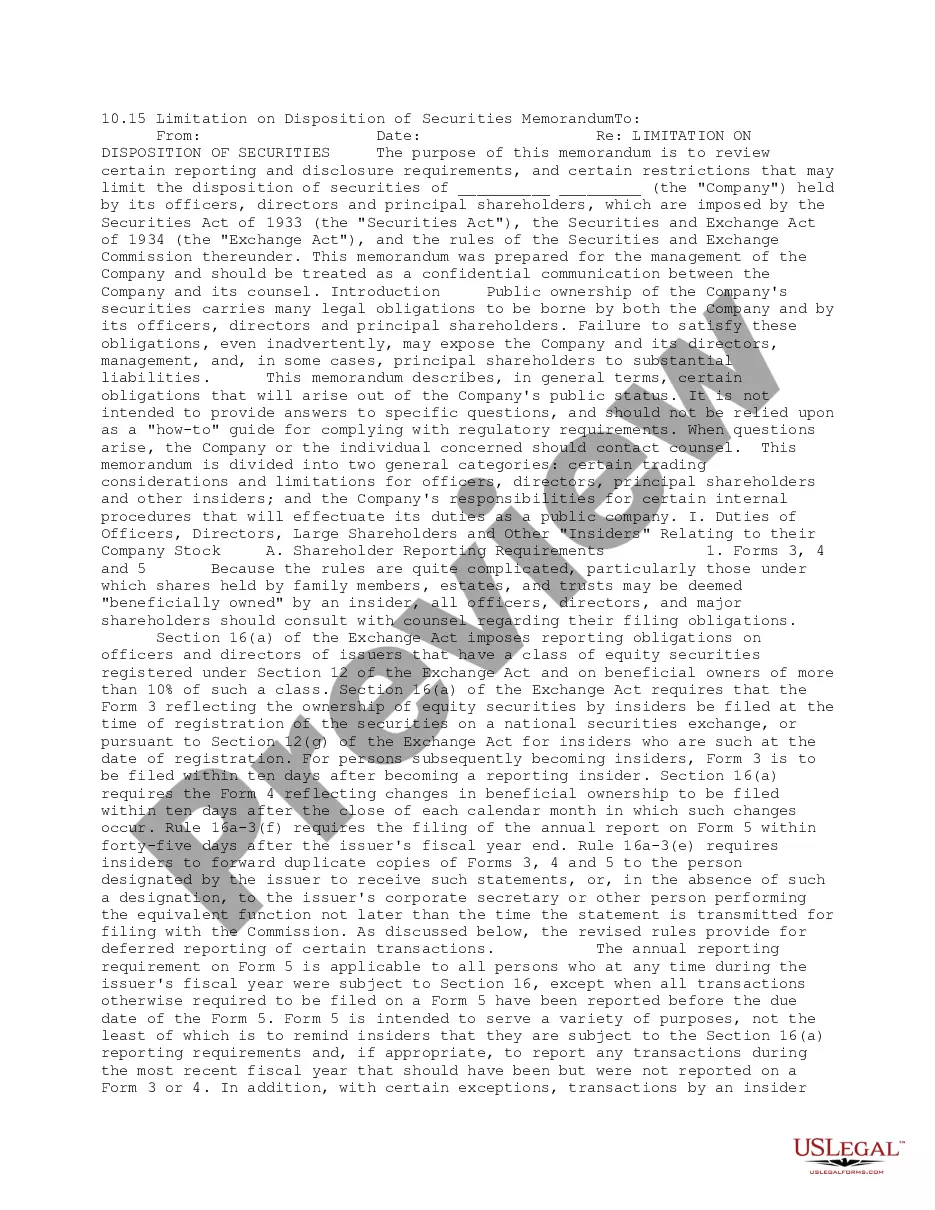
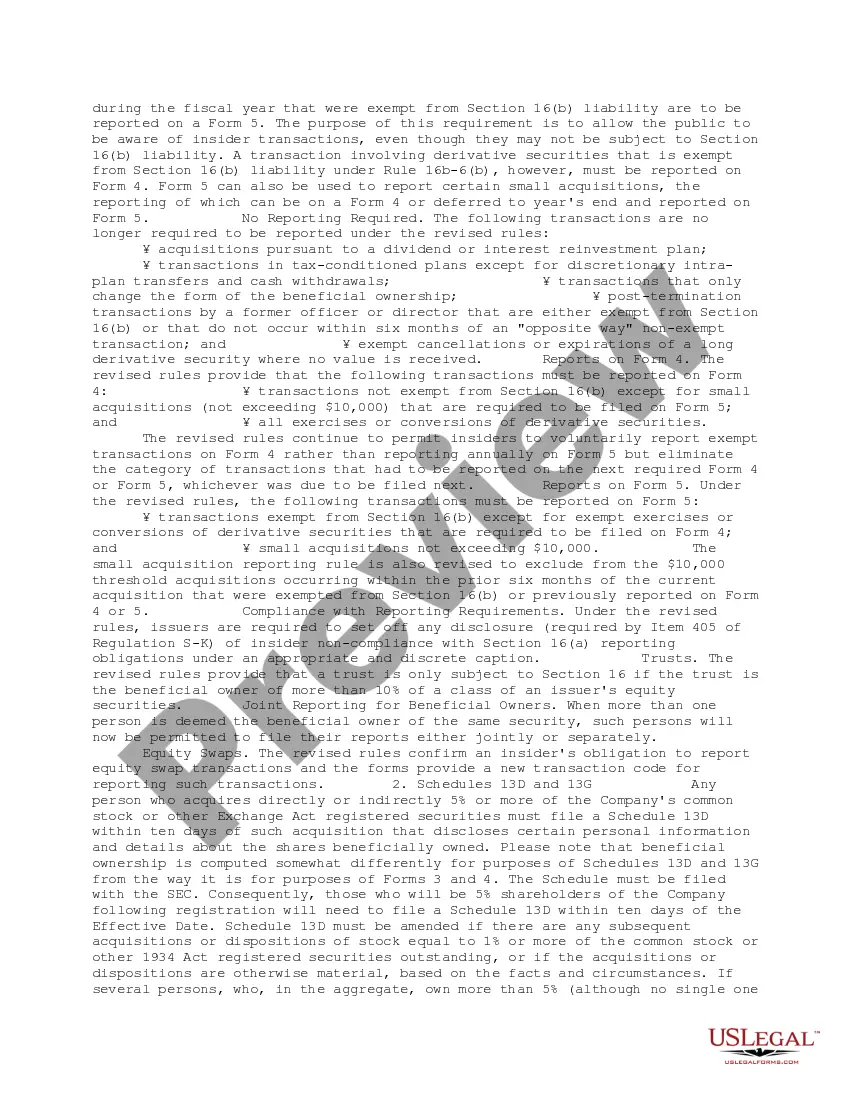
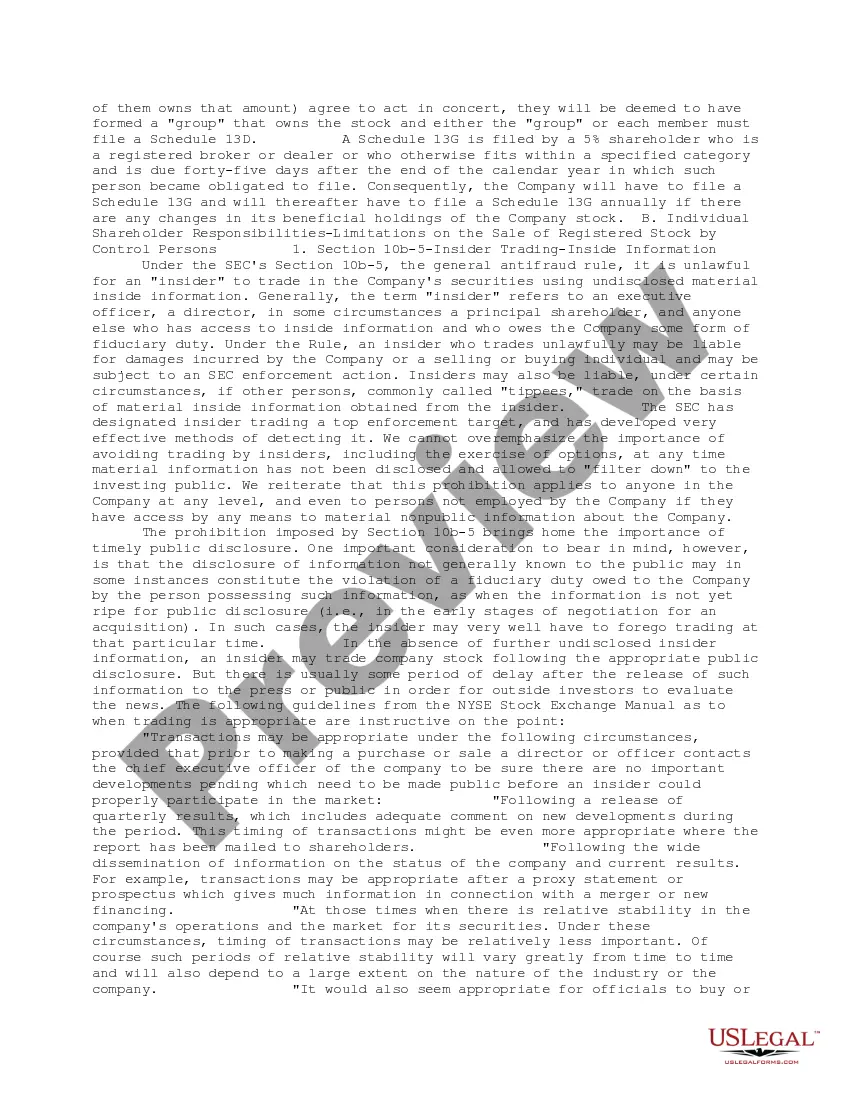
The Limitation on Disposition of Securities Memorandum is a legal document designed to inform company management about the reporting and disclosure requirements pertaining to the disposition of securities by corporate insiders such as officers, directors, and principal shareholders. This memorandum outlines the relevant obligations under the Securities Act of 1933 and the Securities Exchange Act of 1934. It serves as a confidential communication intended to guide companies in complying with federal securities regulations and ensuring that insider trading laws are followed.
Form components explained
- Introduction outlining public ownership and legal obligations.
- Duties of officers, directors, and major shareholders regarding their company stock.
- Detailed reporting requirements such as Forms 3, 4, and 5.
- Insider trading rules, including Section 10b-5 and Section 16(b) regulations.
- Internal company procedures for maintaining compliance as a public entity.
When this form is needed
This form is necessary when a company has publicly traded securities and needs to establish compliance guidelines for insider trading among its officers, directors, and major shareholders. It should be utilized when the company is preparing to register securities or when it has newly become a public entity, ensuring that all stakeholders are aware of their legal responsibilities and potential sanctions for non-compliance.
Who this form is for
- Corporate management teams responsible for regulatory compliance.
- Officers and directors of publicly traded companies.
- Principal shareholders with significant equity ownership in the company.
- Corporate counsel and legal advisors assisting with compliance issues.
Steps to complete this form
- Identify the parties involved, including the company and the insiders.
- Specify the relevant date of issuance for the memorandum.
- Outline the reporting obligations for Forms 3, 4, and 5 as required by the SEC.
- Detail the insider trading regulations applicable to the insiders.
- Communicate the internal procedures that the company will implement for compliance.
Is notarization required?
In most cases, this form does not require notarization. However, some jurisdictions or signing circumstances might. US Legal Forms offers online notarization powered by Notarize, accessible 24/7 for a quick, remote process.
Get your form ready online
Our built-in tools help you complete, sign, share, and store your documents in one place.
Make edits, fill in missing information, and update formatting in US Legal Forms—just like you would in MS Word.
Download a copy, print it, send it by email, or mail it via USPS—whatever works best for your next step.
Sign and collect signatures with our SignNow integration. Send to multiple recipients, set reminders, and more. Go Premium to unlock E-Sign.
If this form requires notarization, complete it online through a secure video call—no need to meet a notary in person or wait for an appointment.
We protect your documents and personal data by following strict security and privacy standards.

Make edits, fill in missing information, and update formatting in US Legal Forms—just like you would in MS Word.

Download a copy, print it, send it by email, or mail it via USPS—whatever works best for your next step.

Sign and collect signatures with our SignNow integration. Send to multiple recipients, set reminders, and more. Go Premium to unlock E-Sign.

If this form requires notarization, complete it online through a secure video call—no need to meet a notary in person or wait for an appointment.

We protect your documents and personal data by following strict security and privacy standards.
Common mistakes
- Failing to consult legal counsel when unsure of reporting obligations.
- Not filing Forms 3, 4, or 5 on time, leading to penalties.
- Overlooking the importance of timely public disclosure, which can result in insider trading violations.
- Assuming that all transactions are exempt from reporting requirements.
Benefits of using this form online
- Convenient access to downloadable legal templates drafted by licensed attorneys.
- Editable form formats allowing customization to meet specific company needs.
- Reliable updates to reflect the latest regulatory changes and compliance requirements.
Legal use & context
- This memorandum helps prevent insider trading, protecting both the company and its insiders from legal consequences.
- Failure to adhere to the guidelines can result in substantial liabilities for the company and its officers or directors.
- Consulting legal counsel is important for specific applications and compliance with the latest regulations.
Quick recap
- The Limitation on Disposition of Securities Memorandum is essential for compliance with securities regulations.
- It provides guidance on shareholder reporting requirements and insider trading limitations.
- Proper use of this form can prevent legal issues and ensure that all filings are completed accurately and timely.
Looking for another form?



Form popularity
FAQ
The disposition effect refers to investors' reluctance to sell assets that have lost value and greater likelihood of selling assets that have made gains (Shefrin & Statman, 1985). This phenomenon can be explained by prospect theory (loss aversion), regret avoidance and mental accounting.
Disposition, temperament, temper, character, personality mean the dominant quality or qualities distinguishing a person or group. disposition implies customary moods and attitude toward the life around one.
After eliminating loss aversion and prospect the- ory, they conclude that the disposition effect is most likely driven by belief revisions that investors simply maintain that their losing positions are still good invest- ments and will revert.
The definition of disposition is a tendency. An example of disposition is someone who leans toward being happy.Tendency or inclination under given circumstances. I have little disposition now to do as you say. Salt has a disposition to dissolve in water.
1a : prevailing tendency, mood, or inclination. b : temperamental makeup. c : the tendency of something to act in a certain manner under given circumstances.
The disposition effect is an anomaly discovered in behavioral finance. It relates to the tendency of investors to sell assets that have increased in value, while keeping assets that have dropped in value.
The disposition effect is one of the most robust behavioral regularities documented in studies of trading behavior. It imposes substantial costs on investors. First, disposition investors pay more in capital gains taxes than necessary.
How to avoid it. So what can we do to prevent the disposition effect from causing us to make poor decisions and poor investments? Simply, the answer is to stop holding on to losing investments for too long and selling winners too soon.
Property Disposition means any sale, transfer or swap of, grant of a security interest in or loss, destruction or any other disposition whatsoever, whether voluntary or involuntary, of any of the Borrower's oil and gas properties used in the determination of the Borrowing Base.