Purchase or Sale of Real Property - Land or Lot - Questionnaire
What this document covers
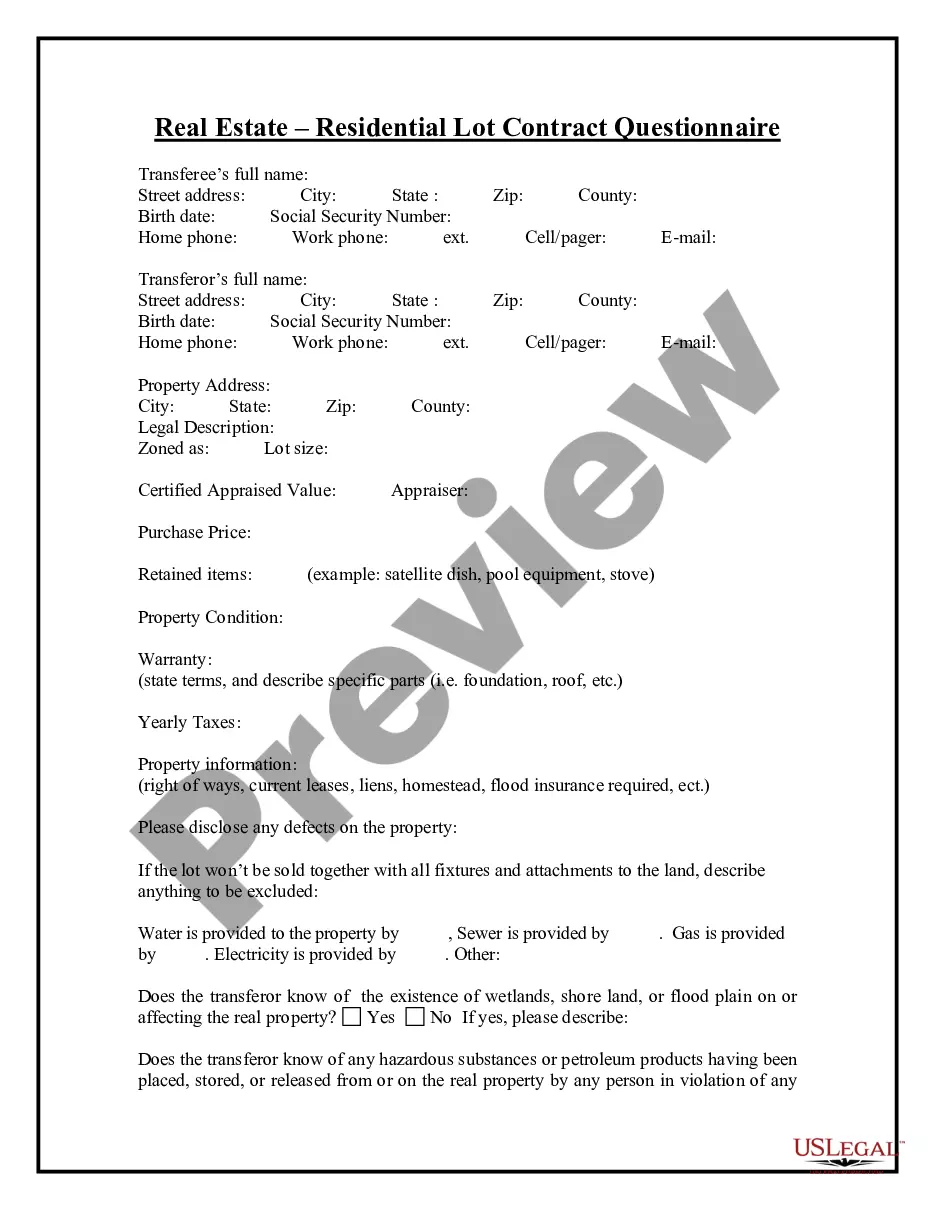
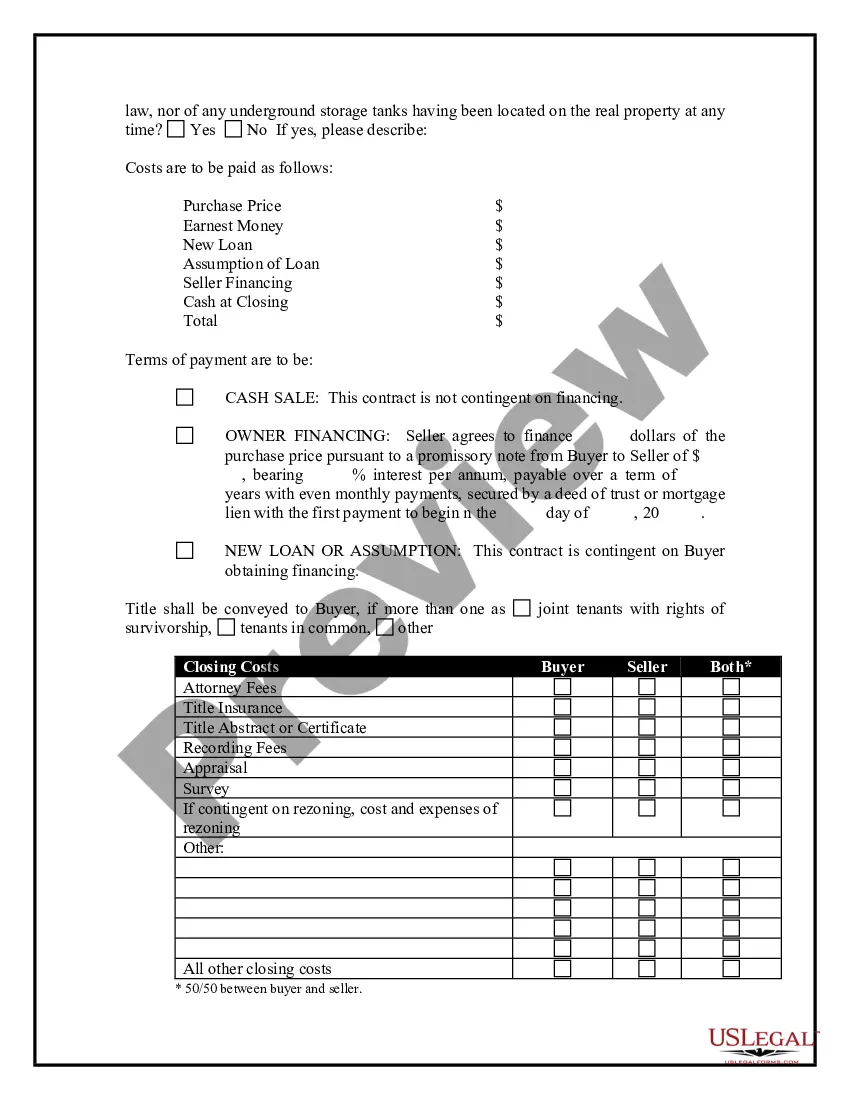
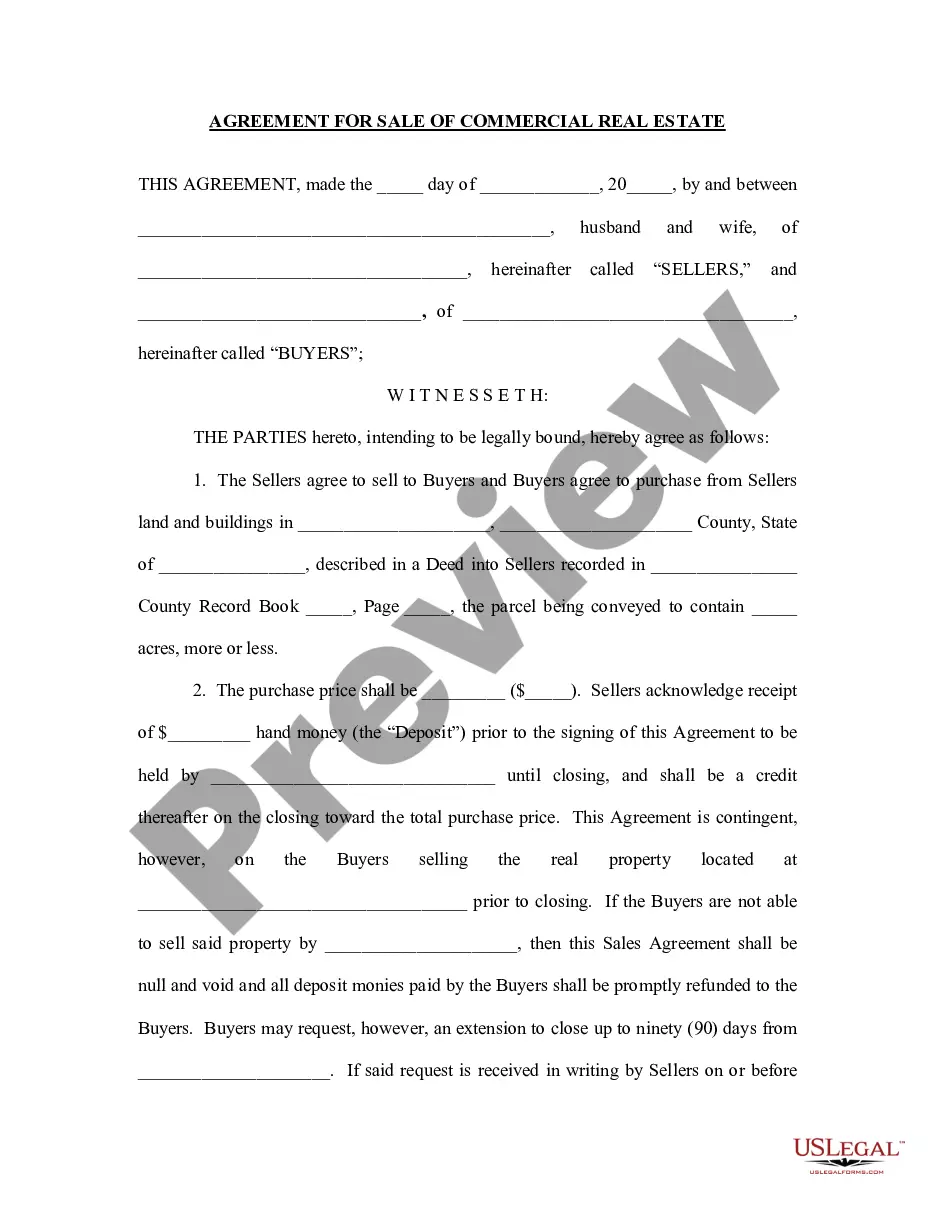
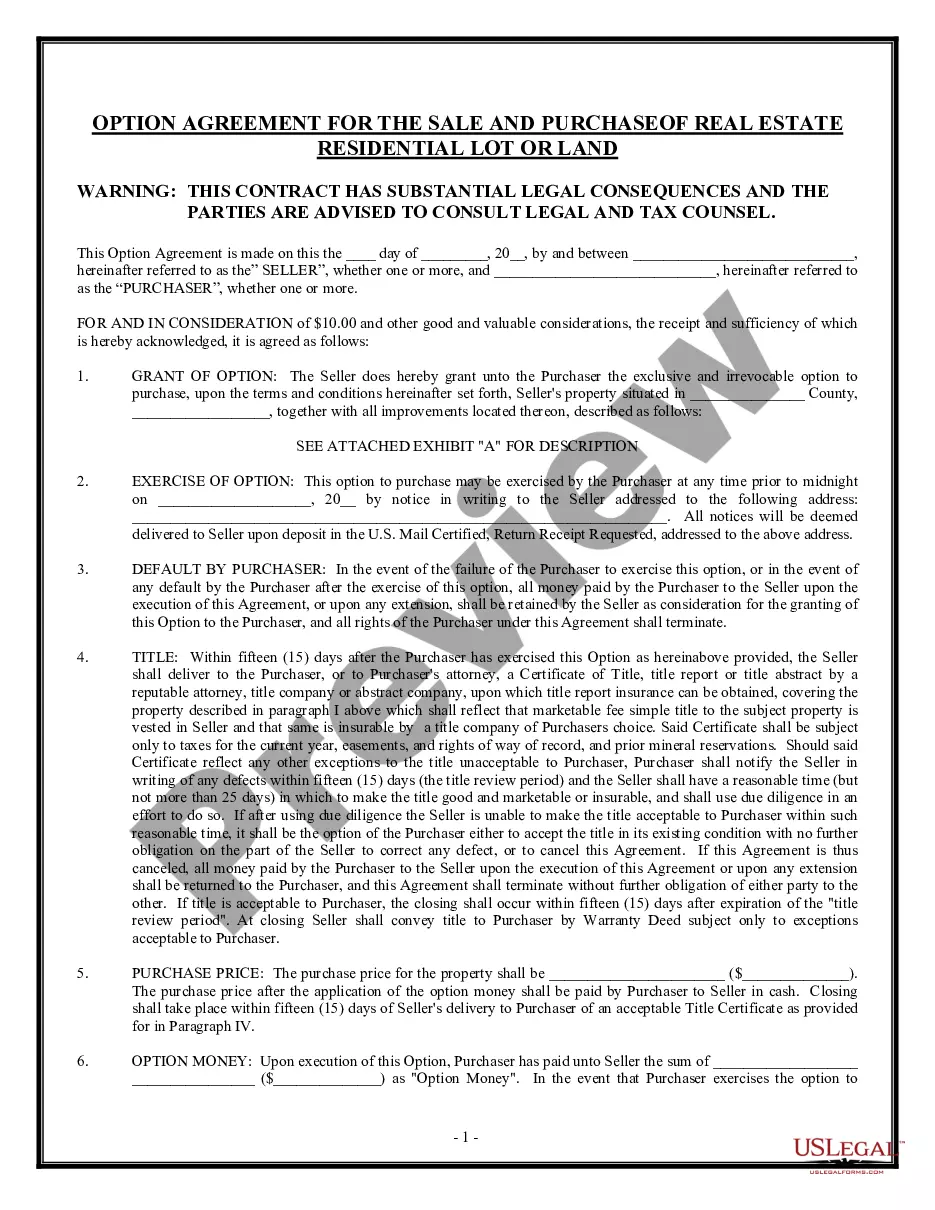
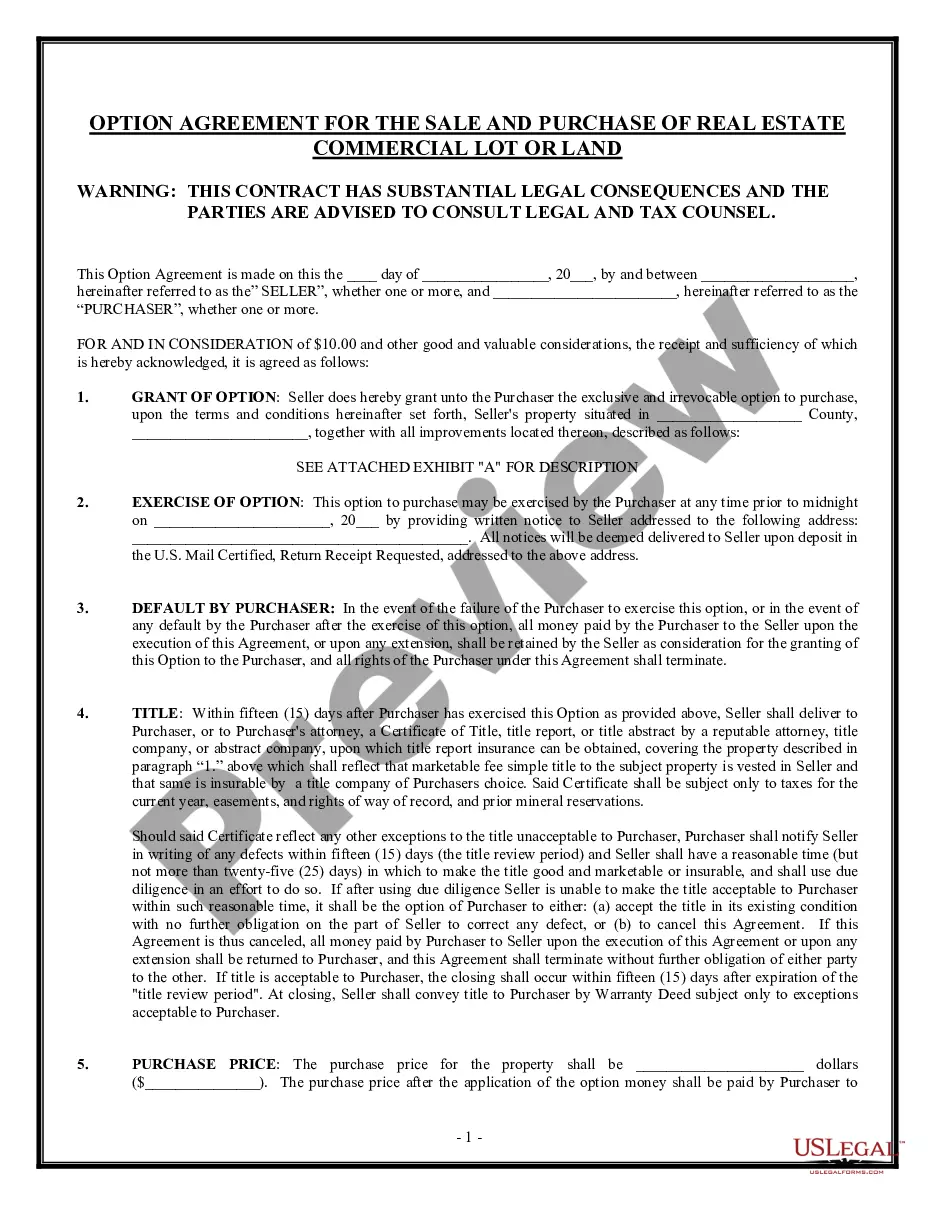
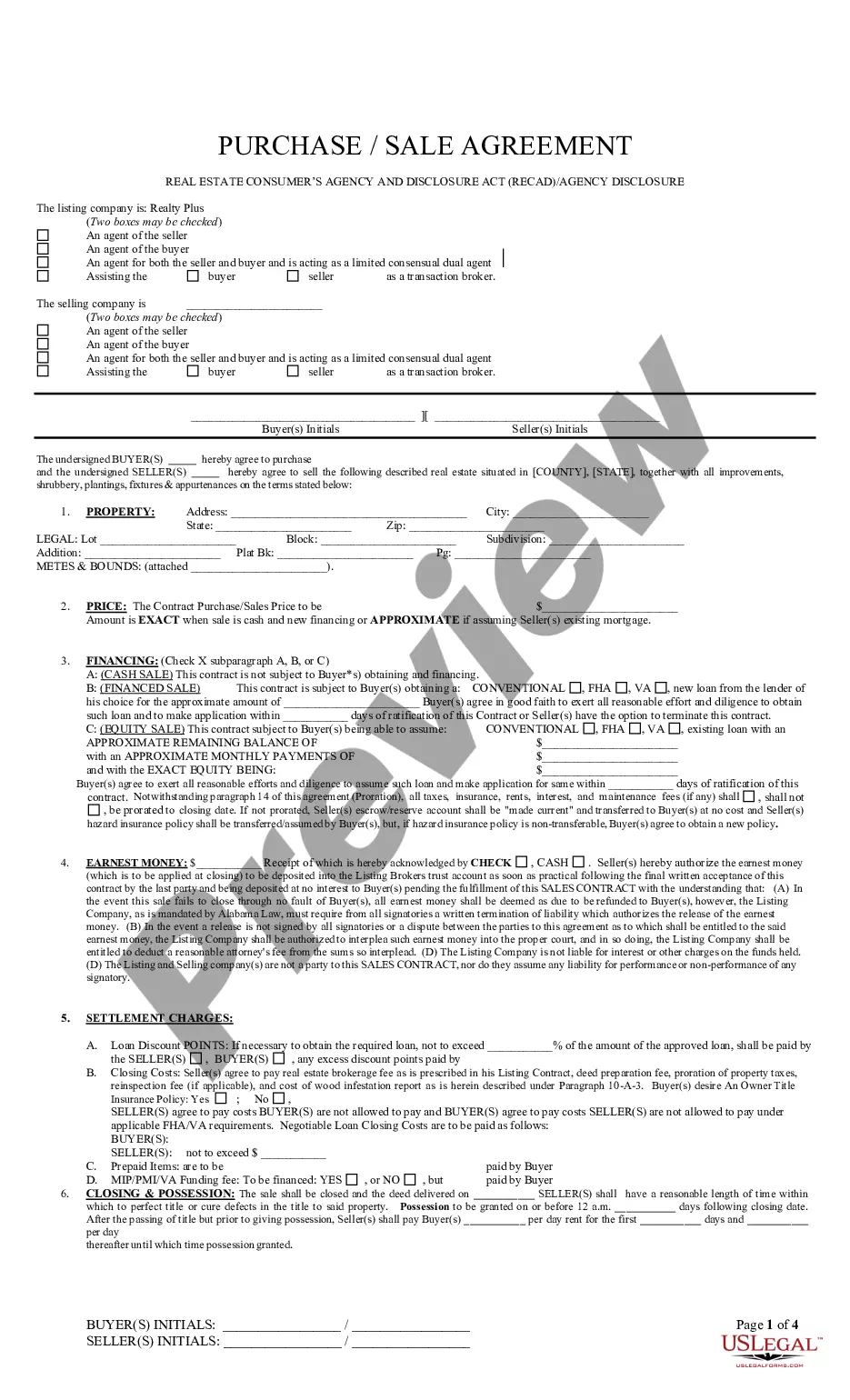
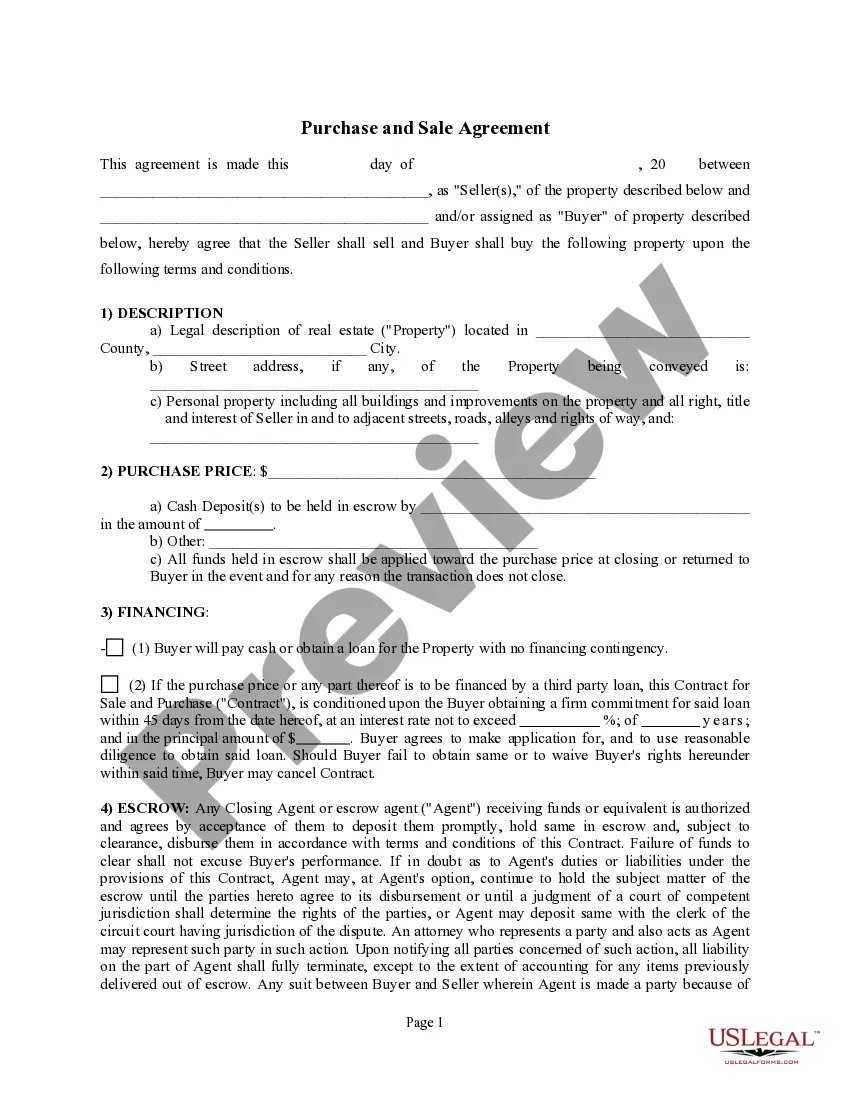
The Purchase or Sale of Real Property - Land or Lot - Questionnaire is a crucial document that helps identify terms, conditions, and issues involved in the sale of real estate. This questionnaire assists sellers and buyers in noting important considerations that may affect their legal rights and obligations. Unlike similar forms, it is designed specifically to facilitate thorough attorney evaluations and effective issue identification related to lot or land sales.
Form components explained
- Contact information for involved parties, including buyers and sellers.
- Detailed descriptions of the property being sold or purchased.
- Disclosure of any existing liens or encumbrances on the property.
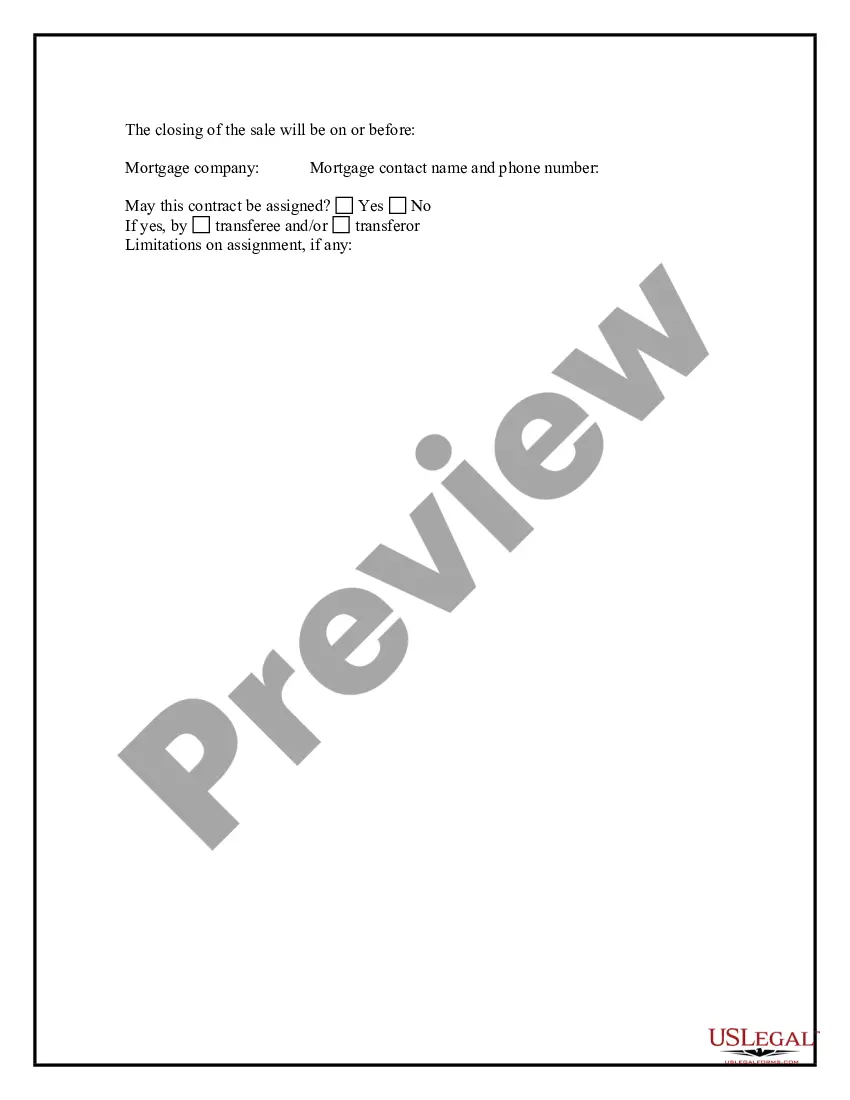
- Terms and conditions regarding the sale, including payment arrangements.
- Questions addressing potential title issues or zoning restrictions.
When to use this document
This form is ideal for individuals or parties involved in the process of buying or selling a piece of land or property. Use this questionnaire when you want to clarify essential information before drafting a purchase agreement or when seeking legal representation for a real estate transaction. It is especially helpful in identifying potential issues that may require attention during negotiations.
Who needs this form
- Property buyers looking for clear guidance during the purchasing process.
- Property sellers wanting to ensure compliance and proper disclosure.
- Attorneys representing clients in real estate transactions.
- Real estate agents seeking to streamline the sale process.
Instructions for completing this form
- Identify all parties involved in the transaction and their contact details.
- Provide a clear description of the property, including location and size.
- Disclose any existing liens, claims, or issues related to the property.
- Specify the terms of the sale, including price and payment methods.
- Respond to questions concerning title issues and zoning regulations.
Notarization guidance
This form must be notarized to be legally valid. US Legal Forms provides secure online notarization powered by Notarize, allowing you to complete the process through a verified video call.
Get your form ready online
Our built-in tools help you complete, sign, share, and store your documents in one place.
Make edits, fill in missing information, and update formatting in US Legal Forms—just like you would in MS Word.
Download a copy, print it, send it by email, or mail it via USPS—whatever works best for your next step.
Sign and collect signatures with our SignNow integration. Send to multiple recipients, set reminders, and more. Go Premium to unlock E-Sign.
If this form requires notarization, complete it online through a secure video call—no need to meet a notary in person or wait for an appointment.
We protect your documents and personal data by following strict security and privacy standards.

Make edits, fill in missing information, and update formatting in US Legal Forms—just like you would in MS Word.

Download a copy, print it, send it by email, or mail it via USPS—whatever works best for your next step.

Sign and collect signatures with our SignNow integration. Send to multiple recipients, set reminders, and more. Go Premium to unlock E-Sign.

If this form requires notarization, complete it online through a secure video call—no need to meet a notary in person or wait for an appointment.

We protect your documents and personal data by following strict security and privacy standards.
Avoid these common issues
- Failing to include all contact information for parties involved.
- Not disclosing existing liens or encumbrances on the property.
- Inaccurate property descriptions that may lead to disputes.
- Overlooking important questions about property zoning or title status.
Benefits of using this form online
- Convenient access to legal forms from anywhere, at any time.
- Editable templates to tailor the questionnaire to your specific situation.
- Reliability as these forms are drafted by licensed attorneys.
Legal use & context
- This form aids in ensuring compliance with state laws regarding real estate transactions.
- Completing this questionnaire can facilitate a smoother sale process by addressing potential legal issues upfront.
Quick recap
- The questionnaire is a vital tool for buyers and sellers in real property transactions.
- Thoroughly completing the form helps streamline legal evaluations.
- Being aware of state-specific requirements is essential for compliance.
Looking for another form?







Form popularity
FAQ
Location. The absolute most important factor to consider before buying land is its location. Property Setbacks. Zoning Requirements. Natural Hazards. Easements. Utility Sources.
With the owner's contact information in hand, you can write to or call the owner, expressing interest in purchasing the land and asking whether the owner would be willing to sell it. If the owner lives next to the vacant land, or in the same town, consider asking the owner if you could stop by to introduce yourselves.
A real estate deal can take a turn for the worst if the contract is not carefully written to include all the legal stipulations for both the buyer and seller.You can write your own real estate purchase agreement without paying any money as long as you include certain specifics about your home.
The Property Buyer and the Property Seller. Description of the Property. Purchase Price. Financing. Offer Expiration Date. Earnest Money Amount and Terms. Investigation Period. Contract Contingencies.
Is the Land Under Any Conservation Easements? What Will the Taxes on This Property Look Like? What Rights and Titles Are Included with This Property? Do I Have Access to Electricity/Wi-Fi Everywhere on This Property? Are There Any Environmental Hazards I Should Be Aware Of?
The identity of the buyer and seller. A description of the property being purchased. The purchase price. The terms as to how and when payment is to be made. The terms as to how, when, and where the goods will be delivered to the purchaser.
Typically, the buyer's agent writes up the purchase agreement. However, unless they are legally licensed to practice law, real estate agents generally can't create their own legal contracts. Instead, firms will often use standardized form contracts that allow agents to fill in the blanks with the specifics of the sale.
Review the property. The asking price may not always be the agreed-upon purchase price. Obtain a copy of covenants and restrictions. Do a cost analysis. Don't create problems. Make a fair offer.
Is the Land Under Any Conservation Easements? What Will the Taxes on This Property Look Like? What Rights and Titles Are Included with This Property? Do I Have Access to Electricity/Wi-Fi Everywhere on This Property? Are There Any Environmental Hazards I Should Be Aware Of?