Landlord Tenant Relationship Questionnaire for Landlords
About this form
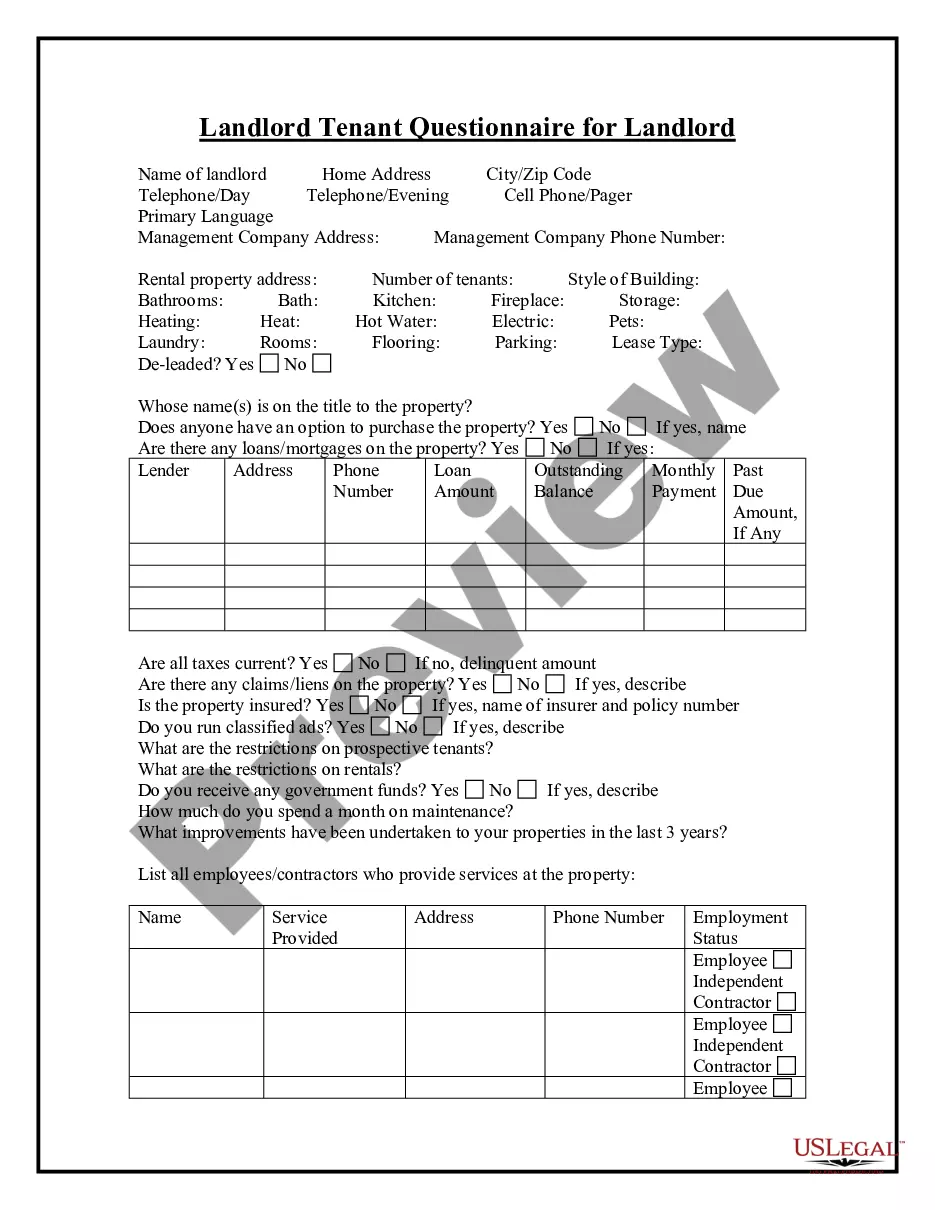
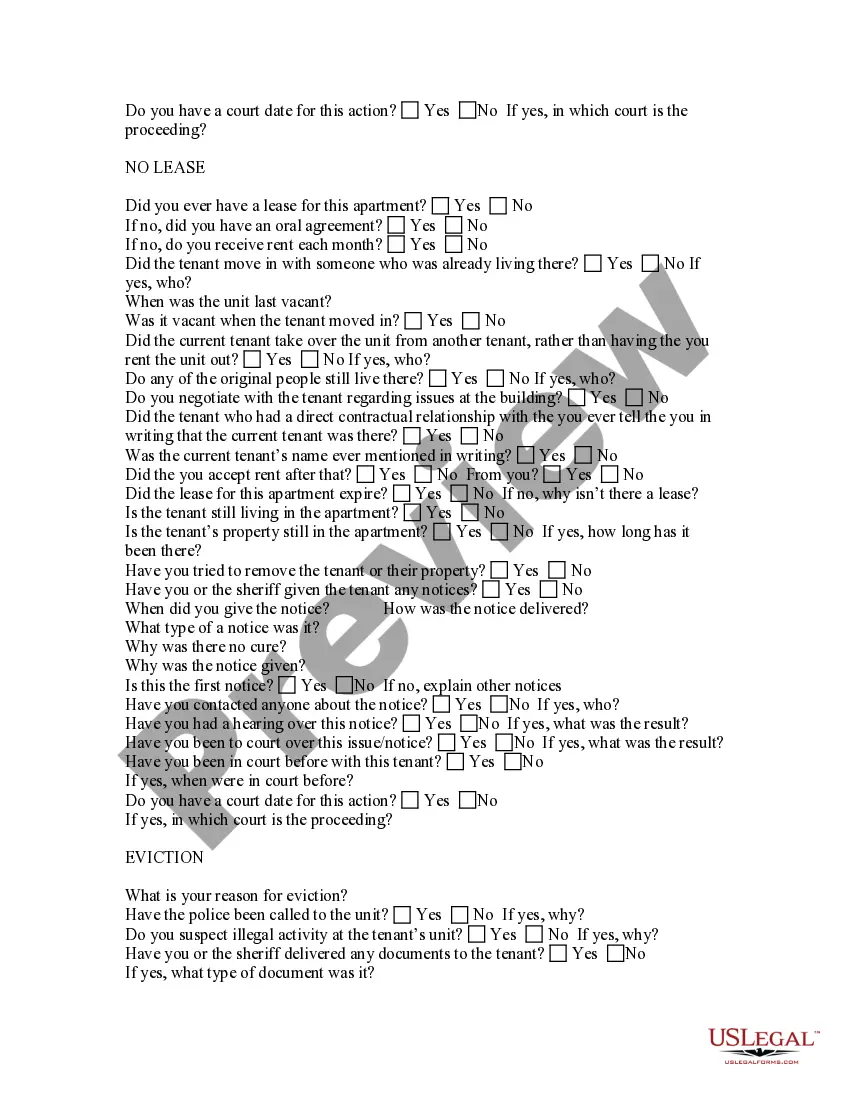
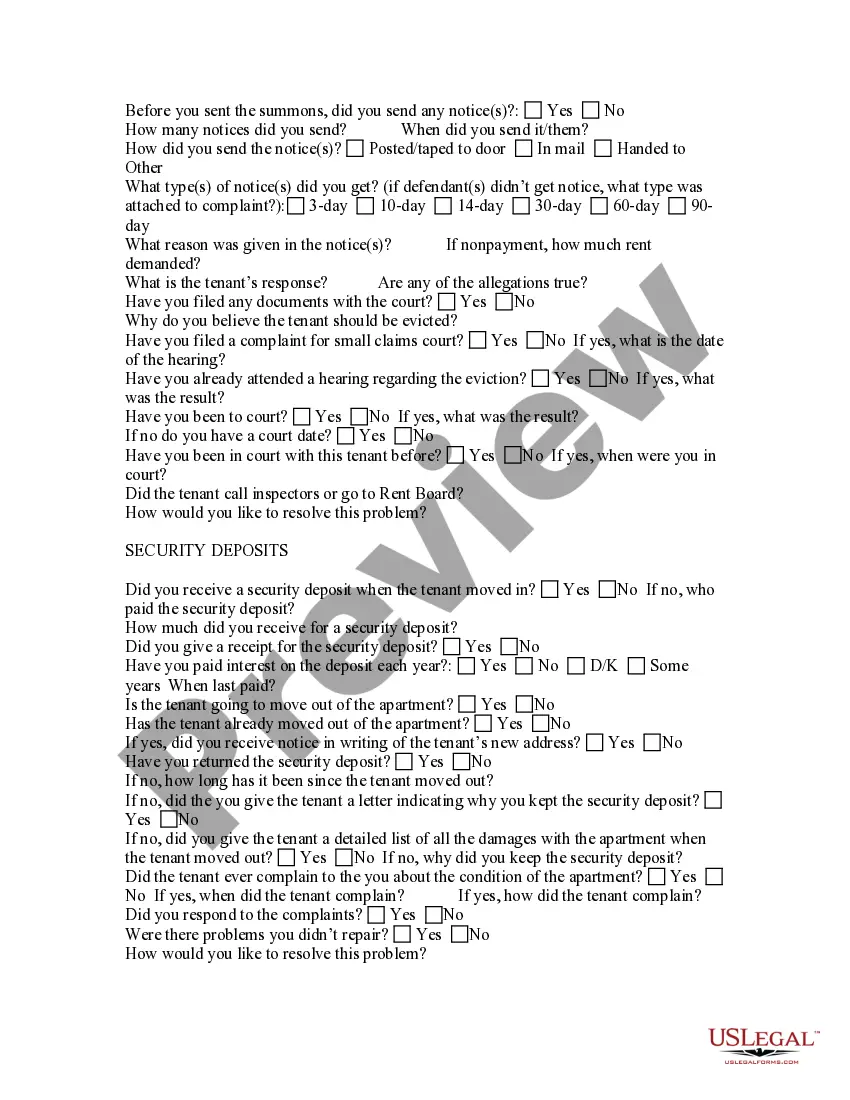
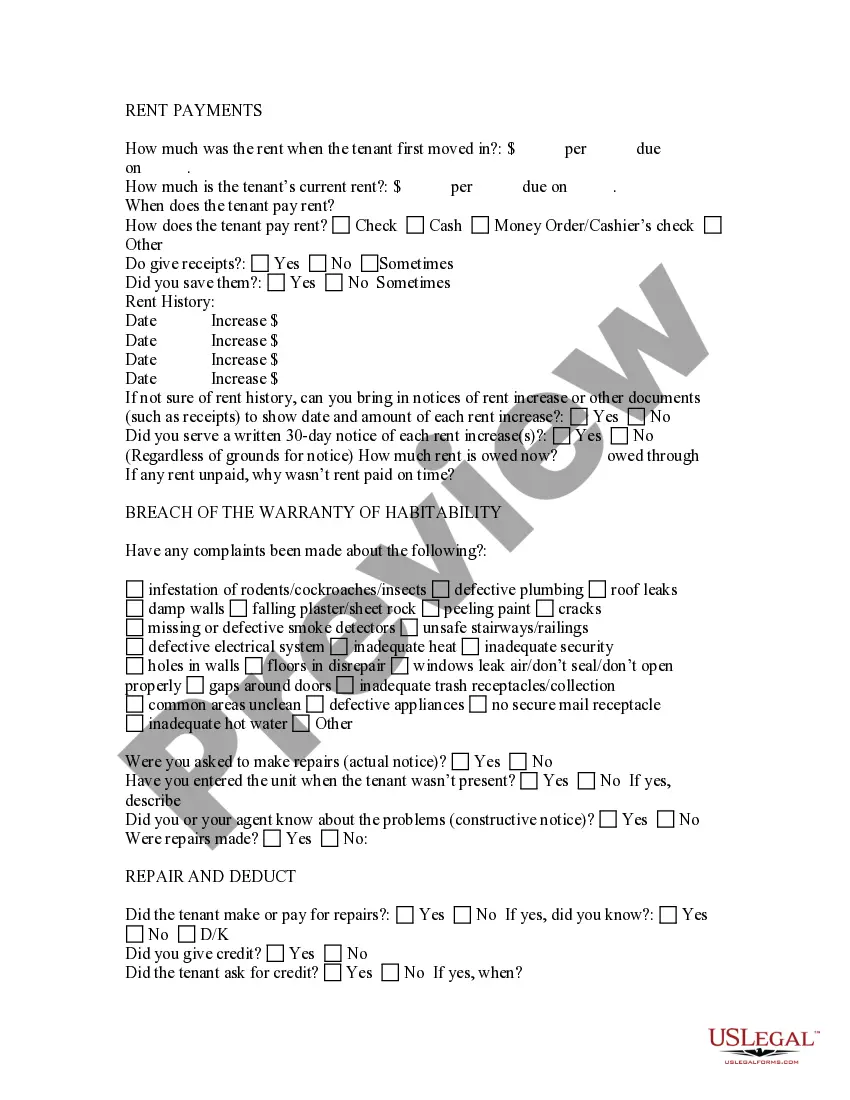
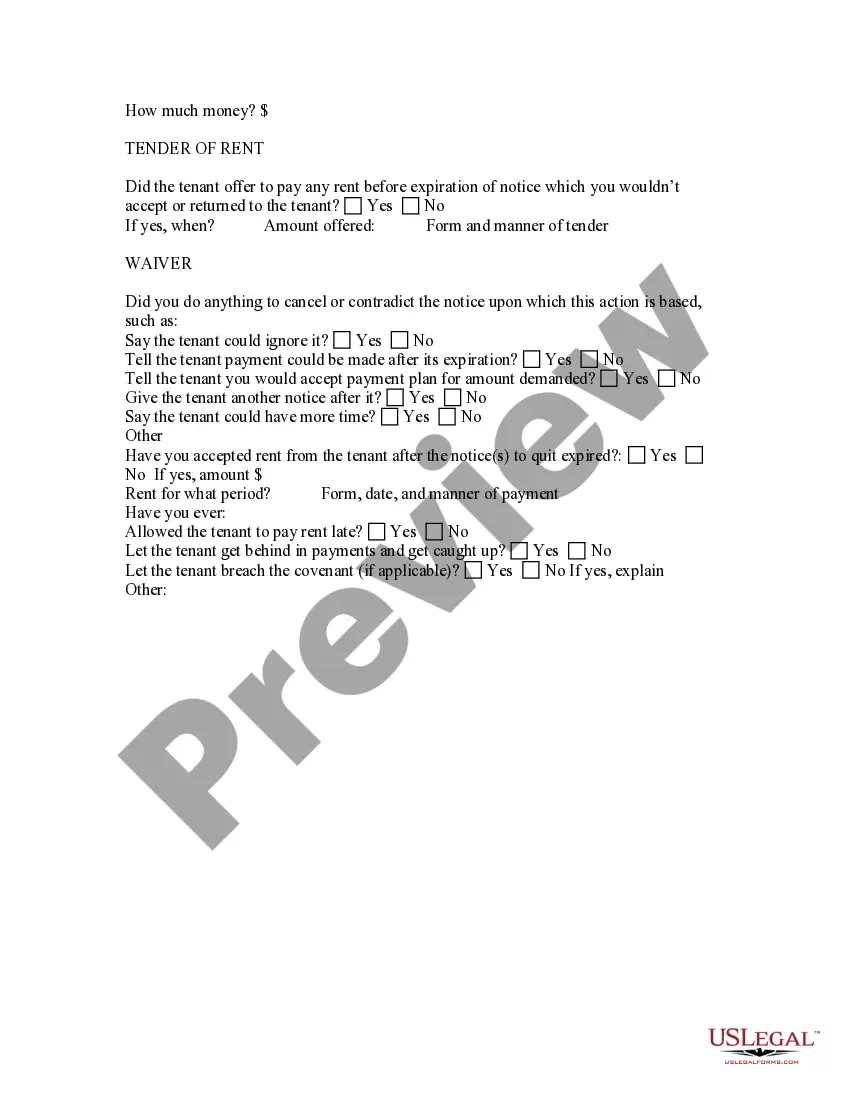
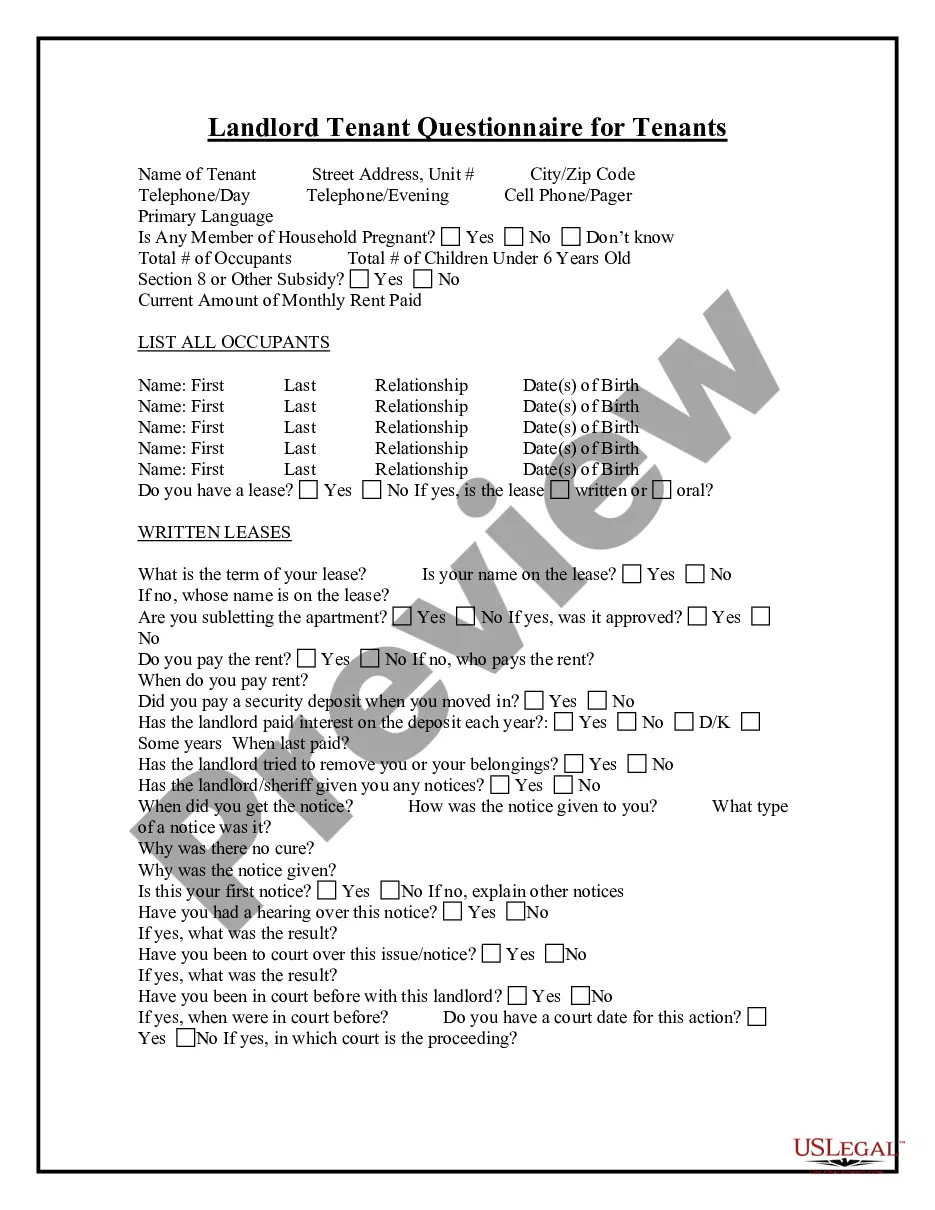
The Landlord Tenant Relationship Questionnaire for Landlords is a valuable tool for landlords to assess their legal rights and obligations concerning their tenants. This form facilitates effective identification and preparation of relevant issues and problems, streamlining communications with legal counsel. Utilizing this questionnaire enhances case evaluation by attorneys and helps significantly reduce the costs associated with case preparation compared to similar forms.
Key components of this form
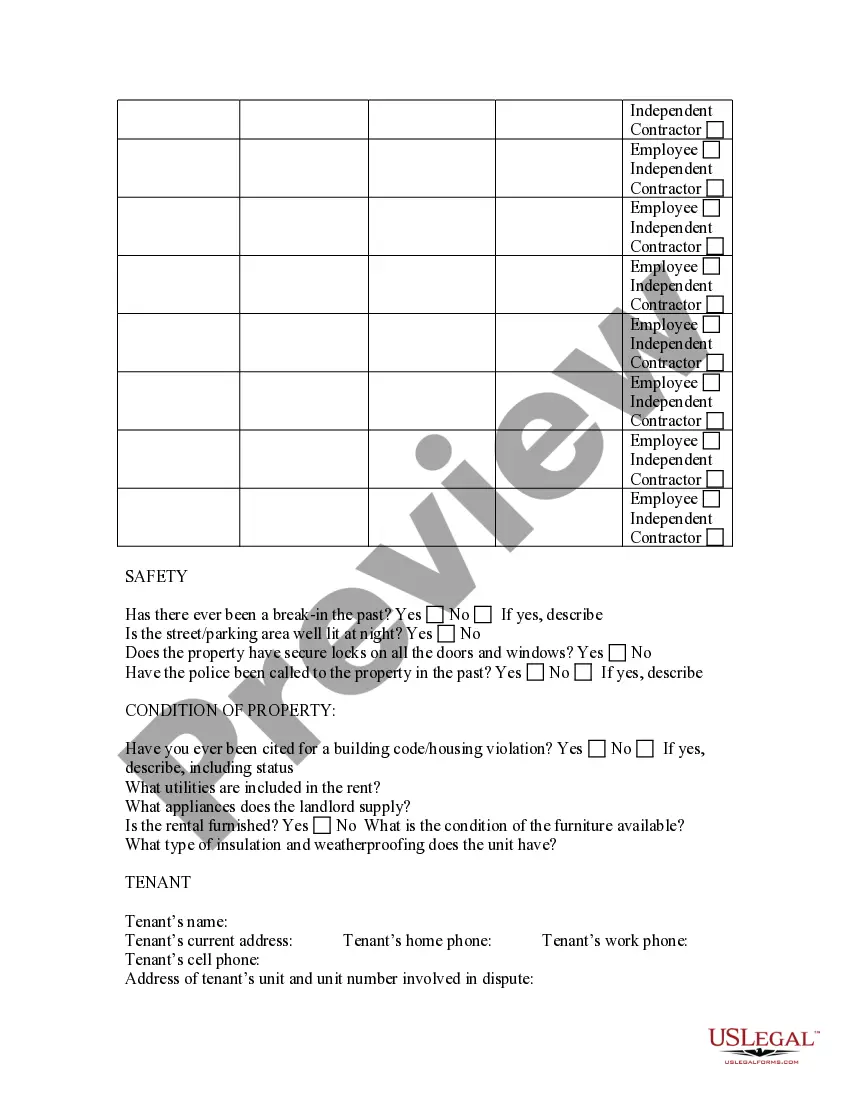
- Questions regarding the control and condition of the property.
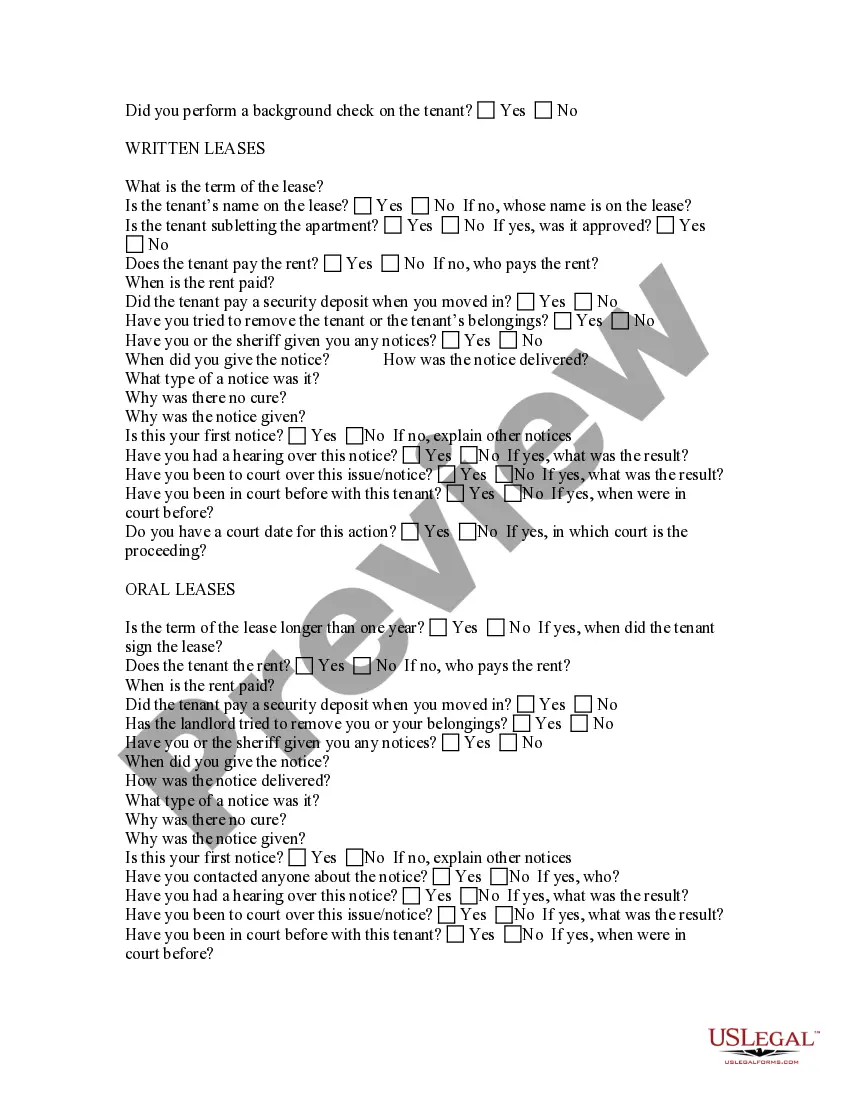
- Information about notices given or received related to eviction or tenancy.
- Clarification of tenant agreements and rent acceptance.
- Documentation of any written communications between the landlord and the tenant.
Common use cases
This form is particularly useful in scenarios where landlords face disputes with tenants or need to clarify their legal standing in a landlord-tenant relationship. It can also be employed when preparing for discussions with a lawyer to understand potential legal issues such as eviction proceedings or rent disputes.
Intended users of this form
- Landlords seeking to understand their rights and obligations.
- Property managers involved in landlord-tenant relationships.
- Attorneys needing to gather pertinent information from landlord clients.
Instructions for completing this form
- Identify the property in question and provide accurate details.
- Answer all questions related to tenant agreements and notice history honestly and completely.
- Document any communications you have had with the tenant in writing.
- Review your answers to ensure accuracy before submission.
Is notarization required?
Notarization is generally not required for this form. However, certain states or situations might demand it. You can complete notarization online through US Legal Forms, powered by Notarize, using a verified video call available anytime.
Get your form ready online
Our built-in tools help you complete, sign, share, and store your documents in one place.
Make edits, fill in missing information, and update formatting in US Legal Forms—just like you would in MS Word.
Download a copy, print it, send it by email, or mail it via USPS—whatever works best for your next step.
Sign and collect signatures with our SignNow integration. Send to multiple recipients, set reminders, and more. Go Premium to unlock E-Sign.
If this form requires notarization, complete it online through a secure video call—no need to meet a notary in person or wait for an appointment.
We protect your documents and personal data by following strict security and privacy standards.

Make edits, fill in missing information, and update formatting in US Legal Forms—just like you would in MS Word.

Download a copy, print it, send it by email, or mail it via USPS—whatever works best for your next step.

Sign and collect signatures with our SignNow integration. Send to multiple recipients, set reminders, and more. Go Premium to unlock E-Sign.

If this form requires notarization, complete it online through a secure video call—no need to meet a notary in person or wait for an appointment.

We protect your documents and personal data by following strict security and privacy standards.
Typical mistakes to avoid
- Failing to provide complete information regarding notices and agreements.
- Overlooking past communications that could impact the case.
- Misunderstanding terminology, leading to incorrect responses on the form.
Why use this form online
- Convenient access to essential legal documentation anytime.
- Editable format allows for easy updates as circumstances change.
- Reliable information drafted by licensed attorneys ensures accuracy.
Legal use & context
- This questionnaire aids in clarifying the legal relationship between landlords and tenants.
- A properly filled-out form can support legal actions, including eviction or dispute resolution.
What to keep in mind
- The form is essential for understanding landlord rights and responsibilities.
- Completing the questionnaire can streamline communication with legal representatives.
- It is a proactive step for landlords in managing potential tenant disputes.
Looking for another form?






Form popularity
FAQ
The Tenant Doesn't Make Enough Income. The Tenant Smokes. The Tenant Has a Pet. The Tenant's Income Isn't Verified. The Tenant Has Been Convicted of a Crime. The Tenant Does Not Have Rental History. The Tenant Has a History of Damaging Property and Not Paying Rent. The Tenant Provides False Information.
Calling your rental applicant's previous landlords for a reference is standard practice in tenant screening.But if your applicant has a poor relationship with the landlord references, you might find a fake reference on the rental application.
When did the tenant's lease begin and end? What amount of rent did the tenant pay? Did the tenant pay their rent on time? How well did the tenant take care of the property? Would you rent to the tenant again?
How Long Is the Lease Term? What's Included in the Rent? When Is Rent Due and How Do I Pay It? Is the Security Deposit Refundable? Is Renters Insurance Required? How Much Notice Do I Give Before Vacating? What's the Penalty For Breaking My Lease?
Are utilities included in the rent? How often will rent increase and by approximately how much? When is rent due and how will you need to pay? What grace period is there for rent payment? What are the terms of the lease agreement?
Stick to the Facts Many landlords have heard rumors that they can't give tenants a bad reference. This is not true, and if there are definite, verifiable facts that pertain to a particular tenant, you have a responsibility to let other prospective landlords know.
Did the tenant pay their rent on time and in full? Did the tenant take good care of the home or property? Was the tenant a courteous neighbor? Was the renter a good communicator? Would you rent to this person again?
Be Honest. It's almost impossible to get along with your landlord after starting off on the wrong foot, so start making an effort to build a good relationship on day one. Pay Your Rent. Say Hi. Mind Your Lease. Ask For Help. Mind Your Attitude. Get Everything in Writing (or e-mail) Know Your Rights.