Permission To Park
What is this form?
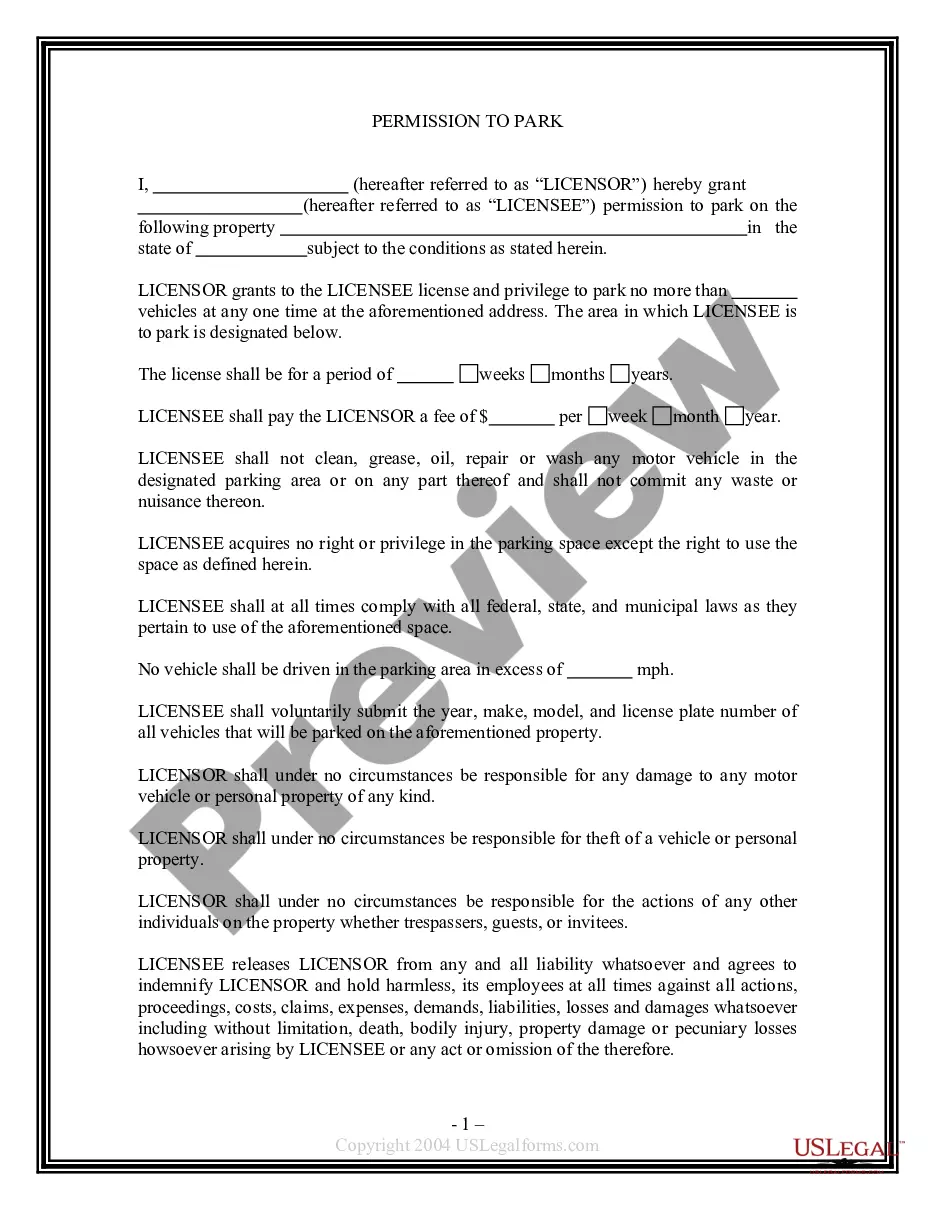
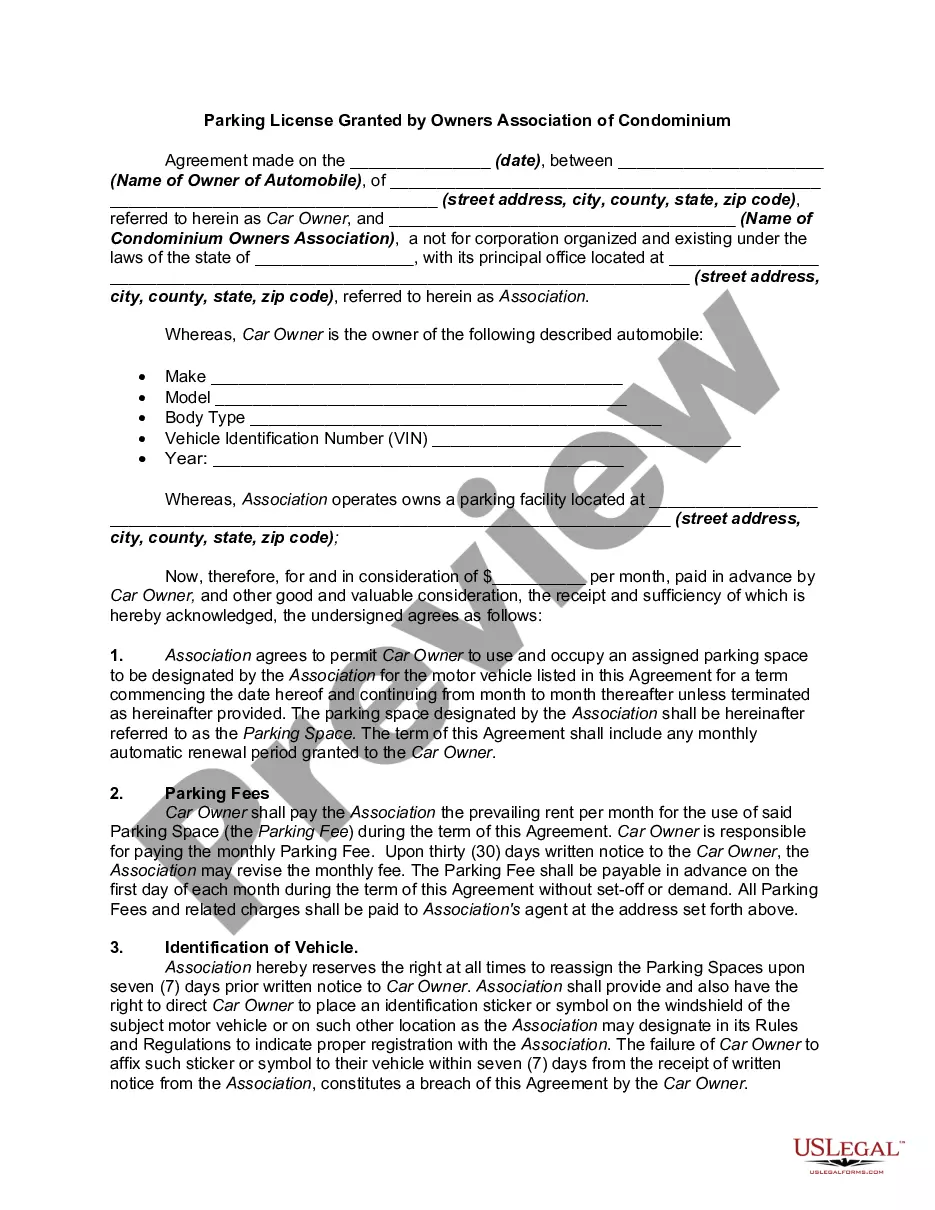
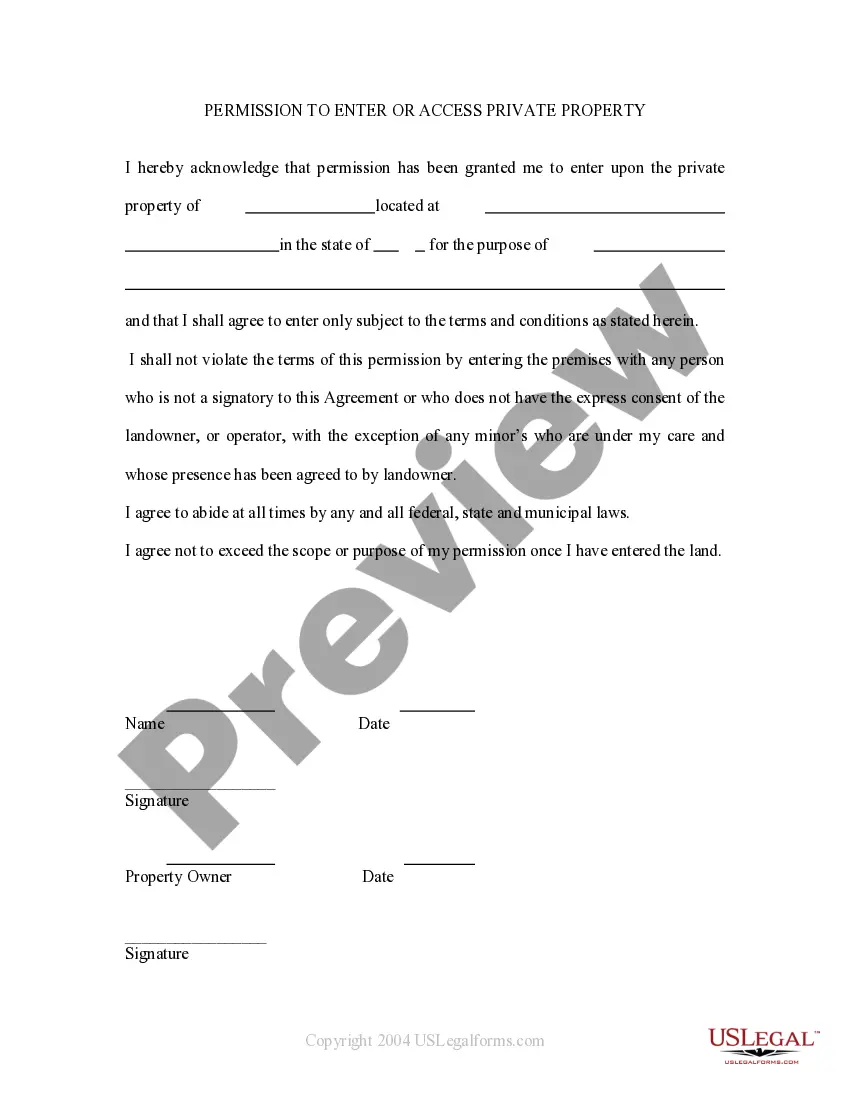
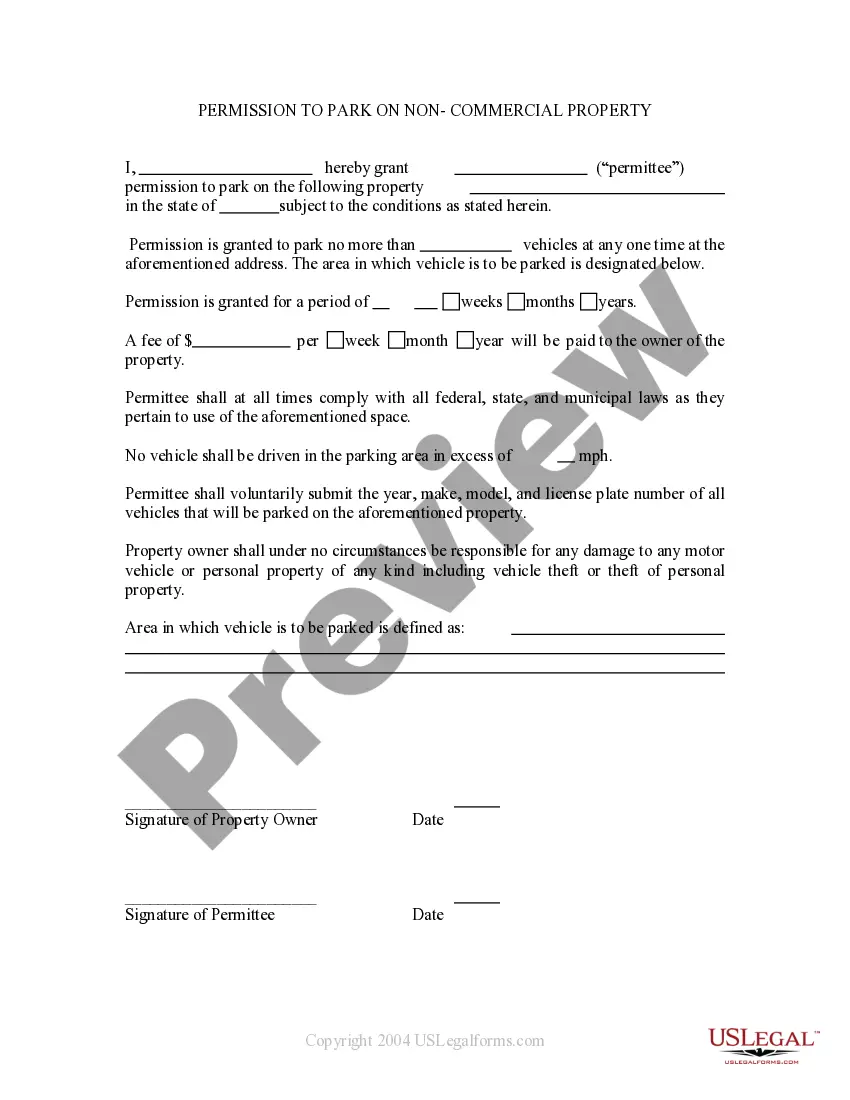
The Permission To Park form is a legal document that grants an individual or entity the right to park a vehicle on another person's property or in a designated parking area for a specific time and agreed compensation. This form is commonly used in commercial settings, making it distinct from personal parking agreements. It outlines the rights and responsibilities of both the licensee (the person parking) and the licensor (the property owner).
Key parts of this document
- Identification of the licensor and licensee involved in the agreement.
- Details on the parking area and specific location granted.
- Duration for which the parking permission is valid.
- Compensation details for using the parking space.
- Restrictions on vehicle maintenance activities in the parking space.
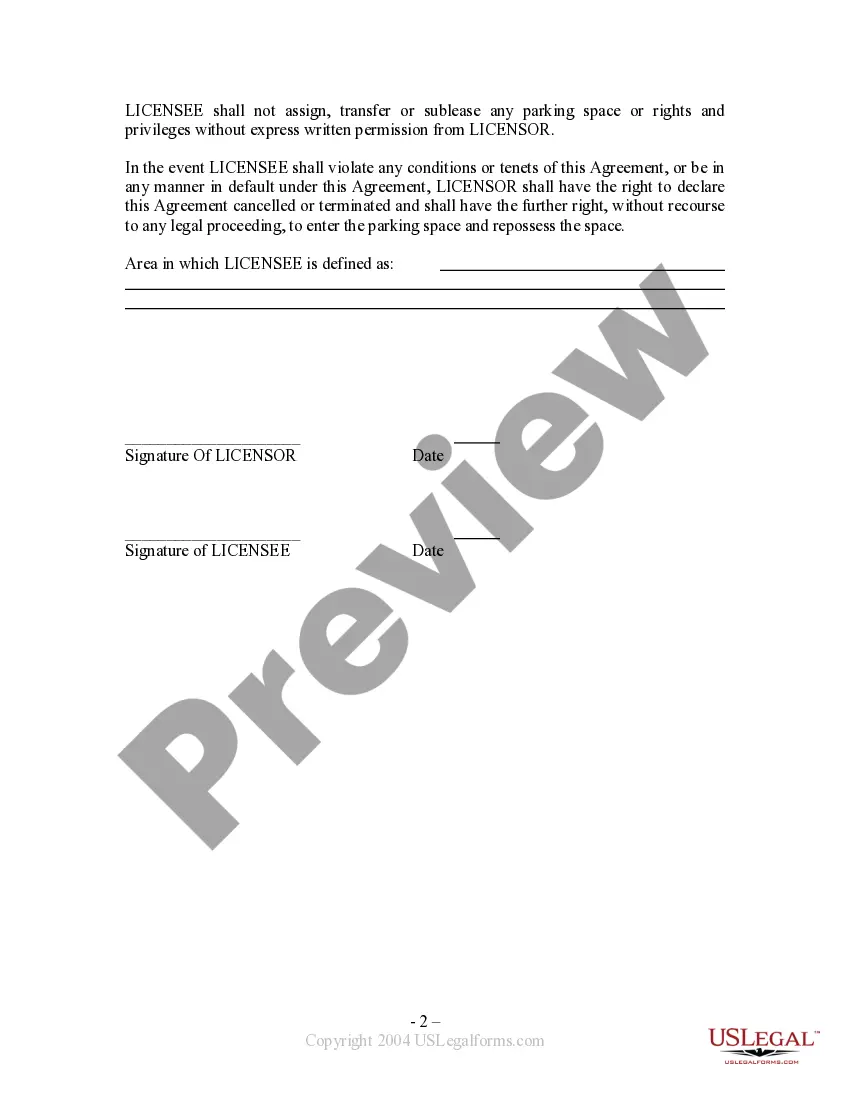
- Liability waivers that protect the licensor from various claims.
When this form is needed
This form should be used when a property owner or manager wishes to formally allow an individual or business to park in their designated parking area for a set period. Examples include when someone wants to park in a commercial lot for events, temporary business operations, or other specific circumstances that require formal permission.
Who can use this document
This form is intended for:
- Property owners or managers offering parking facilities.
- Individuals or businesses seeking temporary parking consent.
- Organizations managing events that require designated parking for attendees.
Instructions for completing this form
- Identify and enter the names and contact information of both the licensor and licensee.
- Clearly specify the location of the parking space being granted.
- Set the time period during which the license is valid.
- Detail any compensation that will be exchanged for the parking permission.
- Both parties should review the clauses related to responsibilities and liabilities.
- Sign and date the form to make it legally binding.
Does this document require notarization?
This form does not typically require notarization unless specified by local law. However, having a notarized document can add an extra layer of authenticity and may be beneficial in certain situations.
Get your form ready online
Our built-in tools help you complete, sign, share, and store your documents in one place.
Make edits, fill in missing information, and update formatting in US Legal Forms—just like you would in MS Word.
Download a copy, print it, send it by email, or mail it via USPS—whatever works best for your next step.
Sign and collect signatures with our SignNow integration. Send to multiple recipients, set reminders, and more. Go Premium to unlock E-Sign.
If this form requires notarization, complete it online through a secure video call—no need to meet a notary in person or wait for an appointment.
We protect your documents and personal data by following strict security and privacy standards.

Make edits, fill in missing information, and update formatting in US Legal Forms—just like you would in MS Word.

Download a copy, print it, send it by email, or mail it via USPS—whatever works best for your next step.

Sign and collect signatures with our SignNow integration. Send to multiple recipients, set reminders, and more. Go Premium to unlock E-Sign.

If this form requires notarization, complete it online through a secure video call—no need to meet a notary in person or wait for an appointment.

We protect your documents and personal data by following strict security and privacy standards.
Typical mistakes to avoid
- Failing to specify the exact location of the parking space.
- Not clearly stating the duration of the parking permission.
- Overlooking the liability clauses which protect the licensor.
- Neglecting to sign the document, making it unenforceable.
Why complete this form online
- Convenient access to legally drafted forms that can save time.
- Easy to edit fields to customize the agreement based on specific needs.
- Reliable templates created by licensed attorneys to ensure compliance.
Legal use & context
- The form establishes a clear agreement for use of private property for parking.
- It limits liability for the property owner against claims related to theft or damage.
- By signing, both parties agree to the terms, making it a binding agreement.
Main things to remember
- The Permission To Park form is essential for formalizing parking agreements.
- It contains clauses that protect both parties in the event of disputes.
- Understanding how to fill out and utilize this form can prevent misunderstandings.
Looking for another form?
Form popularity
FAQ
Do due diligence. Specify the space or position (Optional). Use an official letter format. Be brief and to the point. Use a polite tone throughout the letter. Salute the recipient properly. Polite Closing.
When you request permission, you want to get written permission (i.e. email or letter). In your request, you should include the following: The specific rights you would like (i.e. to do what with the content) The set amount of time you would like the rights for.
Addresses: Write down the necessary addresses. Salutation: Here you offer some form of respectful greeting. Title: It should be centered, brief and informative. Body: This should be a maximum of 4 paragraphs. Sign out: Here you mention your name and offer your signature for authentication.
Be sure to include your return address, telephone and fax numbers, and date at the top of your letter. Verify the exact name and address of the addressee. Clearly state the name of your university and your dissertation's title. Describe the proposed use of the copyrighted material.
Form: May I + base form of verb. Examples: Can I have a slice of cake? Examples: Mark: Where are you going? Form: Is it ok if + present simple. Jane: Can I take your photograph? Sarah: Yes, that's fine by me. Jane: May I leave the office early today? Manager: Yes, I suppose so. Mark: May I smoke in here?
Addresses: Write down the necessary addresses. Salutation: Here you offer some form of respectful greeting. Title: It should be centered, brief and informative. Body: This should be a maximum of 4 paragraphs. Sign out: Here you mention your name and offer your signature for authentication.
Explain precisely what your request is. Mention the reason for the request. Use polite language and a professional tone. Demonstrate respect and gratitude to the reader. The content of the letter should be official. You may provide contact information where you can be reached.
Explain precisely what your request is. Mention the reason for the request. Use polite language and a professional tone. Demonstrate respect and gratitude to the reader. The content of the letter should be official. You may provide contact information where you can be reached.