Requested Permission to Use Photograph
Understanding this form
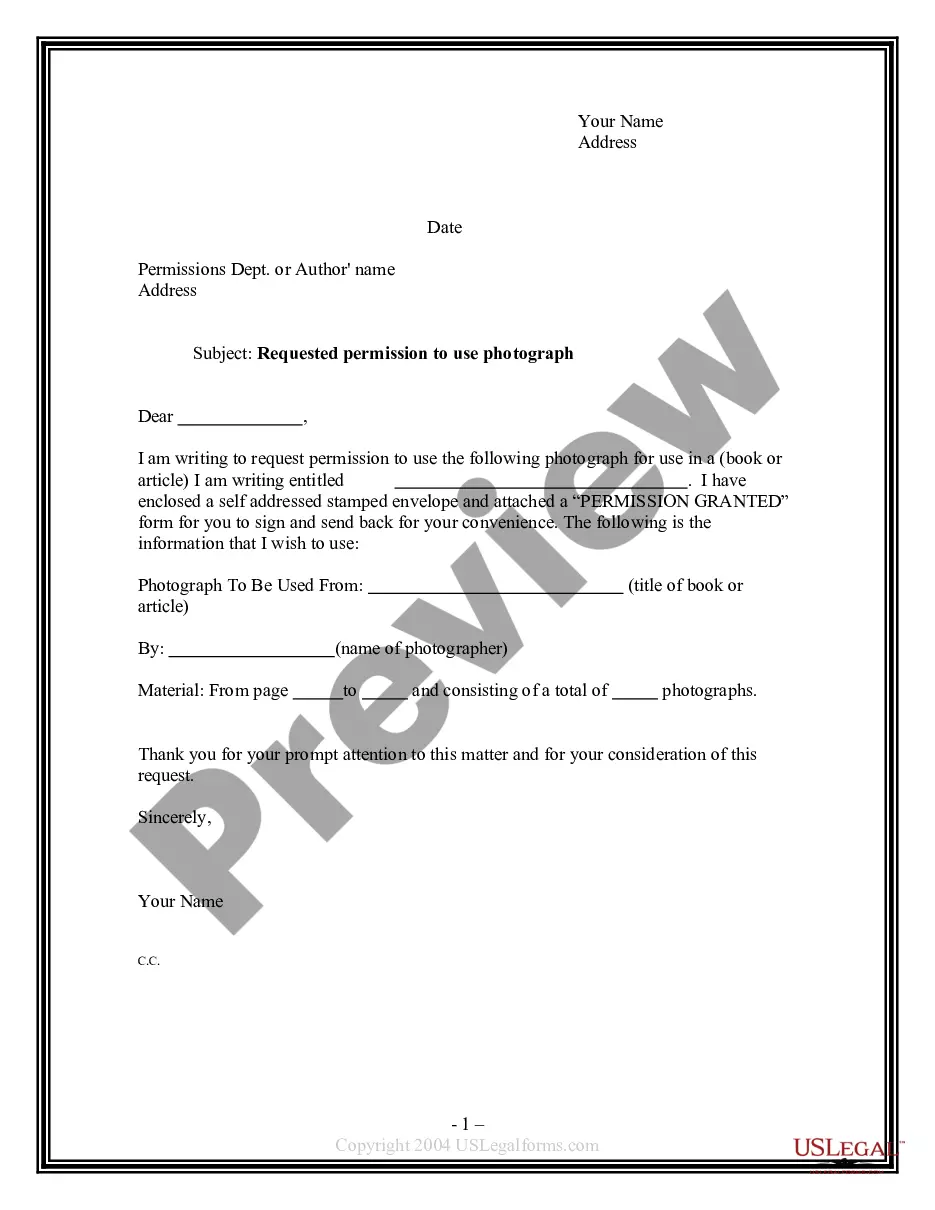
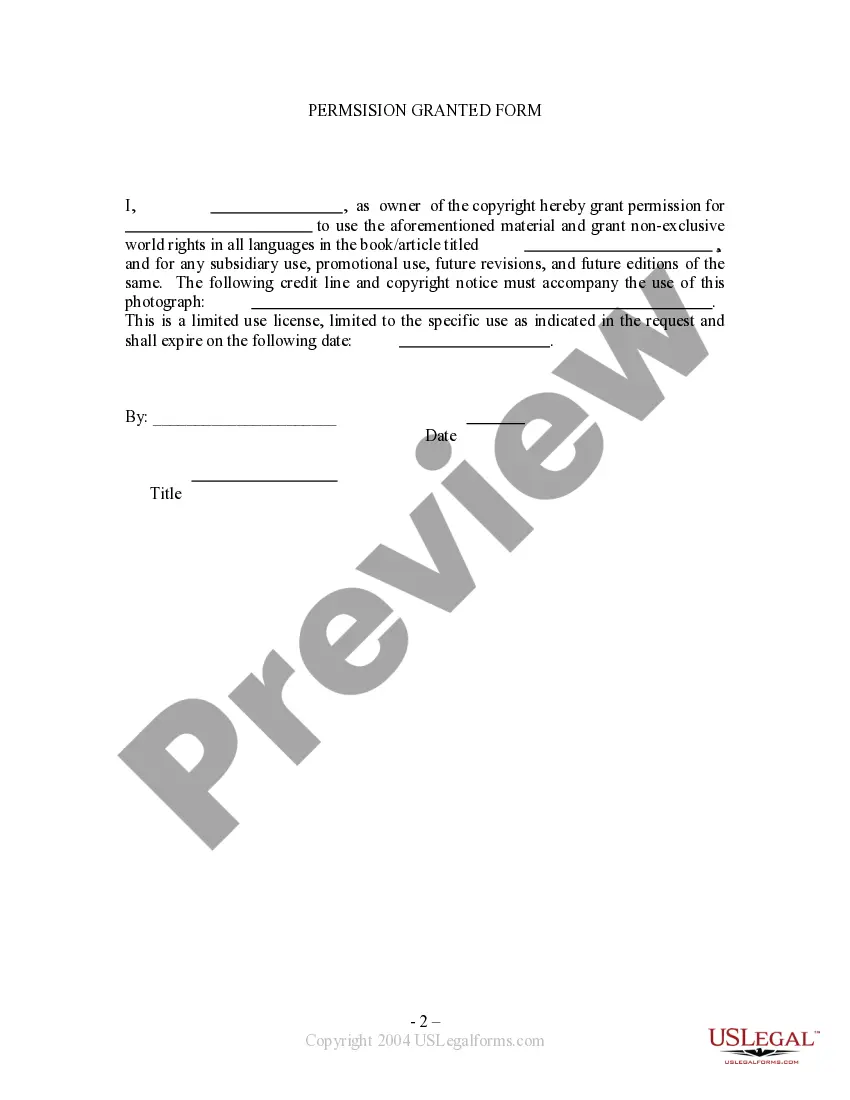
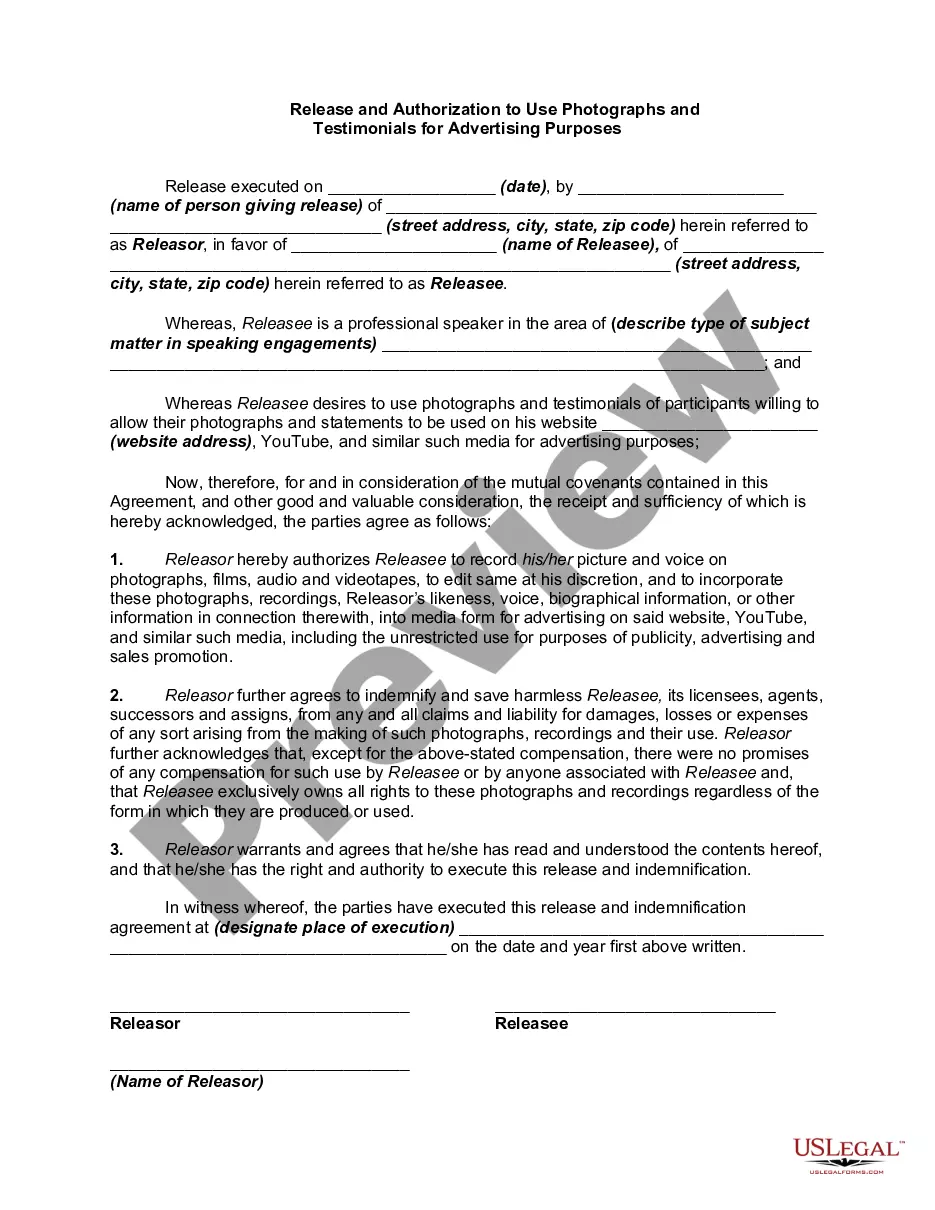
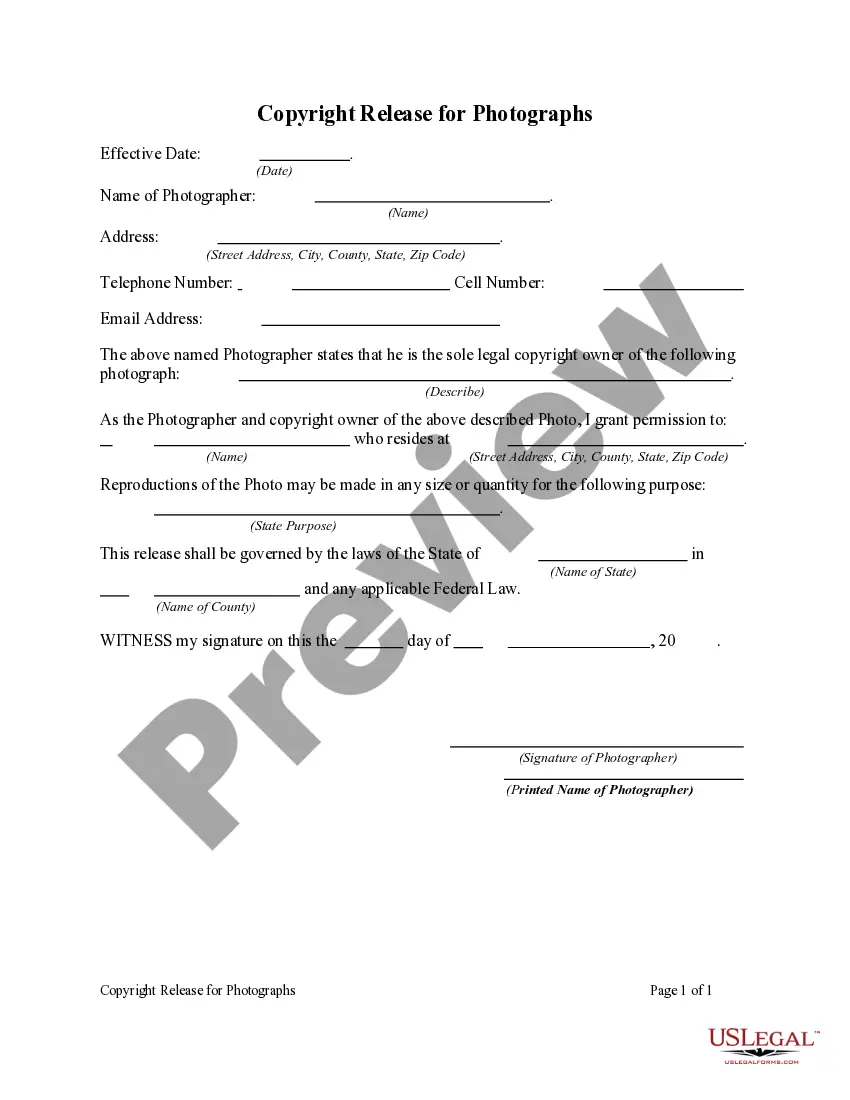
The Requested Permission to Use Photograph form is a legal document that allows you to formally request permission from a copyright holder to use their copyrighted photograph in a book or article. This form is essential for obtaining legal consent before using a photograph that is not your own, distinguishing it from general usage permissions in that it is specifically crafted to address the rights associated with copyrighted material. The form includes an addendum that the copyright holder can sign to grant permission, potentially for a limited timeframe if they prefer not to allow indefinite use.
Key parts of this document
- Requestor information: Details of the individual or entity seeking permission.
- Photograph details: Description of the copyrighted photograph including its source.
- Purpose of use: Specific reasons for wanting to use the photograph.
- Timeframe: Option for the copyright holder to limit the permission duration.
- Signature of the copyright holder: Optional consent acknowledgment for usage.
When to use this document
This form should be used whenever you plan to include a copyrighted photograph in your work, such as a book, article, or online publication. It is particularly important in scenarios where you do not own the rights to the photograph and need to ensure you have explicit permission from the copyright holder to avoid potential legal issues. Using this form can help clarify the terms of use and protect both parties involved.
Who needs this form
- Authors and writers needing to include photographs in their published works.
- Publishers and content creators looking to avoid copyright infringement.
- Students and researchers using images for academic projects or papers.
- Anyone wanting to use a copyrighted photograph for commercial purposes.
Instructions for completing this form
- Identify yourself as the requestor by filling in your name and contact information.
- Provide a detailed description of the photograph, including where it is sourced from.
- Clearly state the purpose for which you intend to use the photograph.
- Specify any time limitations for the usage if applicable.
- Submit the form to the copyright holder and wait for their signature as proof of permission.
Does this document require notarization?
This form does not typically require notarization unless specified by local law. However, having the signed permission notarized can add an extra layer of authenticity to the agreement between you and the copyright holder.
Get your form ready online
Our built-in tools help you complete, sign, share, and store your documents in one place.
Make edits, fill in missing information, and update formatting in US Legal Forms—just like you would in MS Word.
Download a copy, print it, send it by email, or mail it via USPS—whatever works best for your next step.
Sign and collect signatures with our SignNow integration. Send to multiple recipients, set reminders, and more. Go Premium to unlock E-Sign.
If this form requires notarization, complete it online through a secure video call—no need to meet a notary in person or wait for an appointment.
We protect your documents and personal data by following strict security and privacy standards.

Make edits, fill in missing information, and update formatting in US Legal Forms—just like you would in MS Word.

Download a copy, print it, send it by email, or mail it via USPS—whatever works best for your next step.

Sign and collect signatures with our SignNow integration. Send to multiple recipients, set reminders, and more. Go Premium to unlock E-Sign.

If this form requires notarization, complete it online through a secure video call—no need to meet a notary in person or wait for an appointment.

We protect your documents and personal data by following strict security and privacy standards.
Common mistakes to avoid
- Failing to provide complete details about the photograph, which can lead to misunderstandings.
- Not specifying the intended use clearly, leaving the copyright holder uncertain.
- Neglecting to include a timeframe for permission when required.
- Forgetting to check and follow local copyright laws that may vary by state.
Why use this form online
- Easy access to download and complete at your convenience.
- Editability allows you to customize the form for your specific needs.
- Reliable templates drafted by licensed attorneys ensure you are following legal standards.
Main things to remember
- The Requested Permission to Use Photograph form is crucial for legally using copyrighted images.
- Be clear about the purpose and duration of use when completing the form.
- Always check local copyright laws for any additional requirements.
- Obtaining permission protects you from potential legal disputes over copyright infringement.
Looking for another form?
Form popularity
FAQ
Not so, according to attorney Smith. He said anytime you take someone else's photo from a social media page and repost without permission - even if you are in the picture - you are breaking the law. "They are using the image when they do not have the permission to do so," Smith said. "That is copyright infringement. "
Requirements for Publishing ImagesAnyone is allowed to take photos of anyone or anything in a public space. If the photo is for personal enjoyment, nothing else is required you don't need a model release form or permission.Publish means that the photo will be used for promotional purposes.
Although taking a photo of you in a public setting is not an invasion of privacy, if the person captures you in your home and then uses it on social media without your consent, you have legal recourse.Defamation To prove defamation, the photo posted by someone else on a social media site would have to defame you.
As a general rule, taking photos of people and places in a public area does not require permission.You can photograph people in a public area, and it's perfectly legal to do so.
Fortunately, there are millions of photos on the internet that are free to use.You do not need to ask permission to use the photos. Some sites require you to include a photo credit when you use a photo. Trademarks are still in force for any trademarked item that appears in a photograph.
Determine if permission is needed. Identify the owner. Identify the rights needed. Contact the owner and negotiate whether payment is required. Get your permission agreement in writing.
You can legally post images on your website if you get permission from the photograph's copyright holder.Instead, you should get the copyright holder to provide written permission stating that you may post the image on your website. You may also want to use images in the public domain.
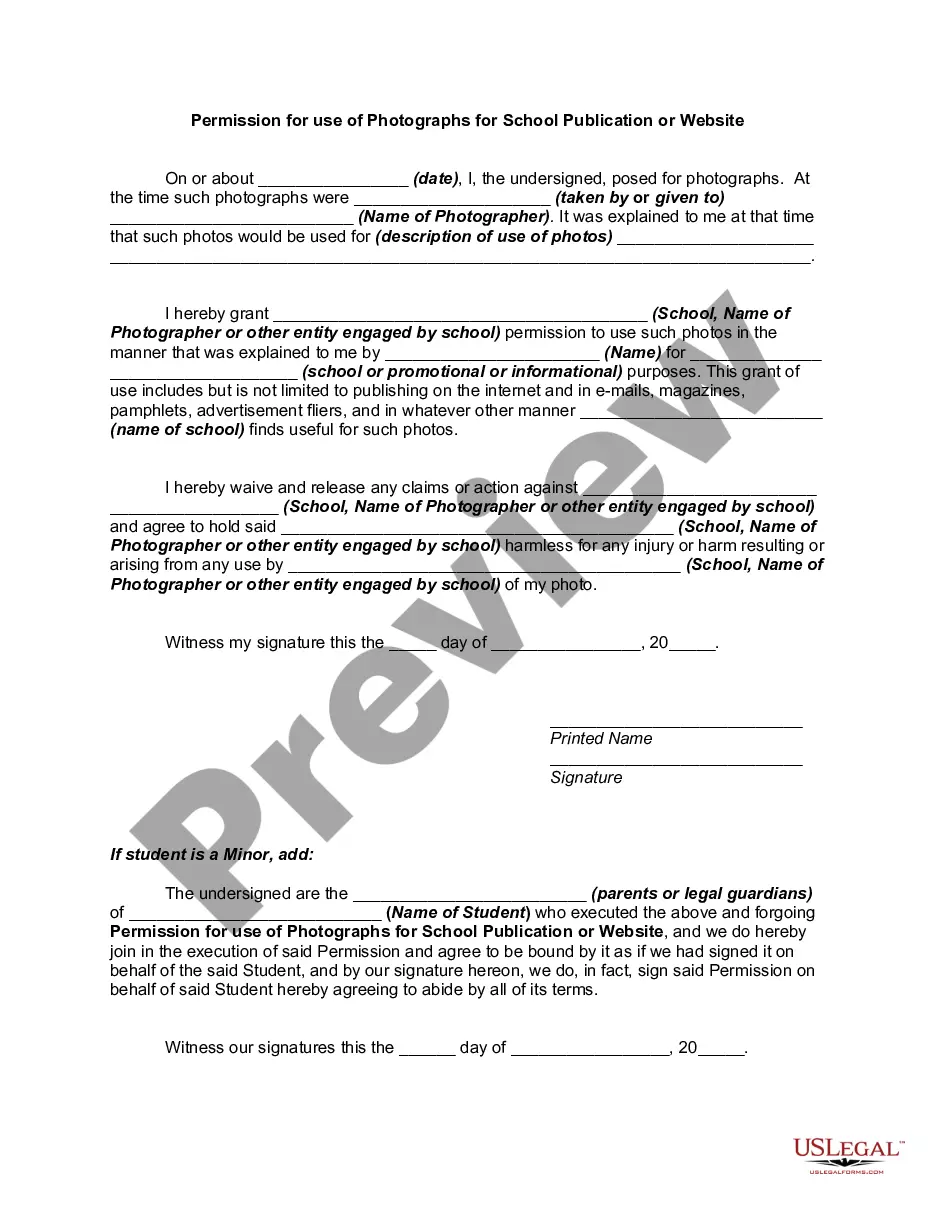
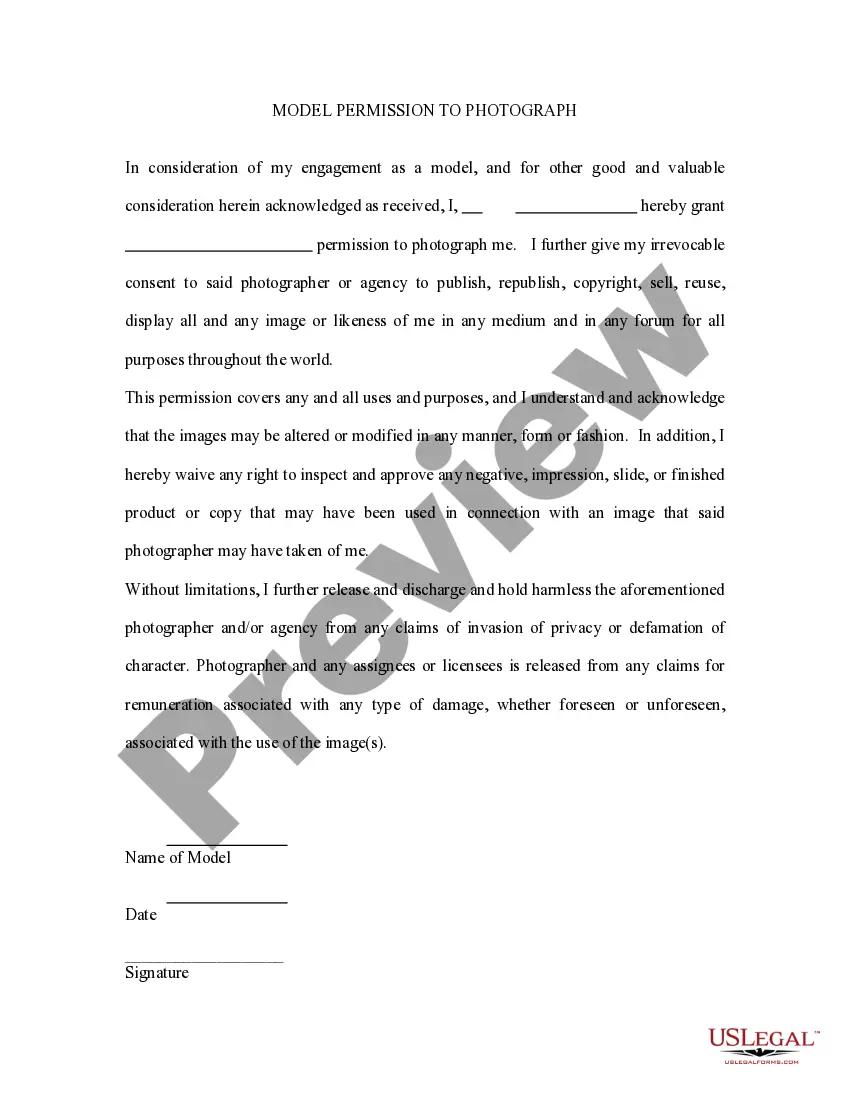
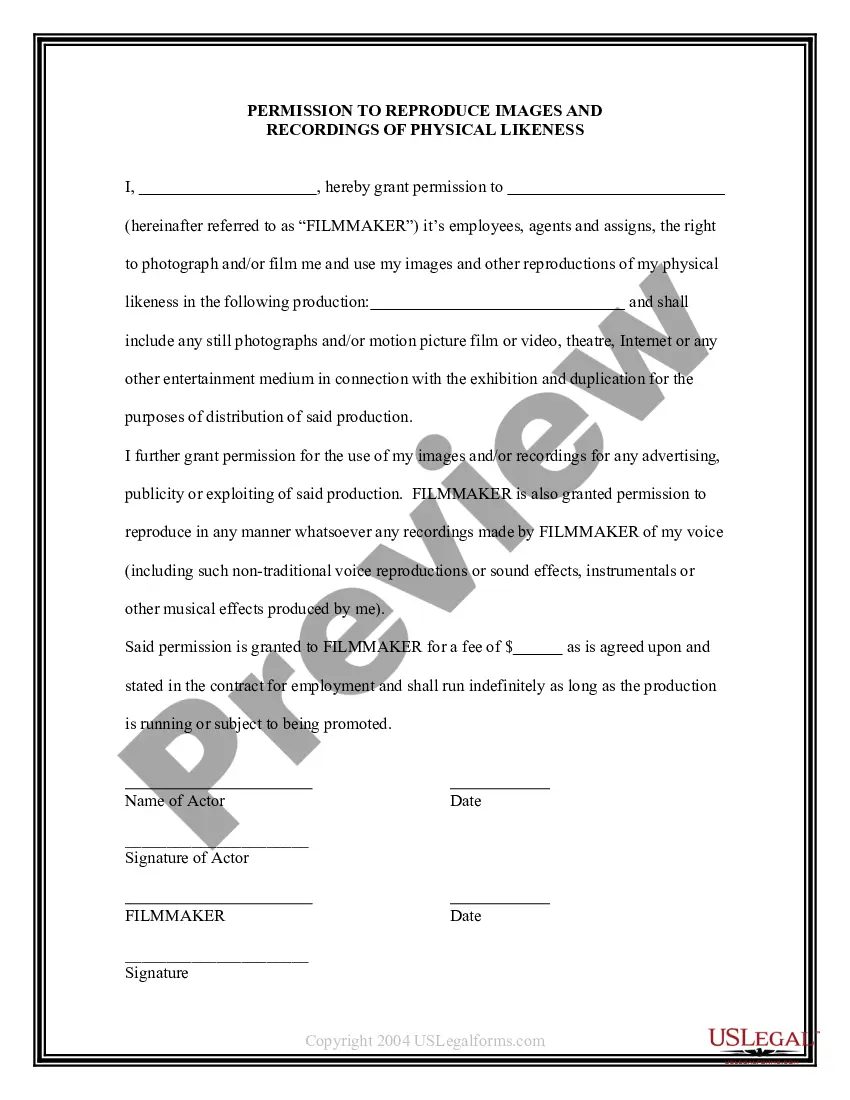
The photo consent form is filled out by an individual consenting the release of images captured of them, or images under their ownership, to someone else. Typically, the person(s) asking for consent wishes to use the individual's photos/images for media publication (social media, television, YouTube, etc.).
In the US, photographers own the images they have taken from the moment they press the camera shutter. UK copyright law states that if you want to use a copyrighted image on your website, you need to have permission from the owner of the license before using it.