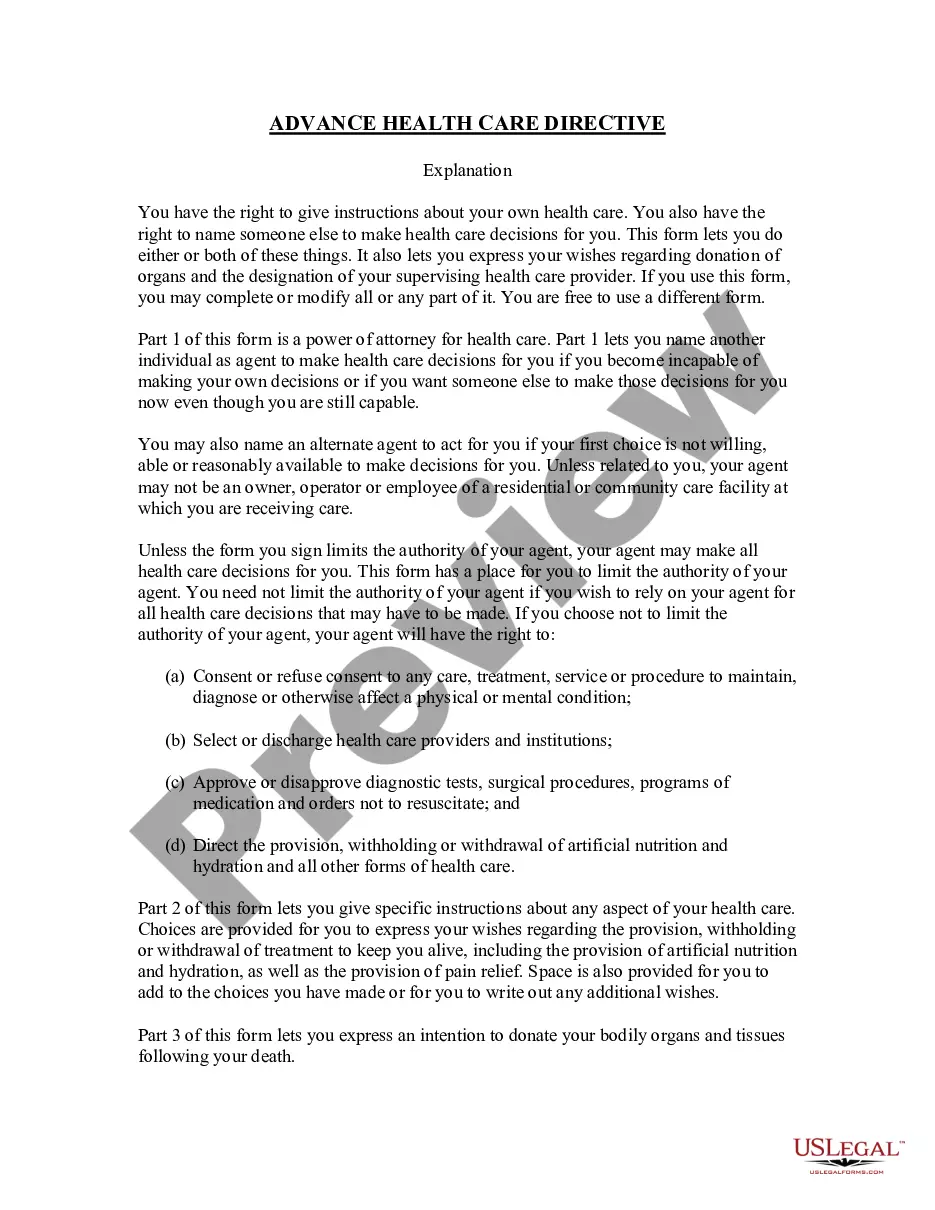
Complaint regarding Insurer's Failure to Pay Claim
About this form
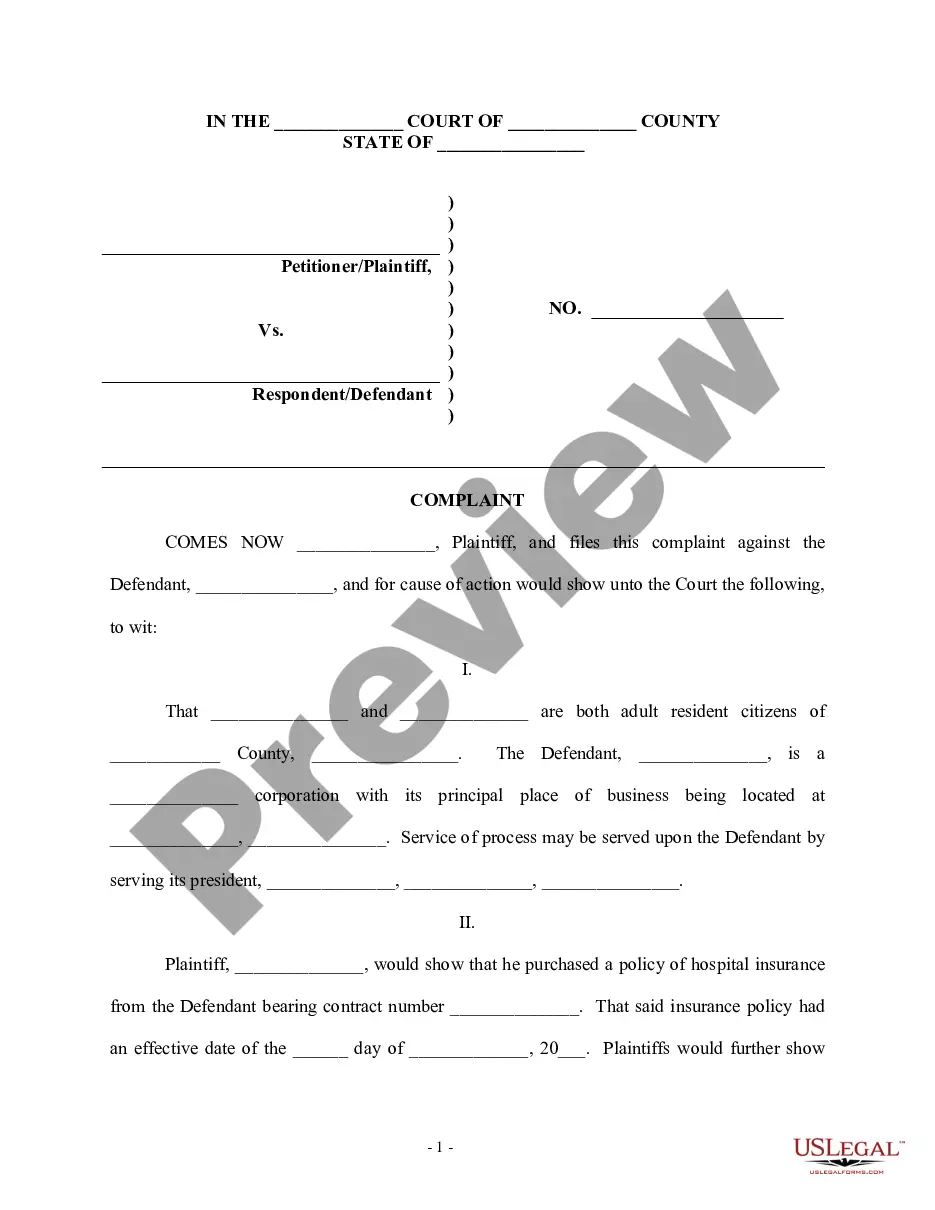
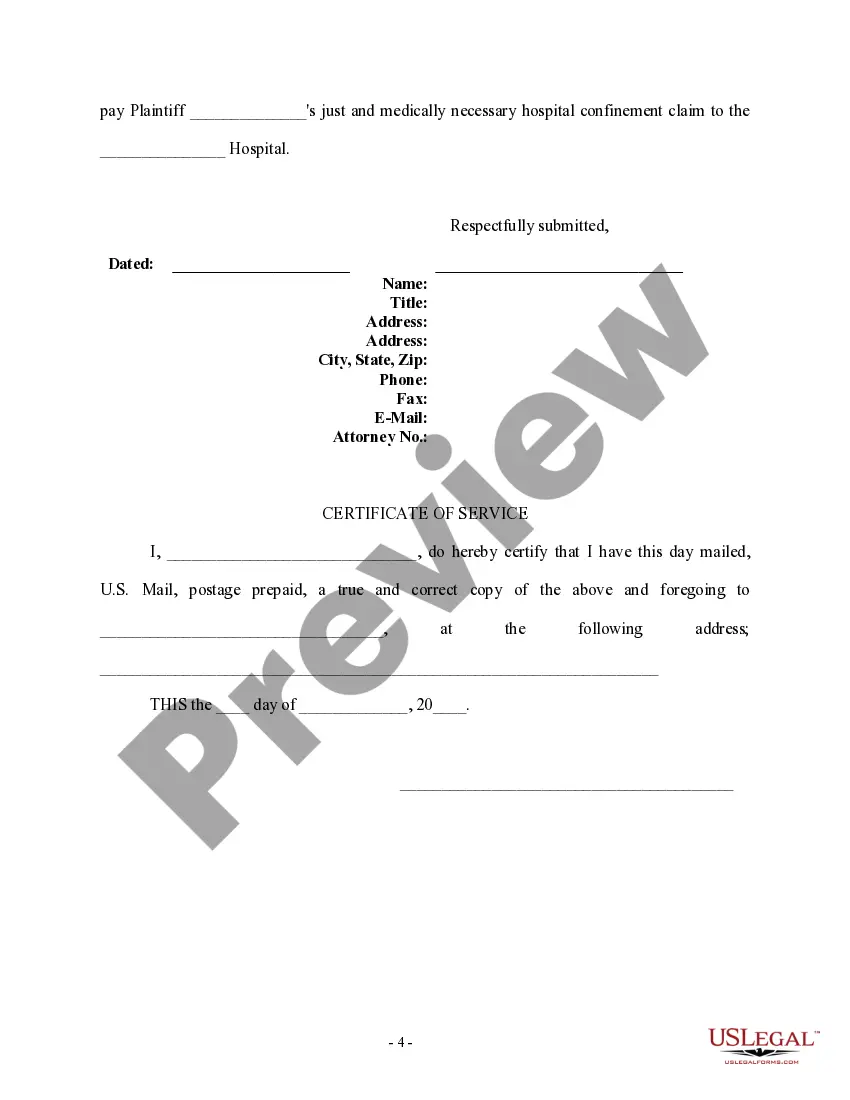
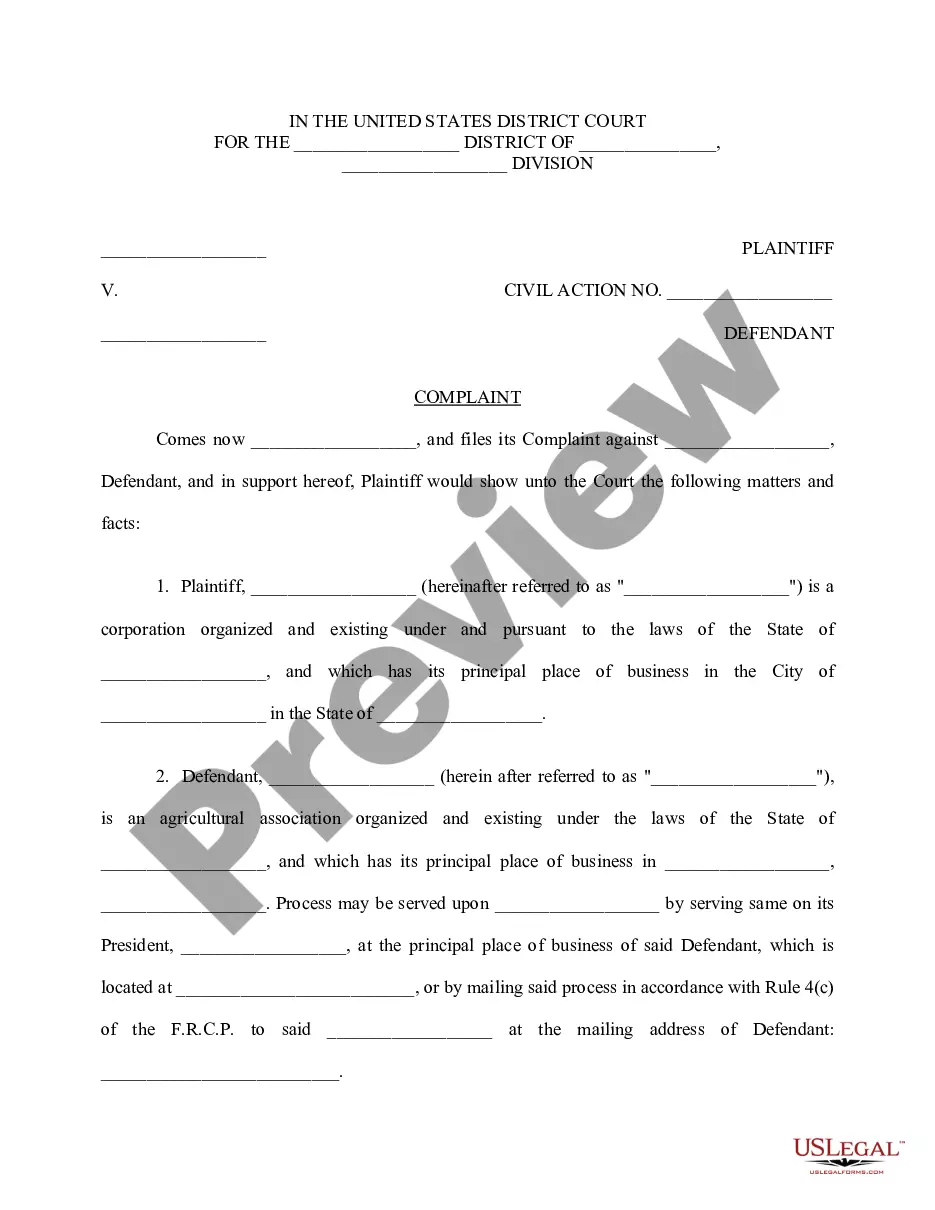
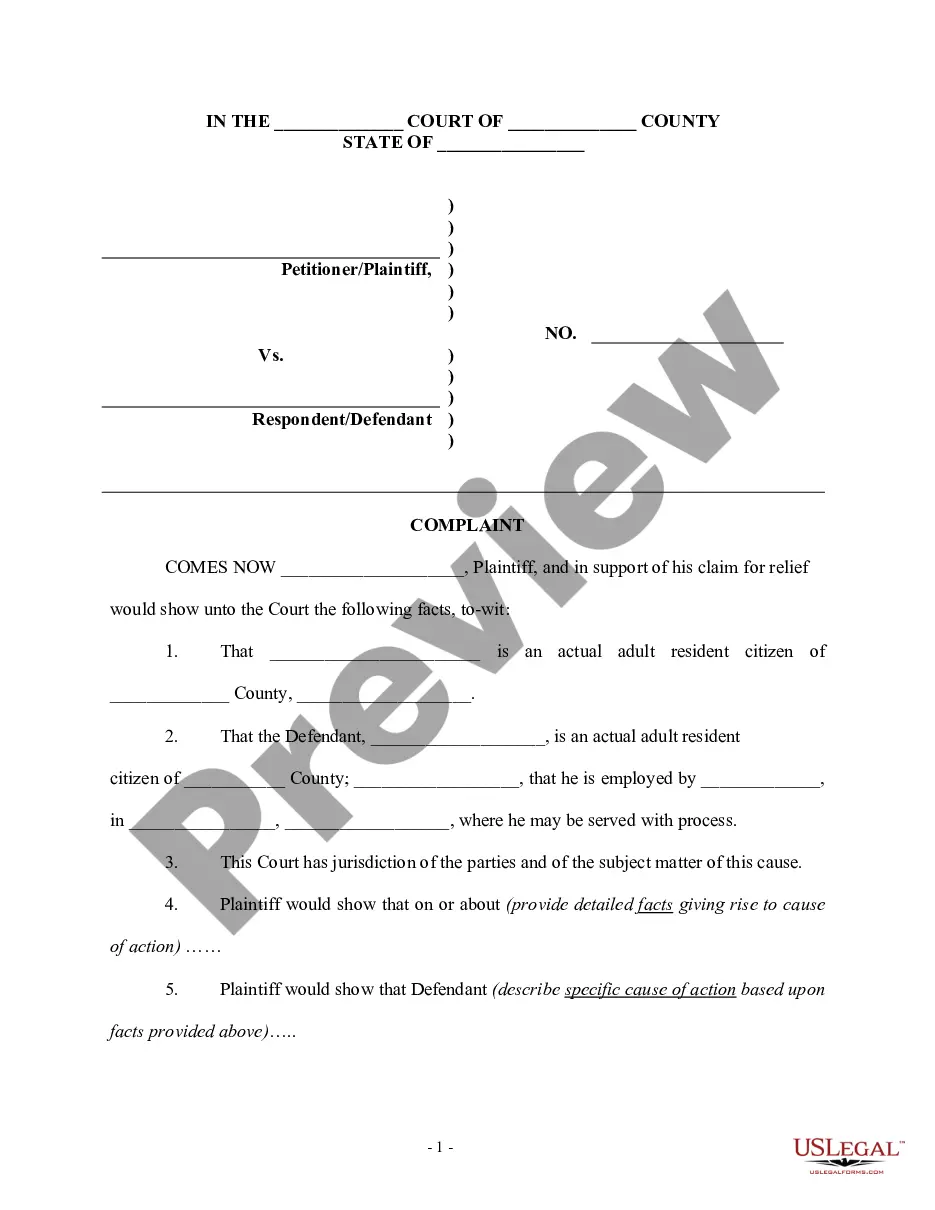
This Complaint regarding insurer's failure to pay claim is a legal document used to initiate a lawsuit against an insurance company that has not fulfilled its obligation to pay a valid insurance claim. This form enables the plaintiff to outline the details of their claim and the insurer's failure to provide payment for covered medical expenses. By using this form, plaintiffs can effectively communicate their grievances in court and seek compensatory damages for their losses.
Key parts of this document
- Identification of the parties involved, including the plaintiff and defendant.
- Details about the insurance policy, including contract number and effective date.
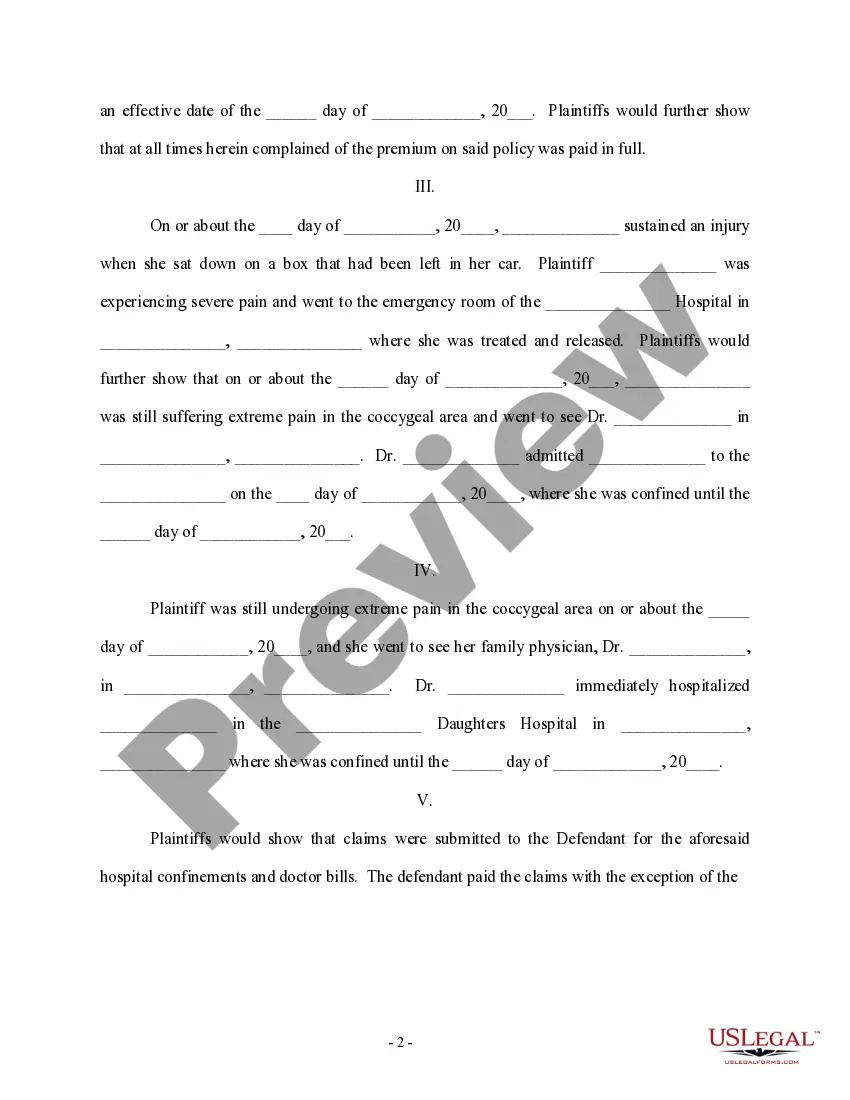
- Narrative explaining the incident leading to the claim and subsequent medical treatment.
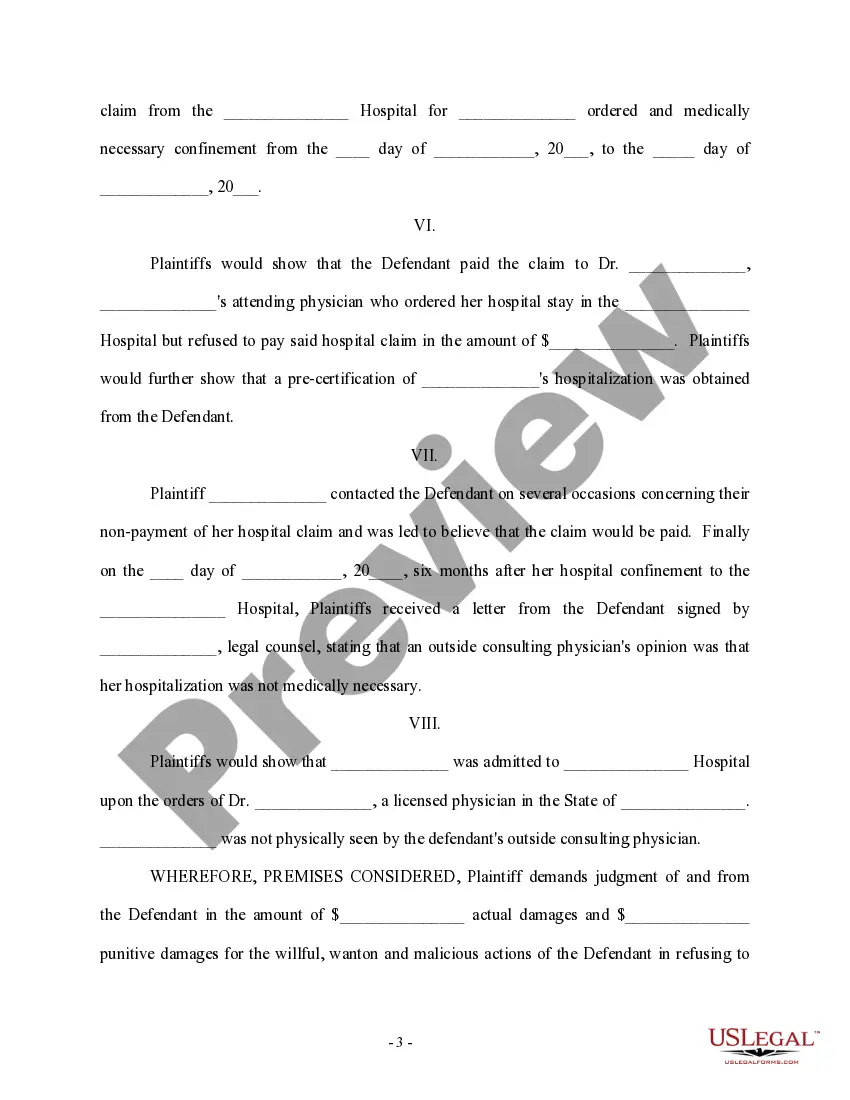
- Documentation of the claims filed, payments made, and specifics of the outstanding claim.
- Allegations of the insurance company's wrongful actions and demand for damages.
- Certification of service, confirming the complaint was delivered to the defendant.


Situations where this form applies
This form should be used when an insured individual believes that their insurer has wrongfully denied or delayed payment for a valid claim. Common situations include medical emergencies where hospital bills remain unpaid despite the policy being in effect and premiums being paid in full. This form allows the plaintiff to formally present their case in court against the insurer for non-payment of claims that are legally owed.
Who should use this form
- Individuals who have purchased an insurance policy and have filed a claim.
- Policyholders who are dissatisfied with the insurer's claim handling and payment decisions.
- Those who have already attempted to resolve the issue directly with the insurer without success.
Steps to complete this form
- Identify and enter the names and addresses of the plaintiff and defendant.
- Provide details about the insurance policy, including the contract number and effective date.
- Describe the incident that led to the claim and list the related medical treatments.
- Detail any claims submitted to the insurer and specify the claim amounts that remain unpaid.
- Document any communication made with the insurer regarding the claim.
- Sign and date the complaint, certifying its delivery to the insurer.
Is notarization required?
This form does not typically require notarization unless specified by local law. Ensure that you check your jurisdictionâs requirements to confirm if a notary is necessary for your complaint to be legally valid.
Get your form ready online
Our built-in tools help you complete, sign, share, and store your documents in one place.
Make edits, fill in missing information, and update formatting in US Legal Forms—just like you would in MS Word.
Download a copy, print it, send it by email, or mail it via USPS—whatever works best for your next step.
Sign and collect signatures with our SignNow integration. Send to multiple recipients, set reminders, and more. Go Premium to unlock E-Sign.
If this form requires notarization, complete it online through a secure video call—no need to meet a notary in person or wait for an appointment.
We protect your documents and personal data by following strict security and privacy standards.

Make edits, fill in missing information, and update formatting in US Legal Forms—just like you would in MS Word.

Download a copy, print it, send it by email, or mail it via USPS—whatever works best for your next step.

Sign and collect signatures with our SignNow integration. Send to multiple recipients, set reminders, and more. Go Premium to unlock E-Sign.

If this form requires notarization, complete it online through a secure video call—no need to meet a notary in person or wait for an appointment.

We protect your documents and personal data by following strict security and privacy standards.
Mistakes to watch out for
- Failing to include all relevant details about the medical treatment received.
- Not specifying the exact claims that were paid or denied.
- Omitting required signatures or dates, which can invalidate the form.
Why complete this form online
- Instant access to a professionally drafted legal document tailored for your situation.
- Edit and customize the form easily to reflect your unique circumstances.
- Convenient download and print options to facilitate filing.
Legal use & context
- This form is enforceable in court if filed correctly and in compliance with jurisdictional rules.
- It serves to formally notify the insurer of your claim and intent to seek legal resolution.
- Failure to adhere to proper filing procedures may impact the enforceability of the complaint.
Main things to remember
- This form is essential for initiating a complaint against an insurer.
- Complete and accurate information is crucial for the form's validity.
- Understanding your rights as a policyholder can enhance your chances of a successful claim.
Looking for another form?








Form popularity
FAQ
Some important points, which would help you in the claims procedure. The loss or damage should be reported to the insurer immediately. On receipt of claim intimation, the insurer will forward a claim form. Submit the completed claim form along with an estimate of the loss to the insurer.
The cost and severity of a claim are key factors when it comes to whether your insurance premium may increase. Auto insurers typically consider your driving record when calculating the cost of your car insurance policy.However, filing a claim doesn't mean your insurance premium will automatically increase.
Depending on the nature of your claim, you may receive a check directly, or the insurance company may pay vendors on your behalf.Your insurance company will reimburse you for those costs. Then, if they send out one of their approved vendors to complete the repairs, they may pay that vendor directly.
Premium increases vary widely by state and insurer, but the average increase is 41% after a single claim of $2,000 or more. Rates increase after an at-fault accident both to pay for the fees associated with filing a claim and to compensate the insurer for taking a higher risk.
The purpose of insurance is to cover expenses due to damages so you don't have to pay a lot of money at one time. Filing a claim if you're at fault for heavy damages to someone else's property is a no-brainer, but it makes sense to file a claim even if you cause heavy damage to your own property.
Who pays: Your insurer or theirs? Whose insurer pays for the costs of an accident can depend on many factors. In some cases, each person's insurance pays for their own repairs. But, if one driver caused the accident, his or her insurance may need to pay for all the costs - or not, if an exception applies.
An insurance claim is a formal request to an insurance company asking for a payment based on the terms of the insurance policy. The insurance company reviews the claim for its validity and then pays out to the insured or requesting party (on behalf of the insured) once approved.
You should file an insurance claim when you can't afford to pay cash for damages or medical bills that your insurance policy will cover. You should pay out of pocket instead of filing an insurance claim if the repairs or medical bills incurred in an accident that you cause will cost less than your deductible.
There are absolutely times when it's advisable to file an insurance claim. For example, automobile accidents that involve an injury, personal liability or severe damage to another vehicle, even if your car was not harmed, are cause to pick up the phone and bring your insurance company up to speed with the situation.