Civil Subpoena - Personal Injury
Overview of this form
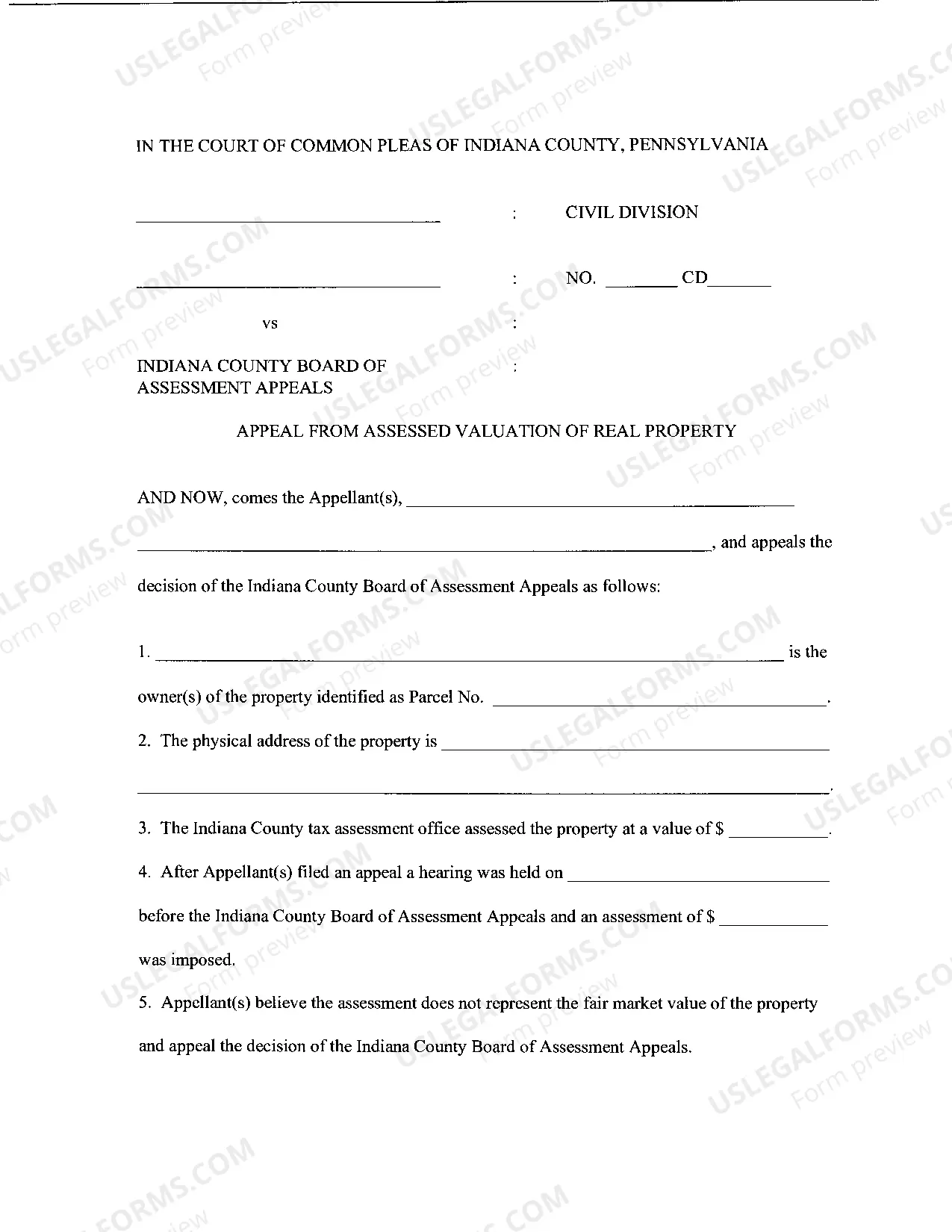
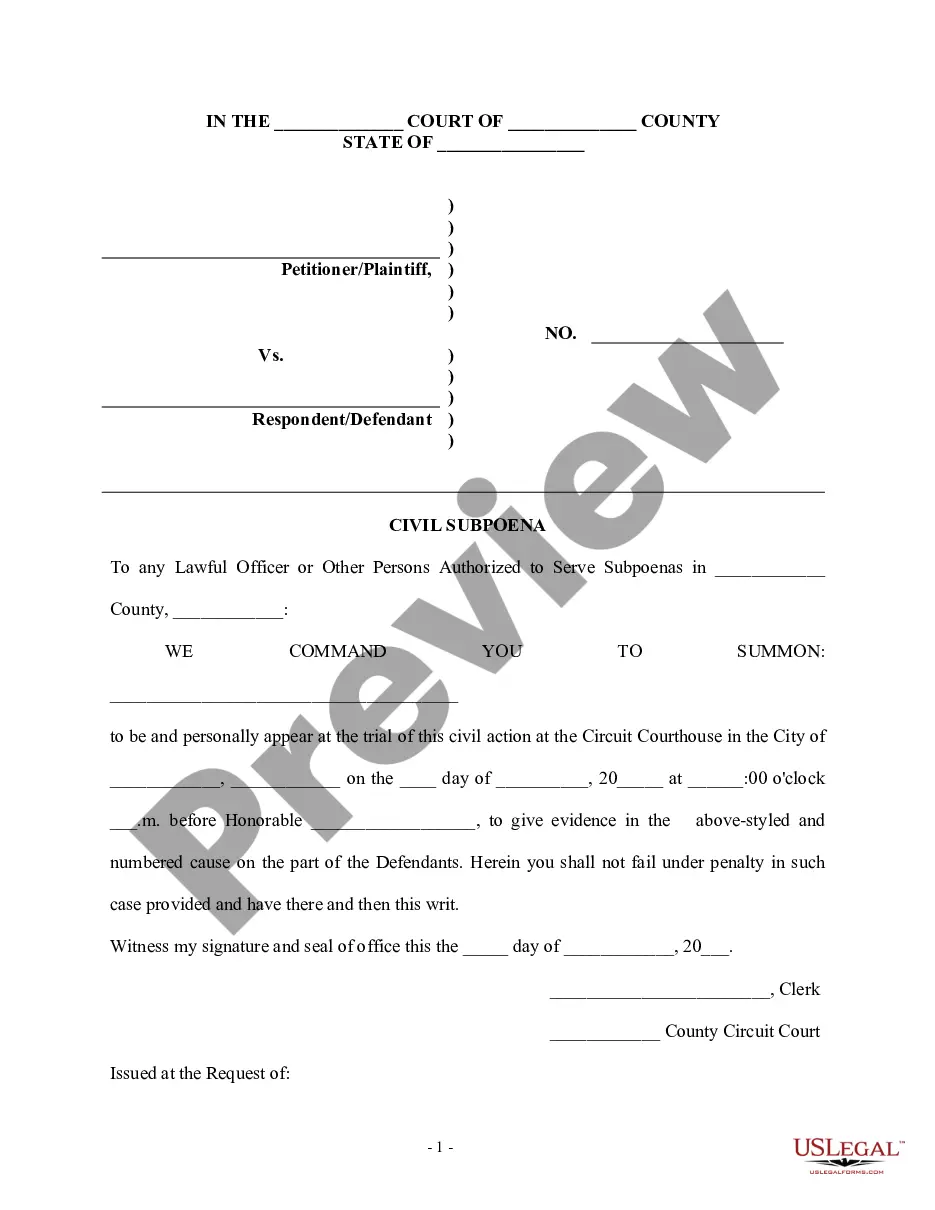
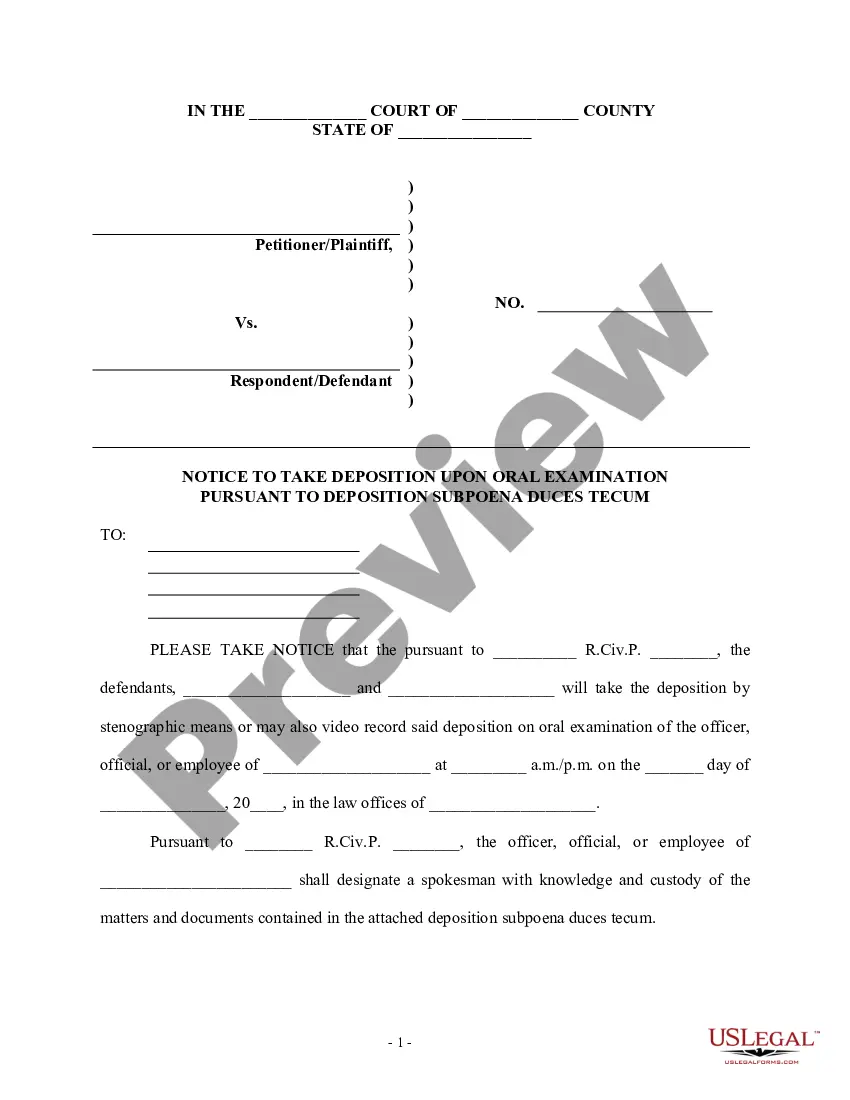
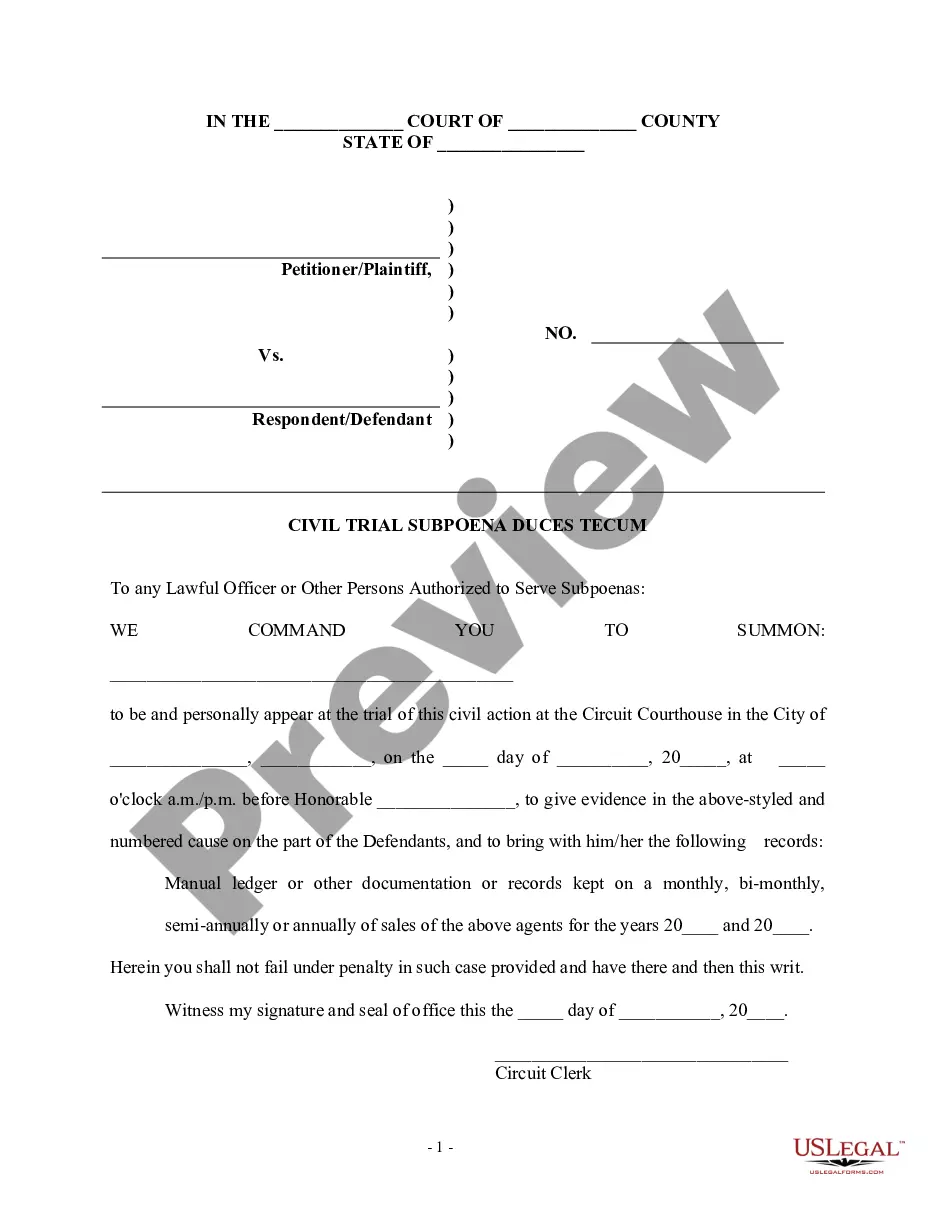
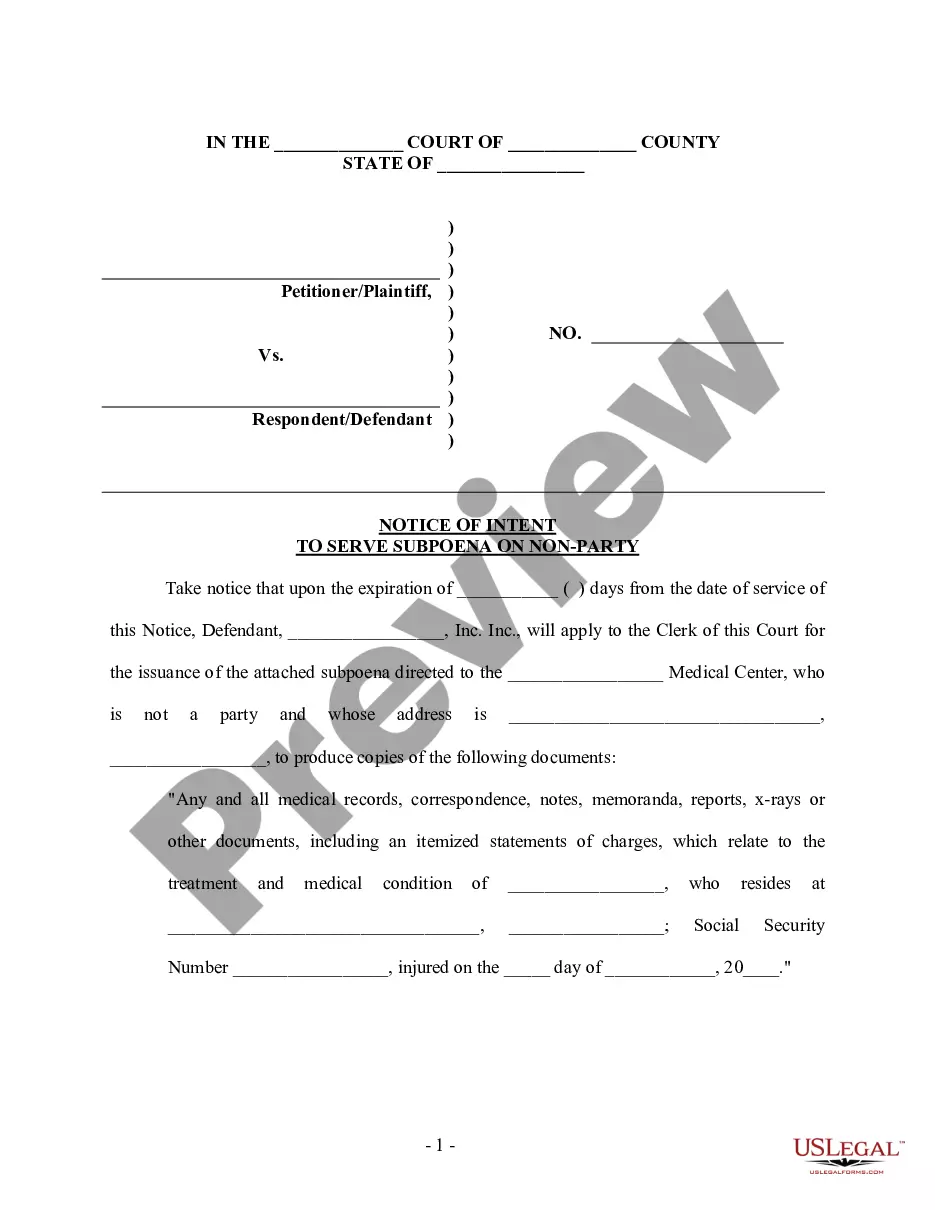
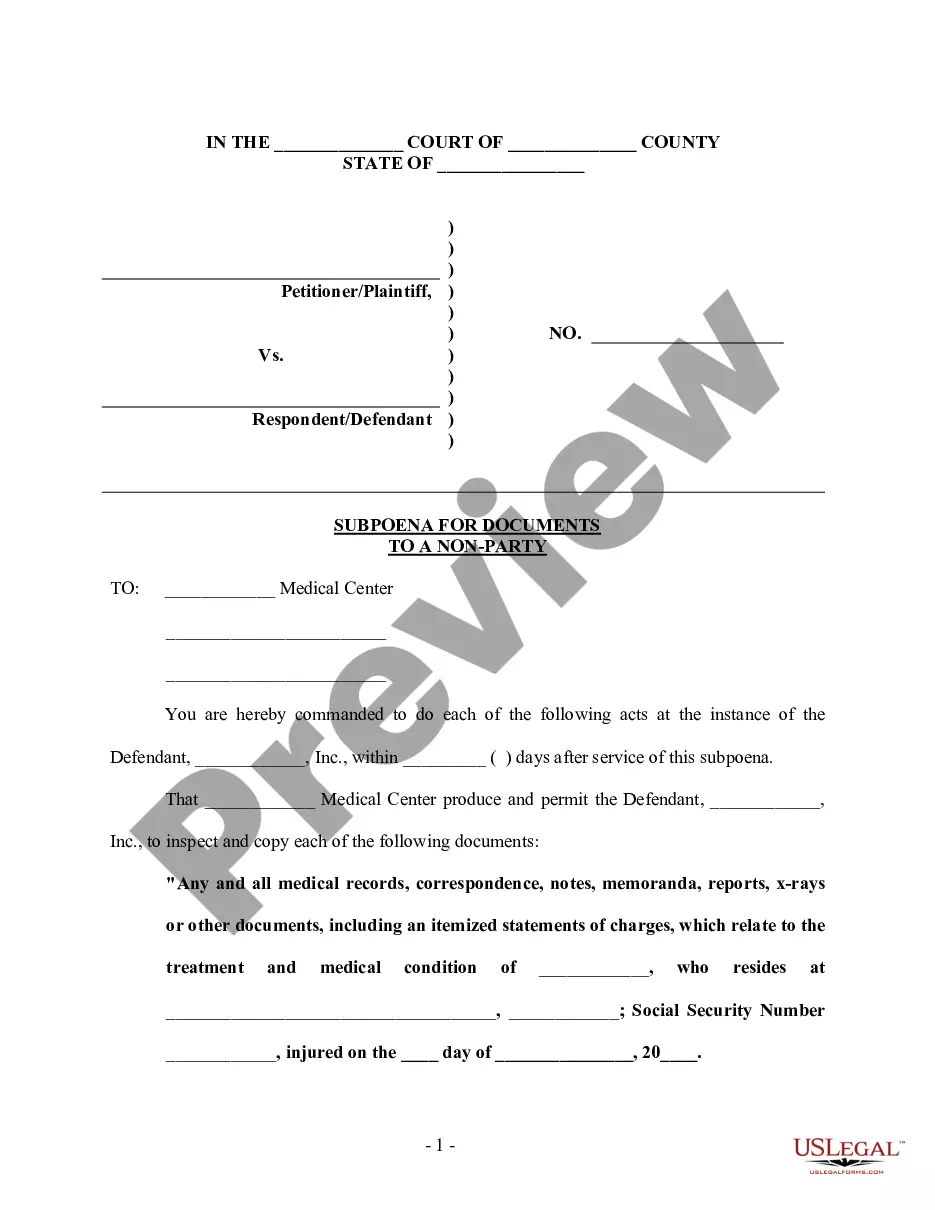
The Civil Subpoena for Personal Injury is a legal document that compels an individual to appear in court to provide testimony or evidence in a personal injury lawsuit. Unlike other legal forms, this specific subpoena allows parties involved in the case to secure the presence of witnesses who can provide essential information relevant to the proceedings.
Key parts of this document
- Identification of the court and the trial date.
- Details of the summoned witness, including name and address.
- Information regarding the penalty for non-compliance.
- Witness fee and mileage compensation details.
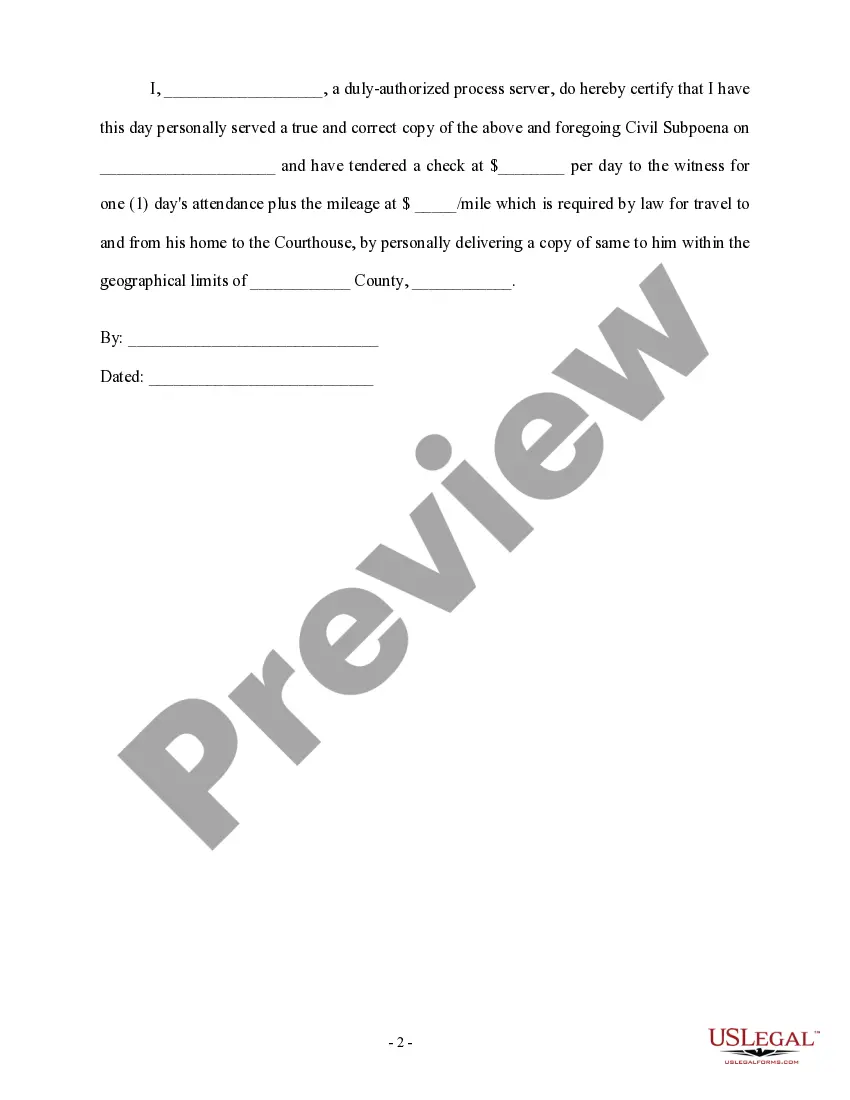
- Certification section for the process server to affirm service of the subpoena.
When to use this document
This form should be used when you need to call a witness to testify in a personal injury case. It's essential when collecting evidence that could influence the outcome of the case, including testimonies from medical professionals, eyewitnesses, or expert witnesses. It is typically used after the case has been filed and a trial date has been set.
Who can use this document
- Plaintiffs who are seeking to present evidence in their personal injury claims.
- Defendants who require testimonies to support their case.
- Legal practitioners representing parties in personal injury lawsuits.
Steps to complete this form
- Enter the name of the Circuit Courthouse and its location.
- Specify the date and time the witness is required to appear.
- Provide the name of the presiding judge.
- Fill in the name of the requesting party.
- Complete the certification section to confirm that the subpoena was properly served.
Does this form need to be notarized?
In most cases, this form does not require notarization. However, some jurisdictions or signing circumstances might. US Legal Forms offers online notarization powered by Notarize, accessible 24/7 for a quick, remote process.
Get your form ready online
Our built-in tools help you complete, sign, share, and store your documents in one place.
Make edits, fill in missing information, and update formatting in US Legal Forms—just like you would in MS Word.
Download a copy, print it, send it by email, or mail it via USPS—whatever works best for your next step.
Sign and collect signatures with our SignNow integration. Send to multiple recipients, set reminders, and more. Go Premium to unlock E-Sign.
If this form requires notarization, complete it online through a secure video call—no need to meet a notary in person or wait for an appointment.
We protect your documents and personal data by following strict security and privacy standards.

Make edits, fill in missing information, and update formatting in US Legal Forms—just like you would in MS Word.

Download a copy, print it, send it by email, or mail it via USPS—whatever works best for your next step.

Sign and collect signatures with our SignNow integration. Send to multiple recipients, set reminders, and more. Go Premium to unlock E-Sign.

If this form requires notarization, complete it online through a secure video call—no need to meet a notary in person or wait for an appointment.

We protect your documents and personal data by following strict security and privacy standards.
Common mistakes to avoid
- Failure to complete all required fields, which can lead to challenges in court.
- Not providing adequate notice to the witness about the subpoena.
- Incorrect date or location, causing confusion or dismissal of the subpoena.
Benefits of completing this form online
- Easy access to professionally drafted legal templates.
- Ability to edit and customize the form to meet specific needs.
- Convenient downloading process, allowing for quick preparation and use.
Legal use & context
- Civil subpoenas must be issued in accordance with state laws governing their use.
- Failure to comply with a subpoena can result in penalties or contempt of court charges.
- This form is enforceable in personal injury actions when properly issued and served.
Key takeaways
- The Civil Subpoena for Personal Injury is essential for compelling witness testimony.
- Accurate completion and timely service are critical to its effectiveness.
- Understand local laws to ensure compliance and proper handling of the subpoena.
Looking for another form?


Form popularity
FAQ
If you ignore the order, the court will hold you in contempt. You could go to jail or face a large fine for ignoring the Subpoena. Subpoenas are used in both criminal and civil cases.If you get a Subpoena and do not want to testify or turn over documents, do not just ignore it.
Prepare. Tell the Truth. Be Mindful of the Transcript. Answer Only the Question Presented. Answer Only as to What You Know. Stay Calm. Ask to See Exhibits. Don't Be Bullied.
As a subpoena is a court order, failing to respond to a subpoena without lawful excuse is a contempt of court. There may be civil or criminal penalties. A subpoena must be served by giving it to an individual, or delivering it to the registered office of a company (including by post).
The name of the court where your case is filed. The title of the action. The case number. A command that a specific person appear at a stated date, time, and place to testify (or testify and provide documents)
What Is a Deposition? Don't Misstate the Facts or Exaggerate. Make Sure You're Well-Prepared. Take Your Time When You Testify. Stay Professional and Polite. Keep Your Answers Short and Simple. Never Answer a Question You Don't Understand. Consult with a Personal Injury Lawyer Before Participating in a Deposition.
Don't guess, speculate, or play a hunch. A deposition is sworn testimony; only say what you know to be true. On the other hand, don't use this tip to avoid giving testimony that you know. If you don't understand a question, ask for the questioner to rephrase it.
At a deposition, a person appears at a specified time and place and gives sworn testimonyunder oath, usually with a court reporter present so that a record is made. Depositions typically occur during the discovery phase of a personal injury case (after the filing of a lawsuit, but before trial or settlement).
The standard is more relaxed in the civil justice system. Instead, the plaintiff must prove his case by a preponderance of the evidence. Under this standard, a plaintiff can prevail and win a civil case by showing that more likely than not everything he has said is true and he is entitled to a legal remedy.
Always Tell the Truth. Never Guess. Remain Calm: Never Argue, Joke, or get Upset. Listen to the Question being Asked. Pause to Give your Lawyer a Chance to Object. Answer JUST that question. Then Stop Talking. Repeat Steps 1 through 7.