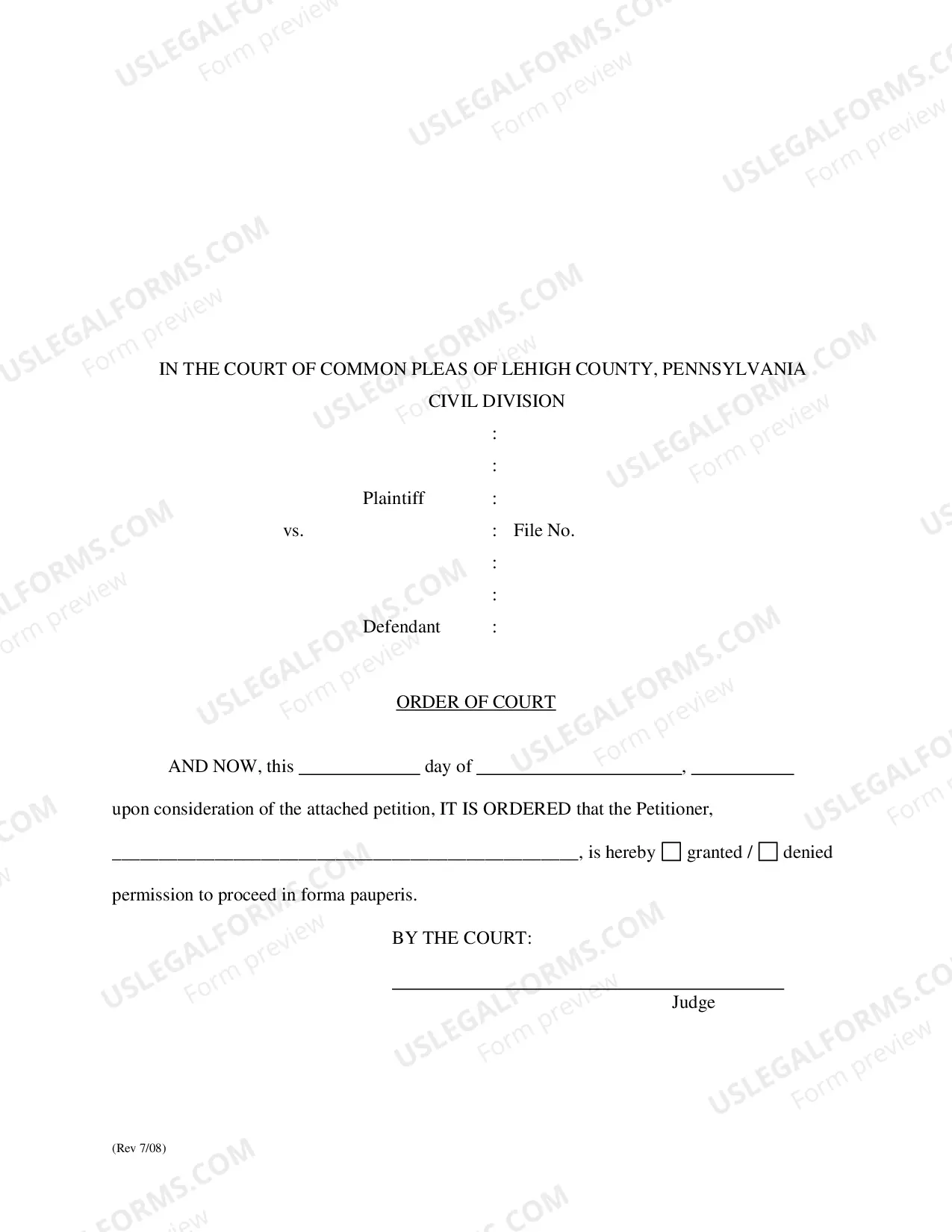
Motion to Quash Deposition Subpoena Duces Tecum
What this document covers
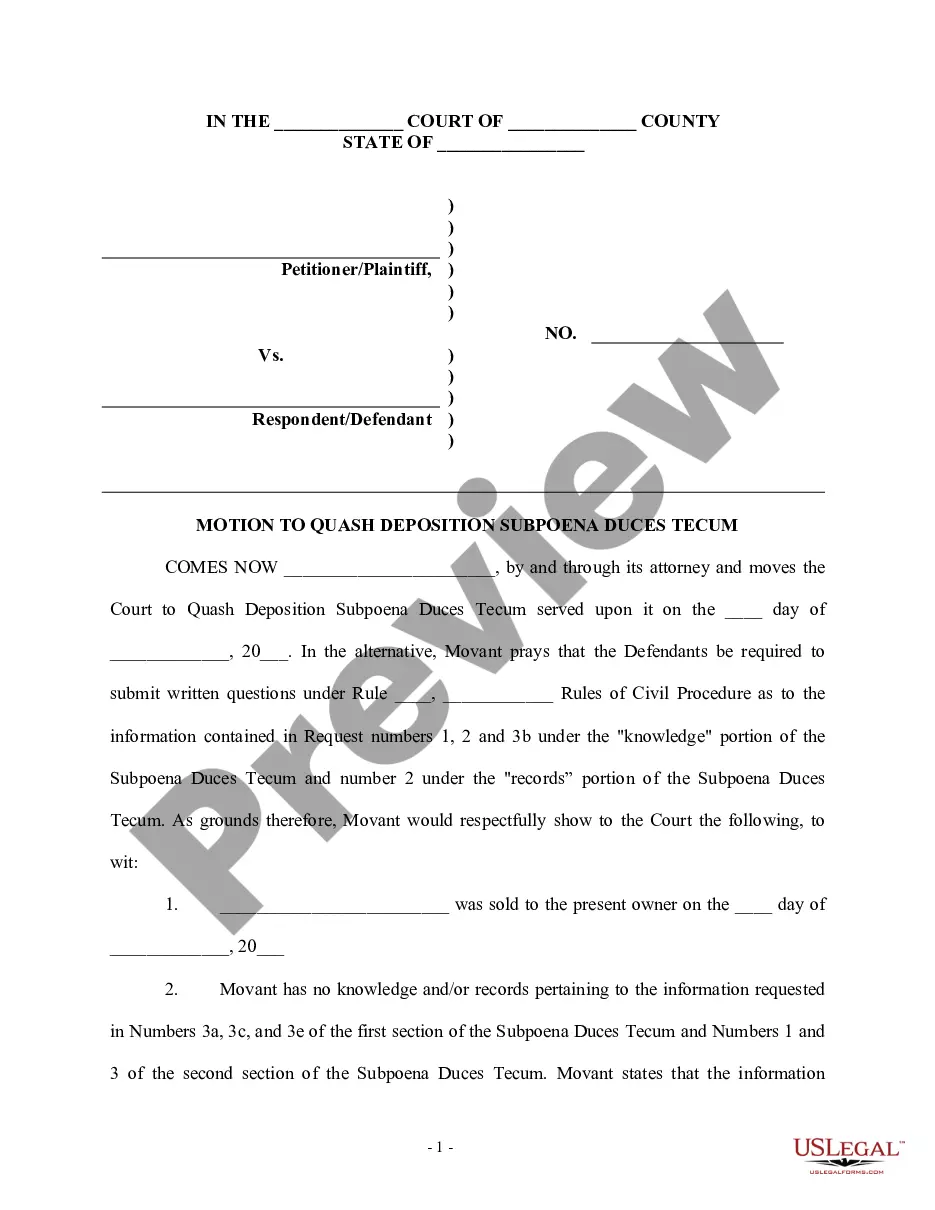
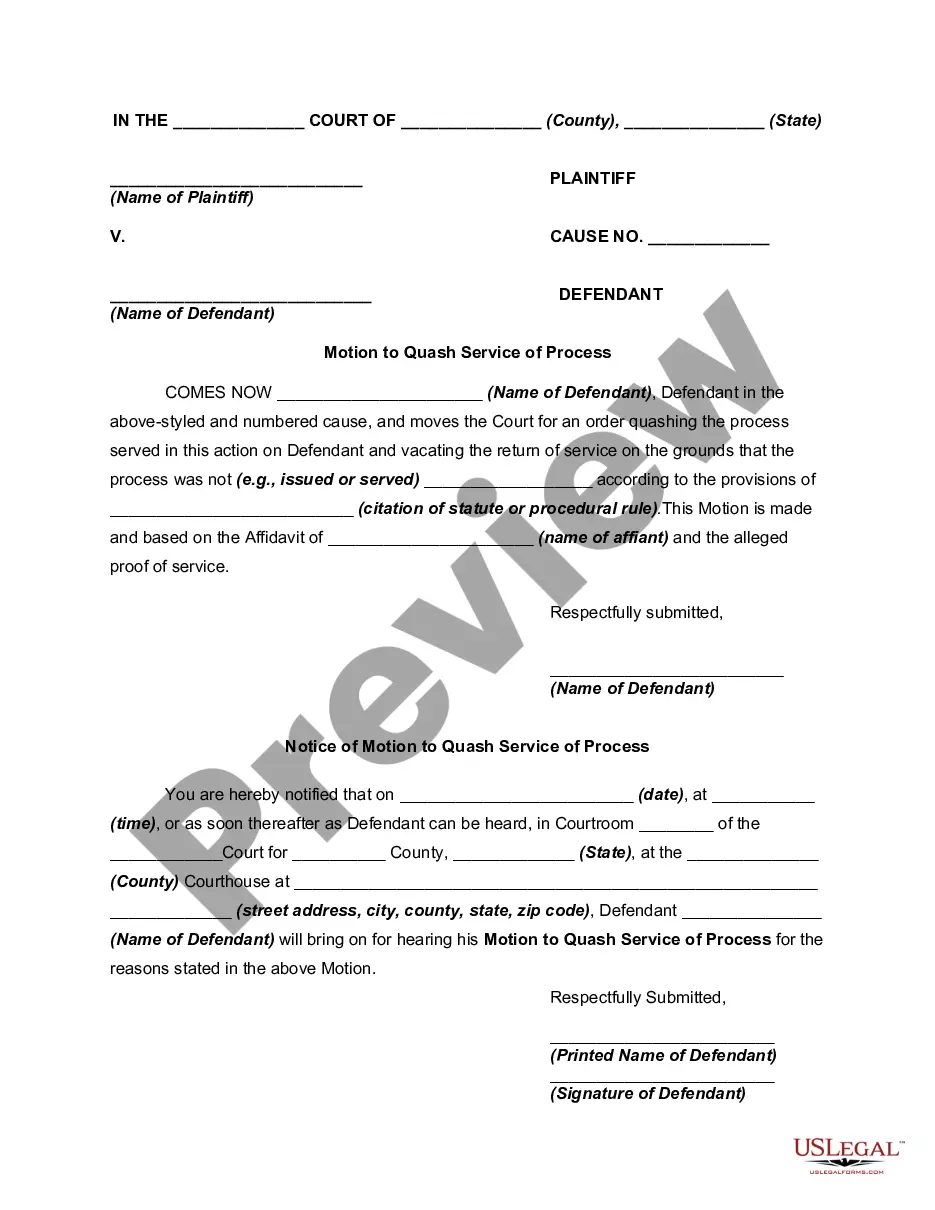
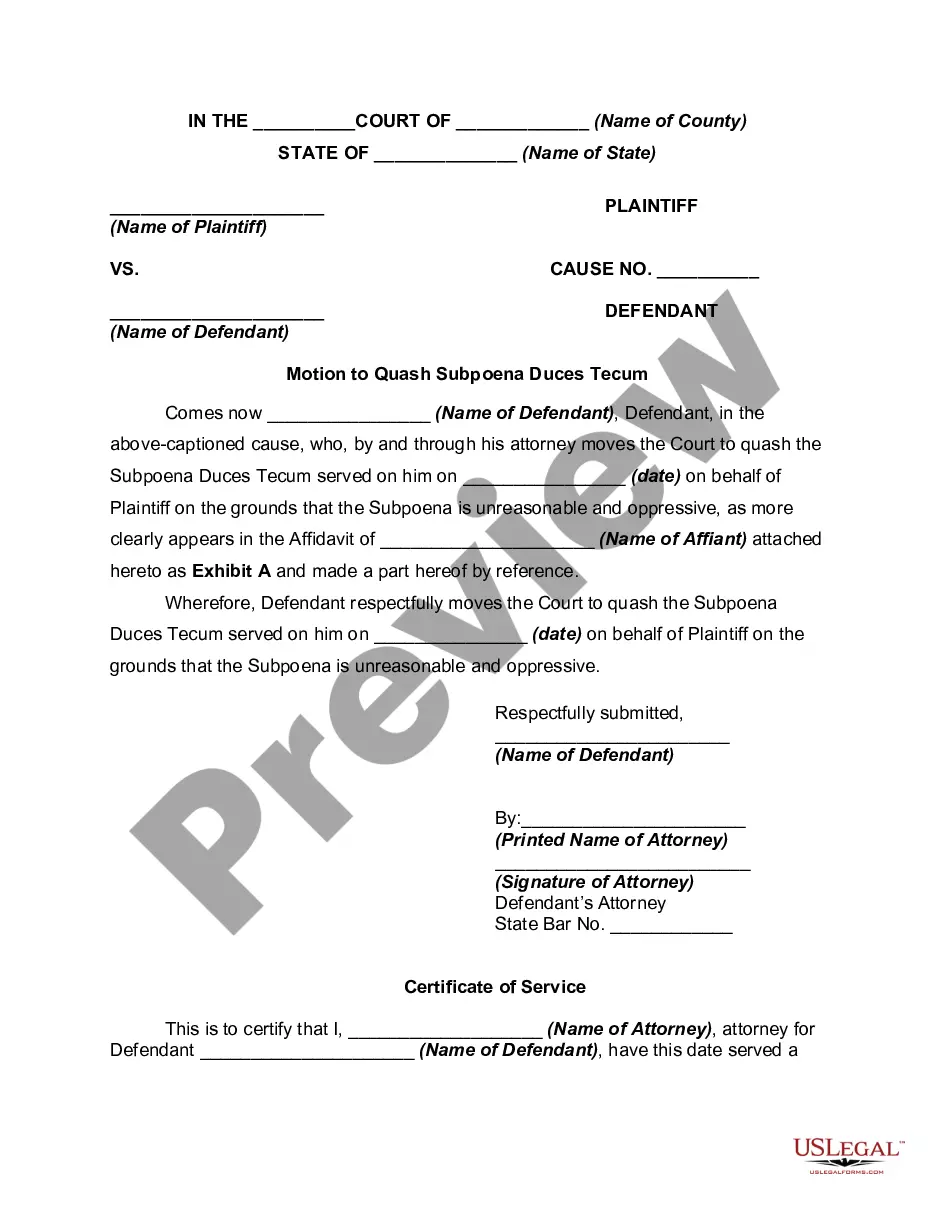
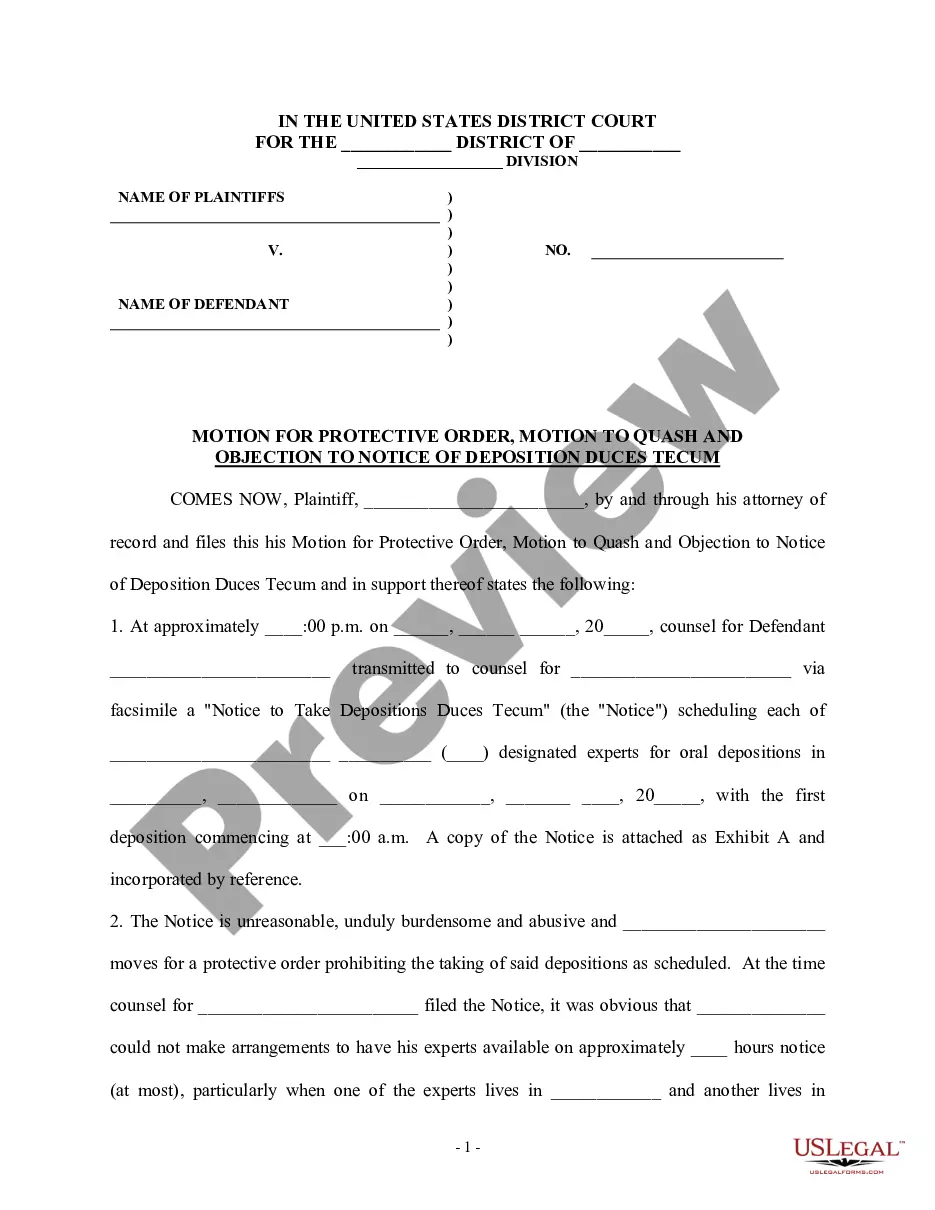
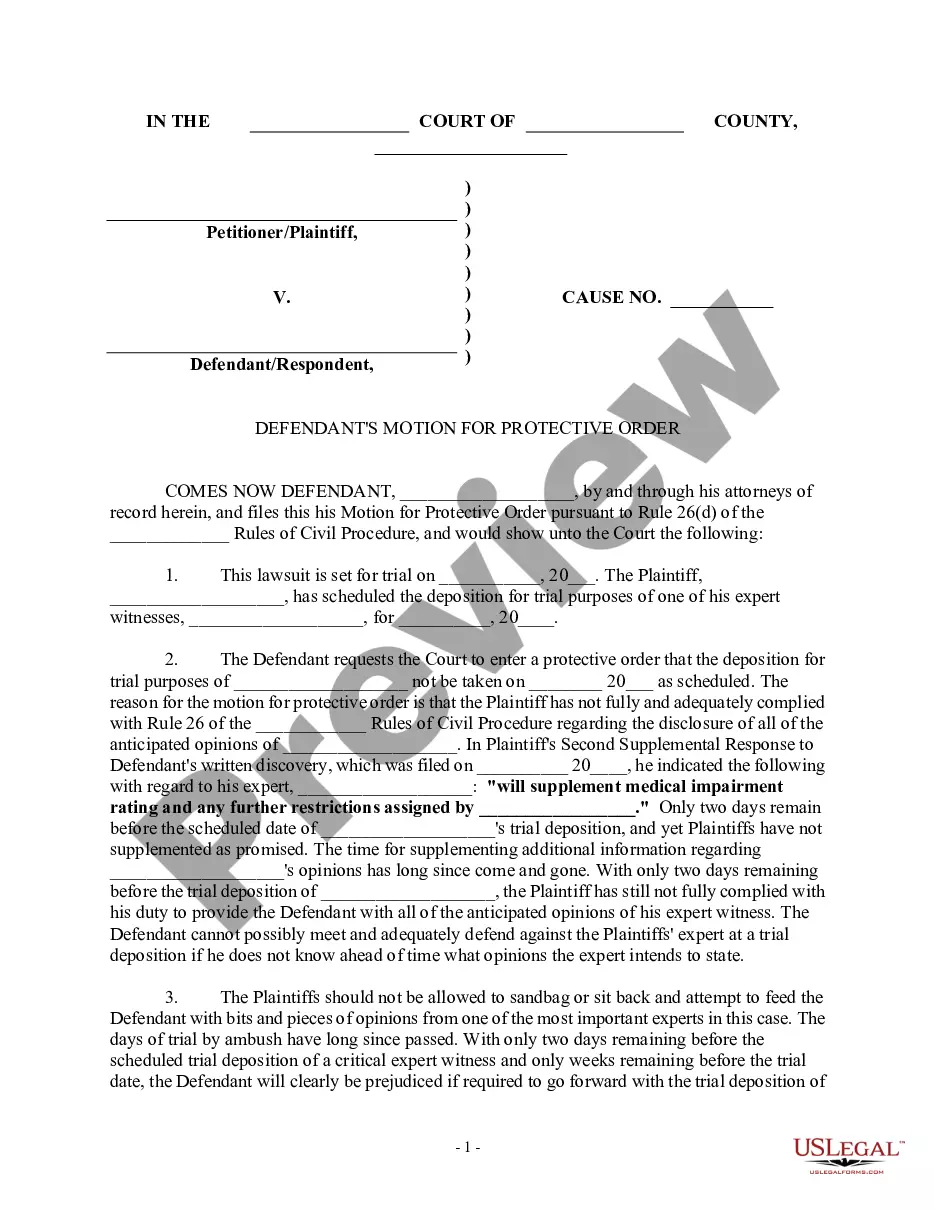
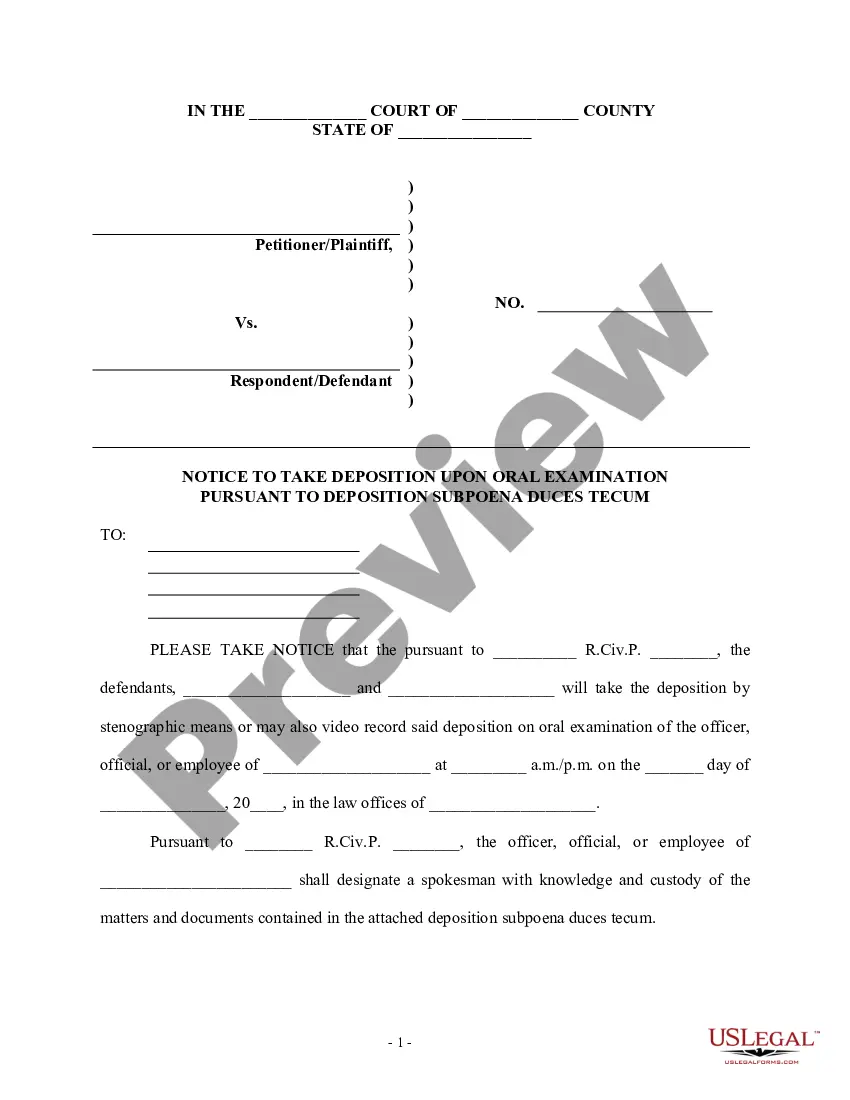
The Motion to Quash Deposition Subpoena Duces Tecum is a legal document used to request a court to invalidate a subpoena that seeks documents or records. This form is essential when a party believes the subpoena is overly broad, burdensome, or not relevant to the case. It serves to protect individuals from providing information that is not necessary for legal proceedings, differentiating itself from standard motions or objections pertaining to subpoenas.
Key components of this form
- Identification of the parties involved, including the current owner of the sold item.
- Statement of lack of knowledge regarding the information requested by the subpoena.
- Assertion that certain requests are overly broad and burdensome.
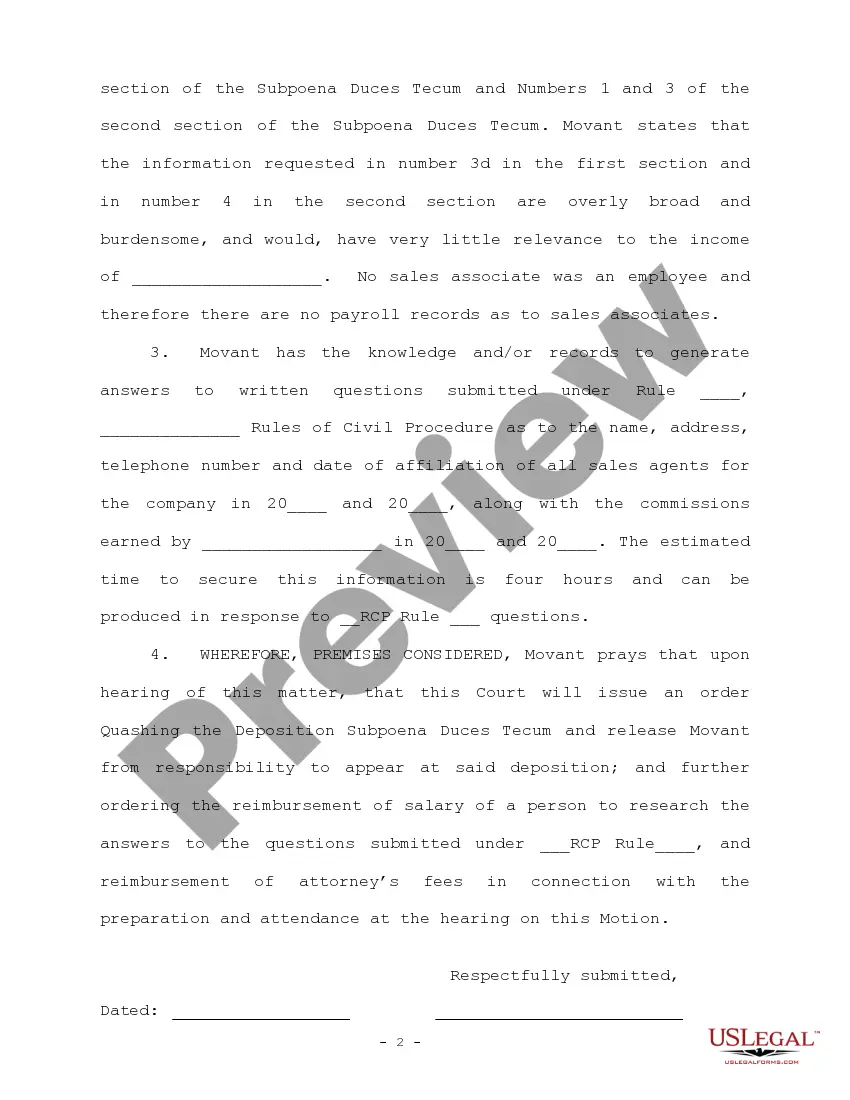
- Outline of information that can be provided, such as names and affiliations of sales agents, including dates and commissions.
- Specification of the required time to gather the requested information.
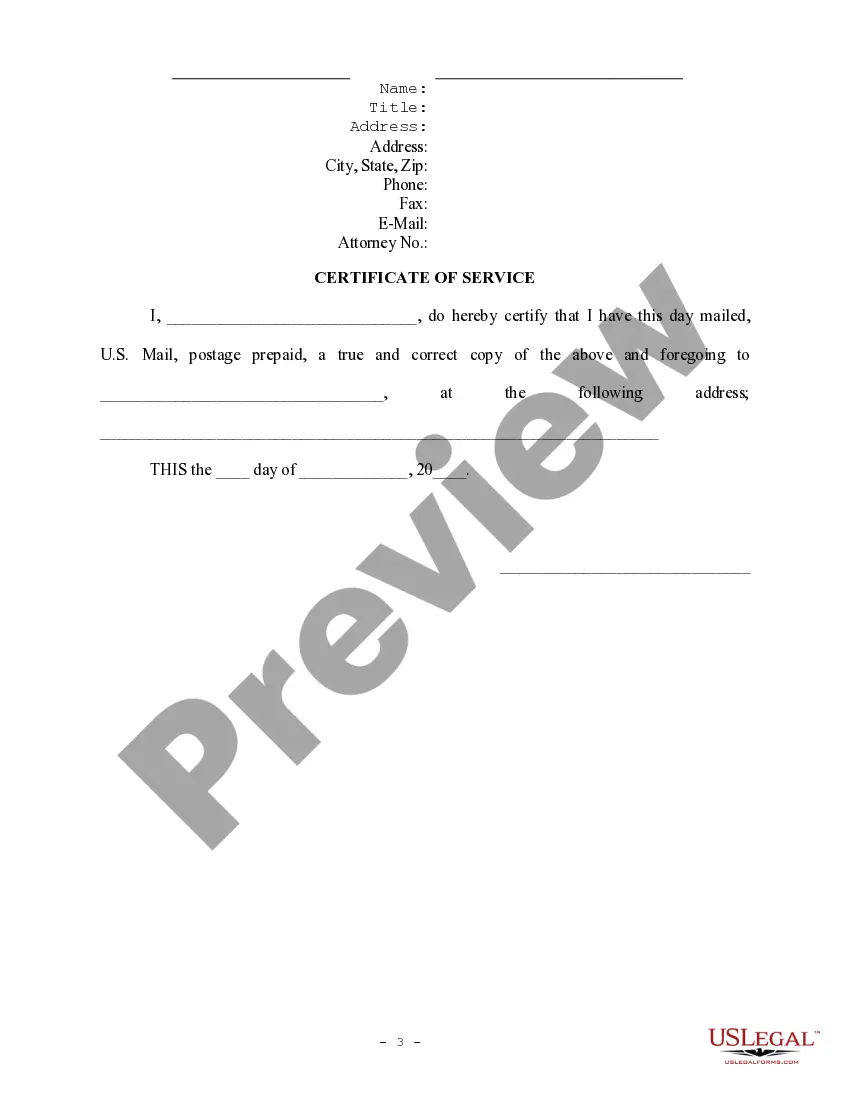
- Signature line for the movant and date of filing.
Situations where this form applies
This form is appropriate in situations where you receive a deposition subpoena duces tecum for documents that you believe are irrelevant, overly broad, or too burdensome to fulfill. For instance, if you are asked to produce extensive business records that are not related to the case or require excessive amounts of time to compile, you would use this motion to quash it. Additionally, it is useful if you lack the information requested or if the subpoena requests information that is confidential or protected.
Who needs this form
This form is intended for:
- Individuals or businesses served with a deposition subpoena duces tecum.
- Legal representatives seeking to protect their clients from excessive subpoena demands.
- Parties involved in litigation who wish to clarify or limit the scope of discovery requests.
How to prepare this document
- Begin by filling in the name of the current owner and the date of the sale.
- Clarify your lack of knowledge regarding the specific information requested in the subpoena.
- Identify which parts of the subpoena you consider overly broad or burdensome.
- Provide the details you can supply, including relevant agent names, contact details, and commission amounts.
- Estimate the time needed to gather the required information and include references to the applicable rules.
- Sign and date the motion at the bottom.
Notarization guidance
Notarization is generally not required for this form. However, certain states or situations might demand it. You can complete notarization online through US Legal Forms, powered by Notarize, using a verified video call available anytime.
Get your form ready online
Our built-in tools help you complete, sign, share, and store your documents in one place.
Make edits, fill in missing information, and update formatting in US Legal Forms—just like you would in MS Word.
Download a copy, print it, send it by email, or mail it via USPS—whatever works best for your next step.
Sign and collect signatures with our SignNow integration. Send to multiple recipients, set reminders, and more. Go Premium to unlock E-Sign.
If this form requires notarization, complete it online through a secure video call—no need to meet a notary in person or wait for an appointment.
We protect your documents and personal data by following strict security and privacy standards.

Make edits, fill in missing information, and update formatting in US Legal Forms—just like you would in MS Word.

Download a copy, print it, send it by email, or mail it via USPS—whatever works best for your next step.

Sign and collect signatures with our SignNow integration. Send to multiple recipients, set reminders, and more. Go Premium to unlock E-Sign.

If this form requires notarization, complete it online through a secure video call—no need to meet a notary in person or wait for an appointment.

We protect your documents and personal data by following strict security and privacy standards.
Avoid these common issues
- Failing to specify which parts of the subpoena are overly broad or burdensome.
- Not providing adequate reasons for lack of knowledge regarding requested documents.
- Missing the signature or date at the end of the form, which can render the motion invalid.
Benefits of using this form online
- Convenience of downloading and filling out the form on your own schedule.
- Editability allows for quick adjustments based on specific case details.
- Provides templates crafted by licensed attorneys, ensuring reliability and compliance with legal standards.
Looking for another form?
Form popularity
FAQ
Providing objections suspends your obligation to comply with the subpoena until or unless a court orders compliance, or you reach an agreement with the party that served you with the subpoena. If you do not wish to comply with the subpoena, you may file a motion to quash it before the date set forth on the subpoena.
3. Any non-party who has been served with a business records subpoena may bring a motion to quash. Note, however, that some case law holds that a non-party may simply serve written objections and is not required to bring a motion to quash. The discovery rules do not discriminate against nonparty deponents.
A motion to quash a subpoena duces tecum should be filed within ten (10) days after receiving the subpoena or before the time stated for compliance if that time is fewer than ten days.
A subpoena is an Order that is issued to require the attendance of a witness to testify at a particular time and place. A subpoena duces tecum is an Order that requires a witness to bring documents, books or other items under his, her or their control, that he she or they is bound by law to produce into evidence.
This gives the patient (or other parties in the case) time to file a Motion to Quash (i.e., to request that the judge disallow the discovery of these documents as potential evidence in the case).
A lawyer may file a motion to quash if a mistake has been made on the part of a court, or if an attorney believes that the issuance of some court document like a subpoena was not done in a legal manner. For example, a party that receives improper service of process may file a motion to quash.
A motion to quash, by itself, does not stop the deposition. You will have to get the hearing advanced to a date before the deposition date.
A Deposition Subpoena differs from the Subpoena DucesTecum in that the documents and testimony requested are part of the discovery process before trial and may not be used in an actual court hearing.