Landlord Consent to Sublease Nondisturbance and Attornment by Sublessee
What is this form?
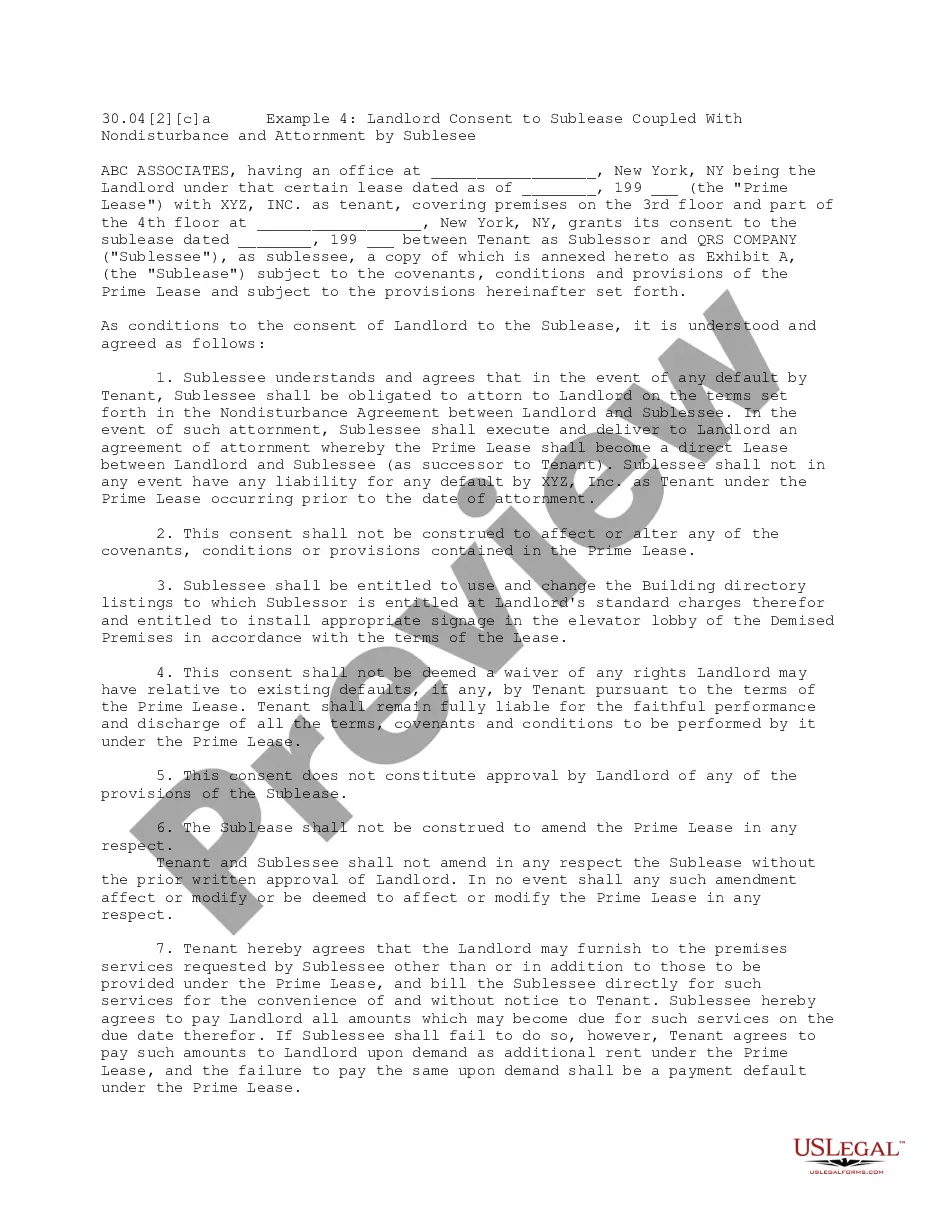
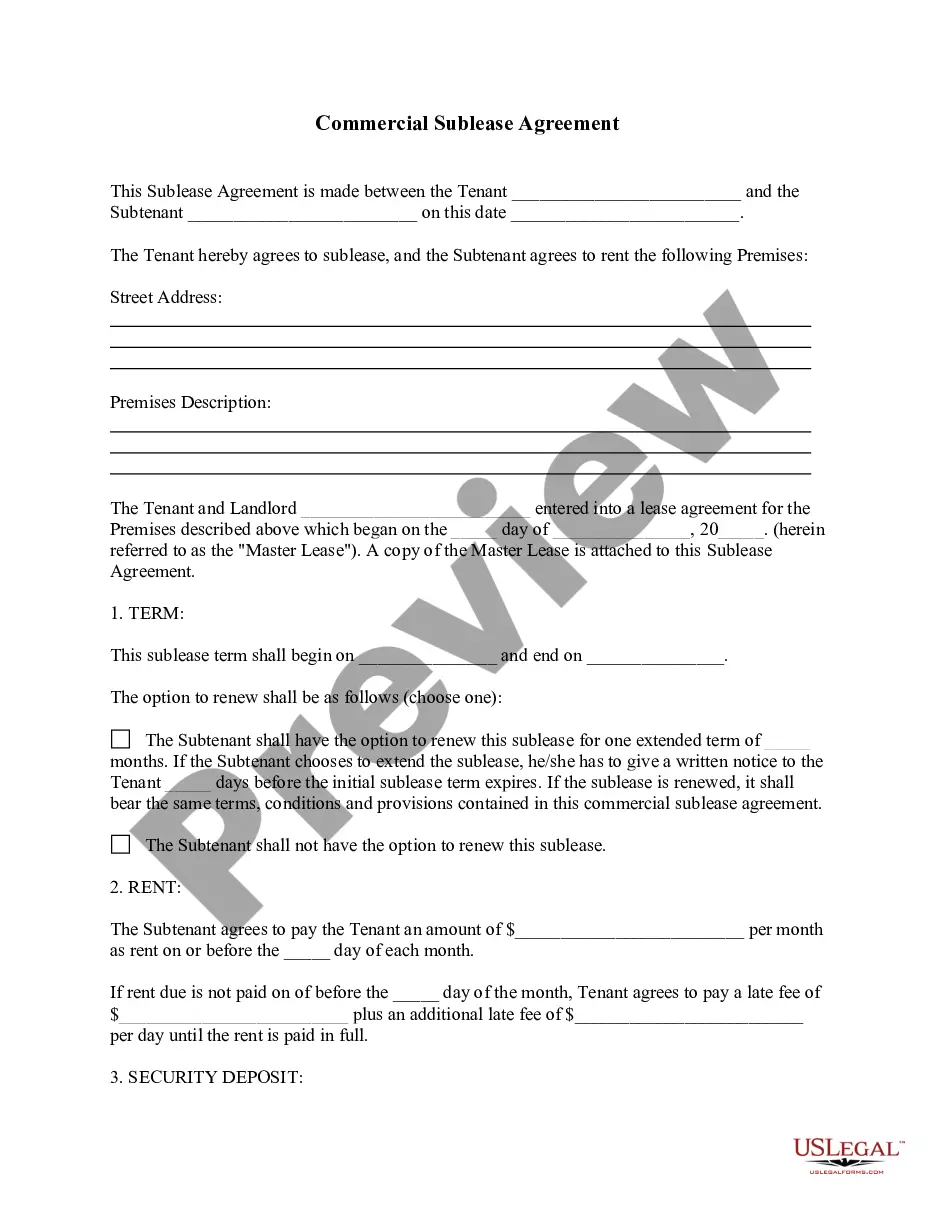
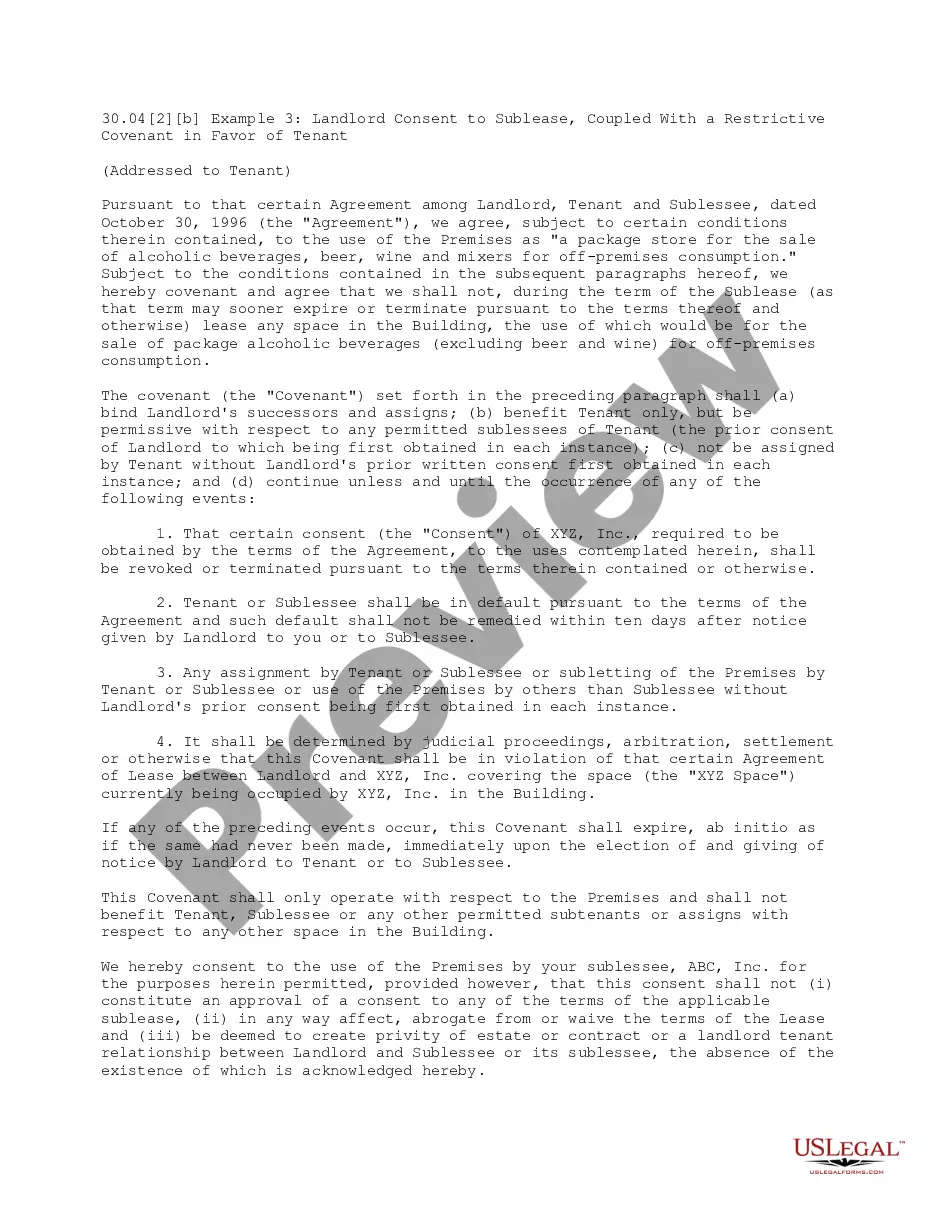
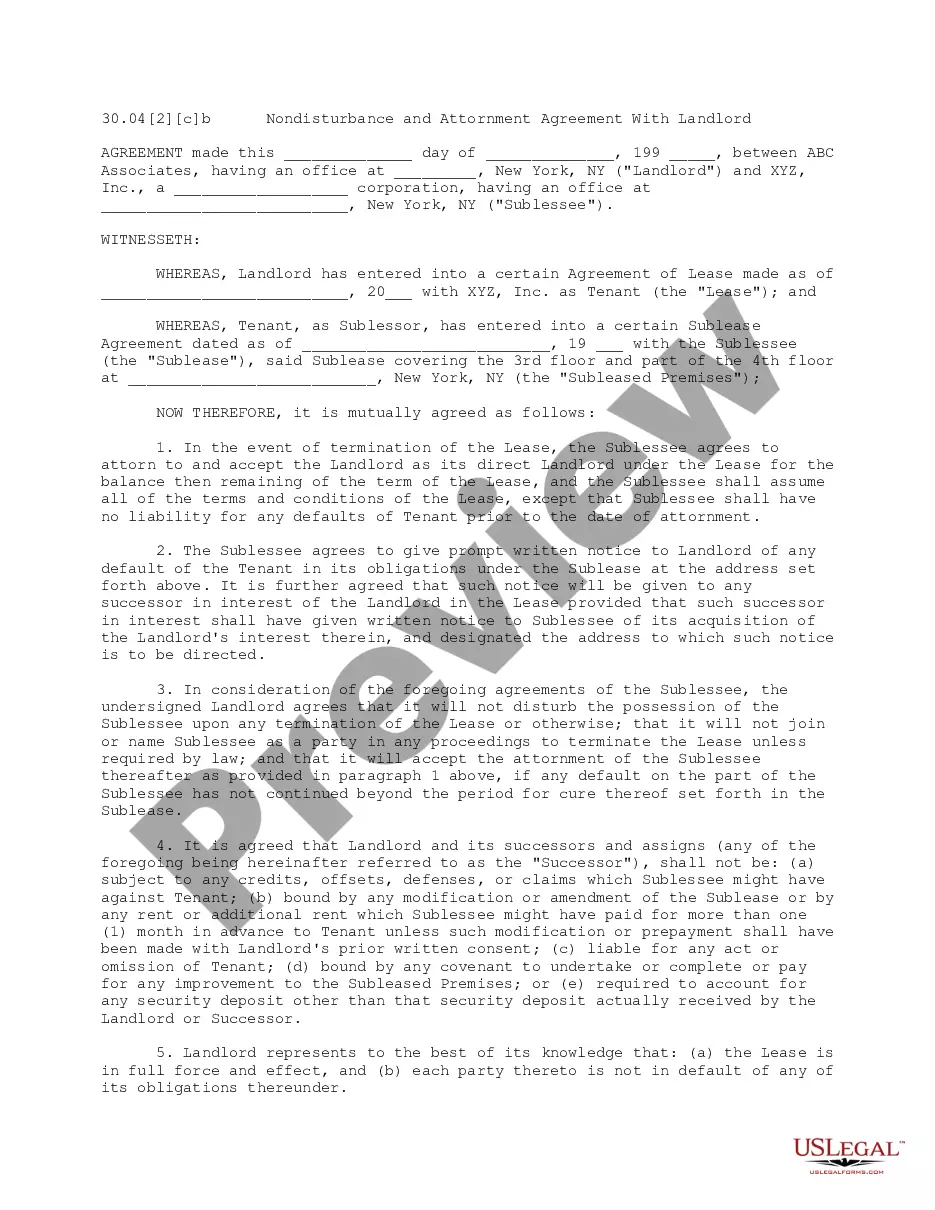
The Landlord Consent to Sublease Nondisturbance and Attornment by Sublessee form is a legal agreement where a landlord grants permission for a tenant to sublease their premises to a third party. This form establishes the relationship between the landlord, tenant, and sublessee, ensuring that the rights and responsibilities outlined in the original lease are maintained. Unlike a standard lease agreement, this consent form specifically addresses the conditions for subleasing and the obligations surrounding attornment in the event of tenant default.
Key parts of this document
- Parties involved: Identifies the landlord, tenant (sublessor), and sublessee.
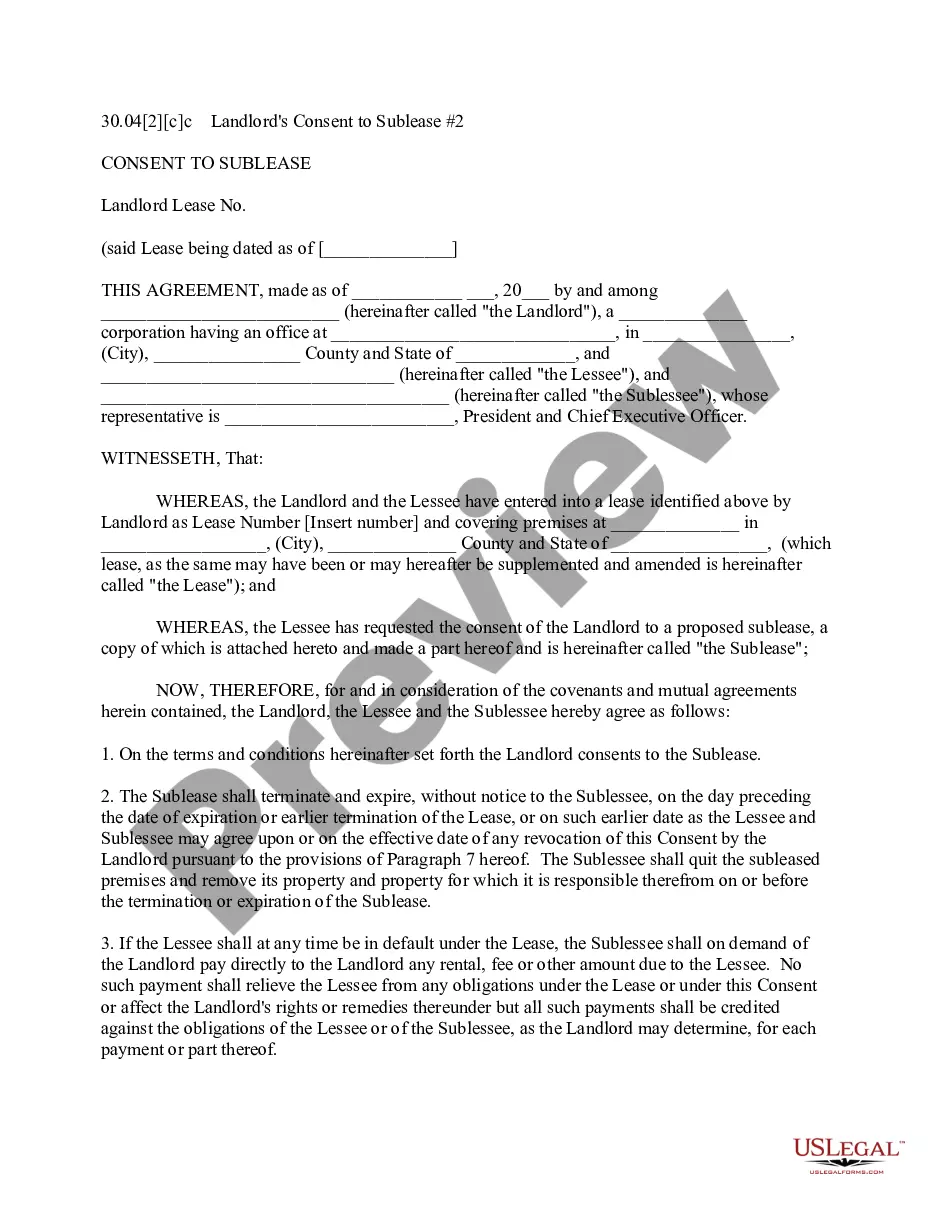
- Consent acknowledgment: Landlord's approval for the sublease, ensuring adherence to the original lease terms.
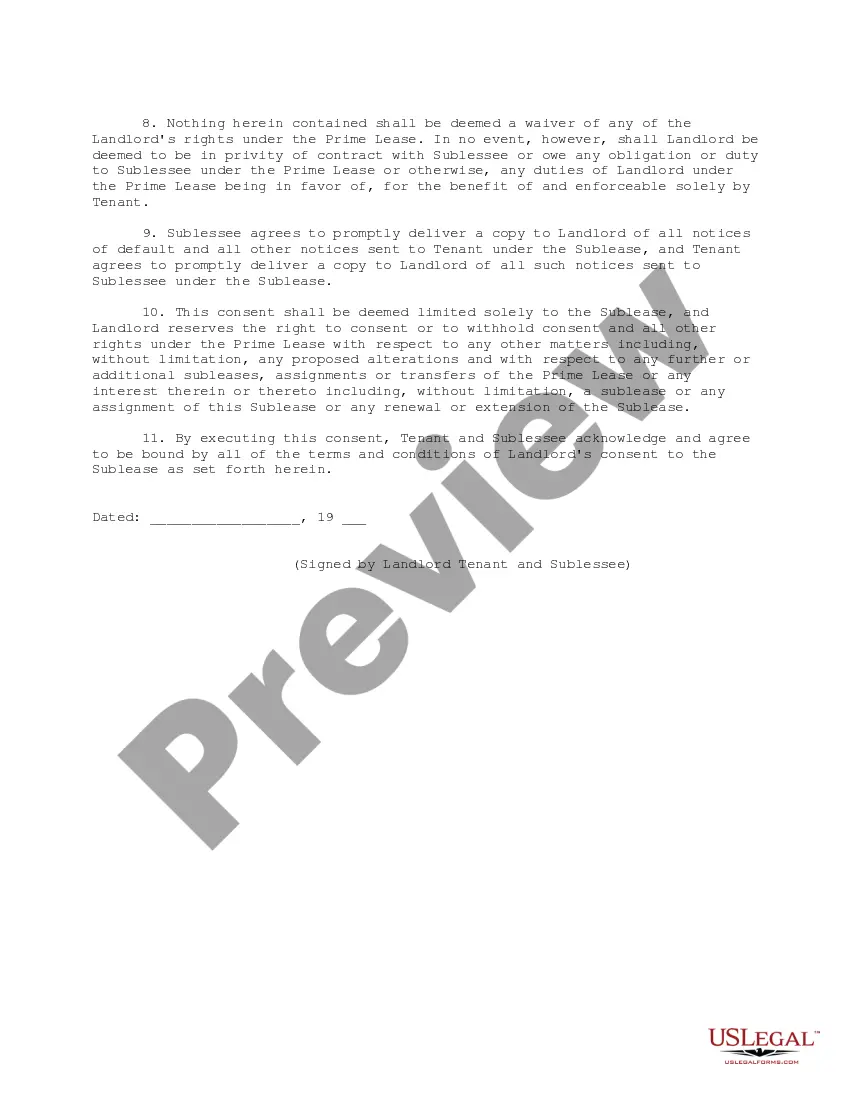
- Attornment clause: Specifies that the sublessee agrees to attorn to the landlord in case of tenant default.
- Limitations on consent: Clarifies that this consent does not waive landlord rights or modify the original lease.
- Service provisions: Allows the landlord to provide services requested by the sublessee and bill them directly.
When this form is needed
This form should be used when a tenant wishes to sublease their leased property to another party and requires formal permission from the landlord. It is especially important in scenarios where the original lease requires landlord consent for subleasing or when the tenant seeks to ensure that the rights of the sublessee are protected in the event of default by the tenant. By using this form, all parties can clearly understand their rights and obligations, reducing the risk of disputes.
Intended users of this form
This form is designed for:
- Landlords who need to provide consent for a tenant's sublease.
- Tenants acting as sublessors looking to sublease their leased premises.
- Sublessees entering into a sublease agreement with a tenant and needing assurance of their status.
Steps to complete this form
- Identify the parties: Enter the names and addresses of the landlord, tenant (sublessor), and sublessee.
- Specify the property: Provide the address of the leased premises being subleased.
- Include relevant dates: Fill in the dates related to the original lease and the sublease.
- Review and confirm conditions: Ensure all parties agree to the terms, especially around attornment and services.
- Obtain signatures: Make sure that all involved parties sign and date the consent form to validate the agreement.
Is notarization required?
Notarization is not commonly needed for this form. However, certain documents or local rules may make it necessary. Our notarization service, powered by Notarize, allows you to finalize it securely online anytime, day or night.
Get your form ready online
Our built-in tools help you complete, sign, share, and store your documents in one place.
Make edits, fill in missing information, and update formatting in US Legal Forms—just like you would in MS Word.
Download a copy, print it, send it by email, or mail it via USPS—whatever works best for your next step.
Sign and collect signatures with our SignNow integration. Send to multiple recipients, set reminders, and more. Go Premium to unlock E-Sign.
If this form requires notarization, complete it online through a secure video call—no need to meet a notary in person or wait for an appointment.
We protect your documents and personal data by following strict security and privacy standards.

Make edits, fill in missing information, and update formatting in US Legal Forms—just like you would in MS Word.

Download a copy, print it, send it by email, or mail it via USPS—whatever works best for your next step.

Sign and collect signatures with our SignNow integration. Send to multiple recipients, set reminders, and more. Go Premium to unlock E-Sign.

If this form requires notarization, complete it online through a secure video call—no need to meet a notary in person or wait for an appointment.

We protect your documents and personal data by following strict security and privacy standards.
Typical mistakes to avoid
- Failing to obtain landlord consent before subleasing.
- Not including necessary details about the property or lease dates.
- Neglecting to clarify obligations related to attornment.
- Omitting signatures from all parties involved.
Benefits of completing this form online
- Convenience: Easily access and download the form from any device.
- Editability: Customize the form to fit specific needs without legal jargon complications.
- Reliability: Access legally-reviewed templates drafted by licensed attorneys.
Looking for another form?
Form popularity
FAQ
Attornment is a holdover from feudal law, when the law considered the relationship between landlord and tenant to be personal. Attornment is the tenant's agreement to become the tenant of someone other than the original landlord and who has now taken title to the property.
Attornment occurs when a tenant acknowledges a new owner of the property as their new landlord.
(025902c8t025c02d0n ) verb (intransitive) 1. law. to acknowledge a new owner of land as one's landlord.
An attornment occurs when the title to an immovable property is transferred from the hands of one lessor to another. In such cases, the existing lessor will usually send a letter of attornment to the lessee notifying him of such sale and request him to make all further lease payments directly to the new lessor.
An attornment occurs when the title to an immovable property is transferred from the hands of one lessor to another. In such cases, the existing lessor will usually send a letter of attornment to the lessee notifying him of such sale and request him to make all further lease payments directly to the new lessor.
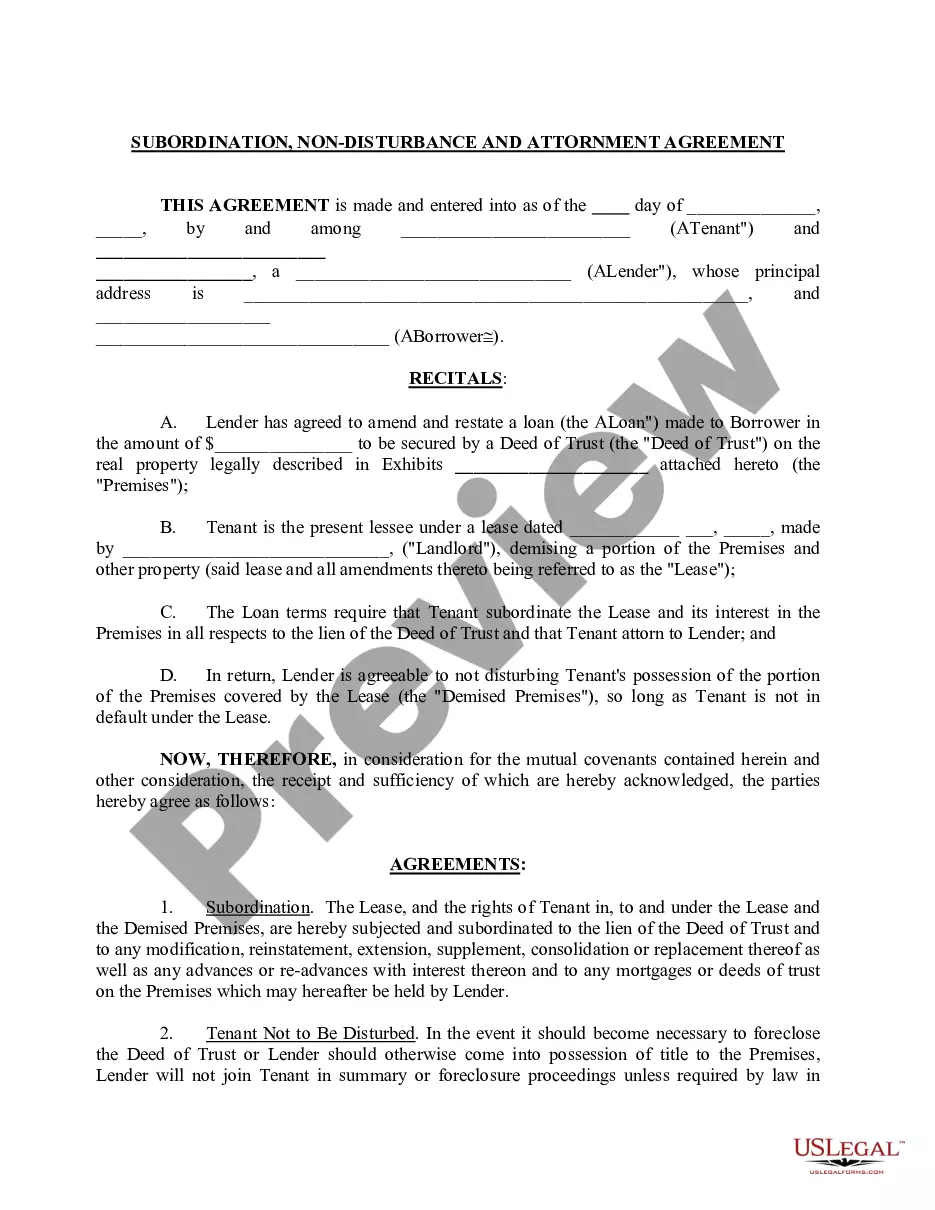
An SNDA is an agreement entered into between a tenant and the lender of the landlord (and, ideally, the landlord) to establish the relationship between the tenant and lender (who would not otherwise have a direct relationship) and provide relative priorities between them.
One of the closing documents in a real estate financing transaction involving leased property is a subordination, non-disturbance and attornment agreement (SNDA). SNDAs have a number of purposes. They serve to connect the lender with the tenant and they provide other uses as well.
A lender typically wants to have an SNDA because of its subordination clause if, in the absence of such an agreement, the lease would be prior to the mortgage.Therefore, if a mortgage is senior to a lease, the foreclosure of the mortgage will terminate the lease unless there is an agreement that provides otherwise.