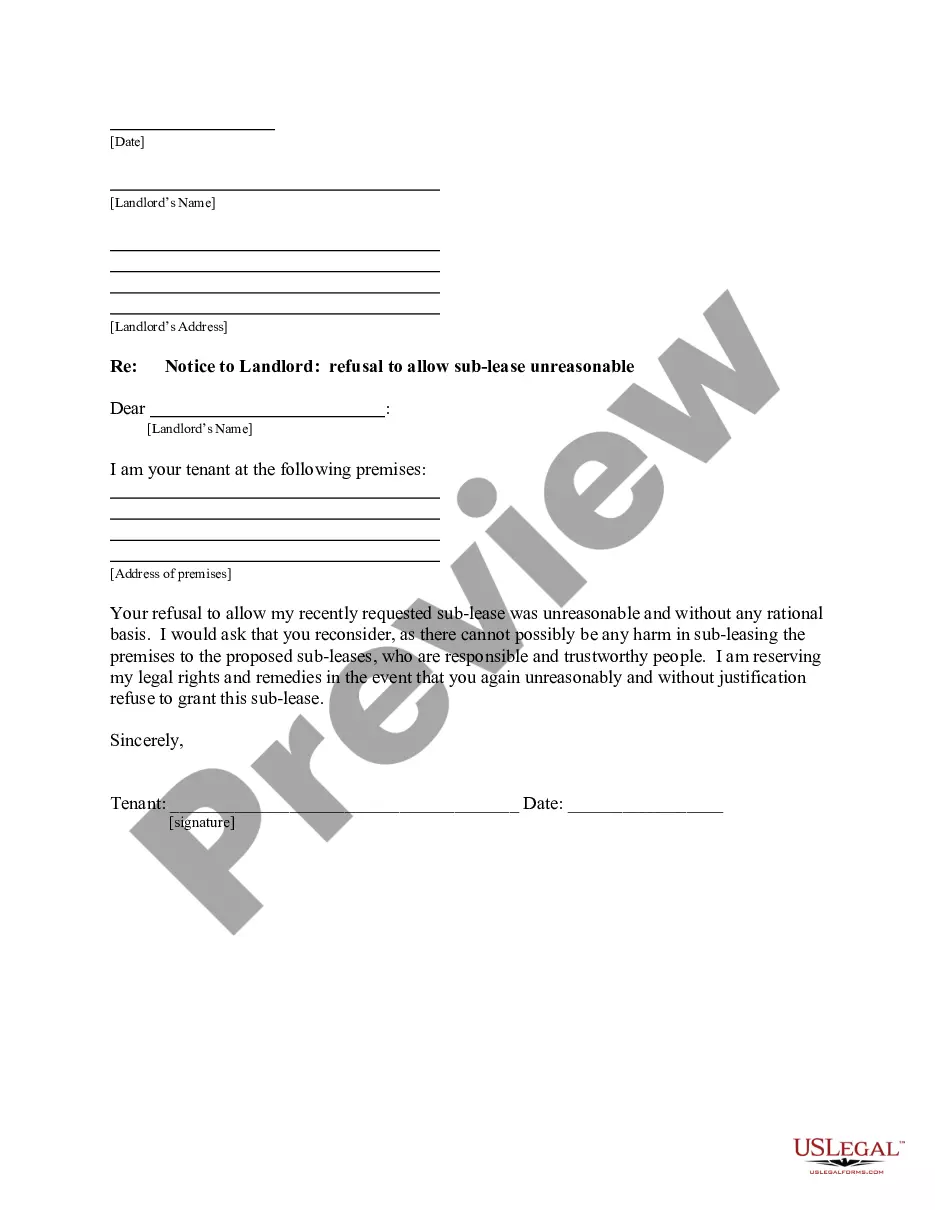
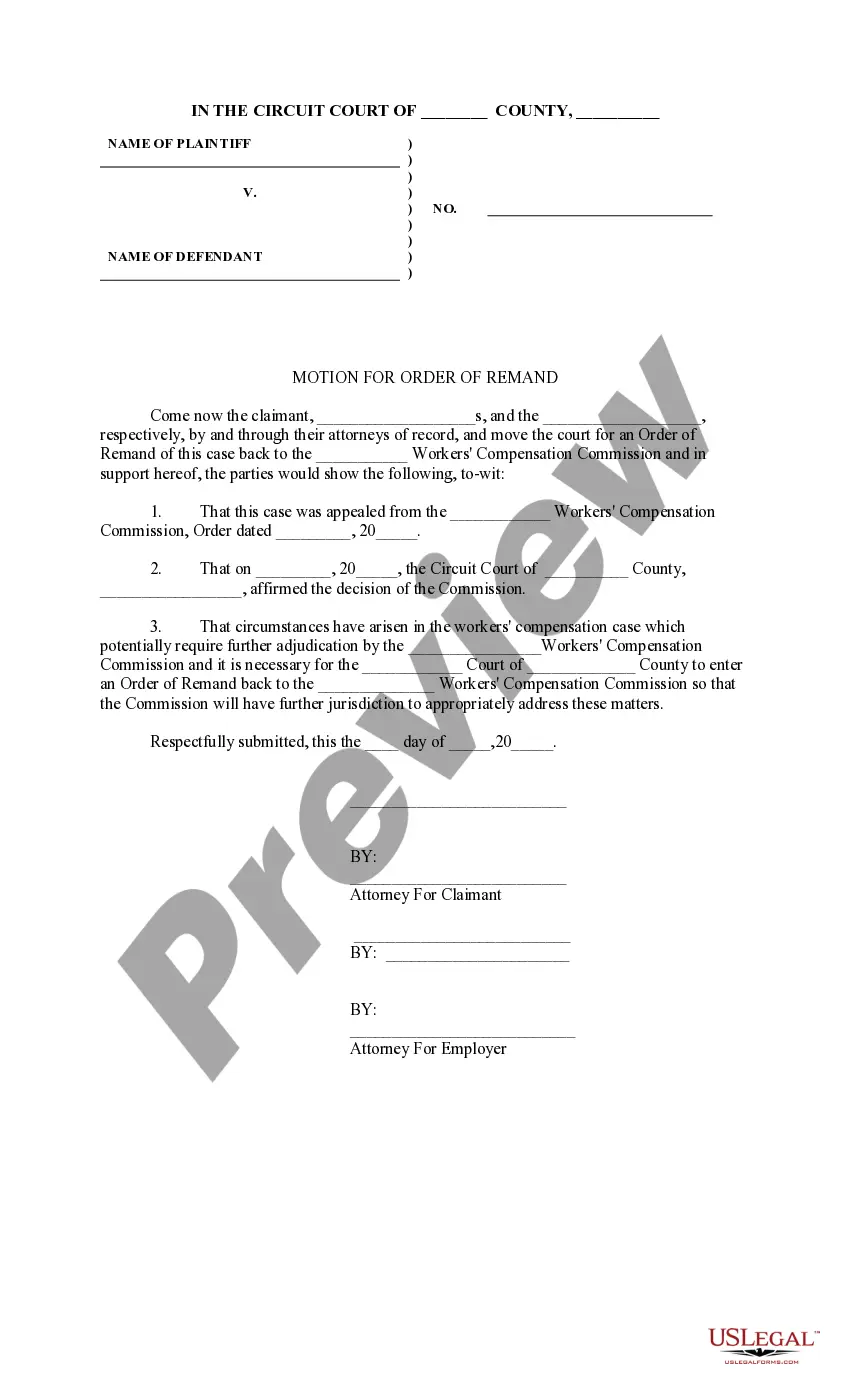
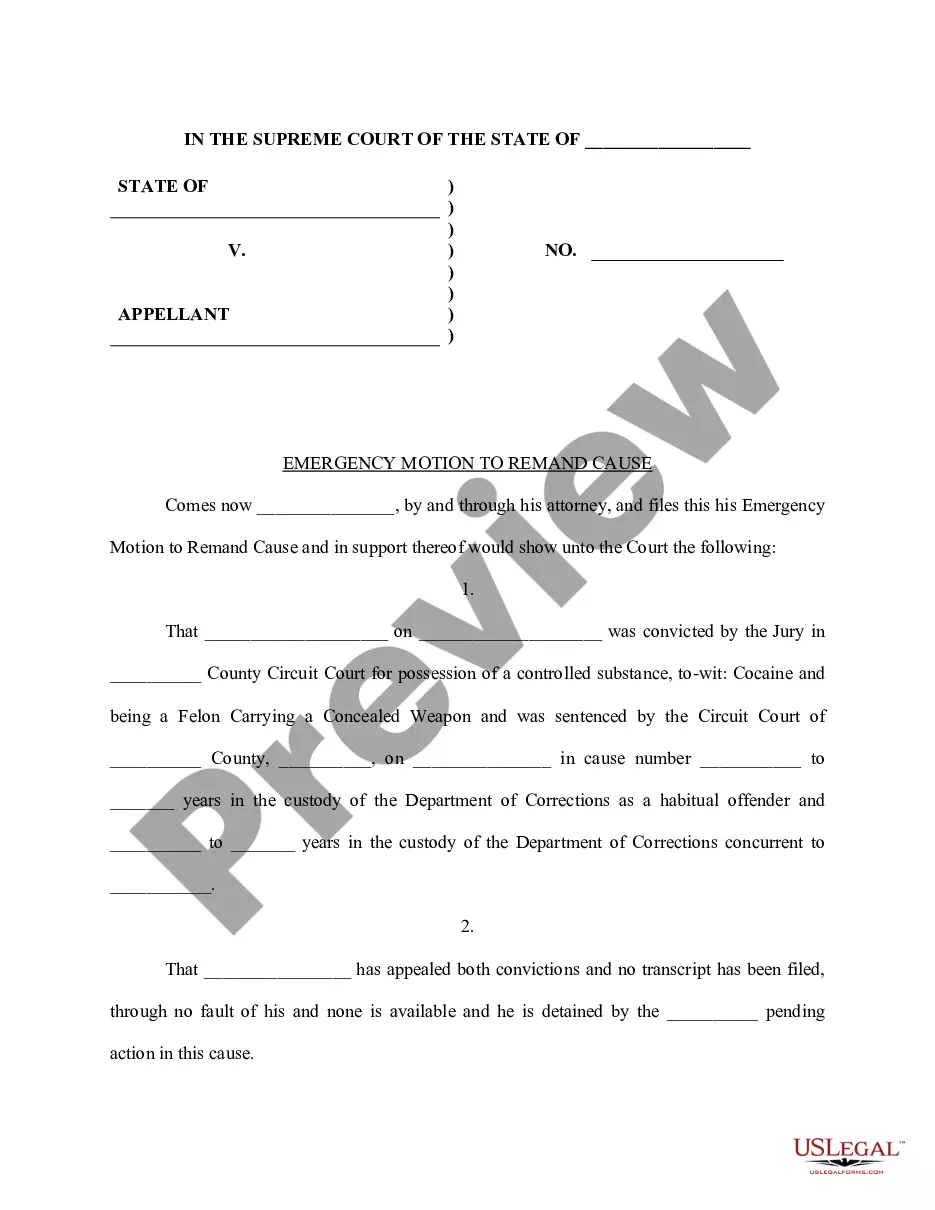
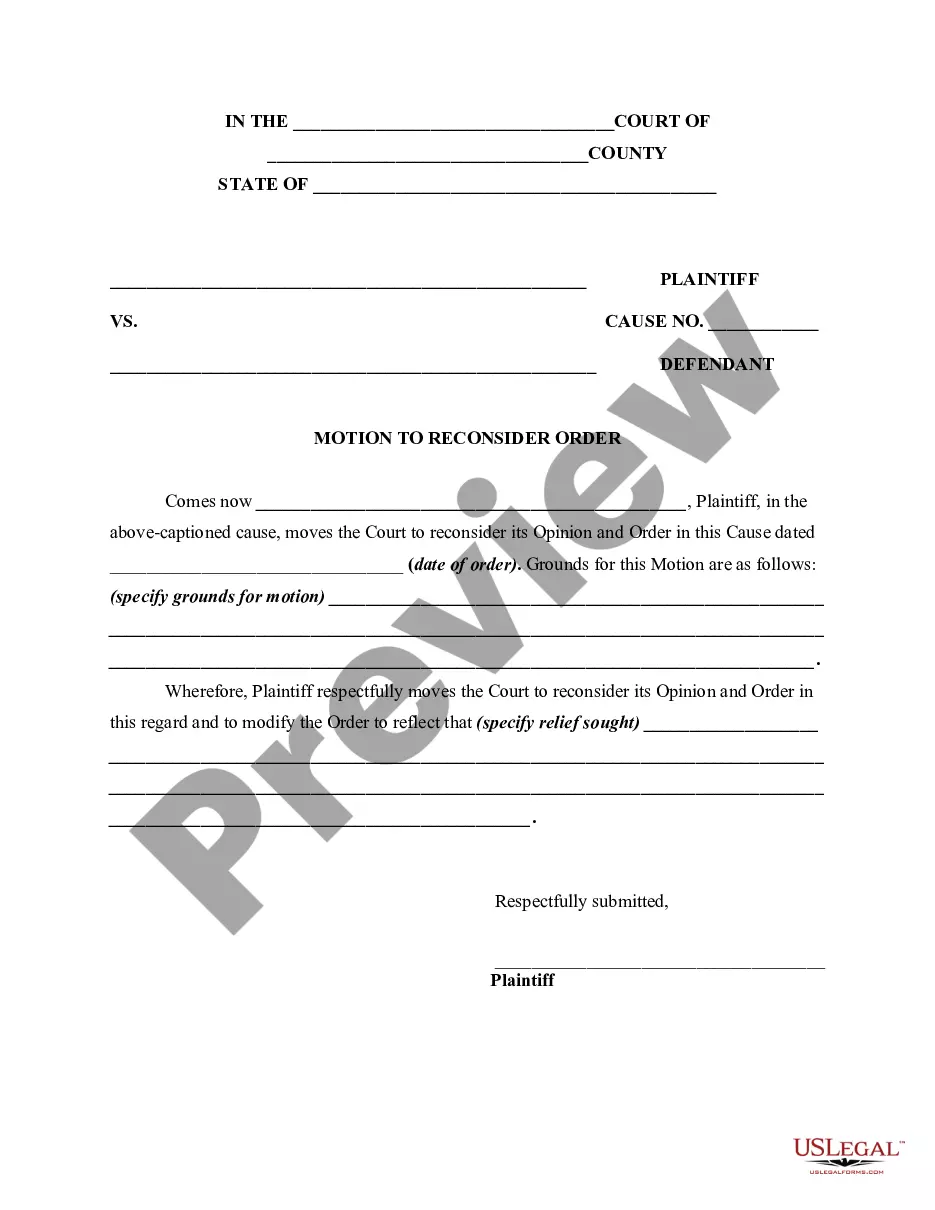
Motion for Order of Remand for further consideration
Understanding this form
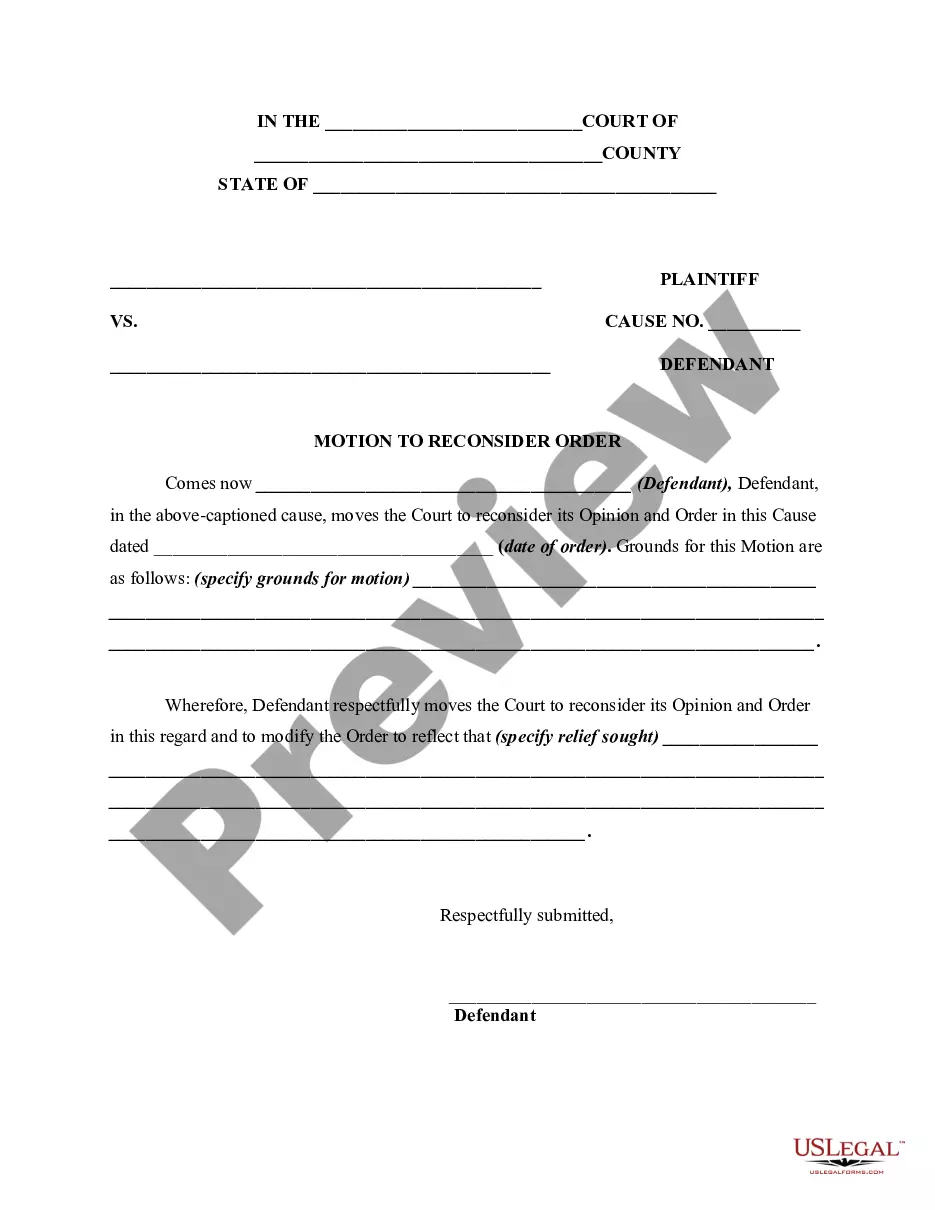
The Motion for Order of Remand is a legal document used to request that a higher court send a case back to a lower court or agency for further consideration. This form is typically filed after a decision has been made by a Workers Compensation Commission, and circumstances arise that necessitate additional review or action. It differs from other forms by specifically addressing the need for further adjudication related to workers' compensation cases.
Main sections of this form
- Parties involved: Names the claimant and defendant.
- Reference to prior decision: States the order being appealed from a Workers Compensation Commission.
- Details of the appeal: Notes the affirmation of the Commission's decision by the Circuit Court.
- Request for remand: Specifies the necessity for further review by the Workers Compensation Commission.
- Signatures: Includes spaces for the attorneys representing both parties to sign.

When to use this document
This form is used when a worker's compensation case has been appealed and a decision has been rendered, but new circumstances require the case to be sent back for additional considerations. It is ideal in situations where the Circuit Court's ruling leaves unresolved issues that need further adjudication by the Workers Compensation Commission.
Who needs this form
- Claimants seeking to have their workers' compensation case reviewed by the Workers Compensation Commission.
- Defendants wishing to support the remand request for further consideration of the case.
- Attorneys representing either party in workers' compensation cases involved in appeals.
How to complete this form
- Identify the parties: Enter the names of the claimant and defendant at the beginning of the form.
- Provide case details: Reference the specific order from the Workers Compensation Commission and the affirmation by the Circuit Court.
- State the reason for remand: Clearly outline the circumstances necessitating further review.
- Sign the form: Ensure that both attorneys for the claimant and employer sign the motion.
- Fill in the dates: Insert the appropriate dates in the designated sections.
Is notarization required?
In most cases, this form does not require notarization. However, some jurisdictions or signing circumstances might. US Legal Forms offers online notarization powered by Notarize, accessible 24/7 for a quick, remote process.
Get your form ready online
Our built-in tools help you complete, sign, share, and store your documents in one place.
Make edits, fill in missing information, and update formatting in US Legal Forms—just like you would in MS Word.
Download a copy, print it, send it by email, or mail it via USPS—whatever works best for your next step.
Sign and collect signatures with our SignNow integration. Send to multiple recipients, set reminders, and more. Go Premium to unlock E-Sign.
If this form requires notarization, complete it online through a secure video call—no need to meet a notary in person or wait for an appointment.
We protect your documents and personal data by following strict security and privacy standards.

Make edits, fill in missing information, and update formatting in US Legal Forms—just like you would in MS Word.

Download a copy, print it, send it by email, or mail it via USPS—whatever works best for your next step.

Sign and collect signatures with our SignNow integration. Send to multiple recipients, set reminders, and more. Go Premium to unlock E-Sign.

If this form requires notarization, complete it online through a secure video call—no need to meet a notary in person or wait for an appointment.

We protect your documents and personal data by following strict security and privacy standards.
Mistakes to watch out for
- Failing to include the correct names and titles of all parties involved.
- Omitting references to the specific orders being appealed.
- Not specifying the reasons for requesting a remand.
- Leaving dates or signature lines blank.
Advantages of online completion
- Convenience: Access and complete your form from anywhere at any time.
- Editability: Easily make revisions without needing to start over.
- Reliability: Forms are drafted by licensed attorneys to ensure legal compliance.
Looking for another form?









Form popularity
FAQ
To remand something is to send it back.When an appellate court reverses the decision of a lower court, the written decision often contains an instruction to remand the case to the lower court to be reconsidered in light of the appellate court's ruling.
Remand is when higher courts send cases back to lower courts for further action.In common law jurisdictions, remand refers to the adjournment (continuance) of criminal proceedings, when the accused is either remanded in custody or on bail.
The current provisions are: 56 days between the first appearance and trial for summary offence; 70 days between the first appearance and summary trial for an offence which is triable either way (the period is reduced to 56 days if the decision for summary trial is taken within 56 days);
Remanded Appeals A remanded appeal simply means that the case is sent back to the lower courts.Improper rulings, errors in procedure, or the exclusion of admissible evidence may result in a lower court's decision being overturned and sent back for further action.
The remand proceeding is an essential provision under the Income Tax Act.The authority to initiate reassessment proceedings has been given to the assessing officer under section 147 of the Income-tax Act, 1961, which deals with the income escaping assessment.
When a person is remanded in custody it means that they will be detained in a prison until a later date when a trial or sentencing hearing will take place.A person who is on remanded in a prison is not treated as a convicted prisoner, as they have not yet been found guilty of any offence.
A remand under rule 8.528(c) is not a decision final on filing because it is not a separately filed order; rather, as part of its appellate judgment at the end of its opinion in such cases the Supreme Court simply orders the cause remanded to the Court of Appeal for disposition of the remaining issues in the appeal.
Remand means that a higher court sends back, or returns a case to the lower court. Our law firm will frequently file a motion to remand a case back to state court. If the federal court decides that the case was not one in which removal was appropriate, it will remand the case back to the state court.
Instead, the appellate court will remand, or send, the case back to the trial court for the trial court to actually fix or re-decide the issue. This means that the issue or issues wrongly decided will be re-tried or re-heard by the trial judge based on and within the instructions given by the appellate court.