Motion for Protective Order, Motion to Quash And Objection to Notice of Deposition Duces Tecum
What this document covers
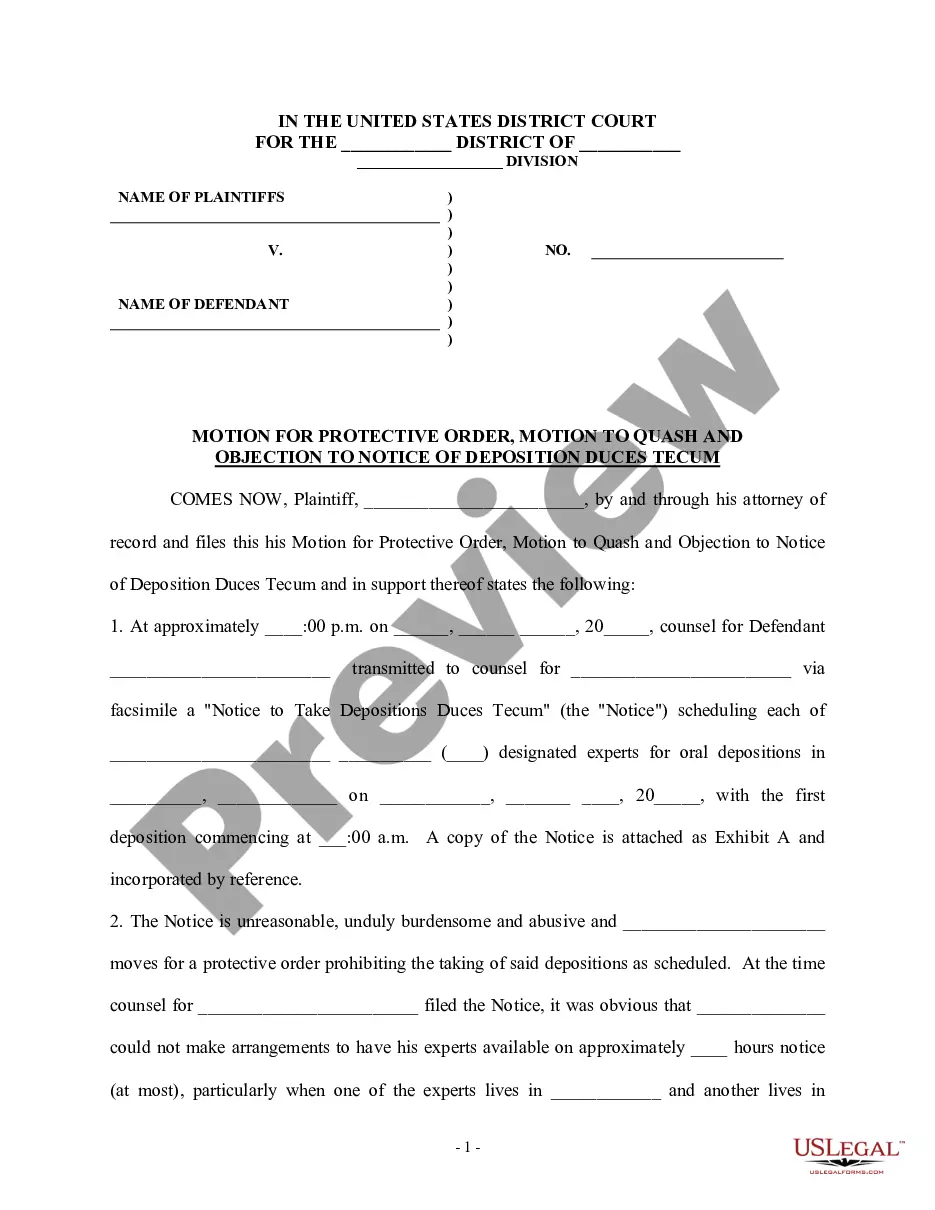
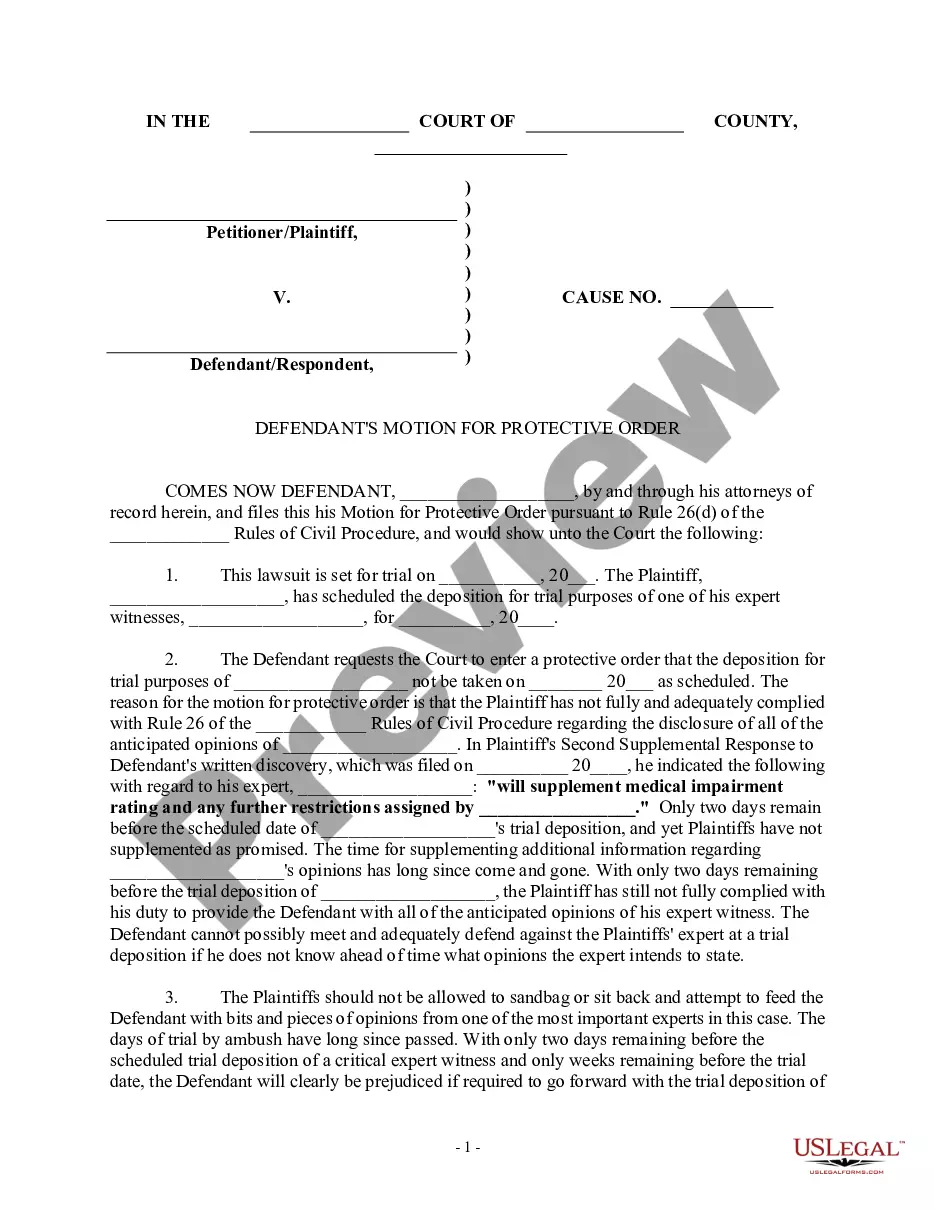
The Motion for Protective Order, Motion to Quash and Objection to Notice of Deposition Duces Tecum is a legal document used to protect a party from unreasonable or abusive deposition requests. This form is designed to prevent depositions that are burdensome, improperly scheduled, or not compliant with legal requirements. Unlike other legal forms dealing with depositions, this specific motion addresses both protective measures and objections to deposition notices, making it essential for individuals facing aggressive discovery tactics in litigation.
Main sections of this form
- Identification of the parties involved in the motion
- Date and time of the scheduled deposition
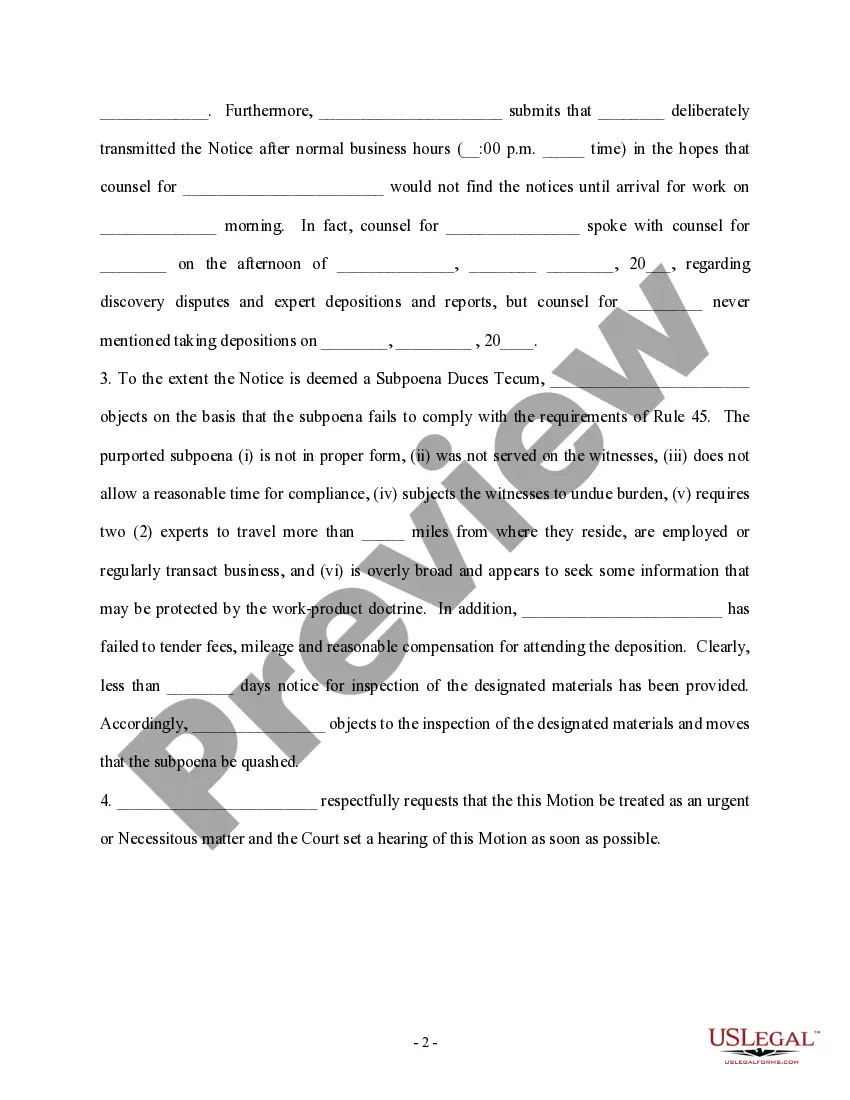
- Claims of undue burden and improper notice
- Objections to the deposition and any subpoenas included
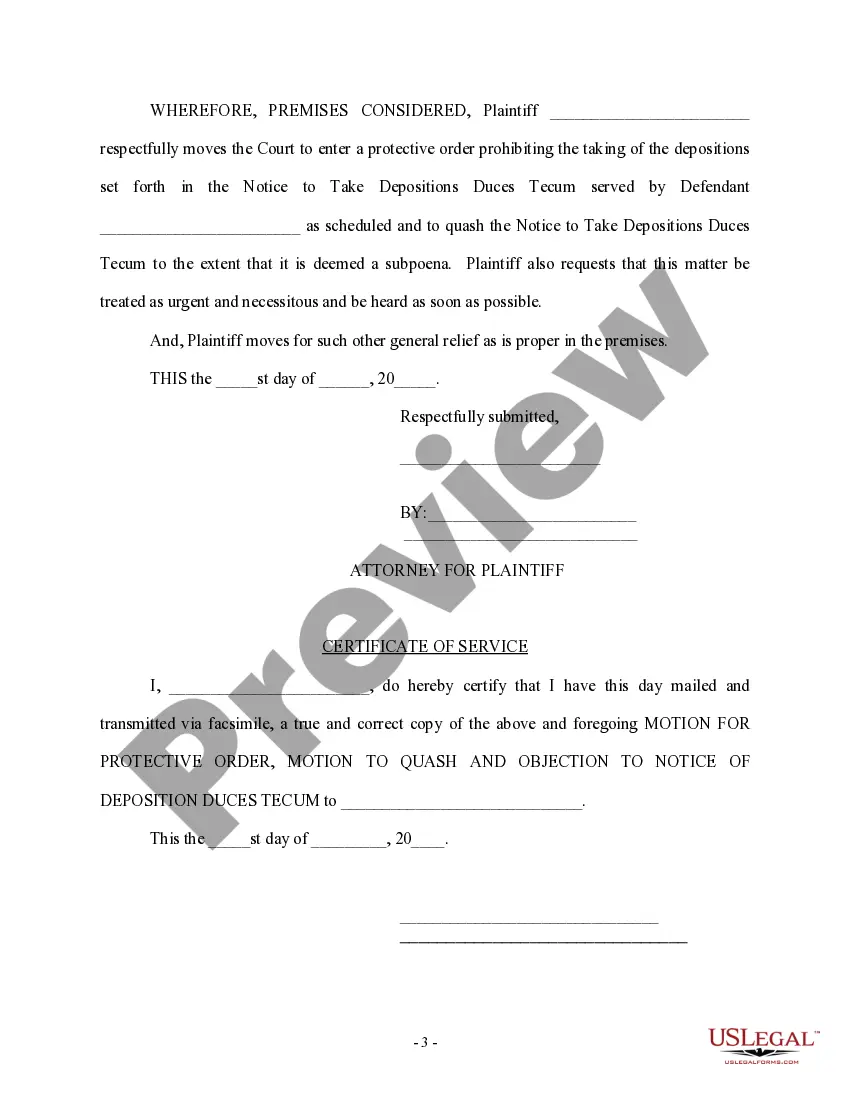
- Request for urgent treatment and a hearing
- Attorney representation details
When this form is needed
This form should be utilized when a party receives a deposition notice that is deemed unreasonable, such as when there is insufficient notice provided for the scheduled depositions or when the details of the deposition are abusive and overly broad. It is important to use this form when a party seeks to formally object to a deposition or when they wish to request a court order to protect them from unwanted discovery methods.
Who needs this form
This motion is suitable for:
- Plaintiffs or defendants in a legal case facing inappropriate deposition requests
- Individuals who have legal representation and require protective measures in their case
- Parties seeking to quash a deposition notice that fails to adhere to procedural standards
Instructions for completing this form
- Identify and name the parties involved in the motion.
- Fill in the date and time of the scheduled deposition as indicated in the notice.
- Provide details on why the deposition notice is considered unreasonable or burdensome.
- List the legal grounds for objecting to the deposition or subpoena.
- Request that the court handle this motion as an urgent matter and specify the desired schedule.
- Sign the form and ensure copies are distributed to the appropriate parties.
Is notarization required?
This form usually doesn’t need to be notarized. However, local laws or specific transactions may require it. Our online notarization service, powered by Notarize, lets you complete it remotely through a secure video session, available 24/7.
Get your form ready online
Our built-in tools help you complete, sign, share, and store your documents in one place.
Make edits, fill in missing information, and update formatting in US Legal Forms—just like you would in MS Word.
Download a copy, print it, send it by email, or mail it via USPS—whatever works best for your next step.
Sign and collect signatures with our SignNow integration. Send to multiple recipients, set reminders, and more. Go Premium to unlock E-Sign.
If this form requires notarization, complete it online through a secure video call—no need to meet a notary in person or wait for an appointment.
We protect your documents and personal data by following strict security and privacy standards.

Make edits, fill in missing information, and update formatting in US Legal Forms—just like you would in MS Word.

Download a copy, print it, send it by email, or mail it via USPS—whatever works best for your next step.

Sign and collect signatures with our SignNow integration. Send to multiple recipients, set reminders, and more. Go Premium to unlock E-Sign.

If this form requires notarization, complete it online through a secure video call—no need to meet a notary in person or wait for an appointment.

We protect your documents and personal data by following strict security and privacy standards.
Mistakes to watch out for
- Failing to correctly identify all parties involved in the motion.
- Neglecting to provide sufficient details to support claims of undue burden.
- Submitting the motion without addressing specific legal grounds for objections.
- Overlooking attachment and reference to the original deposition notice.
- Missing deadlines for filing the motion in relation to the deposition schedule.
Why complete this form online
- Convenience of downloading the form instantly from any device.
- Editable fields that allow personalization to fit individual circumstances.
- Access to attorney-reviewed templates that ensure legal compliance and accuracy.
- Simplified guidance throughout the completion process to avoid errors.
Looking for another form?

Form popularity
FAQ
Used to stop or limit deposition requests that are burdensome or improperly noticed, this form combines a protective order with a motion to quash and objections to a notice of deposition duces tecum. It guides the filing party through identifying the involved parties, scheduling details, grounds for protection, and requests for urgent court action and hearing.
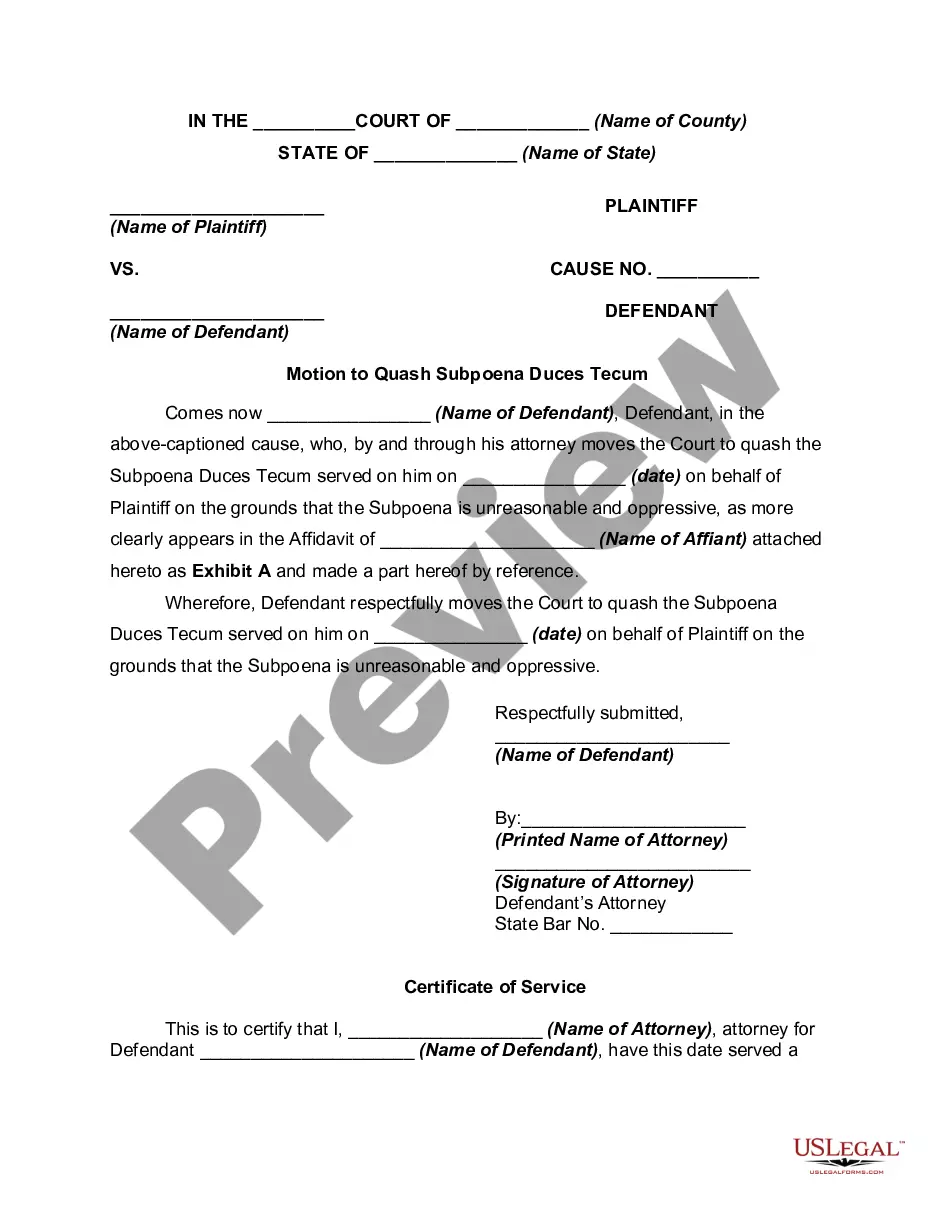
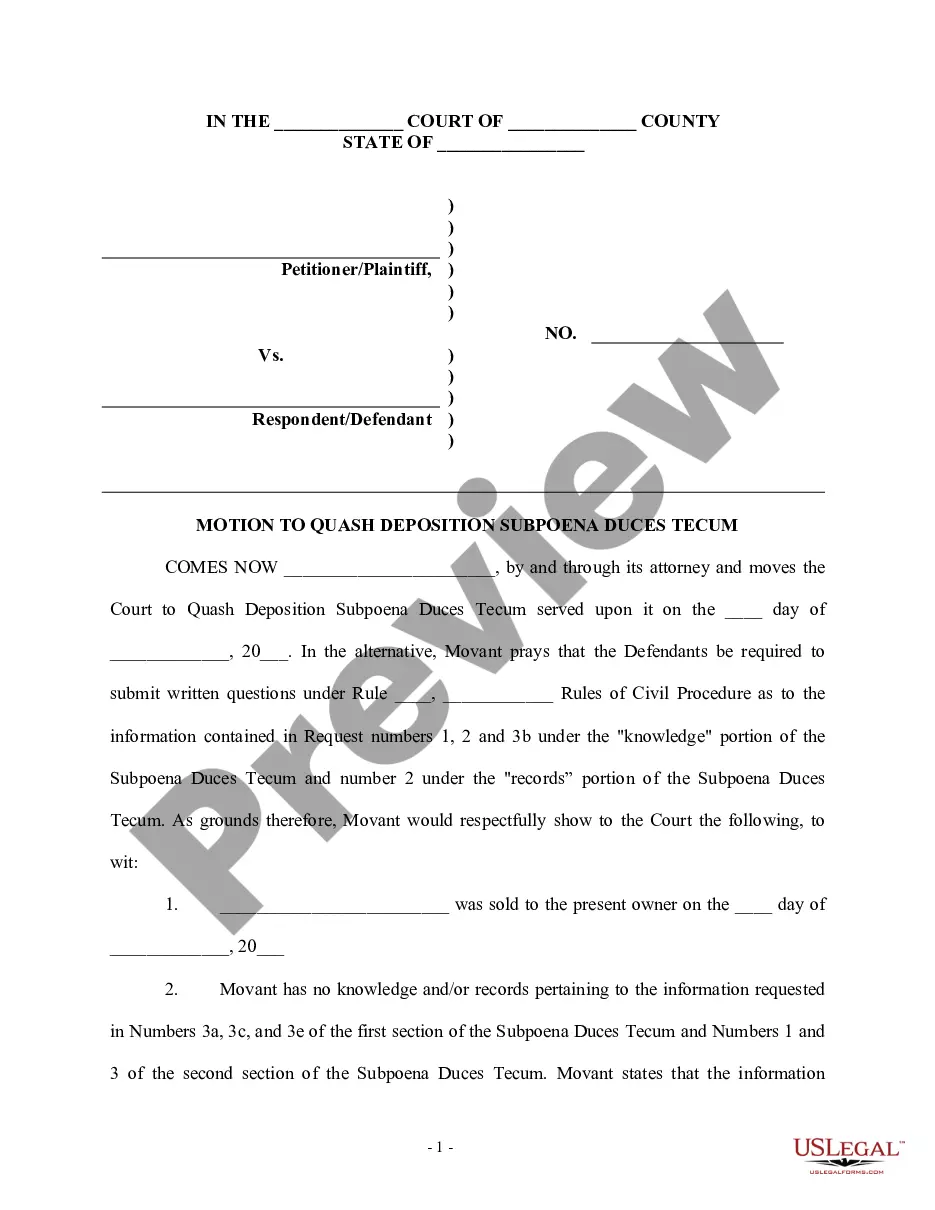
Quash subpoena duces tecum means to cancel or set aside a subpoena that commands production of documents or tangible items. In this form, the motion to quash targets an unreasonable or improperly issued deposition notice under duces tecum, asking the court to block or curtail the deposition and any attached document requests.
Yes. This form allows objections to a deposition notice and any subpoenas tied to it. Grounds may include undue burden, lack of relevance, improper notice, or noncompliance with procedural rules, and the document specifies identification, scheduling details, and a request for urgent treatment and a hearing.
A notice of deposition duces tecum commands appearance for a deposition and requires production of documents or things. This form addresses objections to such notices and can be used to seek protective relief or to quash the notice if it is unreasonable, improperly served, or burdensome.
Whether a motion to quash succeeds depends on the facts and jurisdiction. This form supports arguing undue burden, improper notice, or noncompliance with rules, and requests urgent treatment and a hearing. It helps present a structured challenge to a deposition duces tecum but does not guarantee a favorable outcome.
It combines three reliefs—protective order, a motion to quash the deposition duces tecum, and objections to the notice—into a single, integrated filing. It also emphasizes urgent treatment and a hearing, and follows the form’s sections (identification, date/time, undue burden, objections, and attorney details) for cohesive protection against aggressive discovery.