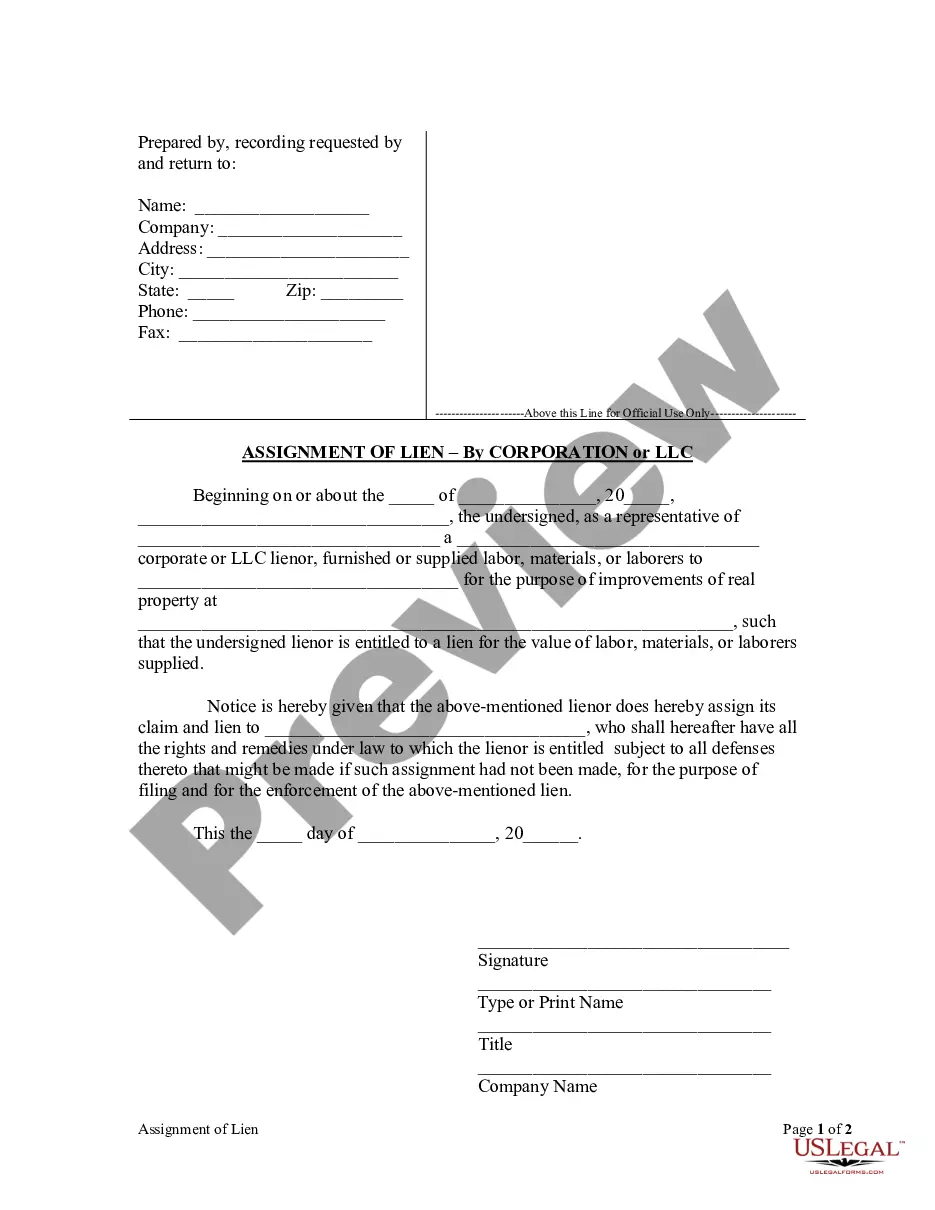
Complaint regarding Breach of Contract for Actual and Punitive Damages
Understanding this form
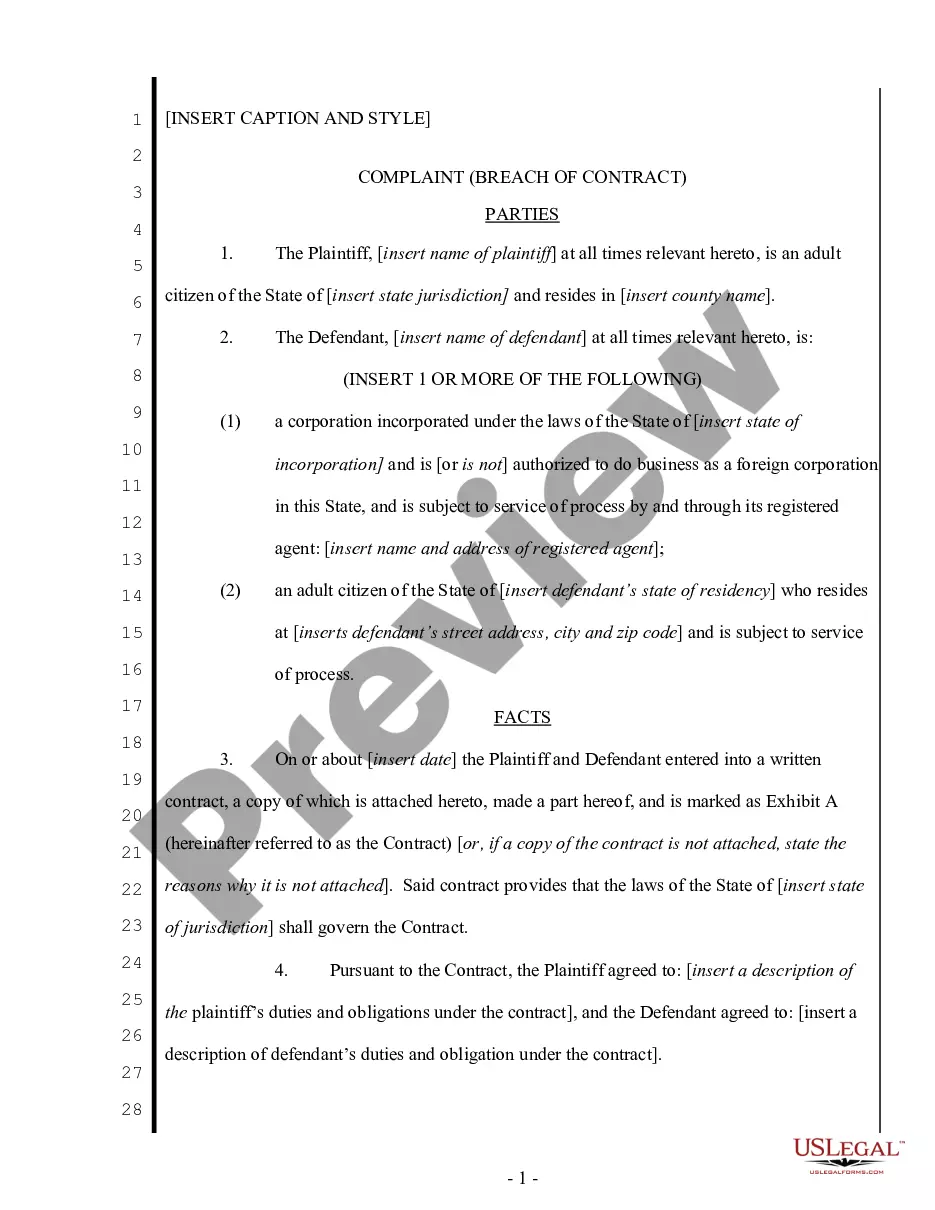
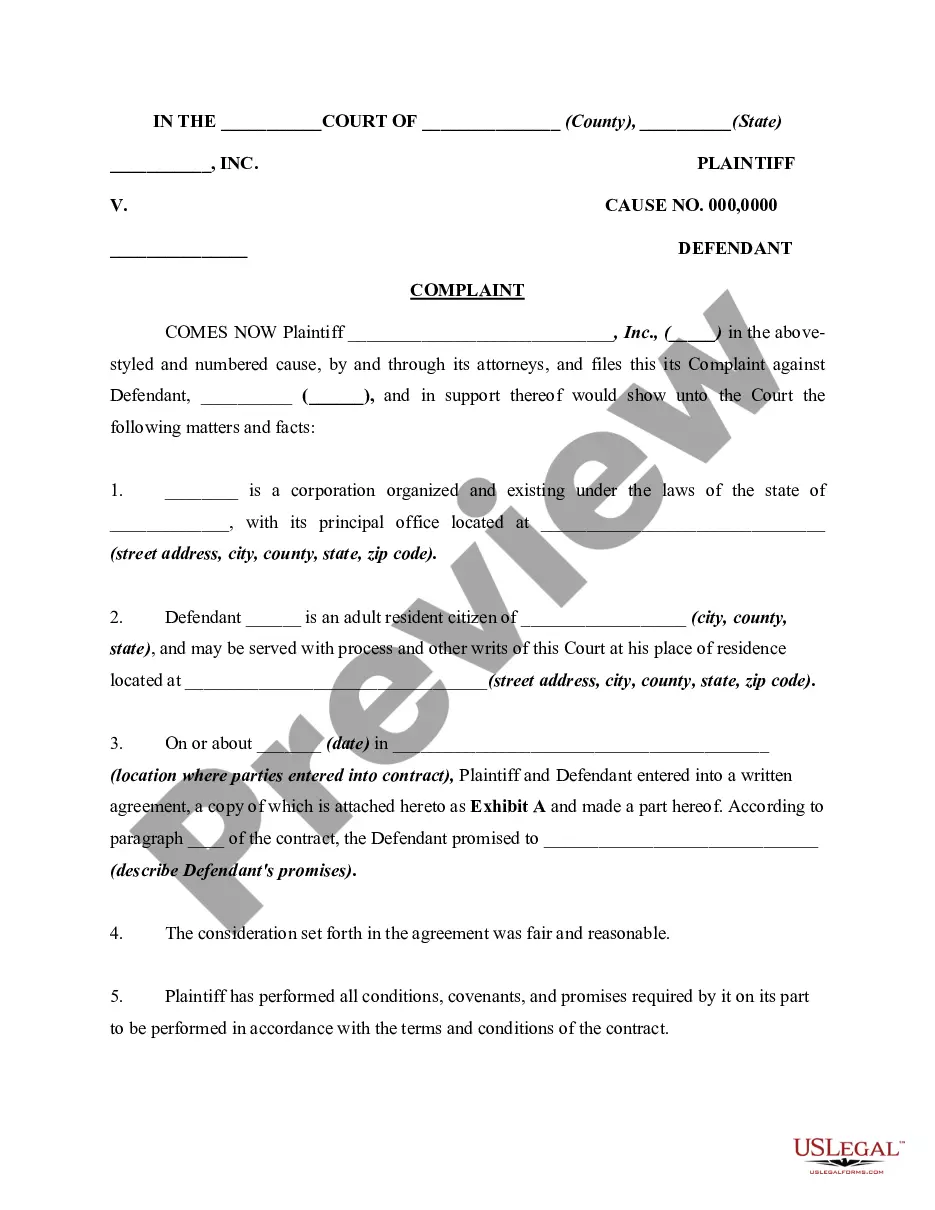
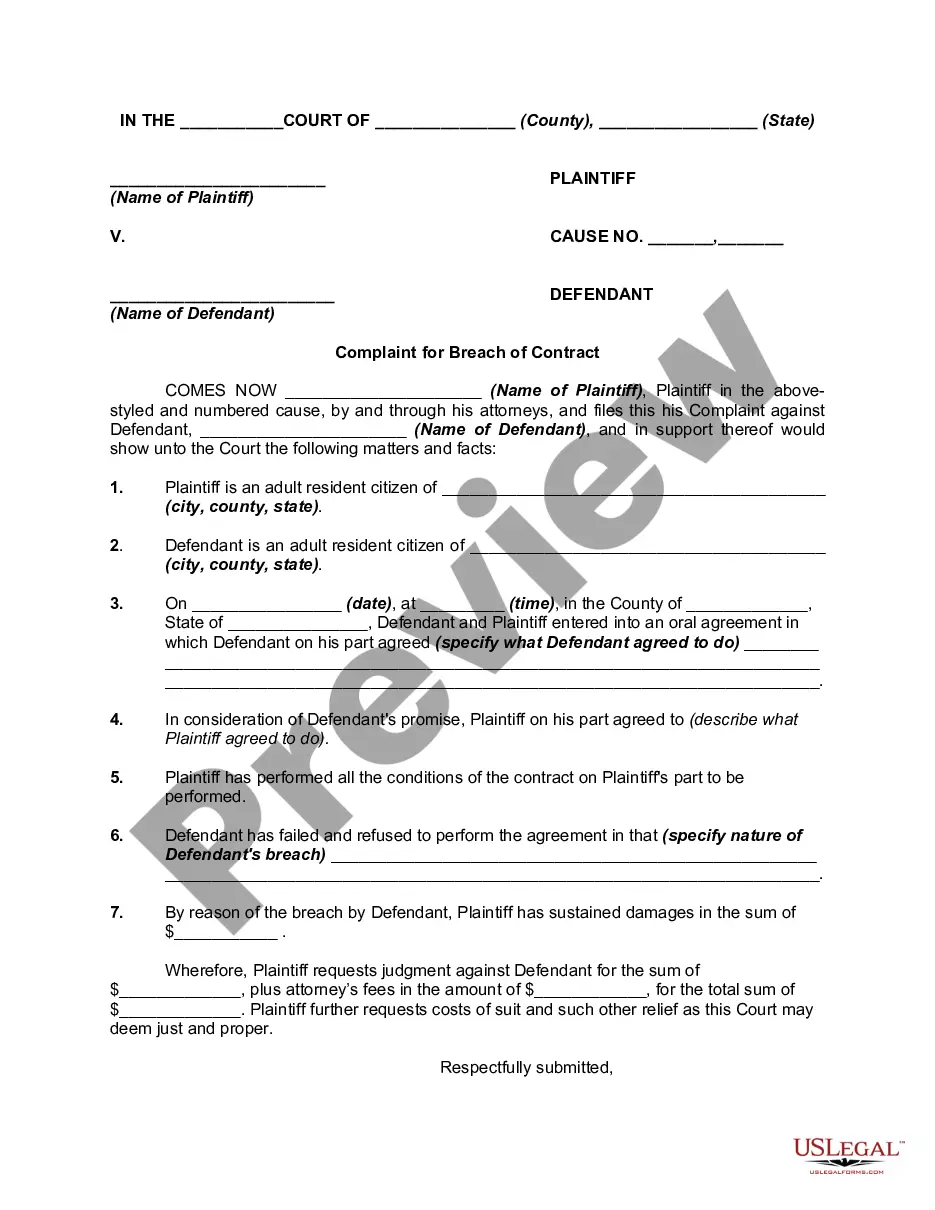
The Complaint regarding Breach of Contract for Actual and Punitive Damages is a legal document that allows a plaintiff to initiate a lawsuit against a defendant for failing to fulfill their obligations under a contractual agreement. This form distinguishes itself by not only seeking damages for the breach but also including provisions for punitive damages, which may serve to penalize and deter the defendant's wrongful conduct. It is suitable for various jurisdictions, making it versatile for users across multiple states.
Main sections of this form
- Parties: Identification of the plaintiff and defendant, including their names and residences.
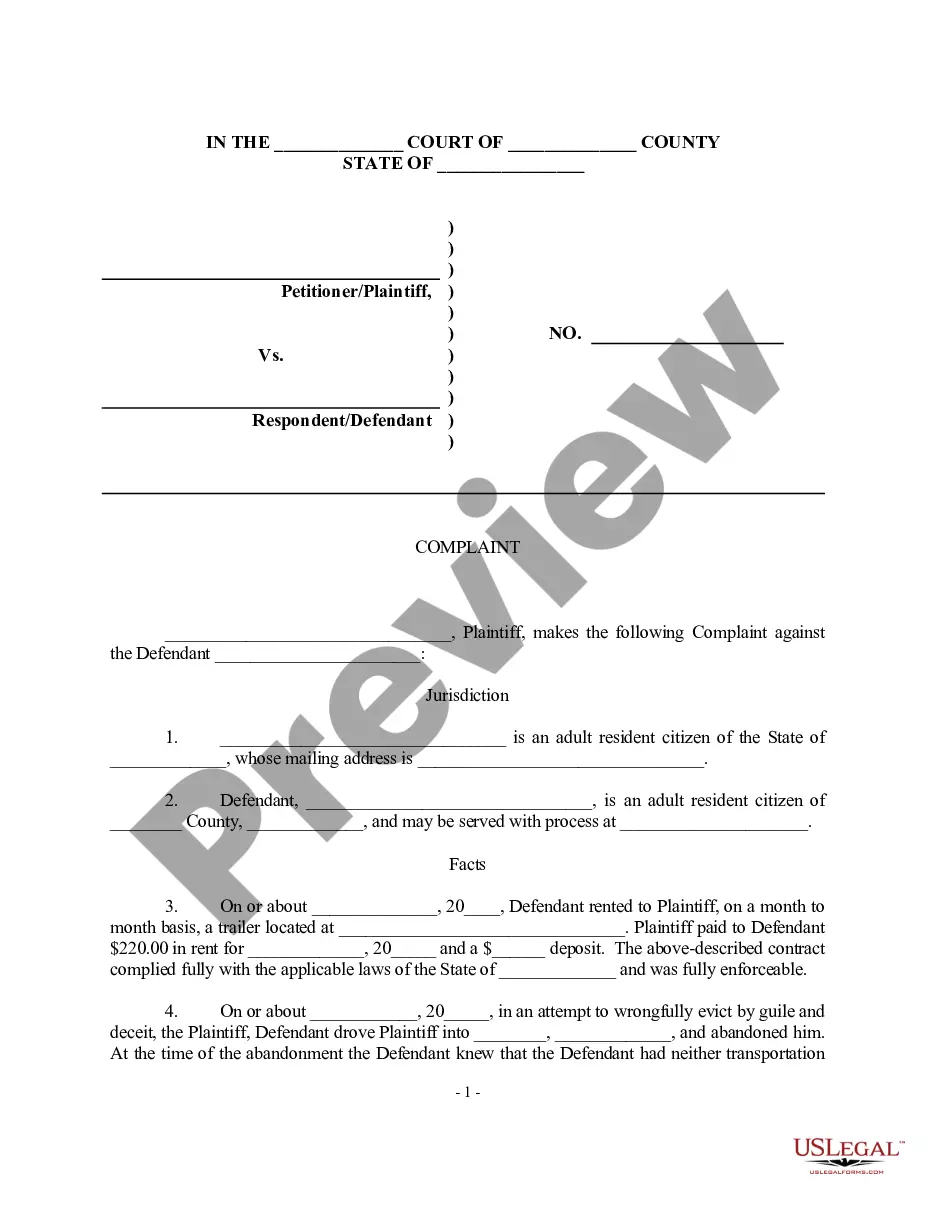
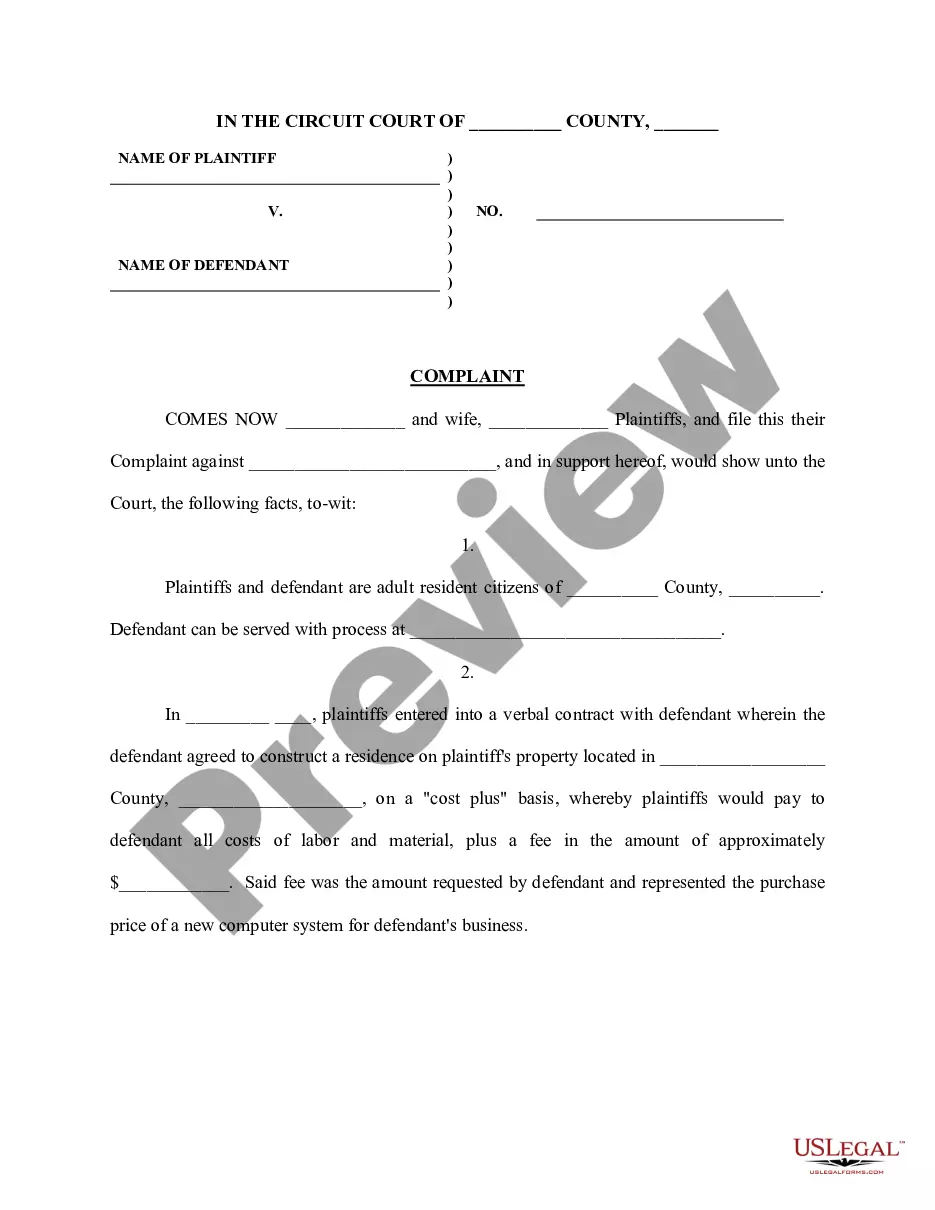
- Facts: A summary of the contract details, including obligations and the nature of the breach.
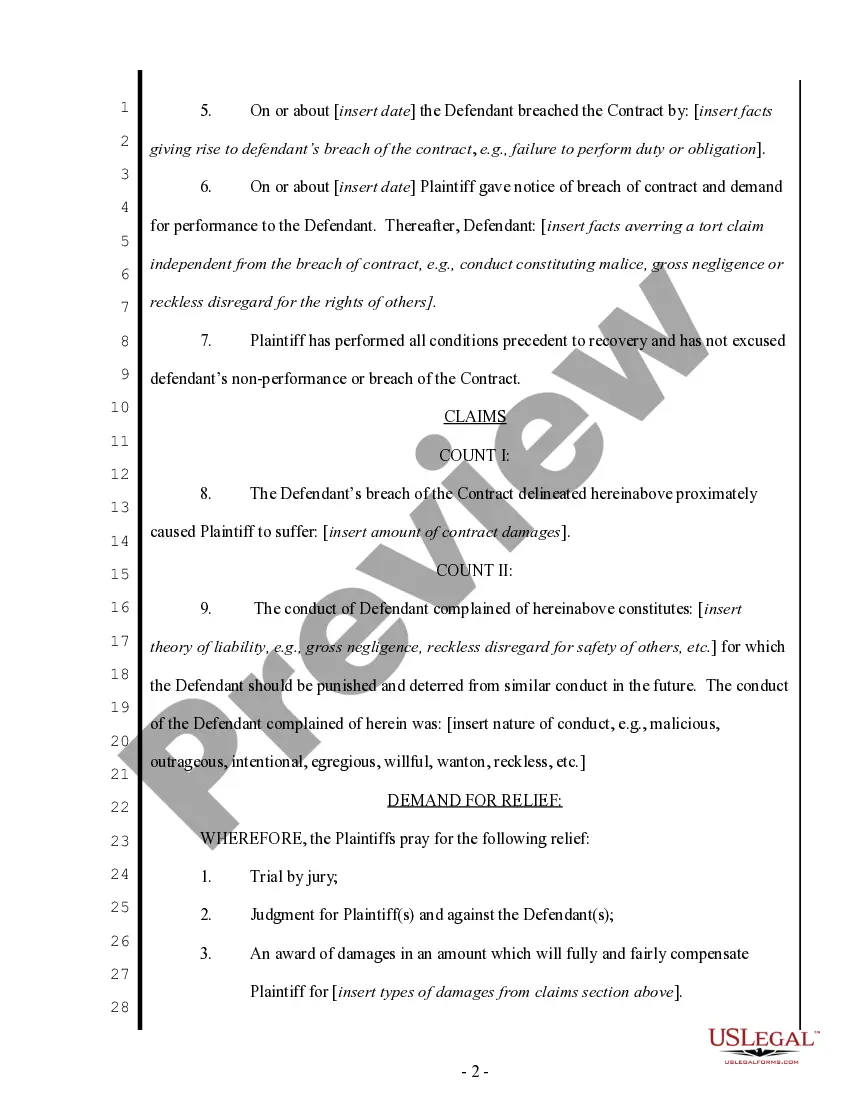
- Claims: Separate counts outlining the damages resulting from the breach and the rationale for punitive damages.
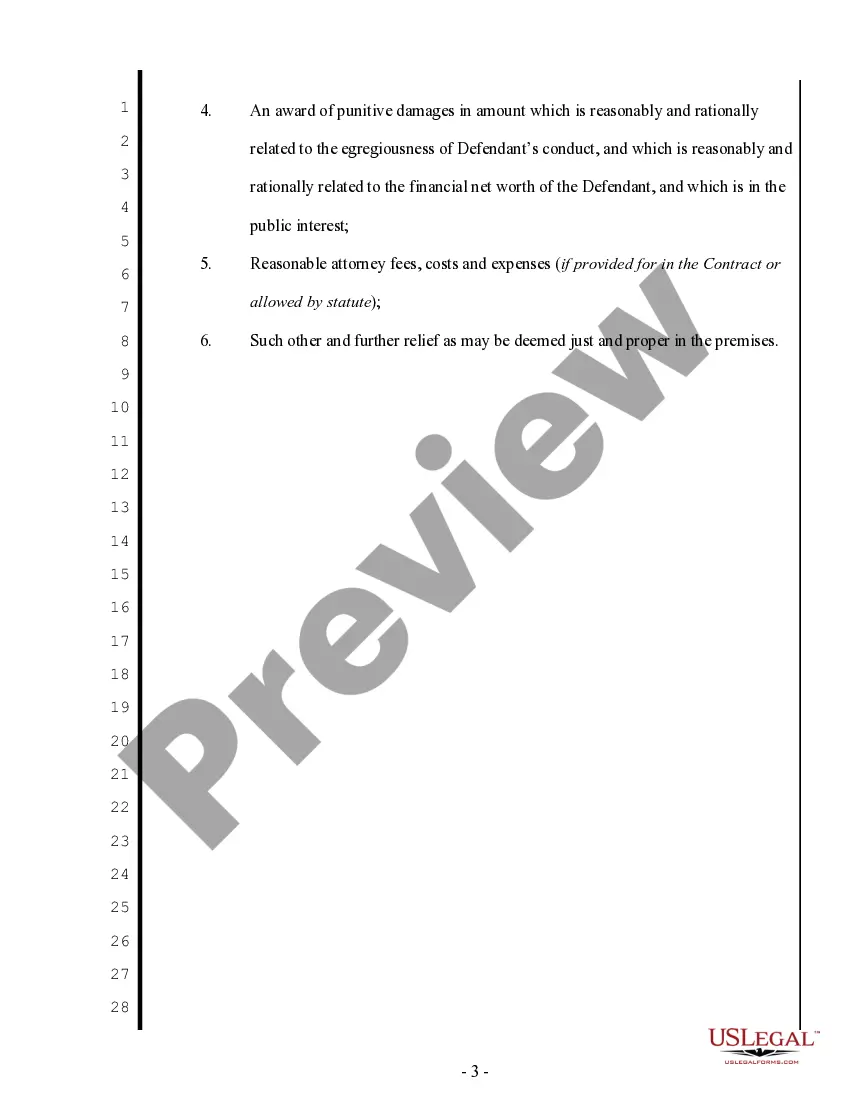
- Demand for Relief: Specific requests from the plaintiff, including compensatory and punitive damages.


When to use this document
This form should be used when a party believes that the other party has breached a contract, leading to financial loss or harm. It is appropriate when the breach is significant enough to warrant legal action, especially when the plaintiff seeks not only compensation for actual damages but also punitive damages due to the egregious nature of the breach.
Who needs this form
- Individuals or businesses that have entered into a contract and have experienced a breach.
- Parties seeking to hold a defendant accountable for negligent or malicious conduct related to the breach.
- Anyone who has fulfilled their obligations under the contract yet has been met with non-performance from the other party.
Instructions for completing this form
- Identify the parties: Enter the names and addresses of the plaintiff and defendant.
- Describe the contract: Include details of the contract and attach a copy, if available.
- Outline the breach: Clearly specify the nature of the breach by the defendant.
- State damages: Detail the actual damages incurred as a result of the breach.
- Request relief: Fill in the specific remedies sought, including punitive damages if applicable.
Does this form need to be notarized?
This form usually doesn’t need to be notarized. However, local laws or specific transactions may require it. Our online notarization service, powered by Notarize, lets you complete it remotely through a secure video session, available 24/7.
Get your form ready online
Our built-in tools help you complete, sign, share, and store your documents in one place.
Make edits, fill in missing information, and update formatting in US Legal Forms—just like you would in MS Word.
Download a copy, print it, send it by email, or mail it via USPS—whatever works best for your next step.
Sign and collect signatures with our SignNow integration. Send to multiple recipients, set reminders, and more. Go Premium to unlock E-Sign.
If this form requires notarization, complete it online through a secure video call—no need to meet a notary in person or wait for an appointment.
We protect your documents and personal data by following strict security and privacy standards.

Make edits, fill in missing information, and update formatting in US Legal Forms—just like you would in MS Word.

Download a copy, print it, send it by email, or mail it via USPS—whatever works best for your next step.

Sign and collect signatures with our SignNow integration. Send to multiple recipients, set reminders, and more. Go Premium to unlock E-Sign.

If this form requires notarization, complete it online through a secure video call—no need to meet a notary in person or wait for an appointment.

We protect your documents and personal data by following strict security and privacy standards.
Avoid these common issues
- Failing to clearly identify both parties' names and addresses.
- Omitting details about the contract or the specific terms breached.
- Not including evidence of the damage caused by the breach.
- Requesting punitive damages without a strong justification related to the defendant's conduct.
Advantages of online completion
- Convenient access: Download and complete the form at your own pace.
- Editability: Make adjustments as necessary before finalizing the document.
- Legal reliability: Forms are drafted by licensed attorneys to ensure compliance with legal standards.
Looking for another form?



Form popularity
FAQ
Causation: The defendant's breach must have caused the plaintiff's economic losses. Foreseeability: The losses must be foreseeable at the time of contract formation. Calculable: The losses must be capable of being calculated into specific monetary amounts.
Punitive damages are rarely awarded for breach of contract. They arise more often in tort cases, to punish deliberate or reckless misconduct that results in personal harm.
How often are punitive damages awarded in breach of contract cases? In 90% of cases.
Punitive damages are rarely awarded for breach of contract. They arise more often in tort cases, to punish deliberate or reckless misconduct that results in personal harm.
Punitive damages in contract law are monetary damages awarded to a plaintiff to punish the defendant and prevent him from engaging in the same conduct at any point in the future.Punitive damages are generally awarded if: The compensatory damages are inadequate. The defendant's conduct was egregious.
Specifically, in a breach of case, the plaintiff is normally only awarded compensatory damages (i.e., money damages for the actual loss suffered based on the value of the contract), and punitive damages are generally not awarded at all.
Jurisdictions employ one of three standards of proof in decisions concerning punitive damages: (1) beyond a reasonable doubt, (2) by clear and convincing evidence, and (3) by a preponderance of evidence.
There are many types of damages for breach of contract that you may receive should a breach occur, these being meted out both to deter parties from breaking contracts and to compensate parties should a contract be broken. The main types of damages are compensatory, liquidation, punitive, nominal, and ordinary damages.