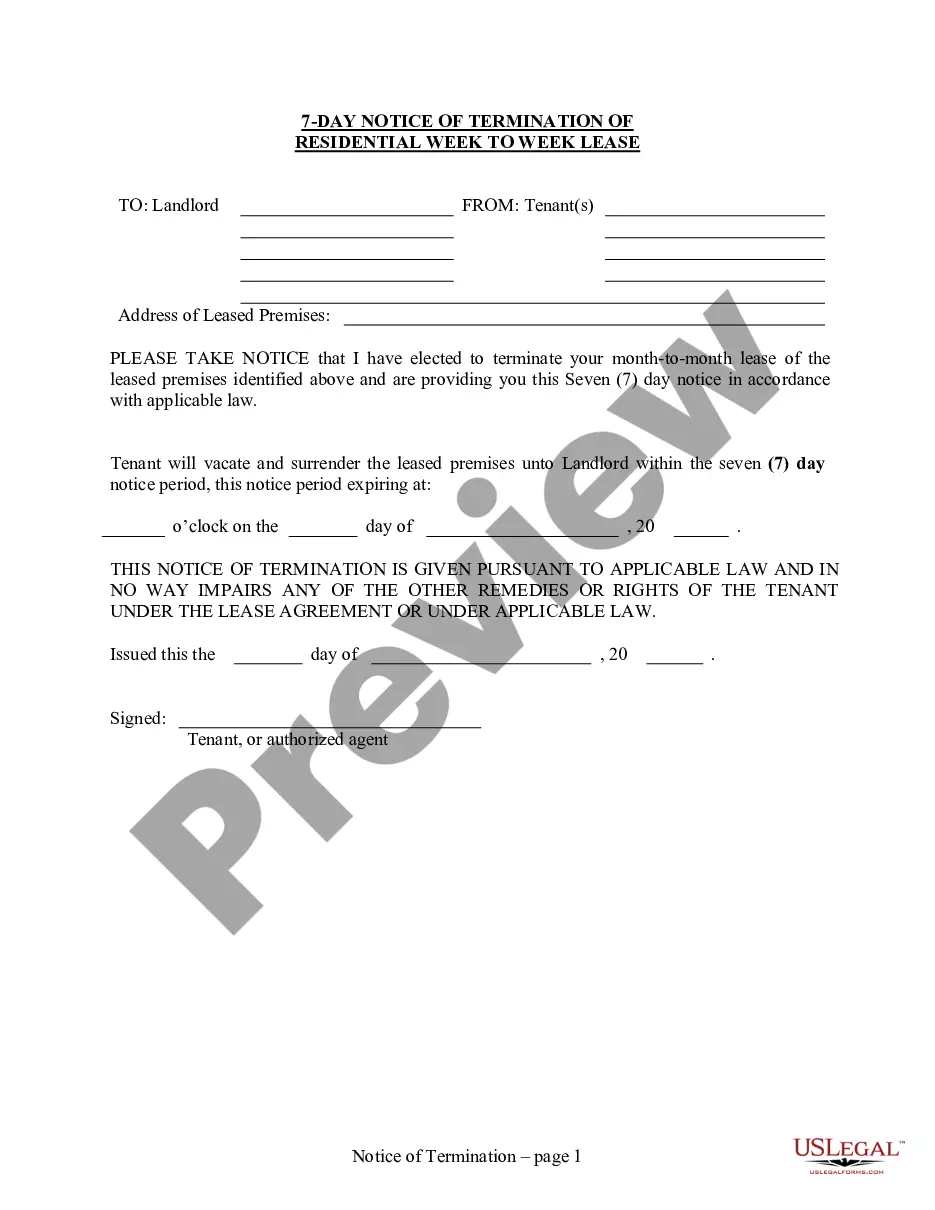
Complaint regarding Auto Accident for Negligence
About this form
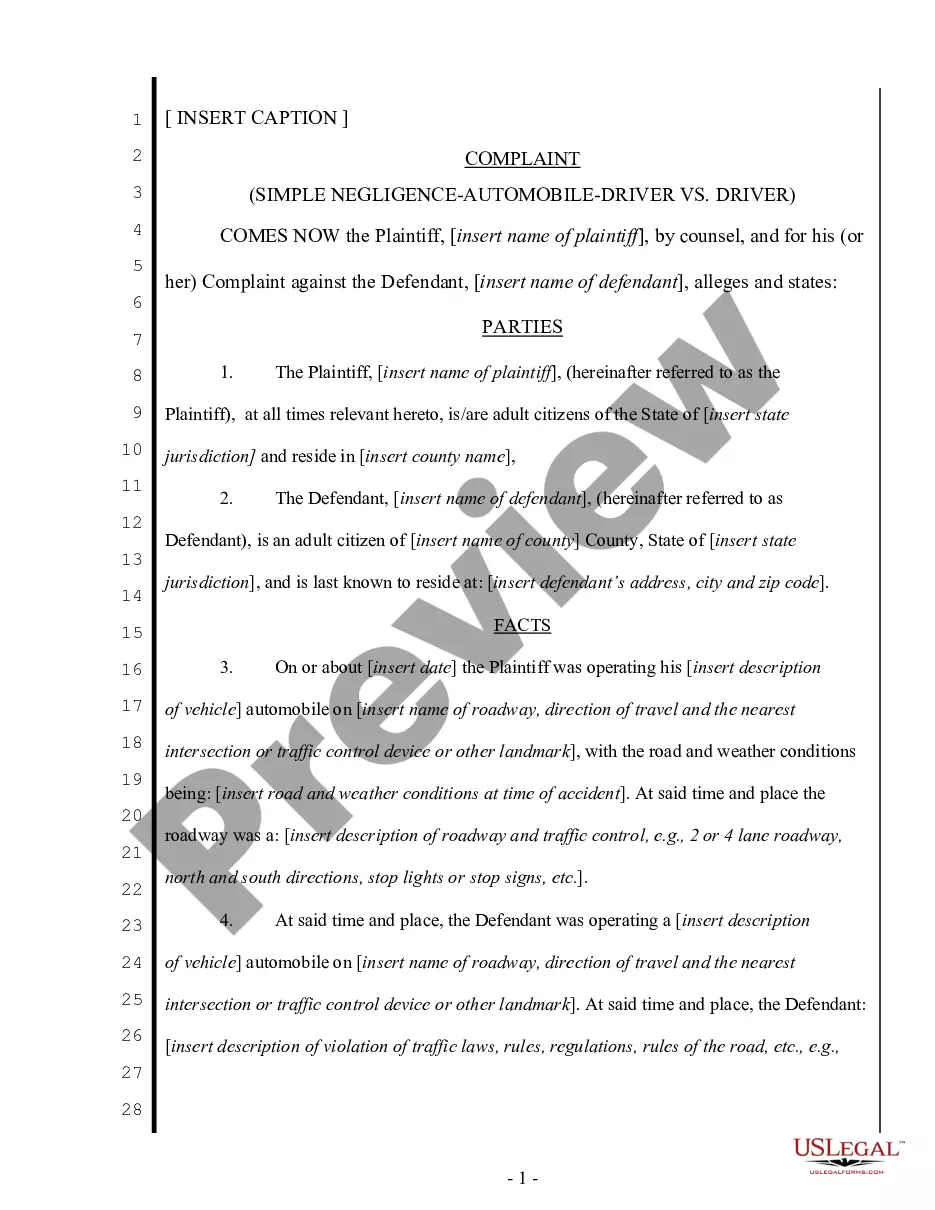
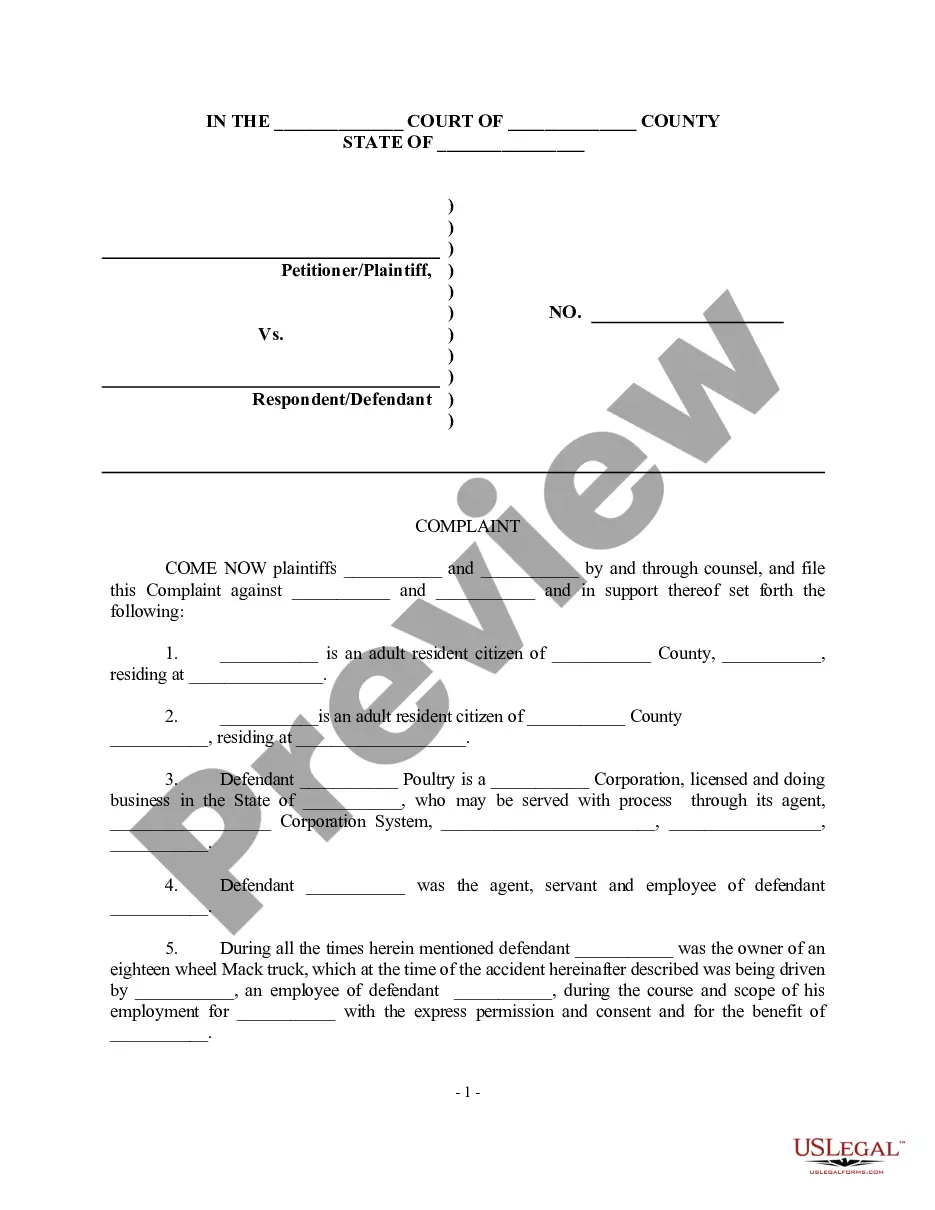
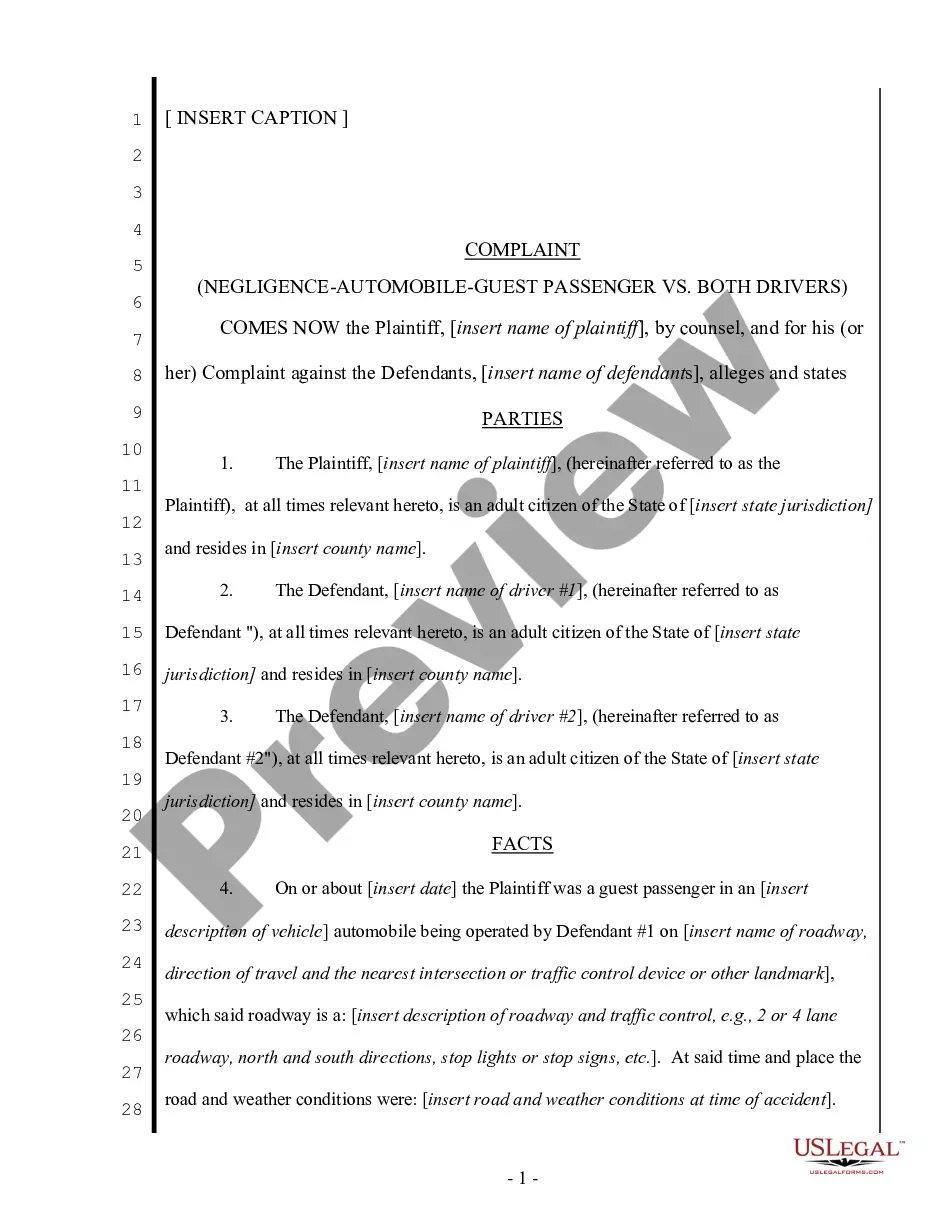
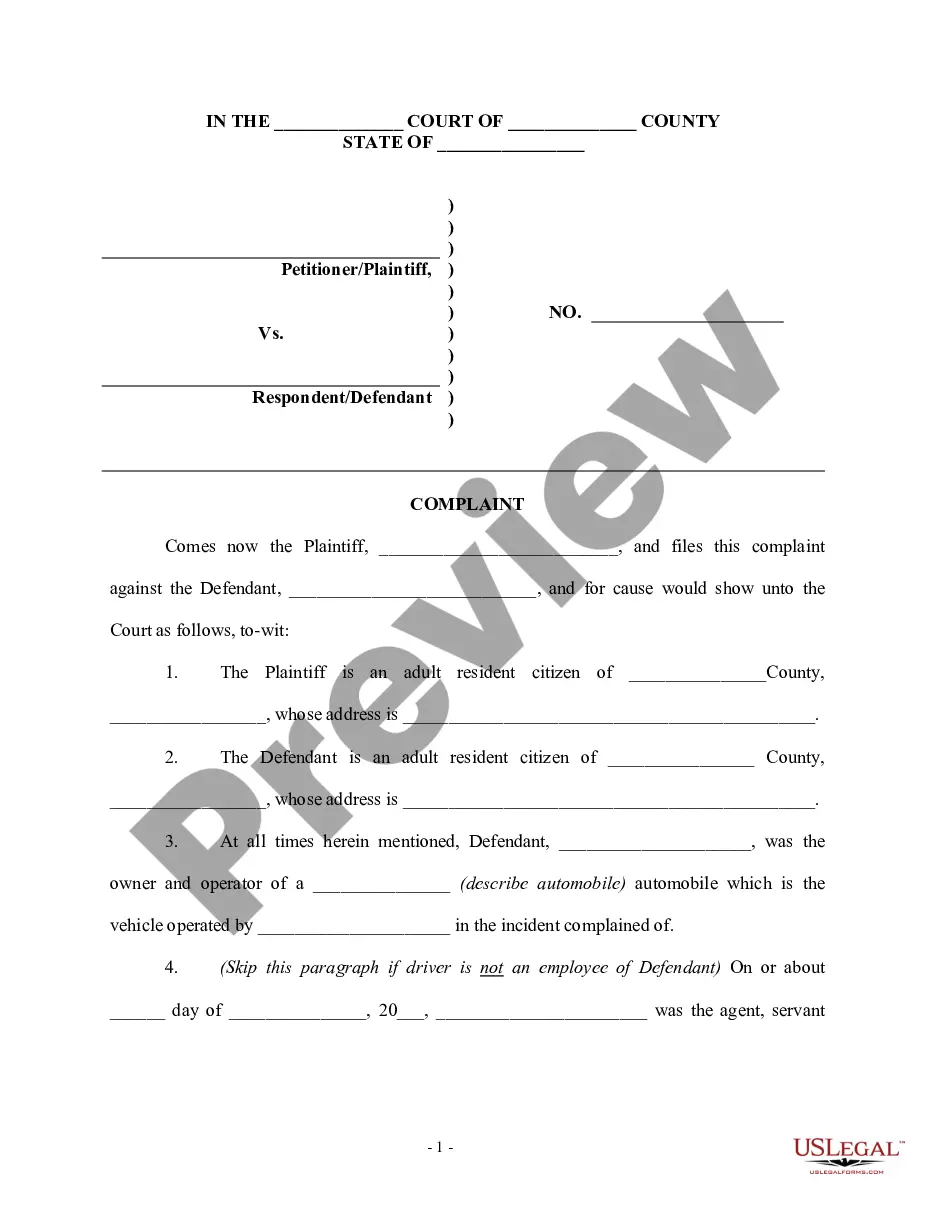
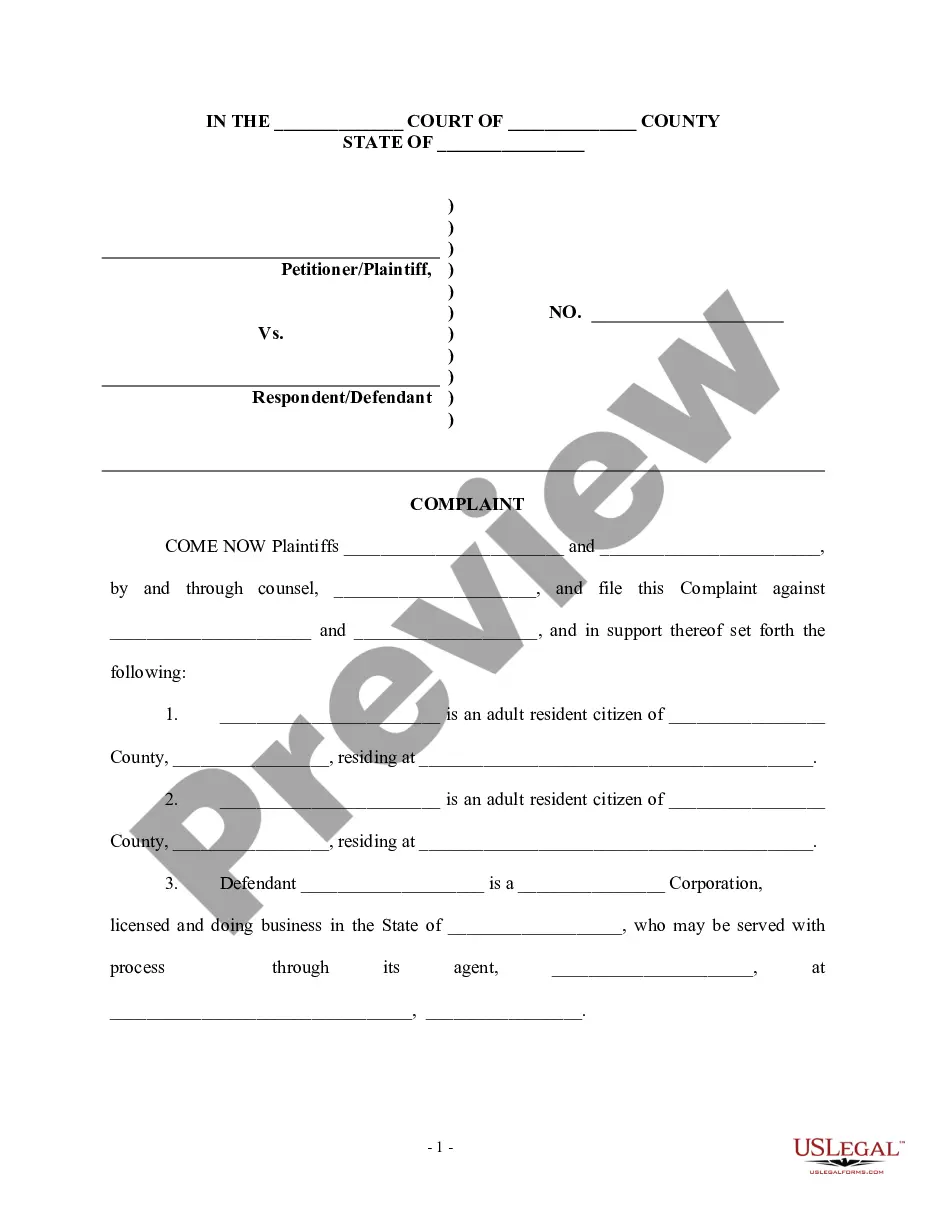
The Complaint regarding Auto Accident for Negligence is a legal document used when one driver, referred to as the Plaintiff, sues another driver, known as the Defendant, following a vehicular accident. This form is essential for initiating a negligence lawsuit, allowing the Plaintiff to outline the facts of the case, identify the parties involved, and state the specific claims of damages resulting from the accident. It is distinct from other forms that may not specifically address auto-related negligence claims.
Key components of this form
- Parties: Identify the Plaintiff and Defendant, detailing their names and addresses.
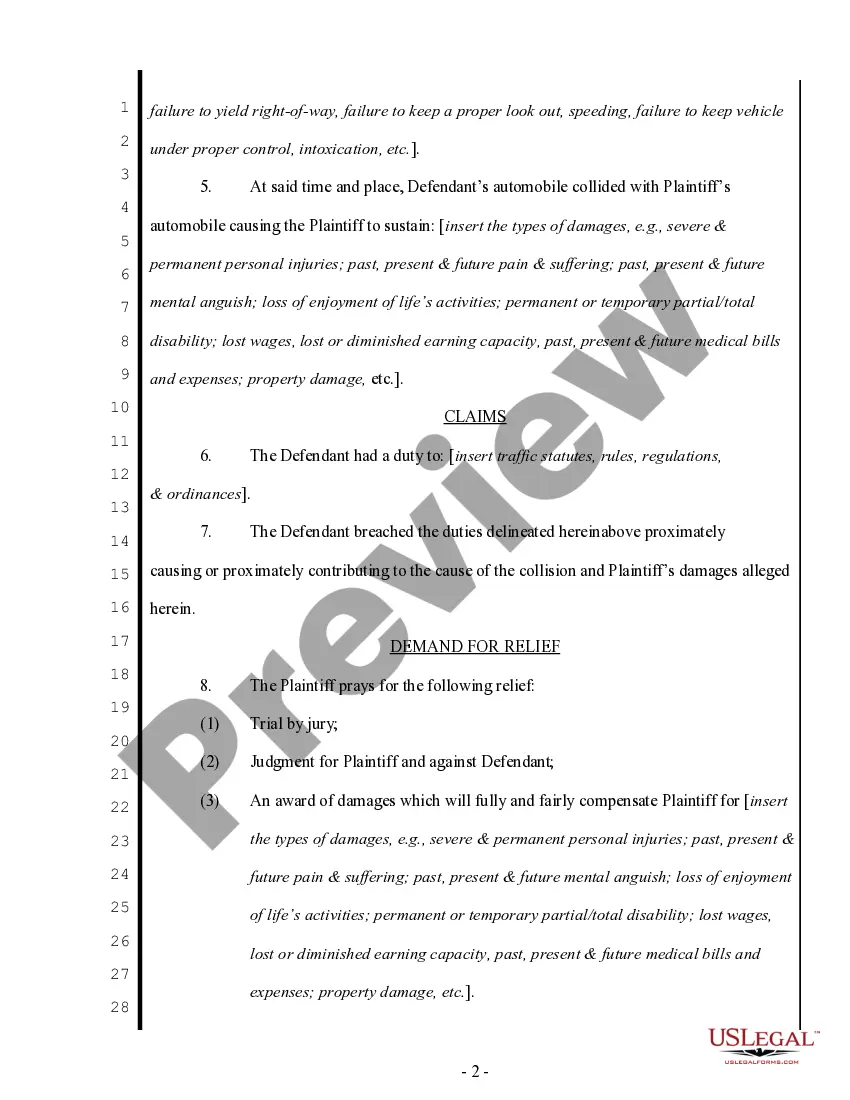
- Facts: Describe the accident, including dates, locations, and circumstances surrounding the incident.
- Claims: State the specific duties the Defendant breached that contributed to the accident.
- Demand for relief: Specify the type of damages being sought and the request for a jury trial.

When to use this form
This form should be used when an individual has been involved in an auto accident and believes that another driver was negligent, resulting in damages or injuries. Common scenarios include situations where the other driver violated traffic laws, such as speeding or failing to yield, leading to the collision. It is typically used as the first step in pursuing legal action for compensation for medical expenses, lost wages, or other damages incurred.
Intended users of this form
- Individuals who have been injured in an auto accident due to another driver's negligence.
- Drivers seeking to recover damages for property damage resulting from a collision.
- Those who wish to pursue legal recourse against another driver in their jurisdiction.
How to complete this form
- Identify the parties involved by filling in the Plaintiff's and Defendant's names and addresses.
- Provide a detailed account of the facts surrounding the accident, including date, location, and vehicle descriptions.
- State the specific violations of traffic laws or regulations by the Defendant that contributed to the accident.
- Outline the damages incurred as a result of the accident, specifying types of compensation sought.
- Sign and date the form to finalize the complaint for submission to the court.
Notarization guidance
This form does not typically require notarization unless specified by local law. Ensure to check state-specific requirements to confirm if notarization is necessary when filing a complaint in court.
Get your form ready online
Our built-in tools help you complete, sign, share, and store your documents in one place.
Make edits, fill in missing information, and update formatting in US Legal Forms—just like you would in MS Word.
Download a copy, print it, send it by email, or mail it via USPS—whatever works best for your next step.
Sign and collect signatures with our SignNow integration. Send to multiple recipients, set reminders, and more. Go Premium to unlock E-Sign.
If this form requires notarization, complete it online through a secure video call—no need to meet a notary in person or wait for an appointment.
We protect your documents and personal data by following strict security and privacy standards.

Make edits, fill in missing information, and update formatting in US Legal Forms—just like you would in MS Word.

Download a copy, print it, send it by email, or mail it via USPS—whatever works best for your next step.

Sign and collect signatures with our SignNow integration. Send to multiple recipients, set reminders, and more. Go Premium to unlock E-Sign.

If this form requires notarization, complete it online through a secure video call—no need to meet a notary in person or wait for an appointment.

We protect your documents and personal data by following strict security and privacy standards.
Common mistakes to avoid
- Failing to accurately identify the parties involved, which can lead to delays in processing.
- Omitting important details about the accident, which may weaken the case.
- Not including sufficient information about damages and injuries, limiting potential compensation.
Benefits of using this form online
- Convenient access allows users to complete the form from anywhere at any time.
- Editable templates provide flexibility to customize the document to specific needs.
- Form drafts are prepared by licensed attorneys, ensuring legal accuracy and reliability.
Looking for another form?



Form popularity
FAQ
In a case based upon negligence the plaintiff, under code or com- mon law pleading, must plead facts in his petition showing (1) that the defendant owed a duty to the plaintiff, (2) that the defendant breached the duty, and (3) that as a result of such breach of duty the plaintiff suffered damage.
In order to have a case for Negligence, actual losses or damages must result from the accident. There must be some actual injury to the victim.Sometimes, accidents just happen and nobody is at fault. Other times, accidents are caused by Negligence and there are legal consequences.
Duty of care. Breach of duty. Causation (cause in fact) Proximate cause. Damages.
If you're a victim of negligence and are seeking compensation, it can be hard to prove negligence. However, it is possible to do so if you take the right steps to build your case.
Automobile negligence occurs when a driver of a motor vehicle did not operate that vehicle in a reasonably safe manner and caused injury to another. That negligent driver is liable for damages by his/her reckless driving. However, the terms negligence and liability often get confused with one another.
Webster's Dictionary defines an accident as follows: an unfortunate happening that occurs unintentionally and results in harm, injury, damage or loss. By contrast, negligence as defined by most jurisdictions in the United States including California, is the lack of ordinary care or skill in the
The other driver had a duty to operate his or her vehicle in a safe manner. The other driver breached this duty. The actions of the other driver caused the accident. The accident directly caused injuries or monetary losses.
In the case of an auto accident, negligence means that a driver failed to exercise the care toward others which a reasonable person would do in the circumstances, or took action that a reasonable person would not under the circumstances. Negligence may also stem from an omission or failure to act.