Nondisclosure Agreement Regarding Proprietary and Licensed Material
Overview of this form
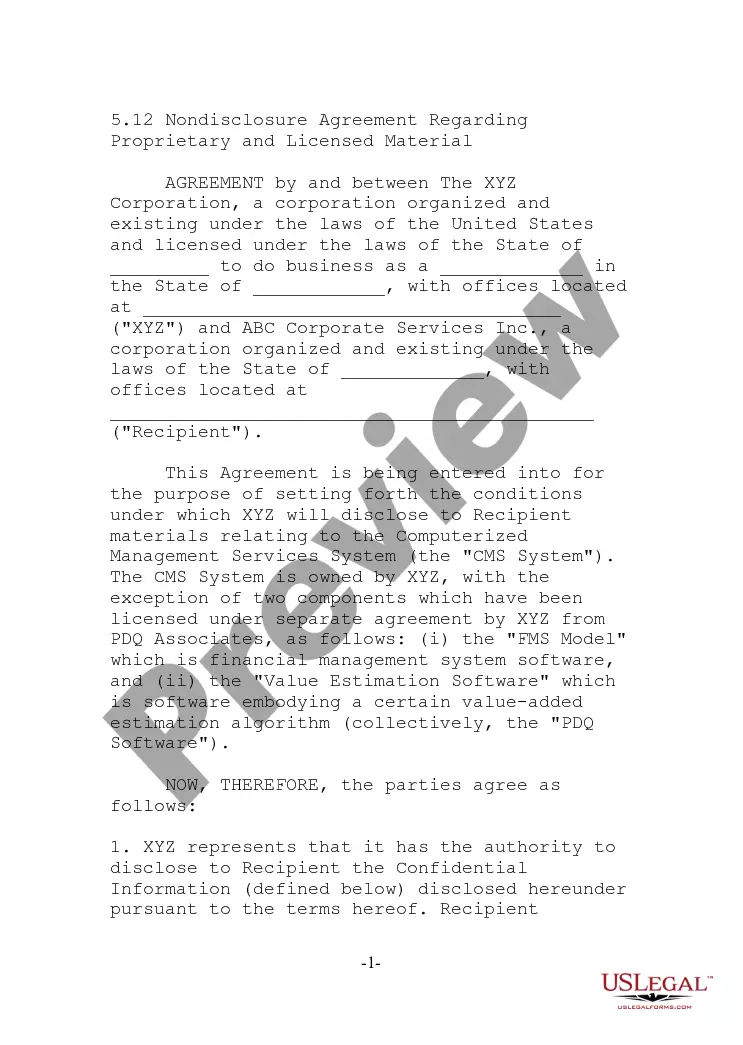
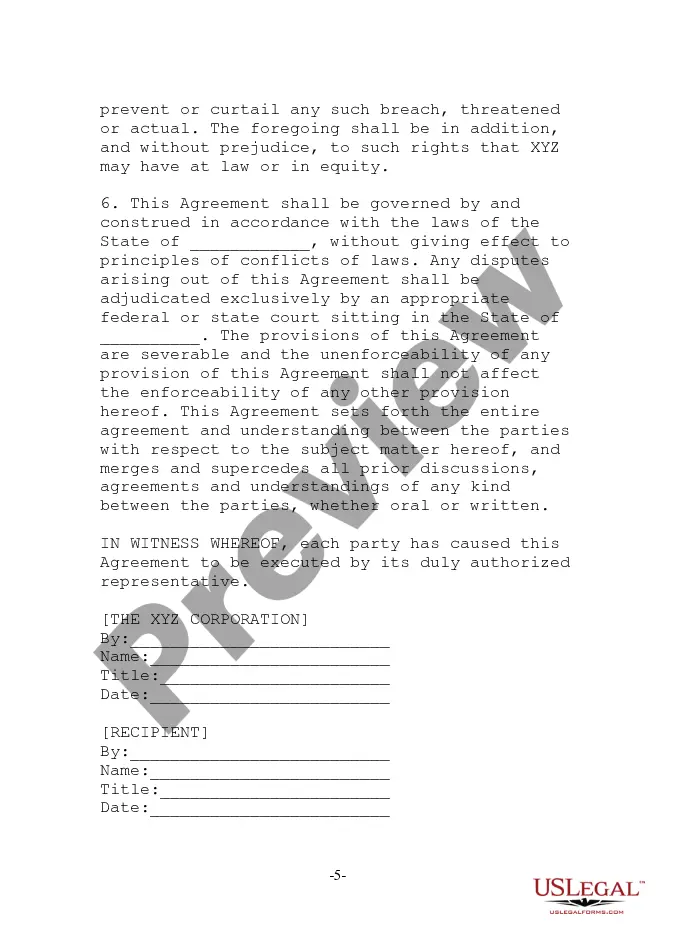
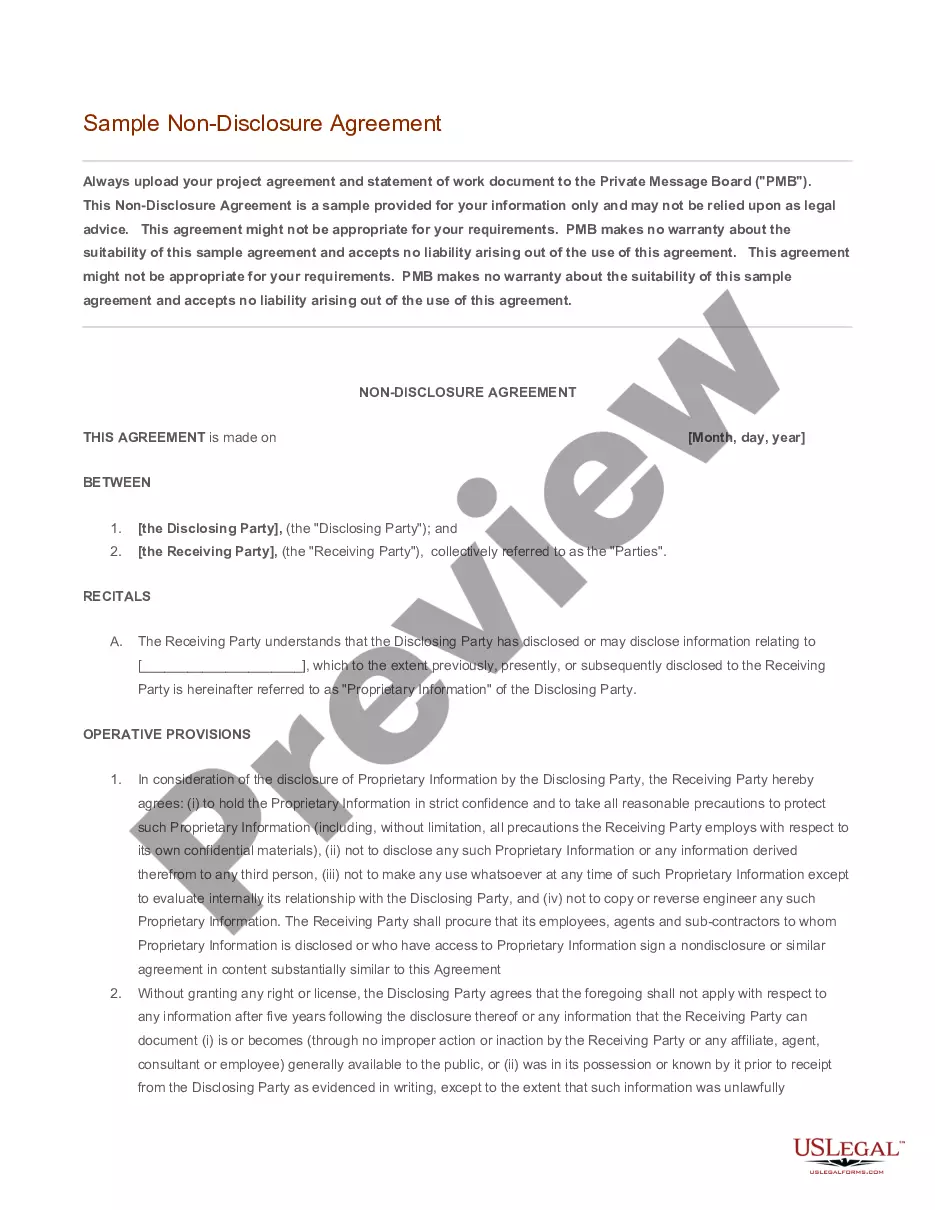
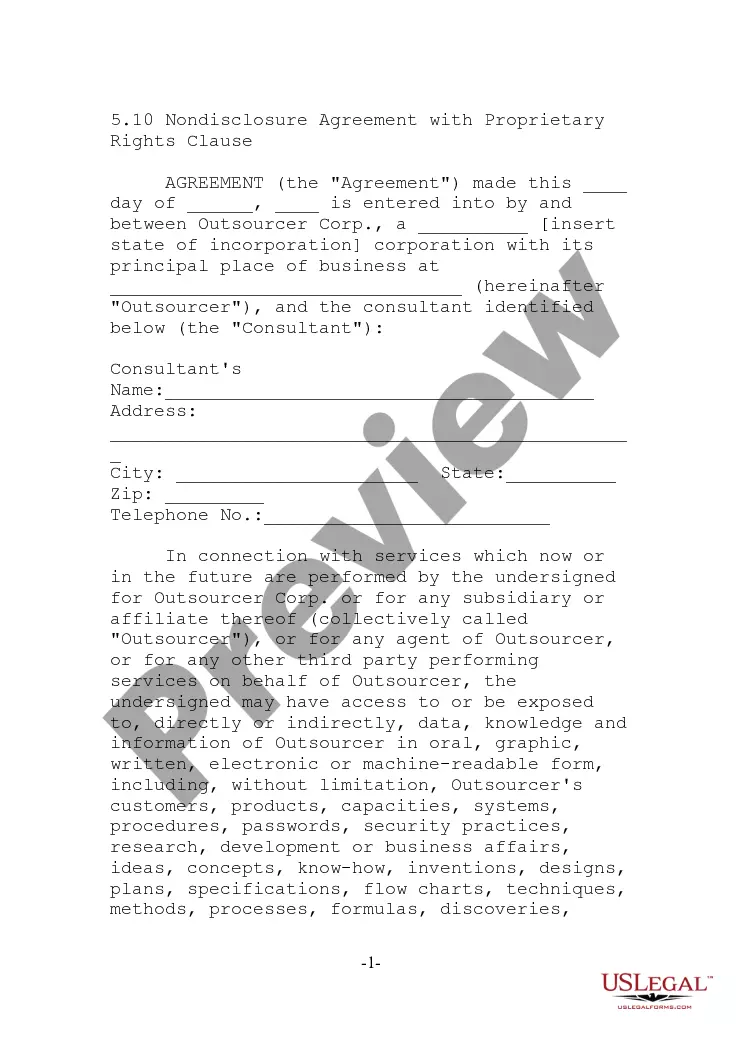
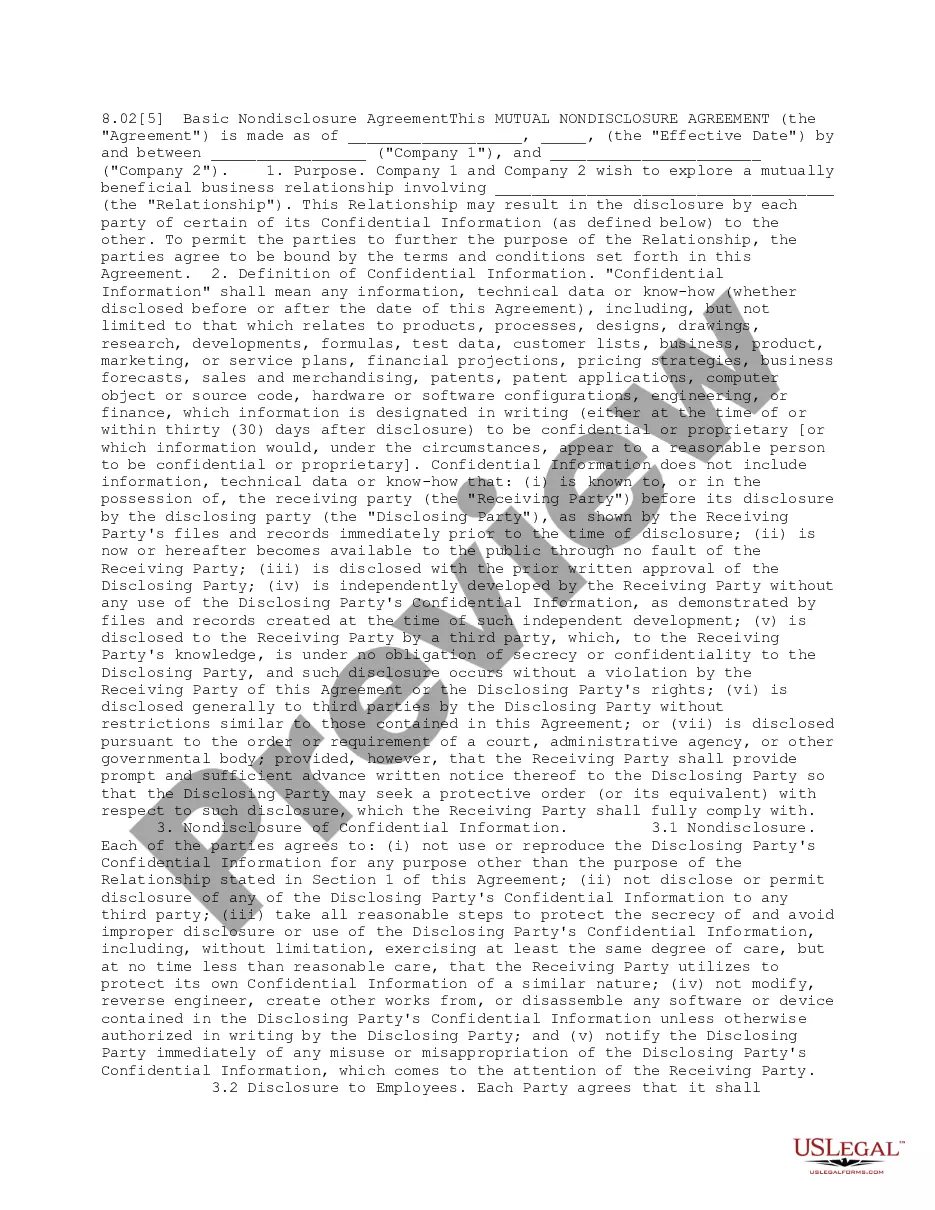
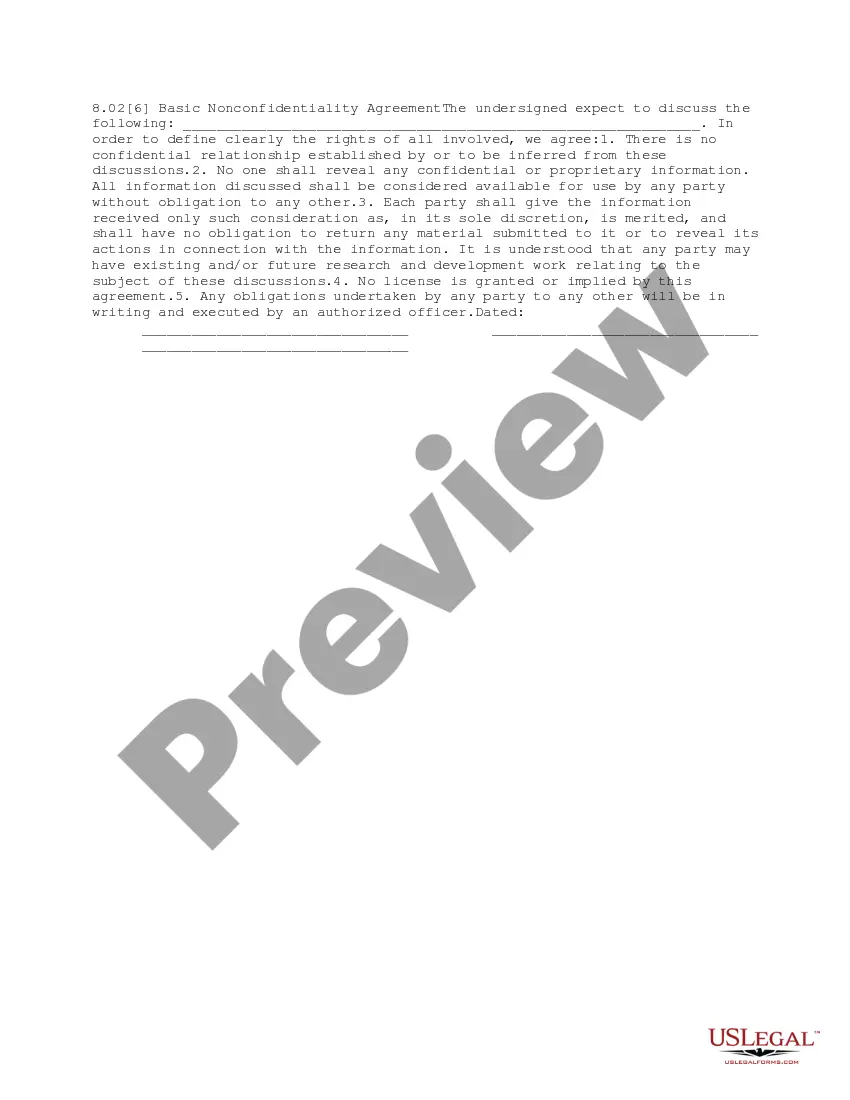
The Nondisclosure Agreement Regarding Proprietary and Licensed Material is a legal document designed to protect confidential information shared between parties. This particular agreement is tailored for situations involving proprietary technologies, intellectual property, and licensed materials, making it essential for businesses in the entertainment and multimedia sectors. It ensures that sensitive information remains private and is only used for agreed-upon purposes, differentiating it from other general nondisclosure forms by its specific focus on proprietary and licensed material.
What’s included in this form
- Identification of the parties involved (disclosing and receiving parties).
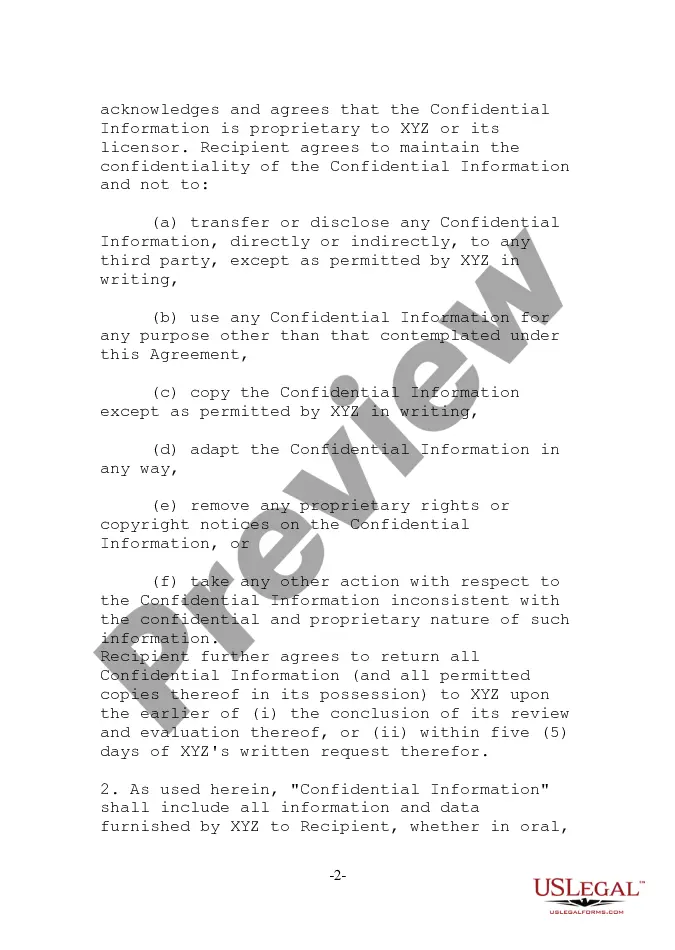
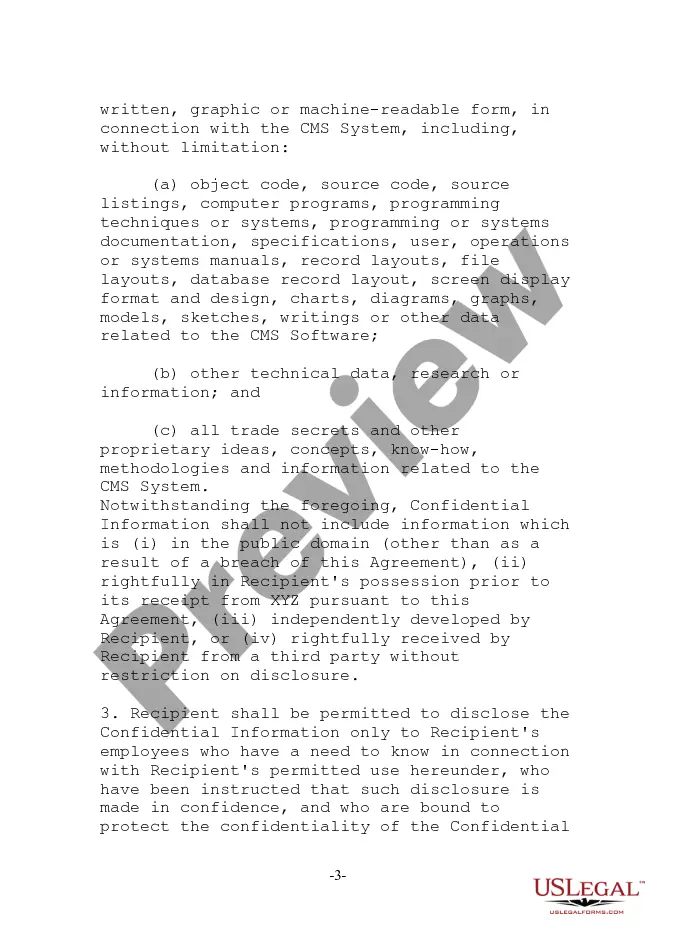
- Definitions of "Confidential Information" and its exclusions.
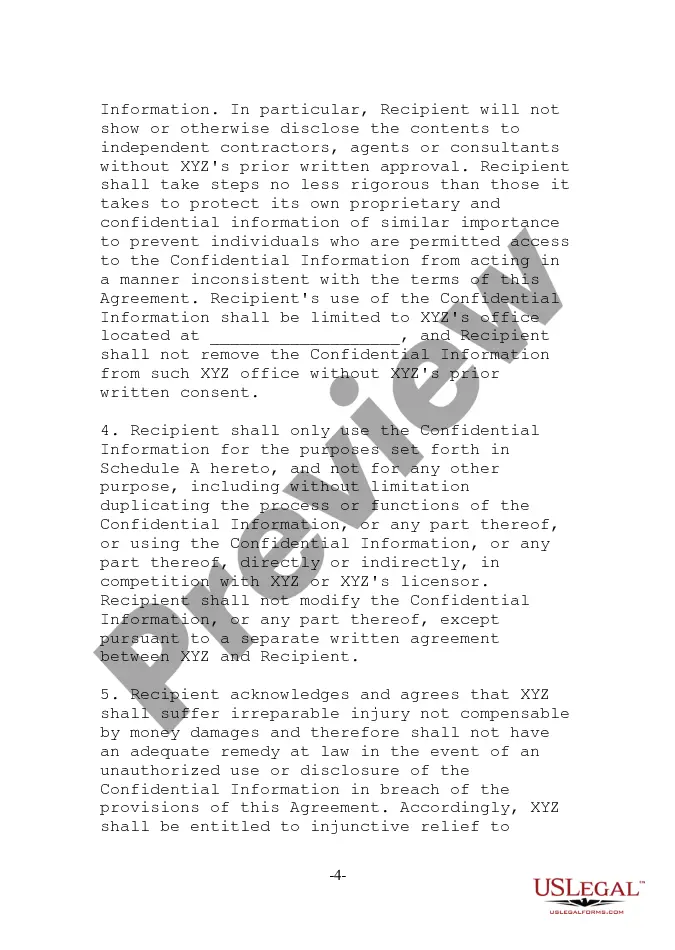
- Obligations of the recipient regarding the non-disclosure and usage of the confidential information.
- Terms for the return of confidential information after the agreement expires or upon request.
- Governing law and jurisdiction for any disputes arising from the agreement.
- Schedule A detailing specific permitted uses of the confidential information.
When to use this document
This nondisclosure agreement should be used when two parties plan to share sensitive information that needs protection. It is particularly useful when discussing new products, proprietary technology, or any intellectual property matters. Businesses may require it when negotiating partnerships, collaborations, or any transactions that involve valuable confidential material.
Who should use this form
- Businesses entering partnerships that involve proprietary technologies or sensitive information.
- Startups presenting innovative products to potential investors or collaborators.
- Organizations working with consultants or contractors who will have access to confidential materials.
- Companies that focus on research and development and need to protect their intellectual property.
Steps to complete this form
- Identify the parties by filling in their legal names and business details.
- Define the confidential information by listing or describing the materials being protected.
- Specify the appropriate use of confidential information in Schedule A of the agreement.
- Determine the governing state law and fill in the relevant jurisdiction information.
- Have authorized representatives of both parties sign and date the agreement.
Is notarization required?
Notarization is not commonly needed for this form. However, certain documents or local rules may make it necessary. Our notarization service, powered by Notarize, allows you to finalize it securely online anytime, day or night.
Get your form ready online
Our built-in tools help you complete, sign, share, and store your documents in one place.
Make edits, fill in missing information, and update formatting in US Legal Forms—just like you would in MS Word.
Download a copy, print it, send it by email, or mail it via USPS—whatever works best for your next step.
Sign and collect signatures with our SignNow integration. Send to multiple recipients, set reminders, and more. Go Premium to unlock E-Sign.
If this form requires notarization, complete it online through a secure video call—no need to meet a notary in person or wait for an appointment.
We protect your documents and personal data by following strict security and privacy standards.

Make edits, fill in missing information, and update formatting in US Legal Forms—just like you would in MS Word.

Download a copy, print it, send it by email, or mail it via USPS—whatever works best for your next step.

Sign and collect signatures with our SignNow integration. Send to multiple recipients, set reminders, and more. Go Premium to unlock E-Sign.

If this form requires notarization, complete it online through a secure video call—no need to meet a notary in person or wait for an appointment.

We protect your documents and personal data by following strict security and privacy standards.
Common mistakes to avoid
- Failing to define what constitutes "Confidential Information."
- Not including a clear expiration date or terms for the confidentiality obligation.
- Overlooking the need to have all parties sign the agreement.
- Not specifying permitted uses of the confidential information.
Advantages of online completion
- Easy customization to meet the specific needs of your situation.
- Immediate access to legal templates without the need to visit a lawyer.
- Secure and reliable templates drafted by licensed attorneys for peace of mind.
- The ability to download and store forms for future use or reference.
Legal use & context
- This agreement is enforceable in court, provided it is properly executed.
- Disclosure of confidential information should strictly adhere to the terms outlined in the agreement.
- Parties may seek injunctive relief if the terms are breached, highlighting the seriousness of confidentiality.
- Understanding local laws is crucial for the agreement's enforceability across different states.
What to keep in mind
- The Nondisclosure Agreement protects sensitive information by restricting disclosure and use.
- It is important for businesses sharing proprietary material to have this document in place.
- Proper completion and execution are essential for the enforceability of the agreement.
- Customization for specific circumstances can enhance the document's effectiveness.
Looking for another form?







Form popularity
FAQ
The NDA should clearly state the start and end date for the period of time in which the information may be exchanged between the parties. For example, you may wish to trade confidential information only at the start of the business collaboration. State the dates specifically.
A confidentiality agreement is a legal tool that binds one or more parties to non-disclosure of confidential or proprietary information. An NDA is actually a type of confidentiality agreement that establishes a confidential relationship and legally binds any signed parties to that relationship.
NDAs are legally enforceable contracts, but they're now coming under increased scrutiny from lawmakers, attorneys and legal experts.Companies often use them as part of an employment contract or settlement agreement to protect sensitive information like trade secrets.
A definition of confidential information. Who is involved. Why the recipient knows the information. Exclusions or limits on confidential information. Receiving party's obligations. Time frame or term. Discloser to the recipient.
A Proprietary Information Agreement is a legally binding contract that stipulates that a number of parties must not disclose confidential supplies, data, or information as outlined by the contract to a different third party.
Identification of the parties. Definition of what is deemed to be confidential. The scope of the confidentiality obligation by the receiving party. The exclusions from confidential treatment. The term of the agreement.
Publicly available information. Information you already possess or may acquire on your own. Information you can prove you learned of independent of the protected information provided for under the NDA. Information received by a 3rd party source.
1. Confidentiality Agreement is used when a higher degree of secrecy is required. Non-disclosure implies you must not disclose personal or private information. But keeping confidential implies you be more proactive in making sure information is kept secret.
NDAs keep people from sharing trade secrets, proprietary knowledge, client information, product information, and strategic plans. NDAs keep people from making a profit on any secret company information. NDAs usually say that a company owns things that get developed or produced during someone's employment.