Mutual Nondisclosure Agreement - Prospective Joint Venture or Co-Development Relationship
Overview of this form
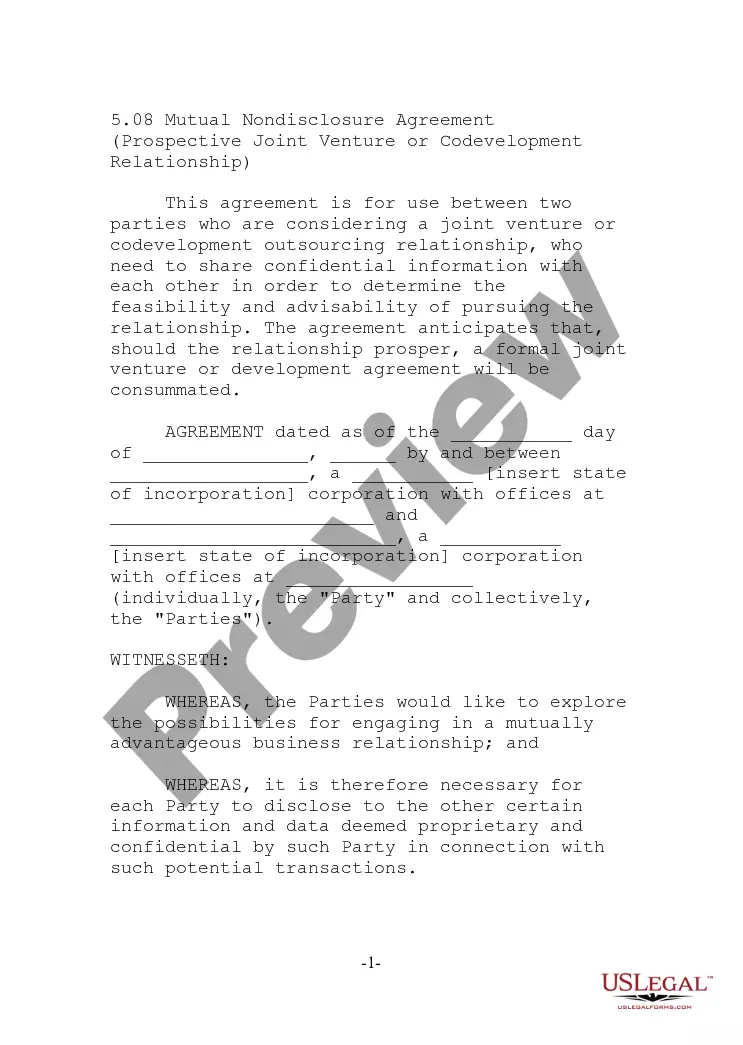
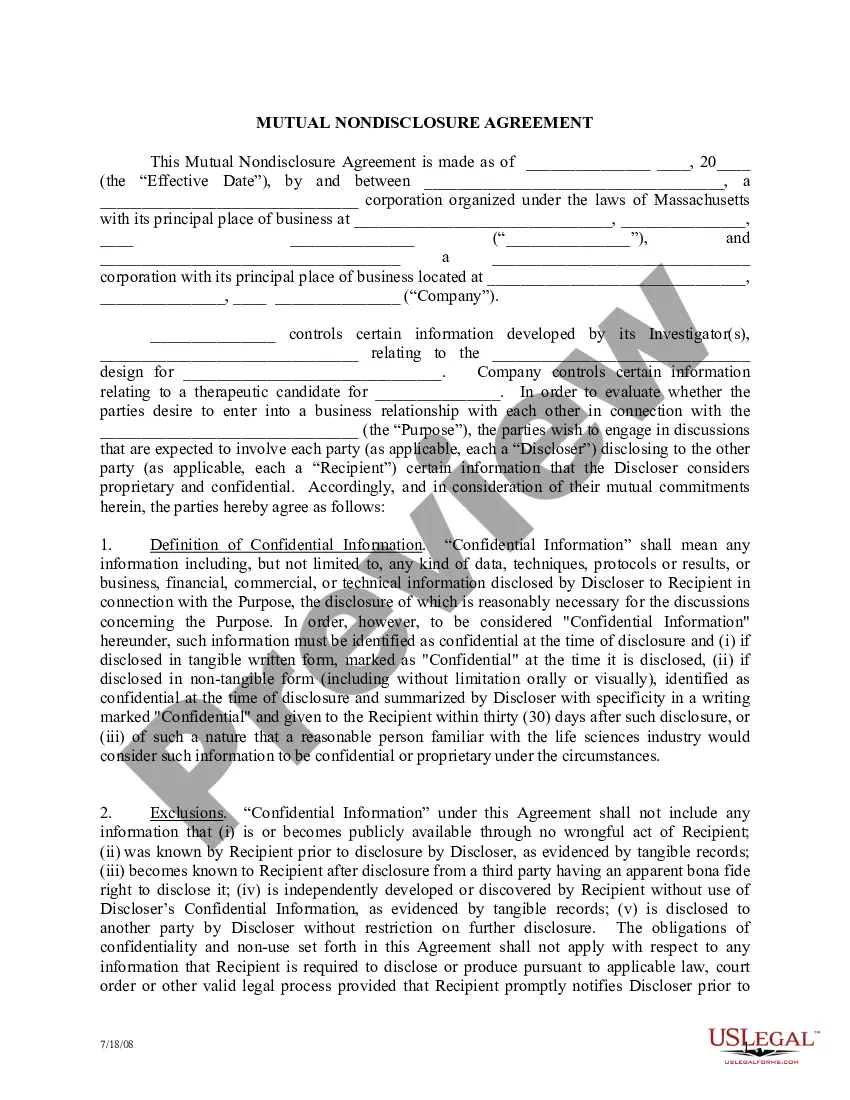
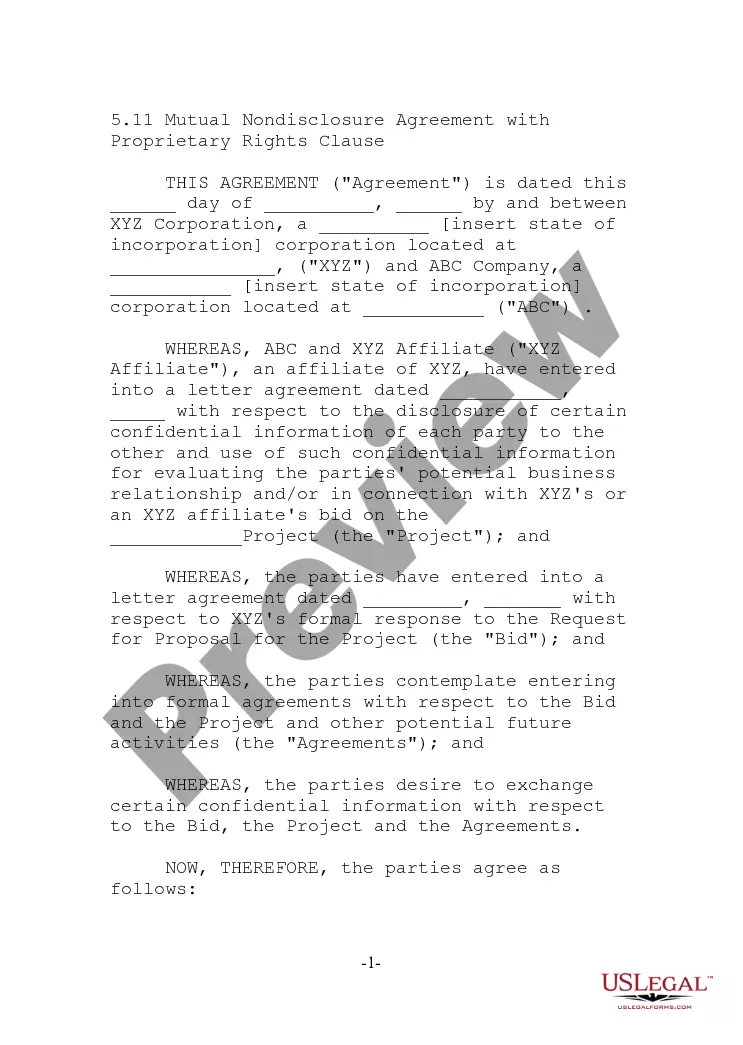
The Mutual Nondisclosure Agreement for a Prospective Joint Venture or Co-Development Relationship is a legal document designed to protect confidential information shared between two parties exploring a potential business partnership. This form is essential for safeguarding sensitive data during preliminary negotiations and distinguishes itself from other nondisclosure agreements by focusing specifically on joint ventures and co-development agreements.
Form components explained
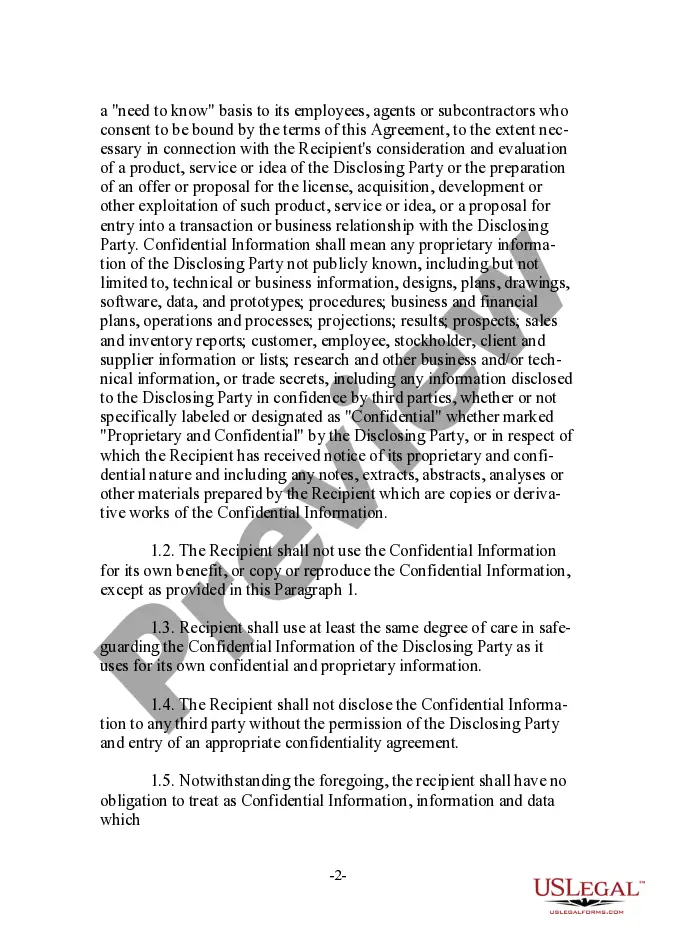
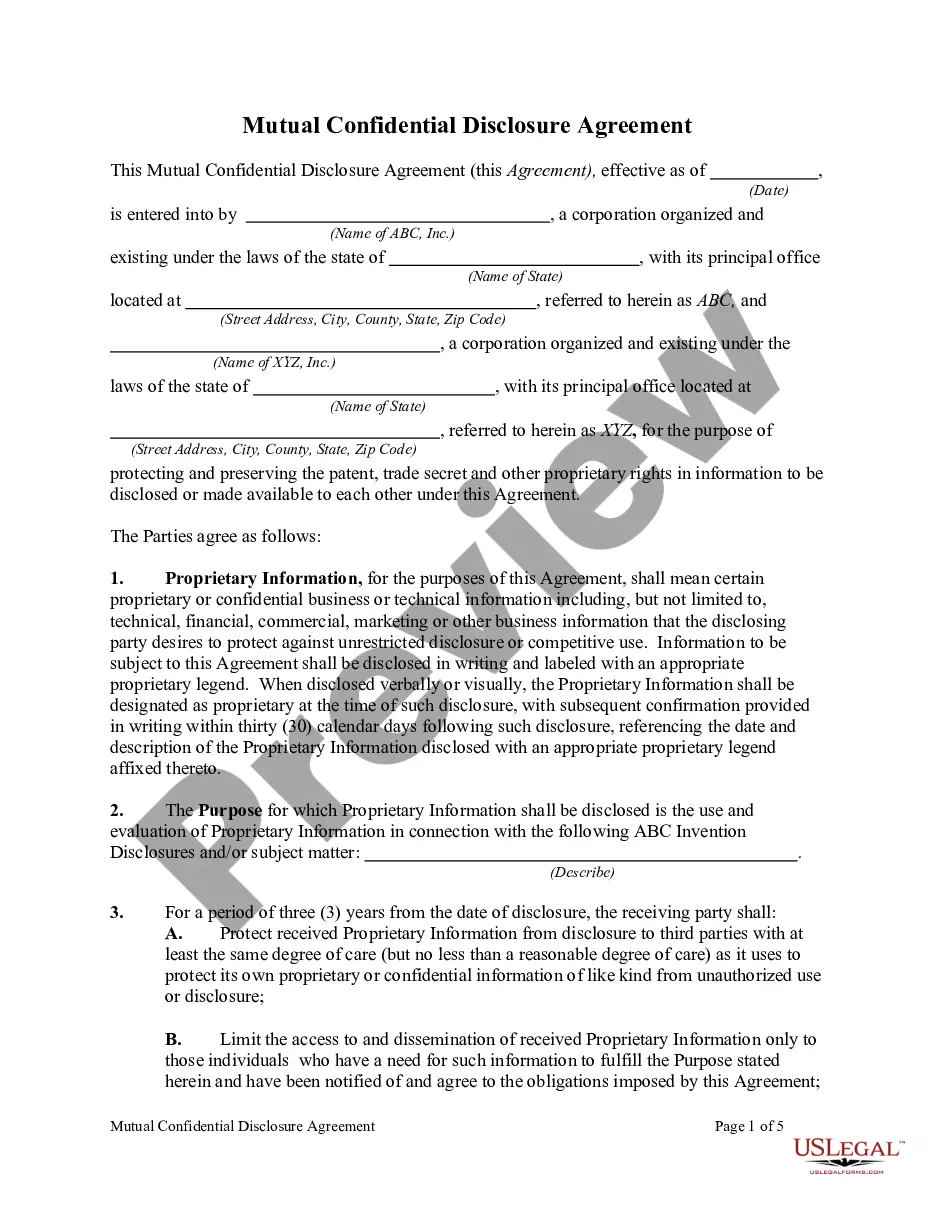
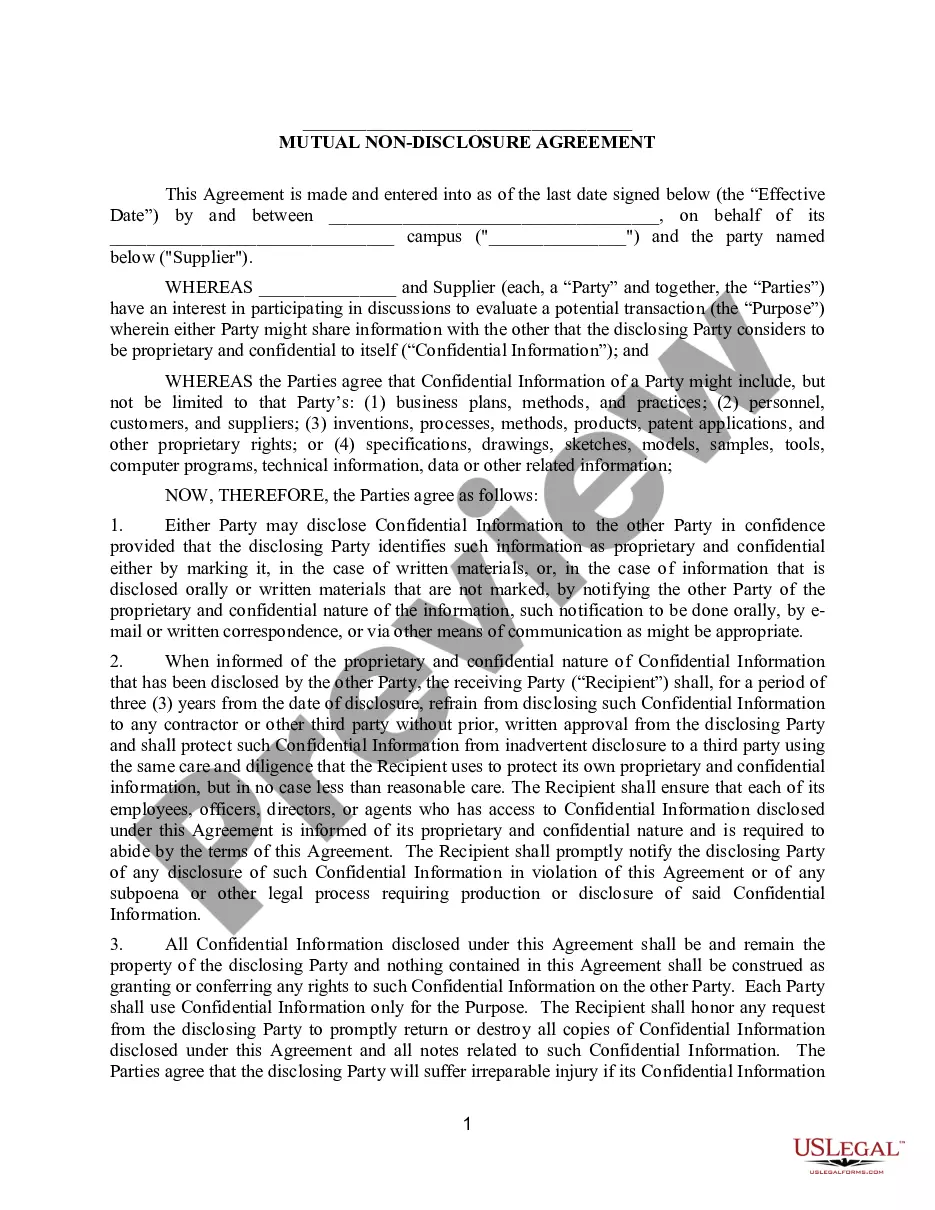
- Confidentiality obligations: Specifies how both parties must handle confidential information.
- Definition of Confidential Information: Clearly outlines what constitutes confidential information.
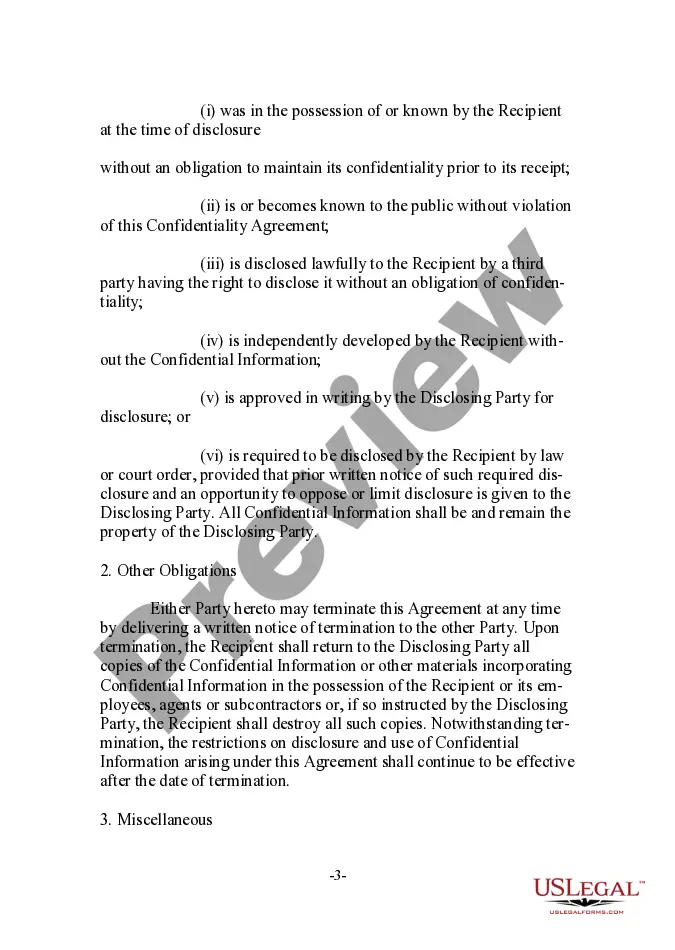
- Termination provisions: Details how and when the agreement can be terminated and the obligations that remain post-termination.
- Miscellaneous clauses: Covers governing law, dispute resolution, and amendments.
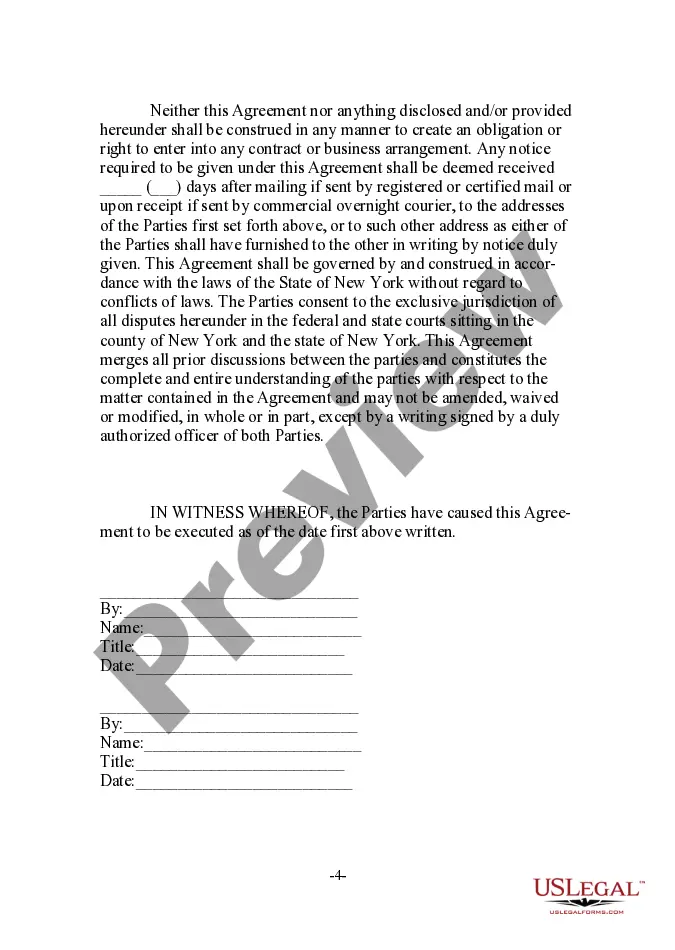
- Execution section: Provides space for signatures and dates to formalize the agreement.
Situations where this form applies
This form is useful when two parties are looking to collaborate on a project, such as developing a new product or entering into a joint venture. It helps ensure that sensitive information, such as business plans, designs, and proprietary data, is protected during discussions about collaboration or development opportunities.
Who needs this form
- Businesses exploring a potential joint venture.
- Companies in the early stages of product development requiring mutual confidentiality.
- Entrepreneurs seeking to share innovative ideas with potential partners without fear of disclosure.
Steps to complete this form
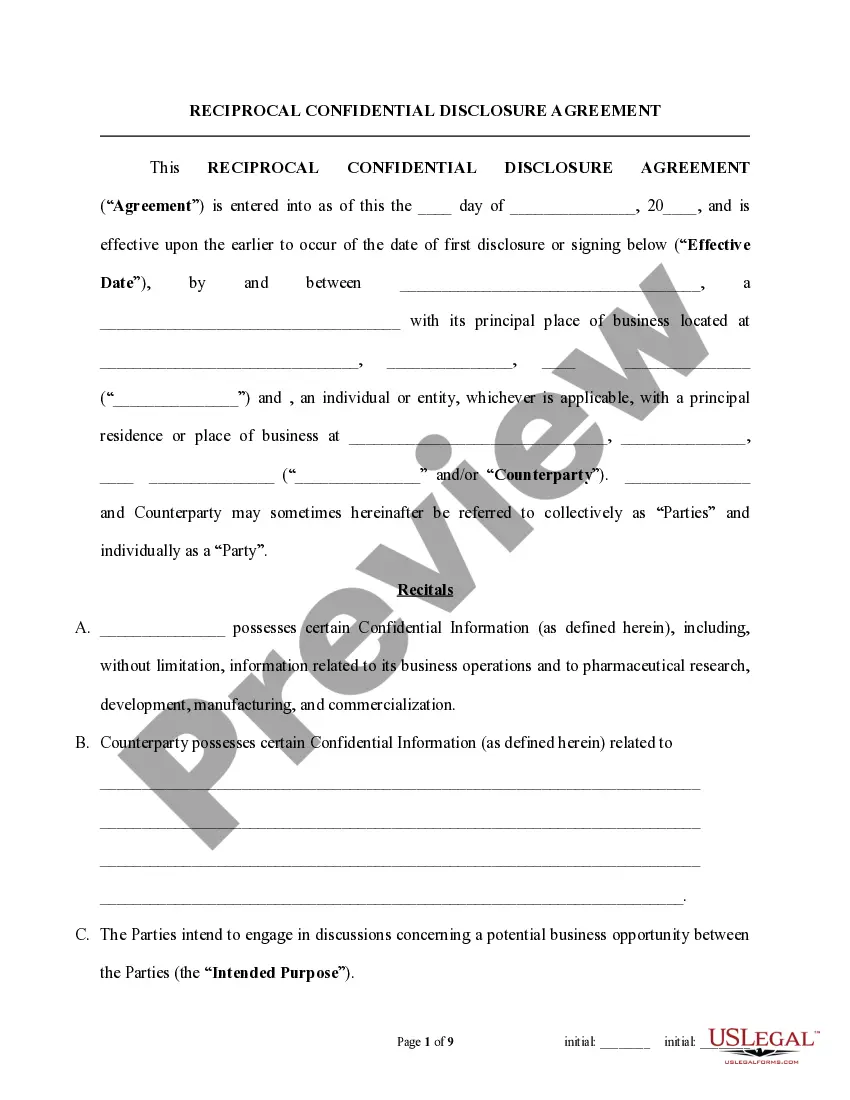
- Identify the parties involved by inserting their names and corporate designations.
- Define the specific confidential information to be shared.
- Specify the start date of the agreement.
- Review the provisions to ensure they meet your needs, especially regarding confidentiality and obligations.
- Have both parties sign and date the document to finalize the agreement.
Notarization requirements for this form
In most cases, this form does not require notarization. However, some jurisdictions or signing circumstances might. US Legal Forms offers online notarization powered by Notarize, accessible 24/7 for a quick, remote process.
Get your form ready online
Our built-in tools help you complete, sign, share, and store your documents in one place.
Make edits, fill in missing information, and update formatting in US Legal Forms—just like you would in MS Word.
Download a copy, print it, send it by email, or mail it via USPS—whatever works best for your next step.
Sign and collect signatures with our SignNow integration. Send to multiple recipients, set reminders, and more. Go Premium to unlock E-Sign.
If this form requires notarization, complete it online through a secure video call—no need to meet a notary in person or wait for an appointment.
We protect your documents and personal data by following strict security and privacy standards.

Make edits, fill in missing information, and update formatting in US Legal Forms—just like you would in MS Word.

Download a copy, print it, send it by email, or mail it via USPS—whatever works best for your next step.

Sign and collect signatures with our SignNow integration. Send to multiple recipients, set reminders, and more. Go Premium to unlock E-Sign.

If this form requires notarization, complete it online through a secure video call—no need to meet a notary in person or wait for an appointment.

We protect your documents and personal data by following strict security and privacy standards.
Common mistakes
- Failing to define what constitutes confidential information clearly.
- Not specifying the duration of confidentiality obligations after termination.
- Forgetting to include necessary signatures or dates at the end of the agreement.
Benefits of using this form online
- Quick and easy download allows for immediate use and editing.
- Templates are drafted by licensed attorneys to ensure legal compliance.
- Convenient access to updates and revisions as laws change.
Legal use & context
- This agreement is enforceable in a court of law, provided that it is properly executed and does not violate any state-specific laws.
- The confidentiality obligations generally continue even after the termination of discussions or the agreement itself.
- Parties must be cautious to ensure that the information shared remains confidential and is not disclosed improperly.
Main things to remember
- A Mutual Nondisclosure Agreement is vital for protecting sensitive information when exploring joint ventures.
- Clear definitions and rights for both parties help prevent misunderstandings and legal issues.
- Use this form to facilitate open dialogue while ensuring confidentiality remains intact.
Looking for another form?
Form popularity
FAQ
An employer will often require an employee to sign an NDA because it allows their company to operate at a higher level, with less risk.Understand, your employer is not asking you to sign an NDA out of mistrust, they are asking you to sign one because it is essential to conducting business smoothly and efficiently.
NDAs are legally enforceable contracts, but they're now coming under increased scrutiny from lawmakers, attorneys and legal experts.Companies often use them as part of an employment contract or settlement agreement to protect sensitive information like trade secrets.
Non-disclosure agreements are an important legal framework used to protect sensitive and confidential information from being made available by the recipient of that information. Companies and startups use these documents to ensure that their good ideas won't be stolen by people they are negotiating with.
1. Confidentiality Agreement is used when a higher degree of secrecy is required. Non-disclosure implies you must not disclose personal or private information. But keeping confidential implies you be more proactive in making sure information is kept secret.
The party to be charged must have signed the contract. Since the NDAs benefit you, so long as the other party has signed, that ishould be sufficient.
In a Unilateral Nondisclosure Agreement, only one party is disclosing confidential information to another party. For example, one company might be requesting bids for work on a project.In a Mutual Nondisclosure Agreement, both parties are sharing confidential information they want to protect.
The nondisclosure agreement should identify the parties to the agreement and which one is the disclosing party, or side sharing the information, and the recipient. Names and addresses of the parties should be included. The agreement should also identify other individuals who may be parties to the agreement.
A non-disclosure agreement is a legally binding contract that establishes a confidential relationship. The party or parties signing the agreement agree that sensitive information they may obtain will not be made available to any others.In this case, it may be called a mutual non-disclosure agreement.