Agreement for Sales of Data Processing Equipment
Understanding this form
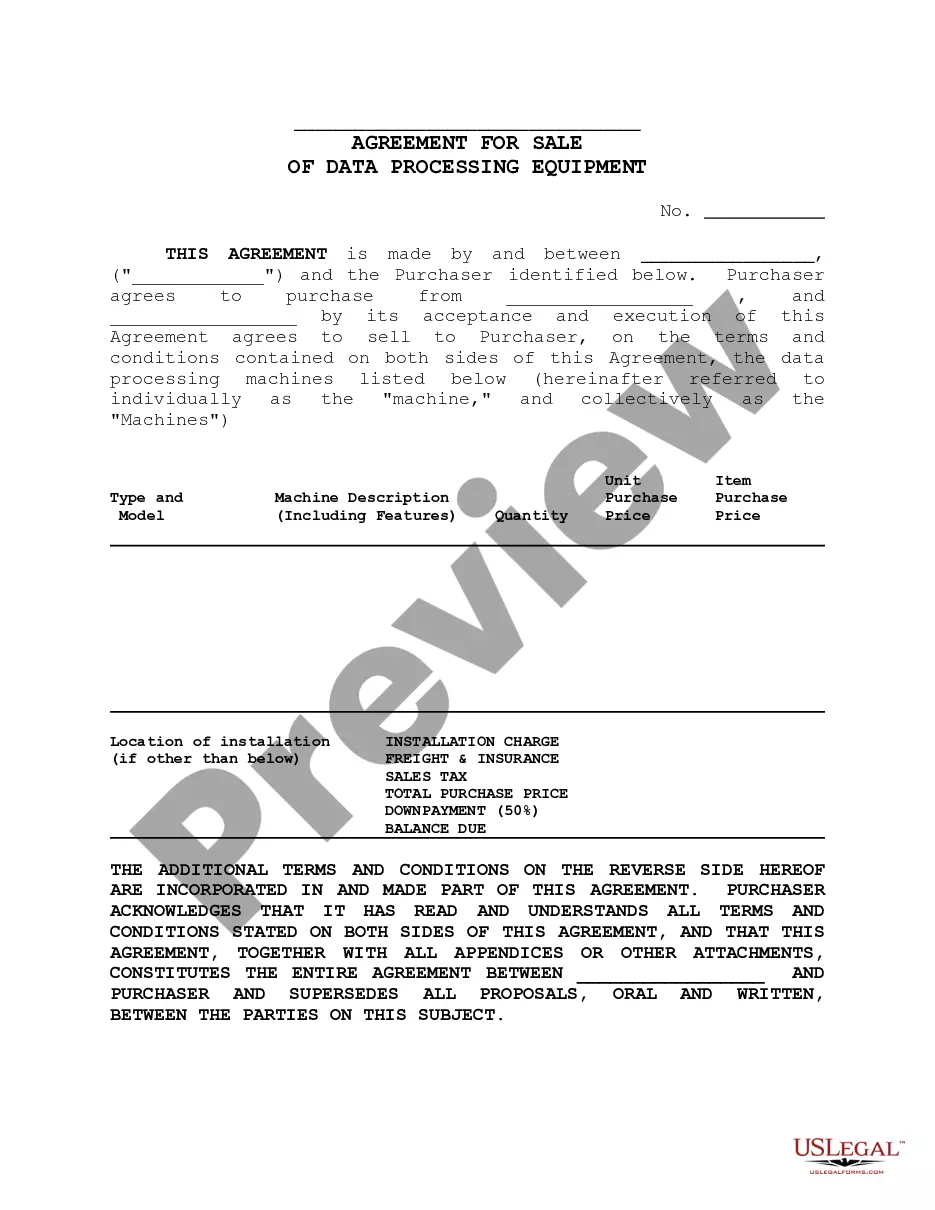
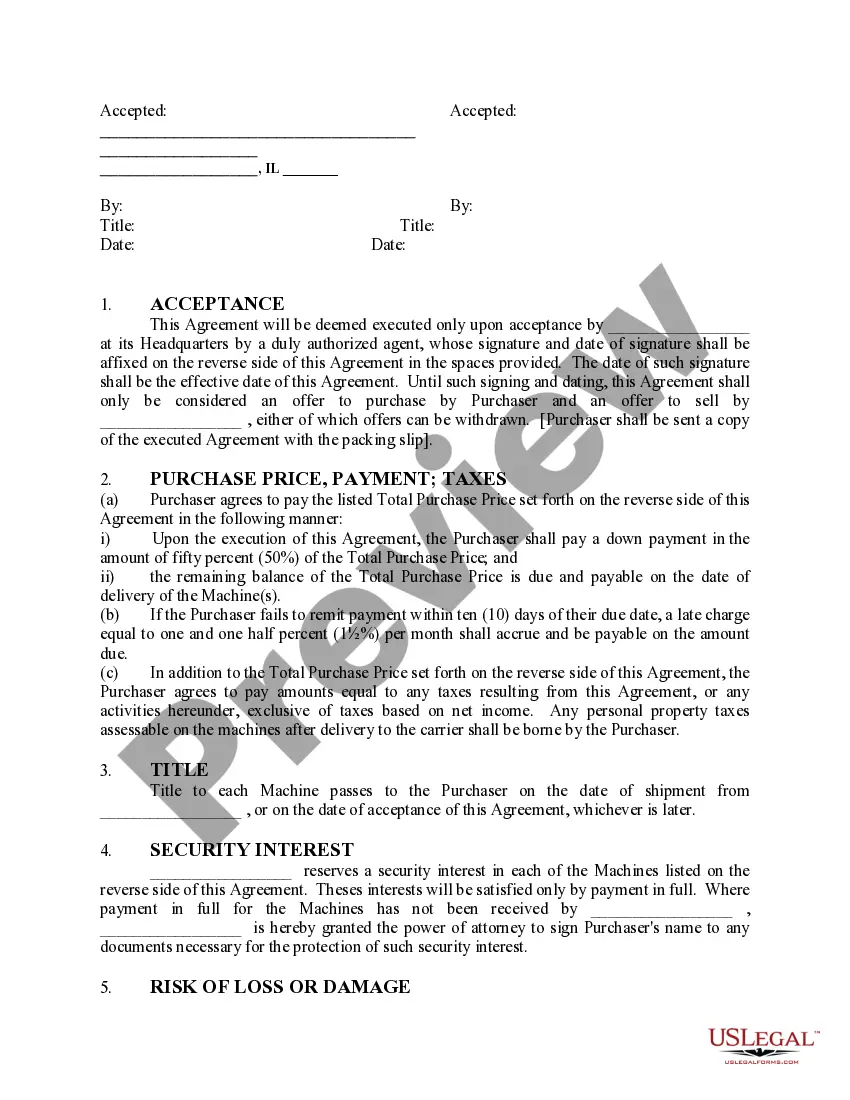
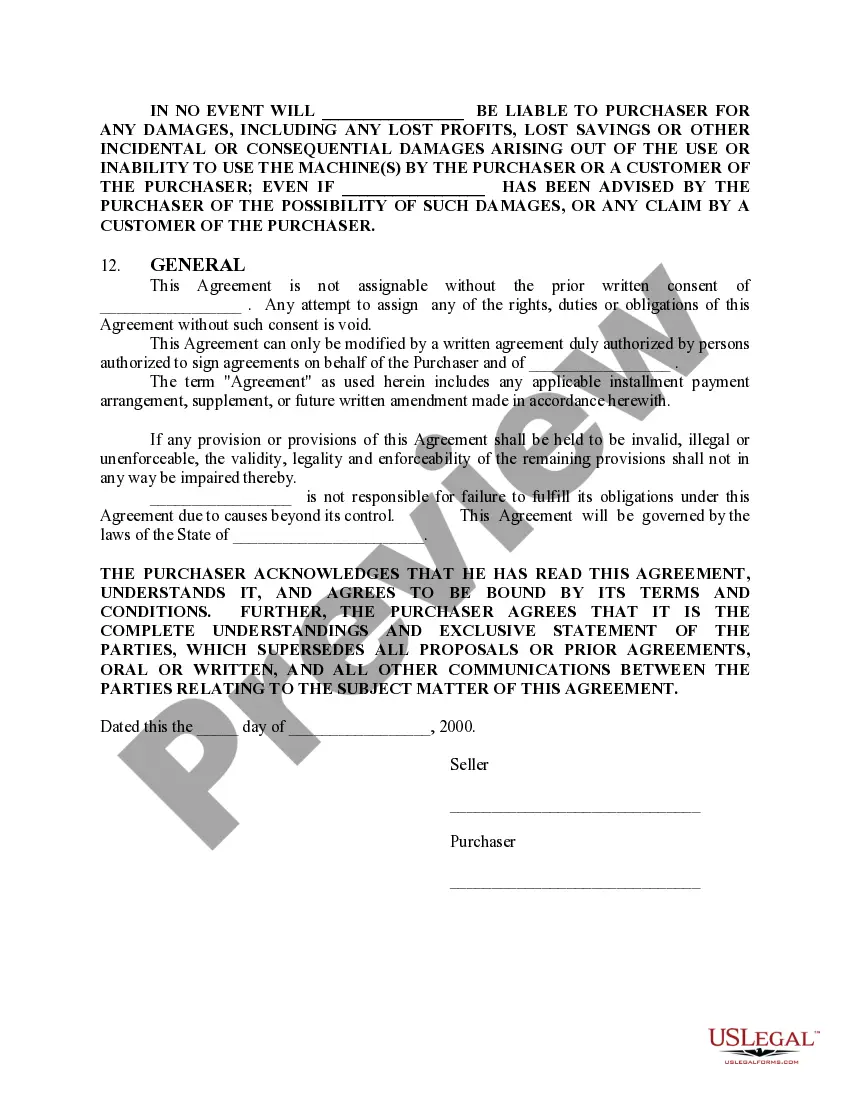
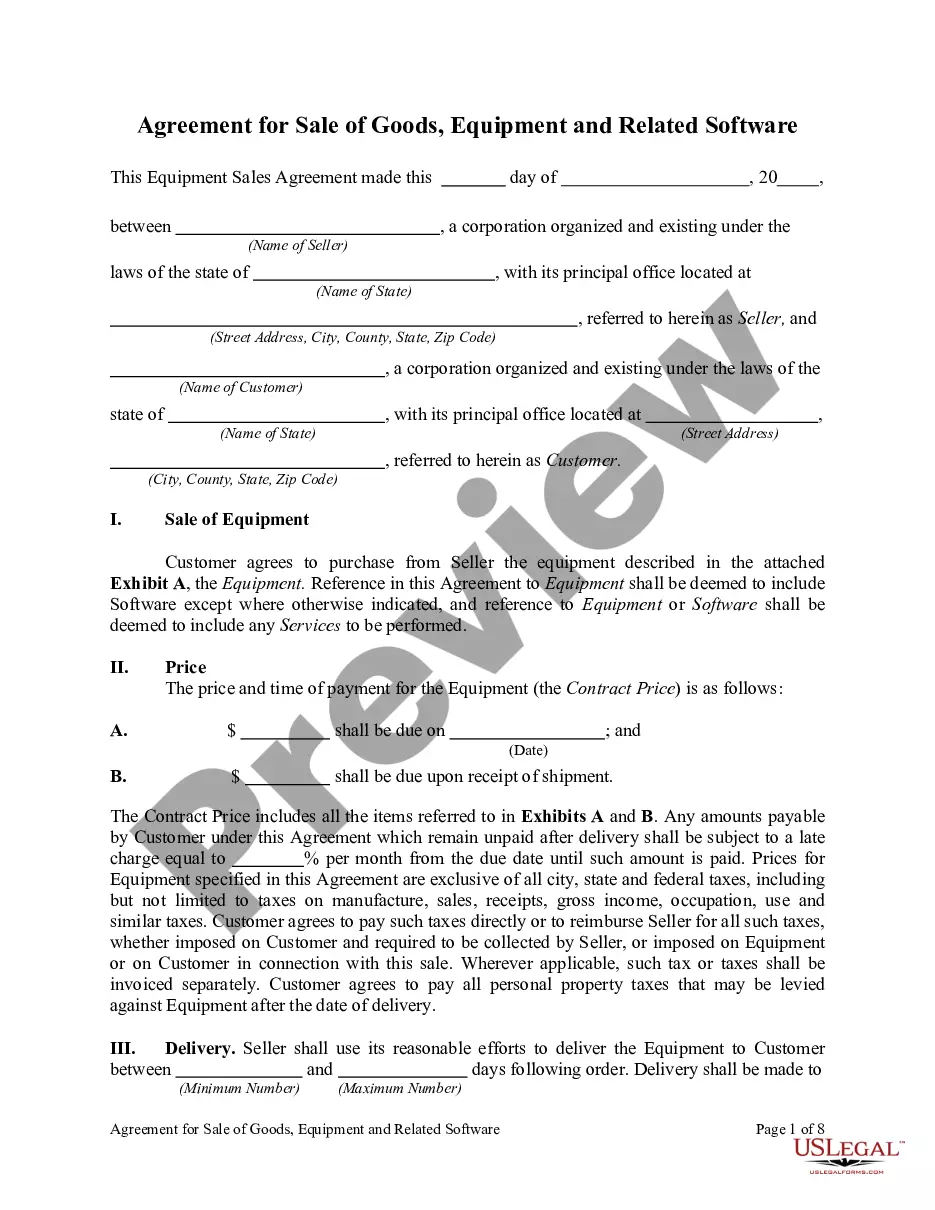
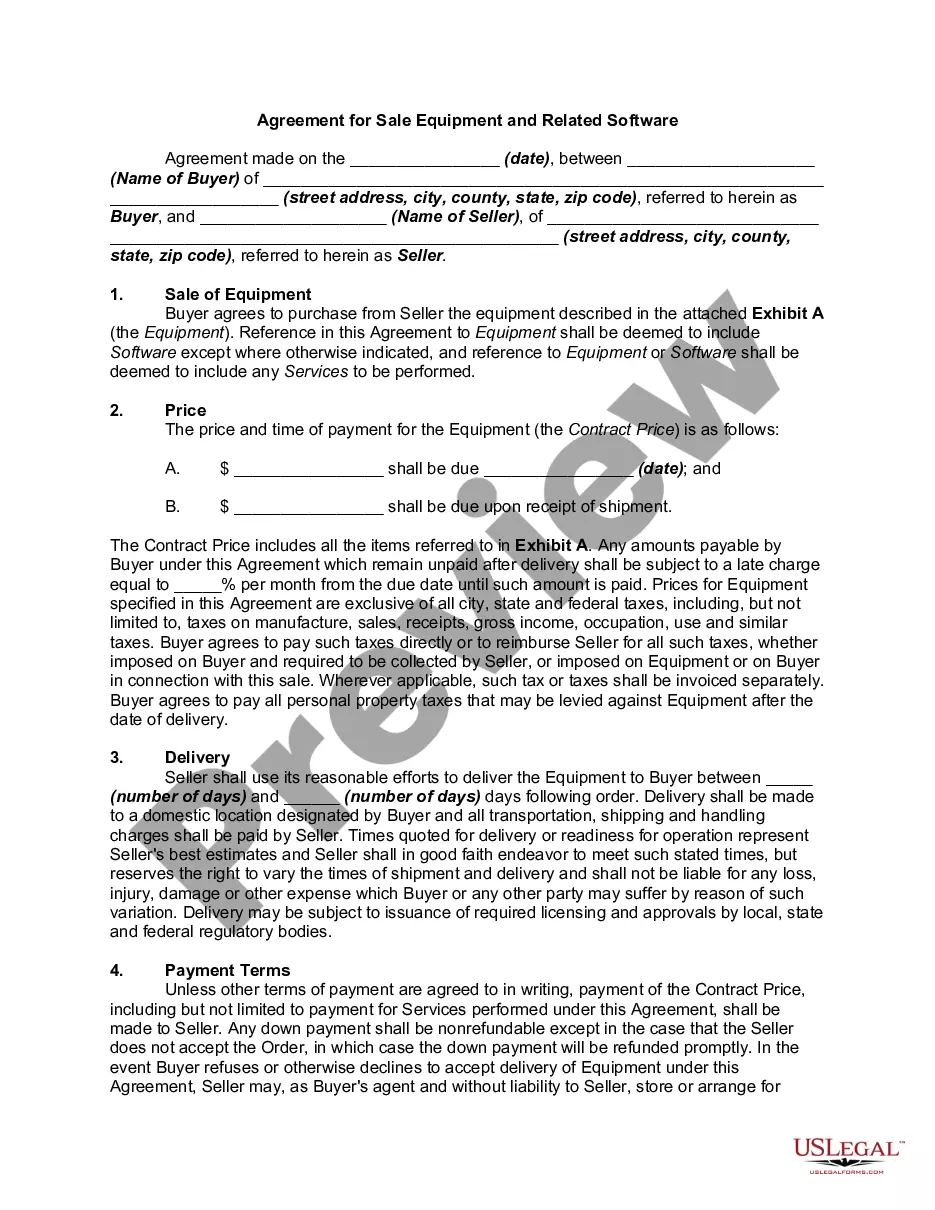
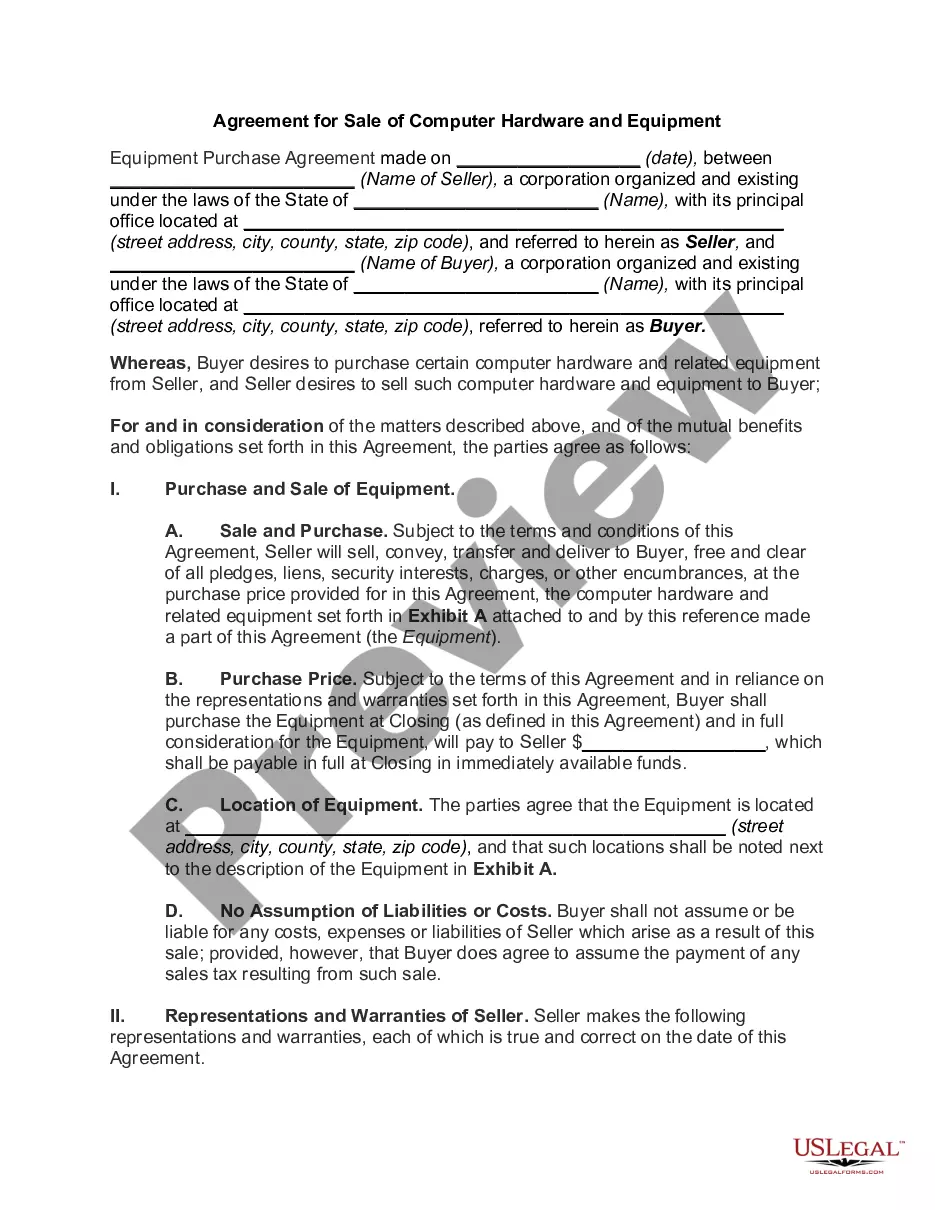
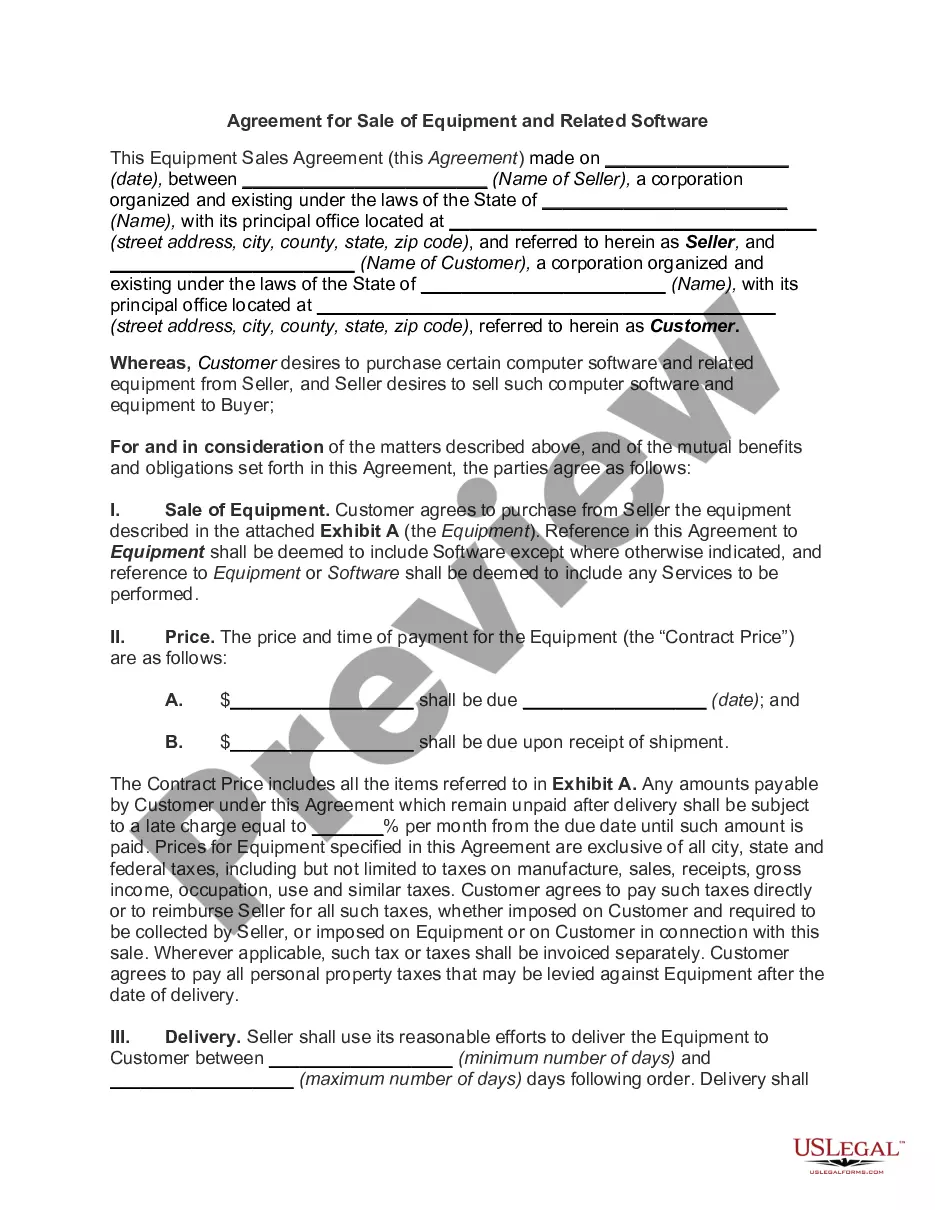
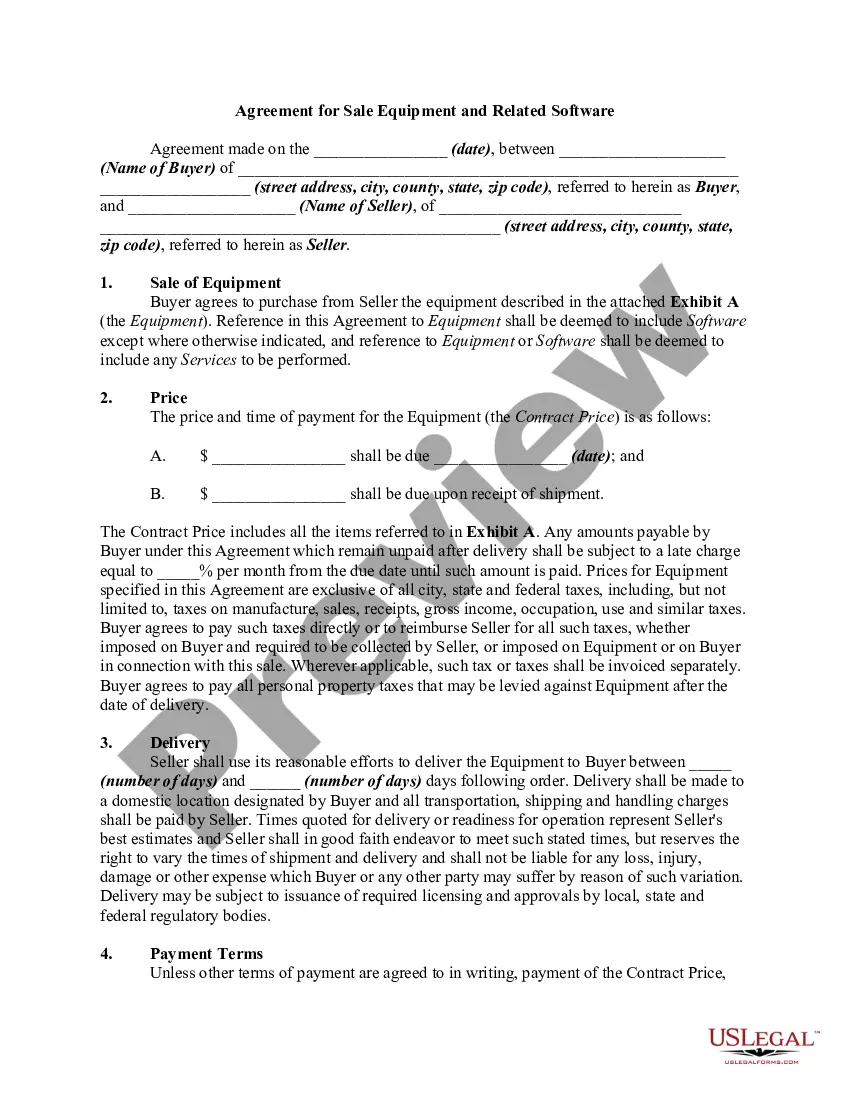
The Agreement for Sale of Data Processing Equipment is a legally binding document designed for the sale of data processing machines. This agreement outlines the terms and conditions agreed upon by both the seller and the purchaser, including payment terms, warranties, and responsibilities regarding installation and maintenance. It differs from other sales agreements by specifically addressing the unique aspects related to technology and equipment transactions.
What’s included in this form
- Identification of the seller and purchaser, including their addresses.
- Details of the equipment being sold, including model, description, quantity, and pricing.
- Payment terms, including down payment and balance due upon delivery.
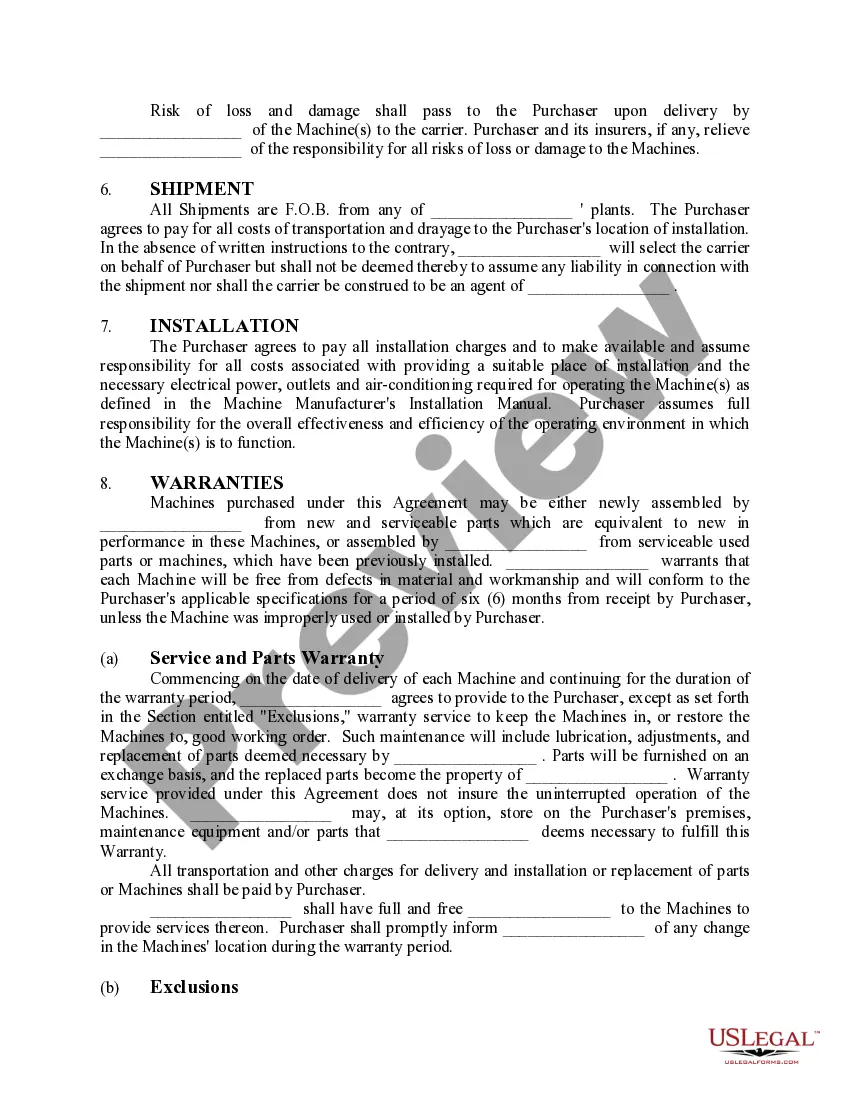
- Provisions for installation, including who is responsible for costs and setup.
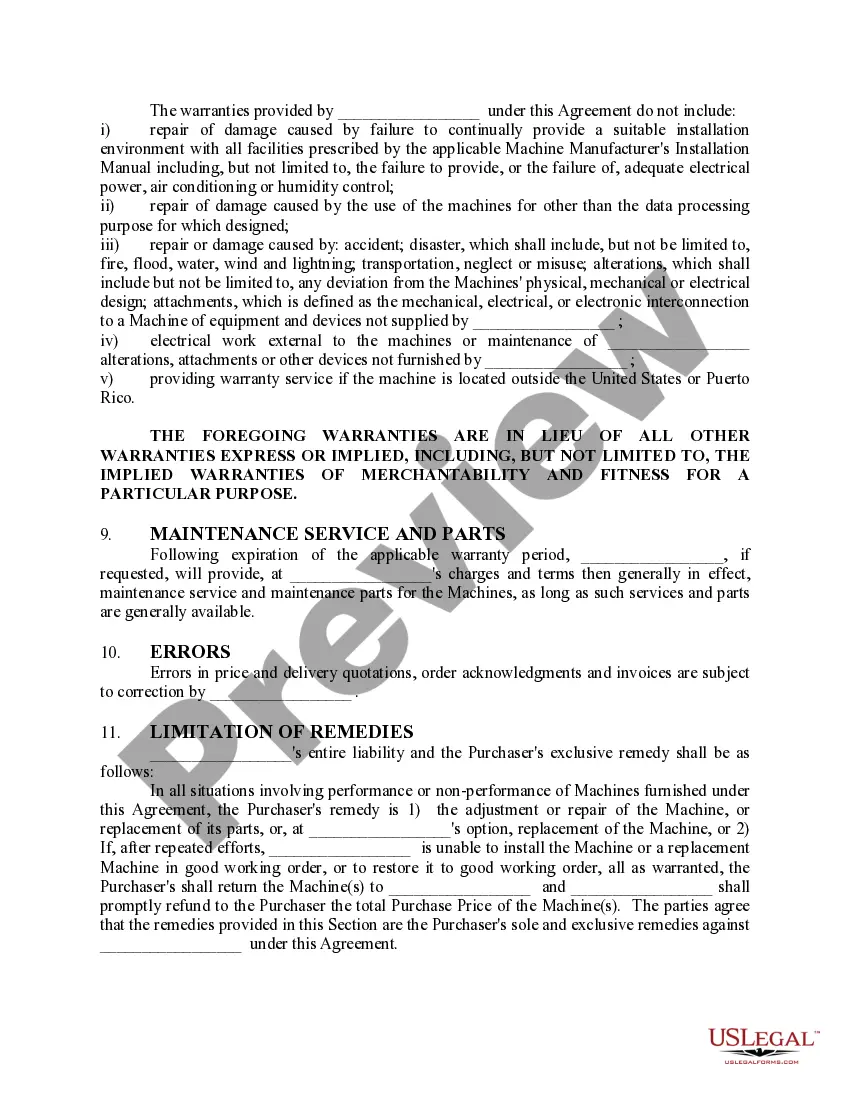
- Warranties provided by the seller regarding the condition and performance of the equipment.
- Conditions under which title and risk of loss transfer from the seller to the purchaser.
When this form is needed
This form should be used when a business or individual wishes to sell data processing equipment to another party. It is appropriate for transactions involving significant financial investment in technology, where clear terms are necessary to protect both the seller and the buyer. Situations might include upgrading equipment in an office, selling surplus machines after a tech upgrade, or when entering new markets requiring different technology.
Who this form is for
- Businesses or individuals selling data processing equipment.
- Purchasers looking to acquire data processing machines for commercial use.
- Legal and business professionals involved in technology transactions.
Steps to complete this form
- Identify and enter the names and addresses of the seller and purchaser.
- Specify the equipment being sold, including model numbers, descriptions, and purchase prices.
- Clearly delineate payment terms, noting down payment and remaining balance due.
- Fill in any additional terms related to installation and warranty information.
- Ensure both parties sign and date the agreement in the designated areas.
Notarization guidance
Notarization is generally not required for this form. However, certain states or situations might demand it. You can complete notarization online through US Legal Forms, powered by Notarize, using a verified video call available anytime.
Get your form ready online
Our built-in tools help you complete, sign, share, and store your documents in one place.
Make edits, fill in missing information, and update formatting in US Legal Forms—just like you would in MS Word.
Download a copy, print it, send it by email, or mail it via USPS—whatever works best for your next step.
Sign and collect signatures with our SignNow integration. Send to multiple recipients, set reminders, and more. Go Premium to unlock E-Sign.
If this form requires notarization, complete it online through a secure video call—no need to meet a notary in person or wait for an appointment.
We protect your documents and personal data by following strict security and privacy standards.

Make edits, fill in missing information, and update formatting in US Legal Forms—just like you would in MS Word.

Download a copy, print it, send it by email, or mail it via USPS—whatever works best for your next step.

Sign and collect signatures with our SignNow integration. Send to multiple recipients, set reminders, and more. Go Premium to unlock E-Sign.

If this form requires notarization, complete it online through a secure video call—no need to meet a notary in person or wait for an appointment.

We protect your documents and personal data by following strict security and privacy standards.
Common mistakes
- Failing to provide complete details about the equipment being sold.
- Not specifying payment due dates or conditions for payment.
- Overlooking warranty provisions which can lead to disputes later.
- Missing signatures or dates, making the agreement invalid.
Benefits of completing this form online
- Convenient access to a legally vetted document that simplifies the sales process.
- Editability allows users to customize the form to fit specific transactions easily.
- Reliable format ensures all necessary legal elements are included for enforceability.
Looking for another form?
Form popularity
FAQ
The subject matter of processing. The duration of the processing. The nature and purpose of the processing. The type of personal data involved. The categories of data subject. The controller's obligations and rights.
A data processing agreement (DPA) is a legally binding document to be entered into between the controller and the processor in writing or in electronic form. It regulates the particularities of data processing such as its scope and purpose as well as the relationship between the controller and the processor.
The processor agrees to process personal data only on written instructions of the controller. Everyone who comes into contact with the data is sworn to confidentiality.The processor will help the controller uphold their obligations under the GDPR, particularly concerning data subjects' rights.
Contracts must set out: the subject matter and duration of the processing; the nature and purpose of the processing; the type of personal data and categories of data subject; and.
A Controller and Processor should enter into a Data Processing Contract which must, at a minimum, contain the following details: The subject matter, duration, nature and purpose of the data processing; The type of personal data being processed; The categories of data subjects whose personal data is being processed; and.
A data processing agreement (DPA) is a legal document signed by the controller and the processor either in written or in electronic form, the purpose of which is to regulate the terms and conditions of EU citizens' personal data processing.
Article 28(3) of GDPR requires that controllers, processors, and sub-processors must enter into written contracts, or data processing agreements, in order to share personal data.
The contract is important so that both parties understand their responsibilities and liabilities.If a processor uses another organisation (ie a sub-processor) to assist in its processing of personal data for a controller, it needs to have a written contract in place with that sub-processor.