Child Care or Day Care Services Contract - Self-Employed
Understanding this form
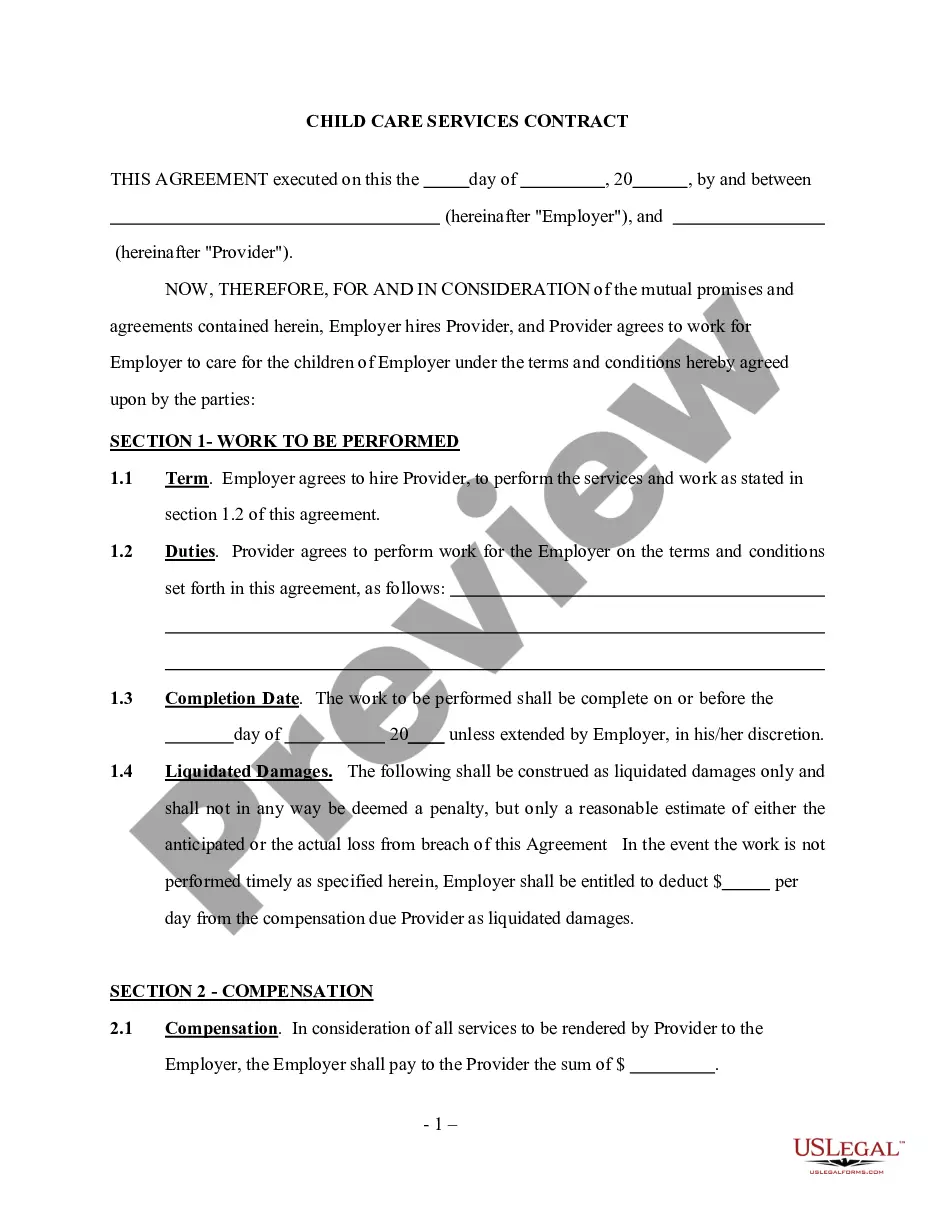
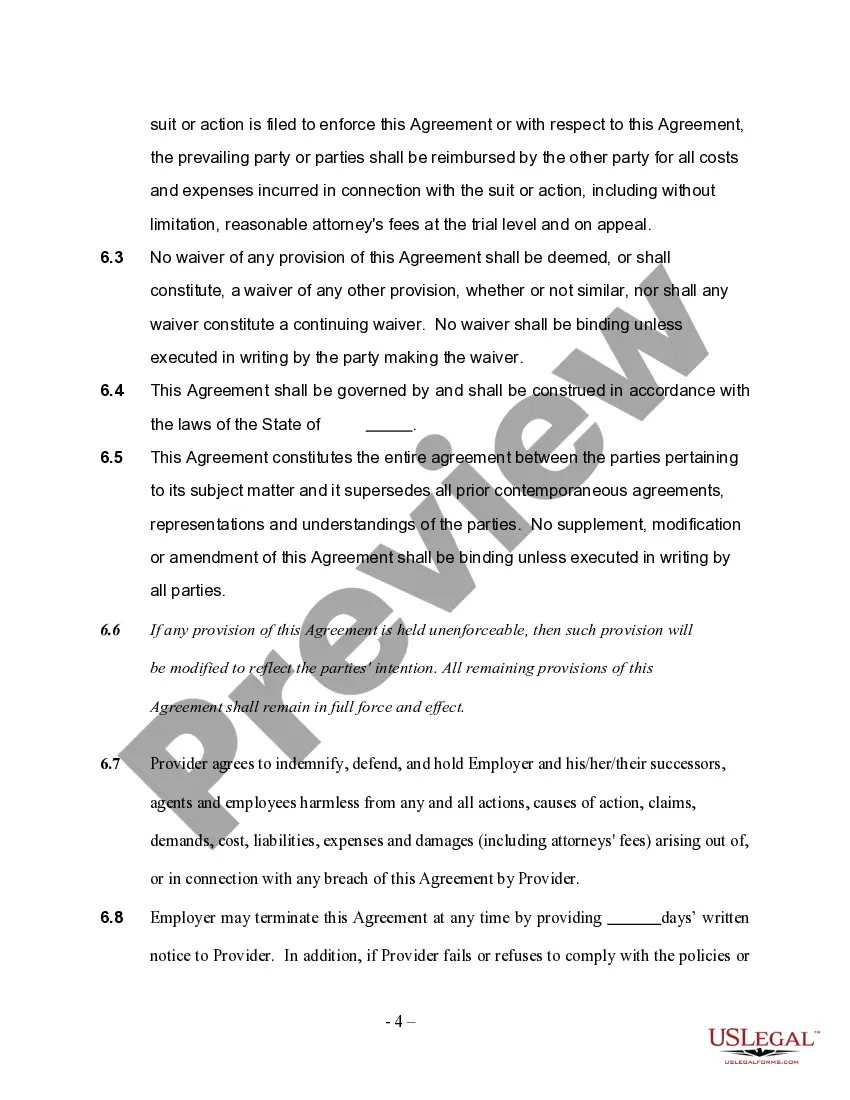
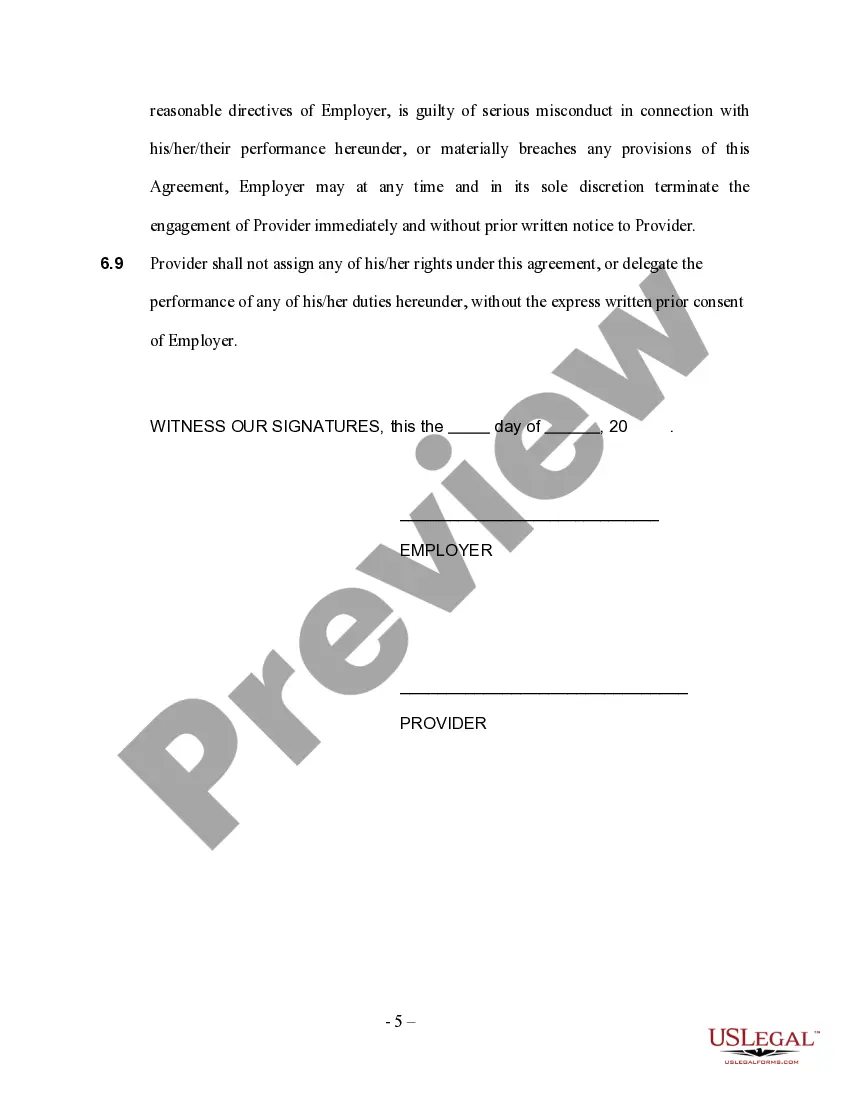
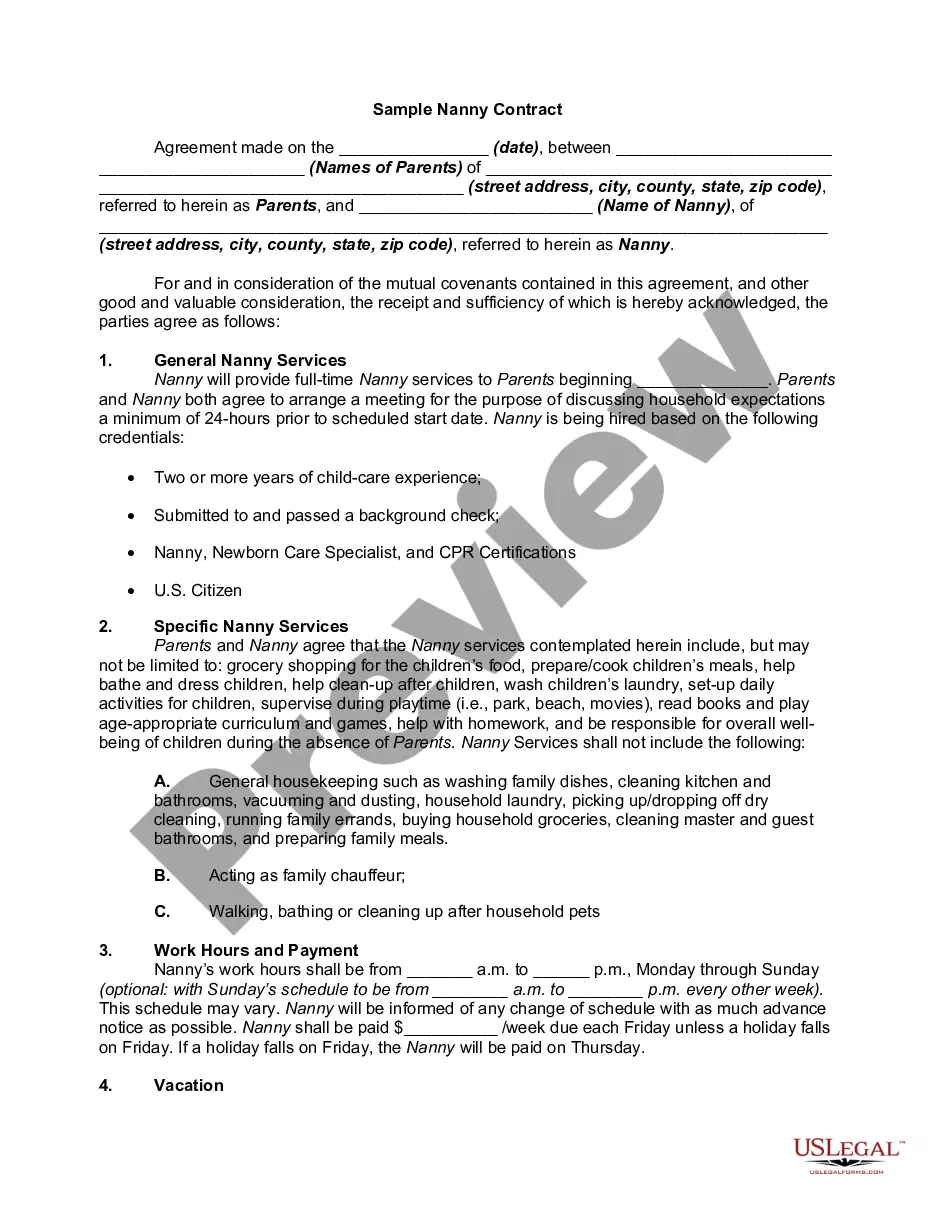
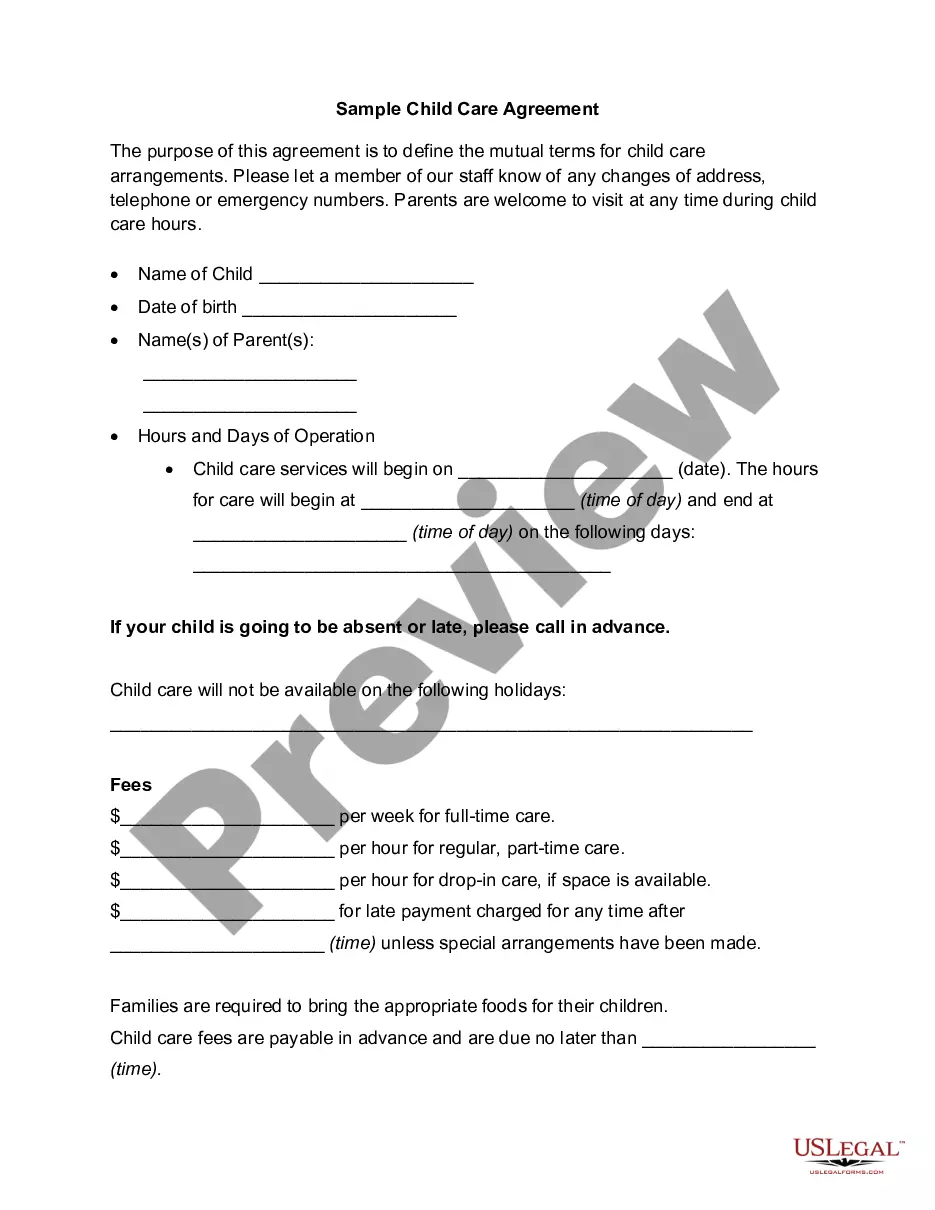
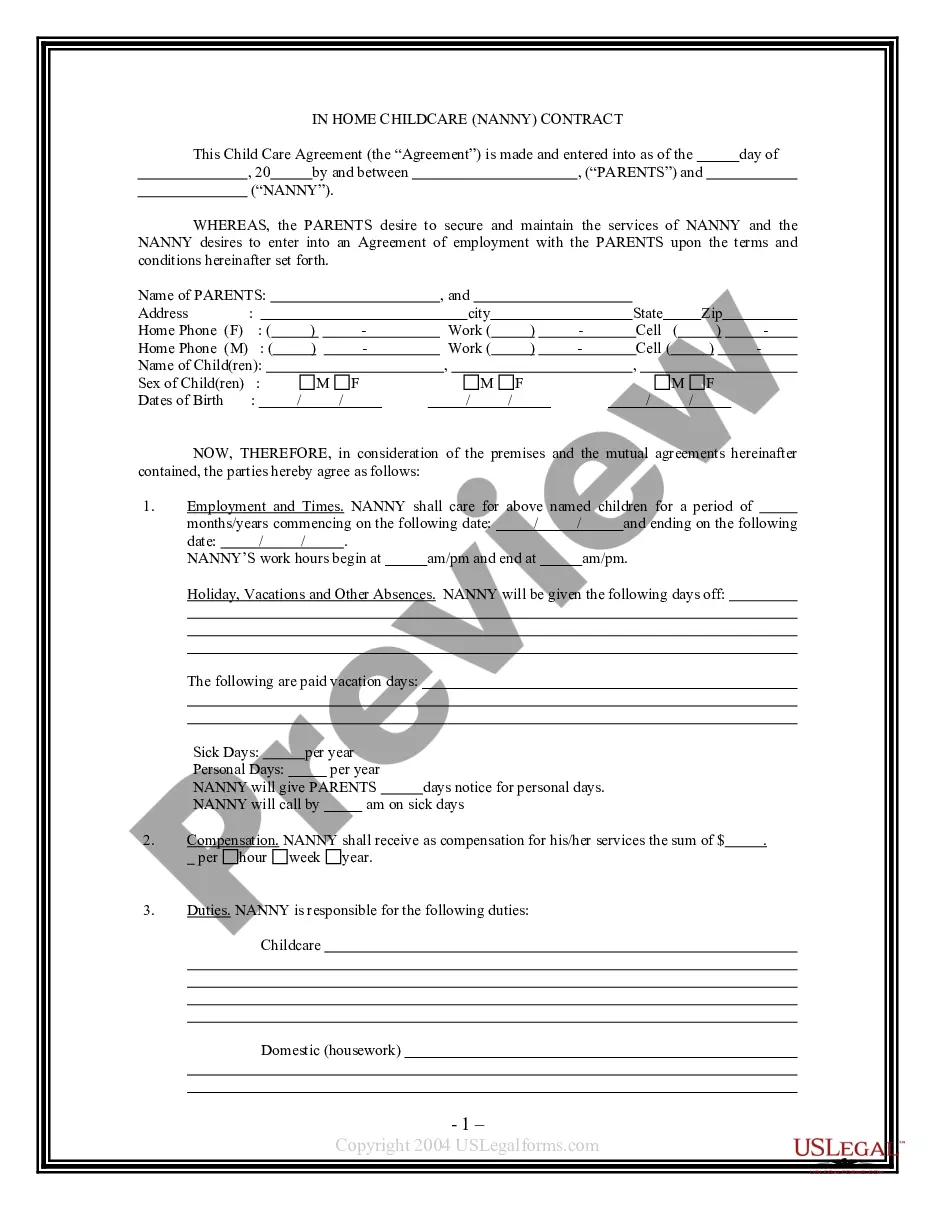
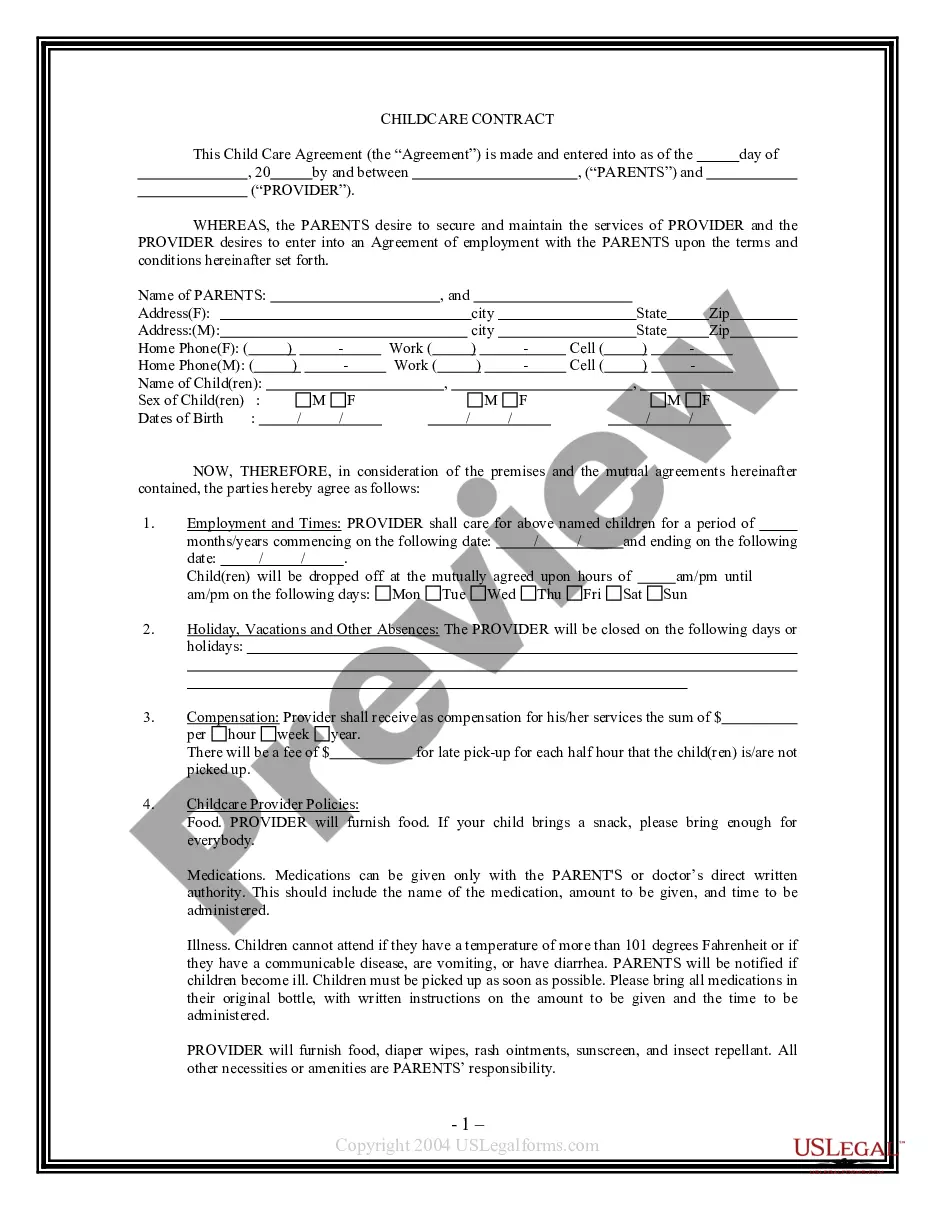
The Child Care or Day Care Services Contract - Self-Employed is a legal agreement between an individual employer and a self-employed child care provider. This contract outlines the terms of employment, clarifying the provider's status as an independent contractor. It differs from other agreements by focusing specifically on the unique relationship between the employer and the independent child care provider, setting clear expectations and obligations for both parties.
What’s included in this form
- Work to be performed: Describes the services to be provided by the child care provider.
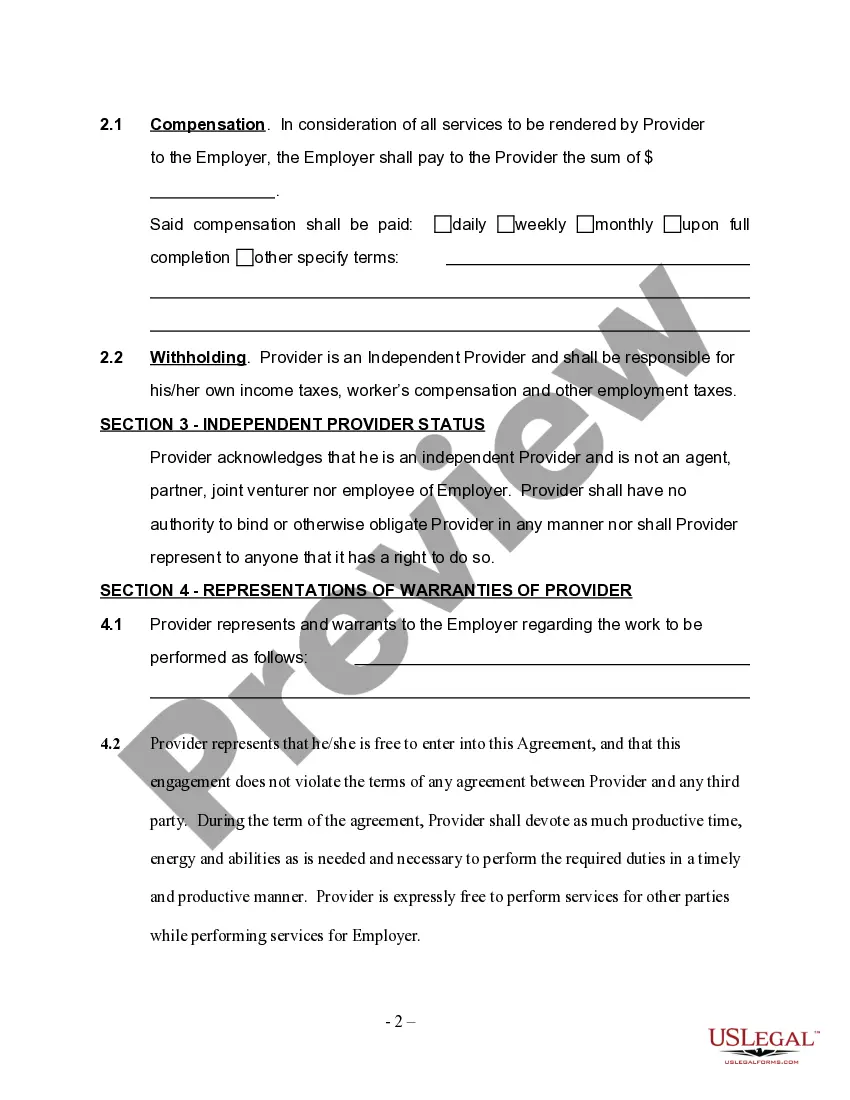
- Independent provider status: Confirms the provider's status as an independent contractor with no authority to represent the employer.
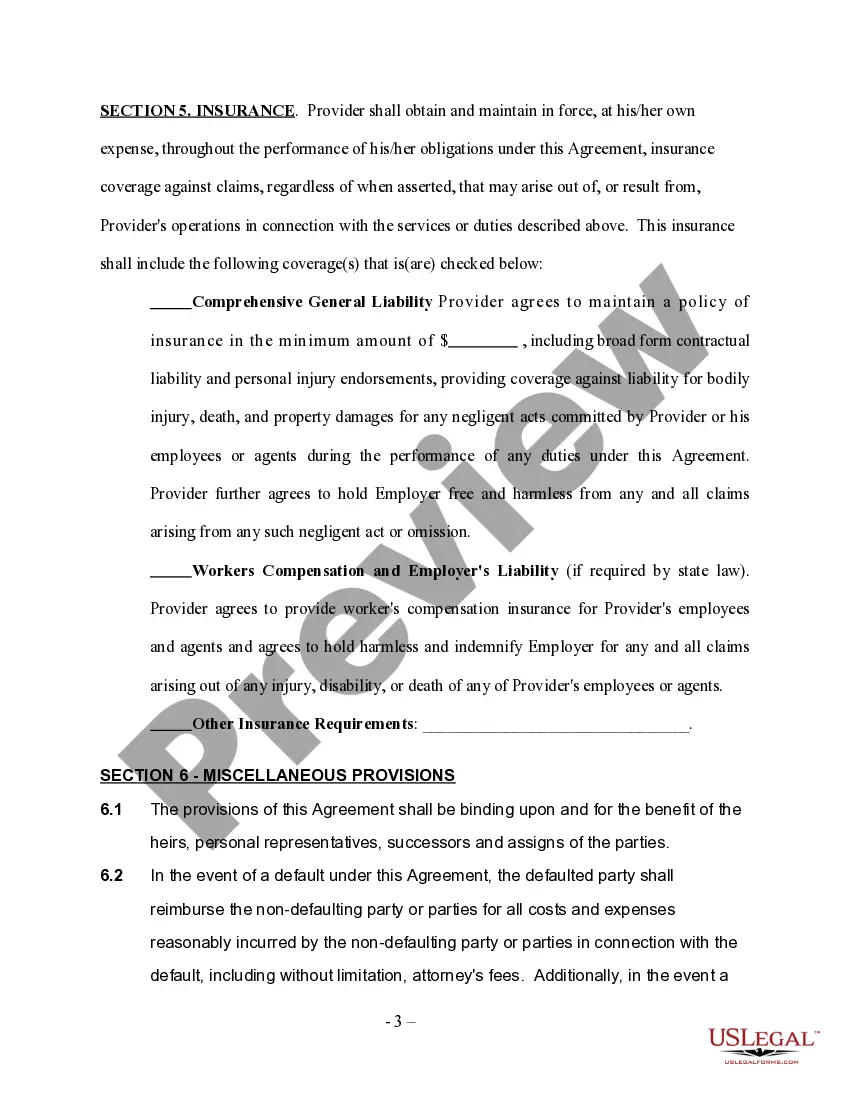
- Insurance requirements: Outlines the need for the provider to maintain insurance coverage during the contract term.
Situations where this form applies
This form should be used when hiring a child care provider as an independent contractor. It is ideal for parents who need assistance caring for their children on a short-term or long-term basis while ensuring that the provider understands their responsibilities and the legal boundaries of their role. This contract helps clarify expectations, protect both parties, and reduce potential misunderstandings.
Who this form is for
- Parents or guardians hiring a child care provider.
- Self-employed child care providers looking to formalize their working relationship.
- Individuals seeking clarity and legal protection in their arrangements with child care services.
Instructions for completing this form
- Identify the parties involved: Enter the names and contact information of both the employer and the provider.
- Specify the services: Clearly outline the child care services to be performed in the designated section.
- Enter the duration: Indicate the start date and end date of the contract term.
- Provide insurance details: Include information about the insurance coverage that the provider must maintain.
- Sign and date: Ensure that both parties sign and date the agreement to make it legally binding.
Does this document require notarization?
This form does not typically require notarization to be legally valid. However, some jurisdictions or document types may still require it. US Legal Forms provides secure online notarization powered by Notarize, available 24/7 for added convenience.
Get your form ready online
Our built-in tools help you complete, sign, share, and store your documents in one place.
Make edits, fill in missing information, and update formatting in US Legal Forms—just like you would in MS Word.
Download a copy, print it, send it by email, or mail it via USPS—whatever works best for your next step.
Sign and collect signatures with our SignNow integration. Send to multiple recipients, set reminders, and more. Go Premium to unlock E-Sign.
If this form requires notarization, complete it online through a secure video call—no need to meet a notary in person or wait for an appointment.
We protect your documents and personal data by following strict security and privacy standards.

Make edits, fill in missing information, and update formatting in US Legal Forms—just like you would in MS Word.

Download a copy, print it, send it by email, or mail it via USPS—whatever works best for your next step.

Sign and collect signatures with our SignNow integration. Send to multiple recipients, set reminders, and more. Go Premium to unlock E-Sign.

If this form requires notarization, complete it online through a secure video call—no need to meet a notary in person or wait for an appointment.

We protect your documents and personal data by following strict security and privacy standards.
Typical mistakes to avoid
- Failing to clearly define the services to be provided.
- Not specifying the duration of the contract.
- Omitting insurance coverage requirements for the provider.
Why use this form online
- Convenient download and print options, allowing for easy access.
- Editability to customize the contract according to your specific needs.
- Reliability, as forms are drafted by licensed attorneys to ensure legal compliance.
Legal use & context
- This contract acts as a formal agreement and can be used as evidence in disputes.
- Ensure both parties fully understand the terms to maintain enforceability.
- Local laws may influence the terms and obligations, so it's crucial to be aware of jurisdictional requirements.
Looking for another form?


Form popularity
FAQ
The IRS requires you to treat most home child care workers as household employees and not as independent contractors.
There are three main criteria to claim the CTC: Income: You must have earned income more than $2,500. Earned income can be from wages, salary, tips, employer-based disability, self-employment income, military pay, or union strike benefits. Qualifying Child: Children claimed for the CTC must be a qualifying child.
Can self-employed parents apply? As long as you earn at least the minimum amount, but less than the upper threshold of £100,000 each, your child will be eligible for the 30 hours free childcare. need to demonstrate that they meet the income criteria for 12 months.
Self-employed parents will be able to get support with childcare costs in Tax-Free Childcare, unlike the current scheme (Employer-Supported Childcare) which is not available to self-employed parents.During this, self-employed parents won't have to earn the minimum income level.
The short answer is that childcare isn't deductible because it's a personal expense.According to the IRS, a business "expense" is one that is both ordinary and necessary.
Babysitting is generally considered self-employment because you're not being treated like an employee. You have more control over your own schedule in terms of what gigs you decide to take on, and you work on your own terms. Nannies, however, are generally considered to be employees of the family.
There are two ways you can pay for childcare costs via your limited company: through a direct agreement with a childcare scheme provider or through a voucher scheme. Both arrangements can be offset as a business expense and will be exempt from tax and national insurance up to a certain amount.
When you put your child into daycare in order to be free to conduct your business, your child care expenses are deductible, not as a business expense, but on your personal income taxes.