USLegal Guide to Unlawful Detention
What is this form?
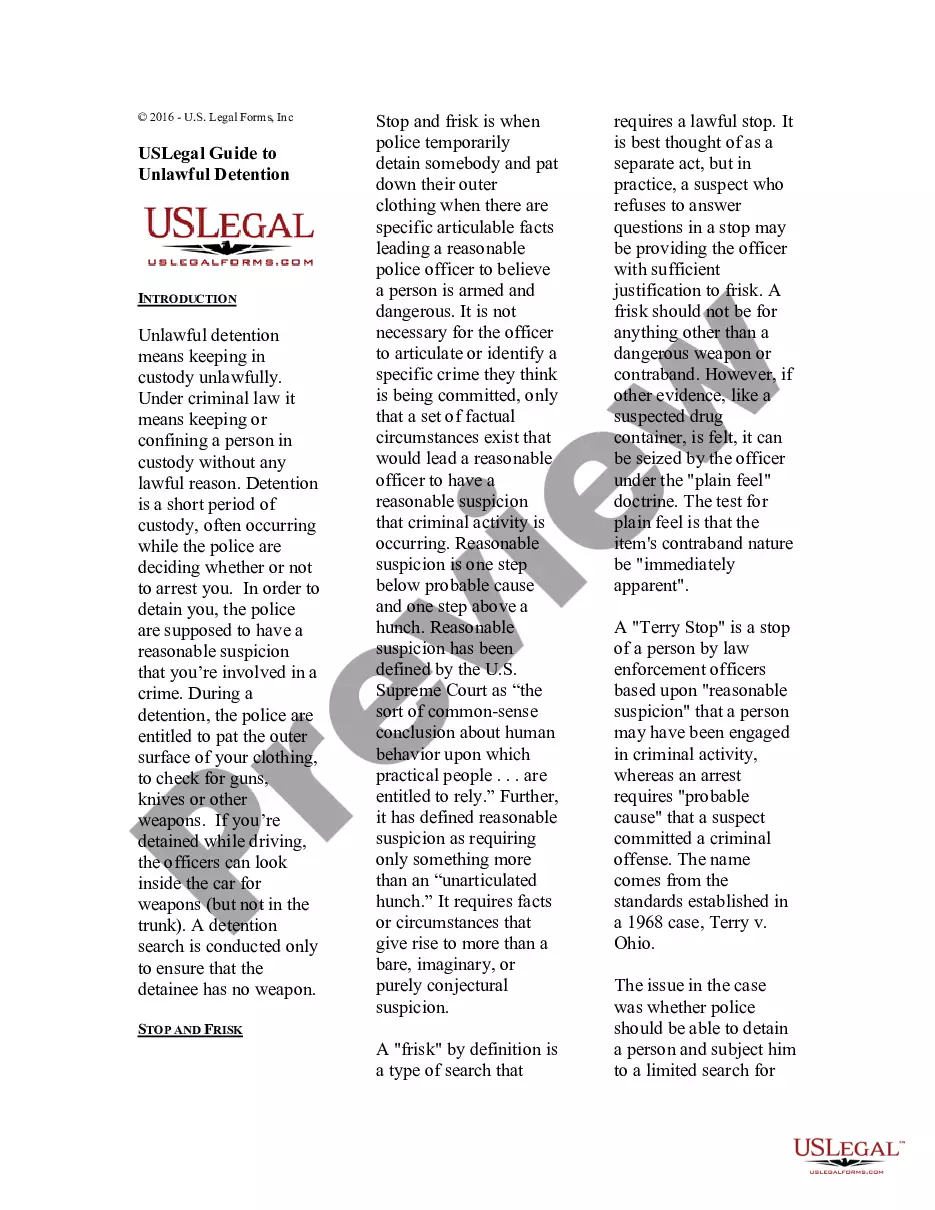
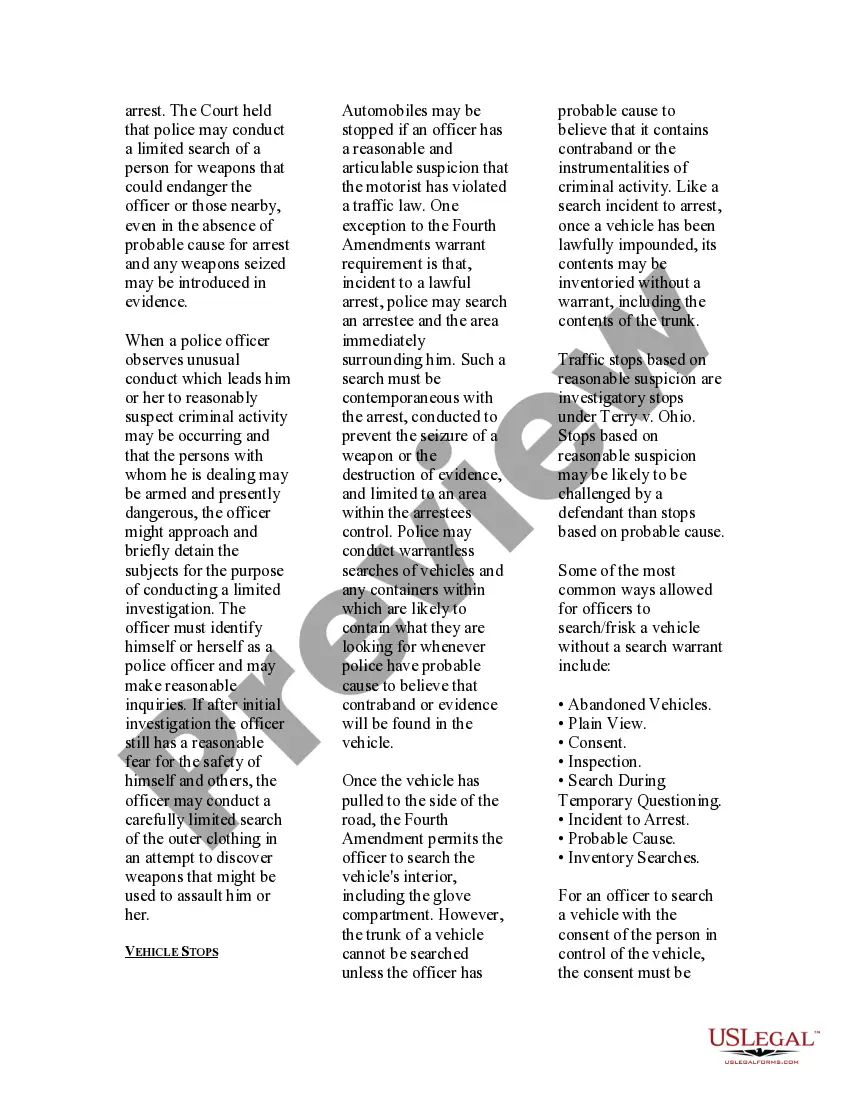
The USLegal Guide to Unlawful Detention is a resource that outlines the legal conditions under which law enforcement officers can detain individuals suspected of crimes. This guide focuses on the concept of unlawful detention, differentiating it from arrest and detailing the conditions for stops, frisks, and searches. It serves as an essential reference for understanding oneâs rights during a police interaction and the legal boundaries governing law enforcement actions.
Key components of this form
- Definition of unlawful detention and its distinction from arrest.
- Explanation of reasonable suspicion and its role in lawful detention.
- Guidelines for stop and frisk procedures by police officers.
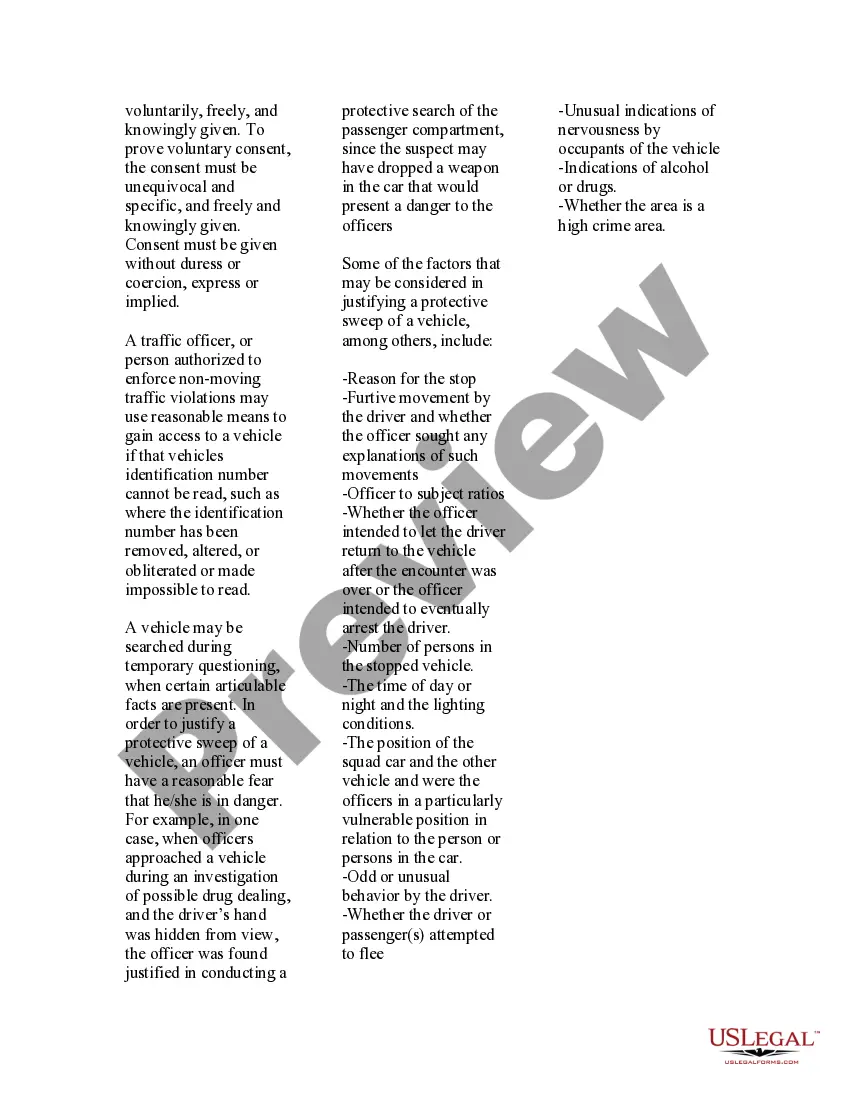
- Conditions under which vehicle searches may be legally conducted.
- Discussion of factors justifying protective sweeps during traffic stops.
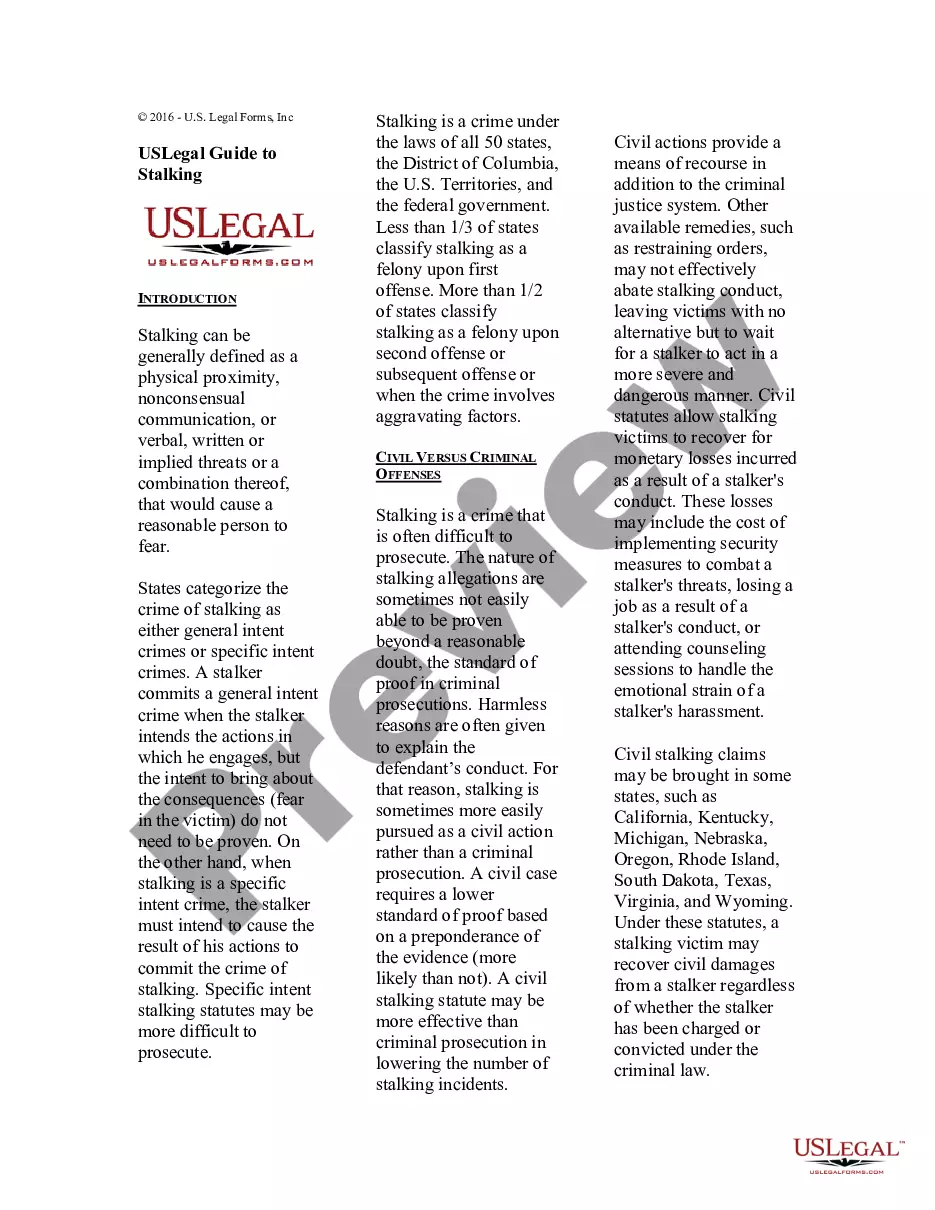
Common use cases
This guide is useful in scenarios where individuals want to understand their rights during police encounters, especially during traffic stops or when approached in public. It helps to clarify situations involving stops, searches, and frisks, thus equipping individuals to respond appropriately and assert their rights when feeling unlawfully detained.
Who can use this document
- Individuals facing police interactions who want to know their rights.
- Legal professionals seeking a clear outline of unlawful detention laws.
- Students and educators studying criminal law and civil rights.
- Advocates and community organizations informing others about their rights.
How to complete this form
- Read the entire guide to understand the concepts of lawful detention and your rights.
- Identify your specific situation regarding police encounters.
- Use the guide to navigate interactions with law enforcement.
- Refer back to relevant sections as needed when preparing for a police statement.
Does this document require notarization?
In most cases, this form does not require notarization. However, some jurisdictions or signing circumstances might. US Legal Forms offers online notarization powered by Notarize, accessible 24/7 for a quick, remote process.
Get your form ready online
Our built-in tools help you complete, sign, share, and store your documents in one place.
Make edits, fill in missing information, and update formatting in US Legal Forms—just like you would in MS Word.
Download a copy, print it, send it by email, or mail it via USPS—whatever works best for your next step.
Sign and collect signatures with our SignNow integration. Send to multiple recipients, set reminders, and more. Go Premium to unlock E-Sign.
If this form requires notarization, complete it online through a secure video call—no need to meet a notary in person or wait for an appointment.
We protect your documents and personal data by following strict security and privacy standards.

Make edits, fill in missing information, and update formatting in US Legal Forms—just like you would in MS Word.

Download a copy, print it, send it by email, or mail it via USPS—whatever works best for your next step.

Sign and collect signatures with our SignNow integration. Send to multiple recipients, set reminders, and more. Go Premium to unlock E-Sign.

If this form requires notarization, complete it online through a secure video call—no need to meet a notary in person or wait for an appointment.

We protect your documents and personal data by following strict security and privacy standards.
Mistakes to watch out for
- Assuming all police stops are unlawful without understanding reasonable suspicion.
- Failing to assert oneâs rights during a detention or search.
- Not seeking legal counsel after experiencing what may be an unlawful detention.
Benefits of completing this form online
- Instant access to current legal information regarding unlawful detention.
- Ability to download and reference the guide anytime, anywhere.
- Ease of understanding complex legal concepts in plain language.
Legal use & context
- This guide is intended for educational purposes and is not a substitute for legal advice.
- Understanding your rights can empower you during police encounters.
- Legal standards are subject to change, so always seek updated information relevant to your situation.
Main things to remember
- Unlawful detention refers to the detention of an individual without proper legal justification.
- Law enforcement must have reasonable suspicion to detain someone temporarily.
- Individuals have specific rights during encounters with police, including the right to understand the basis for their detention.
- Documentation of police stops is critical for protecting oneâs rights.
Looking for another form?
Form popularity
FAQ
There was a willful detention; The detention was without consent; and. The detention was unlawful.
When someone else restrains you or prevents you from moving, this is punishable as a crime.The crime of false imprisonment, sometimes called criminal restraint or criminal confinement, occurs when one person unlawfully restrains someone else without the victim's consent.
False imprisonment occurs when someone confines or detains another person against their will and without any legal justification.
False Arrest Legal Recourse for Victims.Both police and private citizens can be held liable for making a false arrest. Police can be sued for monetary damages by the victim in a civil rights lawsuit. When police have illegally arrested someone, the victim can also file a complaint with the police department.
If you believe you've been detained or arrested without a basis (or if you believe the police are acting outside their proper authority), you need to speak to a local criminal defense attorney as soon as possible.
Unlawful police detention is when law enforcement, without legal justification, restricts a person's freedom to leave. Doing so constitutes a civil rights violation based in the Fourth Amendment. That amendment to the U.S. Constitution prohibits officers from conducting unreasonable searches or seizures.
When one person is unlawfully detained and held by another, it may amount to false imprisonment (also called wrongful imprisonment), which can form the basis of a civil lawsuit. In these kinds of cases, the detainee seeks compensation for any injuries and other damages resulting from the incident.