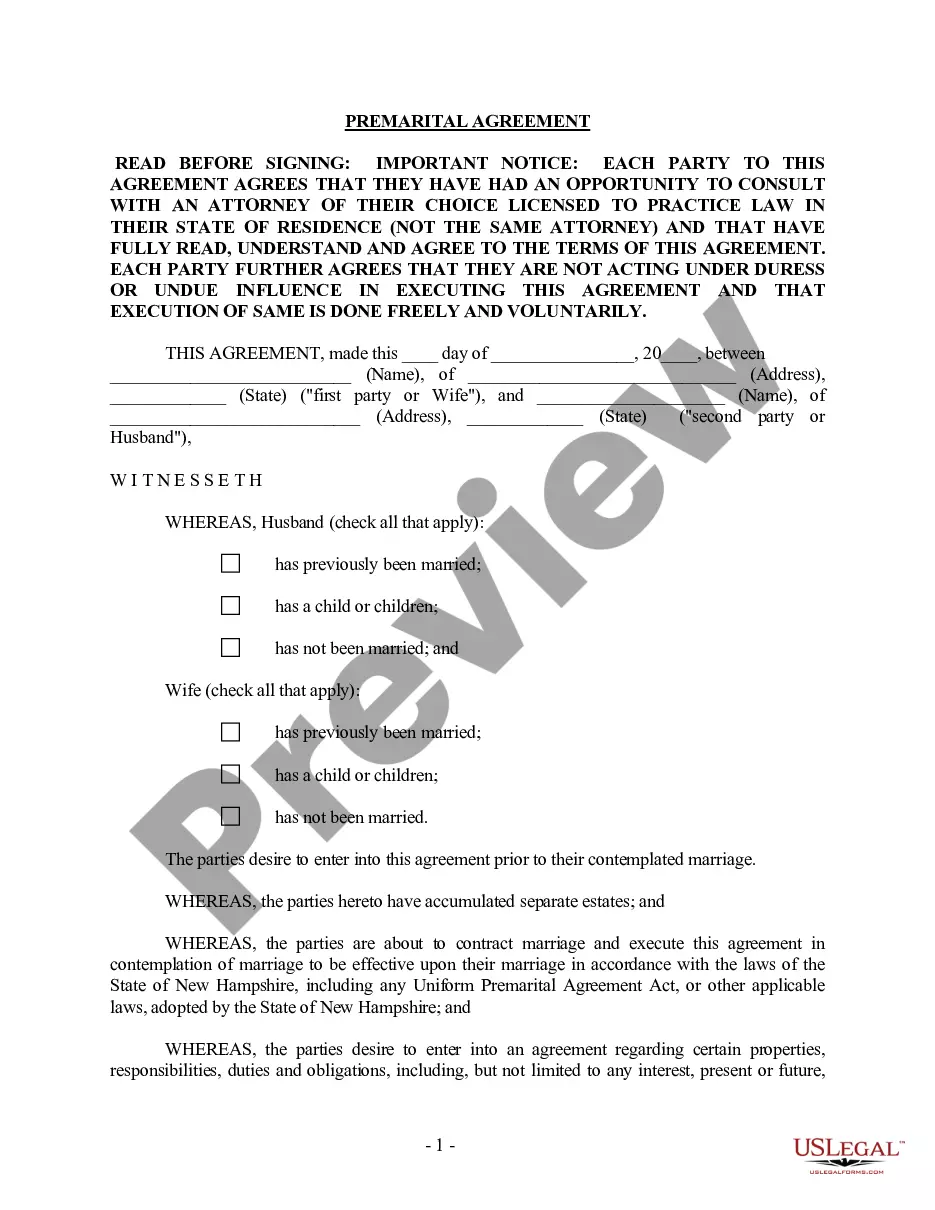
Notice of Special Flood Hazards Availability of Federal Disaster Relief Assistance
Understanding this form
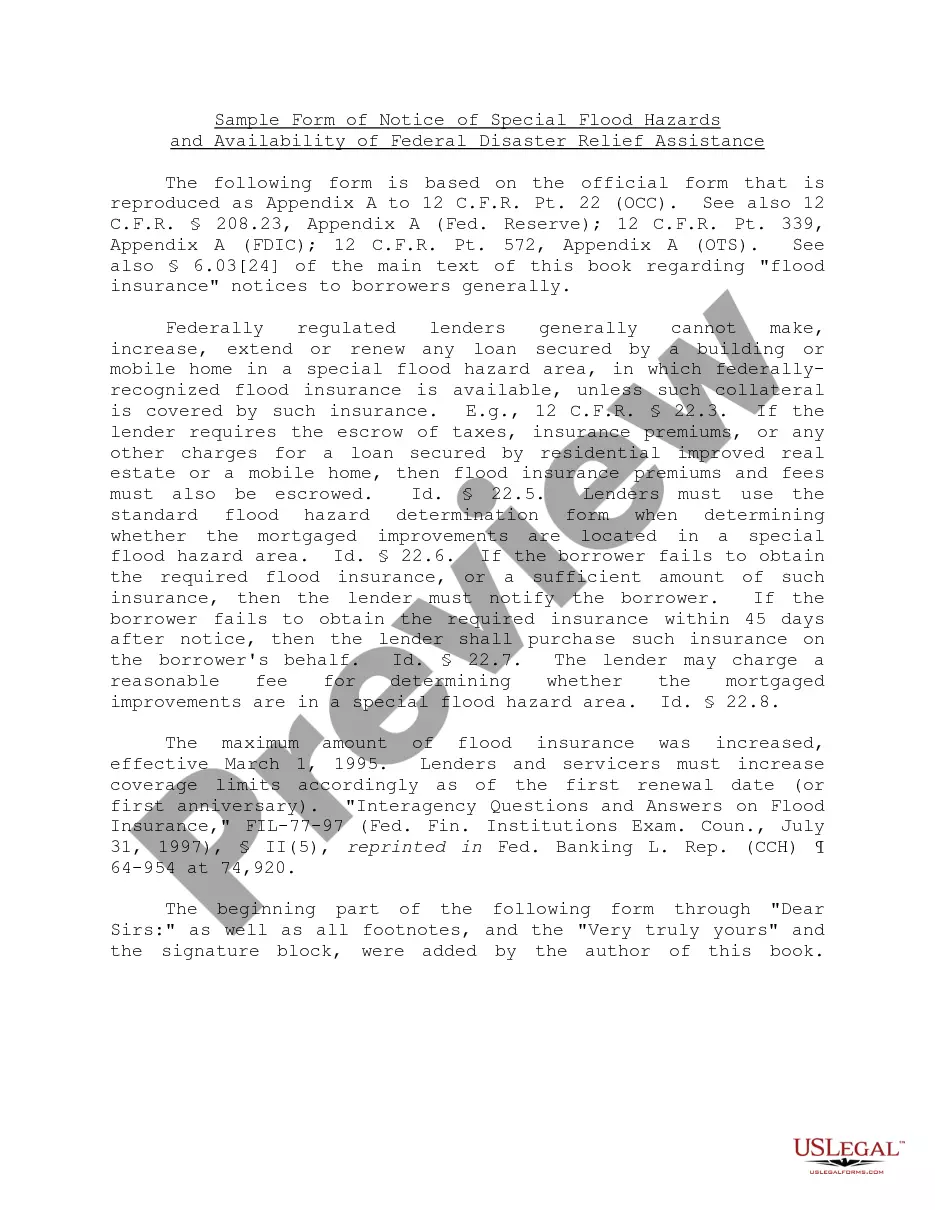
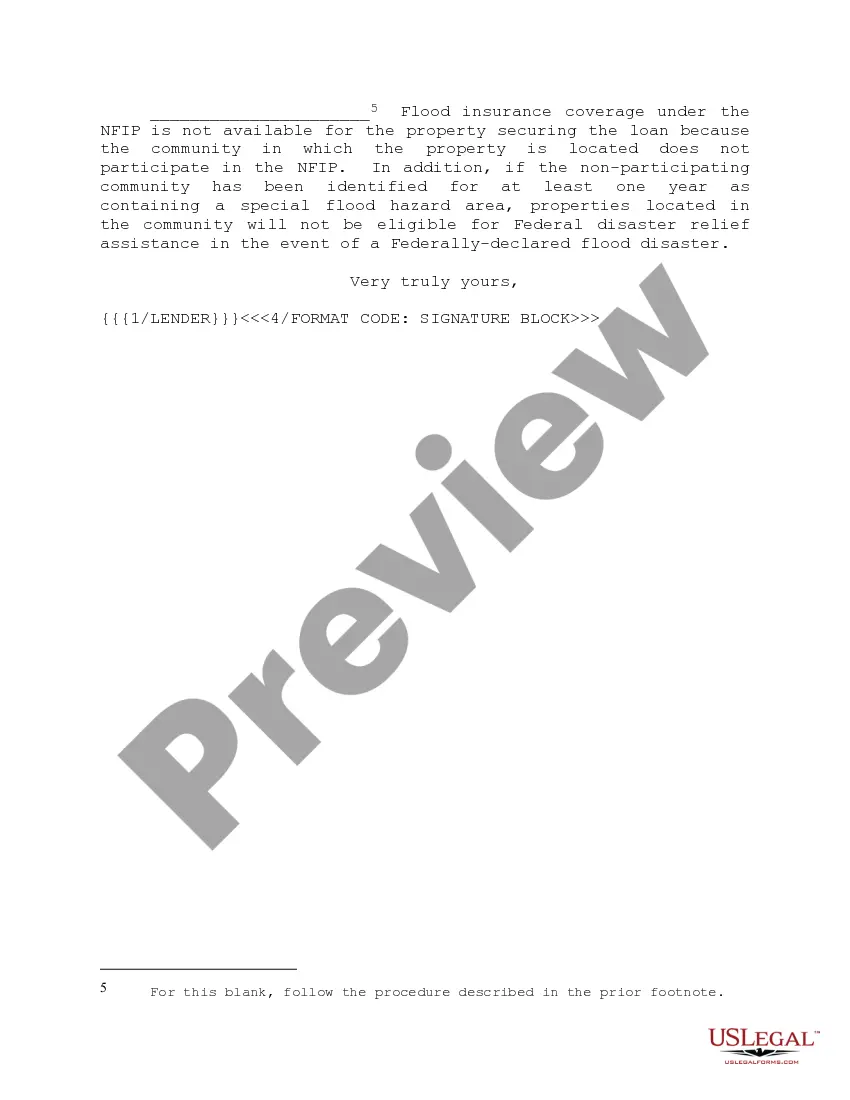
The Notice of Special Flood Hazards Availability of Federal Disaster Relief Assistance is a legal document that notifies borrowers of the flood hazard status of the property securing their loan. This form is essential for compliance with federal regulations, ensuring that lenders inform borrowers when their property is located in a special flood hazard area. It differs from other notices by specifically addressing federal disaster relief assistance requirements related to flood insurance.
Key components of this form
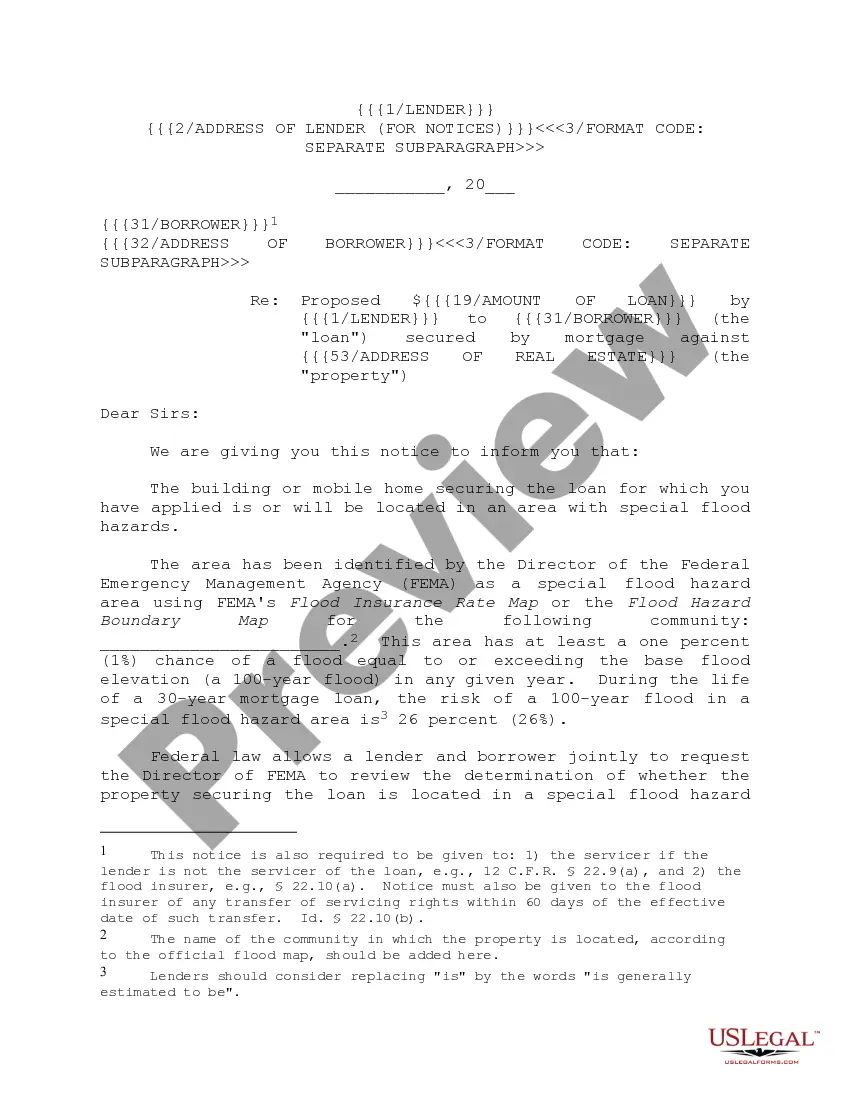
- Contact information for both lender and borrower
- Details regarding the loan amount and property address
- A declaration that the property is located in a special flood hazard area
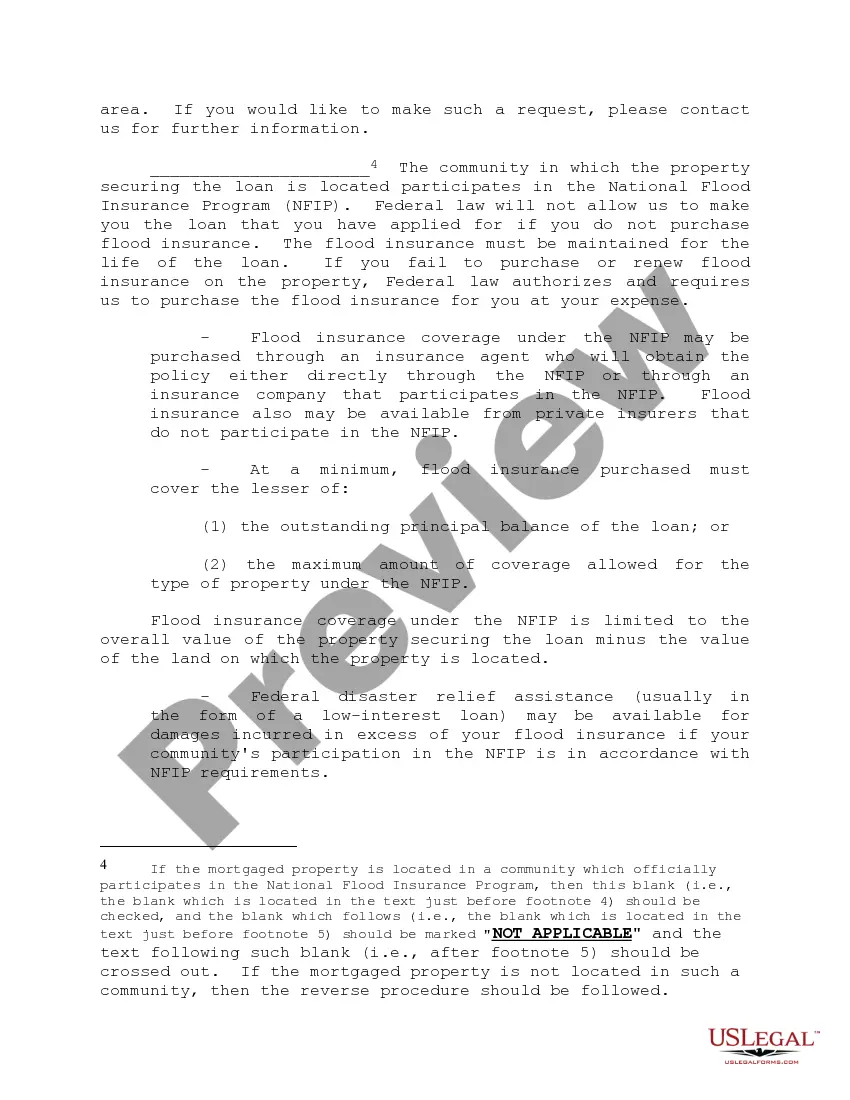
- Information on flood insurance requirements and options available
- Notification concerning the consequences of not obtaining flood insurance
- Instructions on how to appeal the flood hazard determination if necessary
Situations where this form applies
This form should be used when a borrower is applying for a loan secured by residential property or a mobile home that is located in a special flood hazard area. It is crucial at the start of the loan process to ensure that borrowers are aware of their responsibilities regarding flood insurance, which is required under federal law. Additionally, this form is necessary if a lender needs to notify a borrower about existing flood hazards related to their property.
Who this form is for
This form is intended for:
- Lenders who are extending loans secured by properties located in flood hazard areas.
- Borrowers applying for such loans who need clear information about flood insurance requirements.
Instructions for completing this form
- Identify and fill in the names and addresses of the lender and borrower.
- Specify the amount of the loan and address of the property securing the loan.
- Indicate the flood hazard status based on FEMA's Flood Insurance Rate Map.
- Include details about the annual risk of flooding and insurance obligations.
- Ensure signatures are provided as required to finalize the notice.
Notarization guidance
This form does not typically require notarization to be legally valid. However, some jurisdictions or document types may still require it. US Legal Forms provides secure online notarization powered by Notarize, available 24/7 for added convenience.
Get your form ready online
Our built-in tools help you complete, sign, share, and store your documents in one place.
Make edits, fill in missing information, and update formatting in US Legal Forms—just like you would in MS Word.
Download a copy, print it, send it by email, or mail it via USPS—whatever works best for your next step.
Sign and collect signatures with our SignNow integration. Send to multiple recipients, set reminders, and more. Go Premium to unlock E-Sign.
If this form requires notarization, complete it online through a secure video call—no need to meet a notary in person or wait for an appointment.
We protect your documents and personal data by following strict security and privacy standards.

Make edits, fill in missing information, and update formatting in US Legal Forms—just like you would in MS Word.

Download a copy, print it, send it by email, or mail it via USPS—whatever works best for your next step.

Sign and collect signatures with our SignNow integration. Send to multiple recipients, set reminders, and more. Go Premium to unlock E-Sign.

If this form requires notarization, complete it online through a secure video call—no need to meet a notary in person or wait for an appointment.

We protect your documents and personal data by following strict security and privacy standards.
Common mistakes to avoid
- Failing to inform borrowers about flood insurance requirements in a timely manner.
- Not providing accurate property address details which can lead to confusion.
- Overlooking necessary signatures or failing to send the notice to all required parties.
Advantages of online completion
- Convenience of accessing the form from any device without the need for physical copies.
- Editable fields make it easy to customize the form for specific borrower and property details.
- Instant download availability ensures you can act quickly in compliance with legal requirements.
Legal use & context
- The form provides legal notice required by federal regulations regarding flood insurance.
- Failure to use this form correctly can result in legal repercussions for lenders.
- This form helps protect both the lender's and borrower's interests regarding flood risks.
Quick recap
- The Notice of Special Flood Hazards is crucial for informing borrowers about flood-related risks.
- Accurate completion of this form is required to comply with federal lending regulations.
- Using this form online provides convenience and eases the process of legal compliance.
Looking for another form?









Form popularity
FAQ
The SBA requires all borrowers to obtain flood insurance if any collateral is located in a special flood hazard area.It is the responsibility of lenders and CDCs to notify borrowers if flood insurance must be maintained for the life of the loan.
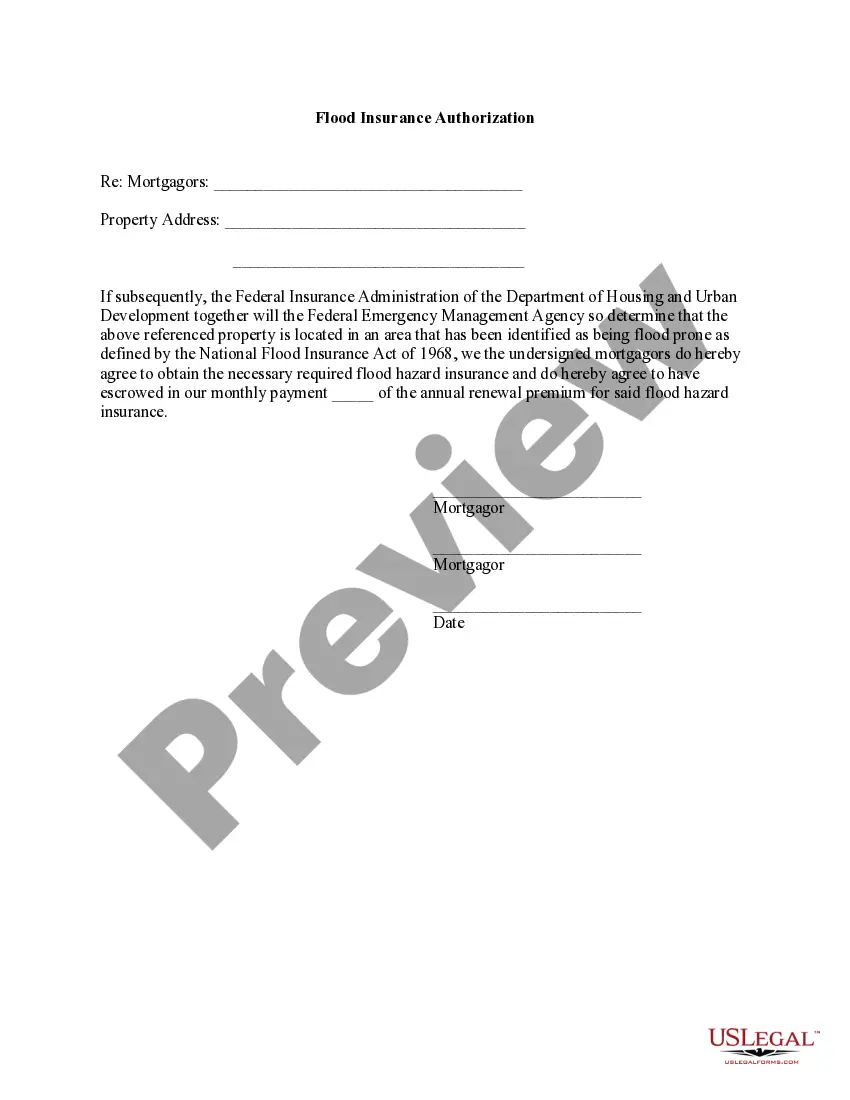
If a bank makes, increases, extends, or renews a loan secured by a residential property, and the property is required to have flood insurance under the National Flood Insurance Act, then the bank, or servicer acting on its behalf, is required to escrow all premiums and fees for the flood insurance, unless the bank or
Lenders are permitted to require more flood insurance coverage than the minimum amount required by the National Flood Insurance Act (Act). If the flood insurance requested by the lender is greater than $250,000, then you or the lender may have to seek such coverage from a private insurance company.
The Standard Flood Hazard Determination Form (SFHDF) identifies whether a property is located in a special flood hazard area, if the borrower is required to obtain flood insurance, and if federal flood insurance is available.SFHDF are generated by a Flood Zone Determination Company.
Lenders are permitted to require more flood insurance coverage than the minimum amount required by the National Flood Insurance Act (Act). If the flood insurance requested by the lender is greater than $250,000, then you or the lender may have to seek such coverage from a private insurance company.
If a bank makes, increases, extends, or renews a loan secured by a residential property, and the property is required to have flood insurance under the National Flood Insurance Act, then the bank, or servicer acting on its behalf, is required to escrow all premiums and fees for the flood insurance, unless the bank or
If you are successful in obtaining the LOMA, give it to the lender and they will usually waive the flood insurance requirement by making a redetermination or simply writing you a letter. Give the lender's letter or form to your insurance agent and ask for a cancellation of your policy.
#1 Get an Elevation Certificate. Flood insurance is based on the flood zone you are in and how much water will get into your house. #2 Get a Letter of Map Amendment (LOMA) #3 Structural Improvements. #4 Community Involvement. #5 Compare Rates.
Fannie Mae does not require an escrow deposit for property or flood insurance premiums for an individual unit in a condo, co-op, or PUD when the project in which the unit is located is covered by a blanket insurance policy purchased by the homeowners' association or co-op corporation.