Vendor Exchange Member Agreement
What this document covers
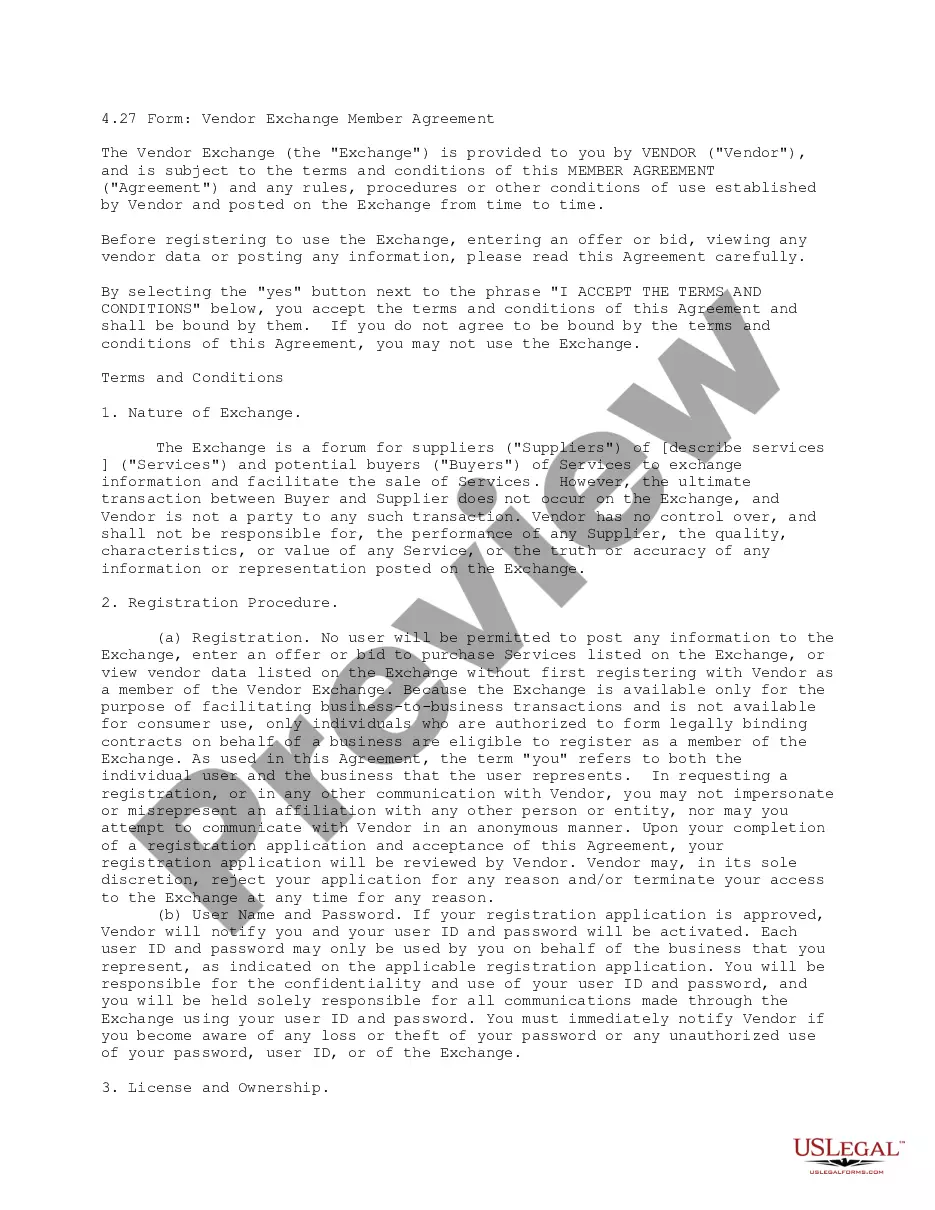
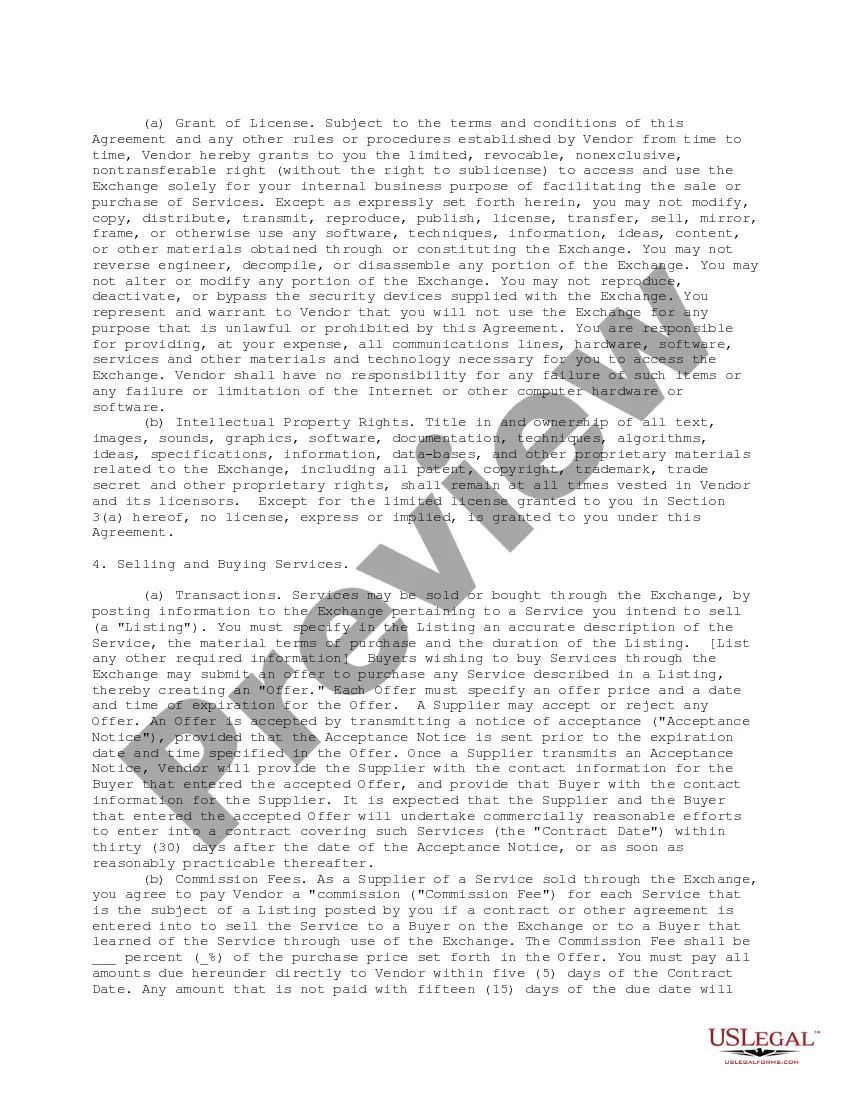
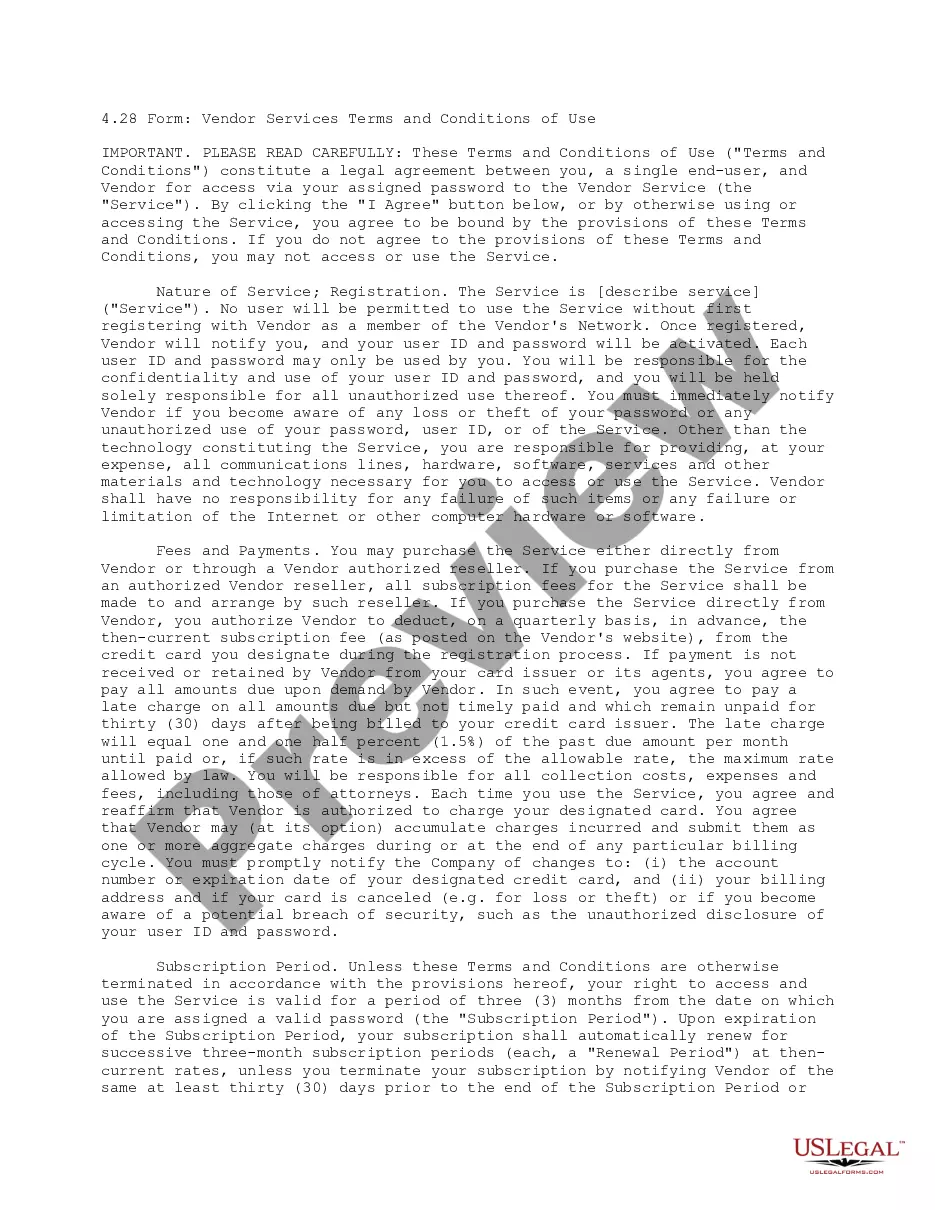
The Vendor Exchange Member Agreement is a legal document that establishes the terms and conditions under which a vendor can access the Vendor Exchange to view and post information related to services offered for sale. This agreement is essential for facilitating business-to-business transactions while ensuring the rights and responsibilities of both the vendor and the exchange are clearly defined.
Key parts of this document
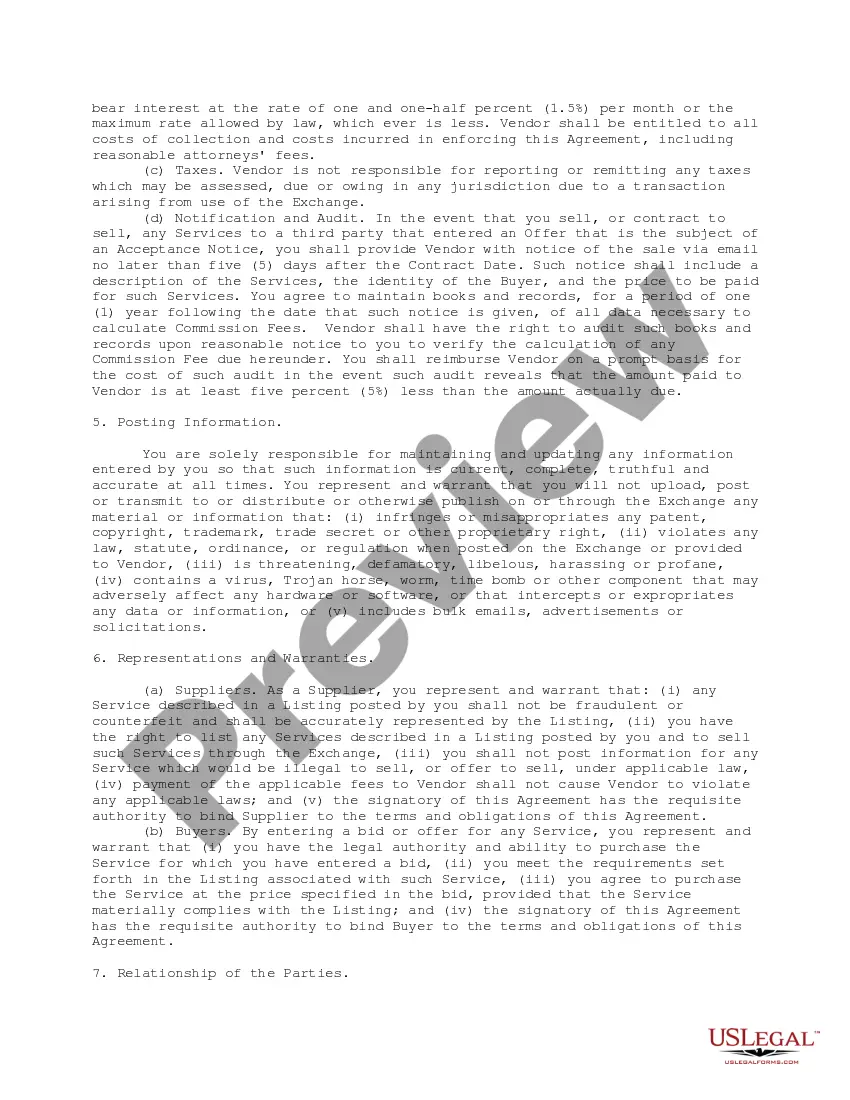
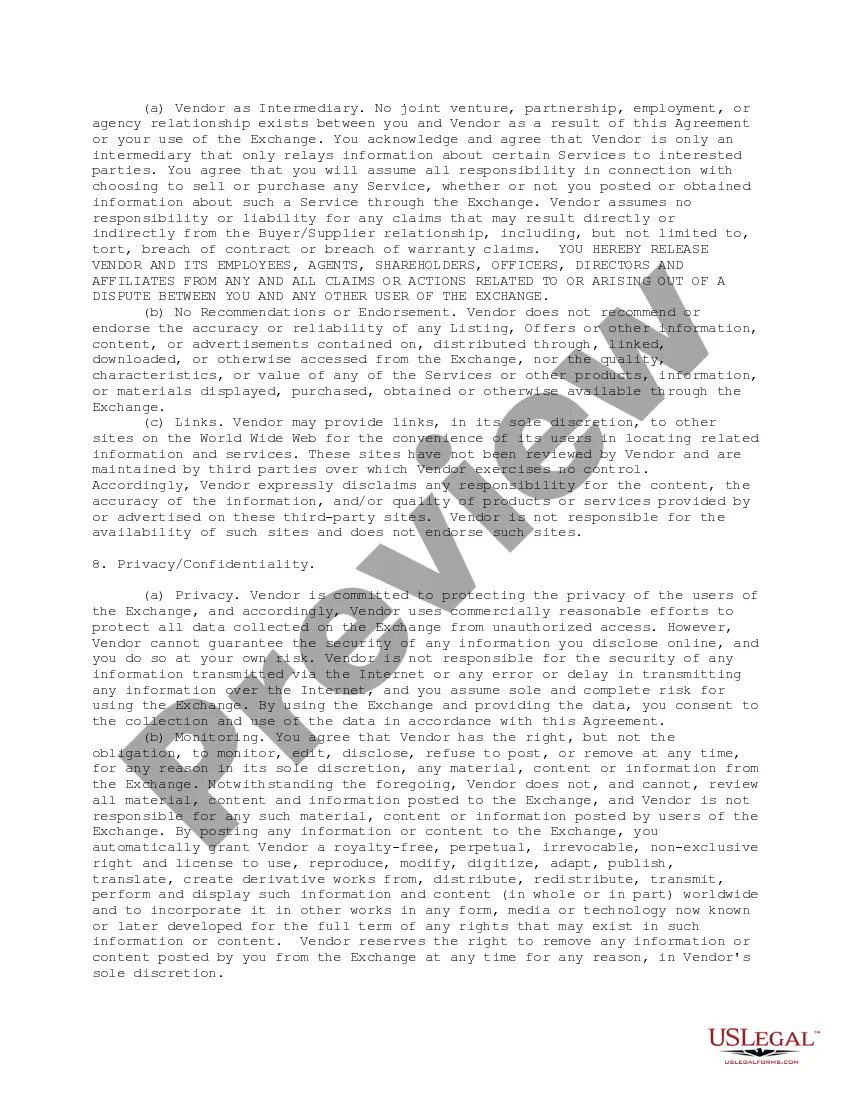
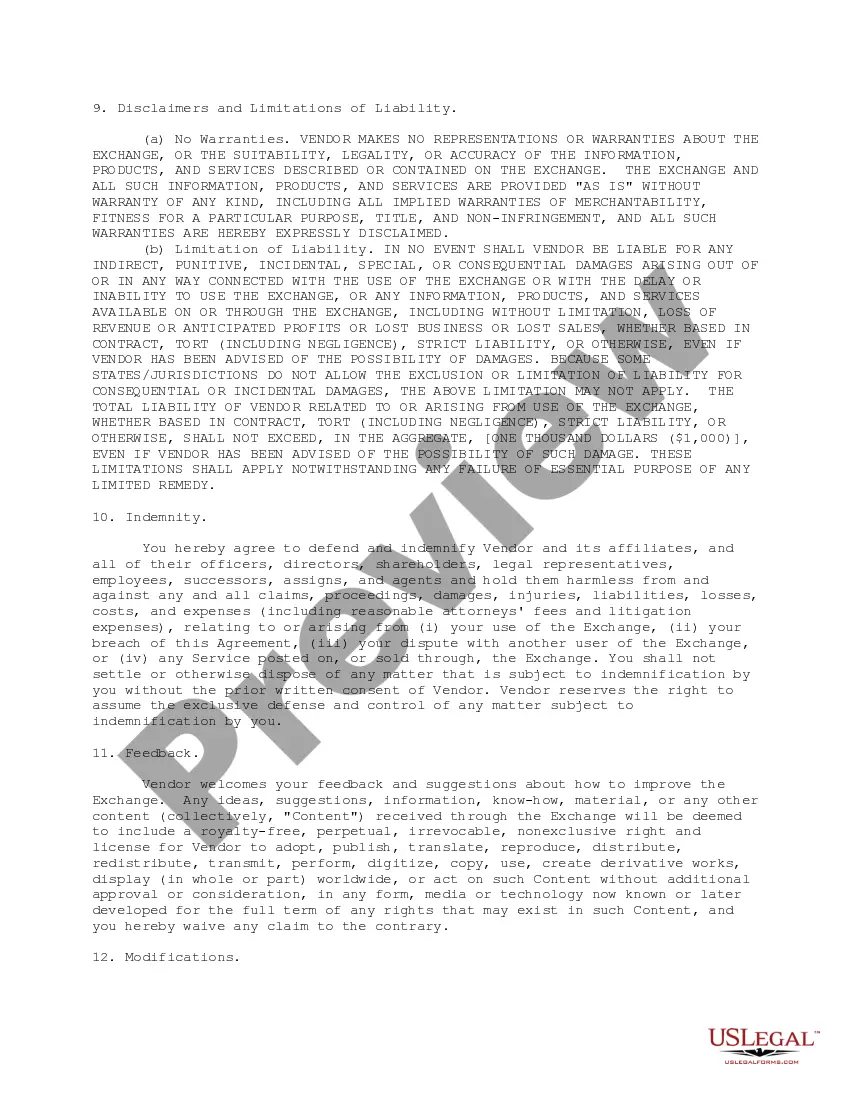
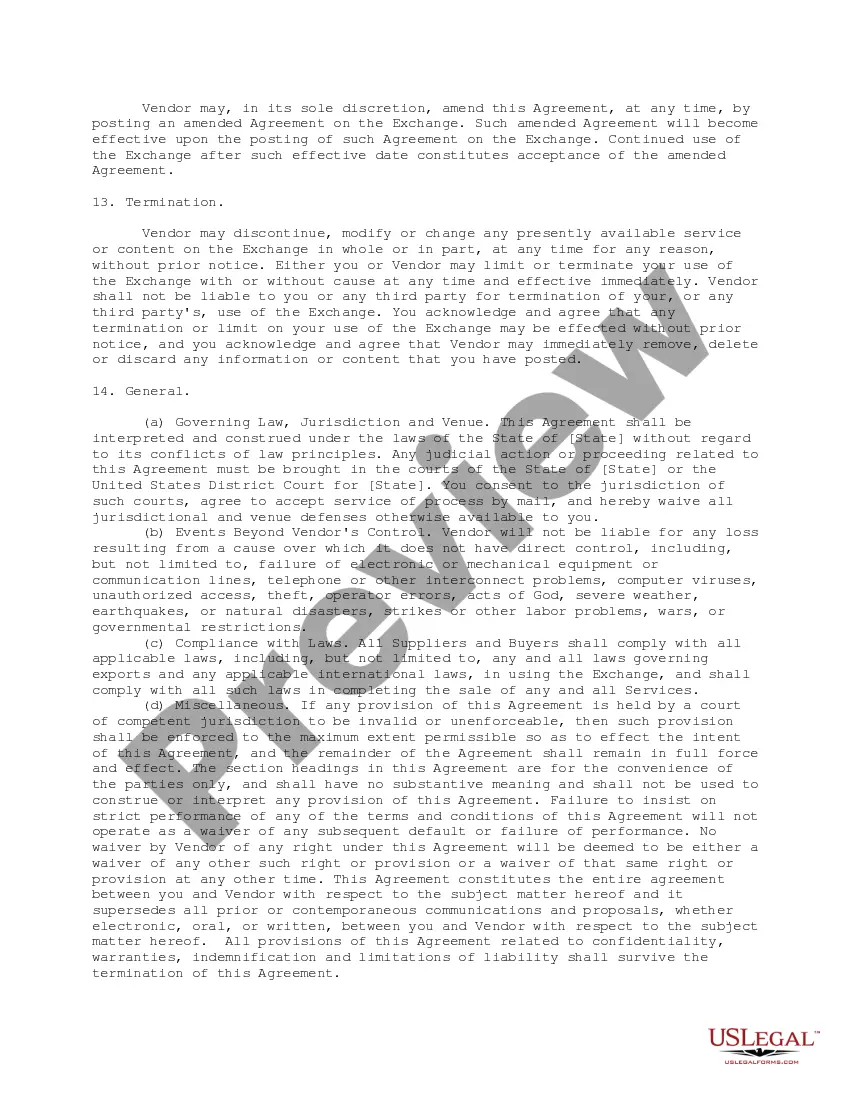
- Nature of Exchange: Outlines the function of the Vendor Exchange as a platform for suppliers and buyers to connect.
- Registration Procedure: Details the steps required for a vendor to register and the necessity of user credentials.
- License and Ownership: Specifies the rights granted to the user and the ownership of content within the exchange.
- Selling and Buying Services: Explains the process for posting service listings, submitting offers, and accepting bids.
- Commission Fees: Outlines the fees vendors must pay upon completing transactions through the exchange.
- Privacy and Confidentiality: Describes how user data is handled and the obligations of the vendor regarding user privacy.

When to use this document
This agreement should be used when a vendor intends to participate in the Vendor Exchange to facilitate buying or selling services. It is necessary to establish clear terms of engagement, protect intellectual property, and ensure compliance with applicable laws and regulations.
Who this form is for
- Business owners or representatives seeking to sell services through the Vendor Exchange.
- Authorized individuals allowed to enter legally binding contracts on behalf of a business.
- Suppliers looking to access vendor data and network with potential buyers.
How to complete this form
- Identify the parties involved, including the vendor and any authorized representatives.
- Provide the necessary registration information to create user credentials.
- Review the terms and conditions carefully, ensuring all information is accurate and complete.
- Sign the agreement to indicate acceptance of the outlined terms.
- Maintain a copy of the signed agreement for future reference.
Does this form need to be notarized?
This form does not typically require notarization unless specified by local law.
Get your form ready online
Our built-in tools help you complete, sign, share, and store your documents in one place.
Make edits, fill in missing information, and update formatting in US Legal Forms—just like you would in MS Word.
Download a copy, print it, send it by email, or mail it via USPS—whatever works best for your next step.
Sign and collect signatures with our SignNow integration. Send to multiple recipients, set reminders, and more. Go Premium to unlock E-Sign.
If this form requires notarization, complete it online through a secure video call—no need to meet a notary in person or wait for an appointment.
We protect your documents and personal data by following strict security and privacy standards.

Make edits, fill in missing information, and update formatting in US Legal Forms—just like you would in MS Word.

Download a copy, print it, send it by email, or mail it via USPS—whatever works best for your next step.

Sign and collect signatures with our SignNow integration. Send to multiple recipients, set reminders, and more. Go Premium to unlock E-Sign.

If this form requires notarization, complete it online through a secure video call—no need to meet a notary in person or wait for an appointment.

We protect your documents and personal data by following strict security and privacy standards.
Mistakes to watch out for
- Failing to accurately represent any services in the listings.
- Not maintaining updated information on the exchange.
- Neglecting to review the terms of the agreement before signing.
- Using unauthorized individuals to register or enter bids.
Benefits of using this form online
- Convenient access to a template that can be downloaded and completed at your own pace.
- Editable fields to tailor the agreement to specific business needs.
- Reliability, as the form is drafted by licensed attorneys, ensuring it meets legal standards.
Legal use & context
- Establishes legally binding terms for business transactions between vendors and buyers.
- Serves as a safeguard for both parties in dispute resolutions related to transactions conducted through the exchange.
Summary of main points
- The Vendor Exchange Member Agreement is crucial for vendors wishing to participate in trading services.
- Understanding the terms and fees outlined in the agreement is essential for legal compliance.
- This agreement serves as a protective measure for both suppliers and buyers involved in business transactions.
Looking for another form?


Form popularity
FAQ
Simply put, a Vendor Agreement is a business contract between two parties covering the exchange of goods or services in return for compensation. Vendor Agreements establish the business relationship conditions and include details on each party's obligations under the contract.
A vendor service agreement is used whenever a business owner or an individual hires a person or company to provide services or products.A quality vendor service agreement clearly states the product or service the vendor will provide and the expectations of the deal from the beginning.
Details of the business and vendor. The details of the business and vendor, like the names, address and office address must be in the vendor contract. Details of goods and services. Payment terms. Period of functionality. Confidentiality. Exclusivity. Intellectual Property. Indemnity.
1) Scope Of The Services Or Products. 2) Contract Length And Duration. 3) Price And How It Will Be Paid. 4) How To Get Out Of The Contract. 5) What Happens If Someone Doesn't Follow The Vendor Agreement.
What is a Vendor Agreement? Simply put, a Vendor Agreement is a business contract between two parties covering the exchange of goods or services in return for compensation. Vendor Agreements establish the business relationship conditions and include details on each party's obligations under the contract.
A vendor service level agreement (SLA) outlines the level of service a client can expect from a vendor. The SLA includes penalties or remedies in case the agreed-upon services aren't met, as well as metrics by which the service is measured.
Contracts always have a brief and vague statement of the service(s) to be provided but rarely go into specific detail of the services to be provided. Service Level Agreements by nature are detailed and not only define the services to be provided, but how the client requires them.
A preferred vendor agreement is a contract between an organization and a vendor that explicitly defines the terms of their relationship.In exchange for these guarantees, the organizations tend to receive lower rates and other special treatment.