Form - Multimedia Product Publication Agreement
Overview of this form
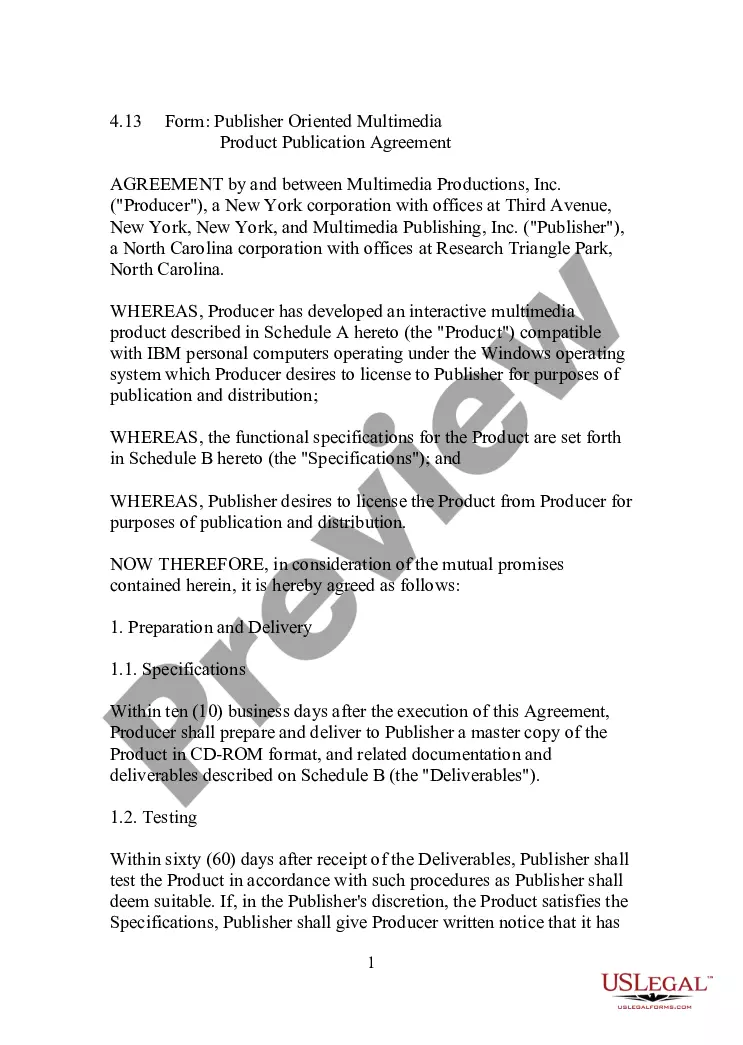
The Multimedia Product Publication Agreement is a legal contract used in business transactions to outline the terms under which an author licenses a multimedia product to a publisher. This agreement allows publishers to promote, market, and distribute the licensed program while ensuring the protection of the author's rights and intellectual property. Unlike other agreements, this contract specifically addresses the nuances of multimedia content, including copyright, sublicense rights, and royalty payments, making it essential for both authors and publishers in the digital landscape.
Key parts of this document
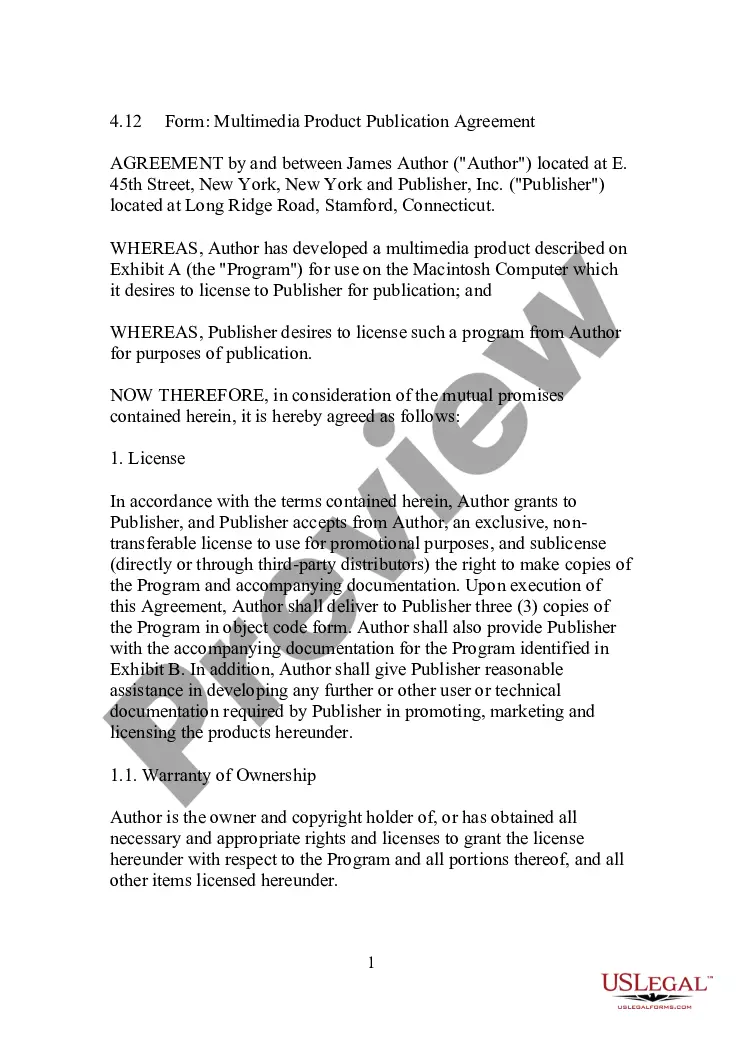
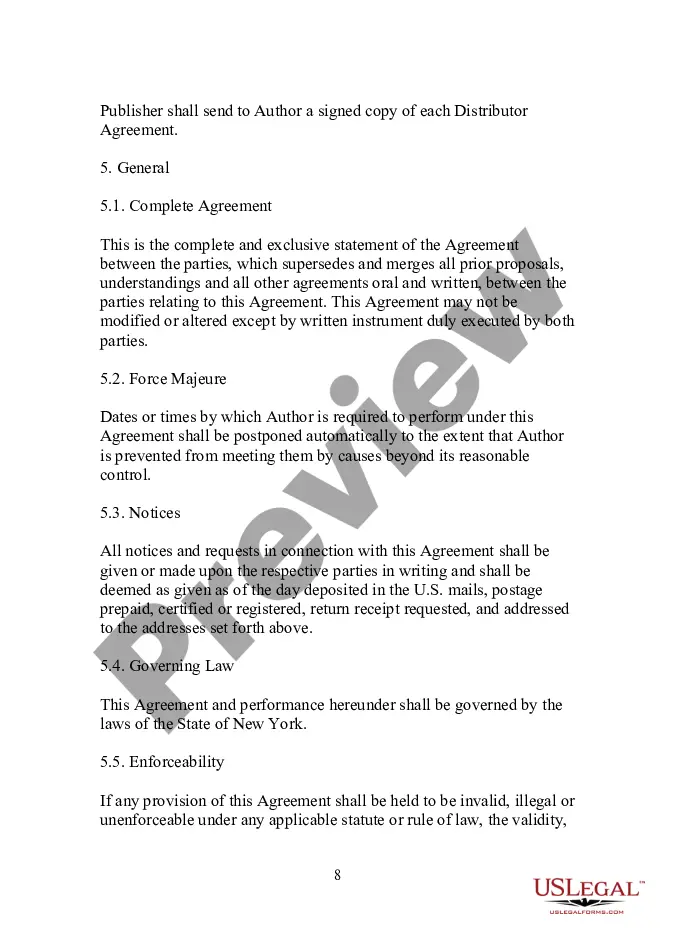
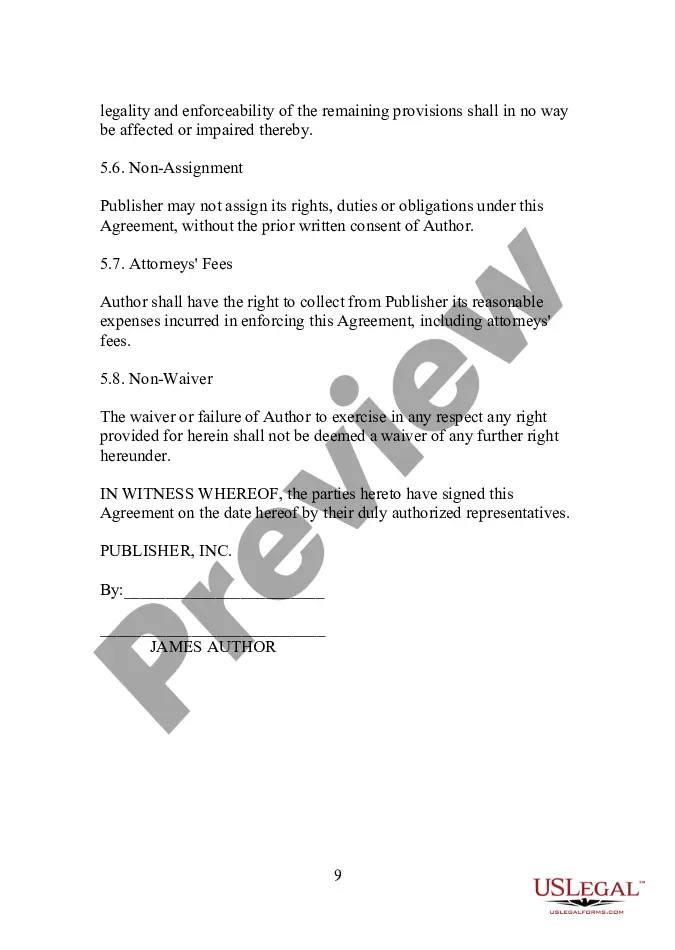
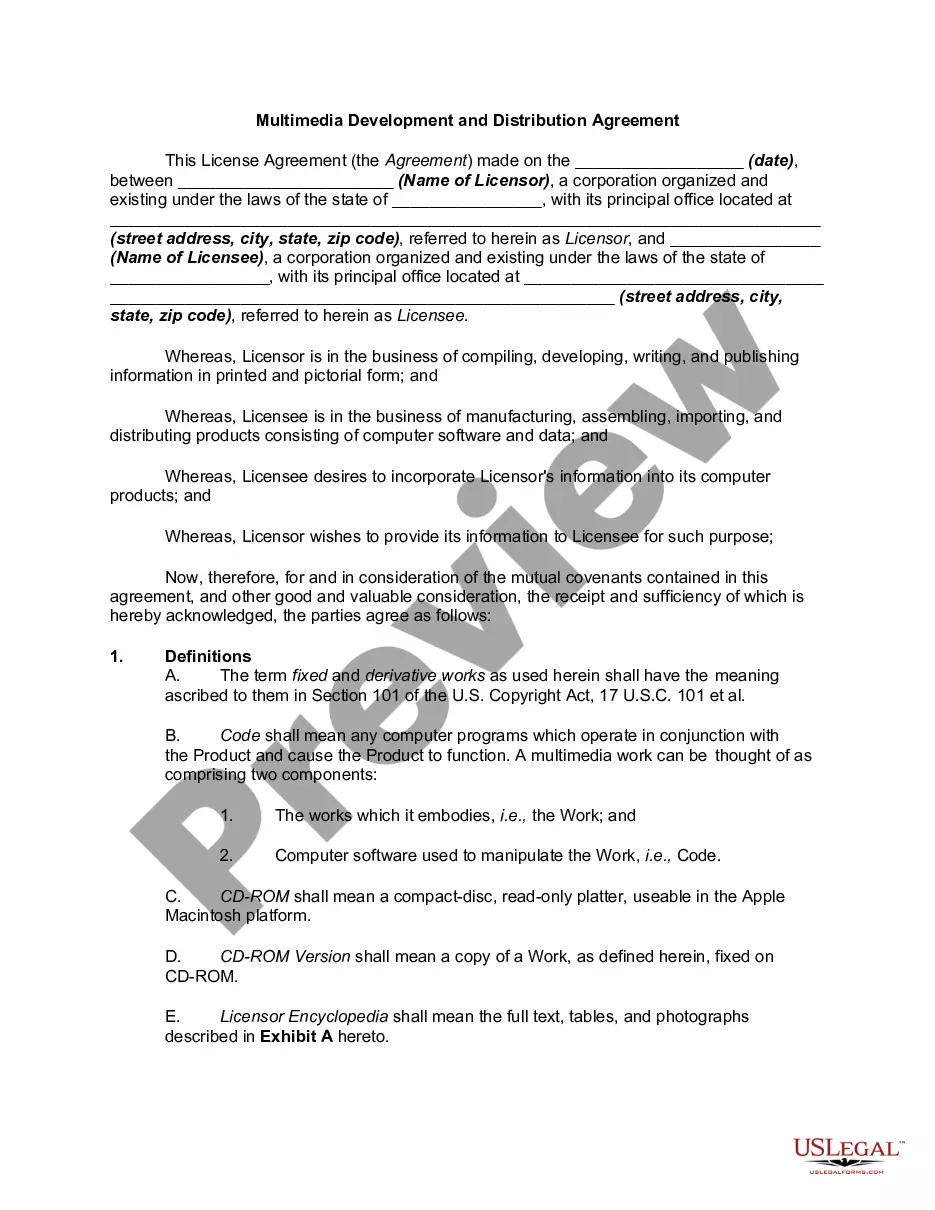
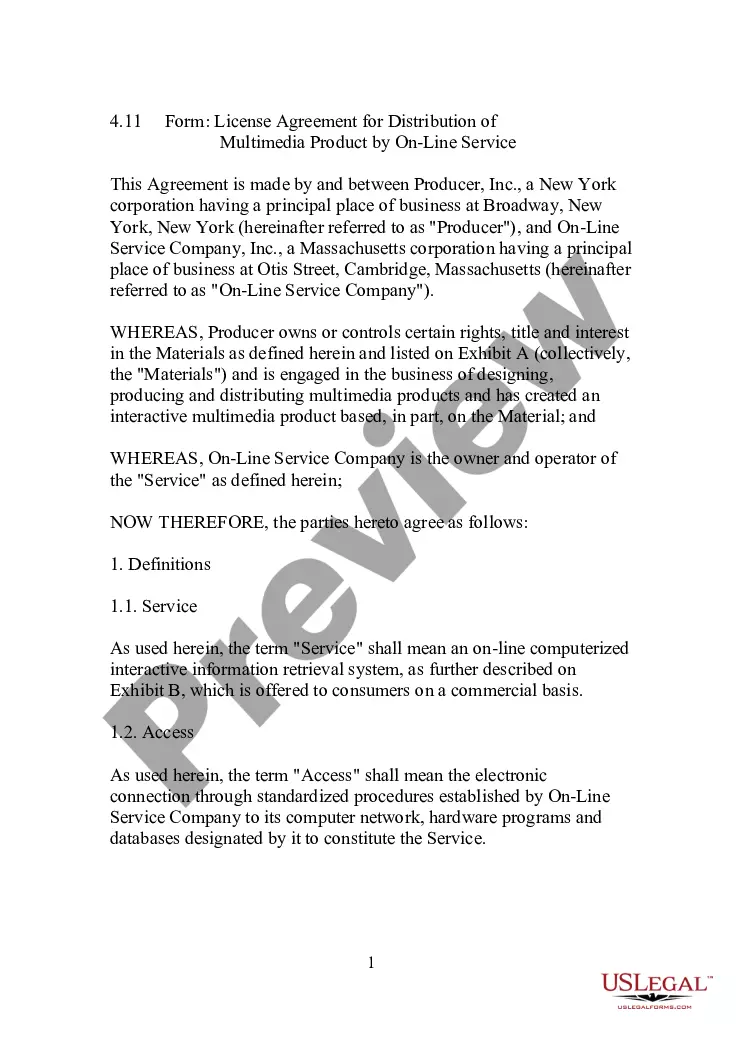
- License Grant: Details the exclusive, non-transferable license from the author to the publisher for promotional use of the multimedia program.
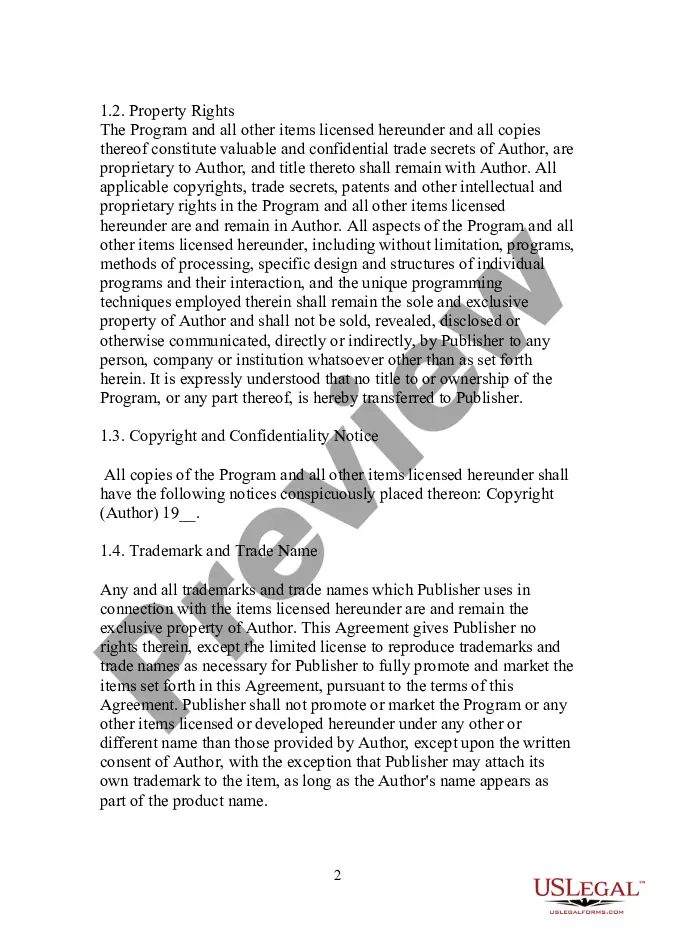
- Ownership Rights: Clarifies that the author retains all copyrights and intellectual property rights associated with the multimedia program.
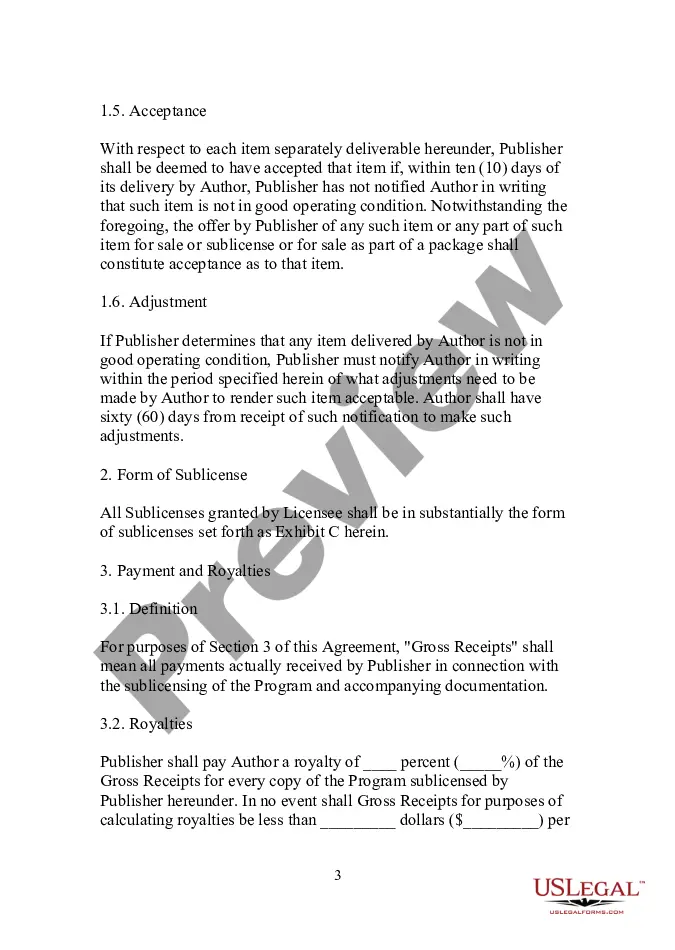
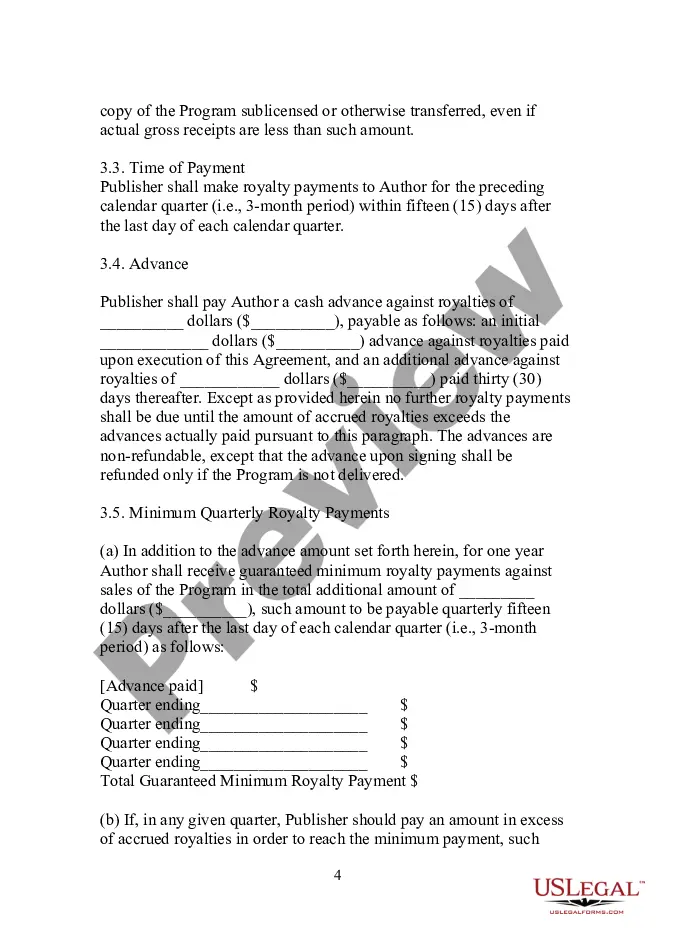
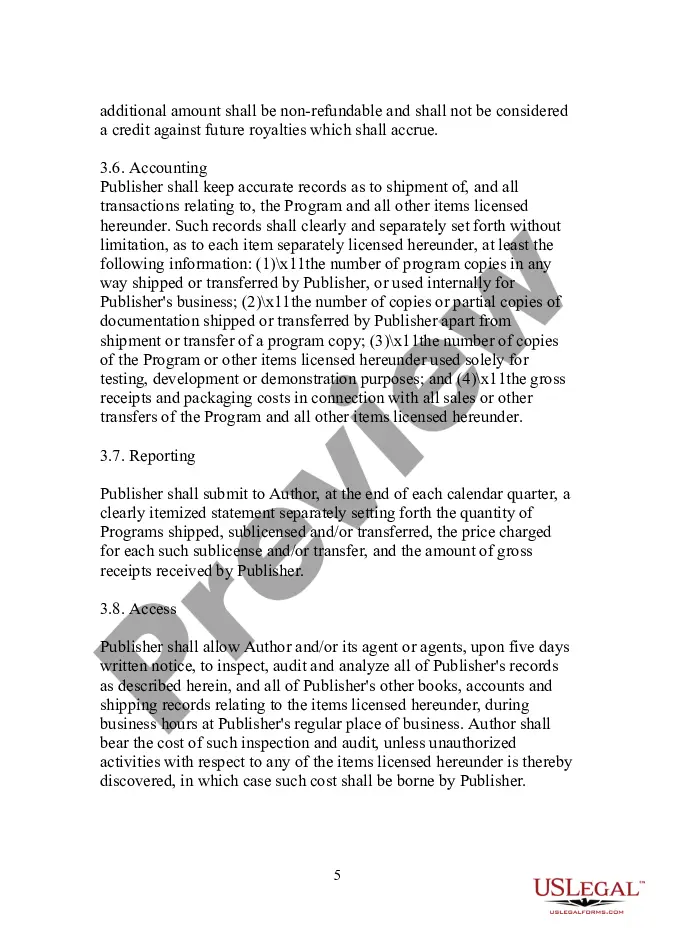
- Royalty Agreement: Specifies the royalty percentage and minimum payment details for the author based on gross receipts from sublicensed programs.
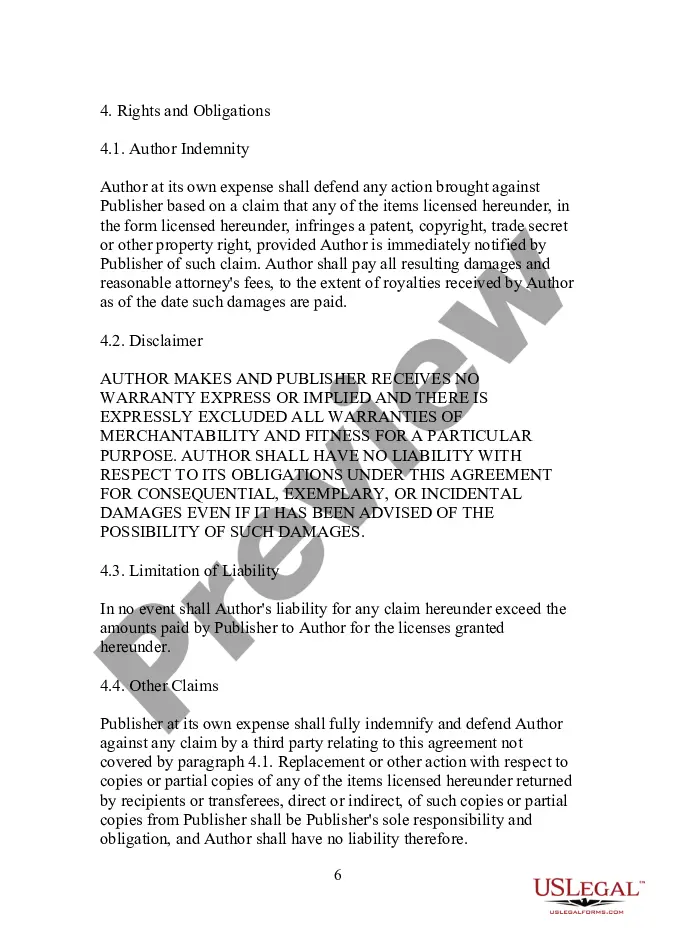
- Indemnity Clauses: Outlines the responsibilities for defending against infringement claims related to the licensed materials.
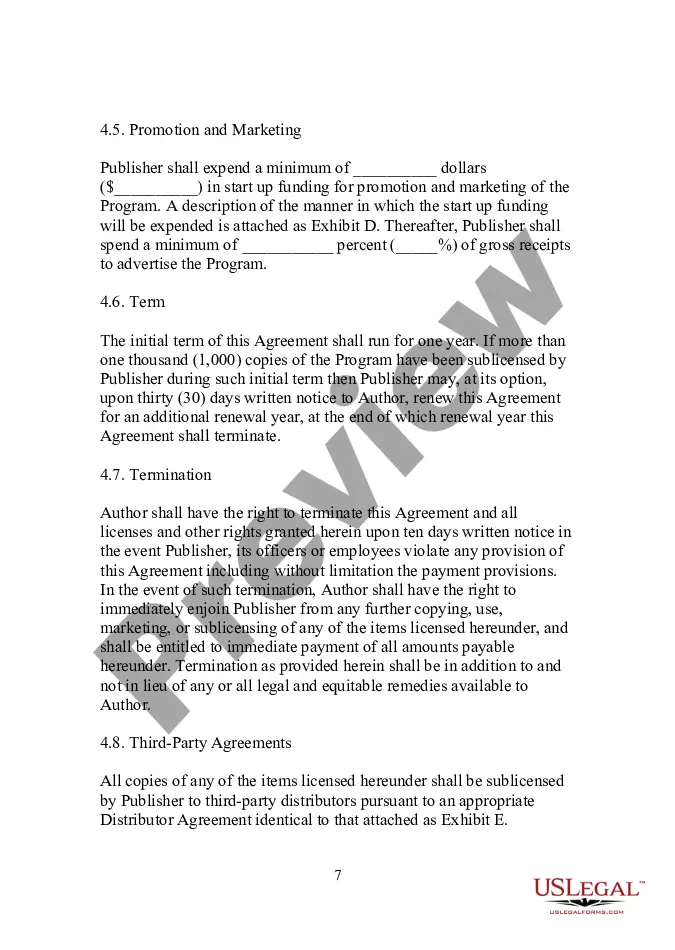
- Termination Provisions: Lists conditions under which either party can terminate the agreement.
Situations where this form applies
This form should be used when an author creates a multimedia product, such as software, videos, or educational materials, and wishes to license it to a publisher for distribution. It is particularly relevant in scenarios where the author requires legal protection for their work while enabling a publisher to market and sell the product. This agreement is essential when defining the terms of royalty payments and underwriting responsibilities, ensuring both parties are clear about their rights and obligations.
Intended users of this form
This Multimedia Product Publication Agreement is designed for:
- Authors and creators of multimedia products seeking to license their works to publishers.
- Publishers looking to acquire exclusive rights to distribute multimedia content.
- Individuals or businesses involved in contracts for digital content creation and distribution.
How to prepare this document
- Identify the parties: Fill in the full names and addresses of both the author and the publisher.
- Define the multimedia program: Describe the program being licensed and attach any necessary documentation as specified.
- Agree on royalties: Specify the percentage of royalties and any minimum payment amounts in the appropriate sections.
- Include indemnity clauses: Fill in any details regarding the responsibilities for defending against claims of infringement.
- Sign and date the agreement: Ensure both parties sign and date the document to make it legally binding.
Is notarization required?
This form does not typically require notarization unless specified by local law. However, it is good practice to have both parties sign in the presence of a witness to ensure clarity and legality.
Get your form ready online
Our built-in tools help you complete, sign, share, and store your documents in one place.
Make edits, fill in missing information, and update formatting in US Legal Forms—just like you would in MS Word.
Download a copy, print it, send it by email, or mail it via USPS—whatever works best for your next step.
Sign and collect signatures with our SignNow integration. Send to multiple recipients, set reminders, and more. Go Premium to unlock E-Sign.
If this form requires notarization, complete it online through a secure video call—no need to meet a notary in person or wait for an appointment.
We protect your documents and personal data by following strict security and privacy standards.

Make edits, fill in missing information, and update formatting in US Legal Forms—just like you would in MS Word.

Download a copy, print it, send it by email, or mail it via USPS—whatever works best for your next step.

Sign and collect signatures with our SignNow integration. Send to multiple recipients, set reminders, and more. Go Premium to unlock E-Sign.

If this form requires notarization, complete it online through a secure video call—no need to meet a notary in person or wait for an appointment.

We protect your documents and personal data by following strict security and privacy standards.
Common mistakes
- Failing to clearly define the multimedia program or its specifications.
- Omitting to specify royalty percentages, leading to confusion over payments.
- Not including all necessary documentation required for the publisher to effectively market the program.
- Neglecting to review state-specific laws that may affect the agreement.
Benefits of using this form online
- Convenience: Easily download and fill out the form from anywhere, at any time.
- Editability: Modify the document for specific needs without a need for physical copies.
- Reliability: Access professionally drafted templates that ensure compliance with legal standards.
Legal use & context
- The agreement establishes a legally enforceable license for the multimedia product.
- Covers the rights associated with copyright and the protection of intellectual property for the author.
- Provides clear terms regarding royalties and responsibilities, minimizing disputes between parties.
Key takeaways
- The Multimedia Product Publication Agreement is essential for protecting both authors and publishers in the licensing process.
- Clear terms regarding royalties and ownership rights are critical for a successful partnership.
- Proper completion and understanding of this form can prevent legal disputes and ensure smooth business operations.
Glossary of terms used in this form
- License: Permission granted by the author to the publisher to use the multimedia product for specific purposes.
- Royalties: Payments made to the author based on sales or sublicensed copies of the multimedia program.
- Indemnity: A promise by one party to compensate the other for losses or damages incurred due to specific claims.
- Intellectual Property: Creations of the mind, including copyrights, trademarks, and trade secrets that are legally protected.
Looking for another form?








Form popularity
FAQ
What's their vision for the book? What will they do in terms of marketing the book? Are they placing any limitations on how you can market and promote the book? Do you, as author, have any say in title and cover design?
The average author with a first-time book deal can expect to receive an advance of $5,000 to $15,000. Once your book is released, you won't see another dime until you have earned back that advance$1.25 at a timeuntil the advance is paid back in full.
A book contract is a written agreement that encompasses every facet of an author's work with a publisher. When a book publisher offers to publish a book, and the author accepts, there are deal points that must be discussed and agreed to. Typically, these points are hashed out between the author's agent and publisher.
Some of the most essential clauses of a standard (boilerplate) book publishing contract are: Grant of Rights, Subsidiary Rights, Delivery and Acceptance, Publication, Copyright, Advance (if there is any), Royalties, and Out of Print.
(1) The ownership of a copyright may be transferred in whole or in part by any means of conveyance or by operation of law, and may be bequeathed by will or pass as personal property by the applicable laws of intestate succession.
The copyright transfer agreement should be filled out using MS Word or hand-printed and signed by all authors (coauthors and copyright holders). These agreements are contracts of adhesion. A copyright transfer agreement enters into force if a manuscript is accepted for publication in English.
Usually, the author of the creative work is the owner of the copyright. But in the publishing industry, the owner of the copyright may be the publishing company due to an agreement between the author and the publisher.Sometimes, even though a book is published by a major publisher, the author still owns the copyright.
Make sure your book is fit for market. With bookstore displays like that, you can bet successful crime novelist Richard Castle has found his niche in the market. ( Refine your elevator pitch. Research and query agents. Follow up and track results. Submit your manuscript to publishers. Figure out which offer is best for you.
Ask for half of net proceeds for royalties on e-books and ask for quarterly payments. Establish a fixed amount of time instead life of copyright (which is life of the author + 70 years)