License Agreement for Distribution of Multimedia Product by Online Service
What this document covers
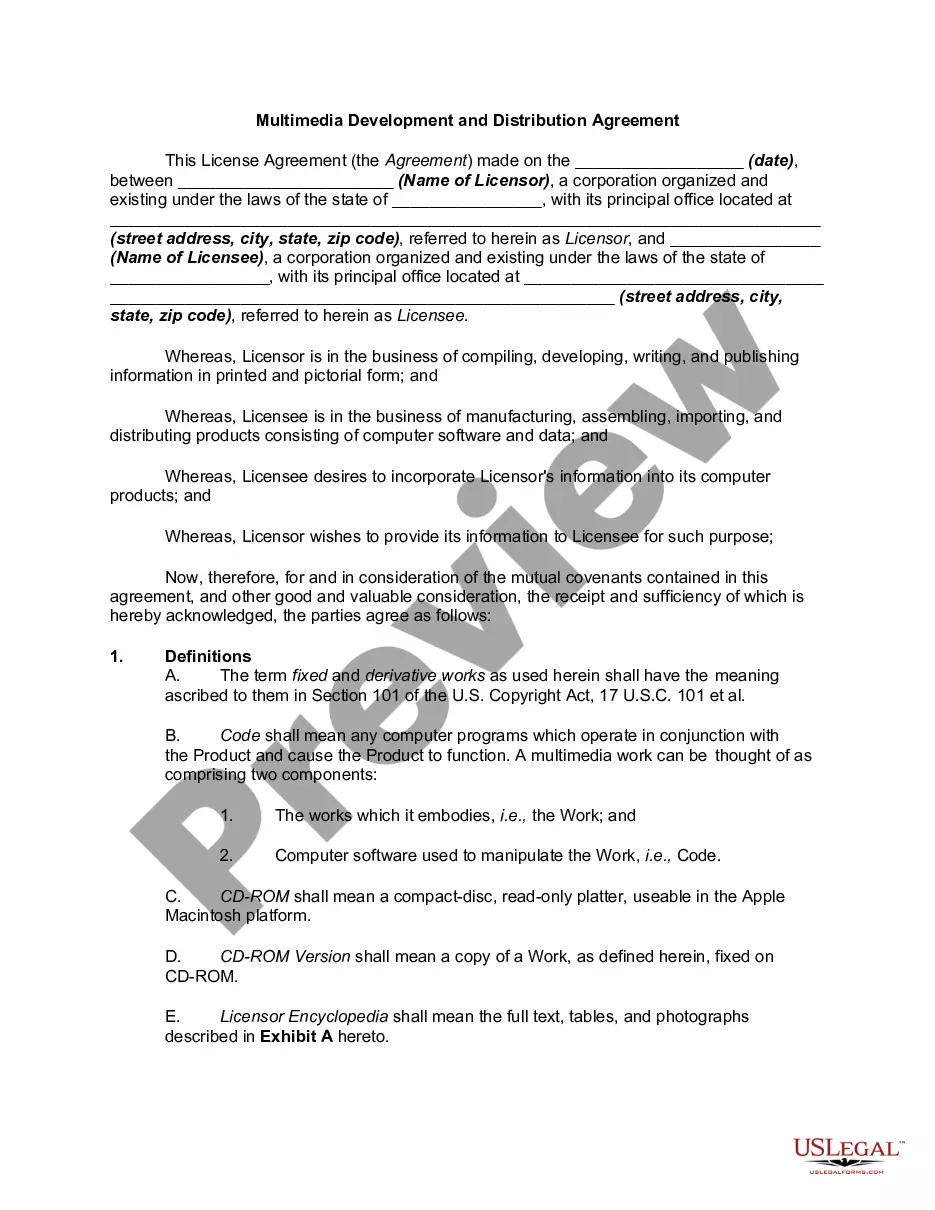
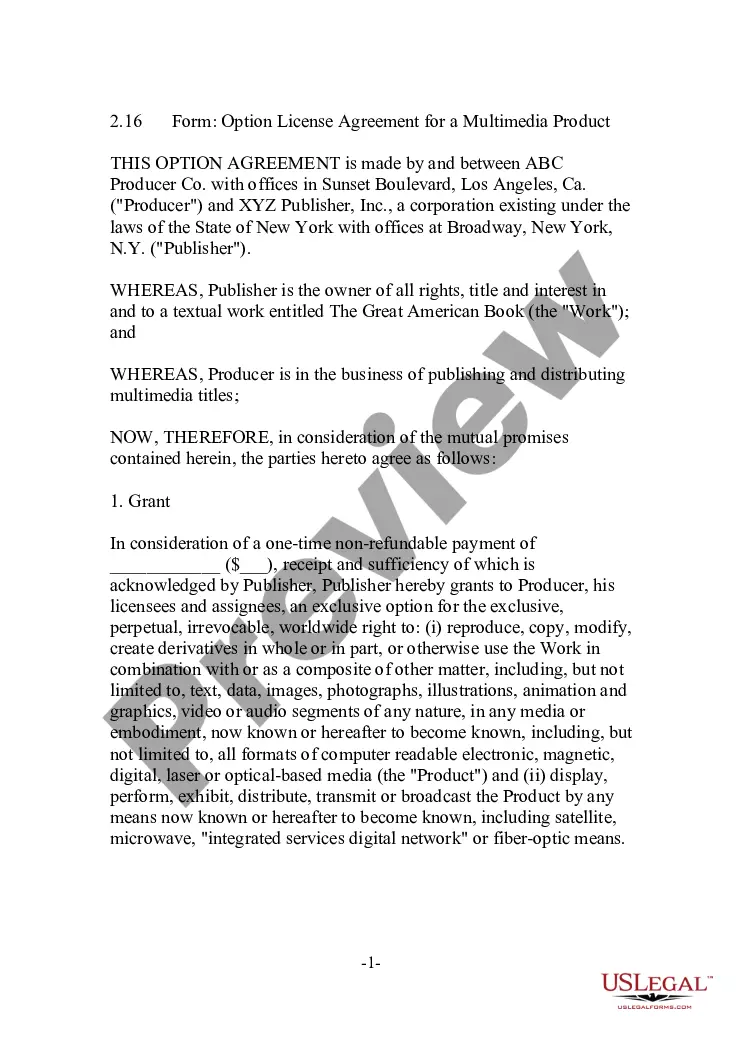
The License Agreement for Distribution of Multimedia Product by Online Service is a legal contract that outlines the terms under which a multimedia product can be distributed online. This agreement is critical for businesses involved in the production and distribution of multimedia content, differentiating itself from other agreements by focusing specifically on the licensing of rights for online distribution and interactive retrieval of the product.
Main sections of this form
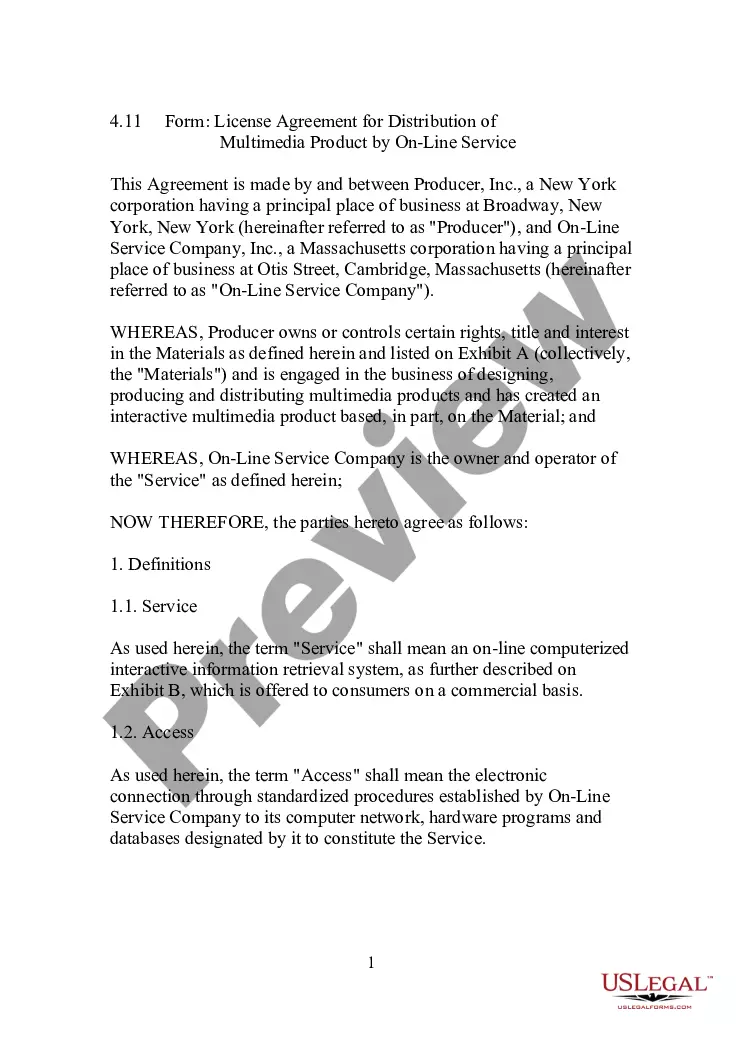
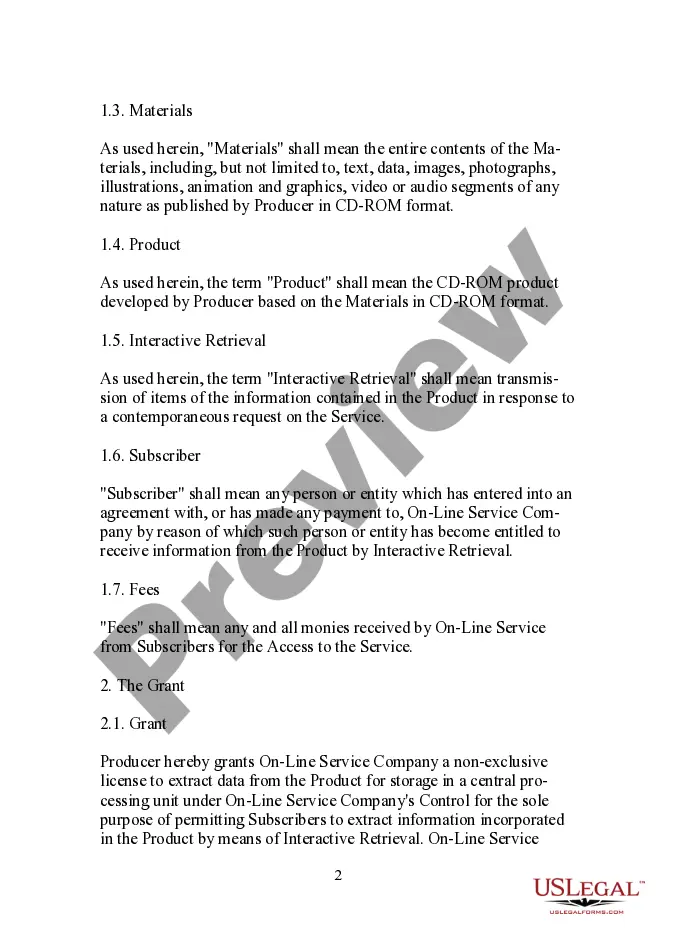
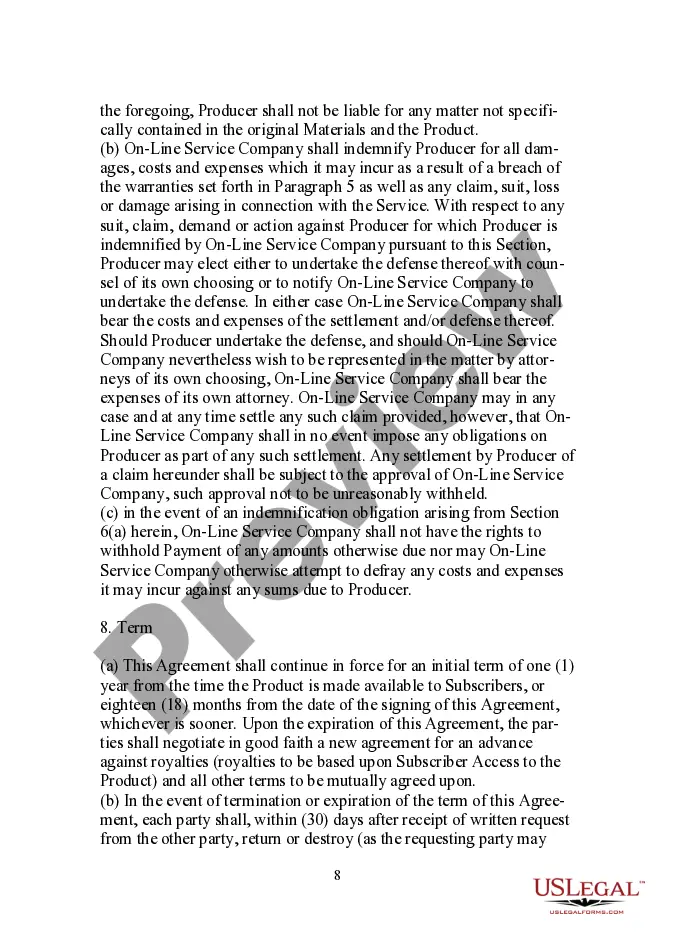
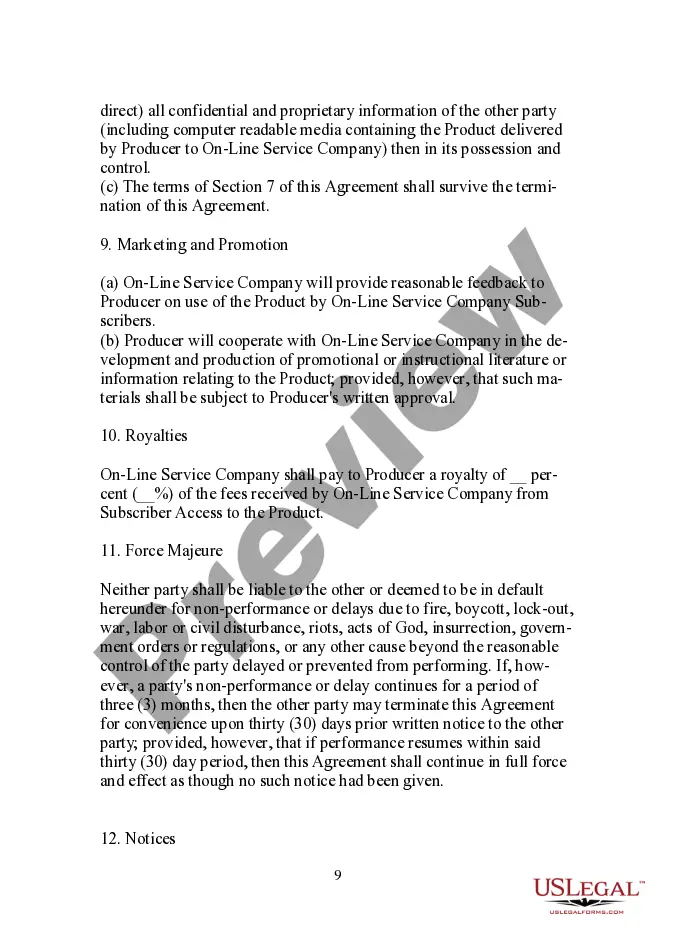
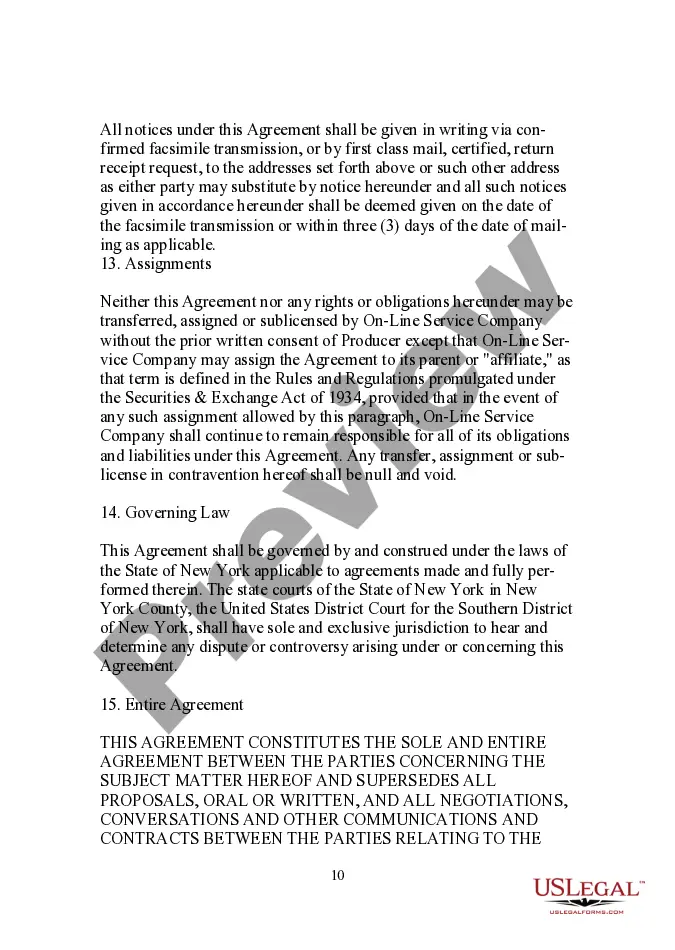
- Definitions: Clarifies key terms used in the agreement, such as "Service," "Materials," and "Subscriber."
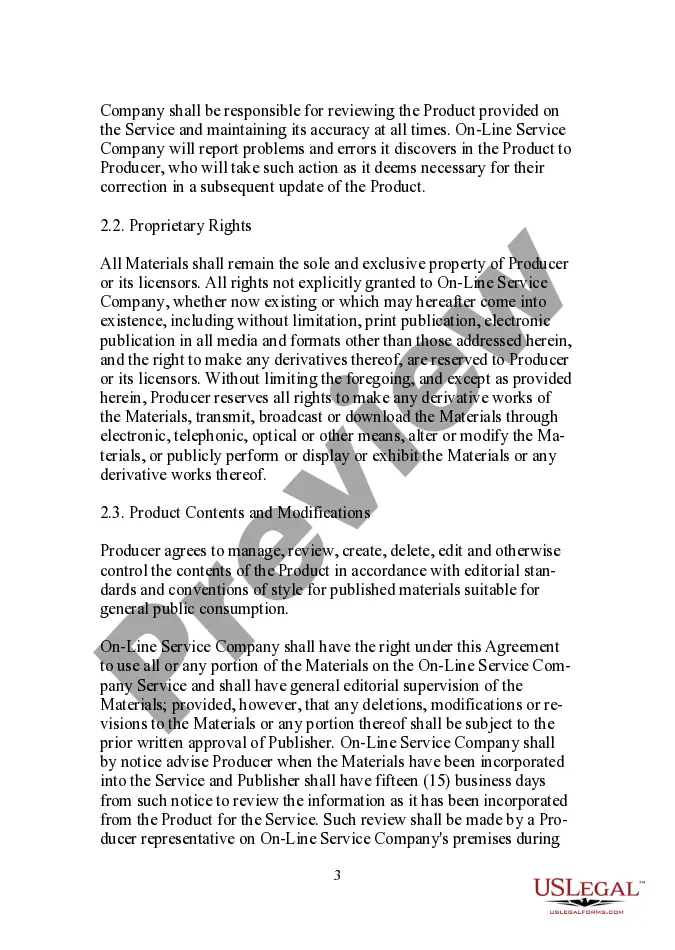
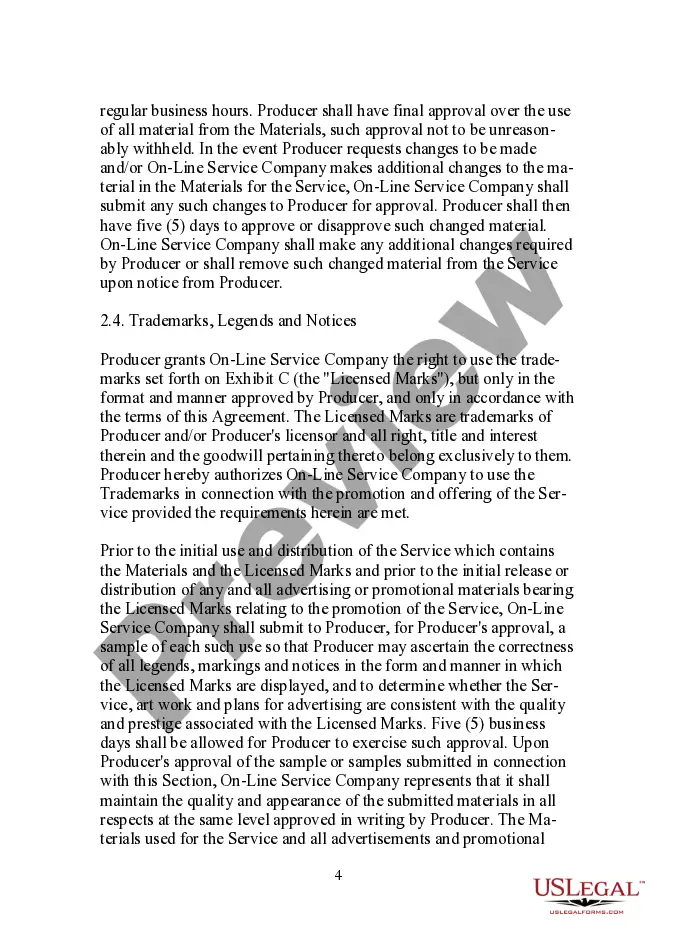
- The Grant: Details the non-exclusive rights granted to the online service to use the multimedia product.
- Proprietary Rights: States that all materials remain the property of the producer.
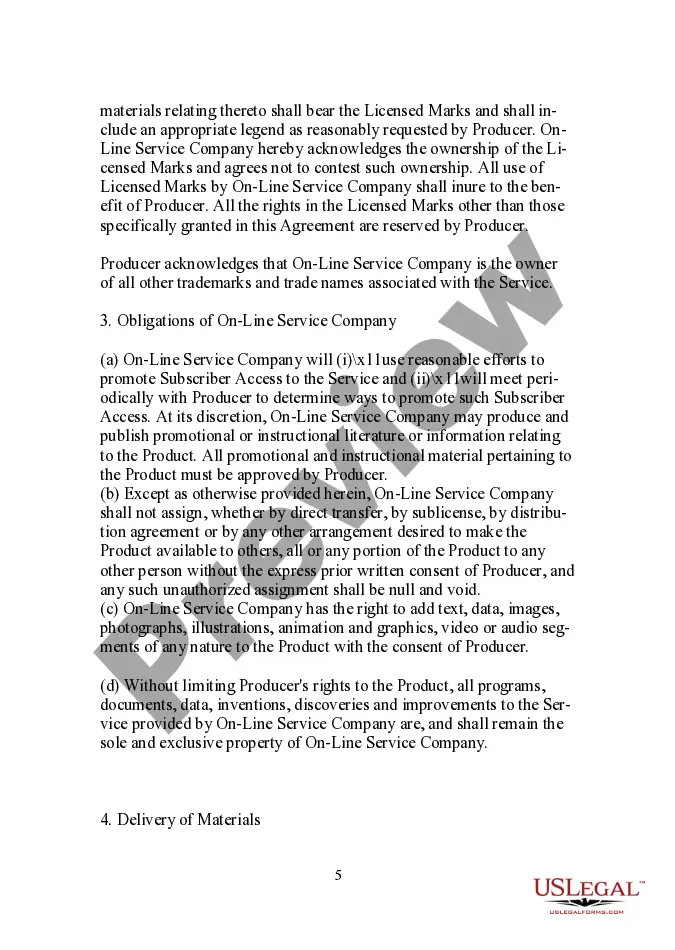
- Delivery of Materials: Outlines the obligations for delivering the product in a specified format.
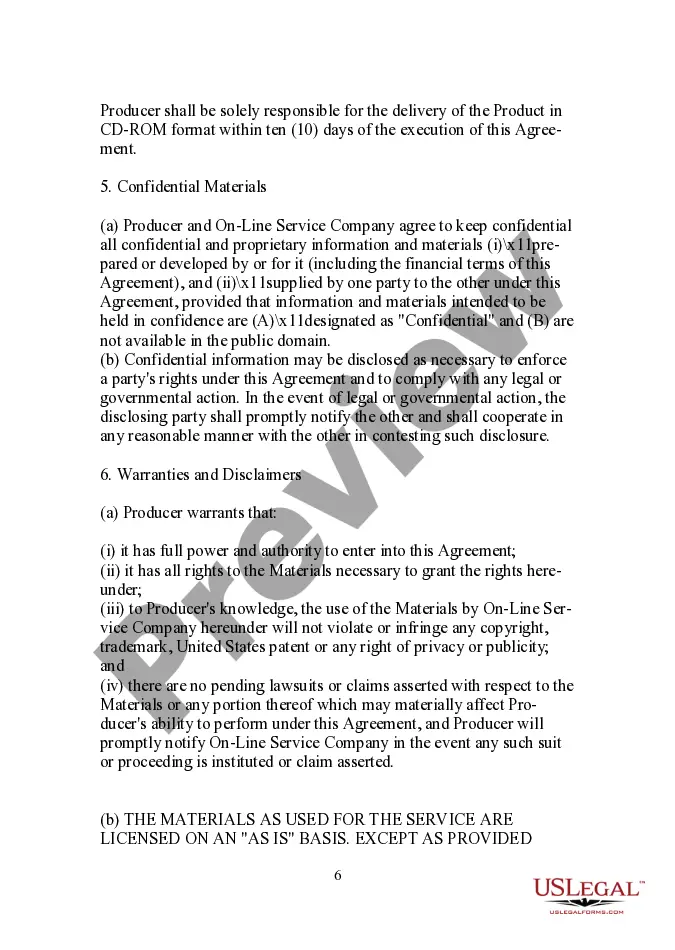
- Confidential Materials: Ensures protection of proprietary information shared between parties.
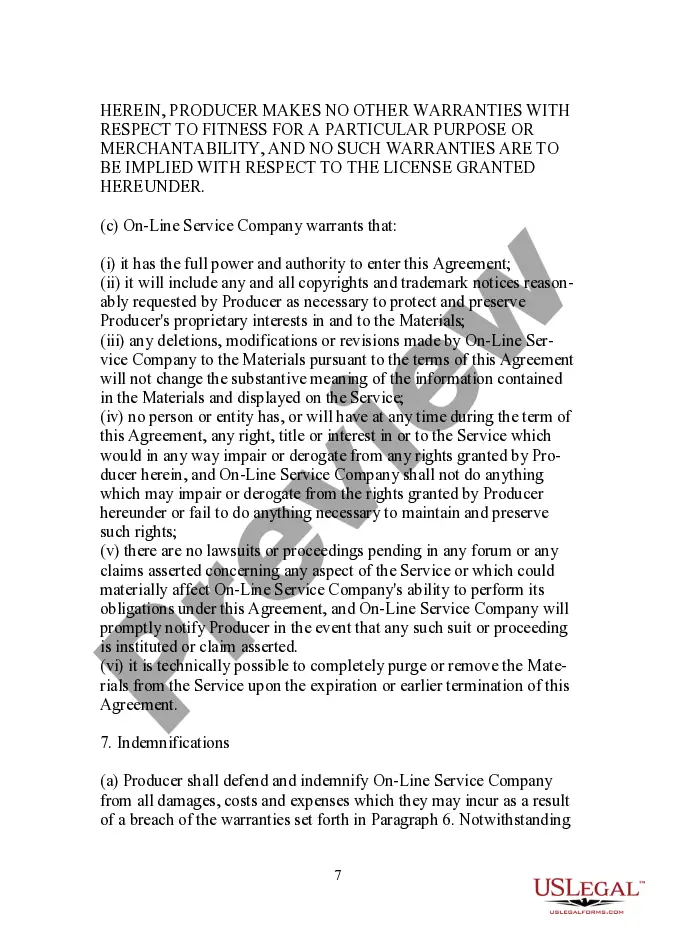
- Warranties and Disclaimers: Provides assurances about the validity and ownership of the materials.

When to use this form
This form should be utilized when a producer wishes to grant rights to an online service company to distribute their multimedia product. It is particularly relevant for businesses that create interactive software, educational content, or entertainment products aimed for online access by subscribers.
Who needs this form
- Producers of multimedia products seeking to license their work for online distribution.
- Online service companies that wish to legally access and distribute multimedia content.
- Businesses requiring clear guidelines for the use and promotion of their products online.
Completing this form step by step
- Identify the parties involved in the agreement, including their legal names and addresses.
- Clearly define the multimedia product being licensed and its associated content.
- Specify the terms of access and distribution for subscribers.
- Include any fees or royalties applicable to the licensing agreement.
- Guide the review process for modifications or deletions to the multimedia content.
- Ensure that both parties sign and date the agreement for it to be legally binding.
Does this document require notarization?
This form does not typically require notarization unless specified by local law. Users are advised to check their jurisdiction's requirements to confirm whether notarization is necessary.
Get your form ready online
Our built-in tools help you complete, sign, share, and store your documents in one place.
Make edits, fill in missing information, and update formatting in US Legal Forms—just like you would in MS Word.
Download a copy, print it, send it by email, or mail it via USPS—whatever works best for your next step.
Sign and collect signatures with our SignNow integration. Send to multiple recipients, set reminders, and more. Go Premium to unlock E-Sign.
If this form requires notarization, complete it online through a secure video call—no need to meet a notary in person or wait for an appointment.
We protect your documents and personal data by following strict security and privacy standards.

Make edits, fill in missing information, and update formatting in US Legal Forms—just like you would in MS Word.

Download a copy, print it, send it by email, or mail it via USPS—whatever works best for your next step.

Sign and collect signatures with our SignNow integration. Send to multiple recipients, set reminders, and more. Go Premium to unlock E-Sign.

If this form requires notarization, complete it online through a secure video call—no need to meet a notary in person or wait for an appointment.

We protect your documents and personal data by following strict security and privacy standards.
Common mistakes to avoid
- Failing to define key terms, leading to ambiguity in rights and responsibilities.
- Omitting the review and approval process for changes to the multimedia content.
- Not including a clear statement about the fees and royalties due.
- Neglecting to properly sign and date the agreement, impacting its enforceability.
Benefits of completing this form online
- Convenience of downloading and editing the agreement as per specific needs.
- Access to a template prepared by legal professionals, ensuring reliability and legal compliance.
- Ability to save and store the document electronically for future reference.
Legal use & context
- The agreement establishes legally binding rights and obligations between the producer and the online service company.
- It outlines how multimedia products can be used, ensuring both parties understand their responsibilities.
- Legal enforceability requires both parties to comply with the terms specified within the agreement.
Key takeaways
- This License Agreement is essential for clarifying the terms of multimedia distribution.
- It's important to define all materials and rights clearly to avoid legal issues.
- Both parties must adhere to the obligations specified to maintain a successful partnership.
Looking for another form?


Form popularity
FAQ
An exclusive distribution contract means only one distributor is appointed in a specific marketplace by a supplier. As part of the agreement, the supplier promises not to allow the distribution of the products by any other party in the given market area.
A product (or merchandise) license allows licensees to leverage popular IP to create branded products, usually for a specific period of time. Once the rights have been secured, the licensee manufactures product using the licensed IP, and in return pays the licensor a royalty for its use.
A licensing agreement is a legal contract between two parties, known as the licensor and the licensee. In a typical licensing agreement, the licensor grants the licensee the right to produce and sell goods, apply a brand name or trademark, or use patented technology owned by the licensor.
Terms and conditions of sale; term for which the contract is in effect; marketing rights; trademark licensing; geographical territory covered by the agreement; performance; reporting; and. circumstances under which the contract may be terminated.
A distribution agreement is a legal agreement between a supplier of goods and a distributor of goods. The supplier may be a manufacturer, or may itself be a distributor reselling another's goods.
A distributor agreement is a commercial contract between a supplier of goods and a distributor of goods. The supplier may be a manufacturer, or it may be a reseller of the products. In the modern business world, more and more companies are involved in distribution arrangements that cross international boundaries.
A distribution agreement, also known as a distributor agreement, is a contract between a supplying company with products to sell and another company that markets and sells the products. The distributor agrees to buy products from the supplier company and sell them to clients within certain geographical areas.
Exclusive Distributor. Terms And Conditions Of Sale. Pricing. Term Of The Agreement. Marketing rights. Trademark licensing. The geographical territory covered by the agreement. Performance.
Perhaps the key difference between a EULA and a software license agreement is that a EULA is often meant for scenarios where many users could be using the software on a continuous basis and a software license agreement is more often used for business-to-business, often times for finite engagements.