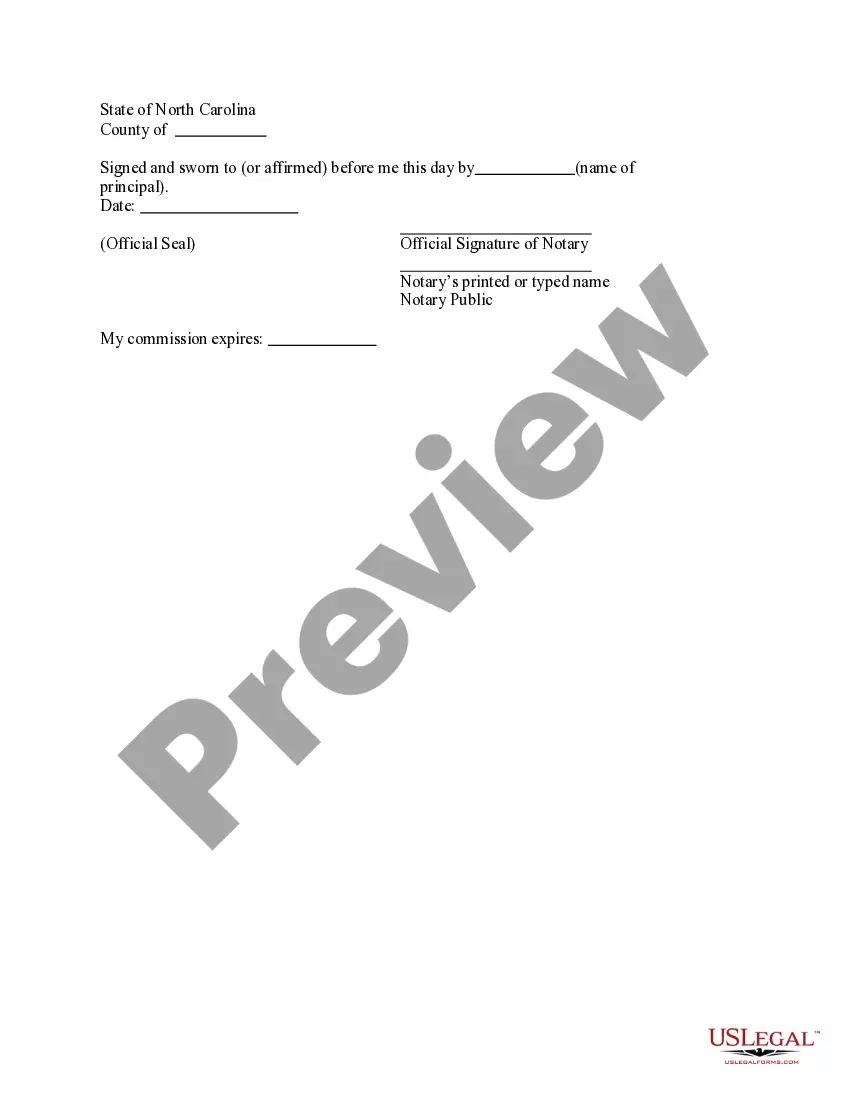
Grantor Trust Agreement between Credit Suisse First Boston Mortgage Securities Corp., Washington Mutual Bank FA and Bank One, National Assoc.
What this document covers
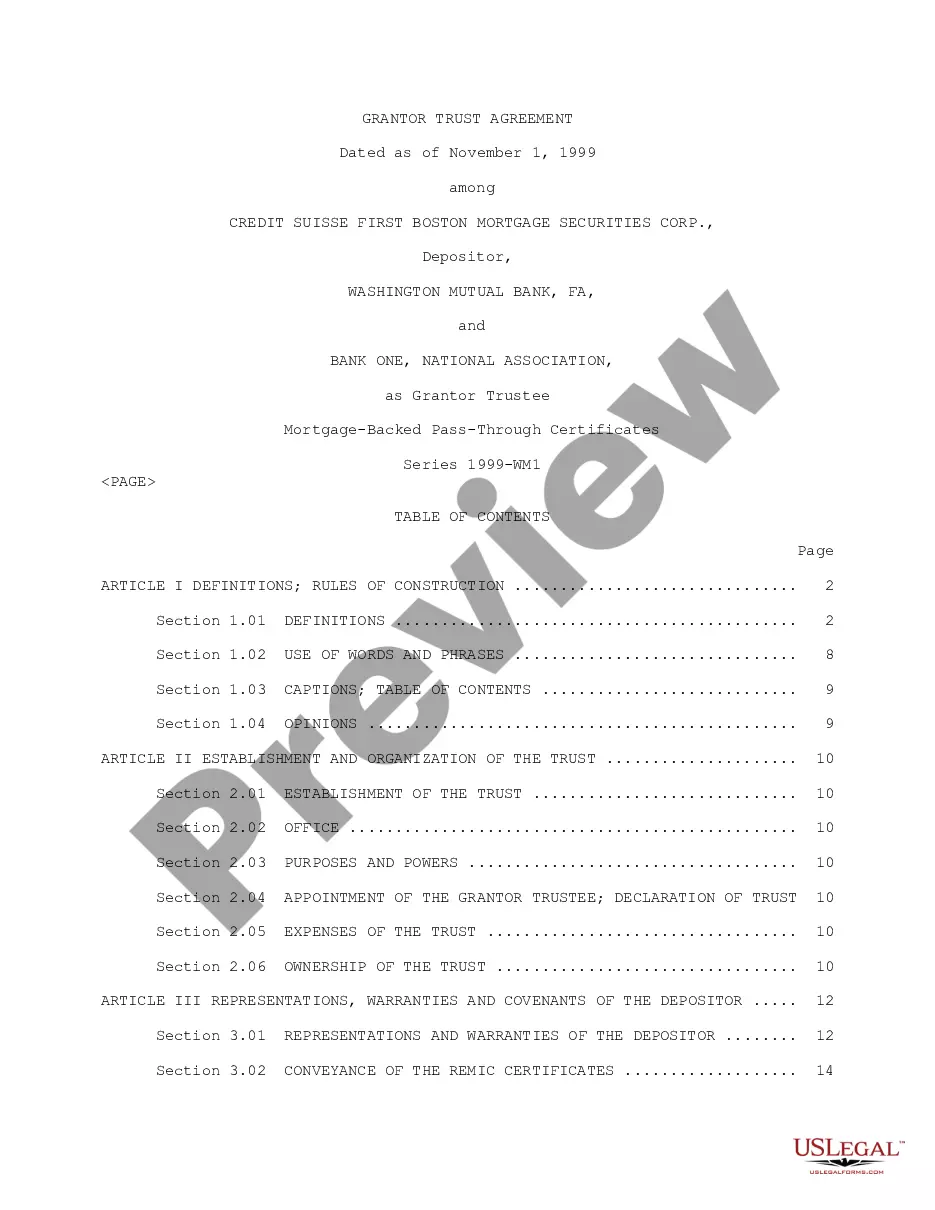
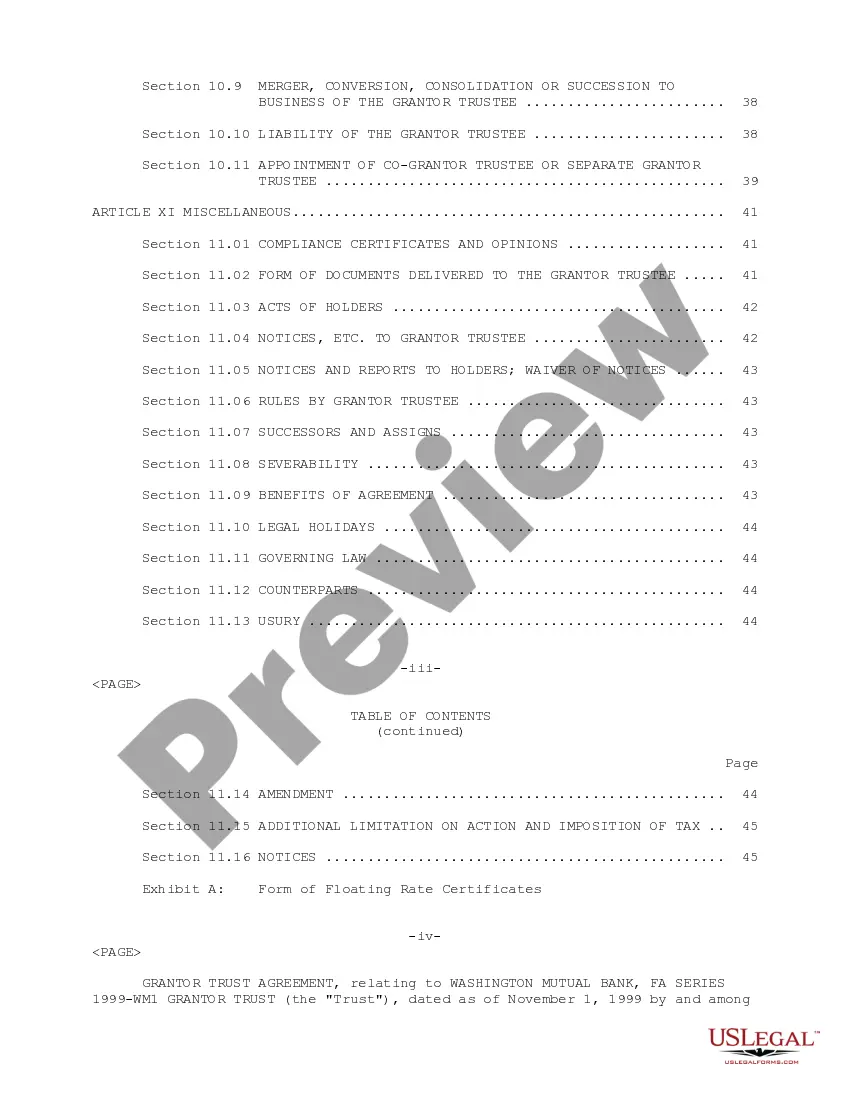
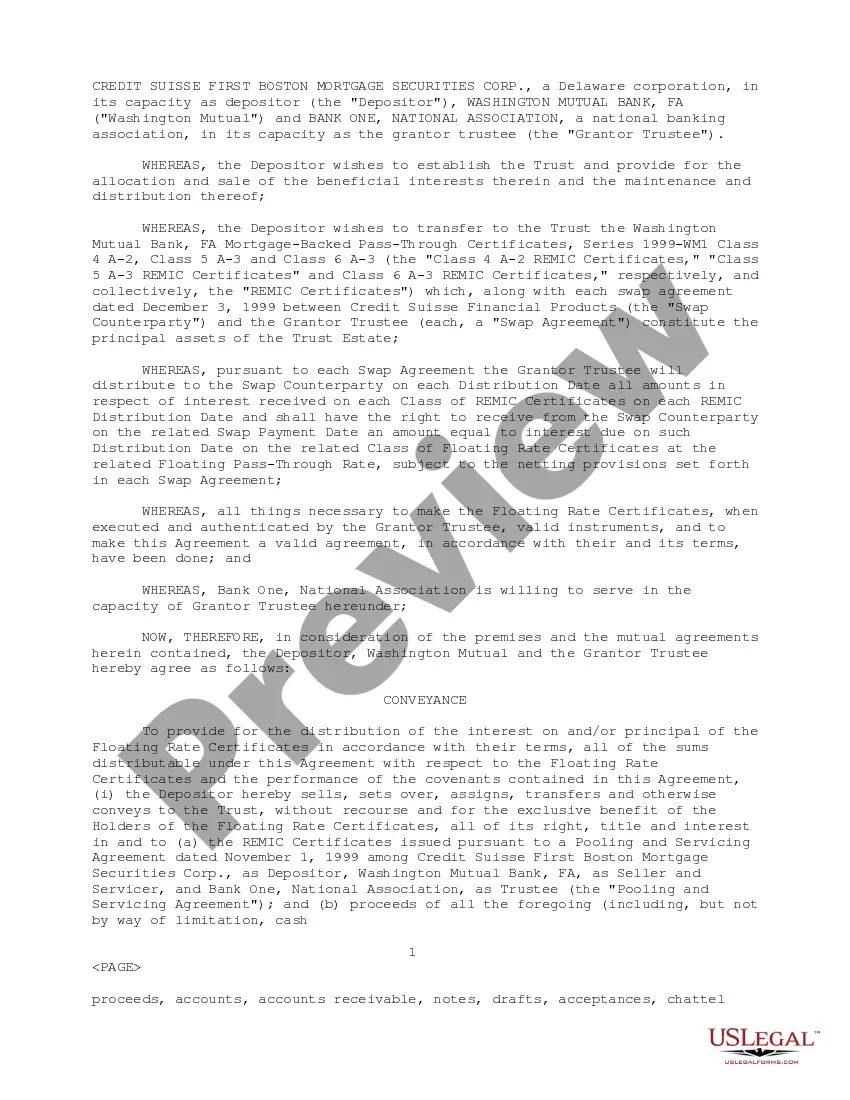
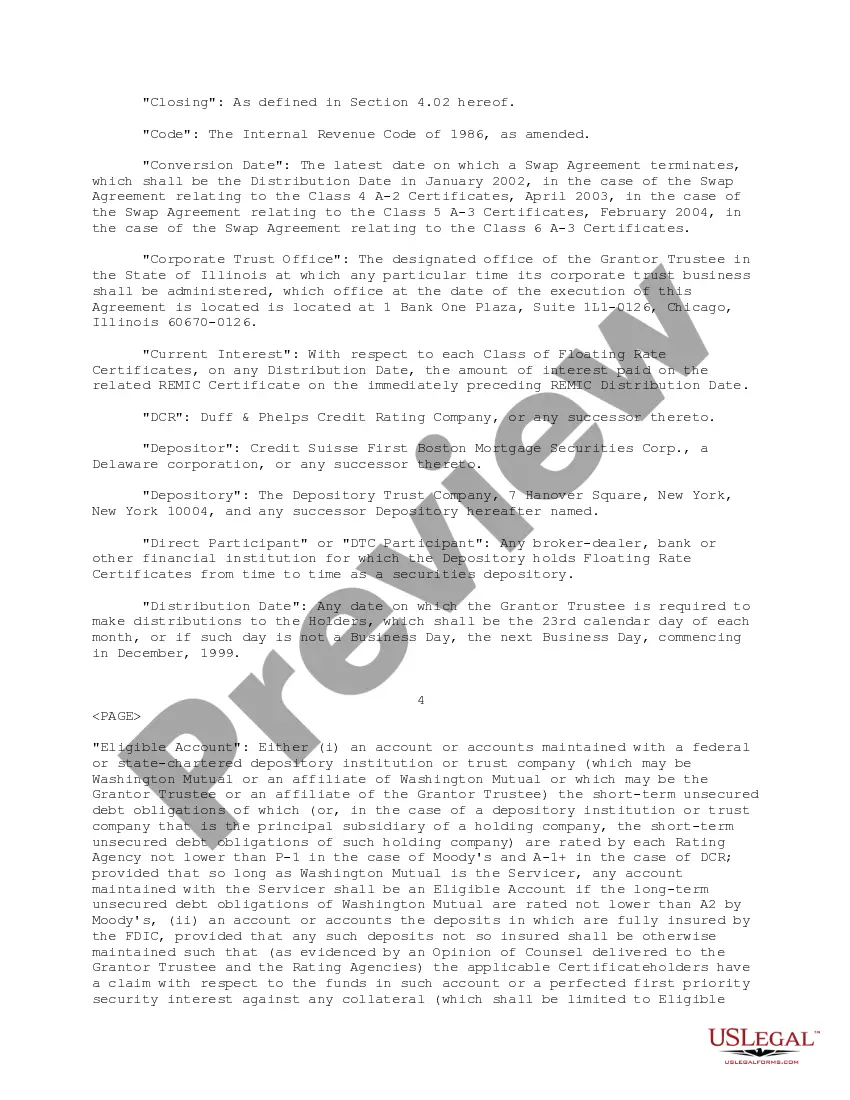
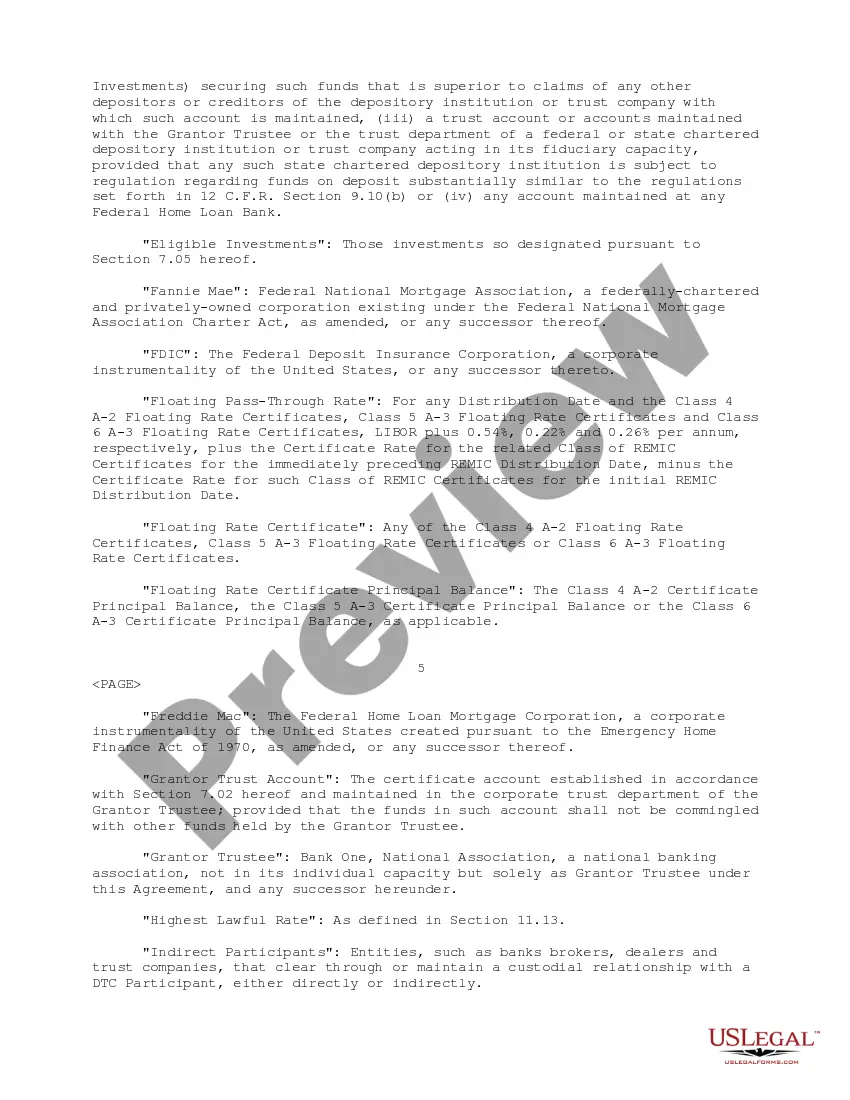
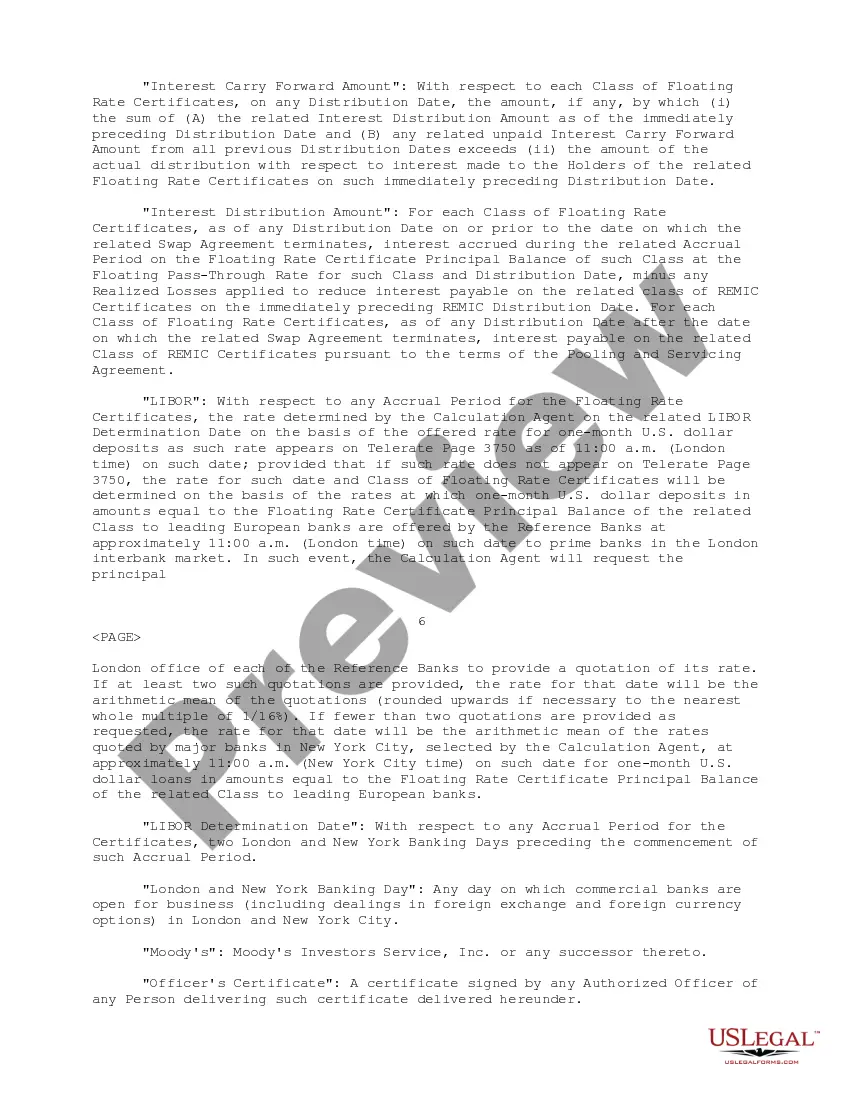
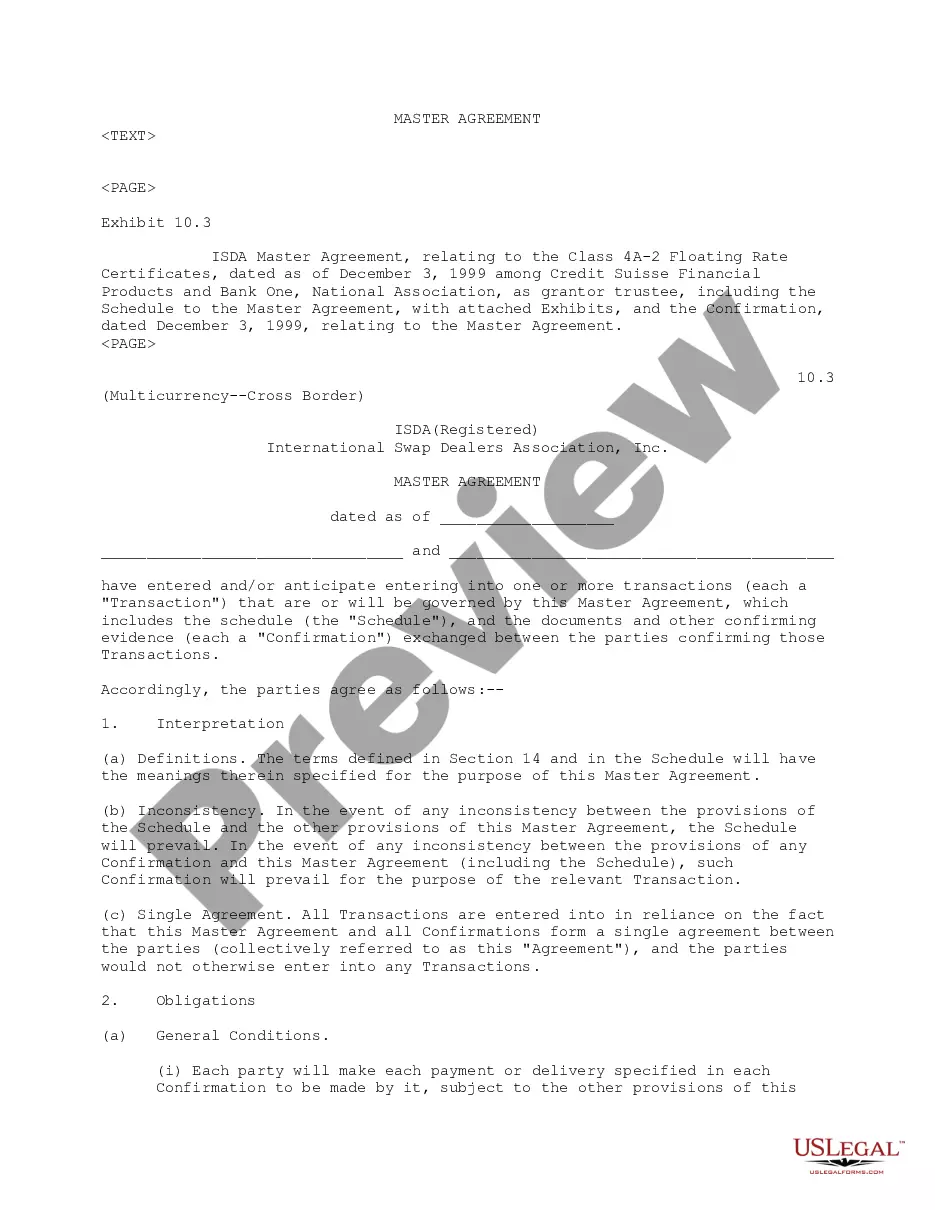
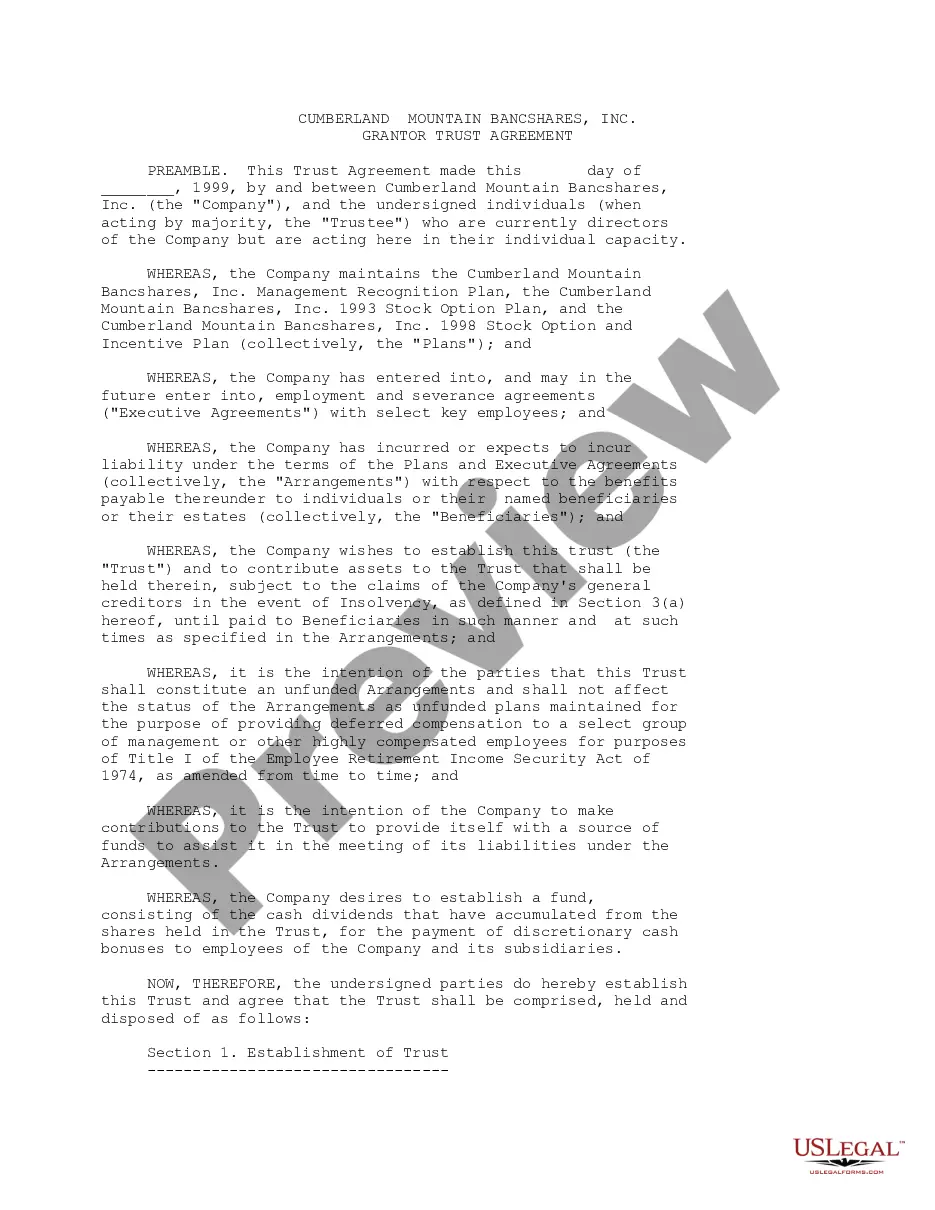
The Grantor Trust Agreement is a legal document created between Credit Suisse First Boston Mortgage Securities Corp., Washington Mutual Bank FA, and Bank One, National Association. It sets forth the structure and operating procedures of the trust that issues mortgage-backed pass-through certificates. This form is essential for facilitating the transfer of beneficial interests in the mortgage-backed securities, and it ensures compliance with applicable laws, differentiating it from generic trust agreements through its specific provisions regarding REMIC certificates.
Form components explained
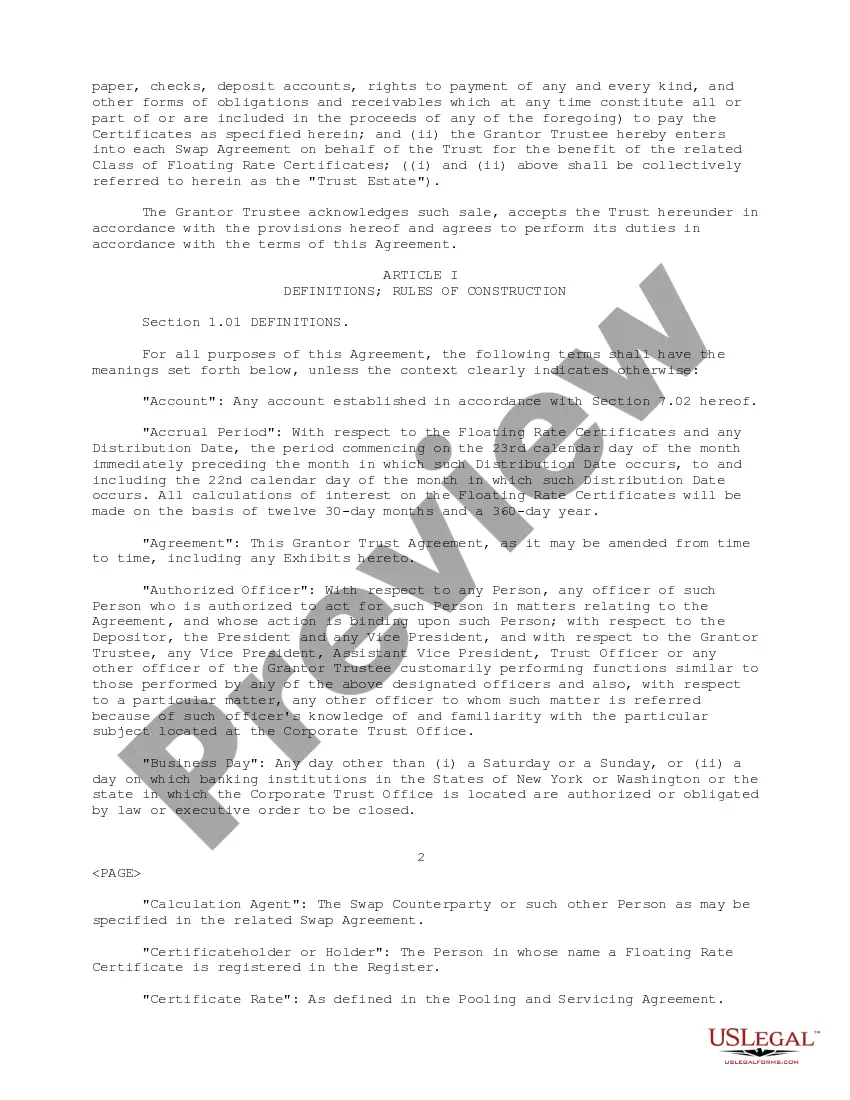
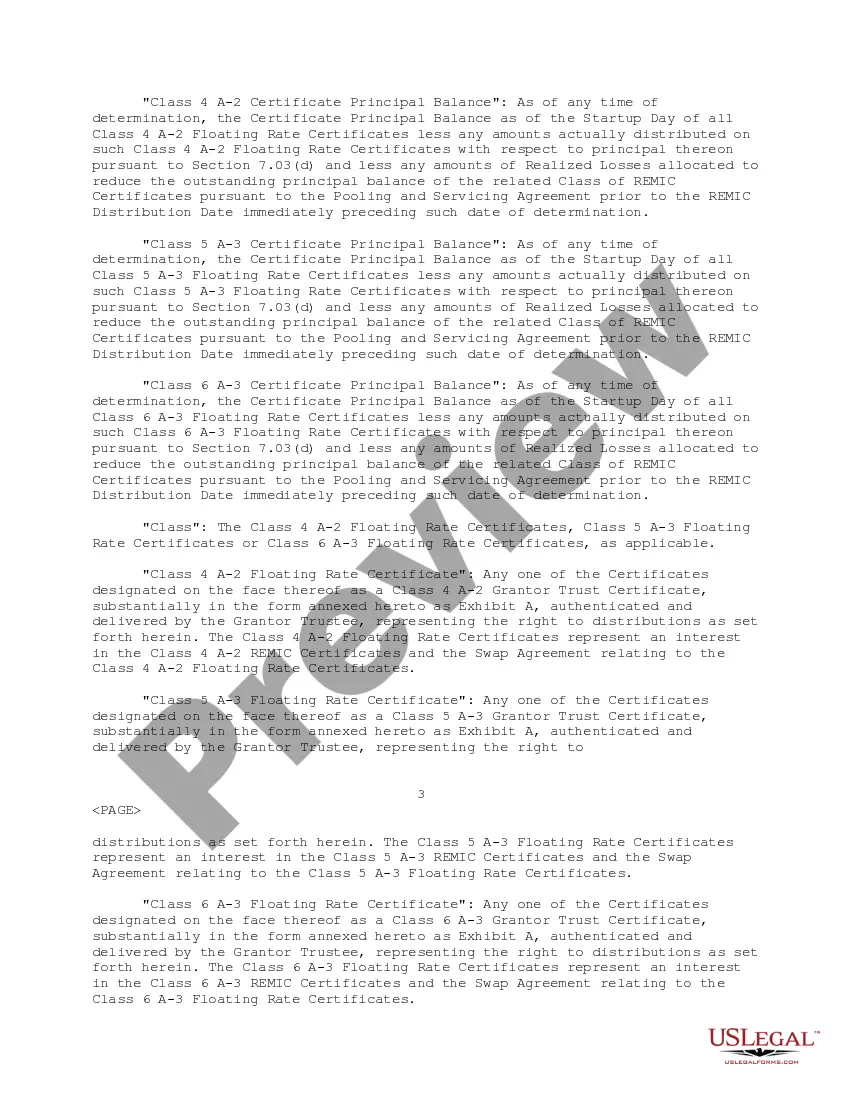
- Definitions: Establishes key terms used throughout the agreement.
- Establishment of the Trust: Outlines the intentions for forming the Grantor Trust.
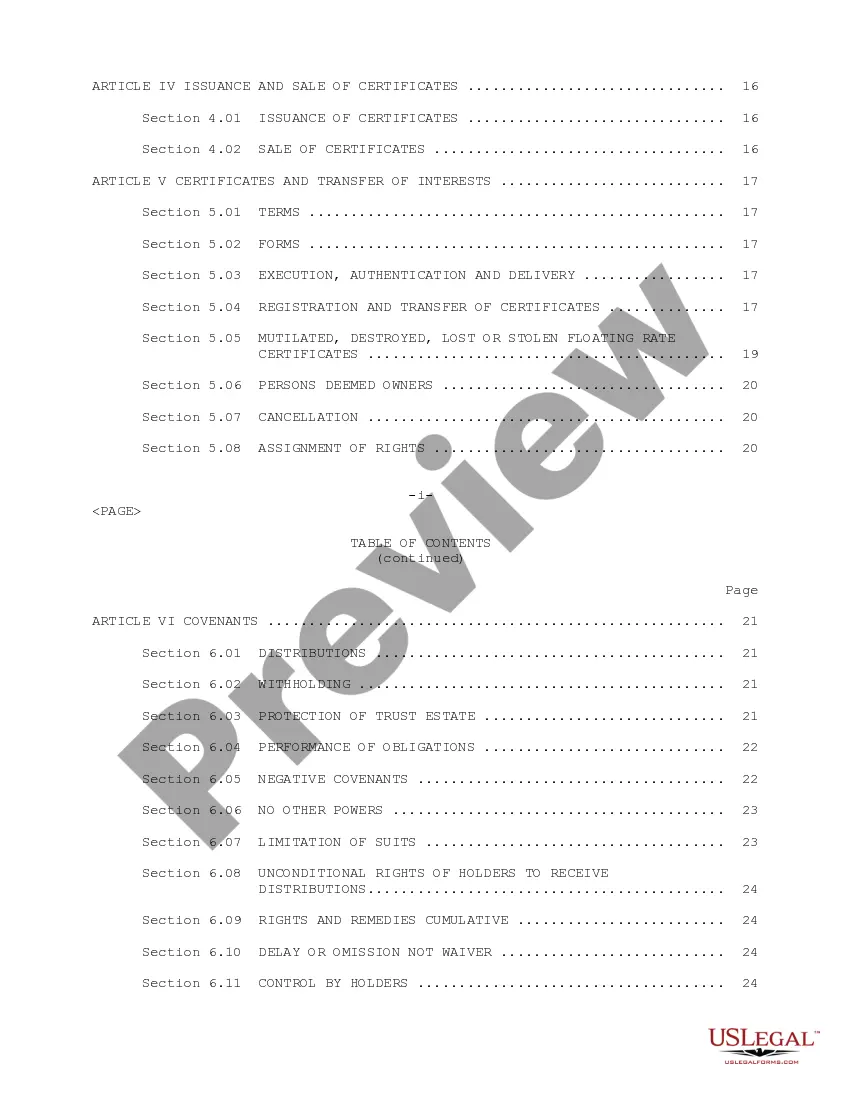
- Issuance and Sale of Certificates: Details how certificates are issued and transferred to investors.
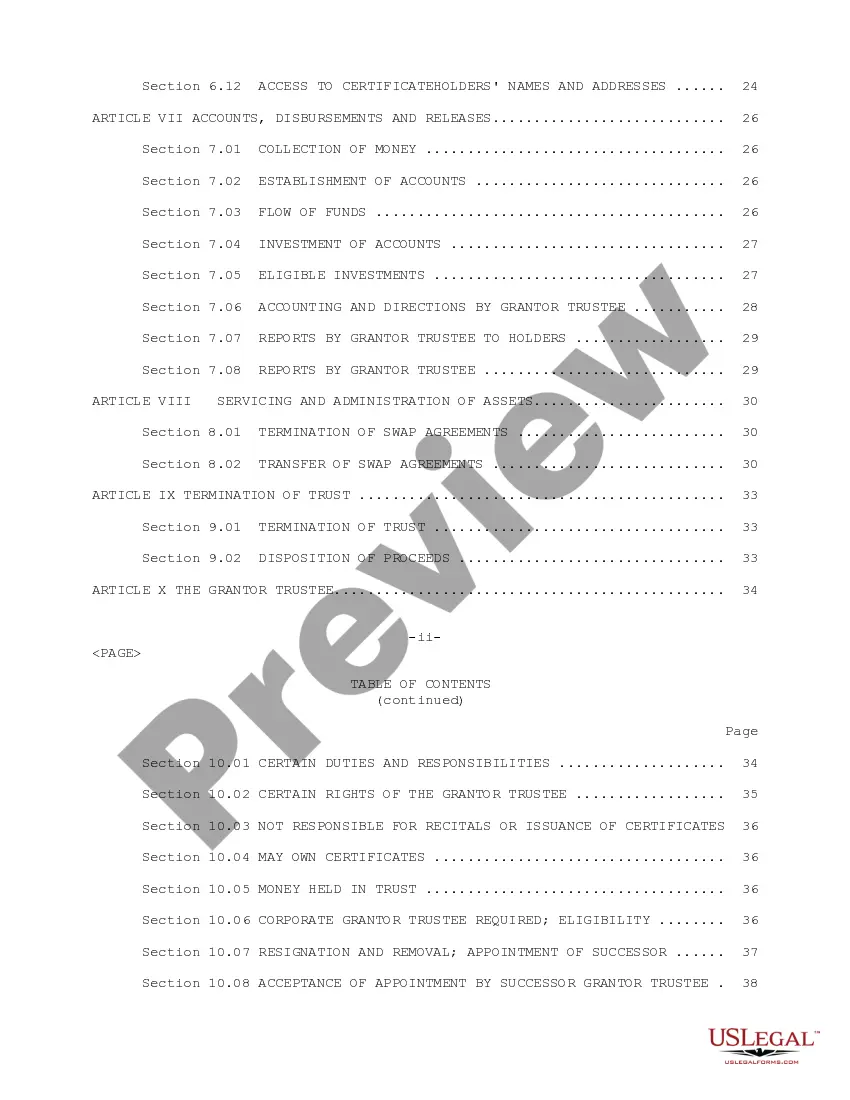
- Covenants: Specifies the commitments of parties involved regarding the management and operations of the trust.
- Distribution Procedures: Describes how payments will be distributed among the certificate holders.

Situations where this form applies
This form should be used when establishing a grantor trust for the purpose of issuing mortgage-backed pass-through certificates. It is necessary during the initial setup phase of the trust, when transferring ownership interests, or when updating any terms related to the management of the trust's assets and distributions to certificate holders.
Who should use this form
- Financial institutions involved in the issuance of mortgage-backed securities.
- Legal entities acting as grantor trustees for managing the trust's assets.
- Investors seeking a structured investment vehicle for mortgage-related assets.
Steps to complete this form
- Identify the parties involved: Credit Suisse First Boston Mortgage Securities Corp., Washington Mutual Bank FA, and Bank One, National Association.
- Specify the purpose of the trust and outline its powers and scope.
- Detail the terms under which the certificates will be issued and sold.
- Define the responsibilities and rights of the grantor trustee and certificate holders.
- Obtain signatures from authorized officers representing each party involved in the agreement.
Does this form need to be notarized?
This form does not typically require notarization unless specified by local law. It is advisable to check with a legal professional or local regulations to ensure compliance.
Get your form ready online
Our built-in tools help you complete, sign, share, and store your documents in one place.
Make edits, fill in missing information, and update formatting in US Legal Forms—just like you would in MS Word.
Download a copy, print it, send it by email, or mail it via USPS—whatever works best for your next step.
Sign and collect signatures with our SignNow integration. Send to multiple recipients, set reminders, and more. Go Premium to unlock E-Sign.
If this form requires notarization, complete it online through a secure video call—no need to meet a notary in person or wait for an appointment.
We protect your documents and personal data by following strict security and privacy standards.

Make edits, fill in missing information, and update formatting in US Legal Forms—just like you would in MS Word.

Download a copy, print it, send it by email, or mail it via USPS—whatever works best for your next step.

Sign and collect signatures with our SignNow integration. Send to multiple recipients, set reminders, and more. Go Premium to unlock E-Sign.

If this form requires notarization, complete it online through a secure video call—no need to meet a notary in person or wait for an appointment.

We protect your documents and personal data by following strict security and privacy standards.
Mistakes to watch out for
- Failing to accurately define key terms, leading to ambiguity in interpretations.
- Omitting required signatures from all parties involved.
- Not adhering to state-specific requirements that may apply to the trust structure.
Why use this form online
- Convenience of downloadable access to the form at any time.
- Editable fields allow for easy customization to fit specific needs.
- Reliability, as the forms are drafted by licensed attorneys and comply with legal standards.
Legal use & context
- This form is legally binding and establishes the rights and responsibilities of involved parties.
- Enforceability depends on adherence to local laws governing trust agreements.
- This agreement must be executed properly to maintain its validity and protect the interests of all parties involved.
Summary of main points
- Utilize the Grantor Trust Agreement to manage mortgage-backed securities effectively.
- Ensure compliance with all necessary regulations and requirements.
- Verify that all relevant parties are accurately represented and that all signatures are obtained.
Looking for another form?
Form popularity
FAQ
Schedule K-1 (Form 1041) is an official IRS form that's used to report a beneficiary's share of income, deductions and credits from an estate or trust.This form is required when an estate or trust is passing tax obligations on to one or more beneficiaries.
A Grantor letter specifying the income earned by the trust is filed with the 1041 and issued to the a Grantor. The Grantor uses this to report the income on his 1040. The payer issues a 1099 (or K-1) to the trust but uses the Grantors SSN. The income is reported directly on the grantors 1040 and no 1041 is filed.
Grantor Trusts. As a general rule, grantor revocable trusts do not need a separate EIN.Accordingly, the IRS does not prohibit the issuance of EINs to grantor revocable trusts.
When setting up a grantor trust, you are not restricted to working only with a revocable trust. The basic revocable grantor trust is easy to create: you simply structure the trust so that you, as the grantor, retain all power to control the trust's assets and income.
Unlike other trusts, if the entire trust is a grantor trust then the taxpayer is only required to fill in the entity information on Form 1041. The assets held by the trust are normally titled to the trust which informs the IRS that the trust should pickup any applicable income or losses.
When grantor trust status applies, either the grantor or a beneficiary is treated as the owner of the activity inside the trust for income tax purposes.The general rule is that all grantor trusts must file a Form 1041, which contains only the trust's name, address, and tax identification number (TIN) (see Regs. Sec.
The Grantor Letter or Information Sheet is a transmittal document, copied to the IRS, showing you as a recipient of various forms of income, and possibly having certain deductible expenses.
Normally, a trust must file Form 1041, U.S. Income Tax Return for Estates and Trusts, each calendar year. However, for most grantor trusts, filing Form 1041 is optional.In that case, the deemed owner must include the activity of the trust on his or her personal tax return (see Regs.
A grantor is the entity that establishes a trust and legally transfers control of those assets to a trustee, who manages it for one or more beneficiaries. In certain types of trusts, the grantor may also be the beneficiary, the trustee, or both.