Underwriting Agreement of Ameriquest Mortgage Securities, Inc.
What this document covers
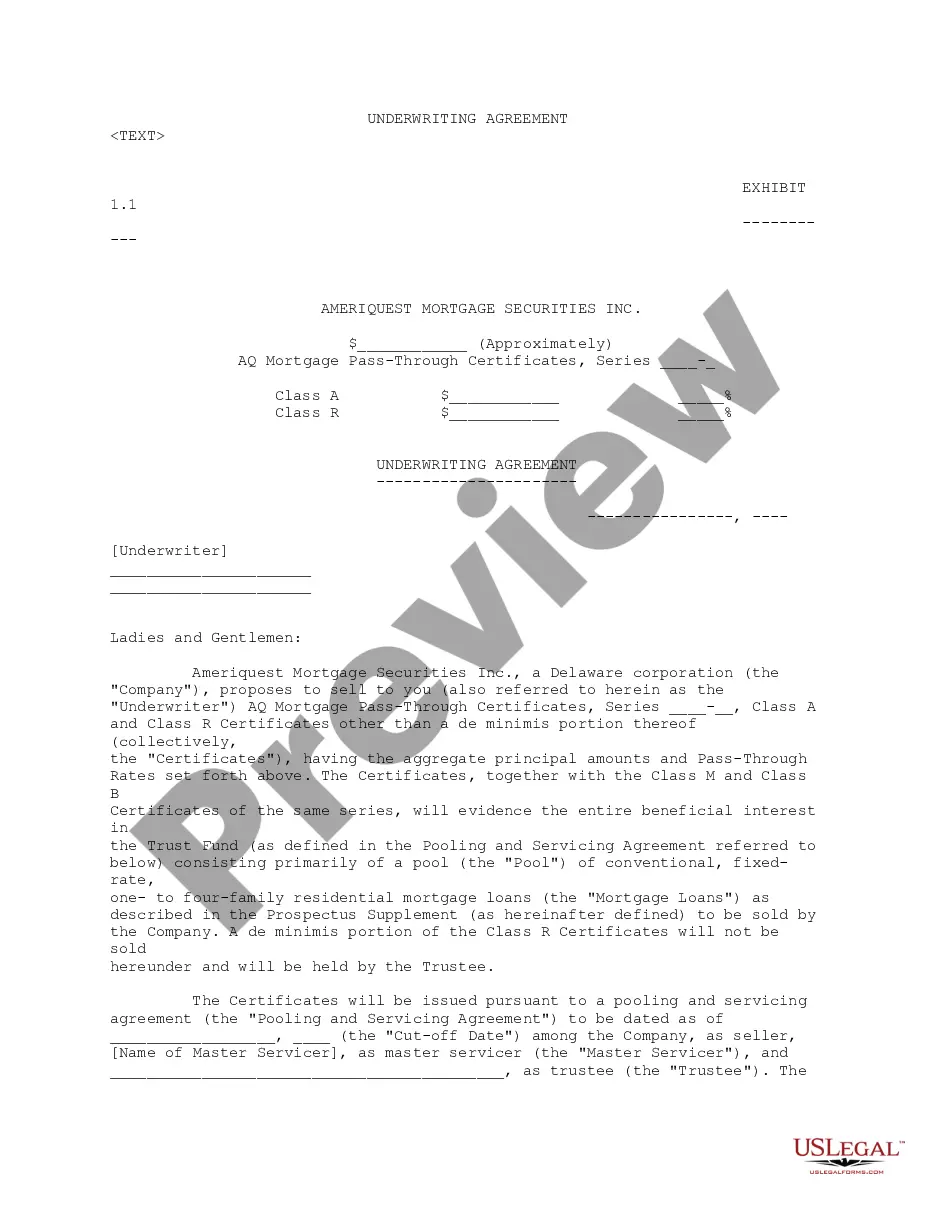
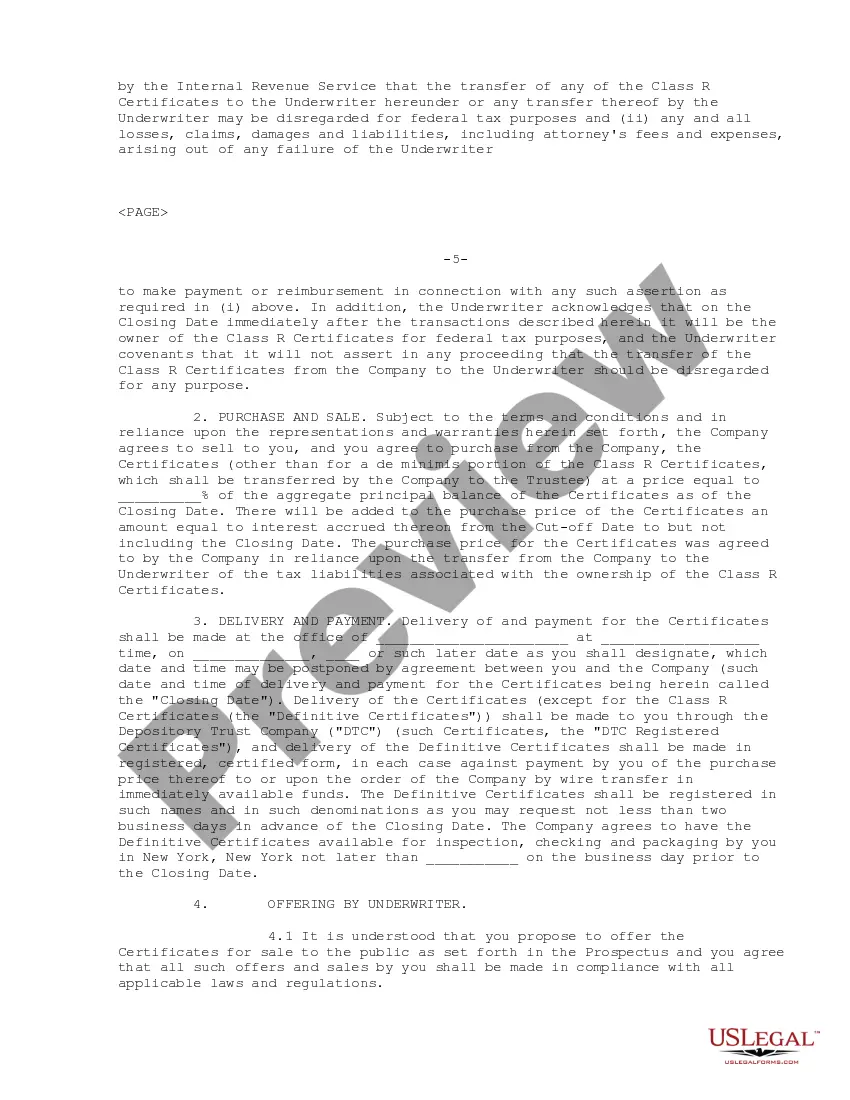
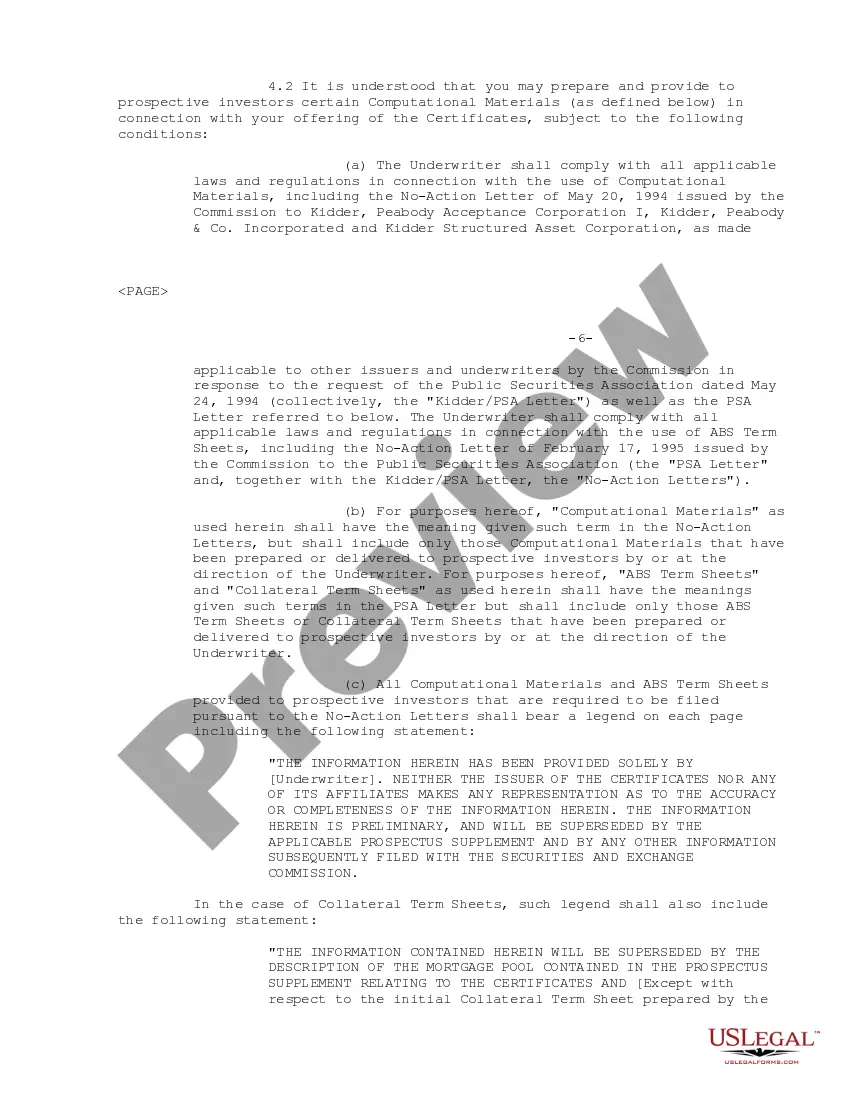
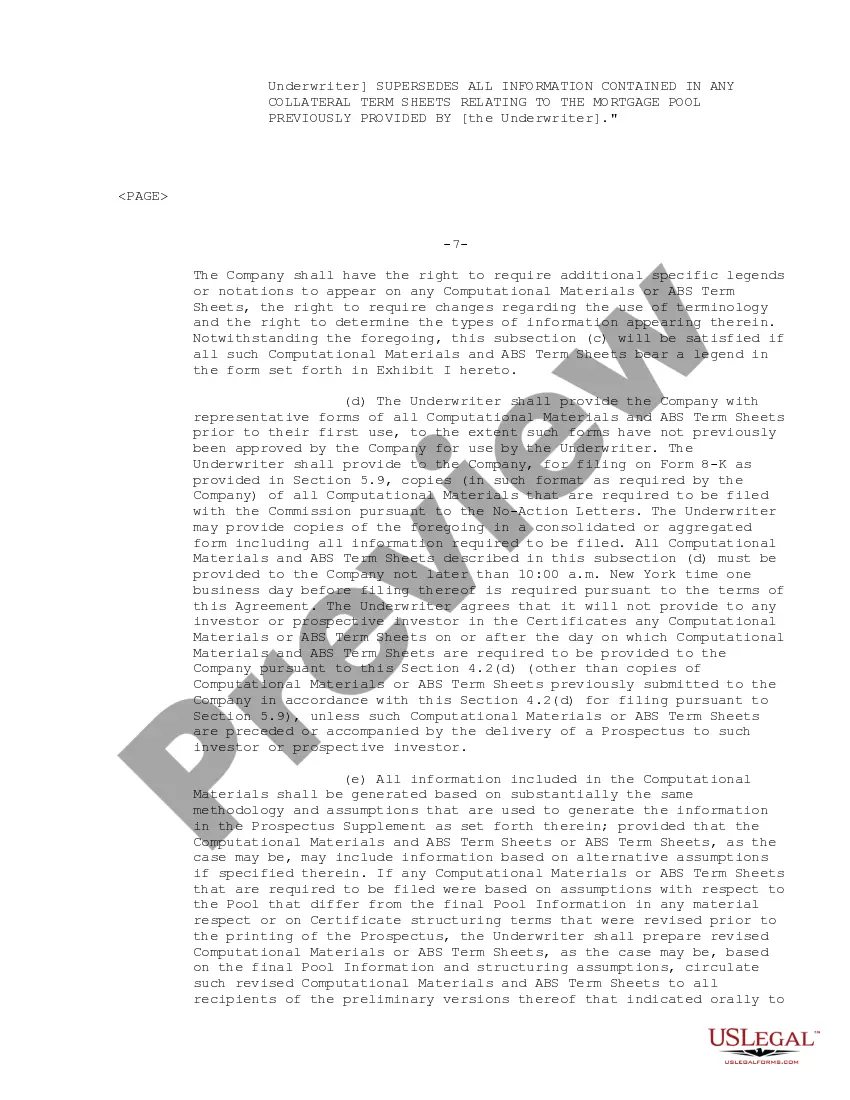
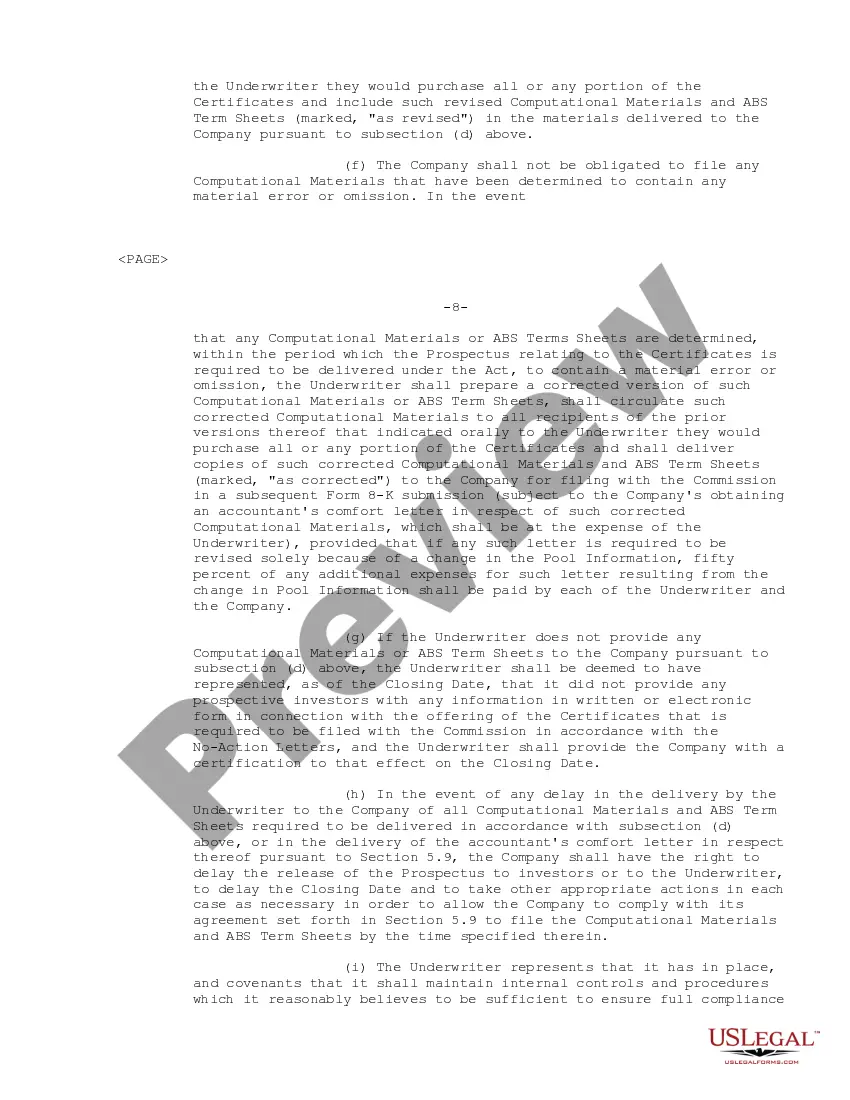
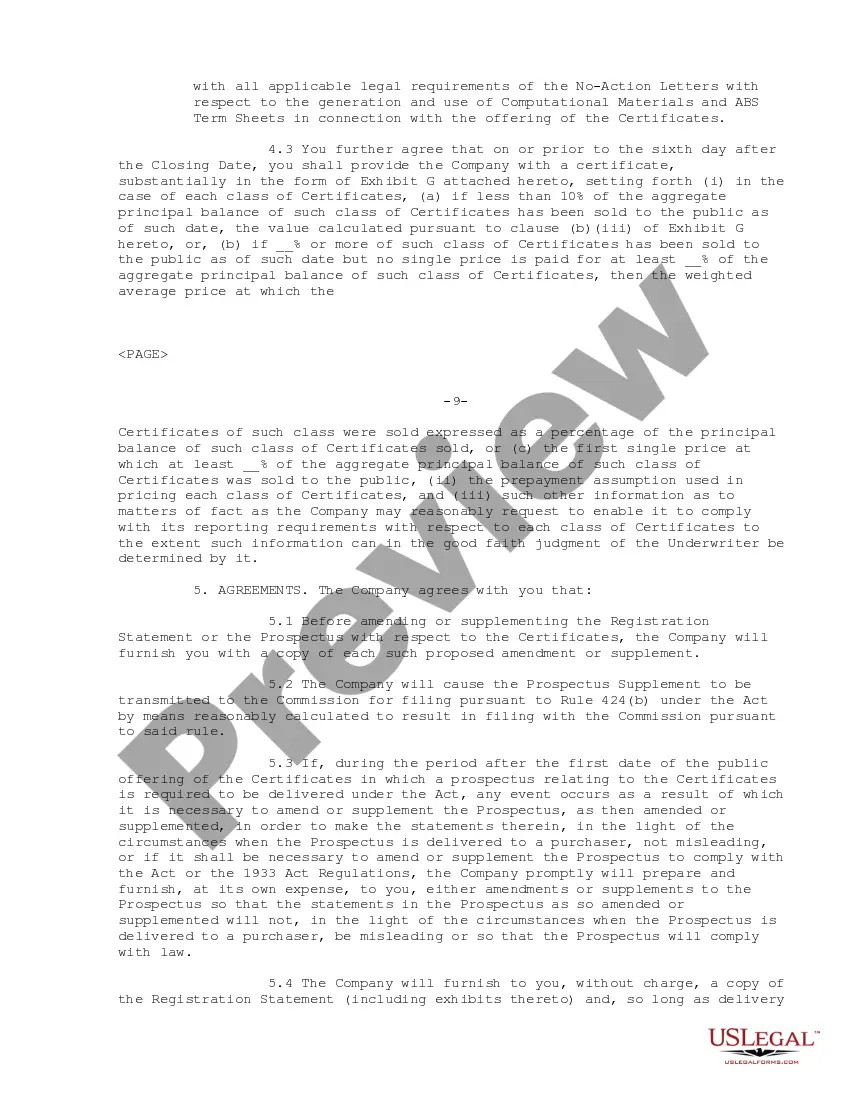
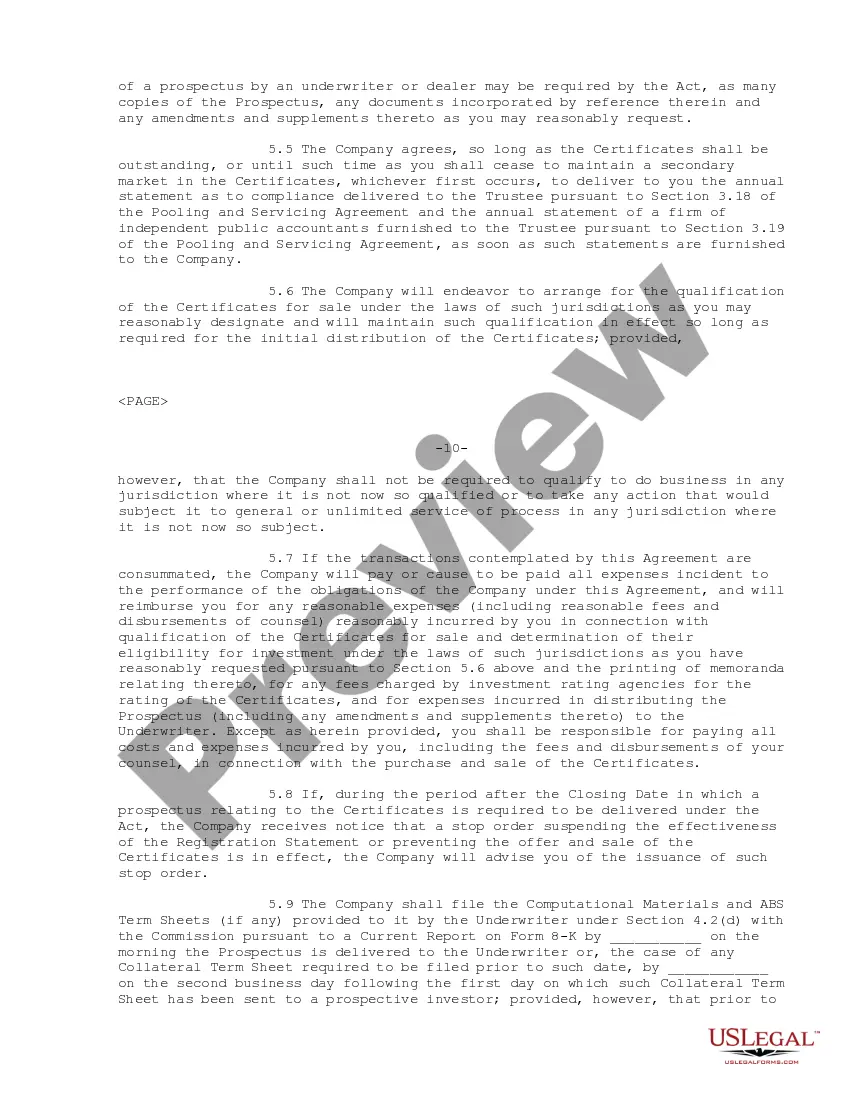
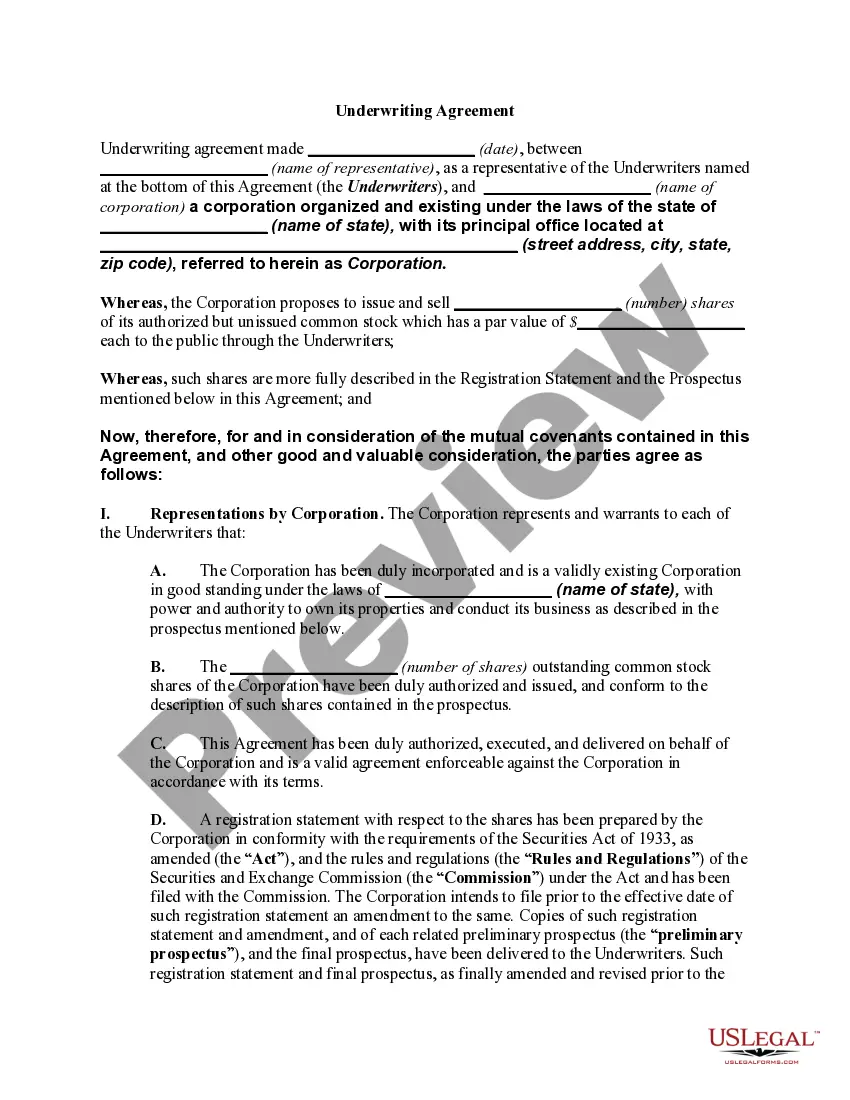
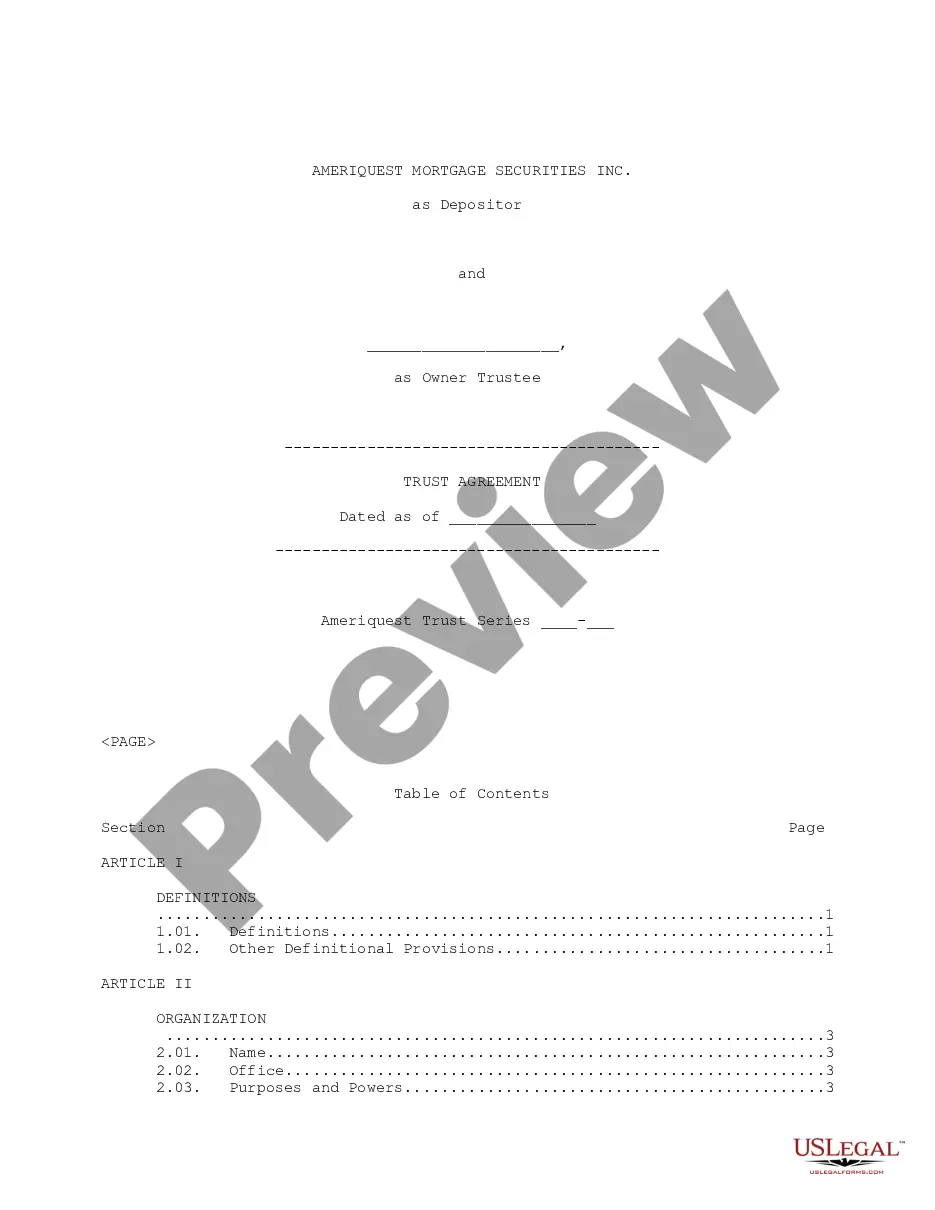
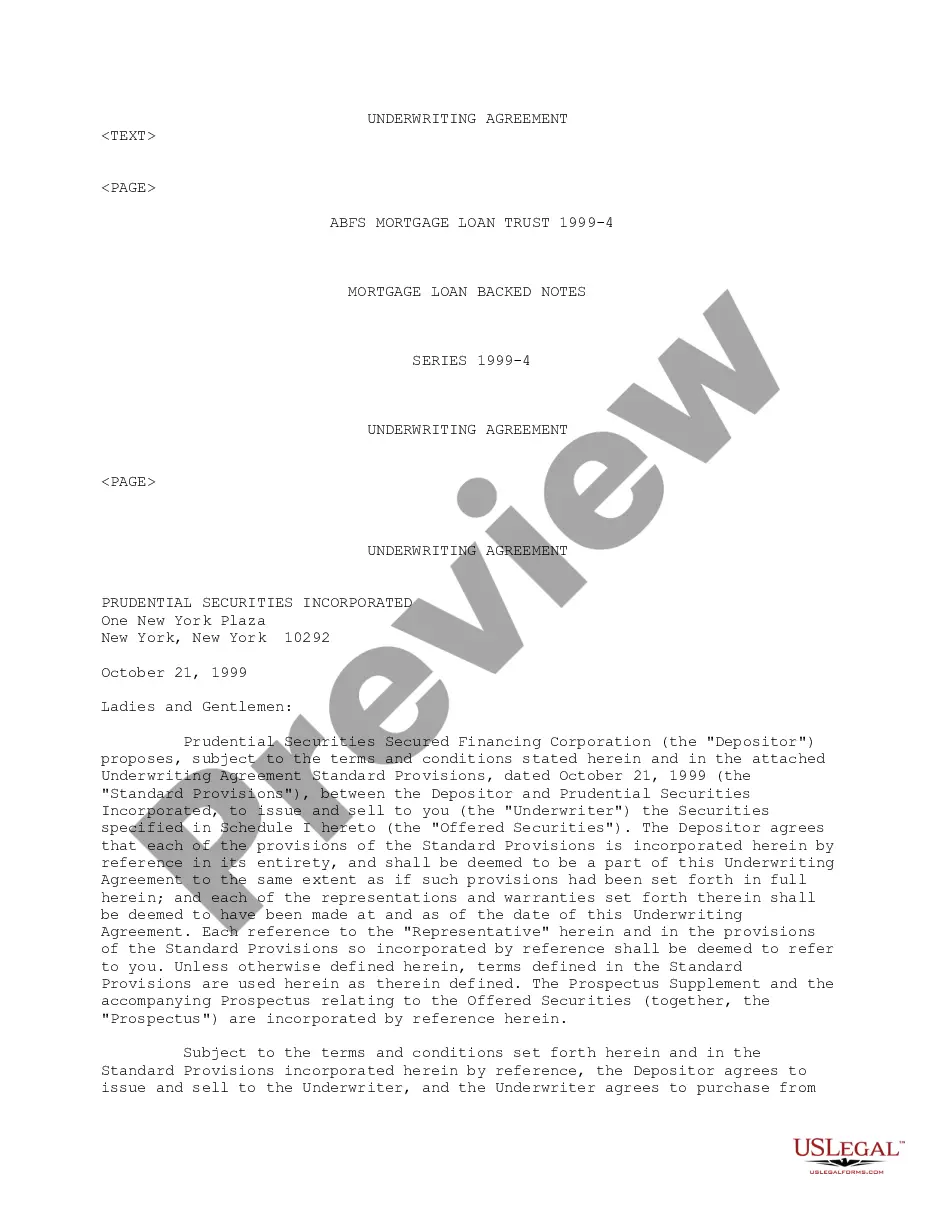
The Underwriting Agreement of Ameriquest Mortgage Securities, Inc. is a legal document used to outline the terms and responsibilities between Ameriquest Mortgage Securities Inc. and an underwriter for the purchase of AQ Mortgage Pass-Through Certificates. This form defines essential elements including price, delivery, and the legal obligations of both parties in a mortgage-backed securities transaction. Unlike typical sales agreements, this form addresses complex financial arrangements involving multiple stakeholders.
Form components explained
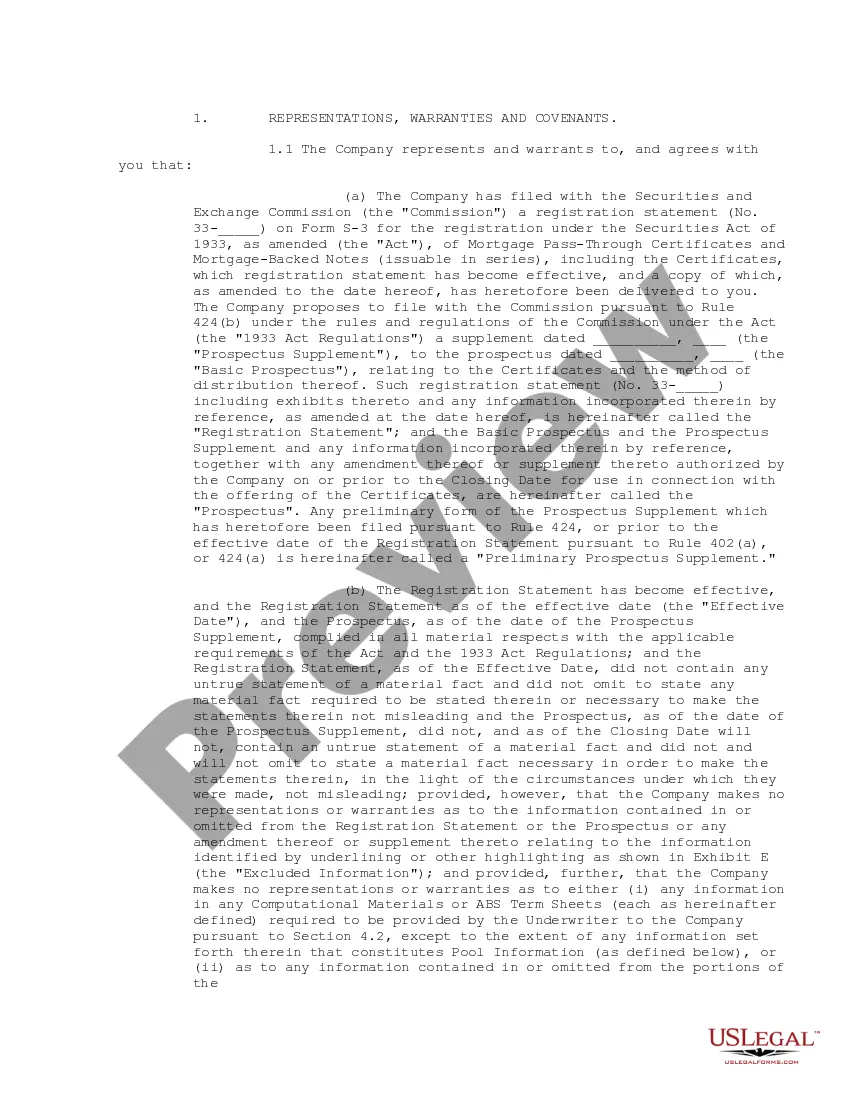
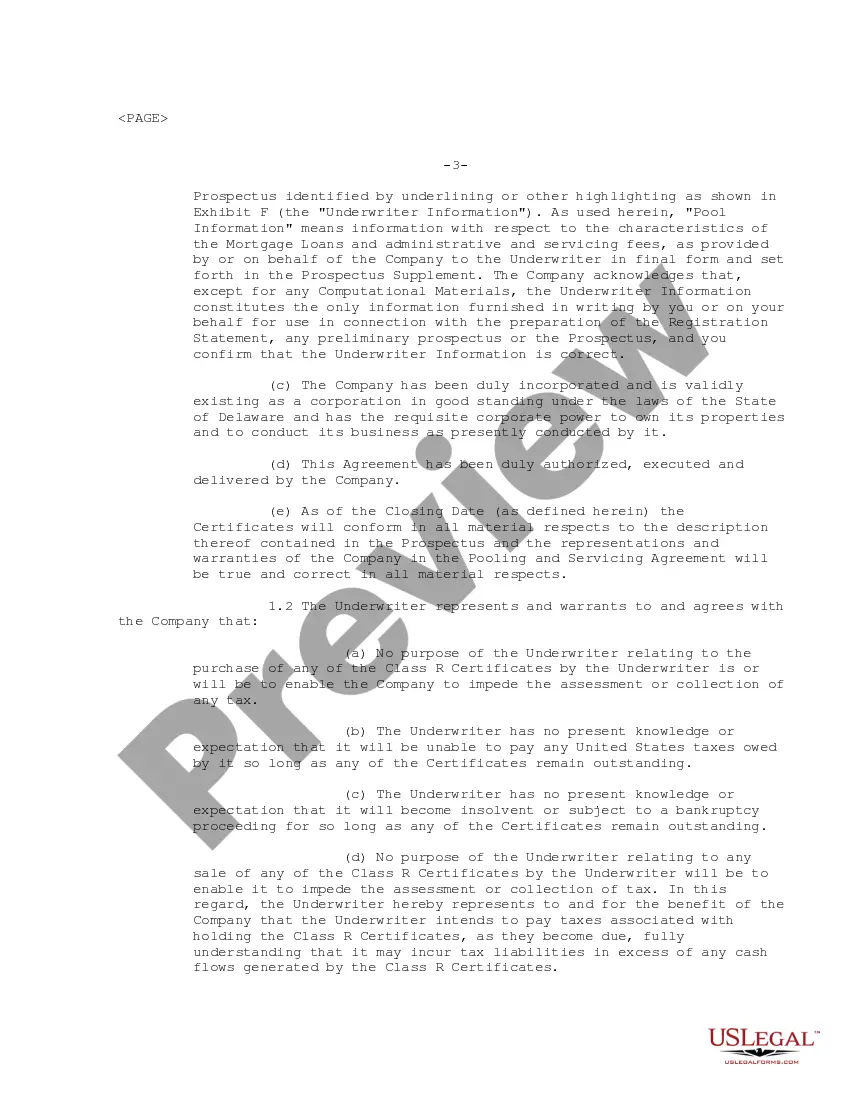
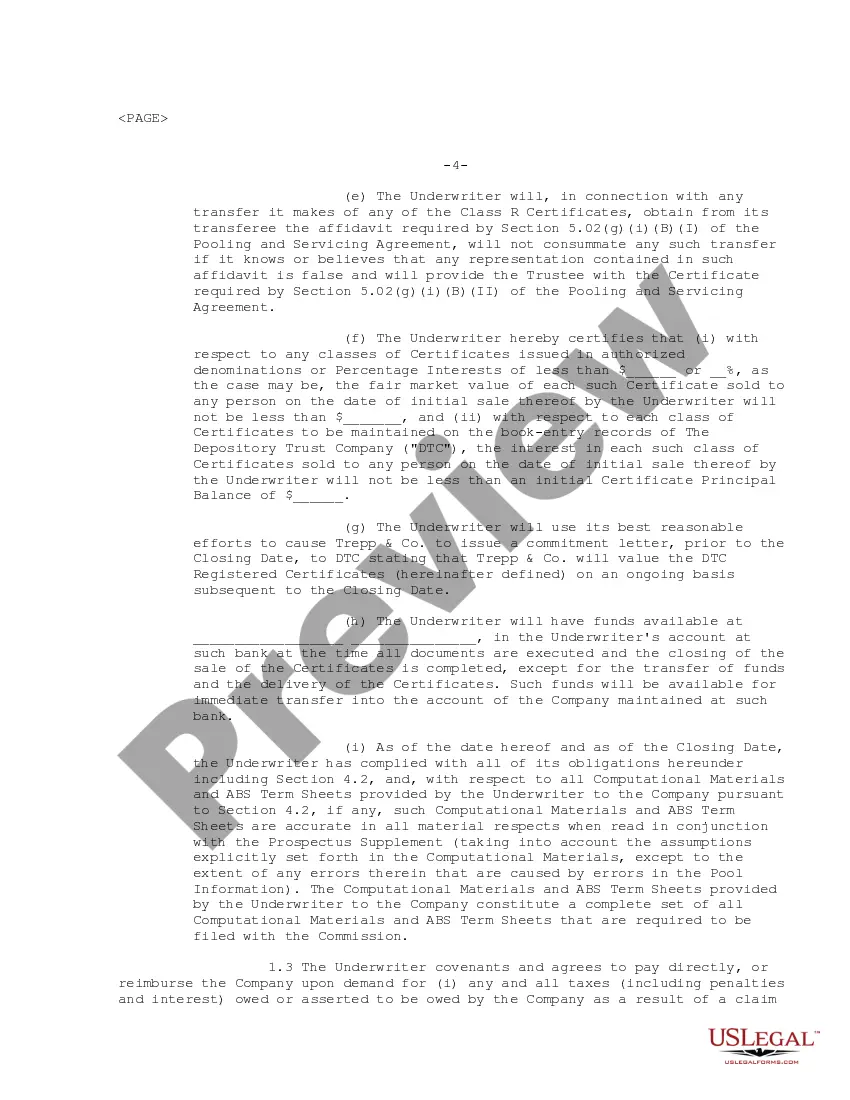
- The representation and warranties section outlining the obligations of both the Company and the Underwriter.
- The purchase and sale terms detailing the agreed-upon price and payment conditions.
- Delivery and payment clauses specifying how and when the certificates will be delivered.
- Indemnification provisions to protect both parties from certain liabilities.
- Conditions precedent that must be satisfied for the agreement to be binding.

When this form is needed
This form should be used when establishing the terms of an underwriting agreement for the sale of mortgage-backed securities. It is typically required when a mortgage company seeks to engage an underwriter to facilitate the sale of investment certificates backed by a pool of residential mortgage loans. This agreement ensures that all parties are clear on their obligations and rights under the transaction.
Intended users of this form
- Mortgage companies looking to sell securities to investors.
- Underwriters responsible for the sale and distribution of mortgage-backed securities.
- Legal professionals assisting clients in structuring financial transactions involving securities.
How to prepare this document
- Identify the parties involved, including the Underwriter and Company.
- Specify the class and series of the mortgage pass-through certificates being sold.
- Complete the representations and warranties section, ensuring all required factual assertions are accurate.
- Fill in the financial terms, including the purchase price and payment terms.
- Sign and date the agreement, securing the commitment of all parties.
Notarization guidance
In most cases, this form does not require notarization. However, some jurisdictions or signing circumstances might. US Legal Forms offers online notarization powered by Notarize, accessible 24/7 for a quick, remote process.
Get your form ready online
Our built-in tools help you complete, sign, share, and store your documents in one place.
Make edits, fill in missing information, and update formatting in US Legal Forms—just like you would in MS Word.
Download a copy, print it, send it by email, or mail it via USPS—whatever works best for your next step.
Sign and collect signatures with our SignNow integration. Send to multiple recipients, set reminders, and more. Go Premium to unlock E-Sign.
If this form requires notarization, complete it online through a secure video call—no need to meet a notary in person or wait for an appointment.
We protect your documents and personal data by following strict security and privacy standards.

Make edits, fill in missing information, and update formatting in US Legal Forms—just like you would in MS Word.

Download a copy, print it, send it by email, or mail it via USPS—whatever works best for your next step.

Sign and collect signatures with our SignNow integration. Send to multiple recipients, set reminders, and more. Go Premium to unlock E-Sign.

If this form requires notarization, complete it online through a secure video call—no need to meet a notary in person or wait for an appointment.

We protect your documents and personal data by following strict security and privacy standards.
Mistakes to watch out for
- Failing to accurately fill in the financial terms, leading to potential disputes.
- Not having all parties sign the agreement, which can render it unenforceable.
- Omitting required representations that could affect legal liability.
Why use this form online
- Convenience of completing the form anytime and from anywhere.
- Editability allows for easy updates before finalizing the terms.
- Access to templates drafted by licensed attorneys ensures compliance with legal norms.
Legal use & context
- This agreement is designed to be legally binding, outlining the obligations of the parties in a structured transaction.
- It is essential for ensuring compliance with security laws and regulations applicable to mortgage-backed securities.
- Failure to adhere to the terms may result in legal disputes or financial penalties.
Quick recap
- The Underwriting Agreement of Ameriquest Mortgage Securities, Inc. is essential for governing the sale of mortgage-backed securities.
- Accurate completion is crucial to avoid disputes and ensure compliance with regulatory standards.
- This form illustrates the legal obligations and rights of parties engaged in the financial transaction.
Looking for another form?

Form popularity
FAQ
The 4 C's of Underwriting- Credit, Capacity, Collateral and Capital.
How long does underwriting take? Underwritingthe process by which mortgage lenders verify your assets, and check your credit scores and tax returns before you get a home loancan take as little as two to three days. Typically, though, it takes over a week for a loan officer or lender to complete.
One of the first things all lenders learn and use to make loan decisions are the Five C's of Credit": Character, Conditions, Capital, Capacity, and Collateral. These are the criteria your prospective lender uses to determine whether to make you a loan (and on what terms).
Although mortgage underwriters do look at a variety of different information when determining loan qualifications, it ultimately comes down to four things: credit, equity, income and assets.
Underwriting simply means that your lender verifies your income, assets, debt and property details in order to issue final approval for your loan.More specifically, underwriters evaluate your credit history, assets, the size of the loan you request and how well they anticipate that you can pay back your loan.
With Spring upon us, and new buyers out looking for houses, I thought today might be a good time to review the basics of what lenders look for as they decide to approve (or deny) mortgage applications. For at least 25 years, I have heard them called The 4 C's of Underwriting- Capacity, Credit, Cash, and Collateral.
They evaluate credit and payment history, income and assets available for a down payment and categorize their findings as the Three C's: Capacity, Credit and Collateral.
The first C is characterreflected by the applicant's credit history. The second C is capacitythe applicant's debt-to-income ratio. The third C is capitalthe amount of money an applicant has. The fourth C is collateralan asset that can back or act as security for the loan.