General Right of Way Instrument
What this document covers
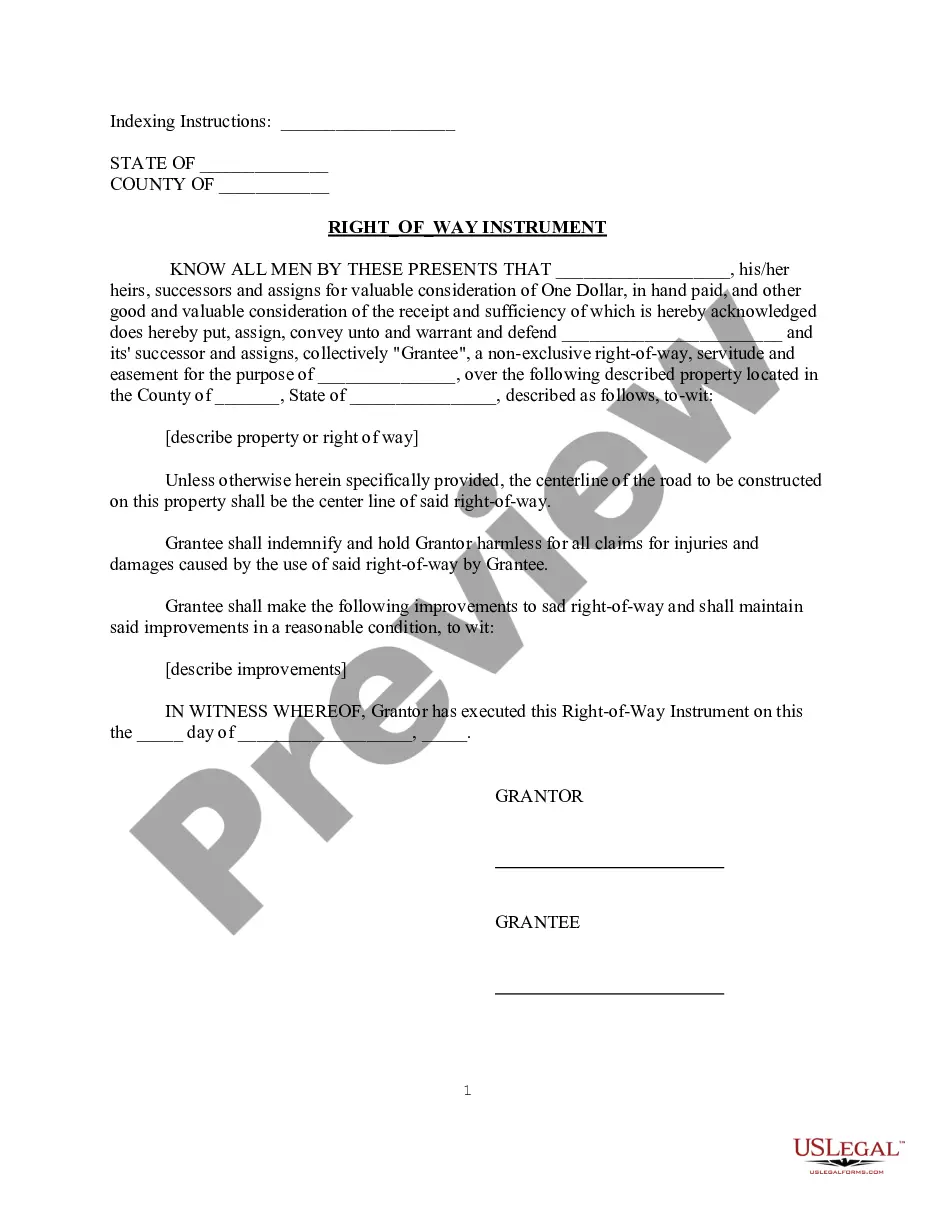
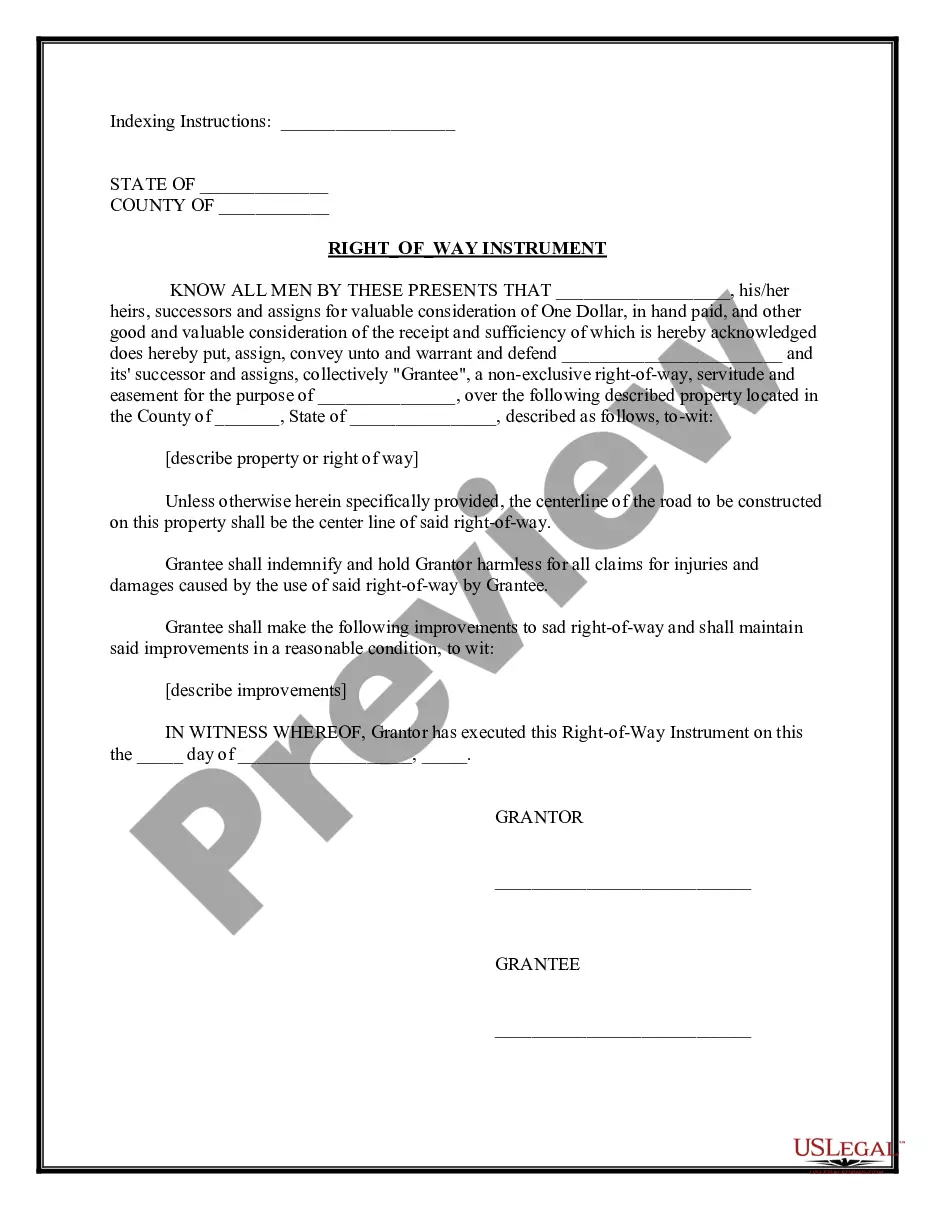
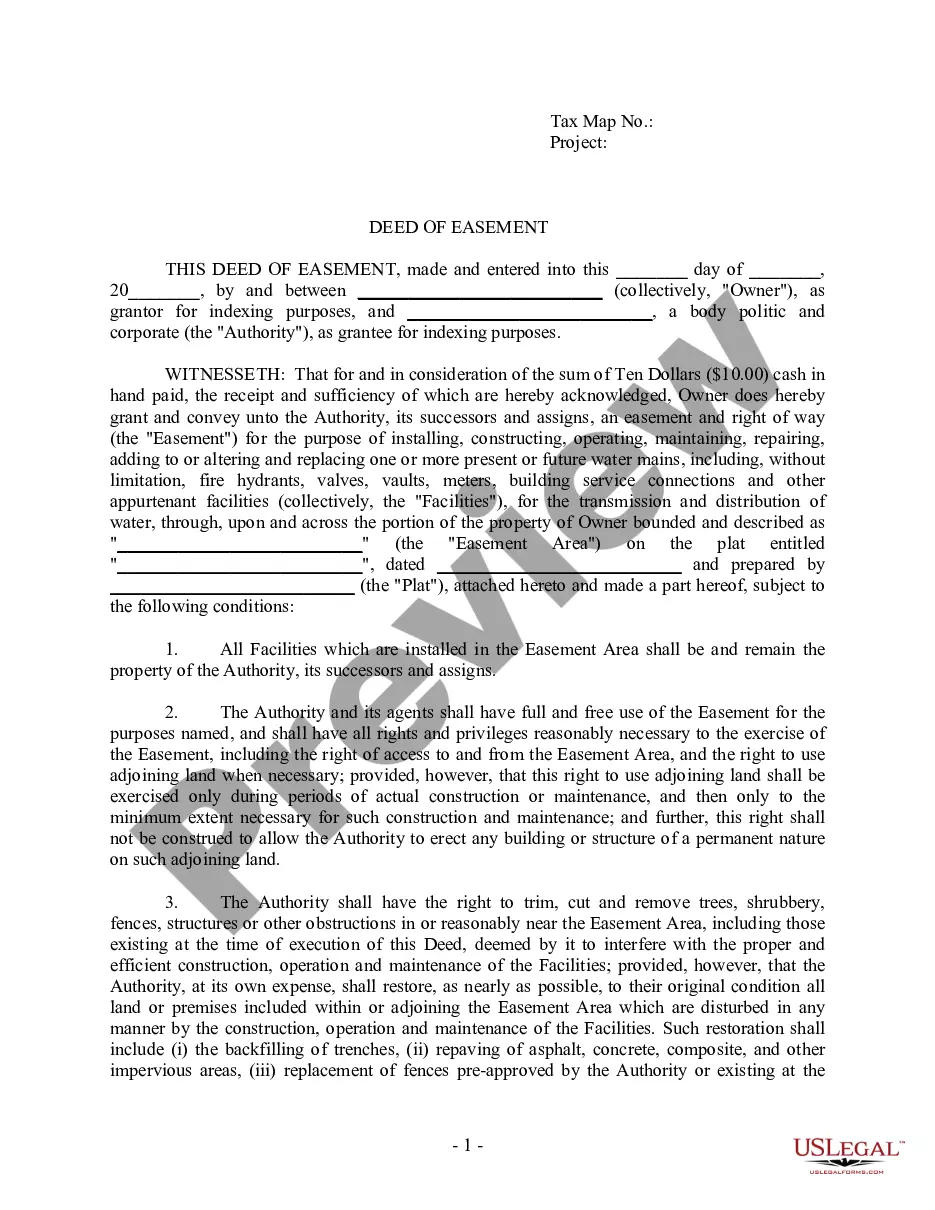
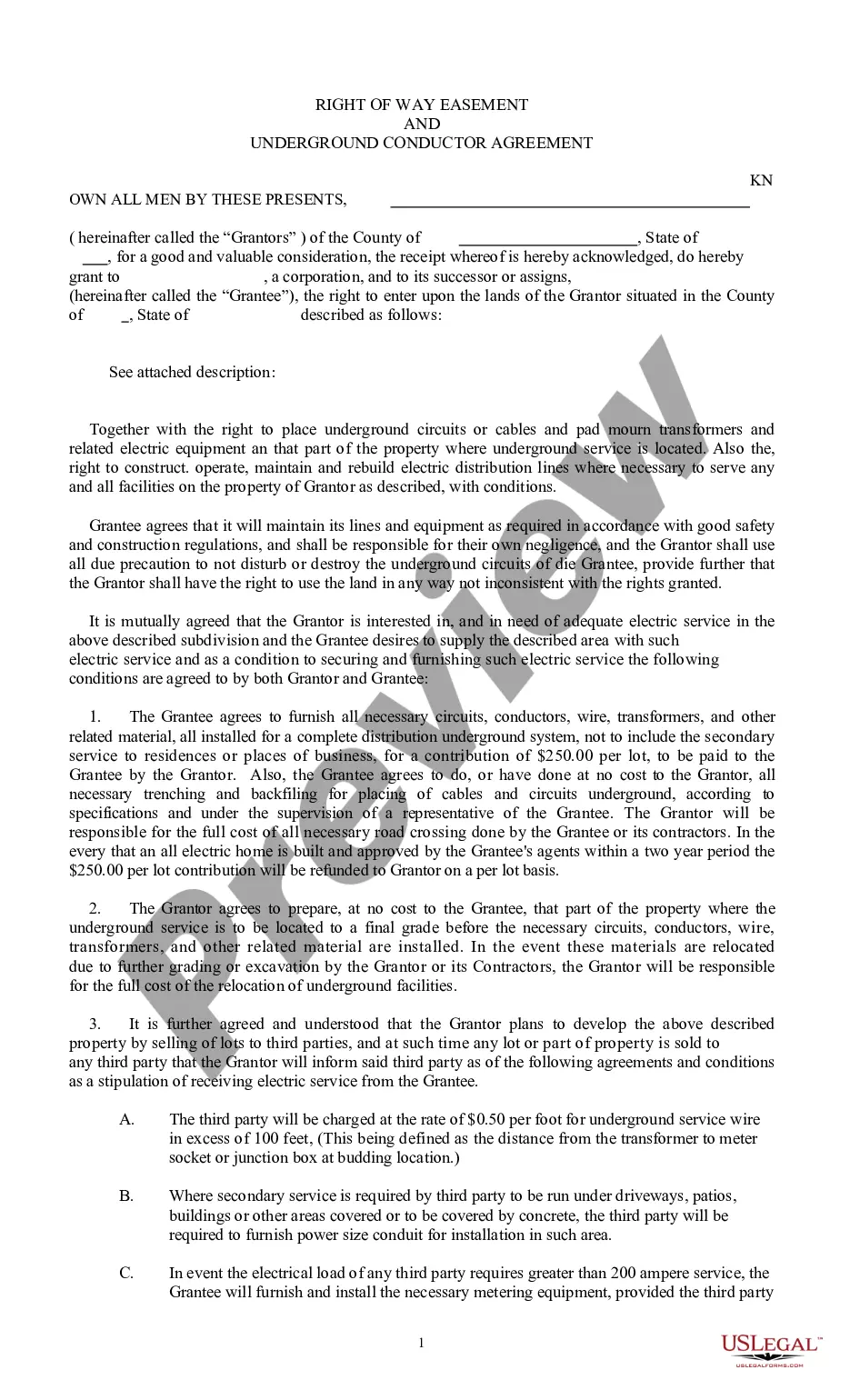
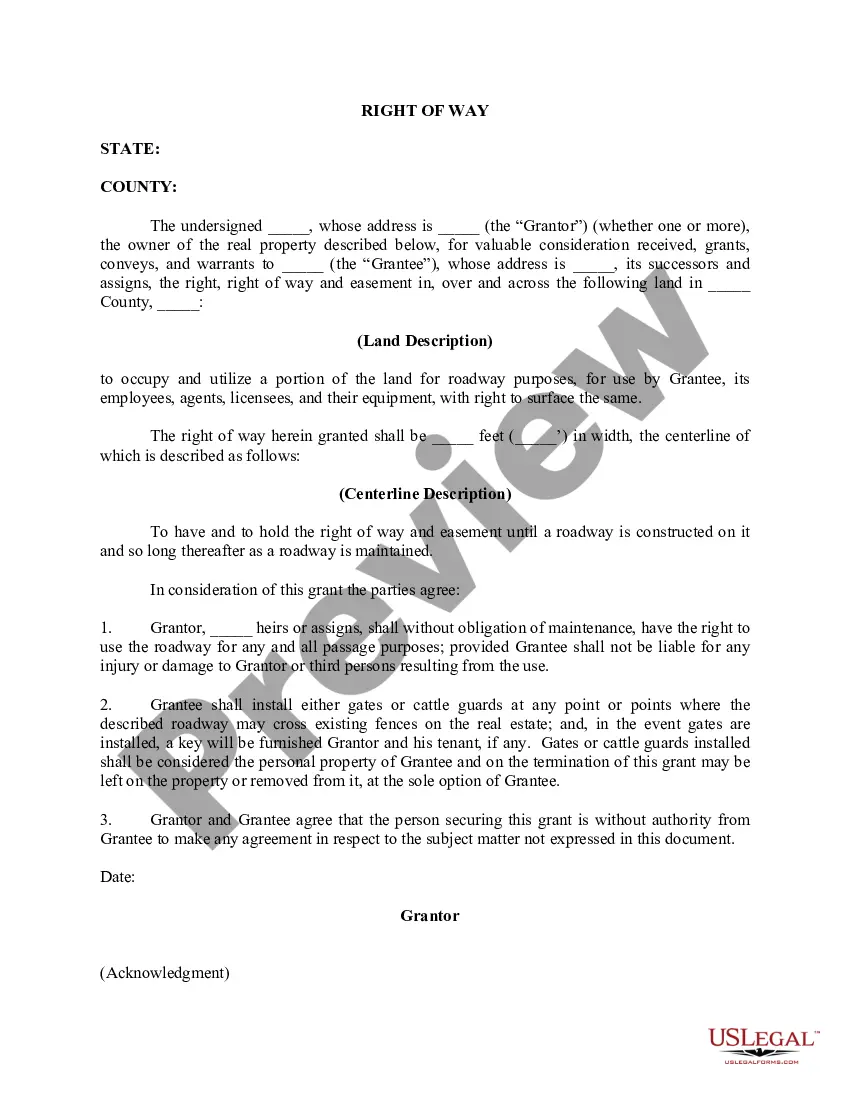
The General Right of Way Instrument is a legal document that grants a non-exclusive right-of-way servitude and easement over a specified property. This form differs from similar agreements by allowing for a designated purpose while granting access without transferring ownership rights. Easements like this are commonly used for utilities, access to properties, and other essential uses, providing a clear framework for both the easement holder and the property owner.
Key parts of this document
- Identification of the grantor (property owner) and grantee (easement holder).
- Statement of consideration, acknowledging any payment made.
- Detailed description of the property and the specific purpose of the easement.
- A clause defining the indemnification responsibilities of the grantee.
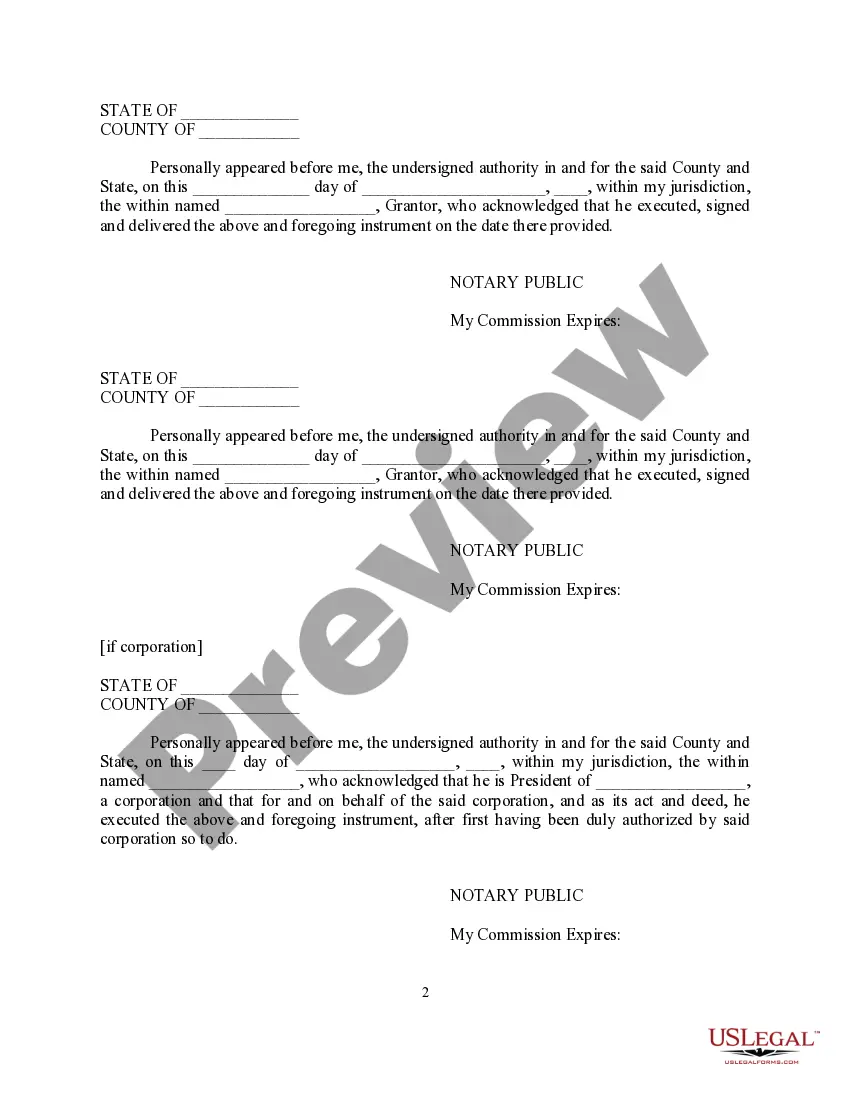
- Signature section for both parties, including acknowledgment by a notary.

When to use this document
This form is typically used when a property owner is granting another party permission to use their land for a specific purpose without giving up ownership. Common scenarios include allowing utility companies to install and maintain infrastructure, providing access for neighboring properties, or permitting passage for agricultural purposes. Use this form whenever clear legal recognition of such rights is necessary.
Who can use this document
- Property owners wishing to grant access for utilities or neighboring properties.
- Landowners seeking to define the terms of use for their land.
- Individuals or businesses requiring legal recognition of their right to traverse another's land.
- Legal professionals assisting clients in establishing easement rights.
Instructions for completing this form
- Identify the parties involved by filling in the names of the grantor and grantee.
- Specify the property description clearly, including any boundaries or notable features.
- State the intended purpose for the easement, detailing how it will be used.
- Enter the date of execution and sign in the designated areas.
- Ensure that the document is notarized to add a layer of authenticity and legal validity.
Notarization guidance
Yes, this form must be notarized to be legally valid. Notarization provides an essential safeguard, ensuring that the signatures are authentic and that both parties understand the agreement. US Legal Forms offers integrated online notarization services, allowing you to complete the process securely and conveniently through a video call, without the need to travel.
Get your form ready online
Our built-in tools help you complete, sign, share, and store your documents in one place.
Make edits, fill in missing information, and update formatting in US Legal Forms—just like you would in MS Word.
Download a copy, print it, send it by email, or mail it via USPS—whatever works best for your next step.
Sign and collect signatures with our SignNow integration. Send to multiple recipients, set reminders, and more. Go Premium to unlock E-Sign.
If this form requires notarization, complete it online through a secure video call—no need to meet a notary in person or wait for an appointment.
We protect your documents and personal data by following strict security and privacy standards.

Make edits, fill in missing information, and update formatting in US Legal Forms—just like you would in MS Word.

Download a copy, print it, send it by email, or mail it via USPS—whatever works best for your next step.

Sign and collect signatures with our SignNow integration. Send to multiple recipients, set reminders, and more. Go Premium to unlock E-Sign.

If this form requires notarization, complete it online through a secure video call—no need to meet a notary in person or wait for an appointment.

We protect your documents and personal data by following strict security and privacy standards.
Common mistakes to avoid
- Failing to provide a detailed property description, leading to ambiguity.
- Not specifying the purpose of the easement, which can cause disputes later.
- Omitting signatures or not notarizing the document, resulting in an invalid agreement.
- Not ensuring that the terms of maintenance and indemnification are clear and enforceable.
Benefits of using this form online
- Convenience of downloading and filling the form at your own pace.
- Editability to customize the content to fit specific needs and circumstances.
- Accessibility to updated legal templates drafted by licensed attorneys.
- Quick and secure access to legal documents without the need for in-person visits.
Looking for another form?
Form popularity
FAQ
1. The obligation to construct and repair a right of way falls on the owner of the dominant tenement who receives the benefit of the right of way.
The owner of the land that has the benefit of the right of way (the user) also has no obligation to maintain and repair but is entitled to maintain and repair the way but if he does so, he has to do so at his own cost.
Right of Way. An easement is the right to use another person's land for a stated purpose. It can involve a general area of the property or a specific portion. A right of way is an easement that allows someone to travel through your property to get to another location.
An easement, right of way or profit can be expressly released by deed. Once this has been done then it is extinguished and cannot be revived. An easement, right of way or profit can be sometimes impliedly released by the owner's actions or in rare cases by the owner's inaction.
Who maintains the property subject to an easement or right-of-way? Maintenance of the property is the responsibility of the landowner. If the holder of the easement or right-of-way causes any damage, they must restore the property to the original condition or pay damages.
1 : the legal right to pass over someone else's land. 2 : the right of some traffic to go before other traffic. right-of-way.
A right of way is an easement that allows someone to travel through your property to get to another location.If property ownership is transferred through sale or other legal methods, a new easement agreement must be made. Appurtenant easements are attached to the property, not the individual.
The party gaining the benefit of the easement is the dominant estate (or dominant tenement), while the party granting the benefit or suffering the burden is the servient estate (or servient tenement). For example, the owner of parcel A holds an easement to use a driveway on parcel B to gain access to A's house.
Who maintains the property subject to an easement or right-of-way? Maintenance of the property is the responsibility of the landowner. If the holder of the easement or right-of-way causes any damage, they must restore the property to the original condition or pay damages.