Easement for Right of Way for Forestry with Liability Provisions
What this document covers
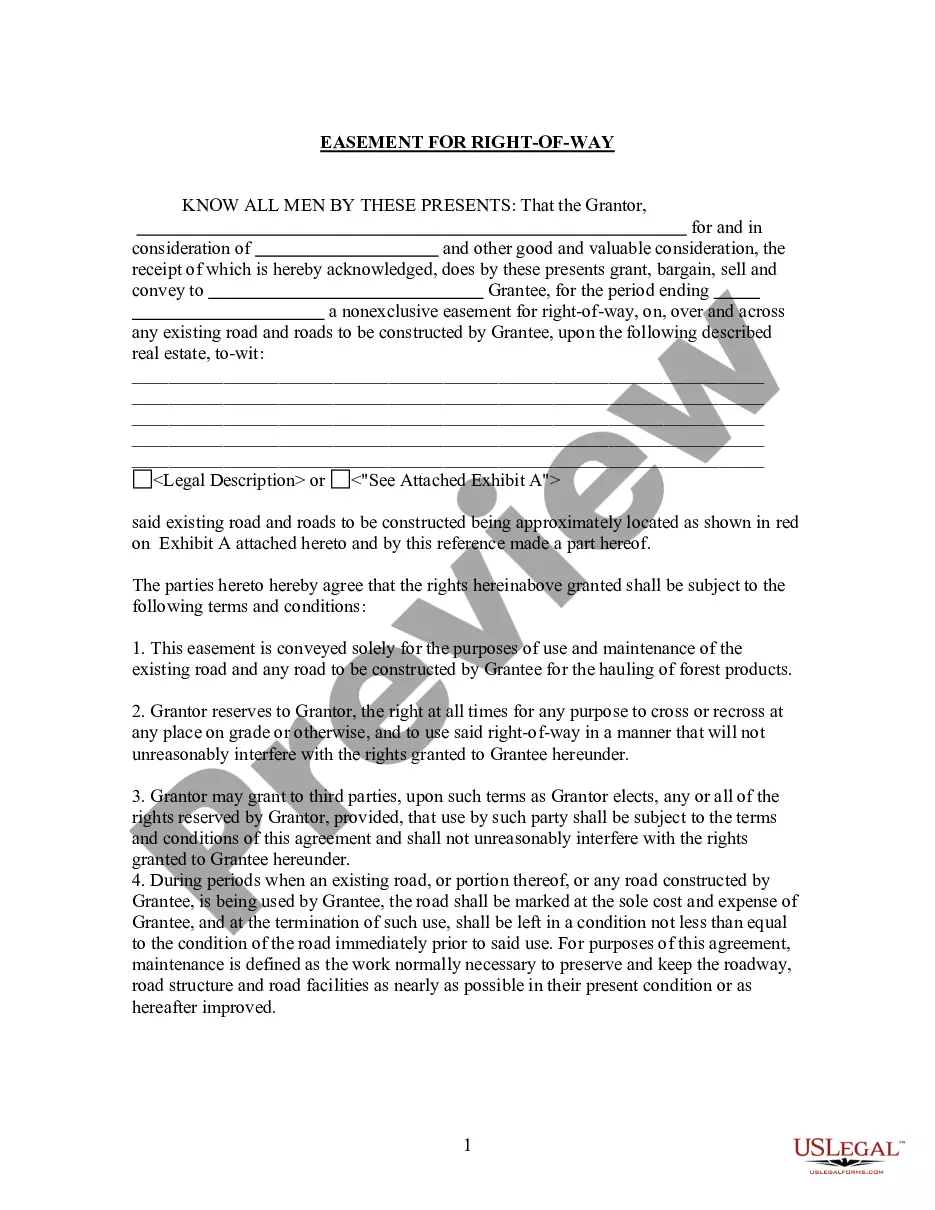
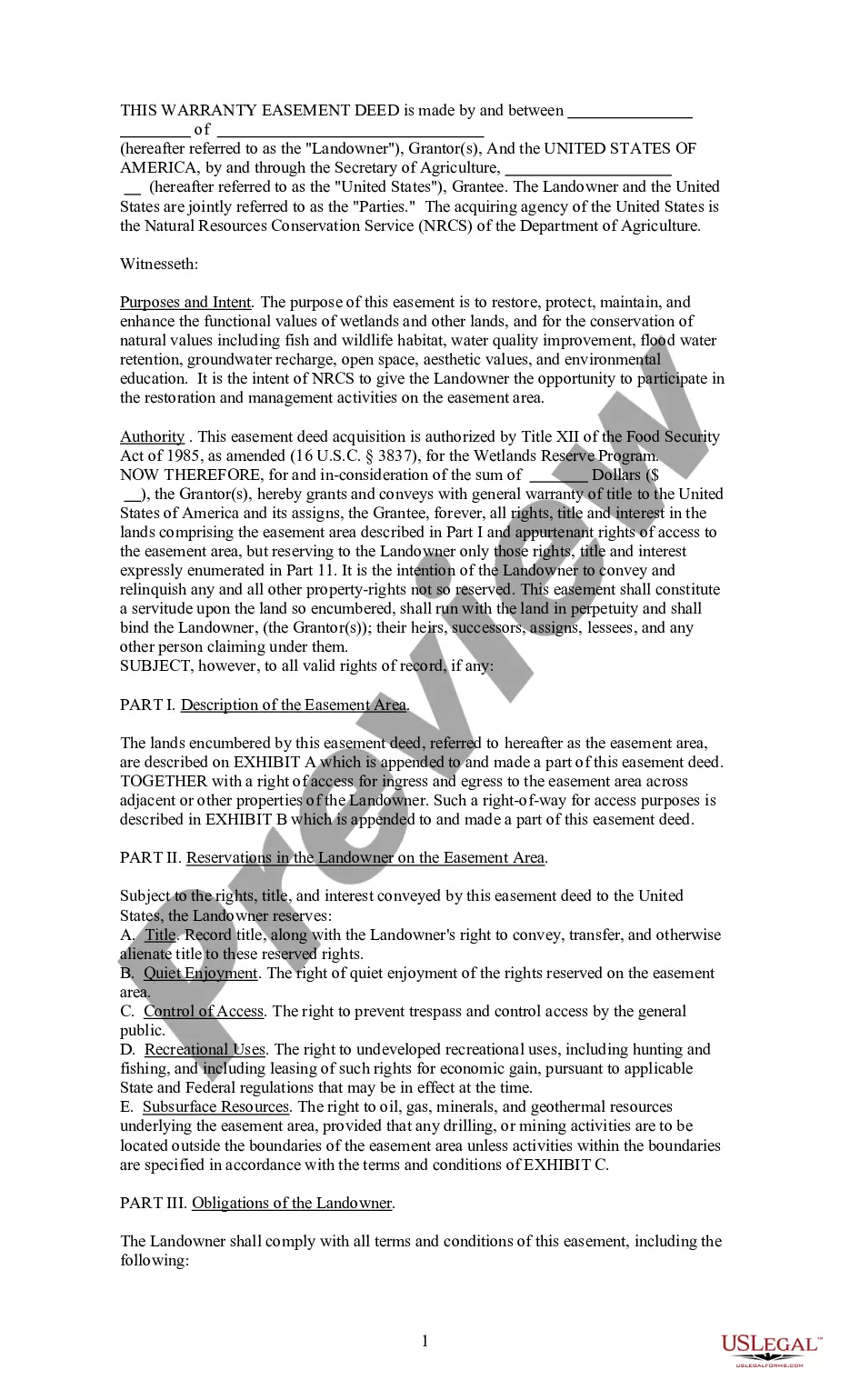
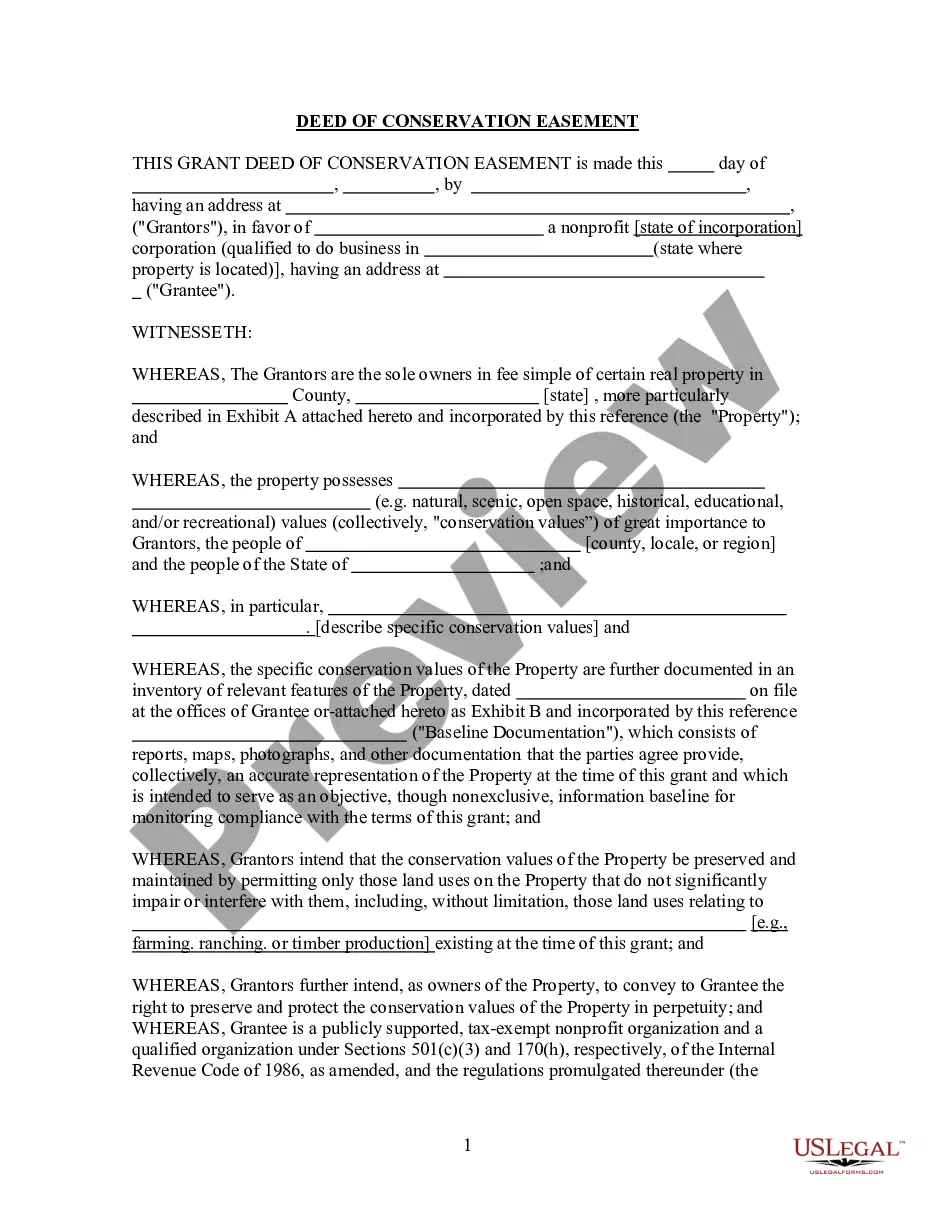
An Easement for Right of Way for Forestry with Liability Provisions is a legal document that grants one party the right to use another party's property for specific purposes related to forestry activities. This easement primarily allows for the use and maintenance of roads for the hauling of forest products, differentiating it from other easements by including liability provisions to protect the property owner against potential claims arising from such use.
What’s included in this form
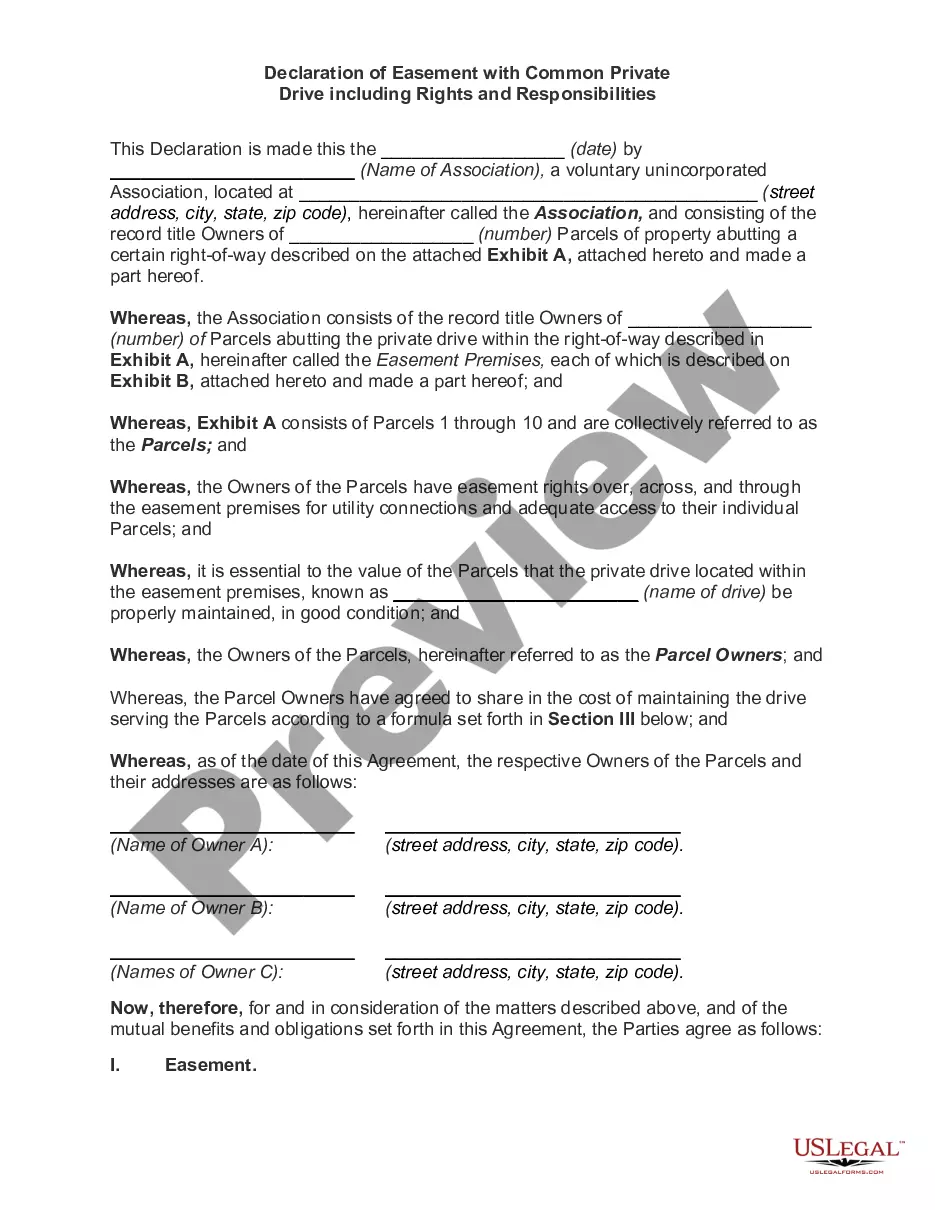
- Legal description of the property, including access rights and road locations.
- Purpose of the easement outlined for forestry-related road usage.
- Provisions regarding the rights of both Grantor and Grantee, including any third-party access.
- Maintenance responsibilities to ensure the road remains in good condition.
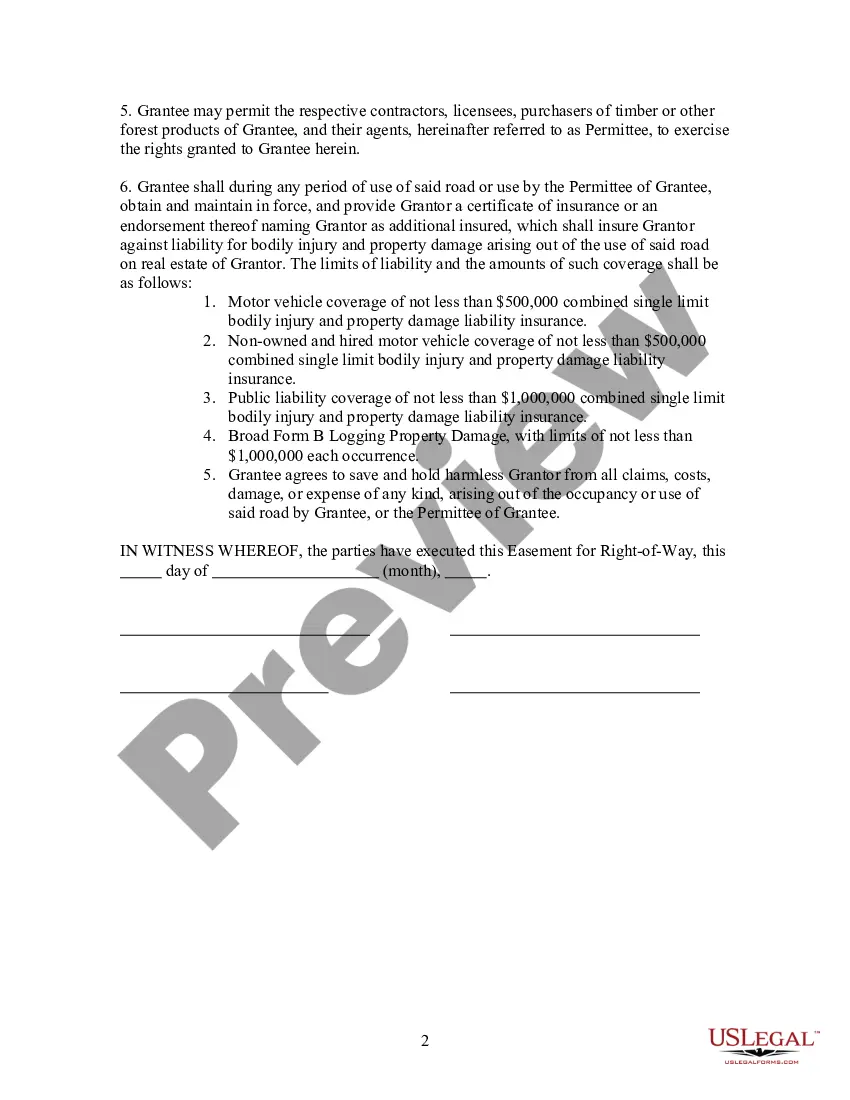
- Insurance requirements for the Grantee, protecting the Grantor from liability.
When to use this document
This form is necessary when property owners wish to establish an easement for forestry purposes, particularly to allow access for logging, road maintenance, and the transportation of forest products. It's commonly used when landowners need to grant access to contractors or harvesters while protecting their rights and defining responsibilities.
Who needs this form
This form is appropriate for:
- Property owners granting access for forestry activities.
- Forestry companies or contractors requiring legal access for hauling timber.
- Landowners looking to define liability and maintenance terms associated with such easements.
Steps to complete this form
- Identify the parties involved: clearly state the Grantor and Grantee.
- Describe the property in detail, including any roads mentioned in Exhibit A.
- Specify the purpose of the easement related to forestry activities.
- Include maintenance and liability provisions as outlined in the form.
- Ensure that the Grantee provides proof of insurance covering both parties.
Does this form need to be notarized?
This form must be notarized to be legally valid. US Legal Forms provides secure online notarization powered by Notarize, allowing you to complete the process through a verified video call.
Get your form ready online
Our built-in tools help you complete, sign, share, and store your documents in one place.
Make edits, fill in missing information, and update formatting in US Legal Forms—just like you would in MS Word.
Download a copy, print it, send it by email, or mail it via USPS—whatever works best for your next step.
Sign and collect signatures with our SignNow integration. Send to multiple recipients, set reminders, and more. Go Premium to unlock E-Sign.
If this form requires notarization, complete it online through a secure video call—no need to meet a notary in person or wait for an appointment.
We protect your documents and personal data by following strict security and privacy standards.

Make edits, fill in missing information, and update formatting in US Legal Forms—just like you would in MS Word.

Download a copy, print it, send it by email, or mail it via USPS—whatever works best for your next step.

Sign and collect signatures with our SignNow integration. Send to multiple recipients, set reminders, and more. Go Premium to unlock E-Sign.

If this form requires notarization, complete it online through a secure video call—no need to meet a notary in person or wait for an appointment.

We protect your documents and personal data by following strict security and privacy standards.
Typical mistakes to avoid
- Failing to provide a clear legal description of the property and roads involved.
- Omitting essential insurance provisions required by the Grantor.
- Not specifying the maintenance responsibilities adequately.
- Leaving out consent for third-party use of the easement.
Benefits of using this form online
- Convenient access to legally vetted forms tailored for your needs.
- Editable templates that allow customization to fit specific situations.
- Easy downloads that save time and provide immediate access to essential legal documents.
Legal use & context
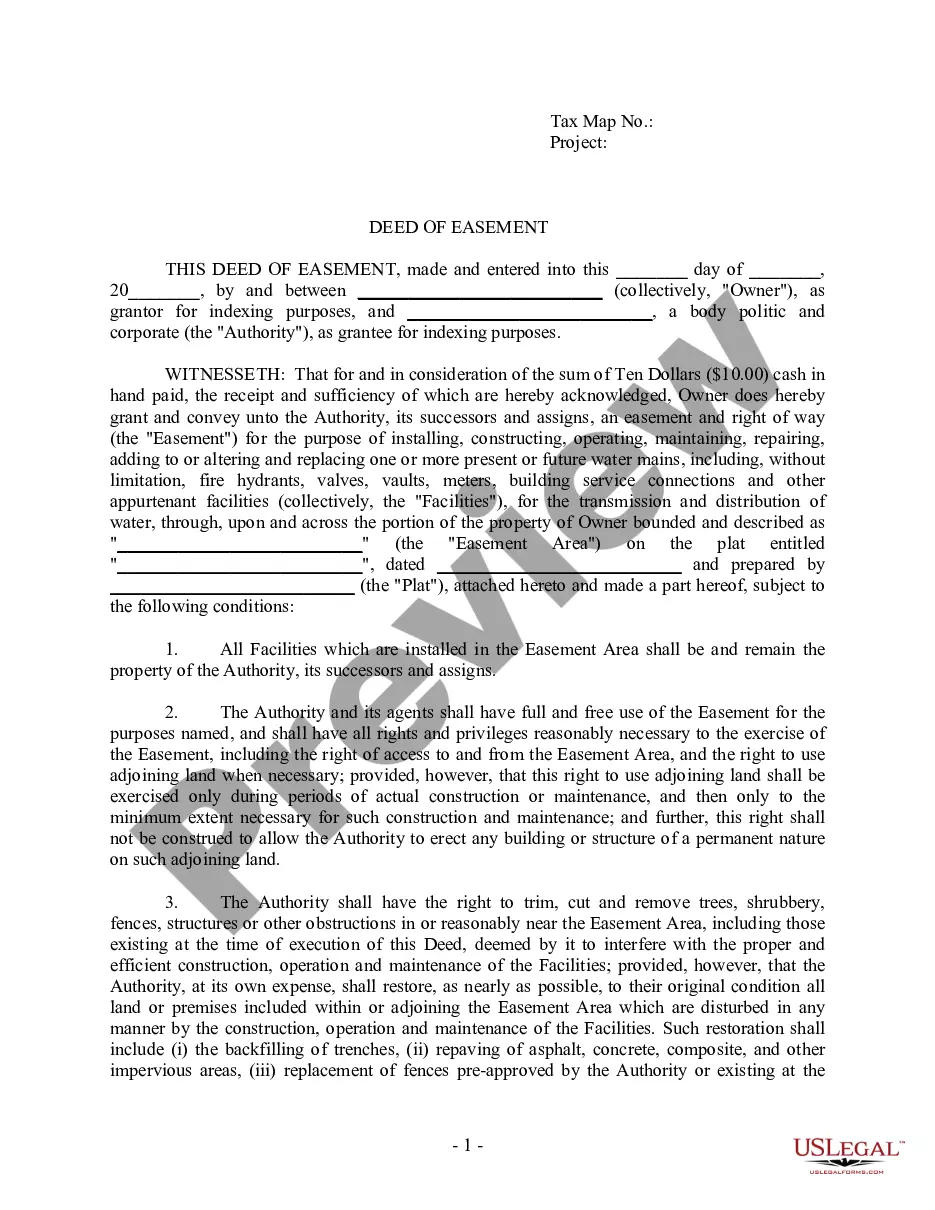
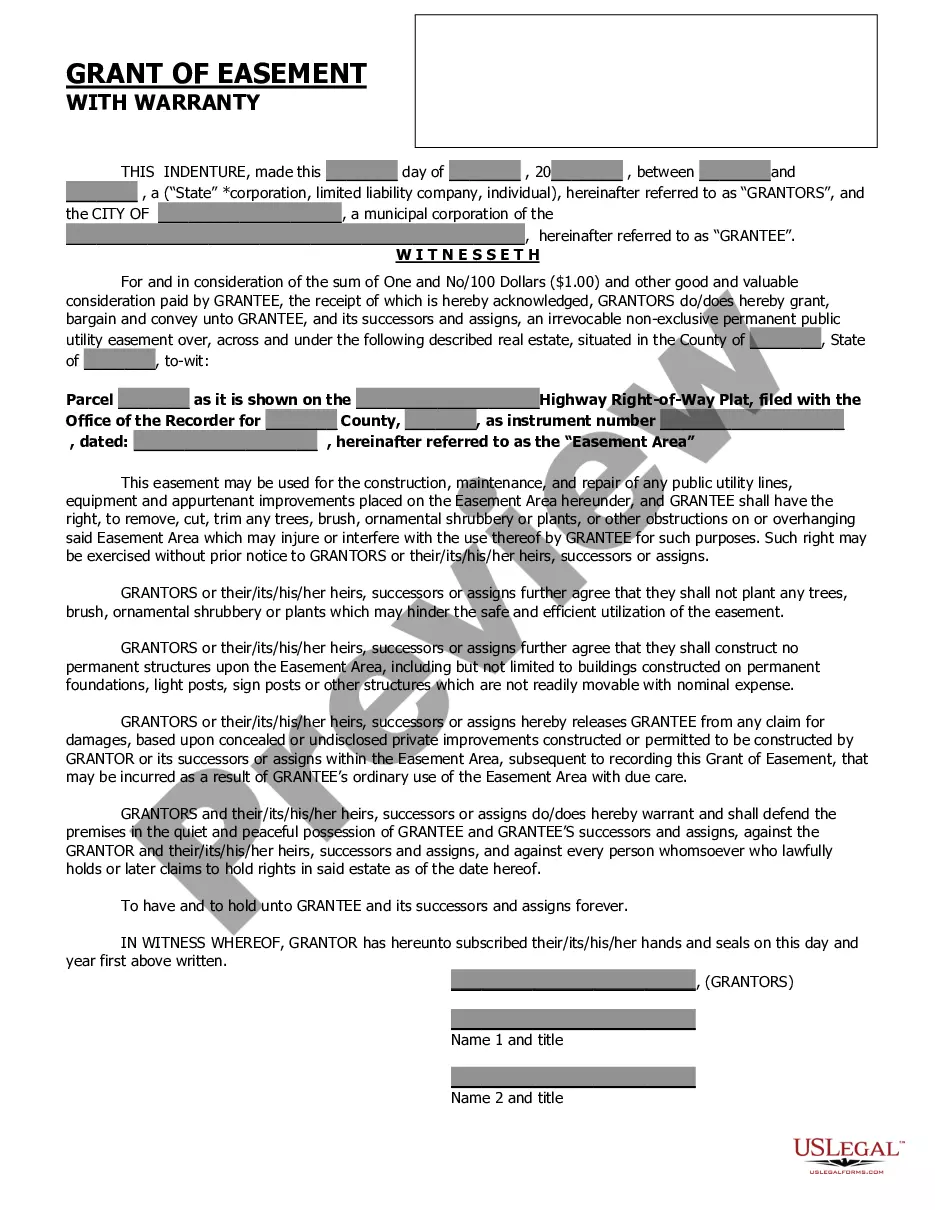
- This easement is a legally binding agreement that establishes rights and responsibilities between the landowner and the party using the easement.
- It is enforceable in court, meaning both parties must adhere to the agreed terms, including maintenance and liability.
- Failure to follow the terms can result in legal action to address breaches of the agreement.
Main things to remember
- The form creates a legal easement for forestry activities with clear liability protections.
- Proper completion is essential to avoid common errors that could impact the enforceability of the agreement.
- Understanding local requirements is crucial for ensuring compliance and validity.
Looking for another form?
Form popularity
FAQ
A: Firstly you should establish whether there is any legal right of way to the property.With an easement your mother may insist your neighbour removes the fence obstructing her right of way. That access has been blocked for two years is likely to be irrelevant. Easements can also be abandoned.
Nine Essential Property Easement Agreement Considerations. Legal Description of Properties. Depiction of the Easement Area. Covenant Not to Disturb the Use of the Easement. Determination of Maintenance Obligations. Payment of Property Taxes.
What are Easements and Rights-of-Way? Easements are nonpossessory interests in real property. More simply, an easement is the right to use another's property for a specific purpose. Rights-of-way are easements that specifically grant the holder the right to travel over another's property.
Benefits the owner of adjacent land. The easement is thus appurtenant to the holder's land. The benefited land is called the dominant tenementThe land that benefits from an easement., and the burdened landthat is, the land subject to the easementis called the servient tenement.
A Right of Way Easement is a form of Easement annexed to land which grants a right to travel over a part of the landowner's property. This right of way is usually granted to neighbouring landowners. The legal rights of the attached landowners to use and maintain the right of way may not always be clear.
Easement holders have the right to use the land to their enjoyment as long as it does not place an unreasonable burden on the servient estate. Landowners have the right to make whatever use of the land as long as it doesn't unduly affect the easement.
The party gaining the benefit of the easement is the dominant estate (or dominant tenement), while the party granting the benefit or suffering the burden is the servient estate (or servient tenement). For example, the owner of parcel A holds an easement to use a driveway on parcel B to gain access to A's house.
There must be a dominant and a servient tenement; The easement must accommodate the dominant tenement, that is, be connected with its enjoyment and for its benefit; The dominant and servient owners must be different persons; The right claimed must be capable of forming the subject-matter of a grant.
An easement may be created by express words, either of grant or reservation. Typically, an express grant of easement will be created by deed but may be created by any instrument that transfers an interest or estate in real property.