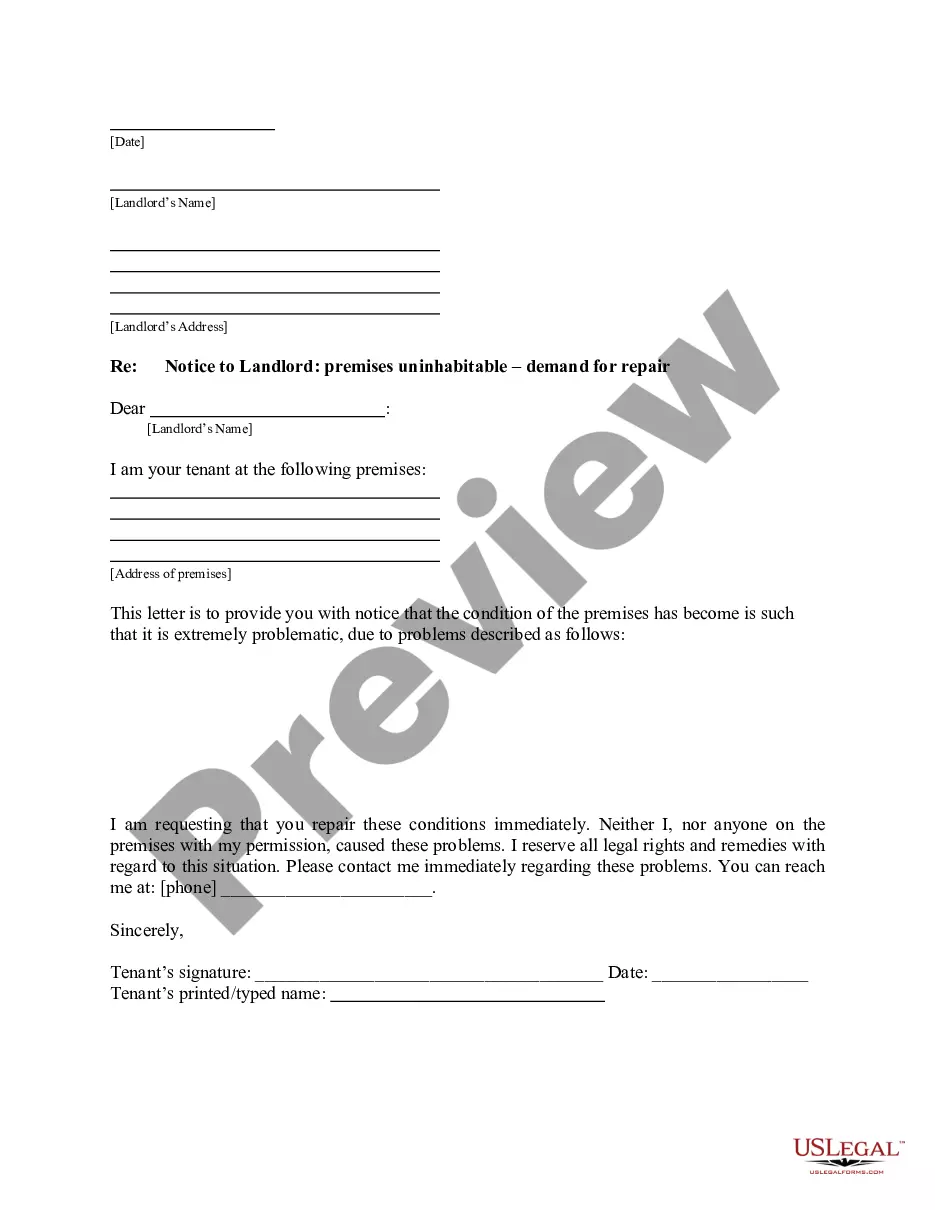
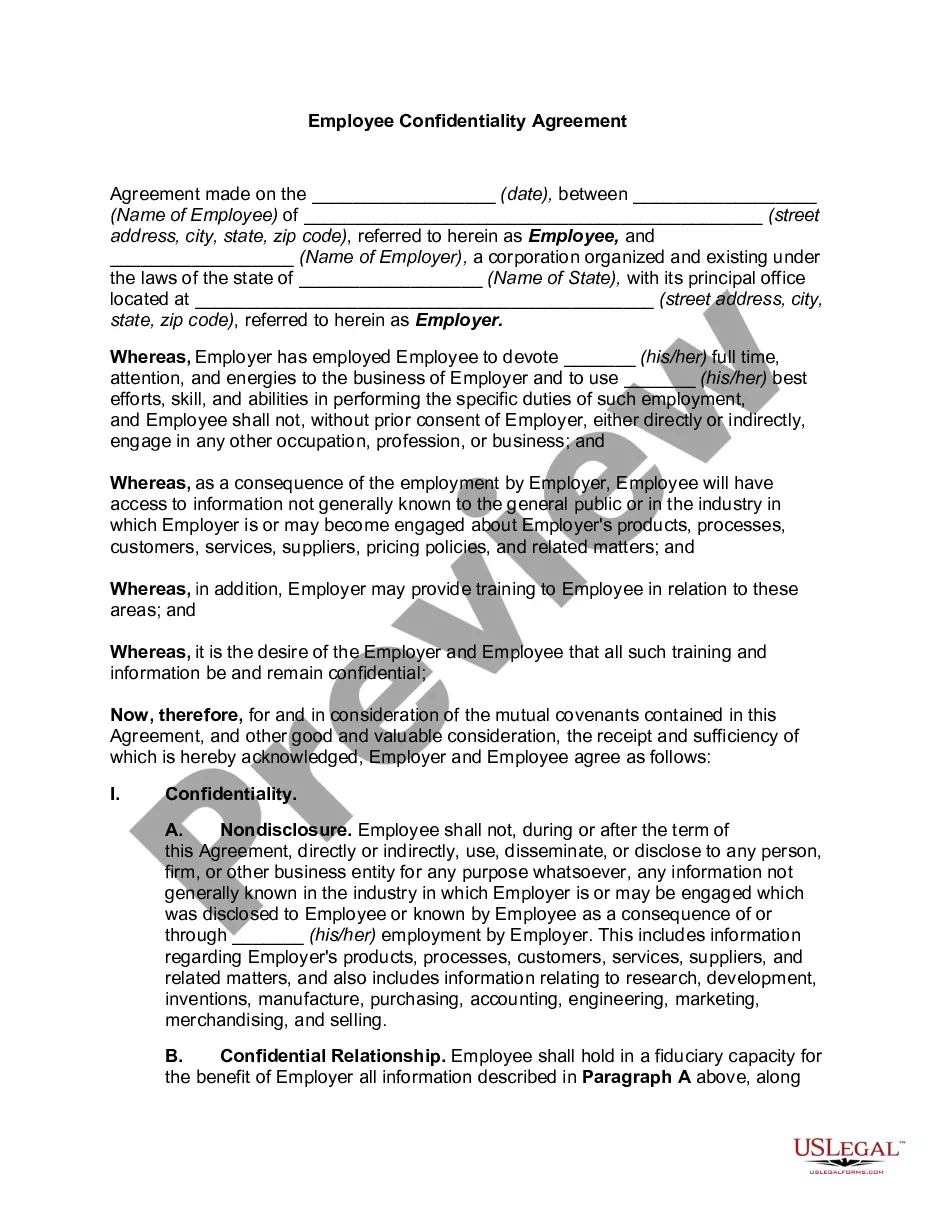
Employee Confidentiality Agreement
What this document covers
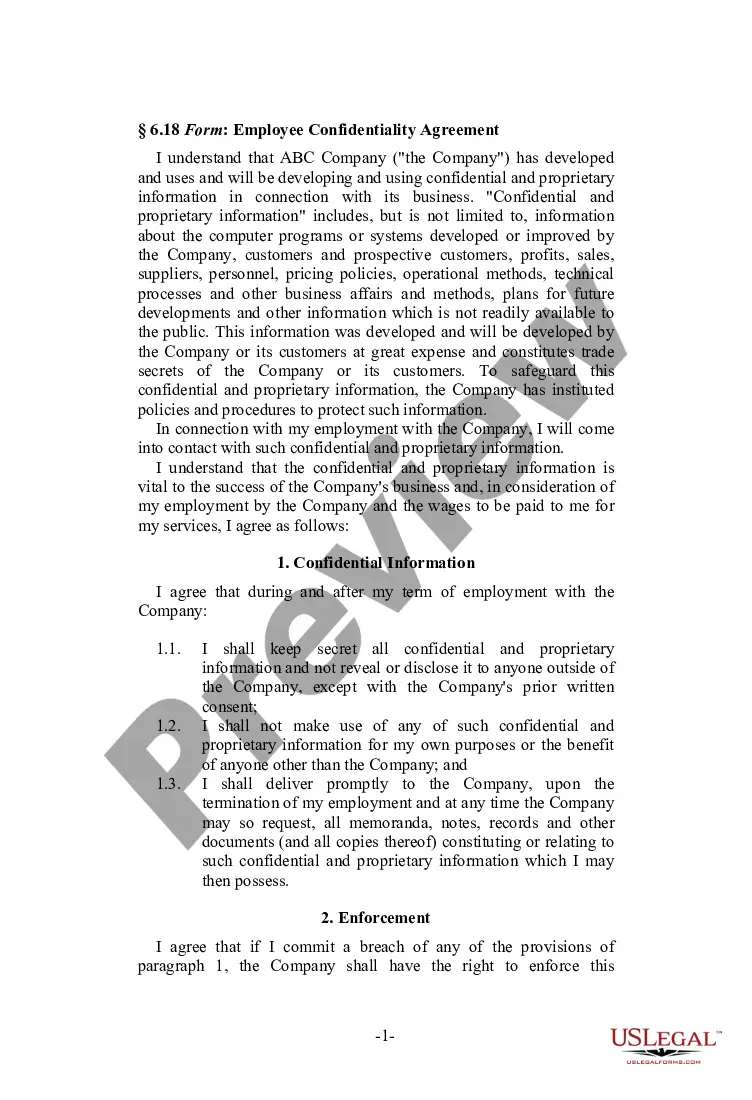
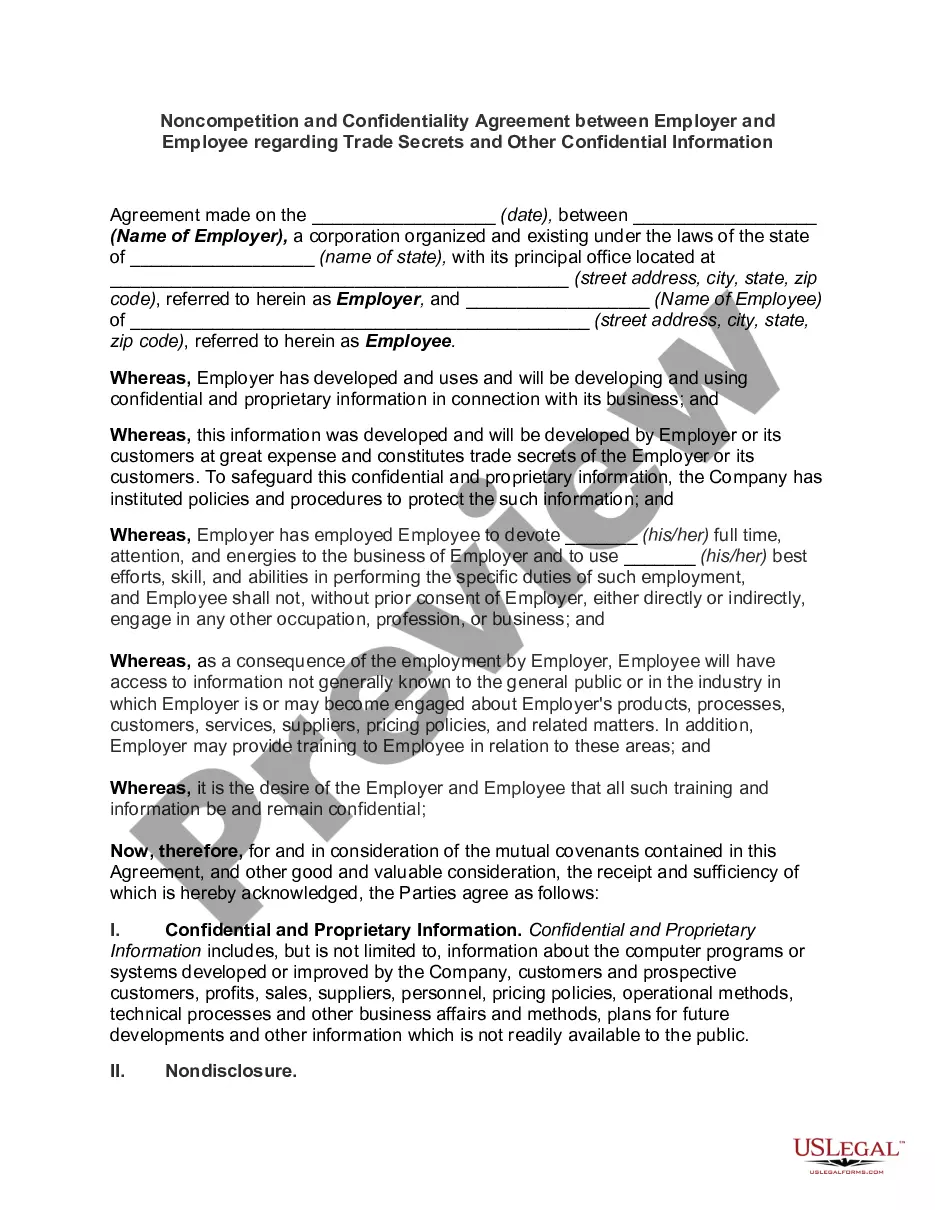
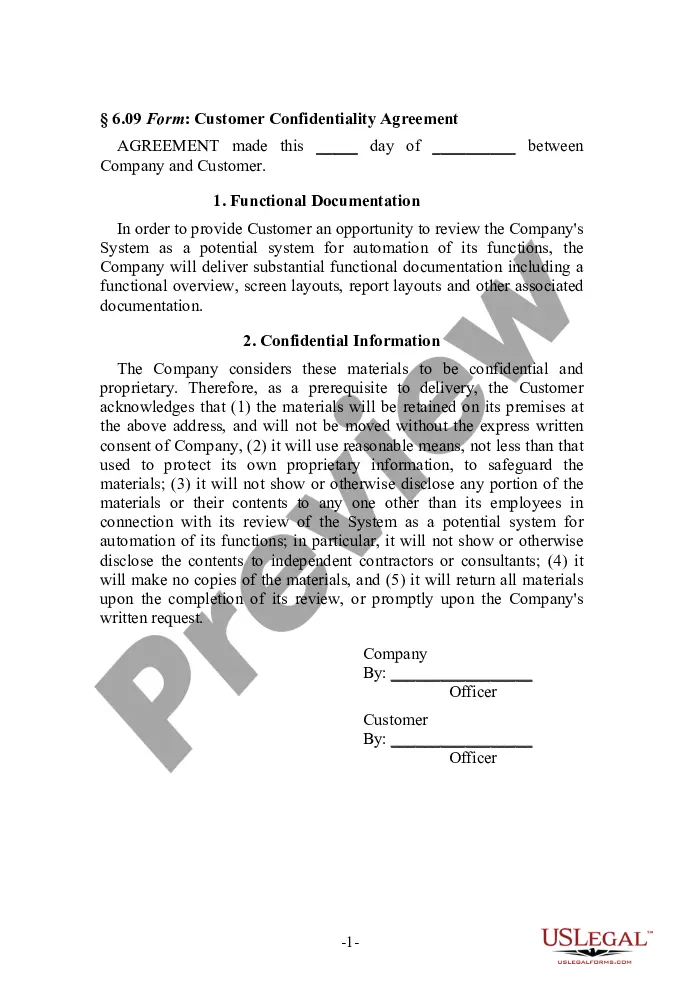
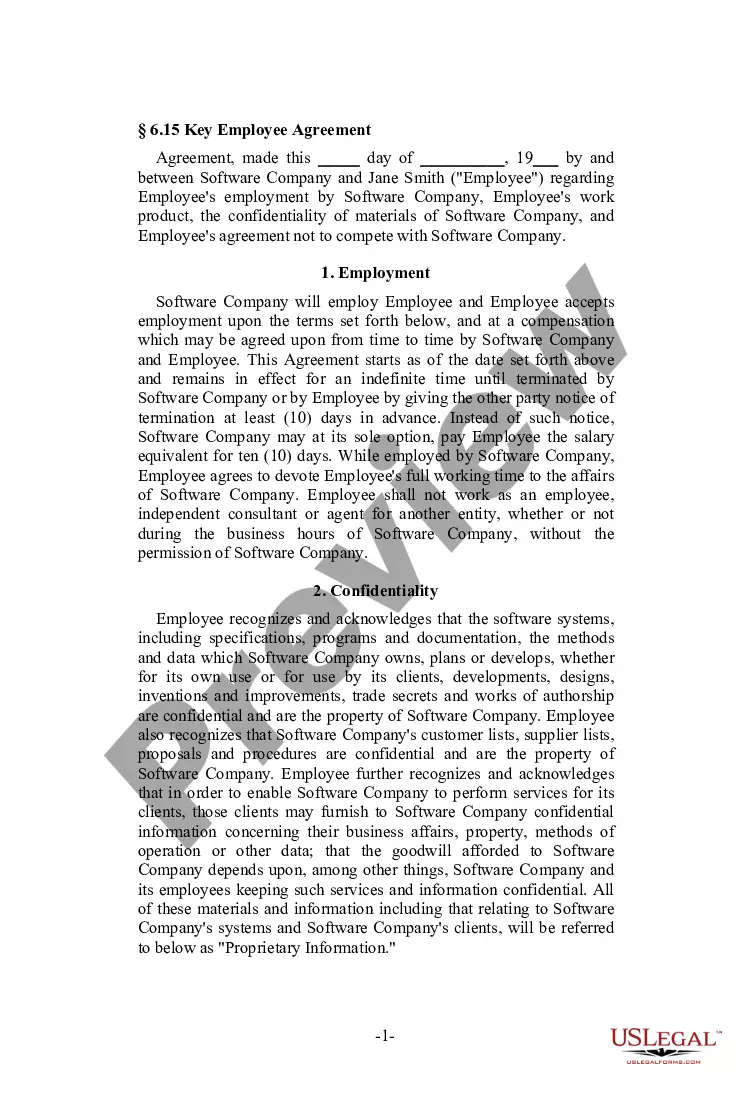
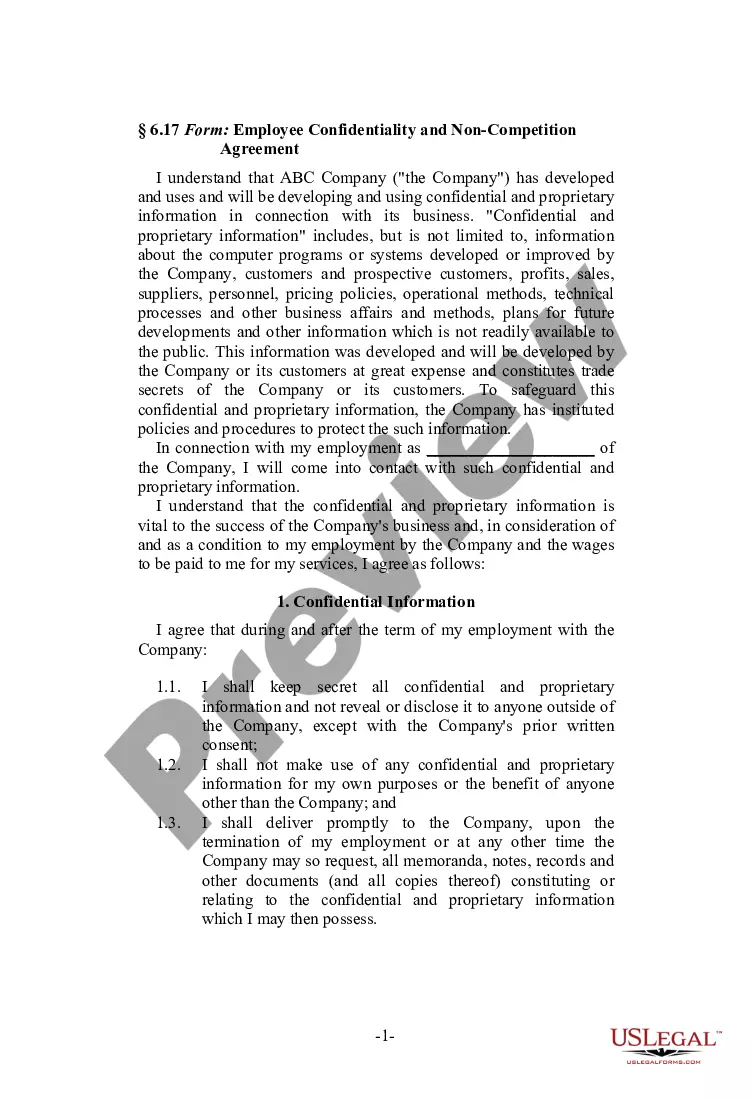
The Employee Confidentiality Agreement is a legal document designed to protect sensitive information within the workplace, specifically in the computer, internet, and software industries. This form outlines the obligations of employees to keep proprietary information confidential during and after their employment. Unlike standard employment agreements, this form focuses specifically on safeguarding trade secrets and confidential business information critical to a company's success.
What’s included in this form
- Definition of confidential information, including specifics on what constitutes proprietary materials.
- Employee obligations regarding the secrecy and non-use of confidential information.
- Procedures for returning confidential documents upon termination of employment.
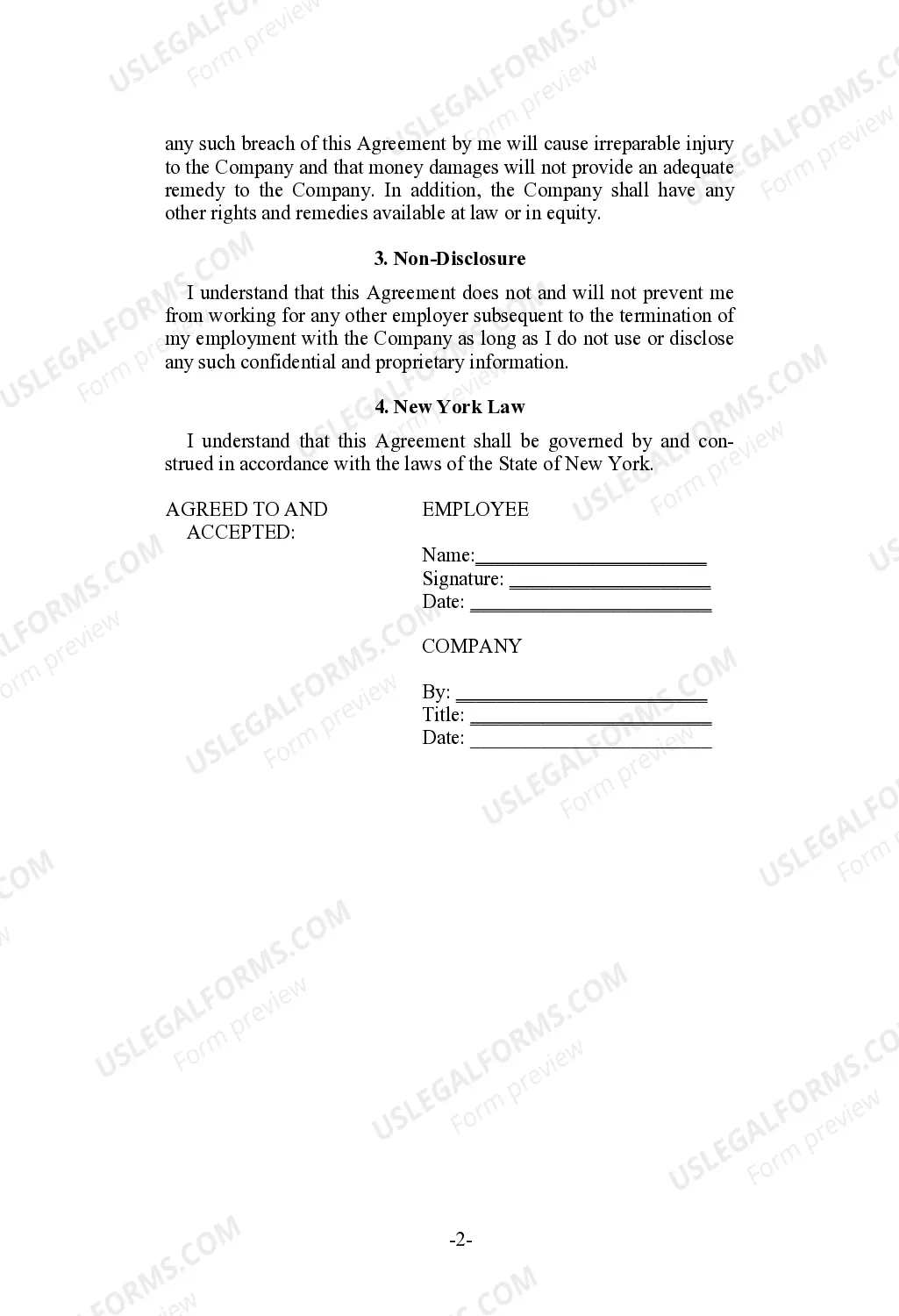
- Enforcement rights of the company in case of a breach of the agreement.
- Governing law stipulating that the agreement follows New York law.
When this form is needed
This form should be used whenever a company wants to protect its confidential and proprietary information, particularly when onboarding new employees in the tech or software sectors. It is essential when employees will have access to trade secrets, client databases, or other sensitive business data. Implementing this agreement helps prevent potential information leaks that could harm the company's competitive standing.
Intended users of this form
- Employers in the computer, internet, and software industries.
- Companies looking to secure their intellectual property and sensitive data.
- Human resources professionals managing employee agreements.
- Employees who are being offered positions that involve access to confidential information.
Instructions for completing this form
- Identify the parties involved: ensure the company name and employee name are correctly filled out.
- Read and understand the definitions and obligations outlined in the agreement.
- Complete the signature section, including the employee's name, signature, and date.
- Ensure the company representative signs, providing their title and date as well.
- Keep a copy of the signed agreement for both the employee and the company's records.
Notarization requirements for this form
This form usually doesn’t need to be notarized. However, local laws or specific transactions may require it. Our online notarization service, powered by Notarize, lets you complete it remotely through a secure video session, available 24/7.
Get your form ready online
Our built-in tools help you complete, sign, share, and store your documents in one place.
Make edits, fill in missing information, and update formatting in US Legal Forms—just like you would in MS Word.
Download a copy, print it, send it by email, or mail it via USPS—whatever works best for your next step.
Sign and collect signatures with our SignNow integration. Send to multiple recipients, set reminders, and more. Go Premium to unlock E-Sign.
If this form requires notarization, complete it online through a secure video call—no need to meet a notary in person or wait for an appointment.
We protect your documents and personal data by following strict security and privacy standards.

Make edits, fill in missing information, and update formatting in US Legal Forms—just like you would in MS Word.

Download a copy, print it, send it by email, or mail it via USPS—whatever works best for your next step.

Sign and collect signatures with our SignNow integration. Send to multiple recipients, set reminders, and more. Go Premium to unlock E-Sign.

If this form requires notarization, complete it online through a secure video call—no need to meet a notary in person or wait for an appointment.

We protect your documents and personal data by following strict security and privacy standards.
Common mistakes to avoid
- Failing to discuss the terms of the agreement with the employee before signing.
- Leaving out critical sections that define what constitutes confidential information.
- Not ensuring both parties retain a copy of the signed agreement.
- Neglecting to update the form if significant company changes occur.
Benefits of completing this form online
- Convenient access allows for quick downloads and customization.
- Editability ensures companies can adapt the agreement to their specific needs.
- Reliability of templates drafted by licensed attorneys adds legal assurance.
Legal use & context
- Confidentiality agreements are enforceable contracts that protect proprietary business information.
- Breaches of the agreement can lead to legal action from the employer.
- Employees are allowed to work elsewhere after their employment ends as long as they do not disclose confidential information.
What to keep in mind
- The Employee Confidentiality Agreement helps safeguard sensitive business information.
- It outlines specific obligations of employees regarding confidential information.
- Employers must ensure the form complies with relevant state laws.
Looking for another form?
Form popularity
FAQ
5 Essential Elements of a Confidentiality Agreement.
Set the date of the agreement. Describe the two parties, sometimes called the Disclosing Party and the Receiving Party.7feff Include names and identification, so there can be no misunderstanding about who signed the agreement.
A definition of confidential information. Who is involved. Why the recipient knows the information. Exclusions or limits on confidential information. Receiving party's obligations. Time frame or term. Discloser to the recipient.
While an employer has the right to demand its employees sign a NDA when those employees have access to valuable company data (e.g. product formulas, private customer lists, financial reports, etc.), the employer should not ask an employee to sign a confidentiality agreement if the purpose is to protect information that
Set the date of the agreement. Describe the two parties, sometimes called the Disclosing Party and the Receiving Party.7feff Include names and identification, so there can be no misunderstanding about who signed the agreement.
Depending on the complexity of what you need protected and the number of parties involved, the cost of having an NDA drafted can vary significantly. When you hire a lawyer in the Priori network, drafting an NDA typically costs anywhere from $175-$1,500.
Identify each party in the first section of the form. The NDA form will start by declaring it to be an agreement and identifying who the agreement is between. Whoever is disclosing the information to be protected is the "disclosing party"; write his or her name on this space.
Use a standard format for contracts. Decide what type of confidentiality statement you should use. Identify the involved parties in the agreement. Define the information to keep confidential. List the information excluded from the agreement.