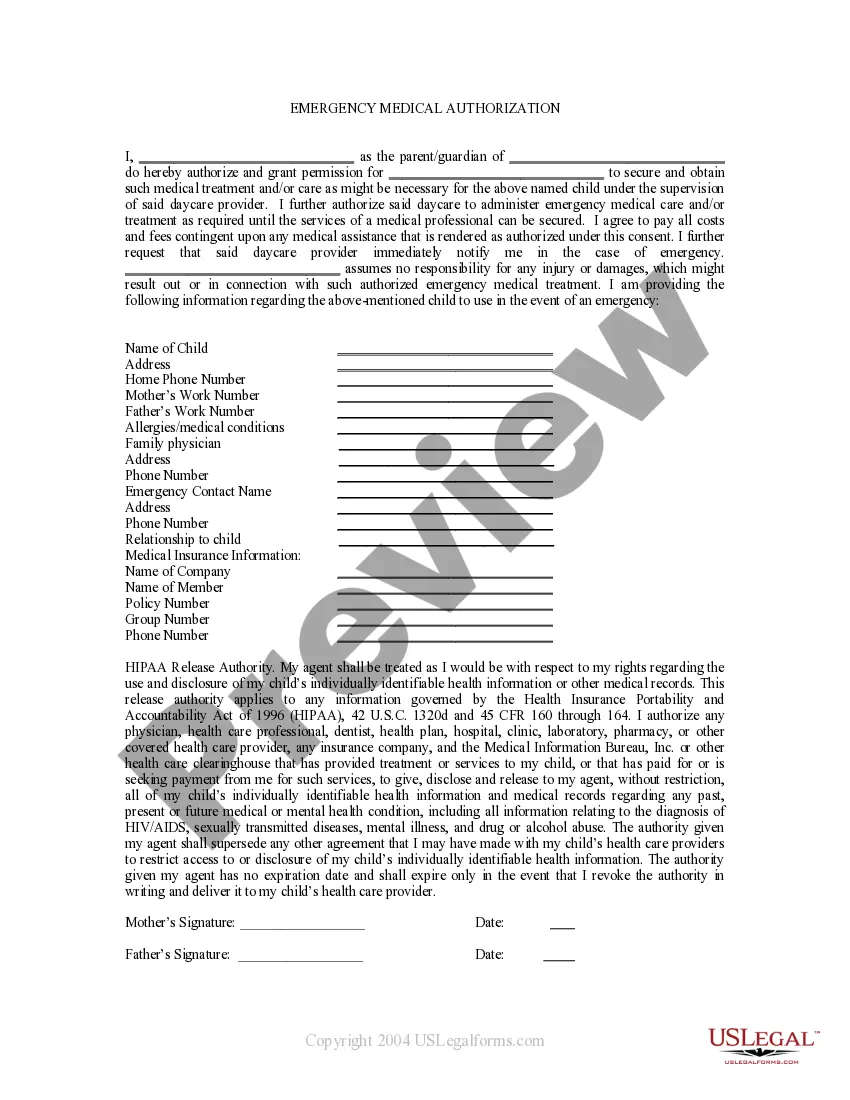
Emergency Medical Authorization Form for Child
Overview of this form
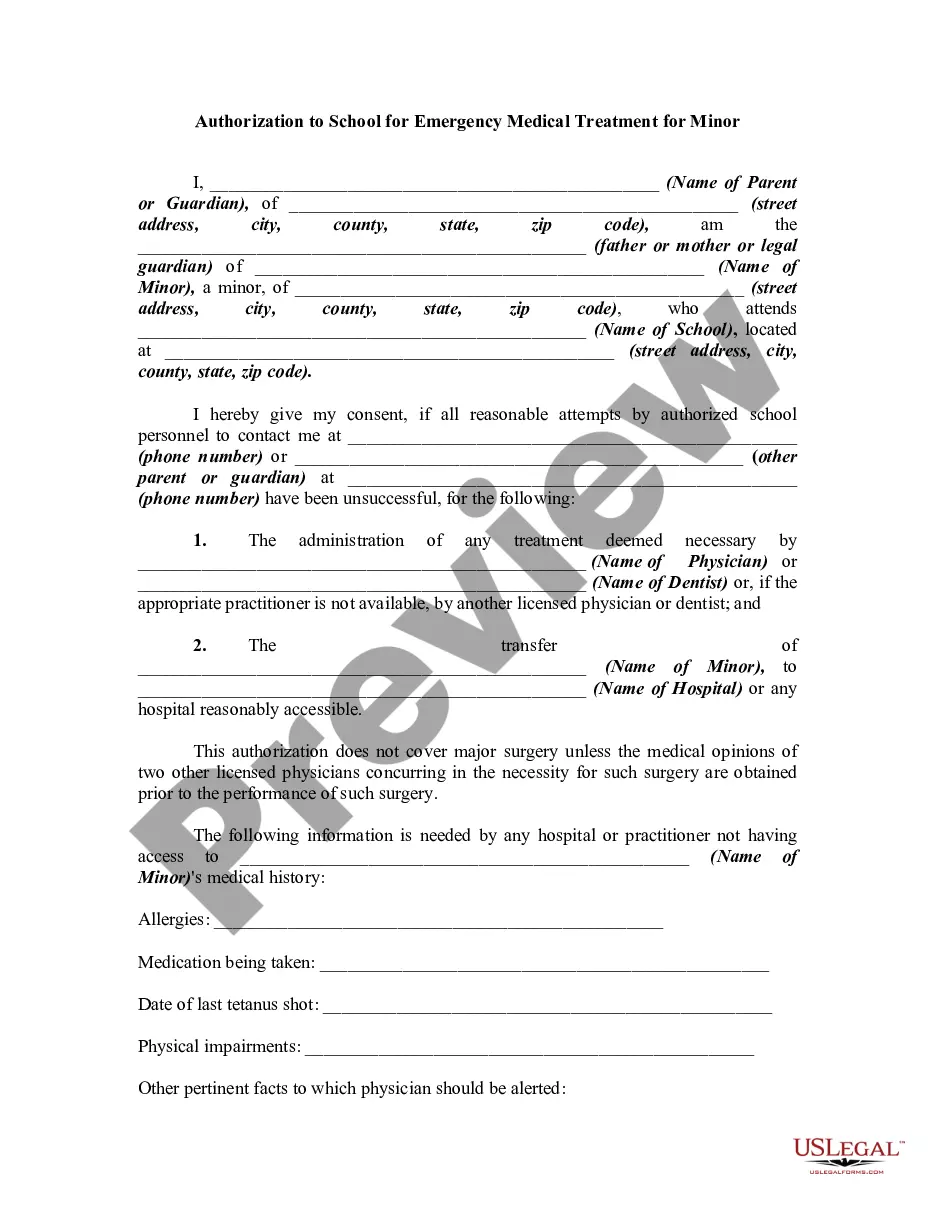
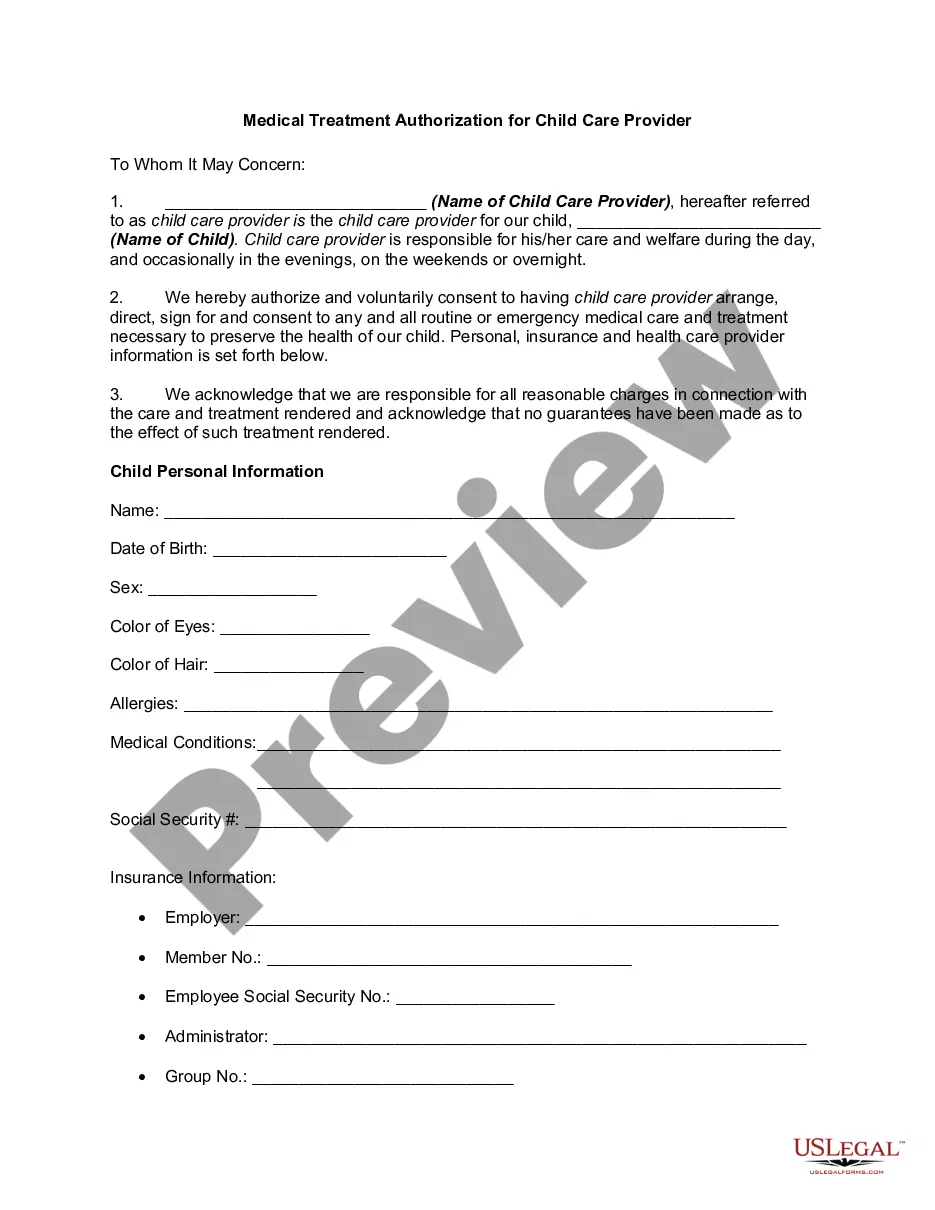
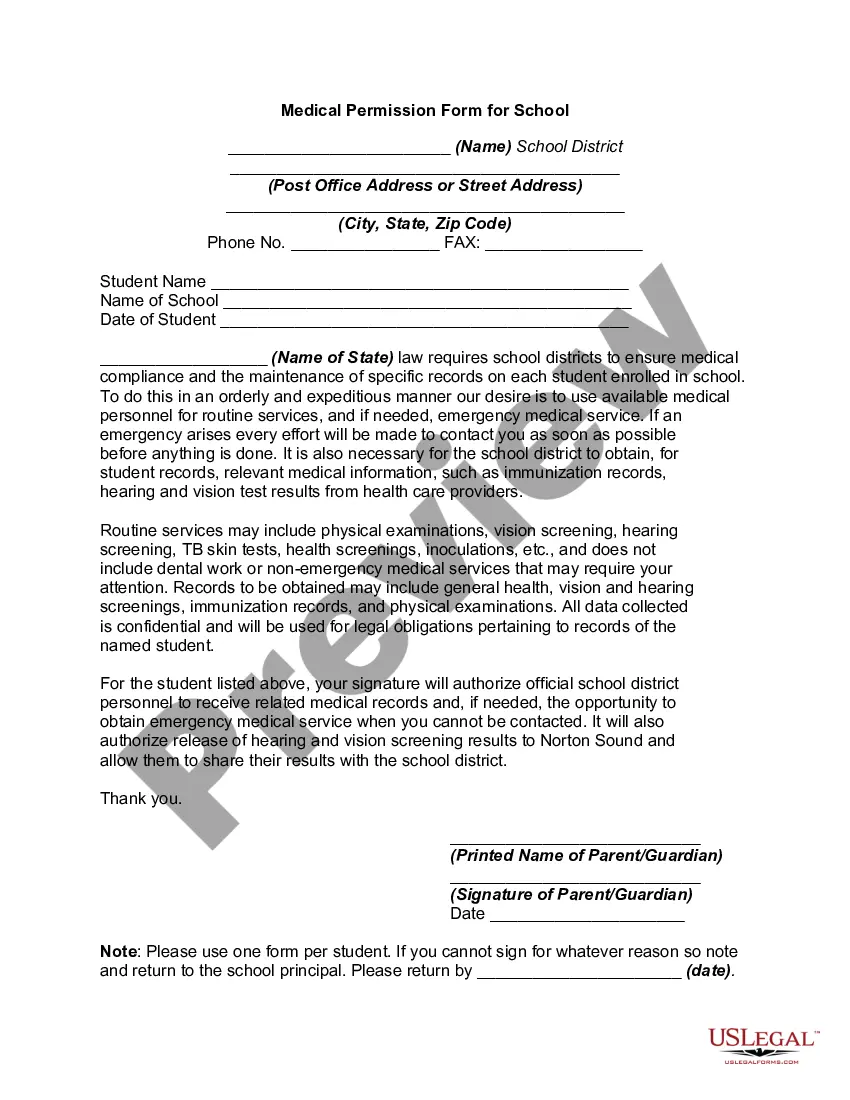
The Emergency Medical Authorization Form for Child is a document that parents or guardians use to authorize emergency medical treatment for their child while they are being cared for at a daycare. This form allows the daycare provider to seek medical assistance and administer treatment in urgent situations, ensuring the child's health needs are promptly addressed. It differs from other medical consent forms by specifically focusing on emergency situations in the context of child care settings.
Key components of this form
- Parent/guardian's authorization for emergency medical treatment.
- Name and information of the child requiring treatment.
- Contact information for parents/guardians and emergency contacts.
- Description of any known allergies or medical conditions.
- Medical insurance details, if applicable.
- Release of liability clause for the daycare provider.
Common use cases
This form should be used whenever a child is enrolled in a daycare setting. It ensures that caregivers have the necessary authorization to seek medical treatment in case of accidents, sudden illness, or other emergencies. Parents or guardians should complete it before leaving their child in the care of the daycare provider to ensure that medical assistance can be quickly obtained if needed.
Who this form is for
Eligible users of this form include:
- Parents or guardians of children enrolled in daycare.
- Daycare providers seeking authorization for emergency medical treatment.
- Family members or caregivers involved in the childâs care who may need to act in emergencies.
Instructions for completing this form
- Provide the name and information of the parent or guardian authorizing treatment.
- Fill in the full name of the child requiring emergency medical authorization.
- Specify any allergies or medical conditions that emergency personnel should be aware of.
- Complete the emergency contact details, including names and phone numbers.
- Sign and date the form to validate the authorization.
Does this document require notarization?
This form does not typically require notarization unless specified by local law. It is a legal document that is generally accepted with just a signature from the parent or guardian.
Get your form ready online
Our built-in tools help you complete, sign, share, and store your documents in one place.
Make edits, fill in missing information, and update formatting in US Legal Forms—just like you would in MS Word.
Download a copy, print it, send it by email, or mail it via USPS—whatever works best for your next step.
Sign and collect signatures with our SignNow integration. Send to multiple recipients, set reminders, and more. Go Premium to unlock E-Sign.
If this form requires notarization, complete it online through a secure video call—no need to meet a notary in person or wait for an appointment.
We protect your documents and personal data by following strict security and privacy standards.

Make edits, fill in missing information, and update formatting in US Legal Forms—just like you would in MS Word.

Download a copy, print it, send it by email, or mail it via USPS—whatever works best for your next step.

Sign and collect signatures with our SignNow integration. Send to multiple recipients, set reminders, and more. Go Premium to unlock E-Sign.

If this form requires notarization, complete it online through a secure video call—no need to meet a notary in person or wait for an appointment.

We protect your documents and personal data by following strict security and privacy standards.
Common mistakes to avoid
- Leaving fields blank, especially contact information and medical conditions.
- Not providing updated information if the child's health status changes.
- Failing to sign or date the form, which may render it invalid.
Why complete this form online
- Convenience of completing the form from home without the need for physical copies.
- Easy access to editing and updating information as needed.
- Reliable storage and retrieval options for important documents.
Looking for another form?


Form popularity
FAQ
To Whom It May Concern: I, Name of Legal Guardian, am the lawful guardian of the female child named below. I give permission and consent to Name, Address and Phone Number of Temporary Caregiver to authorize medical treatment for Full Name of Child and date of birth.
MINOR MUST BE EMANCIPATED (GENERALLY 14 YEARS OF AGE OR OLDER) LAW/DETAILS MAY/MUST THE HEALTH CARE PROVIDER INFORM A PARENT ABOUT THIS CARE OR DISCLOSE RELATED MEDICAL INFORMATION TO THEM? An emancipated minor may consent to medical, dental and psychiatric care.
The consent document must be signed and dated by the patient (or the patient's legal guardian or representative). Many consent forms also require a physician signature. Consent forms should include statements to be signed by the patient and the physician.
Informed consent can only be obtained from an adult patient who is mentally competent to do so except under some circumstances and situations.
Parents have the responsibility and authority to make medical decisions on behalf of their children. This includes the right to refuse or discontinue treatments, even those that may be life-sustaining. However, parental decision-making should be guided by the best interests of the child.
This should include names, titles, addresses, and contact information so you are precisely clear. Some patients aren't private with their medical information and may want to give you permission to share their records with anyone.
A child younger than 14 may be competent to consent to treatment . Conversely, a child aged 16 or over may lack competence . Health practitioners need to make an assessment of competency to consent for all young people aged under 18 years (or 16 years in South Australia) .
A care provider may perform a routine test or treatment on a minor who is over the age of 14 without parental consent and without accompaniment, on condition that the minor him/herself gives informed consent for the medical procedure.