Amendment to the articles of incorporation to eliminate par value
What is this form?
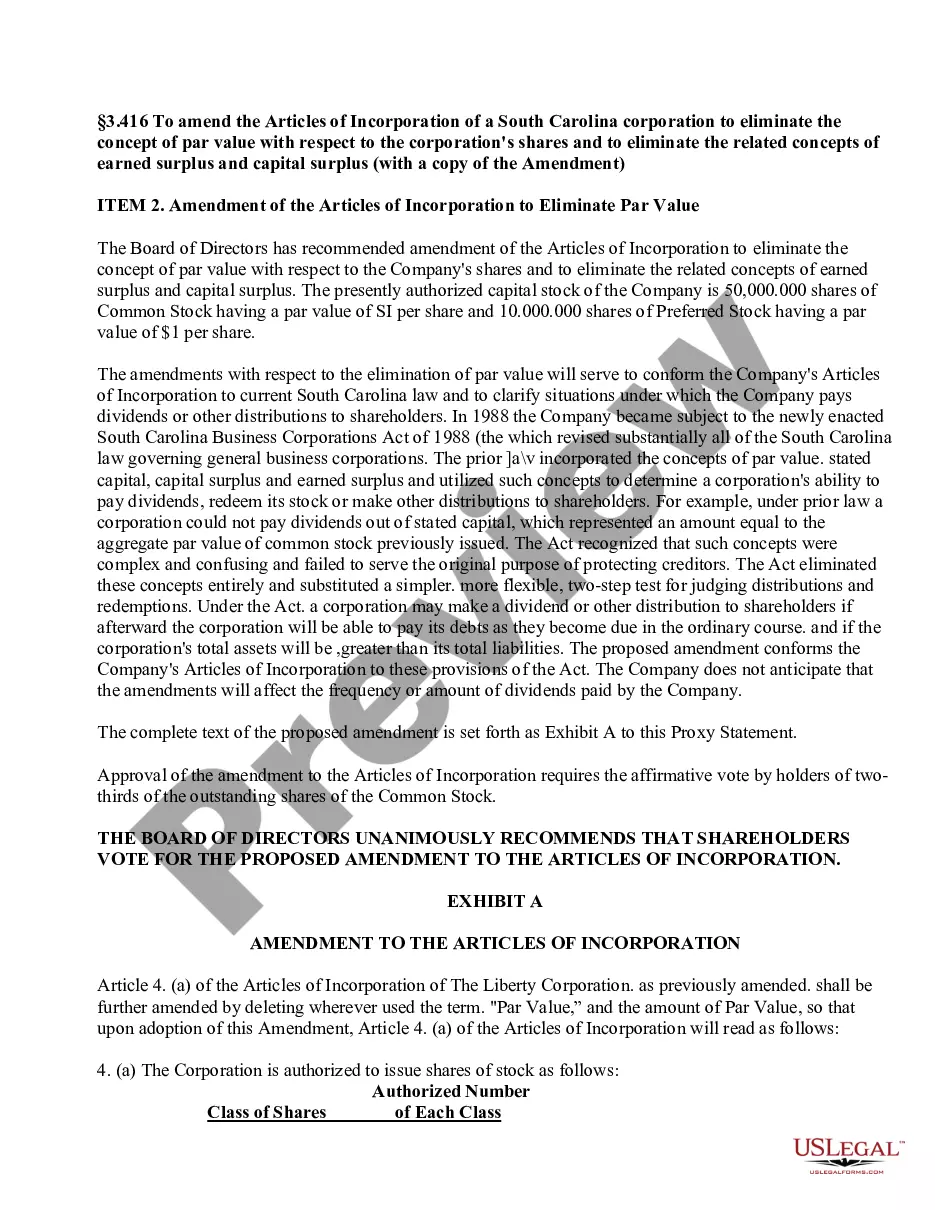
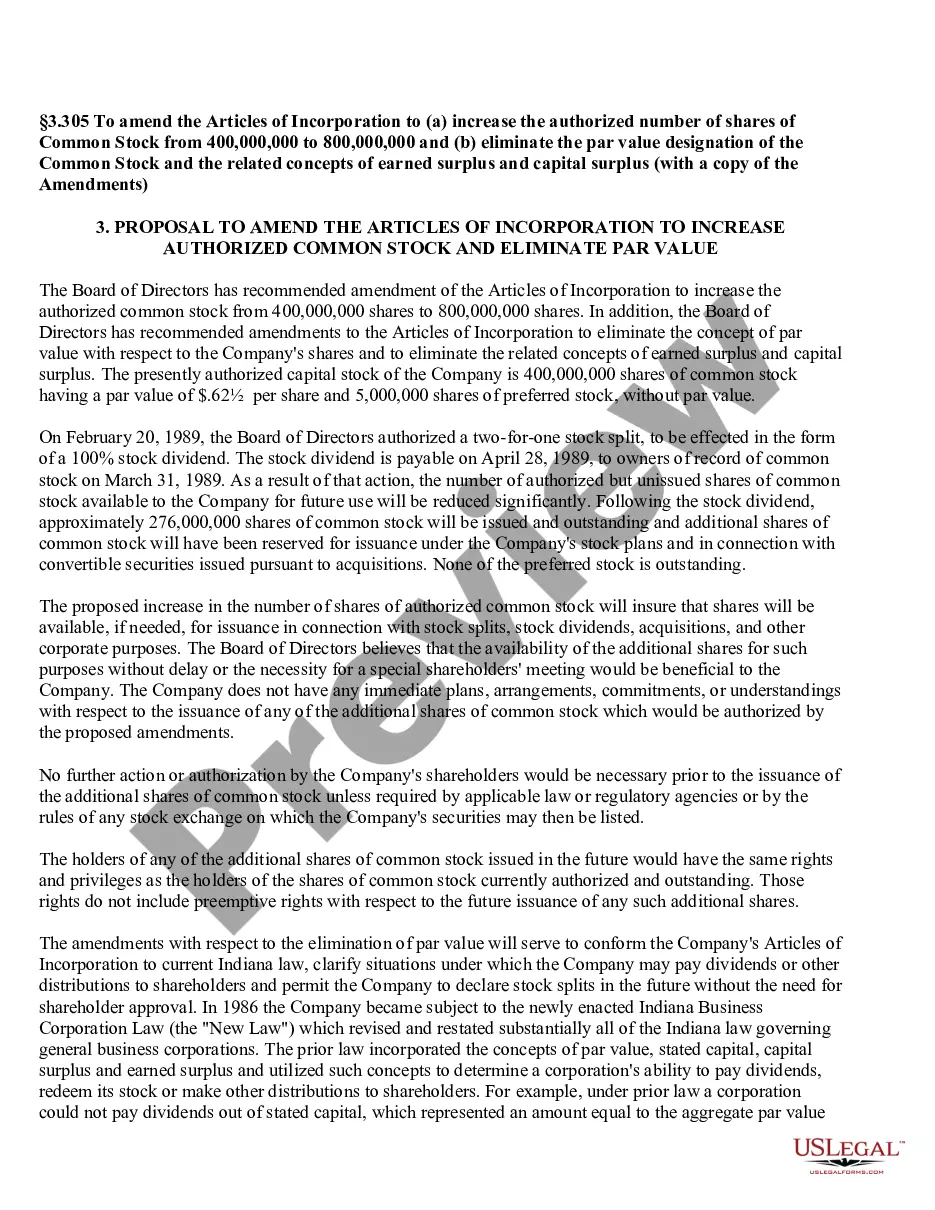
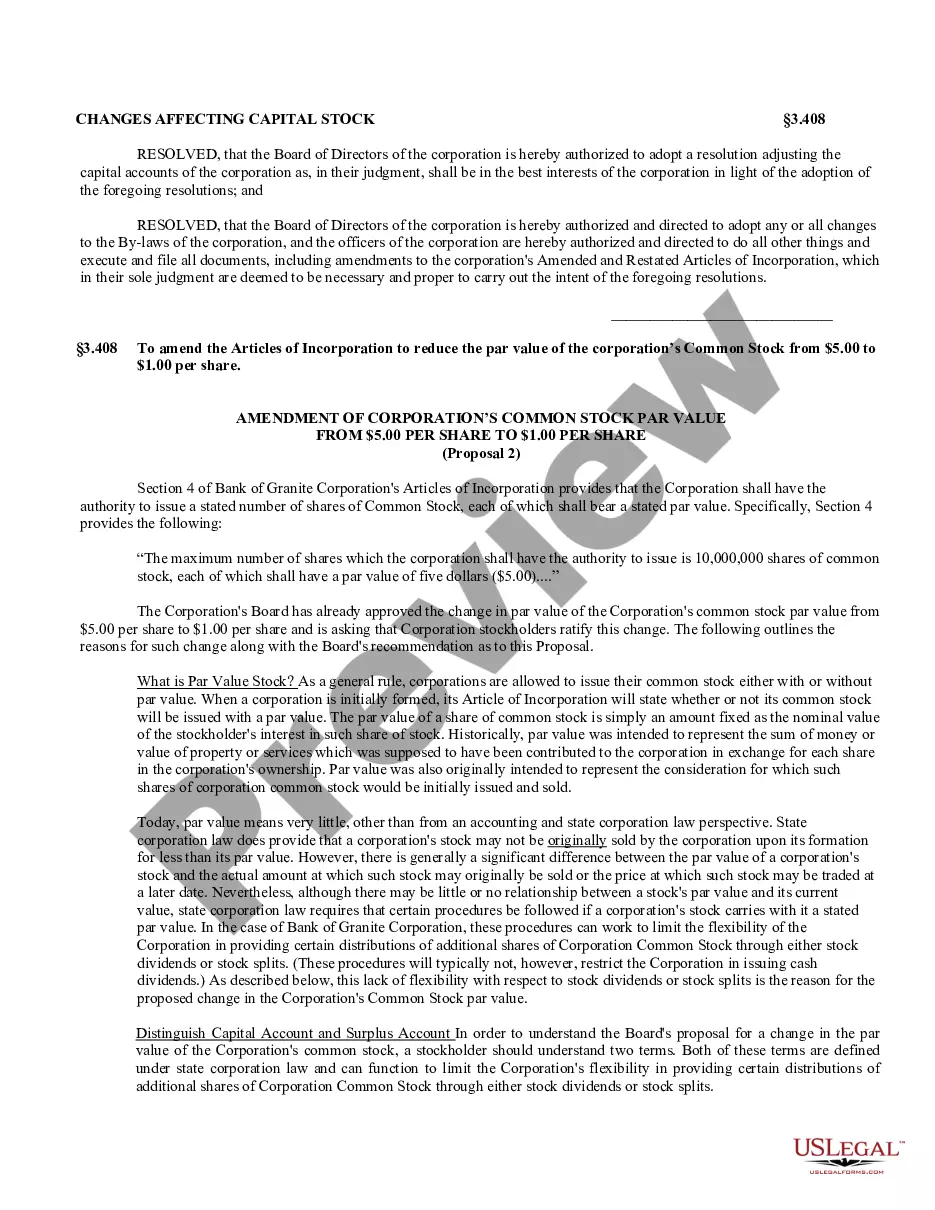
This form is an Amendment to the Articles of Incorporation to eliminate par value. It allows a corporation to remove the concept of par value from its shares, simplifying its regulatory framework and aligning with current laws. This form is important for companies looking to clarify their capital structure and streamline dividend distributions without the constraints imposed by par value terminology.
Key components of this form
- Identification of the corporation and its existing Articles of Incorporation.
- Statement regarding the recommendation by the Board of Directors to eliminate par value.
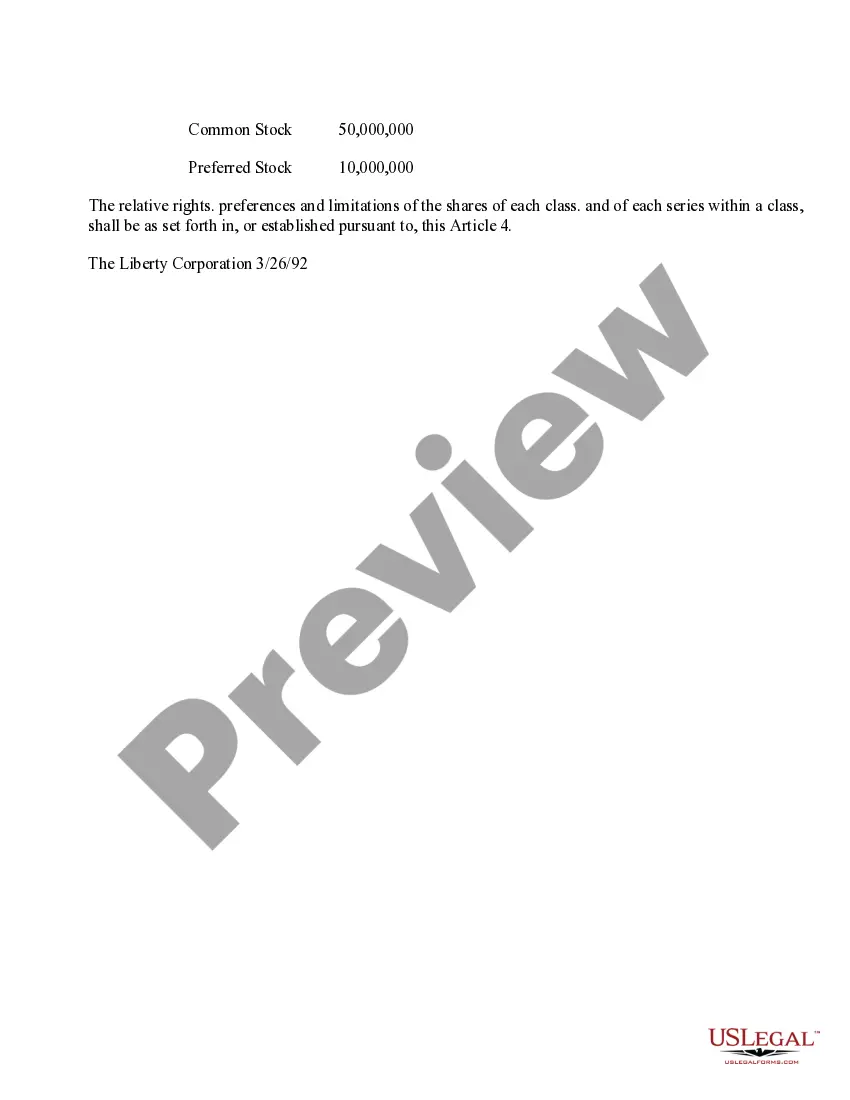
- Details on how the amendment affects the corporation's stock structure.
- Requirements for shareholder approval, indicating the necessary voting thresholds.
- Reference to the sections of the Articles of Incorporation that will be amended.
When this form is needed
This form should be used when a corporation decides to modify its Articles of Incorporation to eliminate the concept of par value. This is typically necessary when a corporation aims to simplify its capital structure or comply with updated state laws. It may also be relevant when corporations seek to clarify their policies around dividend payouts and stock distributions.
Who needs this form
- Corporation owners and managers who are authorized to amend Articles of Incorporation.
- Board members who are responsible for recommending corporate governance changes.
- Corporate legal advisors seeking to ensure compliance with state regulations.
How to prepare this document
- Identify the corporation and reference the current Articles of Incorporation.
- State the intention to eliminate par value for shares clearly.
- Include the recommended amendments as detailed in the form.
- Specify the voting requirement needed for approval of the amendment.
- Obtain signatures from board members to validate the recommendation.
Does this form need to be notarized?
Notarization is not commonly needed for this form. However, certain documents or local rules may make it necessary. Our notarization service, powered by Notarize, allows you to finalize it securely online anytime, day or night.
Get your form ready online
Our built-in tools help you complete, sign, share, and store your documents in one place.
Make edits, fill in missing information, and update formatting in US Legal Forms—just like you would in MS Word.
Download a copy, print it, send it by email, or mail it via USPS—whatever works best for your next step.
Sign and collect signatures with our SignNow integration. Send to multiple recipients, set reminders, and more. Go Premium to unlock E-Sign.
If this form requires notarization, complete it online through a secure video call—no need to meet a notary in person or wait for an appointment.
We protect your documents and personal data by following strict security and privacy standards.

Make edits, fill in missing information, and update formatting in US Legal Forms—just like you would in MS Word.

Download a copy, print it, send it by email, or mail it via USPS—whatever works best for your next step.

Sign and collect signatures with our SignNow integration. Send to multiple recipients, set reminders, and more. Go Premium to unlock E-Sign.

If this form requires notarization, complete it online through a secure video call—no need to meet a notary in person or wait for an appointment.

We protect your documents and personal data by following strict security and privacy standards.
Avoid these common issues
- Failing to obtain the required shareholder vote for approval.
- Not clearly stating the amendments in the appropriate section.
- Skipping the necessary legal review before submission.
Benefits of using this form online
- Easy access to the latest legal language and formats.
- Quick downloads that allow for immediate use and customization.
- Integrated legal advice for specific state requirements and contexts.
Legal use & context
- The amendment must be filed with the appropriate state authority to be legally effective.
- Conformity with state law helps avoid potential litigation regarding stock distributions.
Key takeaways
- This form is essential for corporations wishing to simplify their stocks by eliminating par value.
- Amendments must adhere to state-specific regulations to be valid.
- Approval from shareholders is crucial for the amendment to take effect.
Looking for another form?








Form popularity
FAQ
A stock's par value is its stated value, not its actual value. When a stock sells, it will be issued at its actual value and not the stated par value. The most common reason for a change in par value is a stock split. During a split, the total par value will actually remain unchanged.
Check your bylaws and state law. First, review your company's bylaws to see what steps you must take to change the articles. Have the board of directors vote on the proposed changes. Hold a shareholder vote, if necessary. Prepare and file an amendment form.
No-par value stock is issued without a par value.The advantage of no-par value stock is that companies can then issue stock at higher prices in future offerings. While no-par value stock is issued with no face value, low-par value stock is issued with a price as low as $0.01.
A par value for a stock is its per-share value assigned by the company that issues it and is often set at a very low amount such as one cent. A no-par stock is issued without any designated minimum value.
That the articles of incorporation or any amendment thereto is not substantially in accordance with the form prescribed herein; 2. That the purpose or purposes of the corporation are patently unconstitutional, illegal, immoral, or contrary to government rules and regulations; 3.
Furthermore, the names of the incorporators, the first set of directors and subscribers, the initial treasurer, their original subscription and the place and date of execution of the first Articles of Incorporation cannot be amended.
You can help keep your company private by reducing the number of stock shares available for purchase. A reverse split raises your stock's par value and reduces the number of shares at the same time. The reverse split doesn't change the value of the retained earnings, paid-in capital or cash accounts.
When a company's stock splits, the change in the par value is offset by a corresponding change in the number of shares so the total par value remains the same. The total stockholders' equity is unaffected by the stock split and no entries are recorded.
Does the Par Value Change? It's important to note that the par value of a bondthe amount you will receive at maturitywill never change regardless of the market rate or bond price. If the market interest rate is higher than the interest payable on a bond, the bond is said to be selling at a discount (below par value).